For the wedding toast itself, you’ll want one glass of champagne for every guest. A good rule of thumb is to plan for one 750ml bottle for every five or six people. This ensures everyone has a proper glass to raise for that key moment, without you over-ordering or stretching the budget.
Crafting the Perfect Champagne Experience for Your Wedding
Planning the champagne for your wedding is about so much more than just ordering drinks. It’s about creating those sparkling, unforgettable moments. Think of this guide as your roadmap to getting the flow of bubbly just right, from the first welcome glass to the final, heartfelt toast. It’s often one of the first things your guests experience, setting a tone of elegance and joy from the moment they arrive.
We’ll walk through the essential decisions you’ll need to make, helping you navigate every little detail with confidence. From picking the right glassware to figuring out exactly how many bottles you need, each choice you make shapes the experience for you and your guests.
Key Decisions for Your Celebration
To get started, let’s think about the main elements that will define your champagne service. Getting these sorted first will have the biggest impact on your budget, your timeline, and the overall atmosphere of the day.
- Glassware Style: Are you picturing modern, elegant flutes that keep the bubbles fizzing, or are you leaning towards the vintage glamour of a coupe? Each style brings a completely different feel to your tablescape and, of course, to the photos.
- Bottle Calculation: This is the big question: how many glasses will you actually get through? We’ll give you some simple, tried-and-tested formulas for different guest counts so you can feel confident you’re perfectly stocked.
- Service Timing: When will the corks pop? You might want a welcome drink as guests arrive, a more formal toast during the speeches, or perhaps you’d prefer to have it flowing freely right through the reception.
Thinking these details through in advance is the secret to a seamless, stress-free celebration. It gives your catering team a clear plan to work from, leaving you free to simply enjoy the moment and raise a glass with your loved ones.
And why stop at champagne? To really add a memorable twist to your celebrations, you could consider something interactive for your pre-wedding parties, like a fun cocktail making class for your hen or stag do.
Ultimately, the goal is to make smart, stylish choices that feel like you. By thoughtfully planning every detail, from your glassware to your seating arrangements, you create a cohesive and magical event. For more tips on getting your reception space just right, have a look at our guide on wedding table planner ideas.
The Great Debate: Flutes Versus Coupes
The glass you choose for your champagne does so much more than just hold the bubbles. It shapes the look, feel, and even the taste of your wedding toast. It’s a detail that beautifully blends style with the actual sensory experience of the day.
This decision usually boils down to two iconic shapes: the tall, elegant flute and the wide, glamorous coupe. Each one brings its own distinct personality to a celebration, and knowing the difference will help you pick the perfect one for your day.
The Case for the Classic Flute
There’s a good reason the champagne flute is the modern go-to. Its tall, narrow bowl is designed with a single purpose in mind: to preserve those beautiful bubbles and keep them fizzing for as long as possible. The small surface area at the top means less of the wine is exposed to the air.
This design directly affects what you and your guests taste and smell. As the concentrated stream of bubbles rises, it continuously releases the champagne’s delicate aromas right under your nose. If you’ve chosen a particularly lovely champagne or sparkling wine and you want everyone to savour its crisp, complex notes, the flute is your best bet.
Consider the flute if you want to:
- Keep the fizz going for longer, which is perfect for speeches that might run on a bit.
- Concentrate the aromas so guests can really appreciate the bouquet of the wine.
- Create a sleek, modern look that fits a contemporary wedding theme.
- Minimise spills – that narrow opening is far more practical when guests are mingling and moving around.
The Allure of the Vintage Coupe
The coupe, with its wide, shallow bowl, tells a completely different story. It speaks of vintage romance, old-world glamour, and Gatsby-esque parties. While legend (incorrectly) links its shape to Marie Antoinette, the coupe was actually designed in England in the mid-17th century and graced celebrations for centuries.
Its broad surface allows the champagne to open up quickly, releasing a big burst of aroma all at once. The trade-off? Those lovely bubbles disappear much faster than they would in a flute. While it’s less about preserving the fizz, the coupe is absolutely unmatched in its visual style, especially if you’re dreaming of a show-stopping champagne tower.
The coupe isn’t just a glass; it’s a statement. It evokes a sense of decadence and theatre, making it perfect for couples curating a vintage-inspired wedding. Its open shape is also far better for adding a little garnish, like a single raspberry or a delicate edible flower, adding another layer of personal style to your glasses of champagne.
Figuring Out How Much Champagne You’ll Need (Without Breaking the Bank)
Getting the champagne count right is one of those little details that makes a huge difference to the flow of your day and the health of your budget. It can feel like a bit of a guessing game, but I promise there’s a simple way to figure it out so you can place your order with total confidence.
The industry rule of thumb is a great place to start: one standard 750ml bottle of champagne will pour about five or six glasses. With that in mind, you can build a really solid estimate based on when you want to pop the corks.
Start with a Simple Framework
The easiest way to begin is by mapping out the key moments you’ll be serving bubbly. For a wedding with around 100 guests, a classic approach looks something like this:
- Welcome Drink: One glass for each guest as they arrive and start to mingle.
- The Toast: One glass per person for the speeches.
This simple “two glasses per guest” formula is a fantastic baseline. For 100 guests, that’s 200 glasses, which works out to be between 34 and 40 bottles. Of course, this all hinges on having a firm grasp of your numbers, so getting good at managing your wedding guest list early on is crucial for accurate planning.
This handy visual shows the difference between the two most popular champagne glasses – the flute and the coupe – and how they affect the experience.
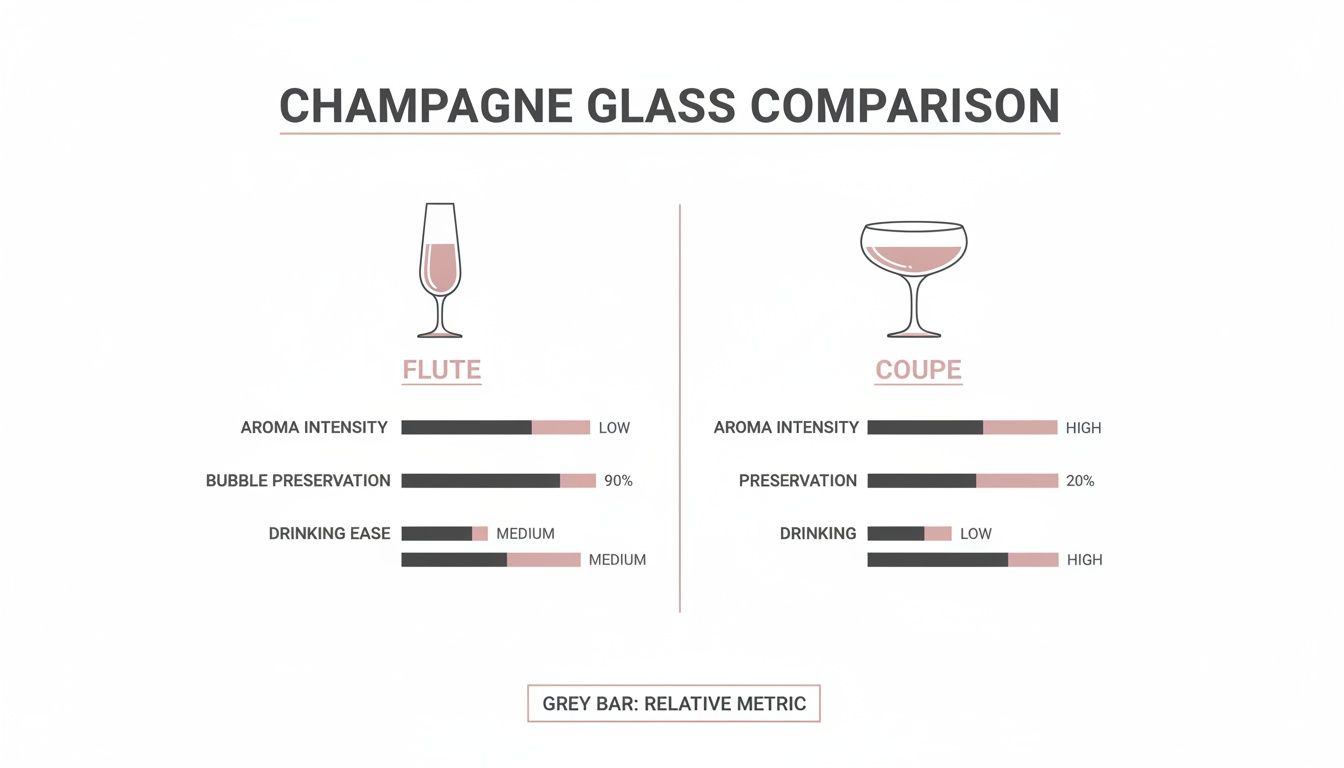
As you can see, the tall, slender flute is all about keeping those bubbles lively for longer, whereas the wide-brimmed coupe lets the aromas open up much more quickly.
Adjust for Your Crowd
Now, let’s get real. Numbers on a page are one thing, but your actual guests are another. Not everyone will fancy a glass of fizz, so it’s smart to account for personal preferences and those who don’t drink alcohol.
Drinking habits at weddings have really shifted lately. In the UK, while 24% of guests tend to avoid alcohol completely, a much larger 47% have chosen not to drink at a wedding on at least one occasion in the last five years. This is especially common among younger guests, which makes having a brilliant non-alcoholic option more important than ever.
My go-to advice? Assume about 80% of your guests will actually drink the champagne you offer for the toast. This simple adjustment is the secret to avoiding a surplus of expensive, unopened bottles at the end of the night.
So, for our 100-guest wedding, that tweak means you’re now planning for 80 champagne drinkers, not the full 100. This brings your bottle count down to a much more palatable 27 to 32 bottles. Just be sure to have something equally celebratory on hand for everyone else – a sparkling elderflower pressé or a beautiful fruit punch ensures nobody feels left out.
Champagne Bottle Calculation Guide Per 100 Guests
To make it even easier, here’s a quick-reference table. It breaks down the numbers based on when you might be serving champagne throughout your celebration.
| Wedding Event | Glasses Per Guest | Total Glasses Needed | Bottles Required (approx.) |
|---|---|---|---|
| Welcome Drink Only | 1 | 100 | 17-20 |
| Toast Only | 1 | 100 | 17-20 |
| Welcome Drink & Toast | 2 | 200 | 34-40 |
| Full Reception (3 hours) | 3-4 | 300-400 | 50-67 |
This table provides a great starting point, but always remember to apply the 80% rule and adjust based on what you know about your own friends and family.
Timing and Service Styles for a Seamless Flow
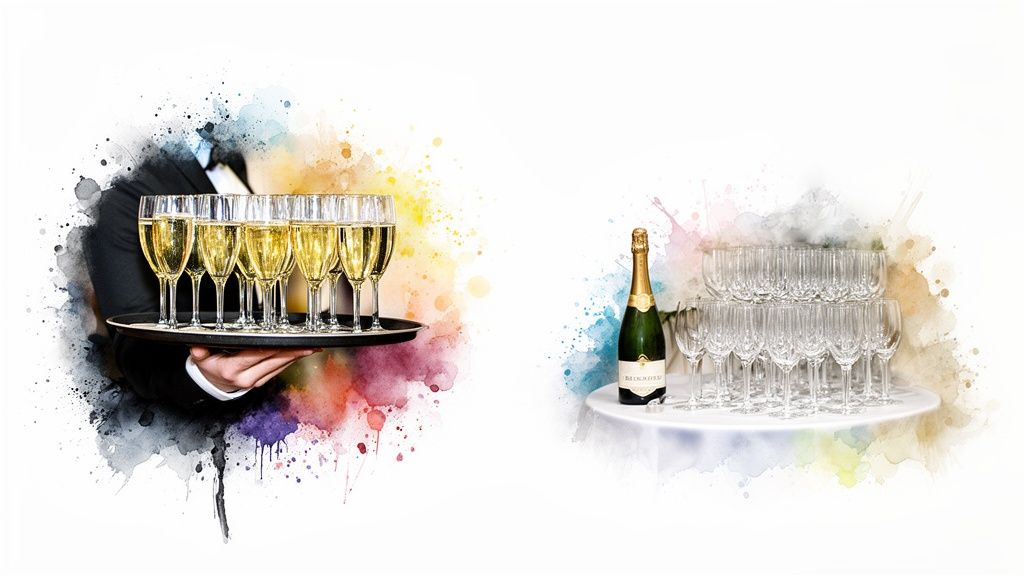
How and when your champagne appears can completely shape the rhythm of your day and your guests’ experience. It’s the subtle difference between a day that flows effortlessly and one with awkward, empty pauses. Let’s look at a few service styles that feel both elegant and natural, making sure every key moment is punctuated with the perfect celebratory sip.
The Classic Welcome Tray
For an immediate touch of class, nothing beats tray-passed service. As guests arrive, staff circulate with trays of beautifully presented glasses of champagne. It’s a wonderfully efficient approach that lets guests grab a glass and mingle without having to queue at the bar.
This style works particularly well for a post-ceremony drinks reception on a terrace or lawn. It encourages conversation and instantly creates a warm, welcoming atmosphere. It also gives you, the happy couple, a fantastic photo opportunity as you greet everyone with a glass in hand.
A great tip is to have a non-alcoholic sparkling alternative ready on the same trays. This small detail ensures every guest feels included from the very first moment, and it’s a seamless way to cater for different preferences without making a fuss.
The Interactive Champagne Bar
If you’re aiming for a more modern, social vibe, a self-serve champagne bar or station can become a brilliant focal point. It creates a lively hub where guests can help themselves, encouraging a more relaxed feel and getting people chatting.
You can take this idea a step further with a ‘pimp your prosecco’ style setup. Think about adding little extras like:
- Fresh Fruit Purées: Such as peach for a classic Bellini or raspberry for a vibrant twist.
- Liqueurs: A splash of elderflower liqueur or Chambord adds a lovely, personal touch.
- Garnishes: Bowls of fresh berries, edible flowers, or delicate lemon twists look beautiful.
This turns the simple act of pouring a drink into a fun, memorable activity. It’s a fantastic icebreaker and adds another layer of personalisation to your celebration. Just be sure to discuss the logistics with your venue coordinator to keep the station well-stocked and tidy.
Perfecting the Toast
The toast is arguably the most important champagne moment of the day. The goal here is flawless execution, with every single guest holding a full glass at the precise moment the speeches begin. This is where your catering team truly shines.
Usually, the venue staff will start pouring and distributing the glasses of champagne towards the end of the main course. They move discreetly around the room, placing a glass for each guest so that the service is complete just before the first speaker stands up. This behind-the-scenes choreography is vital for a smooth transition from dining to toasting.
For a detailed look at how these moments fit into the bigger picture, you might find it helpful to explore this wedding day timeline template. Clear communication with your venue’s team is key; let them know your schedule so they can time the champagne pour to perfection, creating a truly cinematic moment for everyone.
Smart Ways to Manage Your Champagne Budget
Champagne adds an undeniable touch of luxury to a wedding, but it doesn’t have to derail your carefully planned budget. With a few savvy choices, you can create that wonderful celebratory feel without overspending, leaving more of your funds for the things that matter most to you.
One of the smartest moves is to be selective about when you serve true Champagne. While its quality is distinct, a high-quality sparkling wine like Italian Prosecco or French Crémant makes a brilliant, and far more cost-effective, alternative for welcome drinks or a free-flowing reception bar.
Recent research highlights this very dilemma. While 55% of couples now choose Prosecco over Champagne for its affordability, a significant 68% still believe Champagne has a superior taste. With average wedding catering costs on the rise, making smart decisions about your bubbly is more important than ever. You can read more about this in the full report on wedding drink preferences.
Be Strategic with Your Service
A fantastic way to manage costs is to save the most premium option for the most significant moment. Think about reserving the real Champagne exclusively for the toast, where guests will truly savour and appreciate every sip. For other parts of the day, a quality sparkling wine will more than hit the mark.
This approach lets you honour tradition and quality without the expense of serving Champagne all night long. Offering a signature cocktail or a prosecco-based spritz during the reception, for example, can add a personal touch while being much kinder to your wallet.
By focusing your spend on the toast, you create a high-impact moment that feels luxurious and special. This thoughtful allocation ensures you get the best value without compromising on the celebratory atmosphere of your day.
Explore Venue Drinks Packages
Before you start sourcing your own alcohol, always explore your venue’s in-house drinks packages. While buying your own might seem cheaper at first glance, corkage fees—the charge venues apply for serving your own bottles—can quickly add up and often cancel out any savings.
Venue packages frequently offer better value and simplify the logistics enormously. They typically include:
- Set Pricing: A clear per-person cost makes budgeting a breeze.
- Variety: Options often include wine, beer, and soft drinks alongside the bubbly.
- Seamless Service: The venue’s experienced staff will handle all the chilling, pouring, and serving of the glasses of champagne.
Chatting through these options with your wedding coordinator can uncover brilliant, cost-effective solutions you might not have considered. For more inspiration on creating a beautiful celebration on a budget, take a look at our guide to budget-friendly wedding ideas. By combining smart sourcing with strategic service, you can raise a glass to your future without a single financial worry.
Answering Your Wedding Champagne Questions
When you’re in the thick of wedding planning, it’s the little details that can start to feel overwhelming. To help clear things up, we’ve put together answers to the most common questions we hear from couples about serving champagne. Think of it as a clear, straightforward guide to help you finalise your plans with complete confidence.
Can We Really Have a Champagne Tower?
Yes, you absolutely can! A champagne tower is a breathtaking centrepiece, bringing a wonderful touch of old-world glamour to your celebration. It also creates a truly fantastic photo opportunity. To make it work, you must use coupe glasses – their wide, shallow bowls are perfectly designed for stacking and allowing the champagne to cascade beautifully down the tiers.
Building one takes a steady hand and a completely solid, level surface. You’ll start with a square base, then stack each layer on top, making sure to centre the base of each glass over the diamond-shaped gap created by the four glasses beneath it. For that classic, dramatic pour, you can fill the top glass and let it overflow. However, a quicker and less wasteful approach is to pre-fill the lower tiers about halfway before the grand finale.
Who Pours the Champagne for the Toast?
This is definitely a job for the professionals. Your venue’s catering team or bar staff are experts at timing this perfectly. They will discretely pour and hand out the glasses of champagne to all your guests, ensuring everyone is ready for the speeches without any awkward pauses or disruption.
Usually, this all kicks off as the main course is being cleared away. Their coordinated effort guarantees the whole process is seamless, saving you the logistical headache of passing heavy bottles around tables. It keeps the moment feeling polished, special, and effortless.
Trust your venue’s team. They have the experience to manage the pour efficiently, ensuring no guest is left with an empty glass when it’s time to toast. It’s one less thing you need to worry about on the day.
What if We Don’t Drink Alcohol?
It’s becoming more and more common for couples or their guests to prefer non-alcoholic drinks, and it’s so important to cater for them with the same sense of occasion. There are some truly excellent alcohol-free sparkling wines and sophisticated pressés available now that look just as celebratory in a champagne flute.
The key is to serve your non-alcoholic choice in the same elegant glassware as the champagne. It’s a simple, inclusive gesture that makes sure every guest, no matter what they’re drinking, feels equally part of the celebration.
Do We Need to Serve a Top-Shelf Champagne?
While a famous brand name certainly adds a touch of prestige, it’s by no means essential. Many couples are now choosing exceptionally high-quality sparkling wines like Crémant from France or a top-tier Prosecco from Italy. These offer a fantastic taste at a more accessible price point. The goal is quality, not just the label on the bottle.
The UK’s love for celebratory fizz is undeniable. The champagne market alone is projected to hit USD 1.2 billion in 2025, with strong growth expected. This reflects a deep appreciation for quality sparkling drinks, cementing their place in British celebrations. You can find detailed insights on UK champagne consumption to see just how popular it is.
Ultimately, you should serve something you both genuinely enjoy. A blind taste test can be a really fun part of your wedding planning, helping you discover a brilliant bubbly that suits your palate and your budget. The most important thing is to celebrate your marriage with a drink you both love.
At Battle Abbey Weddings, we believe every detail of your day should be perfect, right down to the last bubble. Our experienced team will work with you to create a seamless and elegant champagne experience in our historic East Sussex venue. Plan your fairy-tale celebration with us today.