A wedding day timeline is far more than just a list of timings. It’s the invisible thread that weaves every part of your celebration together, from the first pop of a champagne cork in the morning to the final song on the dance floor. This is the master plan that ensures you, your guests, and all your suppliers are perfectly in sync, allowing you to relax and actually be present on your special day.
The Secret To A Stress-Free Wedding Day Timeline
Behind every truly memorable wedding is a secret weapon: a brilliant plan. A well-thought-out timeline isn’t just a schedule; it’s your roadmap to a day free from logistical headaches and last-minute panic. It’s what transforms a complex event into a seamless, joyful experience.
When your suppliers know exactly where to be and when, and your guests feel looked after and informed, the entire atmosphere shifts. It becomes relaxed, celebratory, and allows you to immerse yourself in the moment, confident that everything is running like clockwork behind the scenes.
Why Every Detail Matters
Let’s be honest, the wedding world is busier than ever. With the UK wedding venues industry revenue projected to hit a staggering £3.9 billion by 2026—fuelled by a compound annual growth rate of 42.7% over the past five years—it’s clear that meticulous planning is non-negotiable. This surge shows just why modern couples are carefully mapping out every hour to make the most of their investment. You can learn more from the latest UK wedding venues market research.
The key to a truly stress-free day is pairing your timeline with an ultimate wedding planning checklist. Think of it this way: your checklist is the ‘what’, and your timeline is the ‘when’.
By mapping out your day, you’re not just creating a schedule; you’re crafting an experience. You’re giving yourself the gift of peace of mind, ensuring that the only thing you need to focus on is celebrating your love.
For a unique historic venue like Battle Abbey, with its distinct and beautiful spaces, a timeline is absolutely crucial. It’s what ensures a graceful flow from a ceremony in the Abbot’s Hall to drinks on the terrace overlooking that famous battlefield. This thoughtful scheduling is what turns your wedding from a series of events into a beautifully orchestrated story.
Key Timeline Components At A Glance
To get started, it helps to break the day down into its core phases. This table gives a quick overview of what each part of the day involves and what you’re trying to achieve.
| Timeline Phase | Key Activities | Primary Goal |
|---|---|---|
| Getting Ready | Hair & makeup, photographer’s arrival, putting on attire, pre-ceremony photos. | Create a relaxed, celebratory atmosphere while ensuring everyone is ready on time. |
| Ceremony | Guest arrival, processional, vows, recessional, confetti shot. | A seamless and emotional ceremony where timings for music and readings are perfect. |
| Reception | Drinks & canapés, group photos, couples portraits, guest mingling. | Keep guests entertained and comfortable while key photos are taken without rushing. |
| Wedding Breakfast | Guest seating, speeches, meal service. | Ensure a smooth meal service and well-timed, heartfelt speeches. |
| Evening Party | Cake cutting, first dance, live music/DJ, evening food. | Kick off the party with high energy and keep the celebration flowing until the end. |
| The Grand Exit | Final dance, sparkler send-off, guest departures. | End the night on a high note with a memorable farewell. |
Thinking about your day in these distinct blocks makes the whole process feel much more manageable. You’re not just planning a single event; you’re curating a series of wonderful moments.
Laying the Foundations: Your Timeline’s Non-Negotiables
Before you can start slotting in the smaller details, you need to set your timeline’s anchors. Think of these as the big, immovable pillars of your wedding day—the non-negotiables that everything else will pivot around. Get these cornerstones in place first, and you’ll create a solid framework that makes planning the rest of your day feel so much easier.
It’s a bit like building a house; you wouldn’t pick out cushions before the walls are up. Your non-negotiables are your foundation. Once they’re locked in, deciding when to cut the cake or toss the bouquet becomes a simple case of finding the right gap.
Identifying Your Key Milestones
The first and most important anchor is your ceremony start time. This is the heart of the day. Every single thing that comes before it—hair and makeup, supplier arrivals, guest transport—works backwards from this one moment. Everything that follows, from the drinks reception to the first dance, flows directly from when you say your vows.
Your venue plays a huge part in this. As you begin looking at different locations, their available ceremony slots and reception timings are critical pieces of the puzzle. Knowing how to choose a wedding venue that fits your ideal flow is one of the most important first steps you’ll take.
Next up, you need to factor in two other crucial timings, one set by your venue and the other by nature itself:
- Sunset Time: This one is completely out of your hands! For couples dreaming of those gorgeous, golden-hour photos, knowing when the sun is due to set is absolutely essential. Your photographer will plan their entire portrait session around capturing that beautiful, fleeting window of light.
- Venue Curfew: Every venue has a time when the music has to stop and the carriages arrive. This is just as important as your start time, as it dictates the total length of your reception. At Battle Abbey, for instance, our celebrations run until midnight, which gives you a clear finish line to work back from.
Pin down these three points—the ceremony, the sunset, and the curfew—and you’ve just built the fundamental structure of your day. It’s the difference between a schedule that feels rushed and one that flows with effortless grace.
The Role of the Wedding Breakfast
Another major non-negotiable is your meal service. Whether you’re planning a formal three-course banquet or a more relaxed buffet, the timing of the wedding breakfast carves out a significant portion of your afternoon.
A seated meal, for example, typically needs a solid two-hour block. This has to be carefully placed between your drinks reception and the evening party. It also naturally creates the perfect moments for speeches, which are often best held between courses to keep your guests entertained and engaged.
Let’s say your ceremony is at 2:00 PM, followed by a 90-minute drinks reception. This would mean calling guests to be seated for dinner around 4:00 PM. This timing works beautifully, making sure no one gets hungry while keeping the day’s momentum going. Factoring in this meal block early on helps you avoid a classic wedding day pitfall: a rushed dinner service or, even worse, a long, awkward gap where guests are just left waiting around.
How Your Guest Count Shapes Your Wedding Schedule
Does a wedding for 60 guests really need the same timeline as one for 200? Absolutely not.
After the venue and the ceremony time, the size of your guest list is probably the single biggest factor shaping the flow of your day. It’s the difference between a relaxed, intimate gathering and a grand, bustling celebration, and your wedding day timeline template has to reflect that.
A smaller wedding naturally allows for a more leisurely pace. There’s simply more time for everything—longer chats with your guests, more breathing room between the big moments, and a general sense of unhurried joy. A larger wedding, on the other hand, requires a bit more structure to keep things moving smoothly, ensuring no one is left waiting and every part of the day feels seamless.
The Logistics of Scale
Think about it in practical terms. Moving 50 people from the ceremony to a drinks reception is pretty straightforward. Guiding 200 guests requires clear instructions, maybe a few ushers, and definitely more time factored in.
Every logistical element, from the length of the bar queue to the time it takes for everyone to find their seats for dinner, scales up with your numbers.
The latest figures show that the average number of wedding guests in the UK has settled between 83 and 89 for 2024. Digging deeper, 53% of couples invite between 51-100 guests, while 27% are choosing more intimate affairs with under 50 attendees. This fits perfectly with what we see at Battle Abbey, whether you’re planning an exclusive part-site celebration for up to 60 or looking at our guidance for unforgettable large weddings of 75-250 guests.
No matter the size, there are always a few fixed anchors in your timeline—the ceremony, the photos, and the curfew. These are your non-negotiables.
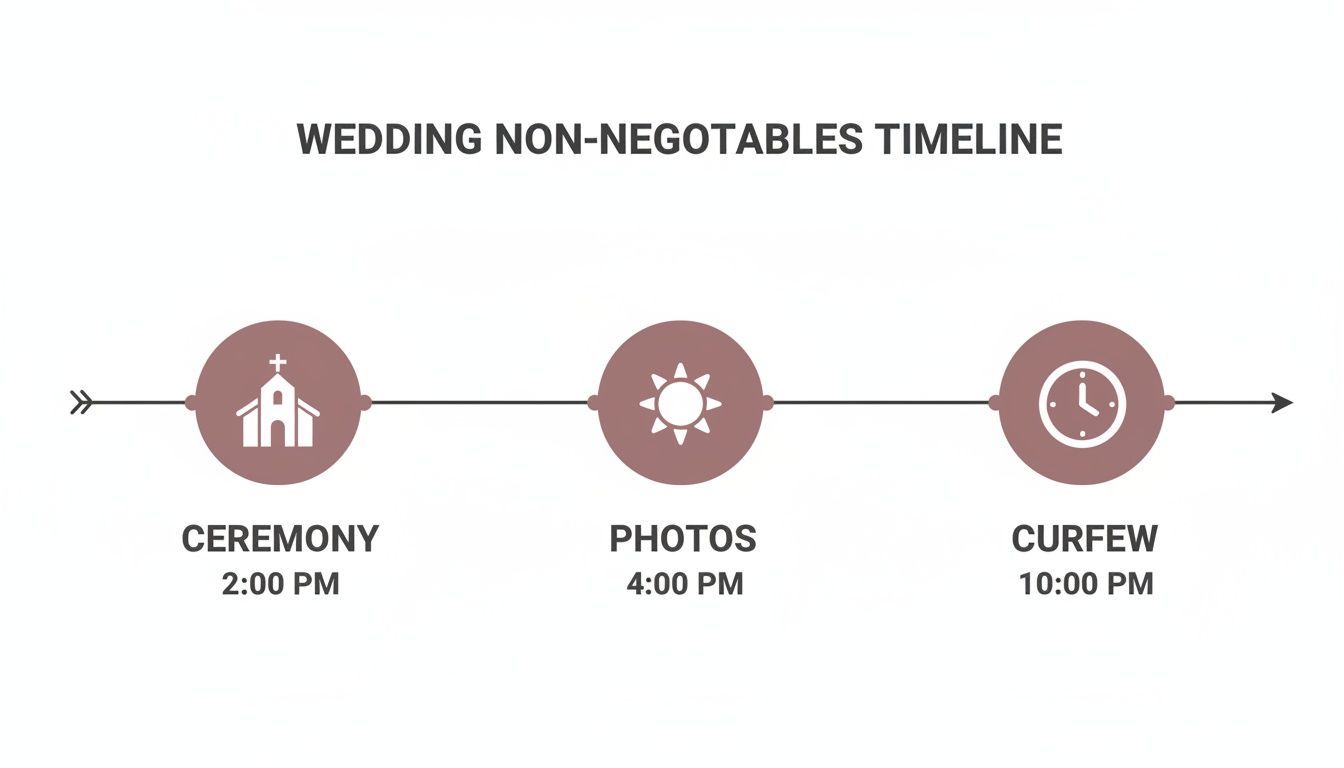
These core pillars give your day its essential structure. It’s the time you allocate between them that will stretch or shrink dramatically based on how many people are celebrating with you.
Timeline Example For A Large Versus Intimate Wedding
To really see the difference, let’s compare two sample timelines for a Battle Abbey wedding. One is for a grand celebration with 150 guests, and the other is for a more personal gathering of 50.
| Time Slot | Activity (Large Wedding) | Activity (Intimate Wedding) |
|---|---|---|
| 11:00 AM | Hair & Makeup Begins | Relaxed Morning |
| 12:30 PM | Photographer Arrives | Hair & Makeup Begins |
| 2:00 PM | Ceremony | Ceremony |
| 2:30 PM | Confetti & Full Group Photo | Confetti & Group Photos |
| 2:45 PM | Drinks Reception & Formal Photos | Drinks Reception |
| 4:15 PM | Call to Dinner (Allow 15 mins) | Couple Portraits (Guests mingle) |
| 4:30 PM | Grand Entrance & Speeches | Call to Dinner |
| 5:15 PM | Wedding Breakfast Served | Speeches & Wedding Breakfast |
| 7:00 PM | Cake Cutting & First Dance | Cake Cutting & First Dance |
| 10:00 PM | Evening Food | Party Continues |
| 12:00 AM | Carriages | Carriages |
The differences are subtle but crucial. Notice the larger wedding has an earlier photography start and a specific 15-minute buffer just for getting everyone seated. The intimate timeline feels much more fluid, with portraits happening while guests relax during the reception.
A Closer Look: An Intimate Wedding Timeline (Up to 60 Guests)
An intimate wedding timeline is all about savouring the moments. With fewer people, everything simply takes less time, which means you can build in more breathing room and spontaneity.
- 12:30 PM – Hair and Makeup Commences
- 2:30 PM – Photographer Arrives for Detail & Getting Ready Shots
- 3:30 PM – Get Dressed
- 4:00 PM – Ceremony Begins
- 4:30 PM – Ceremony Concludes, Confetti & Group Photo
- 4:45 PM – Drinks Reception & Canapés
- 5:15 PM – Couple Portraits (While guests mingle)
- 6:00 PM – Call Guests for Wedding Breakfast
- 6:15 PM – Speeches Begin
- 7:00 PM – Dinner is Served
- 8:30 PM – Cake Cutting
- 8:45 PM – First Dance & Party Starts
- 12:00 AM – Carriages
See that lovely, relaxed 90-minute drinks reception? And the generous slot for dinner and speeches? There’s no need to rush; the whole focus is on quality time.
A Closer Look: A Large Wedding Timeline (75-250 Guests)
For a larger celebration, efficiency is your best friend. The schedule needs to be tighter and more deliberately structured to manage the movement of a crowd and ensure key events happen on time, without feeling rushed.
- 11:00 AM – Hair and Makeup Commences (An earlier start for larger bridal parties is essential!)
- 1:00 PM – Photographer Arrives
- 2:00 PM – Get Dressed
- 2:30 PM – First Look & Couple Portraits (A great time-saver before guests arrive)
- 3:00 PM – Ceremony Begins
- 3:30 PM – Ceremony Concludes
- 3:45 PM – Drinks Reception & Formal Family Photos Begin
- 5:15 PM – Call Guests for Wedding Breakfast (Allow a dedicated 15 mins for seating)
- 5:30 PM – Grand Entrance & Speeches
- 6:15 PM – Dinner Service Begins
- 8:00 PM – Cake Cutting & First Dance
- 8:15 PM – Party Kicks Off with Band/DJ
- 10:00 PM – Evening Food is Served
- 12:00 AM – Carriages
The secret to a seamless large wedding is to front-load activities wherever you can. Doing couple’s portraits before the ceremony, for example, frees up the entire drinks reception for mingling and getting those essential family photos done, preventing a bottleneck later on.
By understanding how your guest count impacts these details, you can choose or create a wedding day timeline template that guarantees a spectacular day that flows beautifully, no matter the size of your celebration.
Coordinating Your Timeline With Key Suppliers
Your wedding day timeline is so much more than a personal to-do list. It’s the master document that pulls your whole team of professional suppliers together, ensuring everyone is on the same page. A well-communicated plan is what transforms a collection of individual services into one beautifully orchestrated event.
Think of it as the sheet music for an orchestra. Each supplier is a brilliant musician, but they need that single score to play in perfect harmony. Getting a detailed timeline out to them about a month before the wedding gives everyone a chance to prepare, ask questions, and flag any potential snags. It’s how you empower them to do their best work for you.
Essential Information for Your Glam Squad
Your hair and makeup artists are, in many ways, the architects of your morning. The atmosphere they create sets the tone for the entire day, so giving them a crystal-clear brief is key to a relaxed, enjoyable start.
They absolutely must know the exact time you need to be ready to step into your dress. This is usually 30-45 minutes before you’re due to leave for the ceremony. Don’t forget to give them a complete list of everyone having hair or makeup done—mums, bridesmaids, the lot—as this directly affects when they need to start. A classic mistake is underestimating how long this all takes; I always recommend adding a 20-minute buffer to their proposed finish time, just in case.
Aligning With Your Photographer and Videographer
Your photo and video team are your storytellers, and their schedule is completely woven into yours. They need much more than just the ceremony start time; they need to see the whole day mapped out to capture every important moment.
Crucial timings for them include:
- Arrival Time: When should they get there for those lovely detail shots of the dress, rings, and stationery?
- First Look: If you’re planning one, this needs its own dedicated time slot in a pre-planned location.
- Post-Ceremony Portraits: Be specific about timings for family group shots and your couple’s portraits, especially that all-important golden hour slot near sunset.
- Key Reception Moments: Pinpoint the exact times for your big entrance, the speeches, cake cutting, and the first dance.
A well-briefed photographer is your timeline’s best friend. They have an expert eye for spotting logistical jams—like an unrealistic gap between the ceremony and dinner—and can suggest tweaks to help you get those dream shots without ever feeling rushed.
Briefing Your Caterer and Venue Team
Your caterer and venue coordinator are the masters of hospitality, keeping your guests happy, fed, and watered. The entire flow of your reception is dictated by their timings. Give them a clear schedule that outlines precisely when the drinks reception starts and ends, when guests should be called for dinner, and when the speeches will happen.
It’s also vital to chat about supplier meals. Your band, photographer, and other full-day suppliers will need a hot meal to keep their energy up. The best time for them to eat is usually while your guests are enjoying their main course, so they’re ready for the next part of the day. Forgetting this can lead to a tired team right when you need them most. It’s also worth remembering that some suppliers have much longer lead times, especially for bespoke items like getting your suits made – it’s always worth checking custom suit tailoring timelines well in advance.
Syncing With Your Entertainment
Whether you’ve booked a string quartet for the ceremony or a DJ for the evening party, your entertainment needs a clear brief to create the right atmosphere. They need to know their setup times, when they’re due to start and finish, and any specific cues for key moments.
Make sure you give them a schedule for:
- Ceremony Music: Clear cues for the processional, the signing of the register, and the recessional.
- First Dance: The exact time this is happening, so they can be ready to announce it and play your song.
- Evening Set Times: Live bands often play in sets, so you’ll want to coordinate their performance times and breaks with things like the evening food service or cutting the cake.
Clear communication is what turns a good plan into a perfect reality. By giving each supplier the specific details they need, you’re setting them up to work together seamlessly, ensuring your wedding day runs without a single missed beat.
Adapting Your Timeline For Every Season
The time of year you choose for your wedding isn’t just a backdrop; it’s a powerful force that shapes the entire rhythm and mood of your celebration. A summer wedding, with its long, light-filled evenings, feels completely different from a cosy winter schedule built around an early twilight. Getting the timeline right for the season is one of the secrets to a day that feels perfectly paced and utterly magical.
It helps to know the seasonal pulse of UK weddings. Market insights show a clear pattern: summer claims a huge 50% of destination weddings, followed by spring at 30%. Autumn brings in a charming 15%, while intimate winter weddings make up the final 5%. It’s easy to see why when you picture canapés on Battle Abbey’s Six Penny Lawn as the golden hour light glows on the historic ruins. You can read more about these trends in the UK destination wedding market.
This seasonal flow has a direct impact on your schedule, especially when it comes to the most precious commodity of all: daylight.
Planning For Summer and Spring Light
Summer weddings are all about those gloriously long days, opening up a world of possibilities for your schedule. With sunsets often pushing past 9:00 PM, you can indulge in a long, lingering drinks reception outdoors without ever feeling rushed. It’s the perfect excuse for relaxed group photos and plenty of time to mingle with guests on the terrace, soaking in the atmosphere.
Spring offers a similar gift, with blossoming scenery and daylight hours that just keep stretching. It’s a season of beautiful balance, but it does come with a touch of unpredictability.
For a spring wedding, always have a Plan B for photos. An unexpected April shower can derail an outdoor-only plan, so make sure you discuss beautiful indoor photo locations—like the grand Library at Battle Abbey—to ensure you get stunning portraits, whatever the weather decides to do.
You can find plenty of inspiration for making the most of the sunnier months by browsing our gallery of gorgeous spring and summer weddings. The key is to use that abundant light to create a relaxed, flowing day.
Crafting a Cosy Autumn and Winter Timeline
As the days shorten, your timeline needs to become more strategic to make the most of the natural light. For autumn and winter weddings, daylight is your most valuable asset, especially for your photographer.
Consider an earlier ceremony time, perhaps around 1:30 PM or 2:00 PM, to give you a generous window of daylight for your post-ceremony photos. An autumn wedding offers the unique chance to time your ceremony with the “golden hour,” that magical period just before sunset when the light is impossibly soft and warm. An October sunset can provide the most breathtaking backdrop for your vows and portraits.
For a winter celebration, the focus shifts indoors, creating an intimate, romantic atmosphere. Your timeline should lean into this:
- Prioritise Portraits: Schedule your couple and family photos to happen immediately after the ceremony. This ensures you catch the very last of the beautiful, fading light.
- Create a Warm Ambience: Plan for an earlier transition to your indoor reception. As dusk falls outside, candlelight and warm decor can create a magical, cosy feeling that feels incredibly special.
- Time the Wedding Breakfast: An earlier wedding breakfast, say around 4:30 PM, keeps the energy and momentum going, leading seamlessly into a vibrant evening party.
By thoughtfully adapting your timeline to the unique character of each season, you can harness its natural beauty to create an unforgettable day that flows perfectly from start to finish.
Your Downloadable Wedding Timeline Templates
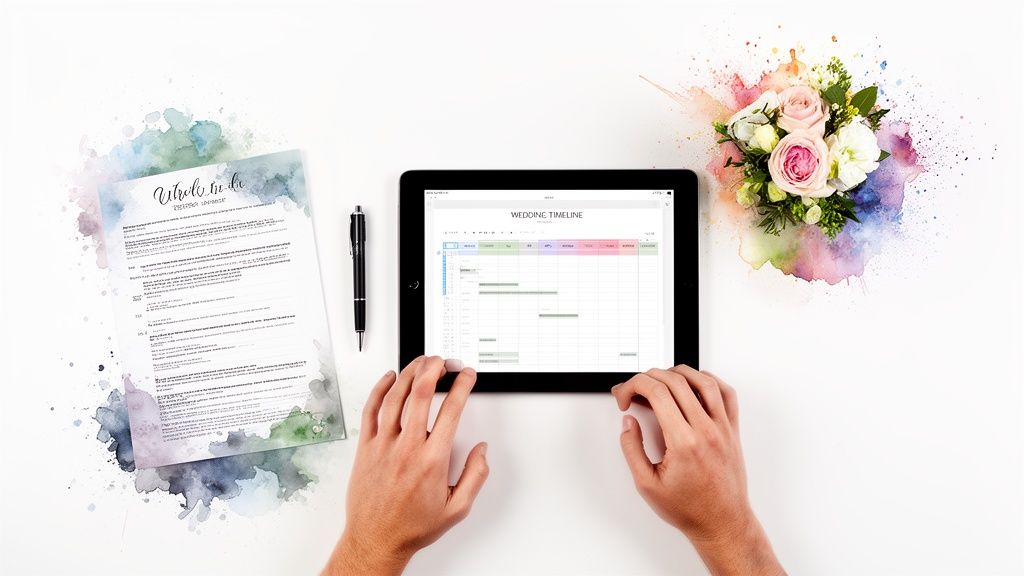
To make your planning journey that little bit simpler, we’ve put together a collection of practical, customisable resources. This is where all the advice and examples come together into real, actionable tools, designed to give you a clear and professional framework for your celebration.
Think of these templates as your starting point. They’ve been built from years of experience coordinating weddings of all shapes and sizes, and their main job is to take the guesswork out of your scheduling. Each one provides a solid foundation you can tweak and adapt to fit the unique character of your day.
Your Complete Template Toolkit
We’ve created a few different formats to suit your planning style, whether you prefer a printable document you can scribble on or an editable spreadsheet you can share digitally. Every wedding day timeline template is designed for clarity and ease of use, making sure you and your suppliers are all on the same page.
Here’s what you can download right now:
- Intimate Wedding Template (PDF): Perfectly paced for celebrations of up to 60 guests. The focus here is on a relaxed, personal atmosphere without rigid timings.
- Large Wedding Template (PDF): A more structured schedule designed for 75-250 guests, prioritising smooth transitions and making sure nobody is left waiting around.
- Fully Editable Spreadsheet (XLSX): A versatile master template for building your schedule from scratch. It’s perfect if you want to get really detailed, with customisable fields and simple formulas.
- Supplier Timeline Version (PDF): A dedicated, concise schedule that highlights only the key timings for your photographer, caterer, DJ, and other vendors. No fluff, just what they need to know.
These aren’t just documents; they’re your blueprint for a flawlessly executed day. They empower you to communicate your vision clearly, ensuring every moment unfolds just as you’ve imagined.
Simply choose the wedding day timeline template that best fits your guest count and vision. Use the examples we’ve talked about in this guide to fill in the blanks, send the supplier version to your team, and feel confident that your day is set up to run beautifully. Download your preferred files below to get started.
Of course. Here is the rewritten section, crafted to sound completely human-written, following the expert tone and style of the provided examples.
Your Wedding Timeline Questions, Answered
Even with the best template in the world, a few questions always crop up when you’re piecing together the flow of your wedding day. Think of this as a chat with one of our planners – we’re here to clear up those common queries so you can move forward with confidence and keep any last-minute stress at bay.
Here are the things we get asked most often by our couples.
When Should We Start Creating Our Wedding Timeline?
The sweet spot for starting your timeline is usually around three to four months before the wedding. By this stage, you’ve likely booked your key suppliers and, most importantly, you’ll have your ceremony time locked in. These are the big, immovable pillars your whole day will be built around.
Start with a simple draft using what you know. You can then flesh it out and refine it over the coming weeks as you get final details from your photographer, caterer, and venue coordinator. The aim is to have a near-final version ready to share with all your suppliers about a month beforehand. This gives everyone plenty of time to review it and iron out any little logistical wrinkles.
How Much Buffer Time Should We Build In?
Honestly, adding buffer time is one of the single best things you can do for a relaxed, joyful wedding day. Little delays are almost guaranteed to happen – a button might pop off a dress, or traffic could hold up a key family member. It’s life!
As a rule of thumb, we always recommend adding 15-20 minutes of extra time after any major transition.
- Pad out the schedule right after hair and makeup is due to finish.
- Build in a cushion before you’re supposed to leave for the ceremony.
- Allow a little breathing room between the end of the ceremony and the start of your drinks reception.
This isn’t about planning for disaster; it’s about giving yourselves the gift of not feeling rushed. It prevents one tiny delay from creating a domino effect and is your secret weapon against feeling flustered.
Who Needs a Copy of The Final Timeline?
Your timeline is the master plan for the day, but not everyone needs to see every single detail. The trick is to create a couple of different versions to keep everyone in the loop without completely overwhelming them.
Distributing the right timeline to the right people is key. Your suppliers need the full minute-by-minute plan, while your wedding party just needs their key timings. This simple step avoids so much confusion and makes sure everyone is on the same page.
Here’s a quick breakdown of who gets what:
- Your Key Suppliers: The venue coordinator, photographer, videographer, caterer, and your band or DJ all need the most detailed version. This is their roadmap for the day, ensuring everything syncs up perfectly.
- Your Wedding Party: For your bridesmaids, groomsmen, and parents, a simplified version is perfect. Just highlight their main call times, like when to be ready for photos or when to line up for the ceremony procession.
- Your On-The-Day Coordinator: Whether you’ve hired a professional, designated your Master of Ceremonies, or asked a trusted friend to keep an eye on things, they absolutely need the master copy. This is the person who will help steer the ship and keep everything flowing beautifully.
At Battle Abbey Weddings, our experienced planners work closely with you to create a bespoke timeline that brings your fairy-tale day to life. Discover how we can help you craft a seamless and unforgettable celebration.