Planning a wedding involves weaving together countless personal moments into one seamless narrative. The order of service is your story’s script, guiding guests from the first vows to the final dance. Far from being a mere formality, this document sets the tone, manages expectations, and ensures your day flows beautifully, preventing lulls and keeping the celebration’s energy high. It transforms a series of events into a cohesive, memorable experience for everyone involved.
This guide offers more than just a schedule; it provides a strategic order of service wedding example for every style of celebration. We will explore seven distinct templates, each with detailed analysis, printable layouts, and specific insights tailored for the unique, historic setting of Battle Abbey Weddings. Whether you envision a grand, traditional affair in the Abbot’s Hall, a modern reception-first format, or an intimate sunset ceremony overlooking the battlefield, you’ll find a replicable framework here.
Each example is designed to be a practical tool. We break down the timing, sequence, and logistical considerations for different ceremony types, from religious and civil to humanist and blended traditions. As you consider different structures for your day, remember that practical decisions, such as addressing key wedding venue questions, play a crucial role in shaping the possible timelines and overall flow. Our goal is to empower you with the clarity and structure needed to design a day that is flawlessly executed and, most importantly, uniquely yours. Let’s explore the blueprints for your perfect celebration.
1. Traditional Ceremony-First Order of Service
The traditional ceremony-first order of service is the quintessential blueprint for a classic British wedding day. This structure prioritises the marriage ceremony as the day’s opening event, followed logically and gracefully by the reception celebrations. Its enduring popularity stems from its formal, elegant progression, which builds momentum and allows guests to settle into the occasion without interruption. This format is particularly effective at historic venues like Battle Abbey, where the distinct character of each space, from the Abbot’s Hall to the Top Terrace, can be showcased in a sequential and organised manner.
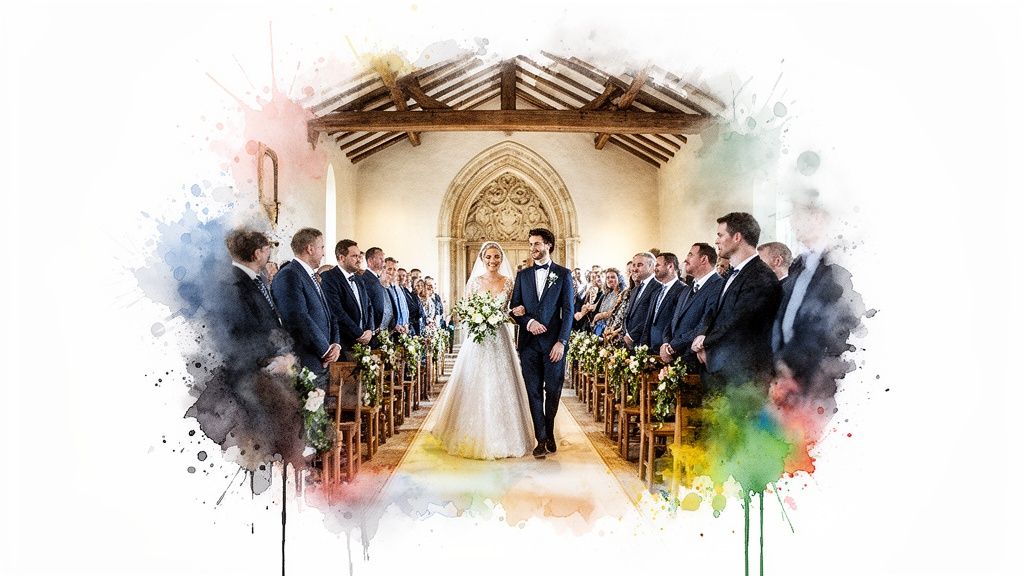
This order of service wedding example provides a clear, time-honoured narrative for your day. It guides guests from the solemnity of the vows to the joy of the celebration, making it an ideal choice for larger, more formal weddings with over 100 guests or those adhering to royal-style protocols.
Strategic Breakdown
- Guest Experience: This timeline is familiar and easy for guests to follow. They arrive for one main event, the ceremony, and are then guided through the subsequent stages, which minimises confusion and logistical stress.
- Venue Flow: At Battle Abbey, this structure allows for a seamless transition between key locations. The ceremony in the Abbot’s Hall can conclude, leading guests directly onto the Top Terrace or Six Penny Lawn for the cocktail hour. This gives staff ample time to prepare the Duke’s Library or Dining Room for the wedding breakfast without disturbing guests.
- Photographic Opportunities: The natural breaks between the ceremony, drinks reception, and dinner create dedicated windows for photography. You can capture formal group shots after the ceremony and couple’s portraits during the cocktail hour, ensuring you don’t miss key moments with your guests later on.
When to Use This Approach
This traditional structure is the perfect choice for couples who value convention, formality, and a seamless flow. It works exceptionally well for:
- Large, Formal Weddings: Its structured nature helps manage large crowds effectively.
- Historic Venues: It complements the grandeur of estates like Battle Abbey, allowing each part of the venue to be used for its intended purpose.
- Couples Prioritising Tradition: If you envision a classic “church then reception” feel, even for a civil ceremony, this is the ideal format.
Actionable Takeaways
- Build in Buffers: Coordinate with your wedding planner to add 15-minute buffers between segments. This accounts for potential delays and ensures the day feels relaxed, not rushed.
- Distribute Clear Timelines: Print a clear schedule within your order of service programme so guests know what to expect and when. Exploring a detailed wedding order of service guide can provide inspiration for layout and wording.
- Communicate with Suppliers: Brief your photographer and caterer on the exact timeline. Ensure your photographer knows when to capture key portraits and your caterer is prepared for precise service times to maintain the day’s elegant pacing.
2. Modern Reception-First Order of Service
The modern reception-first order of service flips the traditional schedule on its head, prioritising a relaxed social gathering before the formal ceremony. This contemporary approach welcomes guests directly into a cocktail and canapé hour, creating an immediate party atmosphere. Its growing popularity is driven by a desire for less formality and a more fluid, guest-centric experience that builds anticipation for the main event. This format is exceptionally well-suited to Battle Abbey, leveraging its stunning Top Terrace for an initial celebration before guiding guests into the historic Abbot’s Hall for the ceremony.
This order of service wedding example is designed for couples who want to break from convention and start their celebration with energy and social connection. It’s an ideal choice for destination weddings where guests travel from afar, or for later afternoon ceremonies that flow directly into an evening of festivities, making the most of Battle Abbey’s midnight licence.
Strategic Breakdown
- Guest Experience: This timeline immediately immerses guests in the celebration, reducing the waiting period often associated with traditional ceremonies. It allows guests, especially those who have travelled, to arrive, relax with a drink, and mingle before the formalities begin.
- Venue Flow: At Battle Abbey, this structure creates a powerful reveal. Guests can enjoy canapés and drinks on the Top Terrace with views across the battlefield, only to be ushered into the dramatic, vaulted Abbot’s Hall for the ceremony. This separation of spaces keeps the main event a surprise and builds excitement.
- Photographic Opportunities: With a relaxed start, you can capture candid shots of guests enjoying themselves during the cocktail hour. This also provides a pre-ceremony window for final couple’s portraits or wedding party photos, freeing up more time to spend with guests after you’ve officially tied the knot.
When to Use This Approach
This contemporary structure is the perfect choice for couples who value a relaxed, social atmosphere over rigid tradition. It works exceptionally well for:
- Late Afternoon/Evening Weddings: A 5 or 6 pm ceremony start time flows perfectly from a pre-ceremony reception.
- Destination Weddings: It provides a warm, informal welcome for guests who have travelled to be with you.
- Couples Prioritising a Party Vibe: If your focus is on celebration and socialising, this format sets that tone from the very beginning.
Actionable Takeaways
- Communicate Clearly: Your invitations must explicitly state that the event begins with a drinks reception at a specific time, followed by the ceremony. For example: “Join us for cocktails and canapés from 4:00 pm, with the ceremony to follow at 5:30 pm.”
- Curate the Atmosphere: The pre-ceremony reception sets the mood for the entire day. Work with your planner to create the perfect ambience with music, drinks, and decor. A well-chosen wedding music playlist is crucial to establish a sophisticated but relaxed feel from the moment guests arrive.
- Manage Key Personnel: Have a clear ‘call time’ for the immediate family and wedding party at least 30 minutes before the ceremony begins. This ensures they are ready for formal proceedings while other guests continue to socialise.
3. Intimate Two-Part Service (Garden Party Model)
The intimate two-part service, or garden party model, is a modern and relaxed alternative designed for smaller, more personal celebrations. This structure intentionally blurs the lines between ceremony and reception, creating a continuous, fluid experience for guests. It treats the wedding day as an extended, elegant garden party, where a brief and meaningful ceremony is simply one beautiful moment within a longer period of celebration, rather than a distinct, formal event that precedes it. This approach is perfectly suited to Battle Abbey’s exclusive part-site option for up to 60 guests, leveraging the natural flow between its historic indoor spaces and stunning grounds.
This order of service wedding example prioritises connection and conversation over rigid scheduling. It encourages a laid-back atmosphere, allowing guests to explore, mingle, and enjoy the estate’s beauty at their own pace, making it ideal for elopement-plus celebrations or second marriages where intimacy is the main focus.
Strategic Breakdown
- Guest Experience: This model offers a highly relaxed and personal experience. Guests feel less like attendees and more like cherished participants in a family gathering, moving freely between spaces like the Duke’s Library for light fare and the outdoor terraces for conversation.
- Venue Flow: At Battle Abbey, this structure beautifully highlights the estate’s versatility. The ceremony can be held in the Abbot’s Hall, with guests then flowing directly onto the Six Penny Lawn, which becomes the central hub for the celebration, offering magnificent views of the historic battlefield.
- Photographic Opportunities: Rather than carving out separate, structured photo sessions, this approach favours candid, reportage-style photography. The photographer can capture organic moments of laughter and connection throughout the day, with perhaps one single, meaningful photo moment like the vow exchange or the first dance.
When to Use This Approach
This relaxed, garden-party structure is the perfect choice for couples who value a laid-back atmosphere and meaningful interaction over formality. It works exceptionally well for:
- Intimate Weddings: Ideal for guest lists of 10-60, where creating a close-knit feel is paramount.
- Couples Prioritising Atmosphere: If you want your day to feel like a sophisticated, yet relaxed, countryside gathering, this is the perfect model.
- Outdoor-Centric Celebrations: It makes the most of Battle Abbey’s glorious grounds, particularly for spring and summer weddings.
Actionable Takeaways
- Opt for Flexible Catering: Work with Battle Abbey’s catering team to create a flexible menu. Options like a high-end BBQ, hog roast, or elegant food stations support the casual, flowing nature of the day.
- Use Timeline Cards: Instead of a formal order of service booklet, place a beautifully designed timeline card on each table or in a central location. This acts as a gentle guide rather than a strict schedule.
- Define Your Central Hub: Designate a primary gathering space, such as the Six Penny Lawn, as the heart of your celebration. Use this as the anchor point for music, food, and seating to encourage natural mingling.
4. Multi-Ceremony Order of Service (Dual Faith/Secular Blend)
The multi-ceremony order of service is a modern, deeply personal approach for couples from different cultural, religious, or spiritual backgrounds. This structure beautifully weaves together two distinct ceremonies, or elements from them, into one cohesive service. It’s an increasingly popular format that honours both partners’ heritage, whether blending a civil ceremony with humanist vows, or incorporating Christian and Jewish traditions. Battle Abbey’s Abbot’s Hall provides a magnificent and neutral historical backdrop that respectfully accommodates such a meaningful union.
This order of service wedding example celebrates unity in diversity. It tells a powerful story of two individuals and two families coming together, ensuring all guests feel included and understand the significance of each tradition being honoured. It transforms the ceremony from a formality into a rich, educational, and emotional centrepiece of the day.
Strategic Breakdown
- Guest Experience: This timeline is incredibly inclusive. By explaining the significance of each ritual in the printed programme, you invite guests into your unique story. It fosters a sense of shared understanding and connection, especially for those unfamiliar with one or both traditions.
- Venue Flow: The grand and versatile space of the Abbot’s Hall is ideal for hosting a blended ceremony without needing to reconfigure the room. You can seamlessly transition from a civil vow exchange at the front of the hall to a blessing or ritual from another faith, using the hall’s length and character to create distinct but connected ceremonial zones.
- Photographic Opportunities: A multi-ceremony service offers a wealth of unique, visually rich moments for your photographer to capture. From the exchange of vows to specific cultural rituals like a handfasting or breaking of the glass, the resulting gallery will be exceptionally personal and dynamic.
When to Use This Approach
This personalised structure is perfect for couples who want their ceremony to be a true reflection of their combined identities. It works exceptionally well for:
- Interfaith or Intercultural Couples: It provides an elegant solution for honouring both partners’ backgrounds without compromising on meaning.
- Couples Blending Secular and Spiritual Beliefs: Ideal for those wanting the legal recognition of a civil ceremony alongside the personal significance of humanist or spiritual vows.
- Intimate, Story-Driven Weddings: Its focus on personal narrative makes it a powerful choice for weddings where storytelling is central.
Actionable Takeaways
- Collaborate with Officiants: Ensure both officiants (e.g., a registrar and a humanist celebrant) have coordinated the script and transitions. A pre-wedding meeting with all parties is essential for a smooth flow.
- Create an Explanatory Programme: Your order of service programme is key. Include brief, clear explanations of each ritual or tradition so guests can follow along and appreciate the symbolism. This is a vital part of a successful order of service wedding example.
- Time Each Segment Carefully: Rehearse the entire ceremony to ensure it flows well and doesn’t run too long. Aim for a total time of 35-45 minutes to maintain guest engagement before moving to the drinks reception on the Top Terrace.
5. Progressive Dinner Order of Service
The progressive dinner order of service transforms your wedding reception into a sophisticated culinary journey, guiding guests through different spaces for each course. This dynamic format breaks from the traditional seated meal, creating an immersive and memorable experience. It’s an elegant way to showcase the full breadth of a multifaceted venue like Battle Abbey, turning the estate itself into a central part of the celebration. The day might begin with a ceremony in the Abbot’s Hall, followed by canapés on the Top Terrace, a starter in the Duke’s Library, and the main course in the grand Dining Room.
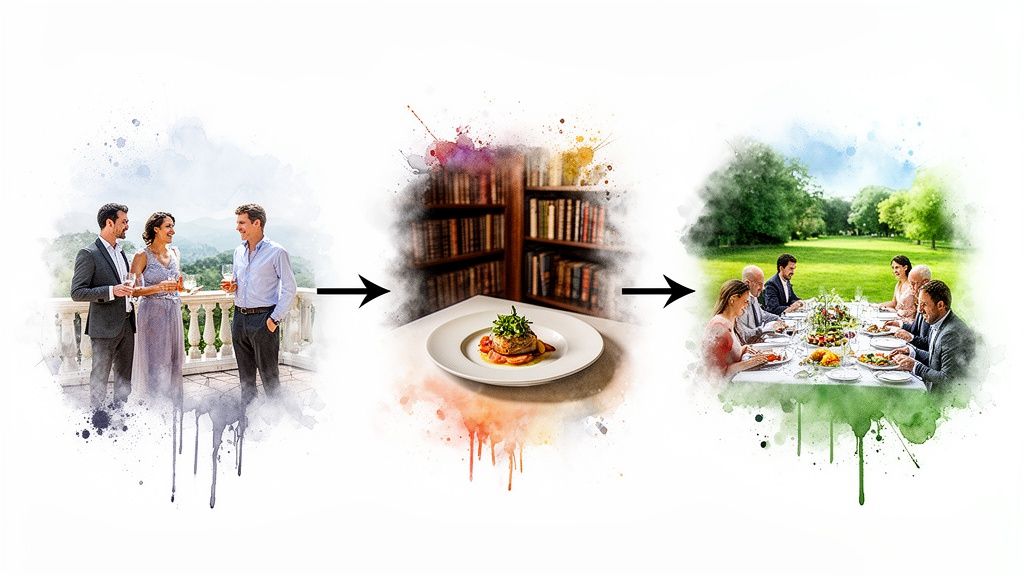
This order of service wedding example is designed for couples who want to create an interactive, high-energy atmosphere focused on food, exploration, and socialising. Popularised by luxury destination wedding planners and high-end event designers, it turns the wedding breakfast into the main event, full of movement, surprises, and Instagram-worthy moments at every turn.
Strategic Breakdown
- Guest Experience: This format encourages mingling and exploration, preventing the post-ceremony lull. Guests are constantly engaged as they discover new parts of the venue, making the event feel more like an exclusive, curated party than a standard reception.
- Venue Flow: A progressive dinner is the ultimate way to utilise Battle Abbey’s distinct locations. Each space can be styled to match a specific course, building a narrative from the light, airy Top Terrace for drinks to the formal, historic grandeur of the Dining Room for the main feast. This logistical flow maximises the venue’s potential and creates a truly unique storytelling opportunity.
- Photographic Opportunities: Each transition offers a fresh backdrop for photos. You can capture candid guest interactions during the moves between courses and styled shots in differently themed rooms, resulting in a diverse and vibrant wedding album that reflects the dynamic nature of the day.
When to Use This Approach
This adventurous structure is perfect for couples who want to prioritise an unforgettable guest experience and showcase their venue in its entirety. It works exceptionally well for:
- Food-Focused Weddings: Couples who consider the culinary experience a cornerstone of their celebration.
- Luxury and High-Profile Events: Its sophisticated and novel format delivers the “wow” factor expected at exclusive gatherings.
- Couples Wanting to Maximise Venue Use: Ideal for those who have fallen in love with every corner of Battle Abbey and want their guests to experience it all.
Actionable Takeaways
- Create a Navigational Programme: Design your order of service with a stylish map illustrating the flow between locations. This serves as a beautiful keepsake and a practical guide for guests.
- Plan Transitions Meticulously: Work closely with the Battle Abbey team to choreograph the movement of guests. Use clear signage, and have staff on hand at transition points to guide people seamlessly to the next stage.
- Build in Time Buffers: Add at least a 15-minute buffer between each course’s location change. This allows for a relaxed pace and accounts for natural delays, ensuring the evening flows smoothly without feeling rushed.
6. Sunset Ceremony with Extended Evening Reception Order of Service
This modern and dramatic order of service flips the traditional timeline to capitalise on the magical golden hour. By scheduling the ceremony for late afternoon or early evening, this format creates a breathtaking, romantic atmosphere, followed by an extended evening reception that makes full use of Battle Abbey’s midnight license. Guests arrive for pre-ceremony drinks and canapés, easing into the event before the main vows take place against a stunning sunset backdrop.
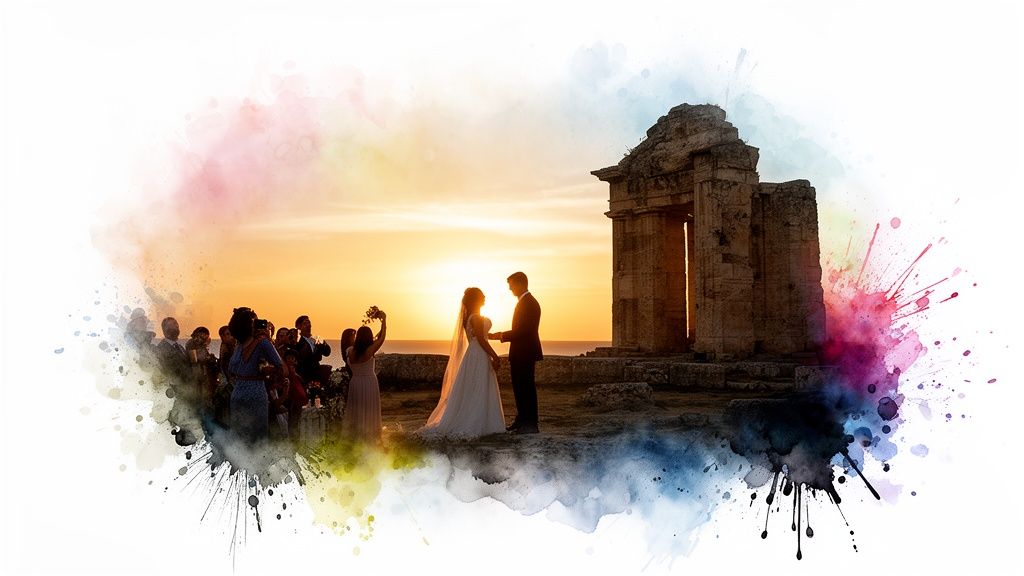
This order of service wedding example is designed for couples who prioritise atmosphere, aesthetics, and a vibrant party that continues late into the night. It transforms the day into an unforgettable experience, particularly suited for summer weddings or for creative couples who want their celebration to stand out.
Strategic Breakdown
- Guest Experience: Guests are treated to a relaxed, celebratory start with welcome drinks, which sets a social tone. The evening flow from ceremony to wedding breakfast and dancing feels continuous, building energy that sustains the party until midnight.
- Venue Flow: Battle Abbey is perfectly suited for this timeline. Welcome drinks can be hosted on the Top Terrace, allowing guests to soak in the views. As the sun sets, the ceremony can take place with the historic ruins as a dramatic backdrop, followed by a seamless move into the Abbot’s Hall or Duke’s Library for a candlelit dinner and reception.
- Photographic Opportunities: This structure is a photographer’s dream. The entire ceremony and the couple’s portraits are captured during the golden hour, the most flattering light of the day. This guarantees incredibly romantic and cinematic photographs without having to steal the couple away from their guests.
When to Use This Approach
This atmospheric approach is ideal for couples who want to create a truly memorable and high-energy celebration. It works exceptionally well for:
- Photography-Focused Weddings: If stunning, light-filled images are a top priority, this timeline is unbeatable.
- Larger, Party-Oriented Celebrations: The extended reception allows more time for dancing, entertainment, and socialising.
- Summer and Destination Weddings: It allows guests arriving from afar to have a more relaxed start to the day.
Actionable Takeaways
- Time the Sunset Perfectly: Work with your wedding coordinator to check the exact sunset time for your wedding date and schedule the ceremony to begin 30-45 minutes beforehand.
- Plan for Guest Comfort: As the evening cools, ensure guest comfort with outdoor heaters, fire pits, or a basket of blankets for the post-ceremony transition.
- Create a Lighting Plan: A later ceremony requires thoughtful lighting. Brief your suppliers on creating a dramatic and romantic atmosphere in the Abbot’s Hall for the wedding breakfast and evening party. Consider uplighting, fairy lights, and an abundance of candles.
7. All-Day Celebration with Morning-to-Evening Flexibility Order of Service
Transforming your wedding day from a single event into a prolonged, festival-like celebration, this order of service embraces morning-to-evening flexibility. It moves beyond a rigid schedule, inviting guests to an immersive, all-day experience with multiple activities and engagement points. This model is ideal for couples wanting to maximise their time with loved ones, particularly those with guests travelling from afar, turning the occasion into a memorable mini-retreat. The exclusive-use nature of Battle Abbey is perfectly suited to this grand scale, allowing different parts of the estate to host various activities simultaneously.
This order of service wedding example is less a linear schedule and more a curated menu of experiences. Guests can arrive for morning lawn games, enjoy a casual lunch, witness the afternoon ceremony, and then flow into afternoon tea and the evening reception. It’s a bohemian, relaxed approach designed for large celebrations of 150-250 guests who appreciate a less formal, more communal atmosphere.
Strategic Breakdown
- Guest Experience: This format offers unparalleled flexibility, allowing guests to participate as much or as little as they wish. It creates a relaxed, ‘drop-in’ atmosphere that removes the pressure of a strict start time and fosters a more organic social environment throughout the day.
- Venue Flow: Battle Abbey’s expansive grounds and multiple distinct spaces are key to this model’s success. You can host lawn games on the Six Penny Lawn, hold the ceremony in the historic Abbot’s Hall, serve afternoon tea on the Top Terrace, and transition to the Duke’s Library for the evening party. This zoning prevents guest fatigue and continually reveals new facets of the venue.
- Photographic Opportunities: An all-day event provides a rich tapestry of photographic moments, from candid morning interactions to the formal ceremony and energetic evening scenes. The changing light from morning to dusk across the Abbey’s stunning architecture also provides a diverse and dramatic backdrop for your photos.
When to Use This Approach
This comprehensive, festival-style structure is the ultimate choice for couples who want a deeply immersive and relaxed celebration. It is exceptionally well-suited for:
- Large, ‘Reunion-Style’ Weddings: Perfect for bringing together large families and friends for an extended period of quality time.
- Bohemian or Festival-Themed Weddings: The fluid, multi-activity format aligns perfectly with a relaxed, celebratory ethos.
- Destination Weddings: It maximises the investment for travelling guests, giving them a full day of entertainment and hospitality.
Actionable Takeaways
- Create ‘Anchor Moments’: While the day is flexible, define key events like the ceremony, cake cutting, and first dance. Highlight these in your printed programme to give the day structure and ensure no one misses the most important parts.
- Communicate Clearly: On your invitations and wedding website, clearly state the format. Use phrasing like, “Join us from 11 am for a day of celebration, with the ceremony at 3 pm,” to manage guest expectations. A detailed wedding day timeline template can be adapted to outline the day’s various happenings.
- Plan Tiered Catering: Work with your caterer to provide food and drink throughout the day. Consider light grazing stations for early arrivals, a substantial lunch, afternoon tea, a formal dinner, and late-night snacks to keep guests energised.
7 Wedding Order-of-Service Formats Compared
| Template | 🔄 Complexity (implementation) | ⚡ Resources (requirements) | ⭐ Expected outcomes (quality) | 📊 Ideal use cases | 💡 Key advantages / tips |
|---|---|---|---|---|---|
| Traditional Ceremony‑First Order of Service | Moderate — fixed sequence; needs strict timing | Standard full catering, staged photography slots, multiple rooms | ⭐⭐⭐⭐ — predictable flow; strong photo coverage | Formal large weddings; historic estate ceremonies | 💡 Print clear timeline; build 15‑min buffers; use terrace for cocktails |
| Modern Reception‑First Order of Service | Moderate — reverse flow; requires clear guest comms | Standard catering, extended bar hours, terrace space | ⭐⭐⭐ — relaxed, social atmosphere | Destination guests; informal contemporary weddings | 💡 Communicate start times; family call‑time 30min early; position cocktails for dramatic reveal |
| Intimate Two‑Part Service (Garden Party Model) | Low — short ceremony, continuous mingling | Smaller staff, buffet/family‑style catering, outdoor contingency | ⭐⭐⭐⭐ — intimate, relaxed celebration | Micro weddings (≤60 guests); couples prioritizing closeness | 💡 Use Six Penny Lawn as hub; printed table timeline; minimal décor; plan single photo moment |
| Multi‑Ceremony Order of Service (Dual Faith/Secular Blend) | High — multiple officiants; rehearsal essential | Additional officiants/coordinator, clear program notes | ⭐⭐⭐⭐ — highly personalized; emotionally resonant | Interfaith/multicultural ceremonies | 💡 Create detailed program; rehearse timing; consider a ceremonialist; aim 35–45min total |
| Progressive Dinner Order of Service | High — multi‑space logistics and guest flow | Large service team, multiple table setups, signage/shuttles | ⭐⭐⭐⭐ — memorable, experiential journey | Food‑focused or luxury estate weddings (100–250 guests) | 💡 Provide map on program; staff transitions; 15‑min buffers; indoor backups for weather |
| Sunset Ceremony with Extended Evening Reception | Moderate–High — precise golden‑hour timing; longer day | Extended bar/lighting, photographer coordination, heating for evening | ⭐⭐⭐⭐ — dramatic photos; extended party energy | Photography‑focused, destination couples; late‑licensing venues | 💡 Schedule 30–45min before sunset; brief photographer; plan heating and late‑night snacks |
| All‑Day Celebration with Morning‑to‑Evening Flexibility | Very high — many activities; complex coordination | Highest staffing and catering needs; zone management; weather contingency | ⭐⭐⭐⭐ — festival‑style engagement if well managed | Large, festival‑style celebrations (150–250 guests) | 💡 Produce comprehensive program; define anchor moments; staff shifts and detailed weather plans |
Your Day, Your Story: Key Takeaways and Next Steps
We’ve explored a diverse collection of order of service wedding examples, from the classic elegance of a traditional ceremony-first structure to the dynamic flow of a progressive dinner celebration. Each template offers a unique narrative framework, but the core lesson is profoundly simple: your order of service is more than just a schedule. It is the architectural blueprint for your wedding day, shaping the emotional arc, managing guest energy, and ensuring every moment lands with purpose and grace.
The examples provided are not rigid prescriptions but adaptable starting points. The true artistry lies in selecting the structure that best tells your unique story as a couple. By mastering the strategic elements behind each order of service wedding example, you transform a logistical necessity into a powerful tool for crafting an unforgettable guest experience.
Synthesising the Strategies: Your Core Takeaways
Reflecting on the various models, from intimate garden parties to grand all-day affairs, several key principles emerge. These are the strategic pillars that will support your planning process, regardless of which template you choose to adapt.
- Communication is Paramount: Your order of service is your primary communication tool. It sets expectations, alleviates guest anxiety about what comes next, and allows everyone to relax and be present. Clarity in wording and timing is non-negotiable.
- Pacing Creates the Mood: The rhythm of your day dictates its emotional tone. A reception-first model creates an immediate celebratory buzz, while a traditional sequence builds anticipation. Consider the energy you want to cultivate and choose a flow that supports it.
- Personalisation is Key: Beyond listing events, use your order of service to inject personality. Include a thank you note, a brief story about your relationship, or fun facts about the wedding party. These small touches make a generic schedule feel deeply personal and curated.
- Venue Integration is Crucial: As we’ve seen with the Battle Abbey examples, a successful timeline works with the venue, not against it. Consider procession routes, room changeover times, and the natural flow between spaces like the Abbot’s Hall and the outdoor terrace. A well-integrated plan feels seamless and effortless to your guests.
Actionable Next Steps: From Inspiration to Implementation
With these insights in mind, it’s time to move from inspiration to action. Follow this structured approach to build your perfect wedding day timeline and create your bespoke order of service.
- Define Your Non-Negotiables: Before you touch a template, sit down with your partner and identify the top three priorities for your day. Is it incredible food? A relaxed, informal atmosphere? Or a show-stopping party? Your priorities will immediately point you towards the most suitable order of service structure.
- Select and Customise Your Blueprint: Review the order of service wedding example that most closely aligns with your vision. Use it as your foundation, but don’t be afraid to customise it. Adjust timings, combine elements from different examples, and tailor the language to reflect your personalities.
- Collaborate with Your Coordinator: This is perhaps the most critical step. Share your draft timeline with your venue coordinator at Battle Abbey. Their logistical expertise is invaluable. They will pressure-test your plan against the realities of the venue, offering insights on everything from kitchen timings to the best moment for sunset photographs on the lawn.
- Design and Distribute: Once finalised, focus on design. Ensure your order of service is easy to read and visually cohesive with your other wedding stationery. Plan your distribution strategy: will they be placed on seats, handed out by ushers, or displayed on a large sign? Clear distribution ensures every guest has the information they need, right from the start.
Ultimately, crafting the perfect order of service is an act of storytelling. It’s about intentionally designing a day that not only celebrates your union but also honours your guests by guiding them through the experience with care and clarity. By thoughtfully applying these principles, you are not just planning a wedding. You are composing a memory that will be cherished for a lifetime.
Ready to bring your vision to life within a setting as timeless as your love story? The expert team at Battle Abbey Weddings specialises in translating your dream timeline into a flawless reality. Explore how our historic venue can provide the perfect backdrop for your uniquely structured day at Battle Abbey Weddings.