You’re at the point where inspiration stops being abstract and starts becoming technical. The pinned bun that looked perfect on a screen has to hold through a ceremony, a veil fitting, a windy terrace, and hours of photographs against exposed stone. In a grand historic venue such as Battle Abbey, hair has to do more than look beautiful from the front.
Bride hair updos succeed or fail on practical details. The style has to suit the neckline, secure the veil, flatter the scale of the room, and stay composed in changing weather. Ancient ruins, formal interiors, and open lawns all photograph differently, so the right updo is the one that still looks intentional from every angle.
Historic settings also reward proportion. A tiny, underbuilt bun can disappear beside a dramatic train or carved stone backdrop, while an overworked style can feel stiff against soft candlelight and old-world architecture. Good bridal styling balances romance with structure.
If you want a stronger grounding in technique and finish, this guide to mastering hair updo techniques offers useful background. The ten styles below are not just pretty options. Each one comes with clear advantages, limitations, and venue-specific considerations for a wedding day set among grand rooms, ancient walls, and open-air photo locations.
1. Classic Low Chignon
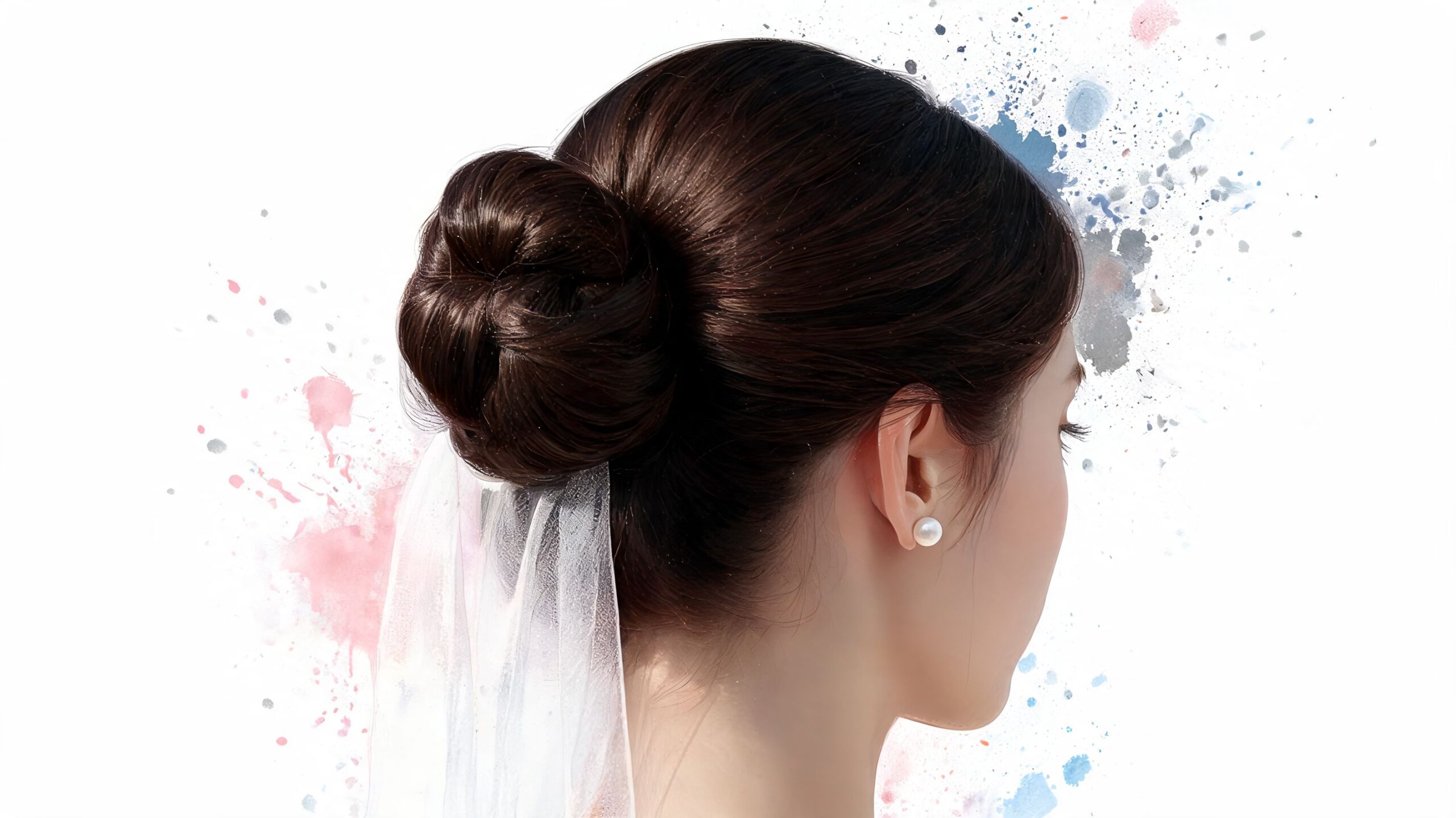
The classic low chignon has never needed reinvention to stay relevant. It sits at the nape, keeps the profile refined, and pairs beautifully with veils, pearl earrings, lace sleeves, and open backs. If a bride wants quiet confidence rather than fashion-forward drama, this is often the safest elegant choice.
It’s especially strong in historic settings because it doesn’t compete with the gown or the venue. A low chignon looks at home in panelled rooms, beneath vaulted ceilings, and in portraits framed by old stonework. It has the same visual discipline as a beautifully crafted dress.
What works best
A polished low chignon flatters structured gowns particularly well. Think bateau necklines, long sleeves, or dresses with detailed backs. It also solves one practical issue that many brides underestimate. The veil anchor point is straightforward, because the style already provides a firm base.
For fine hair, this is the style where discreet support matters. Padding, clip-in pieces, or a small extension weft can make the bun look intentional rather than undersized. On shorter hair, that support often makes the difference between a graceful shape and a pin-heavy compromise.
Practical rule: Smooth doesn’t mean flat. A low chignon should still have shape at the crown, or it can look severe in side-profile photographs.
A good build usually starts with texturising spray on damp hair, then a clean blow-dry, then control at the roots with a fine-tooth comb. Pins should cross over one another rather than all travelling in the same direction. That’s what gives the style staying power when the ceremony is early and the dancing ends late.
The trade-offs
The risk is obvious. If it’s made too tight, it can age the face and drain the softness from the whole bridal look. Leaving one or two gentle pieces around the face prevents that. Too many, though, and the style loses its polished character.
This is also not the best option for brides who want visible movement from the front. From head-on, a classic chignon can look minimal. That’s a strength if you love restraint, but less so if you want your hair to feel more romantic, youthful, or deliberately undone.
2. Romantic Twisted Crown Updo
Some updos are beautiful from one angle. A twisted crown updo earns its place because it works from almost every angle. The shape travels around the head, which gives photographers something to catch whether you’re turning toward the aisle, standing in profile, or looking back over your shoulder outdoors.
It’s a flattering choice for brides who want softness without looking messy. Twists create movement and architecture at once. The result feels romantic, but still considered.
Why it suits a historic setting
At a venue with old stone, terrace views, and dramatic backgrounds, this style holds its own. It has enough detail to be interesting in photographs, yet it still feels bridal rather than editorial. I particularly like it for gowns with softer fabrics, floaty sleeves, or subtle embellishment rather than heavy beading.
If you’re considering floral adornment, this style welcomes it naturally. Tiny sprigs woven into the twists look far more integrated than flowers merely pinned onto a sleek bun. Brides drawn to floral styling often also explore ideas like a bridal flower crown for a romantic wedding look, and the twisted crown sits nicely in that same visual world without committing to a full crown.
Pros and limitations
This style is kinder to hair that doesn’t want to sit poker-straight. A little natural bend, grit, or second-day texture helps. Dry shampoo or texturising spray gives the twists grip, and directing them away from the face tends to be the most flattering.
A few points matter in practice:
- Secure each twist separately: Don’t rely on one final sweep of pins. Each section needs its own anchor.
- Keep softness deliberate: Leave only a small number of face-framing pieces. Too many can turn elegant texture into distraction.
- Use flexible hold: A rigid spray can make twisted sections look shellacked, especially in close photography.
The drawback is that this style asks more of the stylist. Balance matters. If one side is fuller than the other, it shows. It also isn’t ideal if you want a very strong veil insertion point low at the back of the head. It can be done, but the mechanics need planning during the trial.
3. Textured Half-Up, Half-Down Hybrid
A bride steps onto the terrace for portraits, the stonework behind her, the breeze lifting only the ends of her hair while the crown stays beautifully shaped. That is the appeal of a textured half-up, half-down hybrid. It offers the romance of loose lengths with enough structure to read as bridal in both close photography and wider venue shots.
This style suits brides who want movement, softness, and a little more visible hair than a full updo allows. At a historic venue such as Battle Abbey, it can look especially lovely against ancient ruins and gardens because the silhouette feels relaxed without slipping into casual. The key is finish. The pinned section needs intention, and the loose lengths need proper setting, not just a quick curl on the morning.
Where it works best
This is a strong choice for ceremonies that move between spaces. It carries well from a chapel or great hall into gardens, courtyards, and drinks on the lawn. It also flatters gowns with romantic backs, softer skirts, or sleeves that would feel slightly overwhelmed by a larger bun or more formal crown structure.
For photography, the balance is often its strongest asset. You keep detail around the face and crown, but the hair still moves in profile and over the shoulder. That gives portraits a softer line than many fully pinned styles, particularly in golden-hour light against old stone.
It does, however, ask for honesty about conditions. If your day includes exposed terraces, open archways, or a damp forecast, the loose section will react first.
Practical pros and cons
The biggest advantage is softness with shape. Brides who feel too severe with all of the hair pinned away often find this style immediately more flattering. It also holds wave patterns beautifully, provided the hair is properly prepped with set, grip, and brushed-out structure.
The limitation is durability. Any hair left down is more vulnerable to wind, veil friction, humidity, and the back of the dress. On beaded gowns or lace with texture at the shoulders, I often see the ends lose polish faster than brides expect. If immaculate control matters more to you than movement, a full updo will usually serve you better.
A few details make the difference:
- Set the lower lengths before any pinning begins: Waves need to be established first so the shape underneath supports the style.
- Build the crown with padding or backcombing only where needed: Too much volume makes the style look dated. Too little makes it disappear in photographs.
- Conceal the joining point: The pinned section should melt into the loose hair, not sit on top of it.
- Plan for touch-ups: A brush, spare pins, and a small anti-humidity product are worth having nearby.
This is one of the prettiest options for brides who want softness in motion and a more relaxed fairy-tale finish. For a historic venue, it succeeds when the weather is reasonably kind and the styling is deliberate enough to withstand the setting, not compete with it.
4. Sleek High Ponytail Updo
A sleek high ponytail updo is for the bride who wants polish with edge. This isn’t the casual ponytail of weekday life. It’s architectural, lifted, and striking, especially when the tail is wrapped into a refined bun or sculpted finish at the crown.
It suits minimalist dresses exceptionally well. Clean satin, sharp necklines, modern square cuts, and strong shoulders all benefit from a hairstyle with similar discipline.
The modern case for it
This style can be brilliant in a grand historic venue precisely because of the contrast. Against old stone and centuries-old details, a sleek shape looks fresh and intentional. It says modern bride rather than period costume. That tension can be very chic.
There’s also a practical argument for it. The hold can be excellent if the preparation is right. Blow-drying the hair straight first, controlling the roots with pomade, and placing the ponytail high enough to flatter the profile all matter. A crown placement usually reads better than a mid-height one for bridal styling.
A high ponytail updo only looks expensive when the base is immaculate. If the roots ripple or the elastic placement is weak, every photo shows it.
The trade-offs you should know
This style has less forgiveness than almost any other option in the list. Flyaways show. Poor sectioning shows. Tension shows. On some face shapes it can also feel too stark, especially if the dress is already very structured and the make-up is equally sharp.
It’s not always the easiest partner for a traditional veil either. A stylist can work around that, but the mechanics must be discussed in advance. If you’re attached to a cathedral veil worn low, another updo may integrate more gracefully.
Choose this when you want a strong silhouette, a clean jawline, and a distinctly contemporary feel. Avoid it if your overall bridal vision is soft, airy, or storybook romantic.
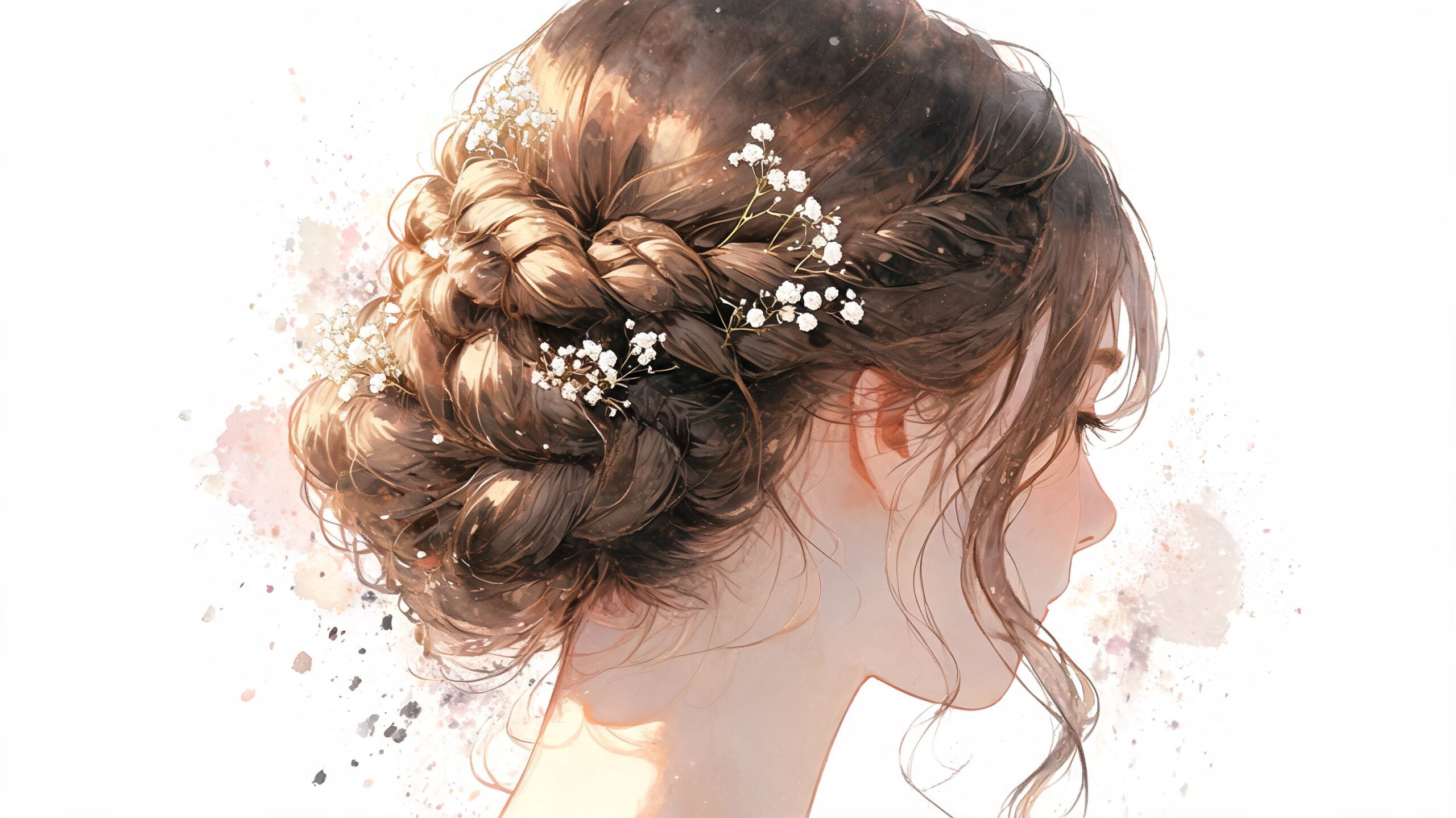
5. Soft Romantic Braid Updo
A bride steps out onto a windy terrace, turns back toward the abbey ruins, and the hairstyle still reads beautifully from every angle. That is where a soft romantic braid updo earns its place. In a historic setting, braid work gives movement, detail, and a sense of occasion without feeling too polished to belong among old stone and open lawns.
The best version has shape with some give. You want the plaits visible in photographs, the silhouette balanced from the front and side, and the finish soft enough to suit a veil, candlelight, and close portrait work.
Why this style suits a grand historic venue
Braids hold their character well over a long wedding day. That matters at venues with outdoor walks, uneven weather, and lots of movement between ceremony, portraits, and reception. If a little softness appears around the hairline, the style still looks romantic rather than disrupted.
It also photographs exceptionally well against textured backdrops. Smooth styles can disappear against carved stone or dark interiors. A braid updo keeps definition, which helps in profile shots, veil shots, and those wider images framed by ancient arches.
For brides carrying a floral story through the day, this updo also takes delicate detail gracefully. Small pins, seed pearls, or blooms inspired by blue wedding flowers for a romantic historic setting can be threaded through the braid without crowding the design.
What works in practice
This style usually performs best on hair with a little texture already in it. Freshly washed, silky hair often slips, especially if the braid needs to stay full rather than tight. I prefer to build the braid first, then place and pin it into the final shape so the structure stays clean.
There is a real trade-off here. Thick hair can create a braid that looks sumptuous in person but too heavy in proportion to the face. Fine hair has the opposite problem. The detail can disappear unless padding, extensions, or careful backcombing are used at the right points.
That is why a trial matters so much with this look. The placement of the braid, the amount of looseness, and the size of any face-framing pieces all need testing under real conditions, especially if portraits will happen outdoors.
A visual tutorial can help if you're narrowing down the mood you prefer:
Decoration needs restraint. One thread of detail through the plait often looks far more expensive than covering every section with pins or flowers. The aim is a braid with presence, not a hairstyle competing with the dress.
6. Low Twisted Bun with Embellishment
A low twisted bun with embellishment is ideal when the bride wants the hairstyle to support one beautiful focal point. The twist work keeps the base elegant. The accessory gives the style personality.
This is a strong choice for brides wearing heirloom pins, jewelled sprays, silk flowers, or coloured accents that tie into the rest of the wedding design. It feels polished, but not anonymous.
How to make the embellishment look intentional
The rule is simple. The bun must stand on its own before anything decorative is added. If the underlying style is weak, no hairpiece will rescue it. Twists should be anchored securely into a low shape first, with the accessory added as a finishing decision rather than a structural one.
This style also gives room to reflect the floral palette. If your scheme includes soft blue accents, for example, a low bun can carry delicate floral pieces beautifully without the style feeling busy. Brides exploring blue flowers for weddings with romantic historic styling often find this updo gives them the cleanest canvas.
Pros and cons
This updo is excellent for ceremony-to-reception continuity. You can wear the full embellishment for the aisle and early portraits, then remove part of it later if you want a lighter feel for dancing. That flexibility is a real advantage.
Still, decorative pieces come with practical questions:
- Check weight early: Heavy combs can pull against the scalp over several hours.
- Pin into structure, not surface hair: Accessories need to lock into the bun’s foundation.
- Bring a backup plan: If a floral pin loosens or a stem breaks, the style should still look complete.
A beautiful accessory should look placed, not perched. If you can see the stylist “adding decoration” instead of integrating it, the finish isn’t right.
The main risk is over-decoration. Historic venues already offer atmosphere in abundance. Hair usually looks most luxurious when it contributes one elegant accent, not several competing statements.
7. Voluminous Teased Crown Updo
A bride steps into the Great Hall in a structured gown with a long train, and suddenly a flatter hairstyle can look visually lost. A voluminous teased crown updo solves that proportion problem. It adds height at the crown, gives the silhouette more presence, and suits historic interiors that can carry a more formal look without swallowing it.
At a venue like Battle Abbey, that drama needs control. The style should feel polished against stone arches and candlelit rooms, not stiff or old-fashioned. The difference comes down to placement, finish, and how much volume the hair can realistically hold for a full day.
Where it works best
This updo is strongest for indoor ceremonies, formal evening receptions, and portraits where the dress has real visual weight. It pairs especially well with ball gowns, high-detail bodices, long veils, and jewellery that can stand beside a fuller hairstyle.
It is less convincing for a bride chasing an undone, airy mood.
The crown should be built from interior support, with the outer layer dressed smooth and light. That keeps the shape refined in photographs, especially from the side. Against ancient ruins or carved doorways, that extra lift can frame the face beautifully, but only if the height stays in proportion to the head and neckline.
Practical trade-offs
This is one of the more technical bride hair updos on the list. Done properly, it holds shape well and gives strong profile shots. Done badly, it can read dated within minutes.
A stylist needs to judge three things carefully:
- How much height the face can take: Petite features or a narrow frame can be overwhelmed by too much crown lift.
- How the weather affects the finish: Wind on outdoor terraces can disturb the smoothed surface, so this style performs best when most key moments happen indoors.
- How the hair will recover later: Heavy teasing creates grip, but too much roughing at the roots makes the style harder to dismantle gently at the end of the night.
Hair type matters here. Fine hair often benefits from this shape because teasing creates structure it may lack naturally. Very thick hair can become bulky rather than elegant unless the interior is reduced and directed with care.
How to keep it luxurious
The modern version relies on restraint. Volume belongs at the crown, not across the entire head. Softness at the hairline keeps the finish romantic, and a clean silhouette through the sides stops it feeling too reminiscent of past decades.
I would also consider the veil plan early. A heavy veil pinned too high can flatten the crown or create an awkward ridge once removed. If the bride wants both height and a veil, the anchor points need to be tested together at the trial, not treated as separate decisions.
For the right gown and setting, this updo is unforgettable. It gives grandeur, profile definition, and a regal line that suits a historic venue beautifully. Its weakness is obvious too. It asks for commitment, maintenance, and a bride who feels comfortable wearing a stronger shape rather than a softer one.
8. Elegant Wrapped Low Bun
A bride steps out of the long stone corridor into the abbey gardens, veil lifted for portraits, and this is the kind of hairstyle that still looks composed from every angle. The wrapped low bun has a quiet discipline to it. It uses the hair itself as the detail, with each section placed to create shape, shine, and a finish that reads beautifully in close photography.
It suits brides who want refinement without ornament. At a historic venue, that restraint can be a strength. Against old stone, carved doorways, and formal interiors, an overworked style can compete with the setting. A wrapped bun tends to complement it.
Why it works so well at a grand venue
This style gives the photographer something to capture from the back and side once the veil comes off. The overlapping sections catch light differently, so the bun has dimension rather than looking like a single flat knot. That matters in candlelit rooms and in portrait spots near ancient ruins, where subtle structure reads better than heavy decoration.
It also pairs especially well with clean necklines, structured satin, and jewellery with a modern line. The result feels polished, but it should never look hard. A little softness through the crown or around the hairline keeps it bridal rather than corporate.
Real-world strengths and weaknesses
For Battle Abbey or any similarly exposed historic setting, the practical appeal is clear. The shape sits low, close, and secure, so it generally copes better with terrace breezes than styles with loose surface texture or a lot of height. If the day includes outdoor drinks, walking between buildings, and a formal dinner indoors, this bun usually handles that sequence well.
The trade-off is precision. Every wrapped piece has to be clean, balanced, and pinned so the mechanics disappear. If the sections are too thick, the bun loses its expensive look. If they are too thin on sparse hair, the wrapping can expose gaps, especially in flash photography.
A good version depends on preparation as much as technique.
- Build a strong base shape first: The foundation bun should be secure before any wrapping begins, or the design loosens as the evening goes on.
- Match the wrap size to the hair density: Fine hair needs fewer, slightly fuller sections. Thick hair usually needs more subdivision to avoid bulk.
- Check the profile as well as the back: In historic venues, profile portraits against arches and stone walls are common, and an uneven wrap pattern shows quickly from the side.
- Use controlled hold, not a lacquered finish: Enough grip keeps the shape intact, but too much product makes the wrapped detail look stiff and dull.
This is not the updo for a bride who wants movement around the face or a deliberately undone mood. It is for the bride who wants her hair to look considered, graceful, and impeccably finished in person and in photographs.
9. Tousled Romantic Bun with Face-Framing
Late afternoon at a historic venue can be unforgiving to a soft updo. A bride steps out onto the terrace, the breeze lifts the tendrils, the stone ruins frame every profile photograph, and a style that looked pretty in the mirror either turns poetic or starts to unravel. That is why this bun needs more planning than its relaxed finish suggests.
A tousled romantic bun suits brides who want softness, movement, and a little gentleness around the face. It pairs beautifully with lace, silk tulle, botanical details, and candlelit interiors. Against old stone and worn archways, the slightly undone texture can feel deeply romantic rather than overly formal.
It also photographs well from close range because the face-framing pieces soften the hairline and catch light in a flattering way. If your wedding includes a meaningful accessory or a subtle nod to tradition, this style can also work nicely with one of these something blue ideas for a refined bridal detail, provided the placement does not compete with the loosened front sections.
The challenge is control.
Brides often ask for “messy but elegant,” but the successful version is neither accidental nor especially messy. The bun needs an internal structure that holds through walking between ceremony spaces, hugs from guests, and changing weather, while the loosened pieces must be chosen with precision. Too few, and the style looks severe. Too many, and it starts to read as unfinished by the time the photographs move outdoors.
Humidity and hair type matter here more than many brides expect. A UK bridal survey cited by Hitched bridal updo guidance notes that many brides, especially Black and mixed-race brides, struggle to find updo advice that accounts properly for humid summer conditions. In practice, that means this look should be adapted to the hair in front of you, not copied from a reference photo built on a different texture.
For naturally curly, coily, or afro-textured hair, the best result is often a structured textured bun rather than loose pieces pinned in the European editorial style. Definition has to be set deliberately, then protected. Controlled texture lasts longer, looks richer in photographs, and copes better with East Sussex moisture than softness with no foundation.
Softness should be placed with intent. If every piece is loose, nothing reads as bridal.
Choose this style if you want romance with movement and can accept a look that may soften further as the day goes on. Skip it if loose hair around the face irritates you, if wind is a major concern for your ceremony setting, or if you want the hairstyle to appear almost identical from the first portrait to the last dance.
10. Jewelled Hairpiece Accent Updo
You step into the long stone light of a historic venue, turn toward the ruins for portraits, and the first thing the eye catches is the hairpiece. In this style, that is intentional. The updo is shaped to hold and frame the jewellery so the accessory reads as part of the hairstyle, not something added at the last minute.
This approach suits heirloom combs, crystal sprays, circlets, and antique-inspired pieces particularly well. At Battle Abbey, it can feel strikingly at home. Old stone, detailed gowns, and a well-placed hair ornament naturally belong in the same visual story.
Building around the accessory
Placement decides everything. A comb set above a low bun gives balanced, formal lines. A jewelled spray pinned into one side of a twisted updo feels softer and slightly more romantic. A piece placed at the back of the crown catches the light beautifully in photographs, but it also needs enough structure underneath to stop it tipping forward as the day goes on.
The best versions are engineered, not improvised. Hair beneath the accessory has to be firm enough to anchor pins, smooth enough to show the piece clearly, and shaped with the veil in mind from the start. If the ornament sits where the veil comb needs to go, one of them will lose.
This style also gives tradition a polished expression. Brides drawn to something blue ideas for a meaningful wedding detail often choose a crystal comb or vintage pin with a single blue stone, which keeps the detail visible without making it feel thematic.
What to think about before you commit
Weight is the first trade-off. A substantial piece looks superb in still photographs, especially against historic architecture, but comfort can become an issue by the wedding breakfast if the comb is heavy or the teeth are poorly made. I always advise testing the piece for more than five minutes. Smile, turn your head, hug someone, and sit down in it.
Weather matters here too. On open terraces or exposed garden paths, the hairstyle itself may hold perfectly while the accessory catches wind or shifts if it has not been pinned into a solid foundation. Historic venues often involve more walking than brides expect, and movement exposes weak placement quickly.
A few practical rules help:
- Anchor generously: heavier pieces usually need several hidden pins placed from different angles.
- Keep the updo disciplined: strong jewellery shows best against clean, intentional hair shapes.
- Trial it with the veil and earrings: all three elements need proportion and compatible placement.
- Check it from every side: this style is photographed from the back almost as often as from the front.
Choose this if the accessory is part of the bridal story, not just a finishing touch. Skip it if you dislike feeling any weight in your hair, or if your chosen piece is beautiful in the box but awkward on the head. The right jewelled updo looks regal, secure, and carefully considered, especially in a venue where ancient stone gives every sparkle a richer backdrop.
Top 10 Bridal Updos Comparison
| Style | 🔄 Complexity | ⚡ Resources & time | ⭐ Expected outcome | 💡 Ideal use cases | 📊 Key advantages |
|---|---|---|---|---|---|
| Classic Low Chignon | Medium–High, skilled finish required | Moderate products, professional styling & rehearsal recommended | Timeless, polished, highly photogenic | Formal historic venues; large traditional weddings | Elegant, flatters many face shapes; showcases dress/jewellery |
| Romantic Twisted Crown Updo | Medium–High, time‑intensive twists | Needs volume, pins, possible floral/headpiece; touch‑ups likely | Soft, romantic with architectural detail | Outdoor/garden ceremonies; medium–long hair brides | Romantic softness + structure; hides fine hair; photogenic |
| Textured Half‑Up, Half‑Down Hybrid | Medium, simpler than full updo | Moderate styling time for waves; requires touch‑ups | Versatile romantic look with movement | Indoor/outdoor, semi‑formal to formal, dancing receptions | Flexible styling; youthful movement; easier for many stylists |
| Sleek High Ponytail Updo | Low–Medium, precision for sleekness | Quick to execute with smoothing products and combing | Clean, contemporary and sharply photographed | Modern venues; minimalist dress silhouettes; active events | Secure, modern, relatively quick to create |
| Soft Romantic Braid Updo | High, advanced braiding technique required | Time‑consuming; best with healthy, thicker hair and pins | Fairy‑tale romantic texture and intricate detail | Historic estates and boho‑romantic brides | Rich texture, secure structure, pairs well with florals |
| Low Twisted Bun with Embellishment | Medium–High, balance styling + decoration | Requires quality hairpieces, extra pins; possible rehearsal | Personalised, decorative statement updo | Formal celebrations wanting distinctive accessories | Customisable focal point; highlights jewellery/heirlooms |
| Voluminous Teased Crown Updo | High, extensive teasing/backcombing prep | Significant prep, strong product use; hair health caution | Dramatic, glamorous height and editorial impact | Grand evening receptions; dramatic gown silhouettes | Creates height and drama; conceals thin hair |
| Elegant Wrapped Low Bun | Medium, precise wrapping technique | Moderate time; extensions optional for volume | Sculptural, modern and polished appearance | Modern venues with historic character; contemporary brides | Architectural look, polished, secure and efficient |
| Tousled Romantic Bun with Face‑Framing | Medium, controlled "undone" technique | Texturizing products, light touch‑ups during day | Relaxed, approachable romantic aesthetic | Garden/outdoor or semi‑formal celebrations; boho brides | Forgiving, natural, photogenic in candid shots |
| Jewelled Hairpiece Accent Updo | Medium–High, anchoring and proportion skills | High investment in accessories; many pins; possible support | Luxurious, show‑stopping focal styling | Grand historic venues; brides featuring heirlooms | Elevates look with meaningful statement pieces; dramatic photos |
Choosing Your Stylist and Perfecting Your Final Look
A bride steps out onto the terrace with a polished updo, only to feel it soften within minutes in the breeze, then shift again as the veil comes out before dinner. Historic venues ask more of bridal hair than a studio trial ever can. At Battle Abbey, the look has to suit stone halls, outdoor photographs, changing light, and hours of wear without losing its shape or its romance.
That is why the stylist matters as much as the style.
Choose someone who can talk about your venue in practical terms, not just show a pretty portfolio. Ask whether they have worked with outdoor ceremonies, long photo walks, and veil changes. Ask how they pin for movement, how they control frizz in damp air, and how they adjust placement if your dress has a high collar, low back, or detailed shoulders. Good answers are specific. Vague confidence is not enough on a wedding morning.
It also helps to see work on hair that resembles yours in density, texture, and tone. A glossy brunette chignon, a dimensional blonde braid, and an updo built for defined curls each demand different product choices and pinwork. Braided looks in particular depend on clean sectioning, even tension, and preparation that prevents them from loosening too quickly in wind or after hours on the dance floor.
Book the trial early enough to make useful decisions. Two to three months before the wedding usually works well because your alterations, jewellery, veil, and hair accessories are clearer by then. Bring photographs of the dress, your earrings, and the exact veil or comb if you have them. If you may wear extensions, discuss them properly in advance. This guide to an effective extension consultation for stylists explains the choices that affect colour match, comfort, and where extra hair should sit within an updo.
At the trial, judge the style the way the day will judge it. Walk around. Turn your head fully. Add the veil, then remove it. If possible, step outside and see what the hair does in natural air and daylight. Ask for photographs from the front, both sides, and the back. Brides tend to assess hair in the mirror. Photographers record every angle, especially in open spaces with ruined stonework behind you.
A few decisions make the final result much stronger:
- Wear a top with the same neckline shape: Hair placement changes when the shoulder line changes.
- Say if anything feels tight: A pin that presses in the trial becomes distracting after several hours.
- Set one priority: Hold, softness, height, or movement. A stylist can balance all four, but one should lead the design.
- Plan for the second look of the day: If the veil comes out after the ceremony or a hairpiece is repositioned for the evening, build that into the plan from the start.
The best bride hair updos are chosen with the setting in mind. At a historic venue, that means considering terrace wind, indoor warmth, long photography periods, and the way your silhouette reads against ancient stone. A successful finish feels beautiful in close view, holds through the last portrait, and still feels true to you by the final dance.
If you’re planning a romantic celebration in East Sussex, Battle Abbey Weddings offers the kind of historic setting where a beautifully chosen updo can shine, from the Abbot’s Hall to the Top Terrace and the dramatic ruins beyond. Explore the venue, picture your bridal silhouette in the space, and start shaping a wedding look that feels timeless from the first entrance to the final dance.