A festive wedding menu usually starts with one practical question. Do we want the meal to feel grand and traditional, lively and relaxed, or polished enough to impress every guest from your university friends to your grandmother?
That decision shapes more than the food. It affects pacing, room layout, drinks service, dietary planning, and how people remember the celebration afterwards. In Britain, Christmas dining has long carried that kind of meaning. Victorian England helped cement the idea of roast turkey, stuffing, potatoes and plum pudding as the festive centrepiece, especially after Dickens' 1843 A Christmas Carol helped define what a “proper” Christmas dinner looked like in the public imagination, as explored in this history of Christmas dinner.
For couples planning a winter reception, restaurant christmas menus are one of the best places to borrow ideas. They show what works in real service. They also reveal where restaurants make smart compromises on structure, atmosphere and guest choice. If you're balancing tradition with personality, the same thinking that helps restaurants sell December dining can also help you shape a memorable wedding breakfast. If drinks are part of the festive brief too, this winter sales drinks guide is a useful companion read.
1. Dishoom
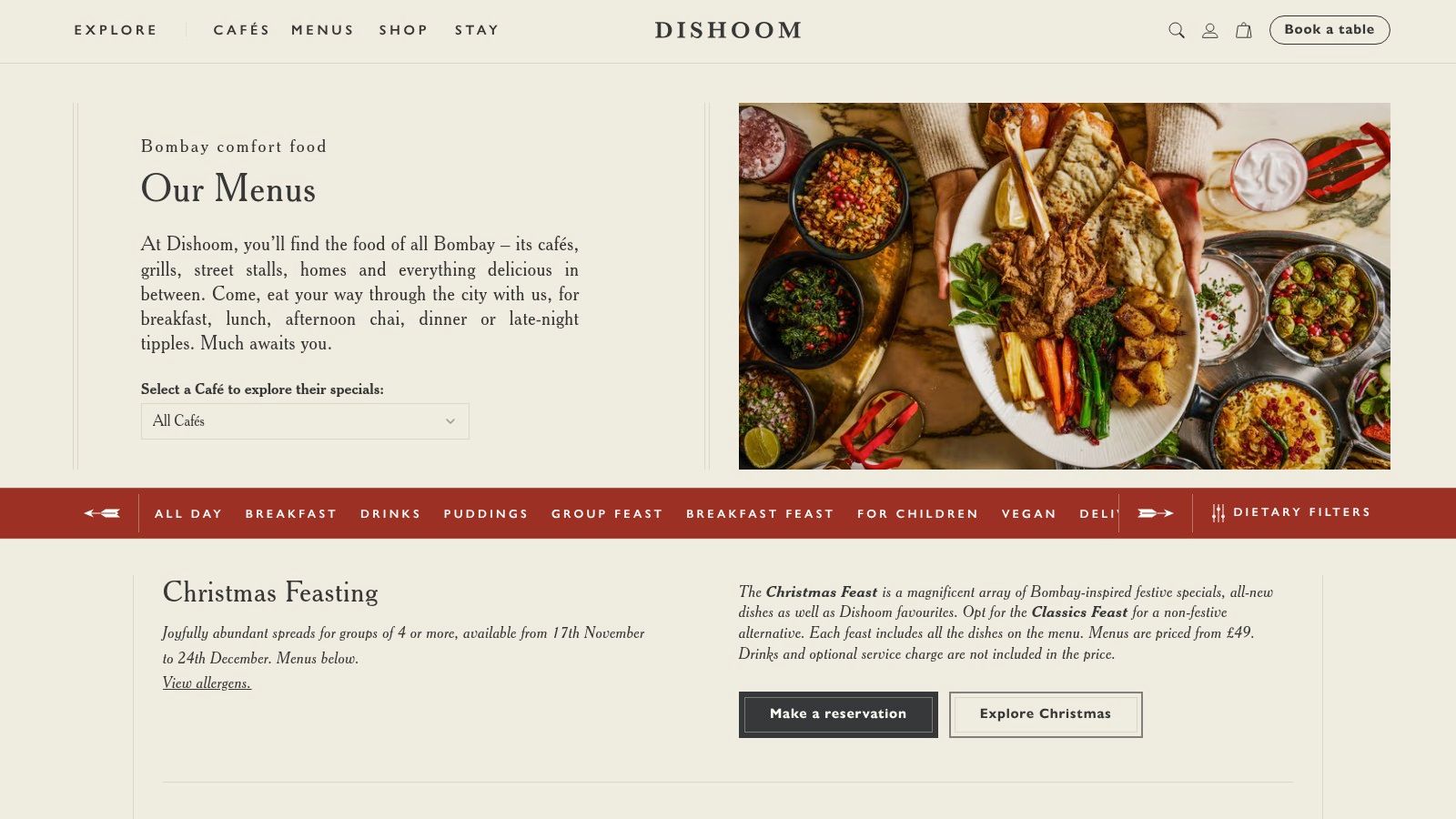
Dishoom gets one thing very right for festive group dining. It builds the menu around shared enjoyment rather than stiff formality. That makes it a strong reference point for couples who want a Christmas wedding meal to feel warm, sociable and slightly less scripted.
The appeal isn't just the Bombay-inspired flavour profile. It's the structure. Sharing dishes create instant movement at the table, and that matters at weddings where guests don't all know each other. A platter passed across the table does more social work than a silent plated starter ever will.
Why the format works
Dishoom's Christmas Feast menus are built for groups, and that's the first strategic lesson. Group-ready menus reduce decision fatigue, speed up service, and make budgeting cleaner. They're especially useful when your guest list includes mixed ages and mixed expectations.
For wedding planning, the stronger takeaway is inclusivity. Dishoom is a good model when you need broad vegetarian and vegan choice without making those guests feel like an afterthought. That aligns with a wider gap in festive menu planning. The market often still leans heavily meat-first, even though dietary variety matters to modern guest lists.
Practical rule: If more than a handful of guests need different dishes, don't “bolt on” one vegan main. Build the whole menu so every course feels considered.
A Dishoom-inspired wedding breakfast works best for:
- Relaxed receptions: Long tables, generous platters, and a room with energy.
- Mixed dietary groups: Menus that let everyone eat well without separate-feeling plates.
- Couples who want atmosphere early: Sharing food gets people talking fast.
For Battle Abbey couples, this translates beautifully into a more informal feast style. A Sussex-led sharing menu, winter salads, richly spiced sides and hearty centrepieces can feel festive without becoming predictable. If you're exploring that direction, Battle Abbey's ideas on a wedding buffet menu show how abundance can still feel elegant.
The trade-off is obvious. This isn't the model for a hushed, silver-service Christmas meal. If your vision is candles, formal speeches and classic courses delivered with ceremonial precision, Dishoom is better used as inspiration than as a direct template.
Book via Dishoom's Christmas Feast page.
2. Hawksmoor
A December wedding breakfast often reaches its most difficult point at the main course. The room is beautiful, guests are hungry, and the menu has to satisfy grandparents, food lovers, and anyone nursing a hope for something recognisable. Hawksmoor handles that problem well because its offer is clear from the start. Proper meat, classic trimmings, and service built for a full dining room.
That clarity is the key lesson.
The wedding-planner lesson
Hawksmoor shows how a festive menu becomes memorable when the centre of the plate is decided early and supported properly. Couples often spend too long spreading budget across too many clever details, then wonder why the meal feels unfocused. A stronger approach is to choose the headline dish first, then build everything else around it, sauces, sides, vegetarian parity, and pacing included.
For a wedding, that might mean roast sirloin with winter vegetables and a confident gravy, rather than three competing mains that dilute the kitchen's attention. Guests remember conviction. They also notice when the alternative dishes feel equally considered, so if roast beef is the star, the vegetarian main needs the same sense of occasion.
What Hawksmoor gets right:
- A strong core choice: The menu tells guests what the meal is about.
- Operational discipline: Restaurants built around premium meat usually understand timing, temperature, and volume control.
- Comfort with formality: The experience feels special, but the food still reads as generous and familiar.
I use this model for couples who want a traditional winter wedding without stiffness. In a setting like Battle Abbey, that matters. Historic rooms already carry atmosphere, so the menu does not need theatrical tricks. It needs confidence, warmth, and enough richness to suit the season.
For Battle Abbey, a Hawksmoor-inspired approach suits a formal wedding breakfast in the Duke's Library. Roast-led mains, strong seasonal sides, and a pudding people look forward to with real anticipation will carry the room beautifully. If you want to strengthen the finish of the meal, these dessert table ideas for weddings show how to add abundance after a classic plated service. The existing White Swan menu inspiration is also a useful parallel for couples drawn to a more traditional structure.
The trade-off is straightforward. This style asks for budget discipline and kitchen confidence. Premium roasts, proper resting time, and polished service cost more than a looser feast format. If the per-head figure is tighter, copy the structure rather than the full luxury version. Keep the standout main, simplify the starter, and avoid overcomplicating dessert.
Explore current options through Hawksmoor.
3. The Ivy Collection
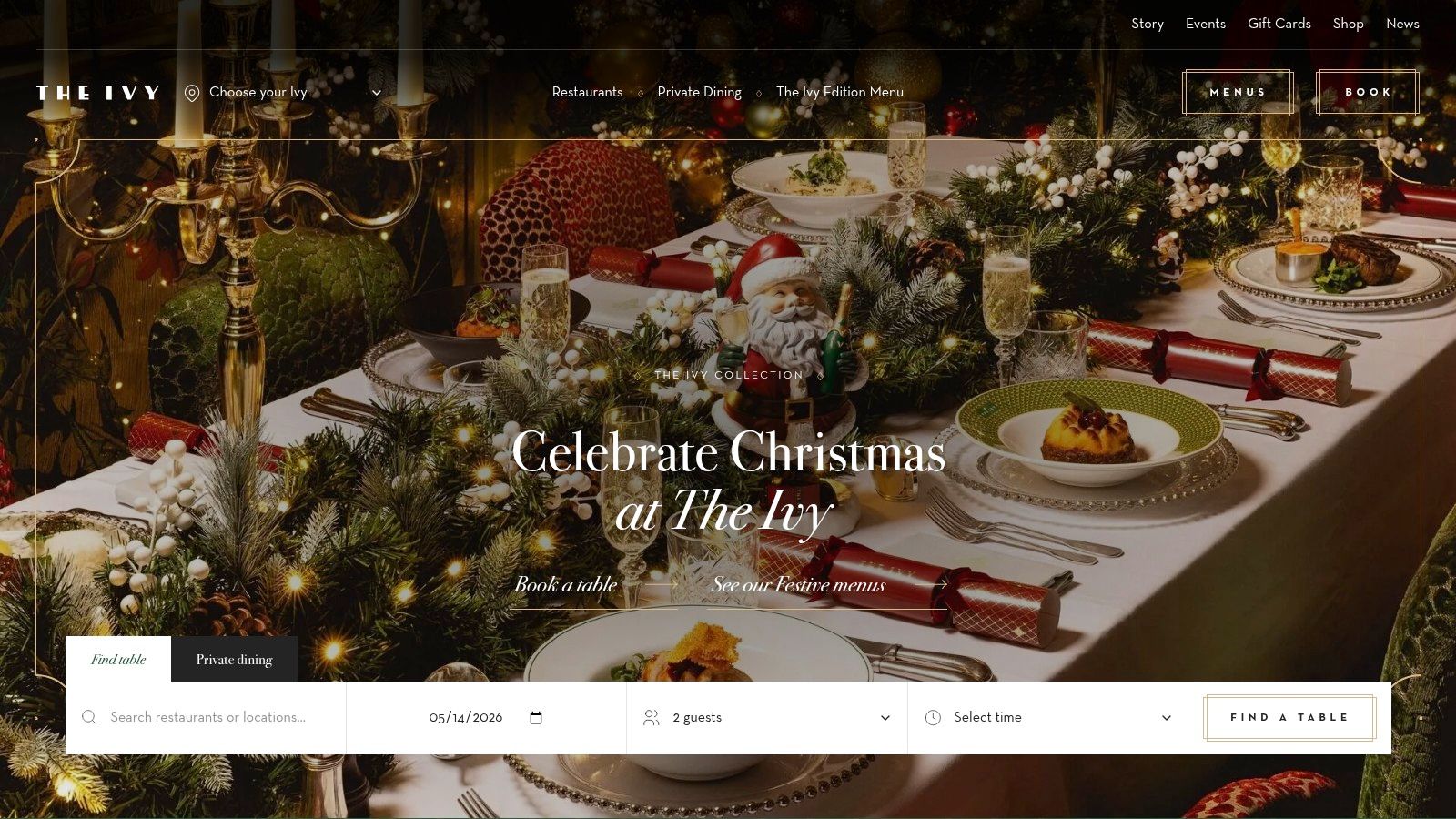
The Ivy Collection is less about one iconic festive dish and more about planning ease. That might sound unromantic, but for engagements, rehearsal dinners and wedding-adjacent celebrations, planning ease is often what keeps the occasion feeling smooth instead of strained.
Its festive offering is useful because it tends to present clear menu tiers, group processes and private dining information. Couples often underestimate how calming that is. Clean documentation means fewer awkward budgeting surprises and fewer last-minute menu decisions chasing people over email.
Best for controlled elegance
The Ivy sits in that productive middle ground. It feels dressed up, but not intimidating. For winter wedding planning, that balance matters. Not every festive event needs the grandeur of a formal banquet, and not every guest enjoys ultra-relaxed sharing service.
A strong lesson from The Ivy is to tier your offering clearly. If you're planning a Battle Abbey reception, think in layers:
- Core menu: Seasonal dishes everyone recognises.
- Upgrades: Signature canapés, a standout dessert, or a premium toast drink.
- Private room extras: Styling touches or late-evening sweet options.
This is also where dessert strategy becomes important. Restaurants that manage festive dining well know that pudding is emotional. Christmas guests expect a finish with some theatre, whether that's a dark chocolate option, a citrus note to lighten the meal, or a nod to traditional pudding. Couples shaping a wedding breakfast can borrow that instinct and build a sweeter finale with help from these dessert table ideas.
The weakness with a multi-site brand is consistency at the edges. The overall feel may be dependable, but atmosphere, exact menu details and festive charges can vary by branch. For weddings, the lesson is simple. If you're borrowing from a polished brasserie model, define every detail early. Don't assume “standard festive” means the same thing to every supplier or every part of your team.
Browse festive options at The Ivy Collection Christmas page.
4. The Wolseley
If Dishoom is about conviviality and Hawksmoor is about hearty confidence, The Wolseley is about occasion. It understands the emotional pull of classic Christmas dishes served in a room that already feels ceremonial before the first glass is poured.
That's why it matters for winter weddings. Architecture changes how food lands. The same turkey dish served in a plain function room feels ordinary. Served in a grand dining room with formality, candlelight and precise service, it feels festive in the old-world sense.
Where formality earns its keep
The Wolseley's strength is restraint. It doesn't need novelty to justify itself. Traditional festive dishes such as roast turkey and Christmas pudding carry the menu because the setting and service frame them properly.
For couples marrying in a historic venue, this is a valuable reminder. Don't fight the building. Let the venue's age and atmosphere do part of the storytelling, then choose a menu that supports that mood. This is especially effective at Battle Abbey, where history is already present in the stonework, the terraces and the ceremony spaces.
A classic-format menu works well when you need:
- A stronger sense of ceremony: Ideal for a formal wedding breakfast.
- Cleaner budgeting: Set inclusions make decision-making easier.
- Traditional guest reassurance: Particularly useful for family-heavy celebrations.
Planner's note: Formal menus only feel luxurious when service stays calm. If timings are stretched or dietary alternatives arrive looking second best, the elegance disappears quickly.
The caution with The Wolseley model is that it can feel too formal for couples who want looseness, movement and a more contemporary energy in the room. It suits black-tie winter romance. It won't suit every kind of party.
See the venue style and current festive approach at The Wolseley City.
5. Brasserie Zédel
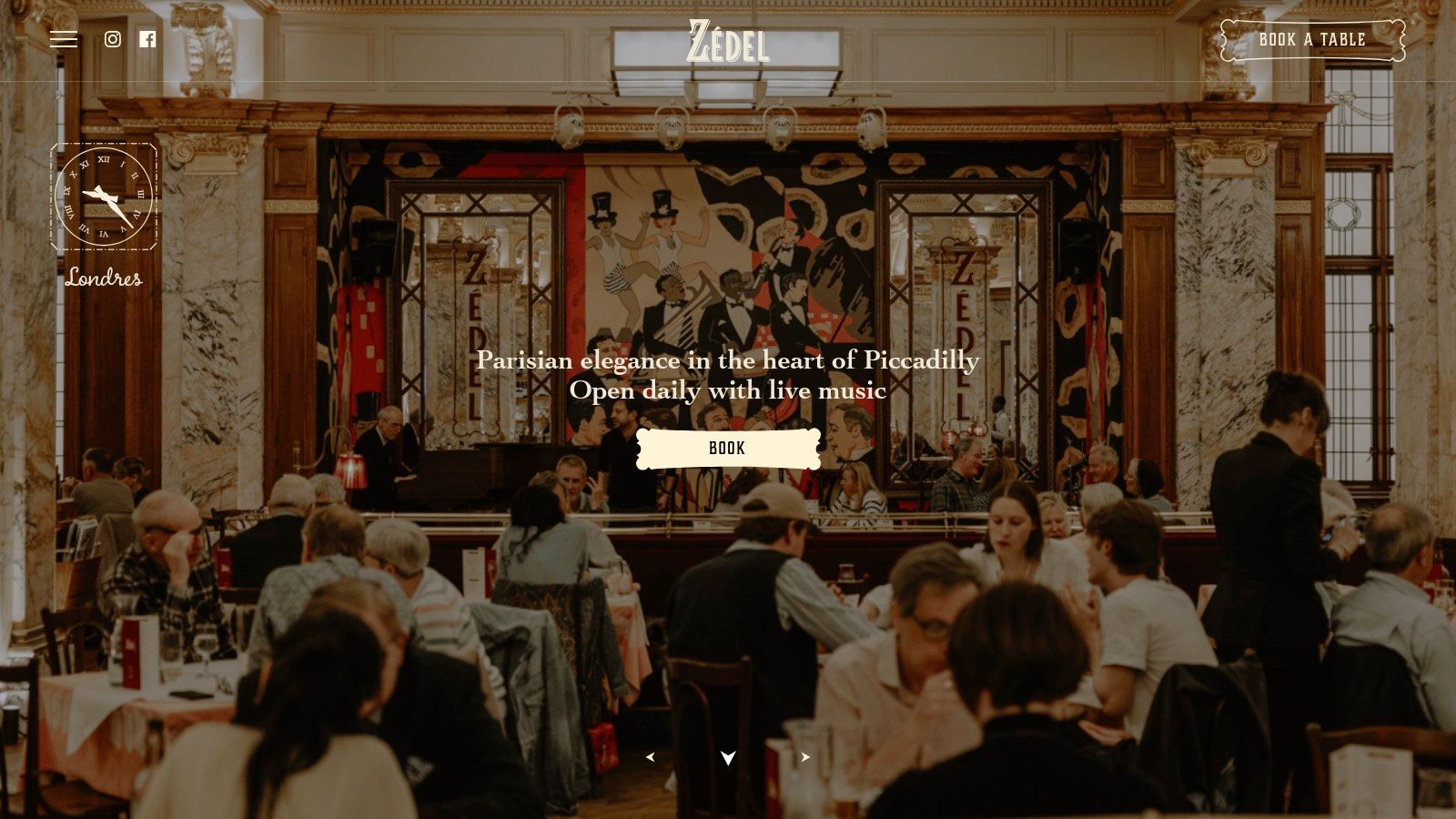
Brasserie Zédel is what I'd point to when couples want glamour without stiffness. It gives you theatrical surroundings and a recognisable festive meal, but the mood is more playful than reverent.
That matters because restaurant christmas menus often split into two camps. One camp chases luxury through seriousness. The other creates delight through atmosphere, movement and a sense that the evening might turn into something more than dinner. Zédel sits comfortably in the second camp.
Strong value in a grand room
Its Parisian brasserie identity is the main strategic lesson. You don't always need the menu to do all the heavy lifting if the room already gives guests a sense of escapism. A festive wedding meal can feel memorable because of mirrors, lighting, music and tempo just as much as because of the main course.
For budget-conscious couples, that's especially useful. There's a clear content gap around Christmas wedding menus that feel celebratory at accessible price points, particularly for couples trying to stay in a sensible per-head range without losing atmosphere. Zédel is a good reminder that perceived luxury often comes from presentation and setting rather than from the most expensive ingredients alone.
Borrow from this model by focusing on:
- Visually rich spaces: Historic or dramatic interiors reduce the need for over-styling.
- Classic dishes with flair: Familiar food, elegant plating.
- Built-in entertainment energy: Nearby drinks, music, or a natural transition into the evening.
The risk is popularity. Rooms with strong festive character get booked quickly, and once demand tightens, flexibility shrinks. For weddings, the equivalent issue is allowing too little lead time for menu tastings, dietary amendments or room-flow decisions in December.
Explore Brasserie Zédel for current festive dining details.
6. Quaglino's
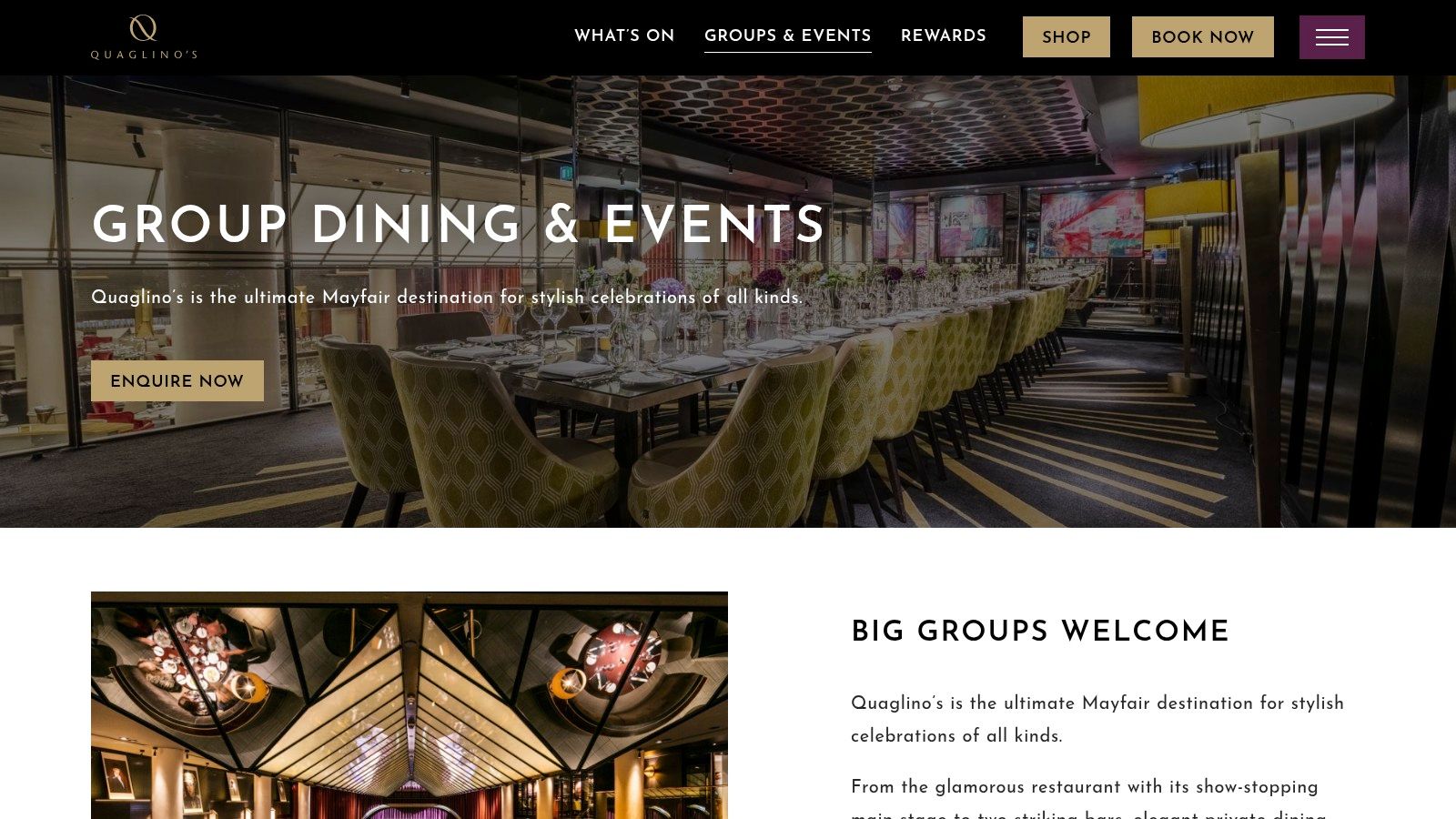
Quaglino's doesn't sell Christmas dinner first. It sells arrival. The staircase, the music, the sense that the room is already in performance mode before anyone sits down. For a wedding planner, that's significant because some festive celebrations need a menu that supports spectacle rather than competing with it.
A dramatic venue changes guest expectations. People forgive a simpler course structure if the room feels electric. They also expect stronger flow between dining and dancing, and Quaglino's is built for that handover.
Best for statement celebrations
This is the template for couples who want their winter wedding to feel like an event rather than a meal with speeches attached. It works particularly well when the guest list is large and the reception needs momentum.
The practical menu lesson is to keep dishes elegant but operationally controlled. In entertainment-led rooms, overcomplicated menus can slow service and flatten energy. Better to serve food that photographs well, eats cleanly and allows the evening to keep moving.
The broader market also points towards thoughtful adaptation rather than rigid tradition. An analysis of UK festive menus found that classics still dominated, but restaurants increasingly layered in lighter ideas and global influences, with examples including smoked garlic honey, mini-maritozzi and ’nduja accents in Christmas dishes in this 2023 Christmas menu trends review. Quaglino's style makes that kind of hybrid approach feel natural.
Keep the festive anchor. Add personality around the edges. That's usually enough to make the menu feel current without making it feel risky.
For Battle Abbey couples hosting larger receptions, this can translate into a classic winter banquet followed by a more theatrical evening shift. Start with formal dining in the Duke's Library, then move into a livelier drinks-led atmosphere once the speeches are done.
See event options at Quaglino's Christmas events.
7. 14 Hills
14 Hills is a useful study in modern festive dining because it knows its visual identity. The foliage, skyline views and rooftop setting create instant impact. That's not a superficial point. In December, guests often decide how “special” the meal felt within moments of walking into the room.
For weddings, that's a reminder that menu success and room design are inseparable. A festive dinner becomes more memorable when the setting already feels immersive.
What to borrow and what to avoid
14 Hills is planner-friendly because the structure is legible. Set menus, supplements for signature dishes, and private dining options make it easier to model cost and guest experience. That operational clarity is increasingly relevant in a market where restaurants have been reshaping festive offers.
A reported industry survey covered by The Telegraph described a projected 2025 shift in which many UK restaurants moved away from cheaper two-course Christmas offers towards mandatory three-course menus, driven by higher festive ingredient and labour costs. The same report described stronger revenue per head despite lower booking volume in that sample, according to this Telegraph business report on festive menu changes. For couples, the practical takeaway is simple. Fixed-format festive menus aren't only about upselling. They also protect service quality and purchasing control.
That makes 14 Hills a strong model if you want:
- A high-impact room: Guests feel the occasion straight away.
- Disciplined pre-orders: Helpful for larger or more corporate-style groups.
- A clear upgrade path: Signature dishes can sit as optional enhancements.
The caution is that visual venues can tempt couples into over-prioritising aesthetics. If the room is already stunning, the menu should steady the experience rather than trying to outshine it. Keep the food clear, seasonal and satisfying.
Visit 14 Hills festive dining.
7-Restaurant Christmas Menu Comparison
| Venue | Complexity 🔄 | Resource requirements ⚡ | Expected outcomes 📊 | Ideal use cases 💡 | Key advantages ⭐ |
|---|---|---|---|---|---|
| Dishoom | Low, set group feast format; simple ordering but high demand | Moderate, fixed per‑person menus, minimal extras; good veg/vegan options | Buzzy, relaxed sharing meal; plentiful portions and value | Informal festive gatherings, mixed‑diet groups, casual office parties | Great value, broad vegetarian/vegan choices, nationwide consistency |
| Hawksmoor | Medium‑High, multi‑course Xmas Day service; deposits/mins likely | High, premium pricing, strong wine/cocktail focus, possible deposits | Elevated, hearty British roast with polished service | Couples or groups seeking a premium steakhouse Christmas | Exceptional roast execution, reliable service, strong reputation |
| The Ivy Collection | Medium, tiered set menus and PDR processes; some branch variance | Moderate, clear per‑person pricing; private‑dining fees vary by site | Polished, accessible dining with predictable budgeting | Engagements, rehearsal dinners, planner‑hosted festive gatherings | Private rooms, clear documentation & pricing, nationwide footprint |
| The Wolseley | Medium, formal set menus and service; discretionary service charge typical | Moderate‑High, per‑person pricing, optional supplements, formal expectations | Elegant, classic Christmas with strong sense of occasion | Traditional/ refined Christmas meals and private dining | Grand interiors, clear inclusions, vegetarian variant available |
| Brasserie Zédel | Low‑Medium, group menus with clear pre‑order guidance; popular slots | Low, competitive central‑London pricing; good group capacity | Lively Parisian brasserie experience with strong value | Central London festive groups seeking lively, photogenic setting | Excellent price‑to‑setting, lively atmosphere, cabaret access |
| Quaglino's | High, live entertainment, whole‑venue hire and planner coordination needed | High, premium pricing, possible music/entertainment charges, AV needs | High‑impact glamorous event with strong visual and entertainment value | Statement Christmas celebrations, large receptions, full buyouts | Flexible spaces, show‑stopping dining room, live programming |
| 14 Hills | Medium, rooftop logistics, pre‑order processes and supplements apply | Moderate‑High, premium dinner pricing, signature dish supplements | Photogenic skyline experience that delivers a 'wow' factor | Celebratory dinners, client entertaining, planner‑friendly events | Rooftop views, standout interiors, clear planner processes |
Your Menu, Your Story Applying These Lessons at Battle Abbey
The best restaurant christmas menus don't just list dishes. They create a feeling before the first course lands. Dishoom shows how shared food can soften a room and bring mixed groups together. Hawksmoor proves that a confident roast-led menu still carries enormous emotional weight. The Wolseley reminds us that tradition becomes more powerful in the right setting, while Quaglino's and 14 Hills show how atmosphere and structure can shape the whole evening.
For a wedding at Battle Abbey, the smartest approach is rarely to copy one restaurant outright. It's to borrow the principle that suits your celebration. If you're planning an intimate winter wedding, that may mean a polished set menu with classic festive notes and thoughtful vegetarian alternatives. If you're hosting a larger celebration, it may mean a strong three-course structure, canapés on the terrace, then a warmer, more relaxed style of evening food once the dancing begins.
The venue itself gives you an advantage. Battle Abbey already carries a sense of history and occasion, which means the menu can either lean into that heritage or provide contrast. A Victorian-inspired winter feast in the Duke's Library feels entirely at home. So does a more contemporary Sussex-led menu with lighter festive details, especially if you want something seasonal without making the whole wedding feel overly traditional.
This is also where couples can make better decisions than many restaurants do. Inclusive festive dining matters. Meat-led grandeur still has its place, but weddings need to work harder for varied guest lists. Plant-forward dishes, transparent allergen planning, and celebratory alternatives for vegan or pescatarian guests aren't side issues. They're part of good hosting.
Battle Abbey's in-house catering team is well placed for exactly this kind of menu building. With locally sourced East Sussex ingredients, flexible catering styles, and spaces that work for both intimate celebrations and larger receptions, the team can translate inspiration into something personal and workable. A Hawksmoor-style roast, a Dishoom-style feast, or a classic festive menu with a more modern Sussex finish can all sit naturally within the Abbey's historic setting.
The goal isn't to recreate a restaurant. It's to create a wedding meal your guests will remember as part of the story of the day.
If you're planning a festive wedding in East Sussex and want a menu that feels generous, elegant and unmistakably yours, Battle Abbey Weddings can help you shape every detail. From intimate winter celebrations to full-site celebrations for larger guest lists, the team pairs historic atmosphere with flexible in-house catering, thoughtful planning and locally sourced menus designed around your vision.