Your son is getting married. You're proud, delighted, and probably carrying one quiet concern alongside all the happiness. At some point, someone will hand you a glass, turn towards you, and expect a few words.
That moment unsettles plenty of fathers. Not because they lack love, but because they care enough to want it right. A good grooms father speech isn't about sounding polished or theatrical. It's about standing up with warmth, speaking clearly, and saying something your son and his partner will be glad to remember.
In grand rooms as much as intimate ones, the same truth holds. Guests won't be measuring you against a professional speaker. They'll be listening for affection, steadiness, and sincerity. If your speech feels considered, generous, and well judged, it will land.
From Honoured Guest to Confident Speaker
Most fathers begin in the same place. The engagement is announced, the family gathers round the news, and then the practical thought arrives. Am I expected to speak?
That question often brings a second one. What on earth am I meant to say?
The answer is simpler than many expect. A grooms father speech is not a performance piece. It is a public act of welcome. You are marking a family milestone, offering your view of your son's character, and recognising the person he has chosen to build a life with.
The pressure is normal
Even men who are steady in business meetings or comfortable in a crowded room can freeze at the thought of speaking at a wedding. The stakes feel personal because they are personal. You're not talking about a project or a plan. You're talking about family.
That's why the most successful speeches rarely sound “written” in the formal sense. They sound like a father who has taken the time to think.
A wedding speech works best when it feels spoken, not performed.
I've seen fathers calm themselves the moment they stop trying to be witty for five minutes straight and start aiming for something much better. A short, warm reflection. One story that reveals character. One direct welcome. One meaningful toast.
Treat the speech as part of the hosting
This mindset helps immediately. You're not there to dominate the room. You're helping shape its atmosphere. In practical terms, that means speaking at a measured pace, keeping your remarks focused, and making sure guests can hear you properly.
If you're worried about being lost in a large room or historic venue, it's worth reviewing practical tips for flawless wedding sound before the day. Good audio doesn't make a weak speech strong, but it does allow a thoughtful speech to land as it should.
A father who speaks with kindness, brevity, and presence nearly always does better than one who tries to be dazzling. That's the shift worth making. You are not stepping into the spotlight by accident. You are stepping forward because you matter.
Understanding Your Place in the Wedding Speeches
Before you draft anything, settle one point first. You may not be in the standard UK speech line-up at all.
Most generic advice misses this, and that's where unnecessary confusion begins. UK wedding guidance commonly places speeches in the order of father of the bride, groom, then best man, which makes the father of the groom a planned option rather than a default, as noted in Bridebook's guide to groom speech examples.
Ask where you fit before you write
This matters more than people think. If you assume you're speaking at the reception, but the couple has planned a tighter speech order, your remarks can feel duplicated or awkwardly added. If they've invited you to speak at a rehearsal dinner or a smaller pre-wedding gathering, the tone should be different again.
Start with three direct questions for the couple:
- When would you like me to speak at the wedding breakfast, at another point in the reception, or at a separate gathering?
- How formal is the speech section with a microphone and seated guests, or more relaxed?
- Who else is covering family thanks, so you don't repeat the same acknowledgements.
Avoid overlap with the other speakers
The father of the bride may already be speaking about family pride and welcome. The groom may be handling thank-yous. The best man may be responsible for the livelier stories. Your speech is strongest when it doesn't trespass on those roles.
A useful rule is to make your contribution distinct.
| Speaker | Usually strongest focus | What you should avoid repeating |
|---|---|---|
| Father of the bride | Welcome, family pride, opening warmth | A second version of the formal opening |
| Groom | Thanks to guests, parents, partner | Long thank-you lists already covered |
| Best man | Friendship, humour, lighter stories | Comic material that belongs in his slot |
| Father of the groom | Character, welcome, family connection | Retelling stories everyone has heard already |
A quick conversation with the other speakers can save a lot of duplication. If the best man is using childhood material, choose a later-life observation. If the groom is doing all the practical thank-yous, keep yours more personal.
For couples planning a traditional order at a formal British reception, details like seating and speaking positions often shape the flow more than people expect. That's why some families also find it useful to look at best man duties and reception flow in a formal setting before finalising who says what and when.
Practical rule: The speech only feels “optional” on paper. Once you're invited to speak, timing and coordination become essential.
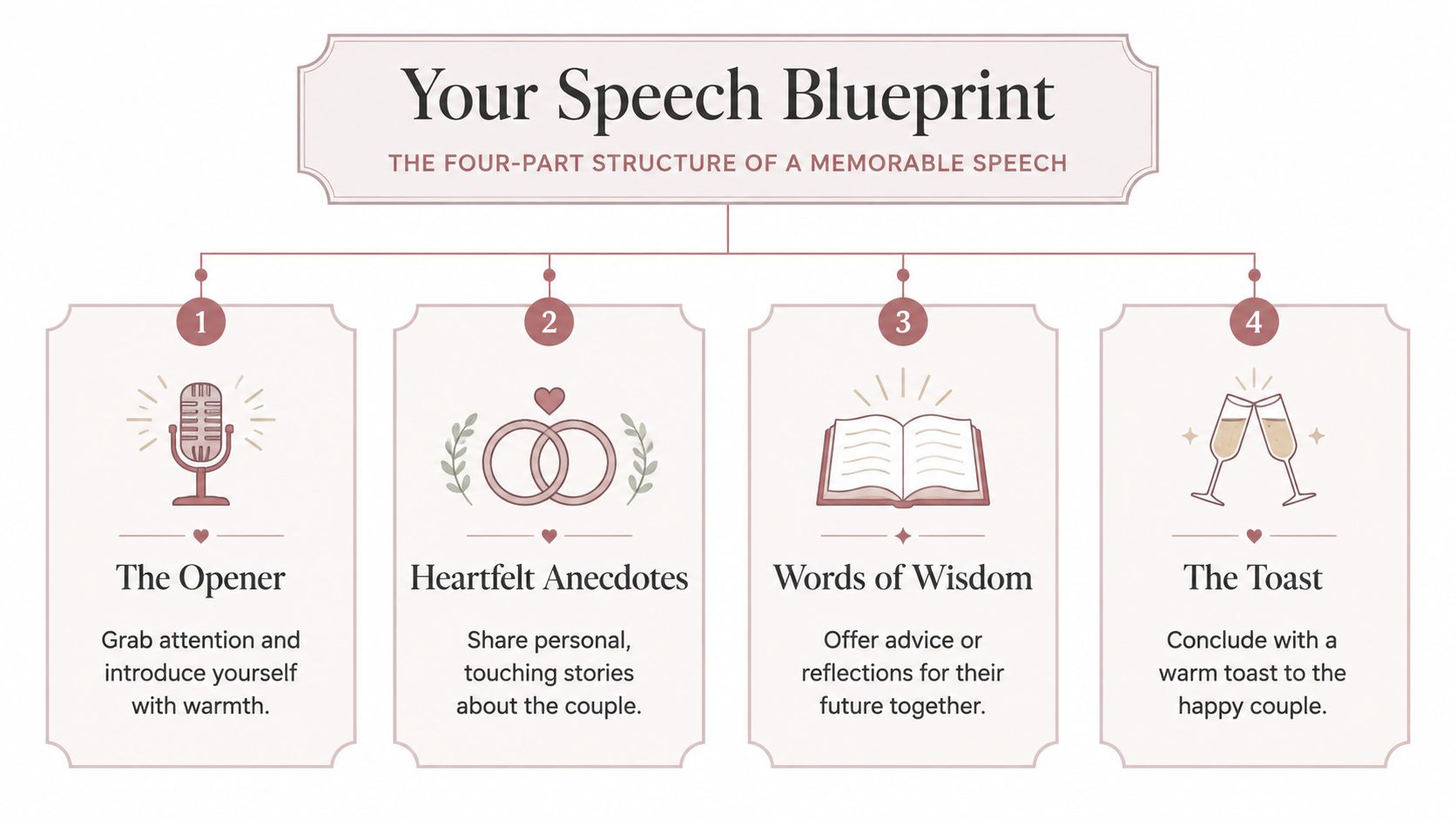
The Four-Part Structure of a Memorable Speech
A strong grooms father speech needs shape. Without it, even heartfelt content can wander. With it, you can sound composed even if you're nervous.
For a speech of 5 to 7 minutes, a practical word count is 600 to 1,050 words at roughly 120 to 150 words per minute, according to Manja Sheets' father of the groom speech guidance. That is more than enough room for a beginning, a story or two, a welcome, and a toast.
Start with a warm opener
Begin directly. Say who you are, acknowledge the moment, and offer a warm welcome. You don't need a grand opening line.
A good opener does three things:
- Introduces you clearly for guests who may not know both families
- Sets a calm tone rather than lunging into a joke
- Signals generosity towards the couple and the room
This can be as straightforward as thanking everyone for being there and saying what the day means to you.
Share selective anecdotes
This is the centre of the speech, and it's where many fathers go wrong by including too much. You do not need a mini-biography of your son from birth onwards. You need one or two selective stories that reveal character.
Choose anecdotes that show something admirable:
- kindness
- steadiness
- humour
- loyalty
- thoughtfulness
- resilience
The best story is often not the funniest one. It's the one that shows who he is.
If a story only proves that he was chaotic at fourteen, leave it out. If it reveals the man he became, keep it.
Welcome the new spouse and acknowledge their family
This is the emotional hinge of the whole speech. If you speak warmly about your son but say almost nothing about his partner, the speech can feel incomplete.
Address the new spouse directly by name. Say what you value about them. Keep it sincere and specific. If appropriate, acknowledge their parents or family with generosity and tact.
The speech broadens from memory into welcome. That shift gives it maturity.
End with a toast that means something
A weak ending can flatten an otherwise lovely speech. Don't drift into a generic close. Build towards a line that feels intentional, then invite the room to raise a glass.
A simple ending formula works well:
- A brief wish for their life together
- One sentence that reflects your confidence in them as a couple
- A clear toast using their names
That closing doesn't need flourish. It needs clarity. People should know the speech has reached its emotional destination.
Writing with Authenticity and Modern Grace
Many fathers start by searching for “funny wedding speech lines” and end up sounding like someone else. That's the quickest route to a speech that feels borrowed.
A good grooms father speech should sound as though only you could have given it. That doesn't mean every line must be original in a literary sense. It means the values, stories, and language should belong to your family.
Humour should warm the room
Humour has a place, but it should never be the engine of the speech. The safest laughter comes from recognition, not from embarrassment. Guests enjoy a line that gently captures your son's habits or a moment that shows his personality. They recoil from stories that expose, belittle, or make the couple tense.
A simple test helps. Ask yourself whether the joke does one of these three things:
- Includes the room rather than relying on an inside reference
- Shows affection rather than scoring a point
- Leaves the couple comfortable rather than braced
If it fails that test, cut it.
Write for the family that exists
Modern wedding speeches need more care than many guides offer. Most speech advice still assumes one neat family structure, one father-son bond, and one straightforward set of parental acknowledgements. Real life is rarely that tidy.
Guidance that helps with stepfamilies, co-parents, and other parental figures matters because inclusivity has become increasingly important in wedding etiquette, as discussed in The Knot's advice on father of the groom speeches.
That has practical consequences for your wording.
If there is a stepmother, stepfather, separated parents, remarriage, or a relative who has played a central parenting role, name people thoughtfully. Don't reach for old formulas that erase the people present in the couple's life.
Inclusive wording that works
Here are examples of the kind of language that tends to land well:
For blended families
“Our family has grown and changed over the years, and today feels like a joyful gathering of everyone who has loved and supported them.”For co-parenting situations
“It's been a privilege to see him guided and encouraged by many loving hands.”For same-sex weddings or non-traditional roles
Focus on names, relationships, and the couple's character. Avoid forcing the speech into inherited phrases that don't fit the day.For a distant or repaired relationship
Keep the tone honest but dignified. You don't need to pretend intimacy that isn't there. You do need to speak with respect.
The most graceful speeches acknowledge reality without making the room carry the weight of family history.
Authentic voice beats borrowed polish
If you are naturally formal, a slightly polished style can sound right. If you are plain-spoken, stay plain-spoken. The speech fails when the language doesn't match the man delivering it.
One useful drafting method is to speak your thoughts aloud first, then write down what you said. That often produces stronger material than trying to “write a speech” from a blank page.
Keep your best line near the end. Make it the sentence your son will remember. Not the funniest one. The truest one.
Rehearsing and Delivering with Confidence
A strong script still needs a steady delivery. This is the point at which preparation turns nerves into control.
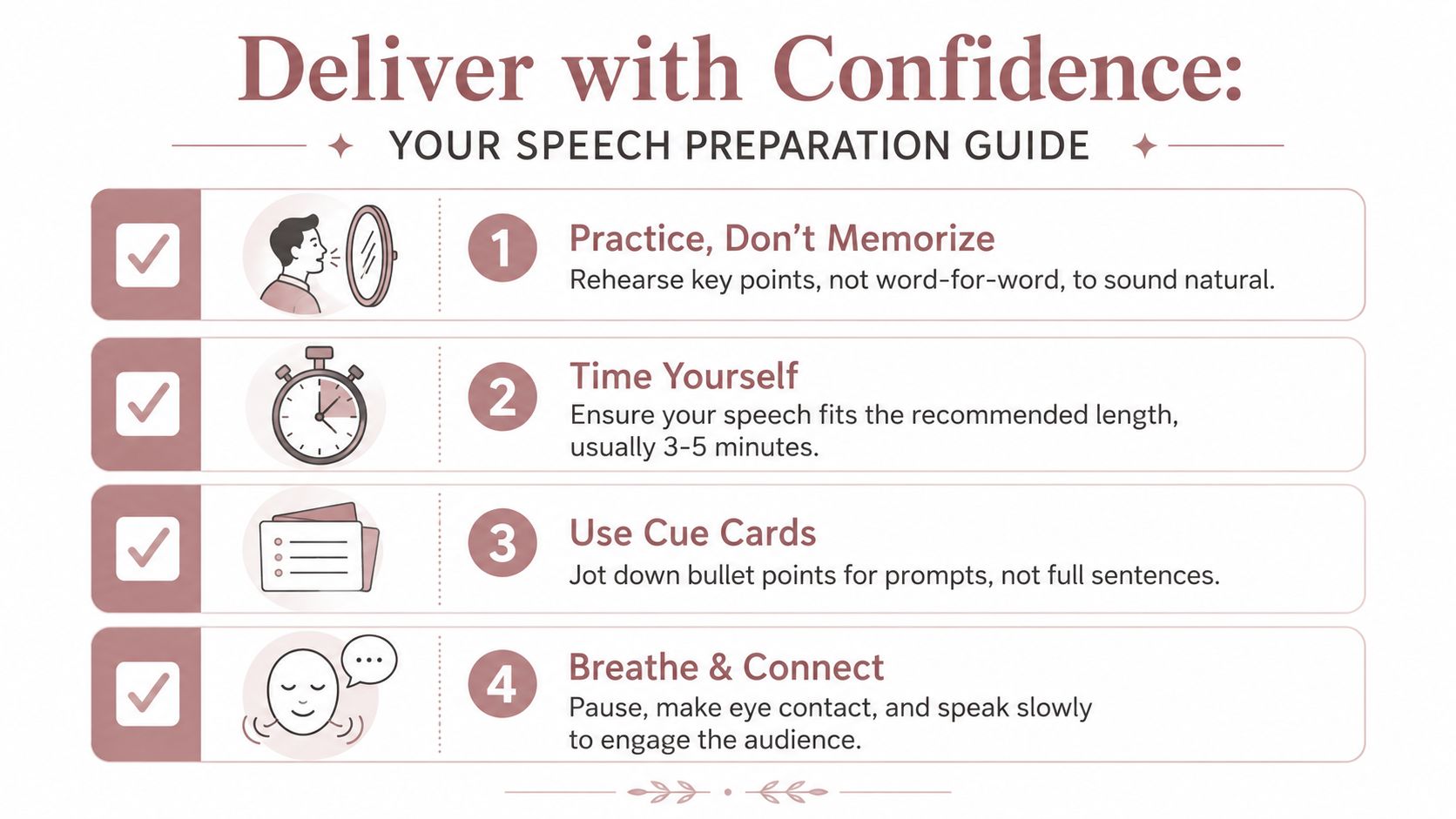
Reading directly from notes can reduce audience engagement by up to 52%, so the aim is to rehearse until you can mostly speak to the room and only glance down when needed.
Rehearse for flow, not theatre
Don't try to become an actor. Try to become familiar. When you know the route through the speech, you sound calmer and more natural.
Use this checklist:
- Read it aloud standing up because silent reading tells you very little about pacing
- Mark natural pauses after key lines and before the toast
- Trim any sentence that feels awkward in your mouth
- Practise with a glass in hand if that reflects how you'll deliver it
Timing matters, but rhythm matters more. A speech that is well paced feels shorter and lands better.
A practical detail that often helps at a formal reception is knowing exactly where you'll stand and where the top table sits in relation to the room. If you're speaking in a seated wedding breakfast, a clear guide to top table layouts can help you picture sightlines, family positioning, and who you should acknowledge first.
This short video gives a useful overview of wedding speech delivery basics:
Use notes properly
Full pages encourage full reading. That's the trap.
Better options are:
- Cue cards with keywords
- Short paragraphs in large print
- Clear spacing for easy glances
Keep your notes as prompts, not a crutch. If you can look up for the key lines, especially when mentioning the couple by name, the whole speech becomes more connected.
Pause if emotion catches you. Guests will wait with you. A hurried recovery is always less moving than a composed breath.
Manage nerves with simple physical habits
Nerves usually show up in the body before the voice. Your mouth goes dry. Your shoulders rise. Your pace quickens. You grip the paper too tightly.
Counter that with basics:
- plant both feet
- exhale before you start
- keep one hand relaxed if the other holds notes
- speak slower than feels natural at first
Nobody in that room is hoping you fail. They're almost always more generous than the speaker imagines.
Your Final Toast in a Timeless Setting
At its best, a grooms father speech becomes one of the emotional anchors of the day. Not because it is elaborate, but because it is honest, measured, and well timed.
In the UK, a contemporary father of the groom speech is generally best kept concise. 5 to 7 minutes is widely recommended for a heartfelt message that doesn't overstay its welcome, according to Hitched's guidance on the father of the groom speech.
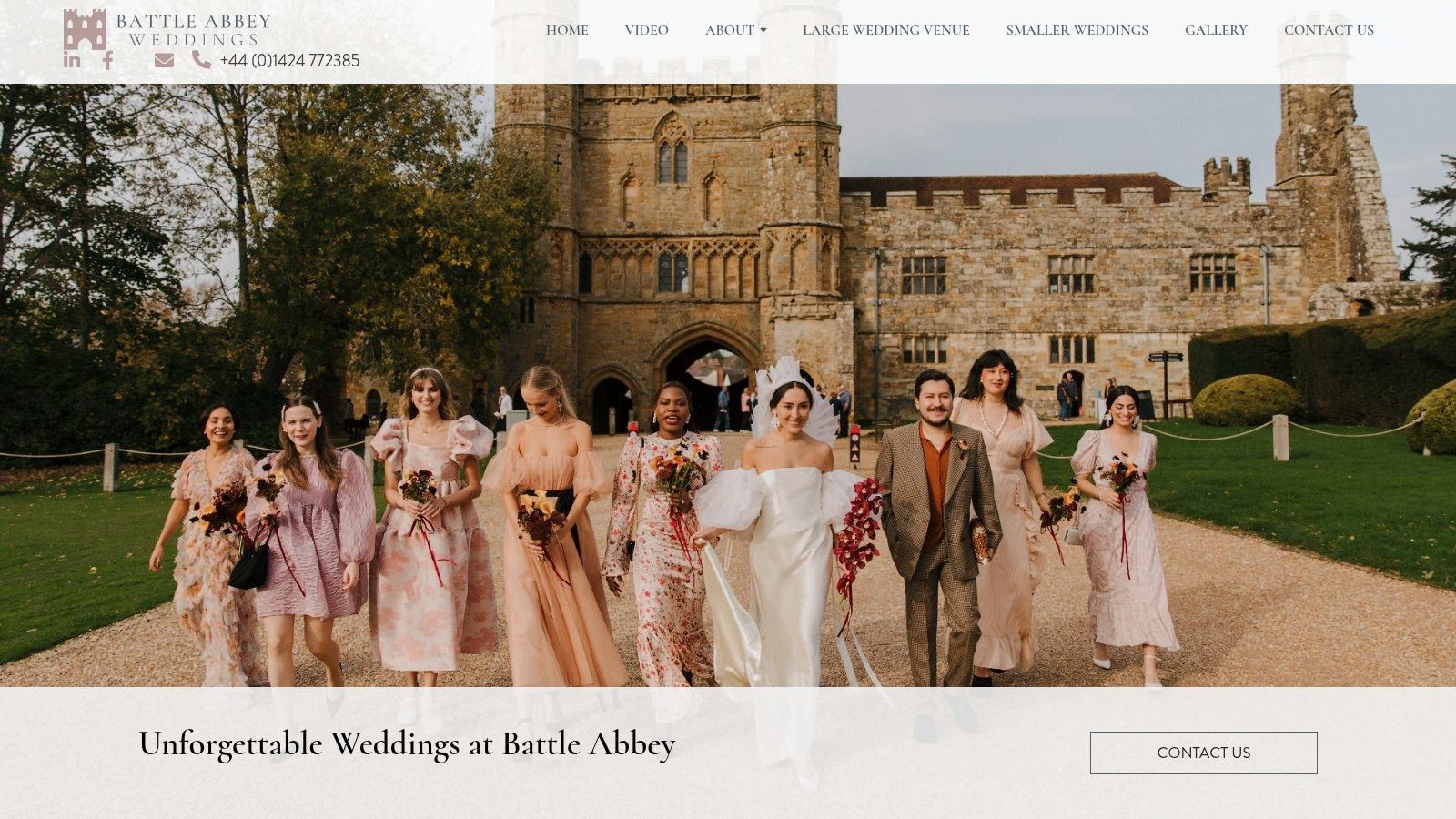
Historic venues add a certain atmosphere to that moment. High ceilings, candlelight, old stone, long tables, and a room full of expectation can make a short speech feel even more resonant. In those settings, clarity matters. So does restraint. You don't need to fill the space with more words. You need to choose the right ones.
If you'd like a little inspiration for the closing lines, especially if your family enjoys raising something stronger than Champagne, these unforgettable toasts for whiskey drinkers can help you find wording with a touch of character. If the celebration is more classic in style, even the visual ritual of glasses of Champagne ready for the toast reminds you what the ending should feel like. Clean, celebratory, and shared.
A good final toast does not need grandeur. It needs warmth, confidence, and a genuine blessing for the couple's future. Speak to them. Let the room witness it. Then raise your glass.
If you're looking for a wedding venue where speeches, toasts, and family moments feel every bit as memorable as the setting itself, Battle Abbey Weddings offers a remarkable backdrop in East Sussex for celebrations that are personal, elegant, and beautifully organised.