You're probably doing what many couples do when they first fall for a historic venue. You scroll through photographs of candlelit halls, ancient windows, lawns edged by old stone, and you think, yes, this is the feeling. But once the first rush of romance settles, a practical question appears. What exactly makes a Tudor house feel so memorable, and how can those features shape a wedding day rather than decorate it?
That's where good Tudor house facts become useful. The Tudor period in England ran from 1485 to 1603, beginning with Henry VII's victory over Richard III at the Battle of Bosworth and ending after the reign of Elizabeth I. Those years changed English building in ways you can still see today. Materials shifted, rooms became more expressive, and houses started to project status through craft as much as through size.
For weddings, that matters because architecture directs mood. Timber framing gives drama. Leaded windows soften light. Carved panelling adds depth to portraits. Terraces and staircases create movement, entrances, and a sense of occasion. A Tudor venue doesn't just provide a backdrop. It gives your day structure, atmosphere, and a story older than any one celebration.
The most memorable weddings in historic settings work with the building rather than against it. Once you understand the key features, you can style more intelligently, plan photographs more beautifully, and make each part of the day feel as though it belongs there.
1. Half-Timbered Façades and Timber Framing
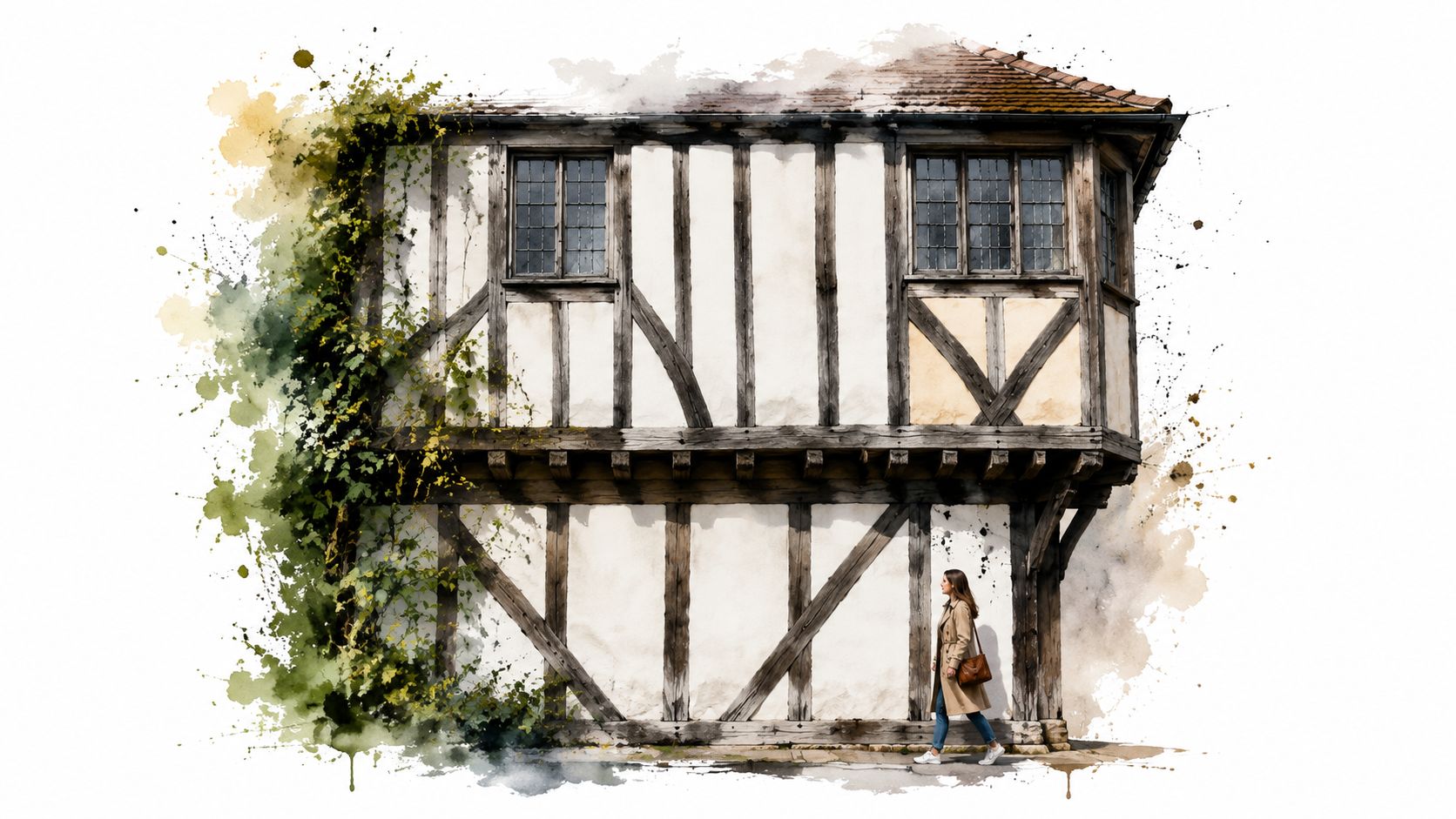
You arrive for a venue visit just as the afternoon light turns honey-gold. Across the courtyard, dark oak beams cross pale panels in a pattern that feels orderly and hand-touched at once. Before you have stepped inside, the building has already set the tone for the day. Historic, intimate, and subtly theatrical.
Half-timbering is one of the clearest Tudor signatures. The timber frame is the building's visible skeleton, with infill panels fitted between the structural members. If stone walls read as solid mass, timber framing reads like calligraphy across a page. You can see the craft. You can also see the age, because old timber rarely sits in perfect modern straightness. That slight irregularity is part of the charm.
During the Tudor period, timber remained a familiar building method even as brick became more fashionable in wealthier settings. That is why timber-framed houses often carry a more domestic, lived-in character than later grand brick façades. For wedding couples, that difference matters. A timbered exterior feels welcoming rather than remote, which is ideal for celebrations that want grandeur with warmth.
A photographer benefits from those dark beams for a simple reason. They organise the frame. Much like the lead lines in a stained-glass window, the timbers guide the eye toward faces, hands, and movement. A couple standing against a half-timbered wall often needs very little extra styling because the architecture already gives rhythm, contrast, and depth.
How to use timber framing on a wedding day
Treat the façade as part of the visual plan, not just the setting beyond it.
- Place a first look where the beam pattern is visible: Clear geometry behind the couple gives the moment shape and makes the photographs feel intentional.
- Use the entrance for arrival shots: Timber-framed porches and gables create a natural stage for walking in, greeting guests, or gathering the bridal party.
- Choose florals that soften rather than cover: Garden-style arrangements, climbing greenery, and restrained urns sit beautifully against timber because they echo the building's age without hiding its lines.
- Schedule a few portraits at dusk: Warm light on pale infill, with the beams turning almost ink-dark, creates a rich storybook effect.
Little Moreton Hall is often admired for the sheer drama of its timber frame, but the lesson applies more widely. Venues with visible Tudor or Tudor-inspired structure offer built-in composition. If you are comparing settings with strong period character, Burton Agnes Manor House wedding inspiration shows how historic architecture can shape mood, portrait locations, and the flow of a celebration.
There is an emotional reason couples respond to these buildings so quickly. Timber framing suggests shelter. It feels protective, like the house is holding the day within it. For ceremony entrances, confetti exits, and quiet portraits just after the vows, that sense of enclosure can make a large venue feel personal.
At a place such as Battle Abbey, that quality becomes especially useful. The exterior can do more than look beautiful in photographs. It can help you choose where guests gather, where the couple steps out for golden-hour portraits, and where the wedding story first appears in the album.
For a closer sense of how timbered historic buildings read on screen, this short film gives useful visual context.
2. Decorative Plasterwork and Ceiling Designs
Some of the best Tudor house facts are overhead. Couples often spend months thinking about flowers, table linen, and place settings, then walk into a historic room without ever looking up. In a Tudor interior, the ceiling may be one of the strongest design features in the entire space.
Decorative plasterwork signalled wealth and taste. Skilled craftsmen shaped plaster into patterned ribs, geometric divisions, floral motifs, and heraldic references. In rooms such as a library, hall, or long gallery, those details turn the ceiling into a stage canopy. The architecture does some of the decorating for you before a single candle or arrangement is brought in.
That's especially useful in wedding planning because ornate ceilings reward restraint. If a room already carries visual richness overhead, you don't need to overwhelm the floor level with oversized props. A well-placed cake table, polished glassware, and candlelight can be enough.
Where plasterwork helps most
Consider the moments when guests pause and look around. During cocktails, before dinner, or while waiting for speeches, people notice the room itself. Plaster ceilings give those pauses texture and grandeur.
Practical rule: Ask your photographer for at least a few upward-angled room shots before guests enter. Those images preserve the architecture, not just the event.
At places associated with grand historic interiors, such as Hampton Court Palace or Knole House, ceilings often shape the whole emotional effect of the room. The same principle works in a wedding venue. If your ceremony space or dining room has strong plasterwork, position key features beneath the most decorative portion of the ceiling. The cake, the top table, or the couple's signing table will instantly look more considered.
A lighting designer can help too. Gentle uplighting brings plaster details forward in the evening without flattening them. Harsh colour washes usually fight the craftsmanship. Soft gold, candle tones, and carefully controlled pin spotting tend to honour the room better.
Styling choices that let the ceiling lead
- Use lower centrepieces: Tall arrangements can block sightlines to the architecture.
- Place focal furniture deliberately: A cake stand or sweetheart table should sit where guests naturally glimpse the ceiling above it.
- Brief your videographer early: Ceiling detail often disappears if camera angles stay too low all evening.
Plasterwork creates a kind of quiet ceremony. It draws the eye upward, slows the room down, and makes everything beneath it feel more significant.
3. Diamond-Paned Mullioned Windows
If you want Tudor house facts that translate directly into wedding photographs, start with the windows. Tudor-era houses often used small panes of glass set within leaded patterns, including the diamond shapes that many people now see as the most romantic expression of the style. Large expanses of glass were costly, so windows also carried social meaning. Light itself became a display of status.
Educational material on Tudor domestic life notes that glass windows were expensive, many homes had dirt floors, and sanitation was basic, while chimneys were a status symbol because they allowed separate heated rooms and greater privacy, as explained in this guide to what life was like in a Tudor house. That reminder matters. The beauty couples admire now once existed within a world that was colder, smokier, and less comfortable than modern wedding guests would ever accept.
That contrast is part of the appeal. You get the romance of filtered historic light without the hardship that once came with it.
Why these windows photograph so beautifully
Diamond panes break light into smaller shapes. Instead of one bright wash, you get a gentler pattern across stone, plaster, skin, and fabric. Veils, sleeves, and dark tailoring all benefit from that softness.
A couple standing beside a mullioned window can be photographed in several ways. Face the light for delicate portraits. Turn slightly for profile depth. Step back for a silhouette that lets the geometry of the leadwork frame the body.
Use window light for portraits wherever possible. Flash often removes the very shadows and texture that make historic rooms feel alive.
Haddon Hall and Penshurst Place are admired for their period windows, but the lesson applies widely. During a venue visit, notice how the light moves at different times of day. A morning ceremony may produce a very different atmosphere from late afternoon drinks.
Best wedding uses for mullioned light
- Bridal preparation portraits: Window light flatters fabric, jewellery, and flowers.
- Quiet couple shots between events: Historic windows create intimacy without elaborate staging.
- Cake and detail photography: Glassware, icing, and stationery gain depth when placed nearby.
A beautiful Tudor window doesn't merely brighten a room. It edits the light into something more poetic.
4. Grand Staircases and Vertical Space Usage
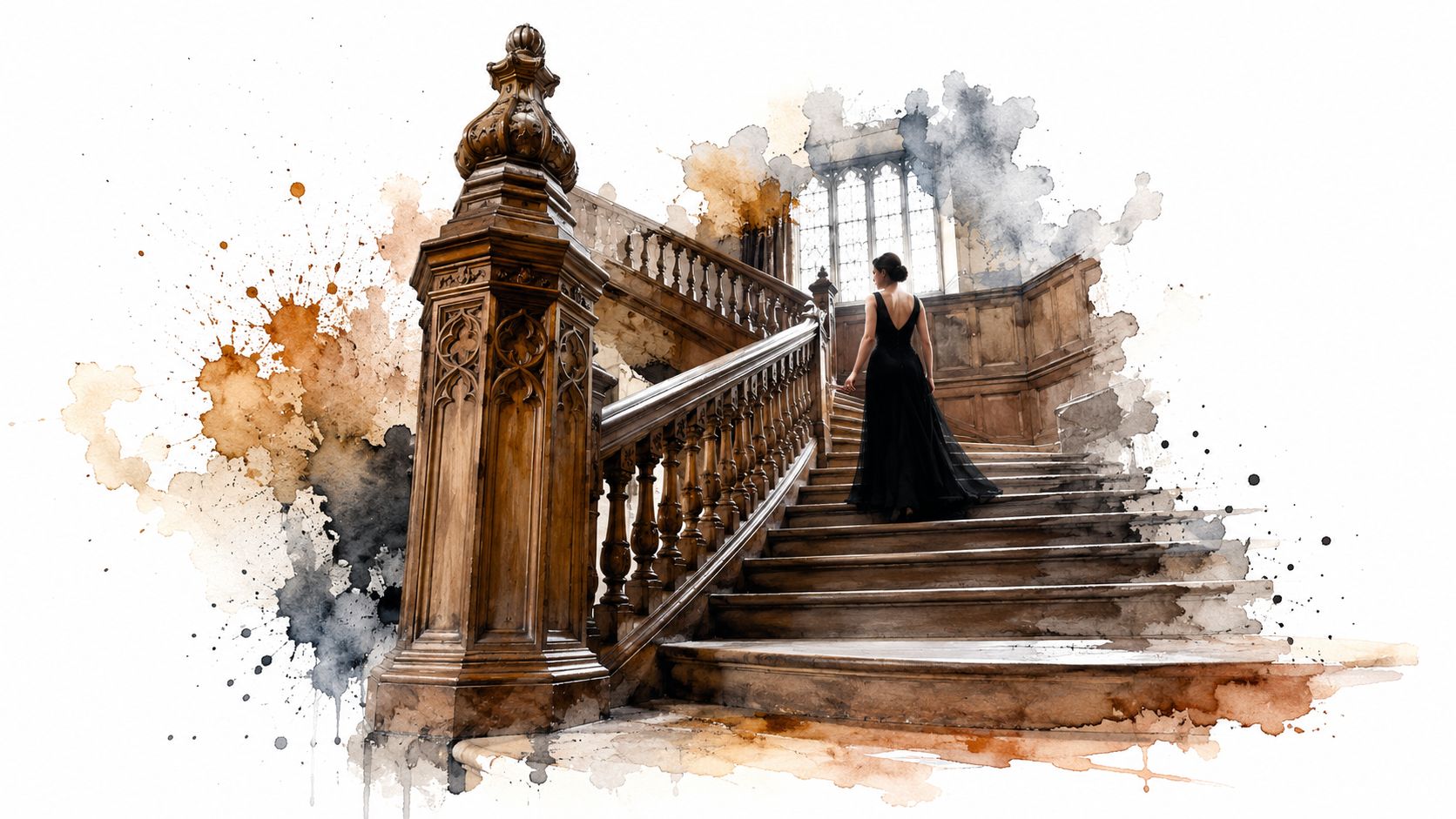
A Tudor house often reveals its confidence through movement. Not only through halls and chambers, but through the route between them. A staircase in a historic manor isn't just a means of getting upstairs. It's a processional device.
Large houses used stairs to separate public life from private life, ceremony from service, arrival from retreat. That vertical journey still matters during a wedding. The bride descending. The couple pausing on a landing. Guests looking up as someone enters. These are moments architecture can heighten.
Planning around the staircase
The most practical question is scale. A staircase may look magnificent, but it also needs to work for a dress with a train, for older relatives, and for a photographer carrying equipment. During your planning visit, walk it slowly. Test the turn of the bannister. Check how a veil behaves in the air around it.
Historic stairs are excellent for layered photography because the photographer can work from above, below, or across the landing. That creates a variety of images without changing location.
- Use the landing as a pause point: It gives space for a bouquet adjustment, a glance back, or a portrait with attendants.
- Time the entrance music carefully: Processional timing feels different on stairs than on level ground.
- Think about guest sightlines: A staircase entrance can be dramatic, but only if guests can see it.
At Hatfield House and Arundel Castle, ceremonial staircases help build anticipation before the next room opens. Couples drawn to that stately feeling often explore other heritage settings too. If you're comparing venue styles across historic properties, this guide to castles in England for weddings is useful for understanding how vertical architecture changes the atmosphere.
A staircase should feel theatrical, not stressful
A good staircase entrance looks effortless because the planning happened earlier. Rehearse the pace, the hand position, and where the photographer will stand.
Even a modest staircase can become one of the most memorable visual features of the day. It creates suspense, elegance, and a natural sense of transition from one chapter of the celebration to the next.
5. Linenfold Panelling and Wood Carving Details
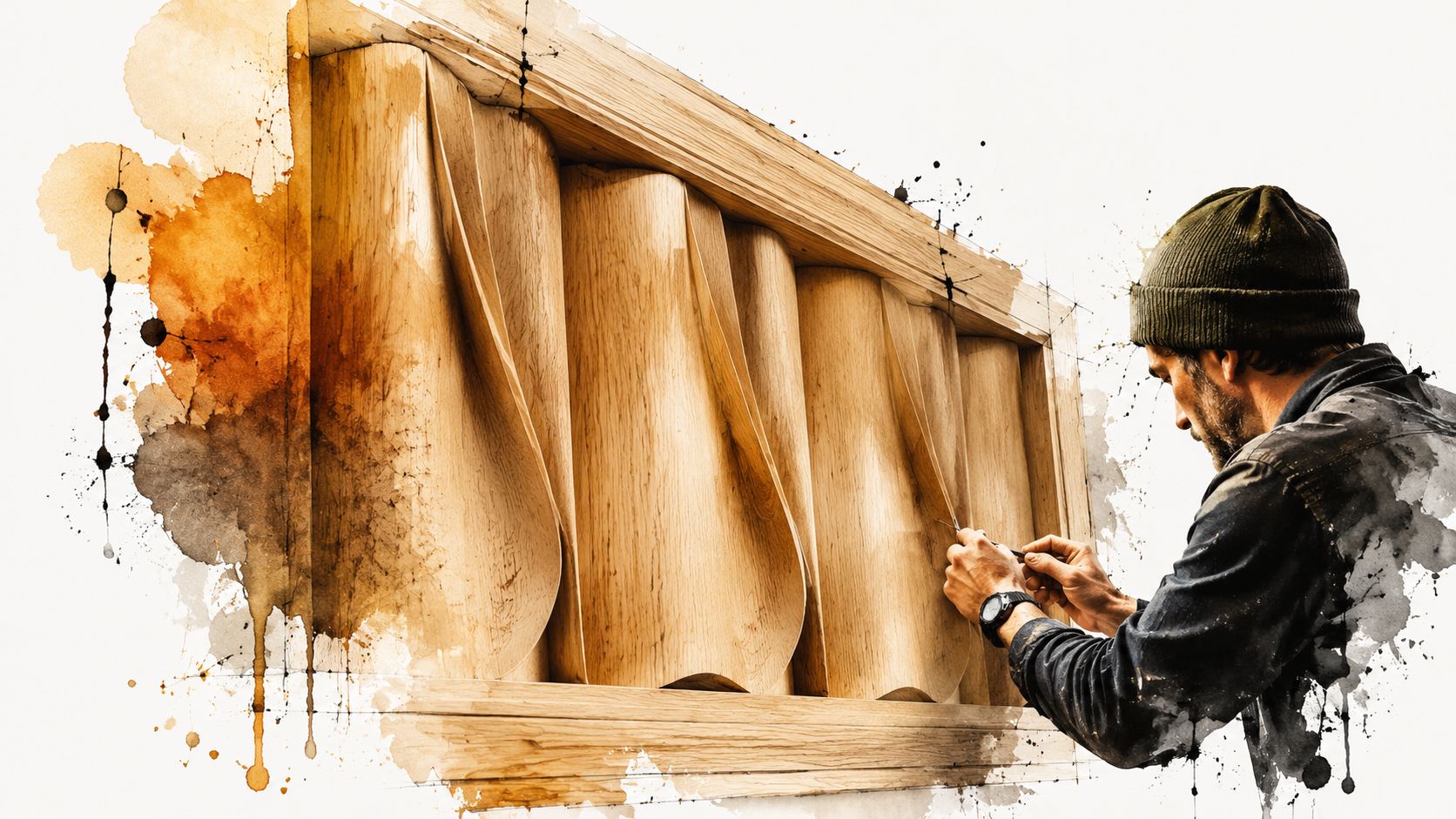
Among the more refined Tudor house facts is the popularity of linenfold panelling. This carved wood treatment imitates folded cloth, turning solid oak into something that appears soft, draped, and almost textile-like. It's a clever visual effect, and in principal rooms it signalled expense, skill, and cultivated taste.
For weddings, linenfold panelling matters because it adds texture without clutter. A plain modern wall often needs flowers, signage, or fabric to avoid looking empty in photographs. A carved Tudor wall already has rhythm. Light catches the recesses and ridges. Portraits gain depth before any styling begins.
Why carved timber changes the mood of a room
Wood has warmth that stone and plaster don't always provide. In a library, dining room, or hall, panelling absorbs light softly and creates a more intimate atmosphere. That's one reason speeches, dinners, and candlelit toasts often feel especially rich in panelled rooms.
The carving also rewards close photography. Hands holding rings, a sleeve against the wall, a profile portrait near the panel edge. These smaller frames often become favourite album images because they feel tactile and specific to the venue.
Styling advice for panelled interiors
- Keep signage elegant and limited: Too many boards and easels compete with the historic surface.
- Use side lighting gently: Wall washers or discreet sconces reveal the carving far better than overhead glare.
- Choose florals with shape, not bulk: You want the eye to read both the arrangement and the panel texture.
Rooms with strong carved detail, such as those seen in major historic houses like Hampton Court Palace or Compton Wynyates, don't need styling that shouts. They respond best to editing. Fewer decorative decisions, made more carefully, usually produce the richer result.
A linenfold room can also influence what people wear and how they move. Velvet, satin, black tie, long sleeves, pearl details, and polished shoes all feel at home against carved oak. The setting encourages a certain grace.
6. Tall Chimneys and Decorative Brickwork
Look up from the gardens and the roofline often tells you as much as the rooms below. Tudor chimneys became increasingly expressive as heating improved and brickwork spread more widely. What began as a practical necessity turned into architectural display.
This is one of those Tudor house facts that works especially well for wedding photography because chimneys give the building a silhouette. From lawns, terraces, and approach drives, they rise above the roof in rhythmic clusters and patterned stacks. In wide shots, they help the eye understand the scale and personality of the venue.
Why chimneys matter beyond the roof
The domestic history matters here too. In Tudor life, a chimney signalled comfort and status because it allowed heat to be directed into separate rooms instead of escaping through more primitive arrangements. Today, couples don't need to know the engineering to feel the effect. Chimneys suggest hearth, shelter, and household. They carry a quiet symbolism that suits a marriage celebration.
Thornbury Castle and Hever Castle both show how distinctive chimney lines can define an exterior view. At a venue with strong rooftop brickwork, those stacks should be treated as compositional anchors, not cropped out.
Stand far enough back in garden portraits for the chimney line to remain visible above the main roof. That upper silhouette often gives the image its historic identity.
Wedding uses for decorative chimney views
- Golden-hour couple portraits: Chimneys become elegant vertical markers behind softer outdoor light.
- Videography establishing shots: A slow exterior shot feels more characterful when the roofline is included.
- Guest orientation outdoors: “Meet by the terrace beneath the chimneys” is easier than relying on temporary signage alone.
Decorative brickwork around chimneys also pairs beautifully with seasonal flowers. Late summer greenery, autumn tones, or winter candlelight all sit well against warm brick. The effect is especially strong if drinks, canapés, or evening sparklers happen within sight of the house.
A chimney stack does more than release smoke. In a historic wedding setting, it gives the whole building a recognisable crown.
7. Symmetrical Room Layouts and Proportional Design
Not every Tudor interior is perfectly balanced, but many principal rooms use proportion and symmetry to create authority. Doors align. Windows answer each other across a wall. The central axis of the room guides where people stand, enter, or focus their attention.
This is one of the most useful Tudor house facts for planning the ceremony itself. A symmetrical room naturally helps with staging. It tells you where the eye wants to go. If you ignore that and place the ceremony table or floral arch awkwardly off-centre, the room can feel unsettled. Work with the building and the whole scene becomes calmer.
Let the room do the arranging
A balanced room often needs less intervention than couples expect. The architecture already provides order.
- Place the ceremony focal point on the central axis: This makes photographs feel composed without trying too hard.
- Align chairs and aisle markers carefully: In historic spaces, small visual misalignments become surprisingly noticeable.
- Use matching arrangements in pairs: Symmetrical flowers usually look better than a single oversized installation.
Some couples worry that symmetry will make the day feel stiff. It doesn't have to. Formal room layout can free the emotional moments to stand out more strongly, because the setting is visually settled.
If you enjoy comparing how different historic periods handle balance and room planning, this look at Georgian house style and spatial order provides an interesting contrast with Tudor character.
Where symmetry helps the most
The ceremony is the obvious answer, but speeches and wedding breakfasts benefit too. A long room with clear proportion photographs beautifully from the back, especially once candles, glassware, and place settings echo the architectural rhythm.
In a symmetrical room, ask your photographer for one straight-on wide shot before guests sit down. It often becomes the image that best captures the venue itself.
Good proportion creates a sense of rightness. Guests may not analyse it, but they feel it.
8. External Terraces and Transitional Garden Architecture
Some of the most romantic Tudor house facts aren't limited to the house. They live in the threshold between building and grounds. Terraces, steps, lawns, and raised walkways turn the outside into an extension of ceremony.
This matters greatly for weddings because transitions are where the day breathes. Guests leave the hall, gather with drinks, drift into conversation, and then look back at the building from a new angle. A terrace gives shape to that movement. It feels more intentional than a simple patch of open ground.
At a venue like Battle Abbey, terraces and lawns can do several jobs at once. They create arrival scenes, drinks settings, group-photo locations, and moments of stillness before the next part of the day begins. They also connect architecture with view, which is one of the great pleasures of a historic English estate.
How to use outdoor architecture well
The key is to plan these spaces as active parts of the celebration rather than as spare overflow areas. Walk the route your guests will take. Notice where they'll first see the view, where bottlenecks might form, and where the house looks most impressive behind them.
- Place canapés where guests can pause without blocking sightlines: A terrace should feel open, not crowded.
- Use steps and level changes for group photography: They help organise large gatherings elegantly.
- Time portraits for shifting light: Stone, lawn, and old walls all change character through the afternoon and evening.
Penshurst Place and Hatfield House show how formal outdoor spaces can frame a great house rather than compete with it. The same principle works on a more intimate scale too. A small terrace with a strong outlook can feel as powerful as a vast garden if the view is well used.
Why terraces are so emotionally effective
A terrace lets guests feel history underfoot while still enjoying air, the scenery, and movement. That combination is rare. Inside, the celebration feels protected and ceremonial. Outside, it widens into something softer and more expansive.
For couples, these in-between spaces often produce the most natural photographs of the day. Less posed, less tightly scheduled, and full of genuine interaction. The building remains present, but the mood relaxes.
8-Point Comparison of Tudor House Features
A Tudor venue often asks couples to make two plans at once. One is practical. Where will people stand, move, dine, and dance? The other is atmospheric. Which original features will give the day its sense of occasion, softness, grandeur, or drama? This comparison table helps with both, so each architectural detail becomes easier to read and easier to use well in a wedding setting.
| Feature | Implementation Complexity (🔄) | Resource Requirements (⚡) | Expected Outcomes (⭐) | Ideal Use Cases (📊) | Key Advantages (💡) |
|---|---|---|---|---|---|
| Half-Timbered Façades and Timber Framing | 🔄 High, structural carpentry and preservation | ⚡ High, quality timber, joiners, ongoing maintenance | ⭐ High, instantly recognisable historic aesthetic | 📊 Venue façades, photo backdrops, romantic settings | 💡 Strong character and photographic contrast. Long-lived when carefully maintained |
| Decorative Plasterwork and Ceiling Designs | 🔄 High, specialist moulding and conservation | ⚡ Medium‑High, skilled craftsmen, conservation materials | ⭐ High, adds grandeur and overhead visual interest | 📊 Formal interiors, ceremony and reception rooms, refined events | 💡 Prestigious period detail that often reduces the need for extra décor |
| Diamond‑Paned Mullioned Windows | 🔄 Medium, glazing and lead or wood muntin specialists | ⚡ Medium, restoration glass, leadwork, periodic repair | ⭐ High, gentle backlighting and historic authenticity | 📊 Photography‑led ceremonies, intimate indoor portraits | 💡 Creates broken, painterly light that flatters close portraits and silhouettes |
| Grand Staircases and Vertical Space Usage | 🔄 Medium, joinery and structural coordination | ⚡ Medium, carpentry, safety and access planning | ⭐ High, dramatic processional moments and depth in photos | 📊 Entrances, processional photography, multi‑level receptions | 💡 Natural focal point that gives movement, ceremony, and stronger composition |
| Linenfold Panelling and Wood Carving Details | 🔄 High, intricate carving or careful conservation | ⚡ Medium, quality timber, skilled conservators | ⭐ High, rich textured backdrop with historical authenticity | 📊 Intimate dining rooms, portrait sessions, close‑up detail shots | 💡 Adds warmth and depth, often with very little extra styling |
| Tall Chimneys and Decorative Brickwork | 🔄 Medium, masonry expertise for repair and restoration | ⚡ Medium, brickwork materials, occasional maintenance | ⭐ Medium, distinctive exterior silhouette and venue identity | 📊 Garden and terrace photography, branding and skyline shots | 💡 Iconic vertical feature that anchors wide outdoor compositions |
| Symmetrical Room Layouts and Proportional Design | 🔄 Low‑Medium, measured planning and preservation | ⚡ Low, layout, furniture placement, minor adaptations | ⭐ High, balanced compositions and easy staging for events | 📊 Central ceremonies, formal events, centred photography | 💡 Natural visual harmony reduces the need for elaborate staging |
| External Terraces and Transitional Garden Architecture | 🔄 Medium, stonework, drainage and garden integration | ⚡ Medium‑High, paving, balustrades, seasonal upkeep | ⭐ High, expands usable event space and provides dramatic views | 📊 Outdoor ceremonies, large receptions, outdoor photography | 💡 Smooth indoor‑outdoor flow with multiple photo locations |
Read this table as a planning tool, not just a style summary. Half-timbering gives instant Tudor character in arrival shots. Mullioned windows soften interior portraits. Staircases shape movement through the day like a carefully staged entrance in a historic drama. At a venue such as Battle Abbey, those choices can help you decide where to place the ceremony, when to schedule portraits, and which rooms need almost no added decoration because the architecture is already doing the work.
Your Wedding The Next Chapter in a Historic Story
Choosing a Tudor venue is more than selecting a pretty building. It's choosing a setting shaped by centuries of craft, social change, and domestic life. The Tudor period in England lasted from the late fifteenth century into the early seventeenth, and the buildings that survive from that world still speak with unusual force. They do it through materials, through light, through proportion, and through detail.
That's why Tudor house facts matter when you're planning a wedding. They help you see past the generic label of “historic venue” and understand what the building offers. Half-timbering gives drama before guests even step inside. Plaster ceilings reward restraint. Mullioned windows soften portraits. Staircases create ceremonial movement. Carved panelling adds richness to dinner and speeches. Chimneys define the roofline and deepen garden views. Symmetry helps staging feel calm and elegant. Terraces let the day unfold between architecture and the grounds.
There's also a deeper emotional reason these buildings work so well. Popular imagination sometimes treats Tudor homes as cosy fairy-tale places, yet the historical reality was often far less comfortable. Many houses had basic sanitation, limited glass, and harsh living conditions by modern standards. When a couple celebrates in a beautifully maintained historic setting today, the romance comes partly from that contrast. You inherit the atmosphere of the past, but your guests enjoy warmth, light, hospitality, and ease.
That tension is part of the magic. A Tudor venue feels storied, but your wedding gives it fresh life. The old hall that once hosted another age now holds your vows. The windows that once admitted precious daylight now frame your photographs. The terrace where guests raise a glass becomes one more layer in the long life of the place.
For couples planning in Southeast England, that sense of continuity can be especially powerful. The venue isn't only where the day happens. It becomes part of what the day means. Your celebration gains texture from the building, and the building gains another memory from your celebration.
The best historic weddings don't try to overpower the architecture. They listen to it. They let the room shape the ceremony, the window shape the light, the stair shape the entrance, and the terrace shape the gathering. When you plan that way, the result feels natural. Not themed. Not forced. Exactly right.
And that may be the most valuable of all Tudor house facts. These buildings were made to leave an impression. Centuries later, they still do.
If you're looking for a historic setting that combines Tudor character, dramatic terraces, and remarkable photo opportunities, Battle Abbey Weddings offers a distinctive East Sussex venue where architecture and atmosphere work together beautifully. Couples can celebrate in richly detailed interiors, spill out onto sweeping outdoor spaces, and create a day that feels both personal and rooted in one of England's most evocative historic settings.