The first time a couple asks about a Leeds Castle wedding, it's rarely about napkin colours or canapés. It's usually something far less glamorous and far more important: can we get married where the iconic photo is, and how late can our party really go?
A Fairy-Tale Wedding at the Loveliest Castle in the World
Arriving at Leeds Castle has the effect great historic venues are supposed to have. The approach slows people down. Guests stop talking for a second, look across the water, and realise this isn't just another country house with a good marketing team.
For couples who want a wedding that feels English, romantic, and unmistakably grand, Leeds Castle has obvious pull. The setting is cinematic without feeling artificial. The moat, the bridge, the stonework, the lawns, and the interiors all do a lot of the design work for you, which matters more than most couples realise in the early planning stages. A strong venue can reduce how much dressing, styling, and visual compensation you need elsewhere.
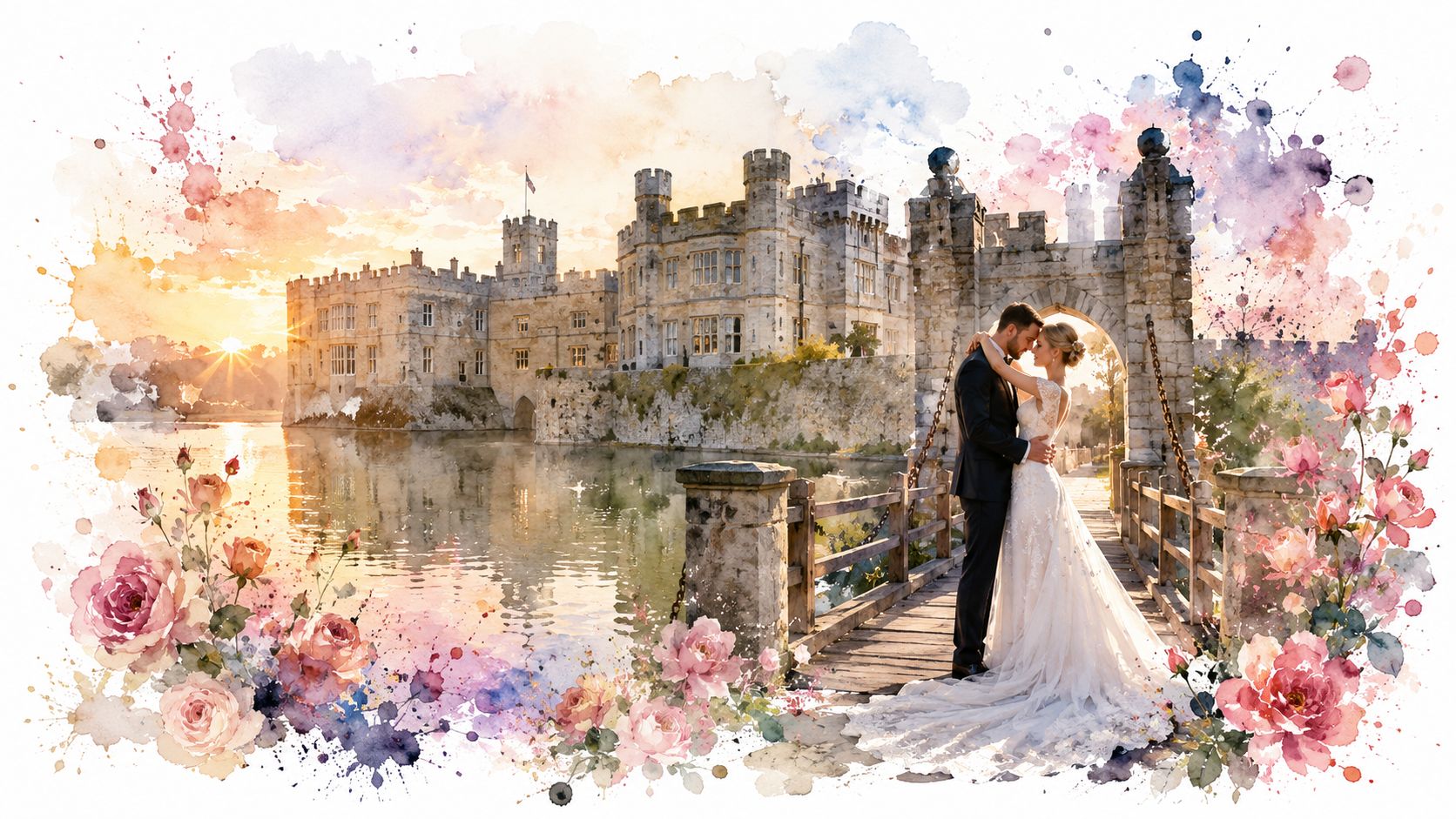
Historic venues also come with trade-offs. The beauty is real, but so are the rules, access limitations, sound restrictions, licensed areas, turnaround times, and guest movement issues. That's where couples often get caught. They fall in love with the image of a castle wedding, but they haven't yet asked the questions that make the day run smoothly.
Leeds Castle earns its reputation as a destination couples actively seek out, and if you're comparing other heritage settings, this broader look at castles in Britain helps put it into context.
Why Leeds Castle feels different
Some venues are beautiful in photographs and merely adequate in person. Leeds Castle tends to work the other way too. It has scale, but the main wedding spaces still support a celebration that feels personal rather than sprawling. That balance is difficult to get right in a historic property.
Three things usually matter most here:
- Sense of arrival: Guests feel they're attending an event, not just a booking.
- Built-in atmosphere: Stone, fireplaces, views, and formal rooms carry the tone.
- Clear identity: A Leeds Castle wedding doesn't need much explanation. People understand the appeal instantly.
Practical rule: The more iconic the venue, the more precise your planning needs to be. Beauty never removes logistics. It only raises the standard guests expect.
The romance is easy to see. The useful part is understanding exactly where that romance works brilliantly, where it needs structure, and where brochure wording leaves unanswered questions.
Exploring Your Leeds Castle Venue Options
A couple can stand on the lawn, look back at the castle façade, and immediately know why they booked this place. Then essential questions arise. Can that exact spot be used for a legal ceremony, or only for photographs? If rain moves everyone indoors, does the indoor room still suit the guest count? If the party runs late, what changes for music, bar service, and guest flow?
Those are the decisions that shape the day.
Leeds Castle works best when the venue choice follows the practical rhythm of the wedding, not just the hero image on a Pinterest board. Historic venues always ask for compromise somewhere. The strongest plans are the ones that choose those compromises early.
Leeds Castle Wedding Venue Capacities
| Venue Space | Ceremony Capacity | Wedding Breakfast Capacity | Evening Reception Capacity |
|---|---|---|---|
| Castle Dining Room | Up to 100 | Not specified | Not specified |
| Croquet Lawn | Up to 100 | Not specified | Not specified |
| Pavilion Lawn | Up to 100 | Not specified | Not specified |
| The Salon | Not specified | Up to 100 | Not specified |
| Leeds Castle overall event format | Up to 100 | Up to 100 | Up to 120 |
| Maiden's Tower | Up to 80 | Not specified | Not specified |
One source for the baseline figures is Hitched's Leeds Castle venue page, which lists the Castle Dining Room for ceremonies of up to 100, both the Croquet Lawn and Pavilion Lawn for outdoor ceremonies of up to 100, the Salon for wedding breakfasts of up to 100, the wider castle format up to 120 for evening receptions, and Maiden's Tower for smaller celebrations.
Capacity is only the first filter. The harder question is how each space behaves once guests, staff, furniture, musicians, and a wet-weather backup are added.
The Castle Dining Room and Salon
Inside the main castle, the Dining Room usually suits couples who want the formality of a legal ceremony in a space that still feels warm rather than stiff. Natural light matters here. In historic buildings, darker rooms can look atmospheric in person but heavy in photographs, especially for winter dates and later afternoon ceremonies.
The Salon is often the stronger choice for the meal. It has enough architectural character to carry the room without asking you to spend heavily on styling, which is a good trade-off if your budget needs to cover entertainment, overnight accommodation, or a more ambitious drinks reception. Rooms with this much period detail also reward restraint. Too many props can fight the building.
Outdoor ceremony spaces and the question couples actually ask
The unspoken question is usually very specific. Can you marry legally outside with the main castle behind you?
At venues like Leeds Castle, the answer depends on the licensed ceremony area itself, not on any stretch of lawn you happen to love visually. The Croquet Lawn and Pavilion Lawn are the outdoor ceremony spaces listed by the venue source above. If your priority is a legal outdoor ceremony with the castle presented in a particular way in the background, confirm the exact approved setup with the venue team before you send invitations, brief the florist, or build a shot list for the photographer.
That point catches couples out more often than almost anything else.
Outdoor ceremonies are beautiful, but they ask more of the plan:
- Weather backup has to be equally acceptable. A backup room should feel chosen, not tolerated.
- Guest comfort changes quickly. Sun, wind, uneven ground, and heel-friendly access all matter.
- Timing gets tighter. Moving musicians, registrars, chairs, and drinks service between areas can eat into the schedule.
If the outdoor setting is the emotional priority, protect it properly. If legal certainty and lower stress matter more, an indoor ceremony with outdoor portraits often gives a better overall result.
Maiden's Tower and the estate's other personalities
Not every Leeds Castle wedding needs to feel grand in the same way. Maiden's Tower suits smaller guest counts and usually appeals to couples who want privacy and a stronger sense of retreat. It is often the better fit for an intimate wedding where every guest is part of the full day, rather than a large celebration that expands significantly in the evening.
Other estate spaces can suit different styles, but the planning logic stays the same. Ask what the room does to the timeline, the atmosphere, and the staffing plan. Couples comparing heritage venues often find it useful to review how wedding venues and prices vary by format, guest count, and level of exclusivity before deciding whether they want stately, rustic, or fully private-use character.
Reception timing, noise, and party size
This is another area where brochure language rarely answers the core concern. Couples want to know how late the evening can feel lively.
At castle venues, reception timing is shaped by more than the DJ finish time. The practical limits can include where the party is being held, how close guest bedrooms are to the entertainment space, what sound management the venue requires, and how many people still remain on site late into the evening. A party of 40 behaves differently from a party of 120. Smaller groups can lose momentum in a large room. Larger groups create more movement, more bar queues, and more pressure on transitions between dinner and dancing.
Ask these questions before you commit to a room plan:
- What is the latest finish for amplified music in the space you want to use?
- Do larger evening guest numbers change where dancing or the bar can be set up?
- Will sound levels need to reduce at a certain point?
- How does the venue handle guest movement if bedrooms are nearby?
The best Leeds Castle layout is the one that still works at 9:30 pm, not just at 1:30 pm when the ceremony chairs are perfectly lined up.
Choose the space that matches your guest experience from arrival to last dance. The prettiest option on paper is not always the easiest room to marry in, dine in, and celebrate in on the same day.
For many couples, the main castle remains the strongest choice because it gives a coherent journey. Ceremony, drinks, dinner, and photographs all feel part of the same story. For others, a smaller setting on the estate creates a better atmosphere and fewer operational compromises. The right answer depends on where you want the day's pressure points to sit.
Understanding Leeds Castle Wedding Packages and Costs
A castle wedding budget rarely goes off course because of one dramatic overspend. It usually slips through polite assumptions. Couples hear “exclusive use,” see a starting package price, and assume the legal ceremony, drinks, bedrooms, evening setup, staffing, and late-night logistics all sit neatly inside it. At a venue like Leeds Castle, they often do not.
As noted earlier, published pricing gives a helpful starting point for first-pass budgeting. Treat it as the cost of entry to the venue experience, not the final cost of the wedding you will stage there.
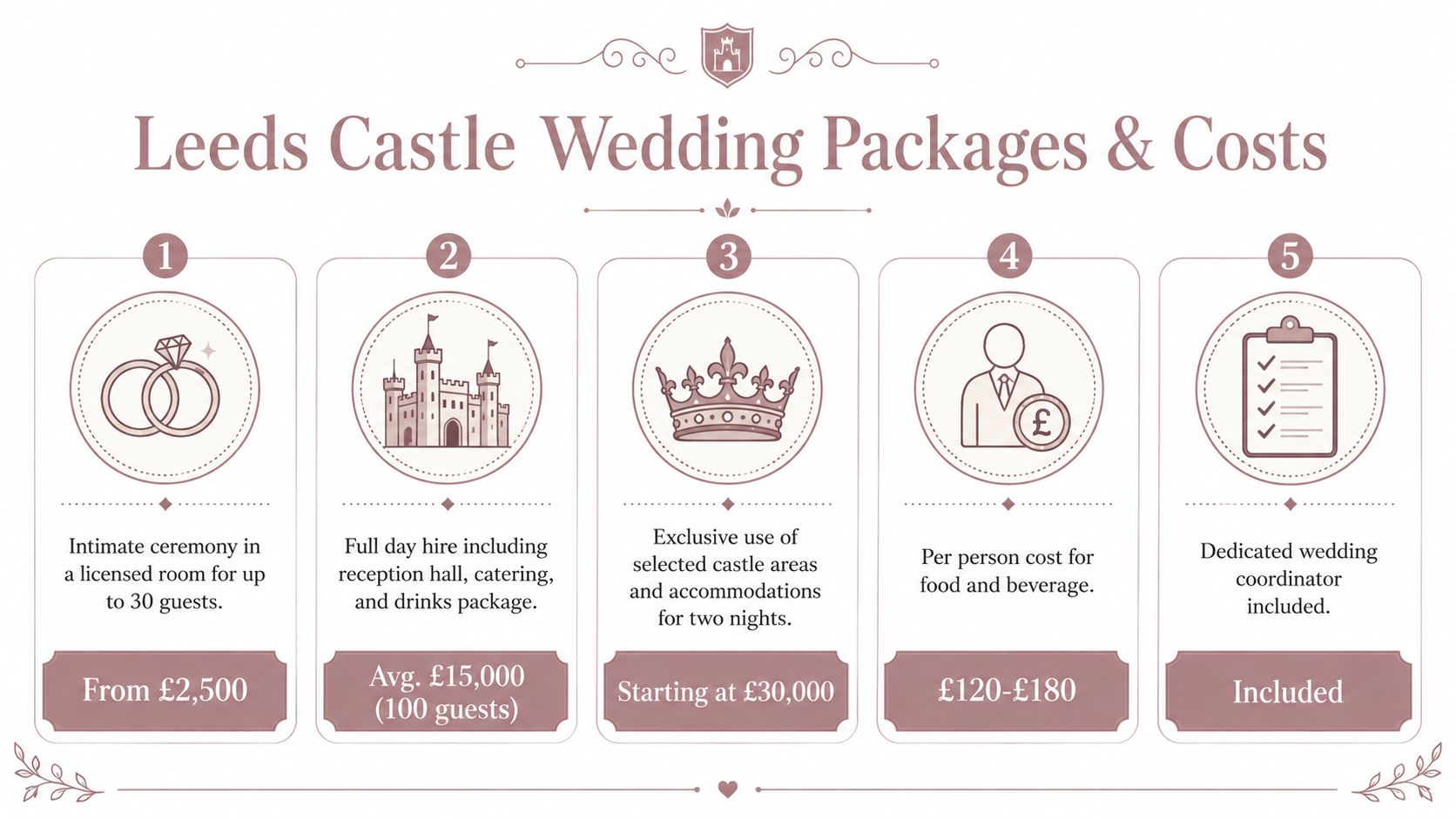
What a Leeds Castle package usually covers, and where couples get caught out
Historic venue packages tend to cover the framework of the day. They do not always cover every decision that makes the day feel finished.
Ask for a line-by-line breakdown of these areas before you compare packages with any confidence:
- Venue hire and access hours: Exact access matters. Supplier setup time, early arrivals, and next-morning collection rules can all affect cost.
- Ceremony fees versus ceremony space: A licensed room may be available, but the registrar fee is usually separate. If you are hoping for an outdoor ceremony in front of the main castle facade, ask the harder question early: is that exact spot legally licensed for marriages, or would it need to be a blessing or symbolic ceremony after the legal formalities are done elsewhere?
- Food and drink minimums: Check whether your package includes canapes, wine with dinner, toast drinks, evening food, and staff for any bar extension.
- Furniture and tableware: Chair style changes, specialty linens, charger plates, candle policy, and extra tables for escort cards or cake can all sit outside the headline figure.
- Bedrooms and guest transport: Castle weddings often create transport costs because guests are spread between on-site rooms and nearby hotels, especially if evening finish times vary by location on the estate.
That last point matters more than couples expect.
A package can look strong on paper and still become expensive if guest logistics are clumsy, suppliers need extra hours, or the legal ceremony plan forces you into a two-part setup.
Compare Leeds Castle on structure, not just romance
Leeds Castle should be judged against venues with similar operational demands, not against a blank-canvas barn or a hotel ballroom. A practical comparison starts with how the venue prices exclusivity, catering, accommodation, and service staffing as a combined offer. If you are weighing it against other heritage properties, this overview of wedding venues and prices is a useful reference point for building a fair shortlist.
I advise couples to price the day in layers:
Core venue cost
The package or hire fee, plus ceremony room use if applicable.Legal and planning cost
Registrar fees, notices, potential rehearsal access, and any separate legal ceremony if your preferred outdoor backdrop is not licensed in the way you assumed.Guest experience cost
Drinks, dining, bedrooms, transport, and evening food.Production cost
Florals, lighting, sound, entertainment, staging, and all supplier overtime tied to setup restrictions.
This method reveals the trade-offs quickly. A venue with a higher entry price can still work out better value if it reduces styling spend, transport complexity, and the number of moving parts across the day.
The quiet costs that move the budget fastest
The pressure points at Leeds Castle are usually scale-related. A 50-person wedding and a 120-person wedding do not stress the same budget lines in the same way.
Couples commonly underestimate:
- Large-room dressing: Historic spaces can look beautiful without much decor, but some rooms still need more candlelight, florals, or intelligent lighting once guest numbers rise.
- Sound and entertainment adjustments: If reception timing or sound limits change by space, your band, DJ, or acoustic act may need a different setup or shorter performance window.
- Table planning complexity: A difficult room shape, split dining spaces, or mixed-age guest list can create extra furniture needs and more planning time. This guide to wedding seating plans is useful if you are trying to avoid expensive last-minute seating changes.
- Weather backup costs: Outdoor intentions often need duplicate planning. Extra parasols, reserved indoor furniture plans, and supplier flexibility can all add cost before a drop of rain appears.
None of these line items looks outrageous on its own. Together, they change the budget significantly.
How to judge whether the package is good value
Good value at Leeds Castle comes from using the venue for what it already does exceptionally well. The architecture, the grounds, and the sense of arrival carry a huge part of the atmosphere. Couples waste money when they treat a place like this as if it needs to be transformed beyond recognition.
Use these questions instead:
- Does the package support the guest count you want, rather than the guest count the venue can technically hold?
- If your dream ceremony image is outdoors, have you checked the legal position for that exact location rather than assuming the whole estate is licensed?
- What happens to timing, bar service, and entertainment if your evening numbers increase after the day guests have been priced?
- How much styling do you need once you have seen the room in natural light and candlelight?
The strongest budgets are honest ones. Spend on the parts guests will feel. Cut the decorative layers that fight the building, duplicate what the venue already provides, or create extra operational strain for no meaningful gain.
Crafting Your Ceremony and Reception Experience
The best Leeds Castle wedding days feel effortless to guests, but they only feel that way because the sequence has been built carefully. Historic venues reward strong flow. They punish muddled transitions.
Start by thinking in movements rather than moments. Ceremony, drinks, dinner, speeches, and dancing shouldn't feel like five disconnected events in five beautiful places. They need to feel like one unfolding experience.
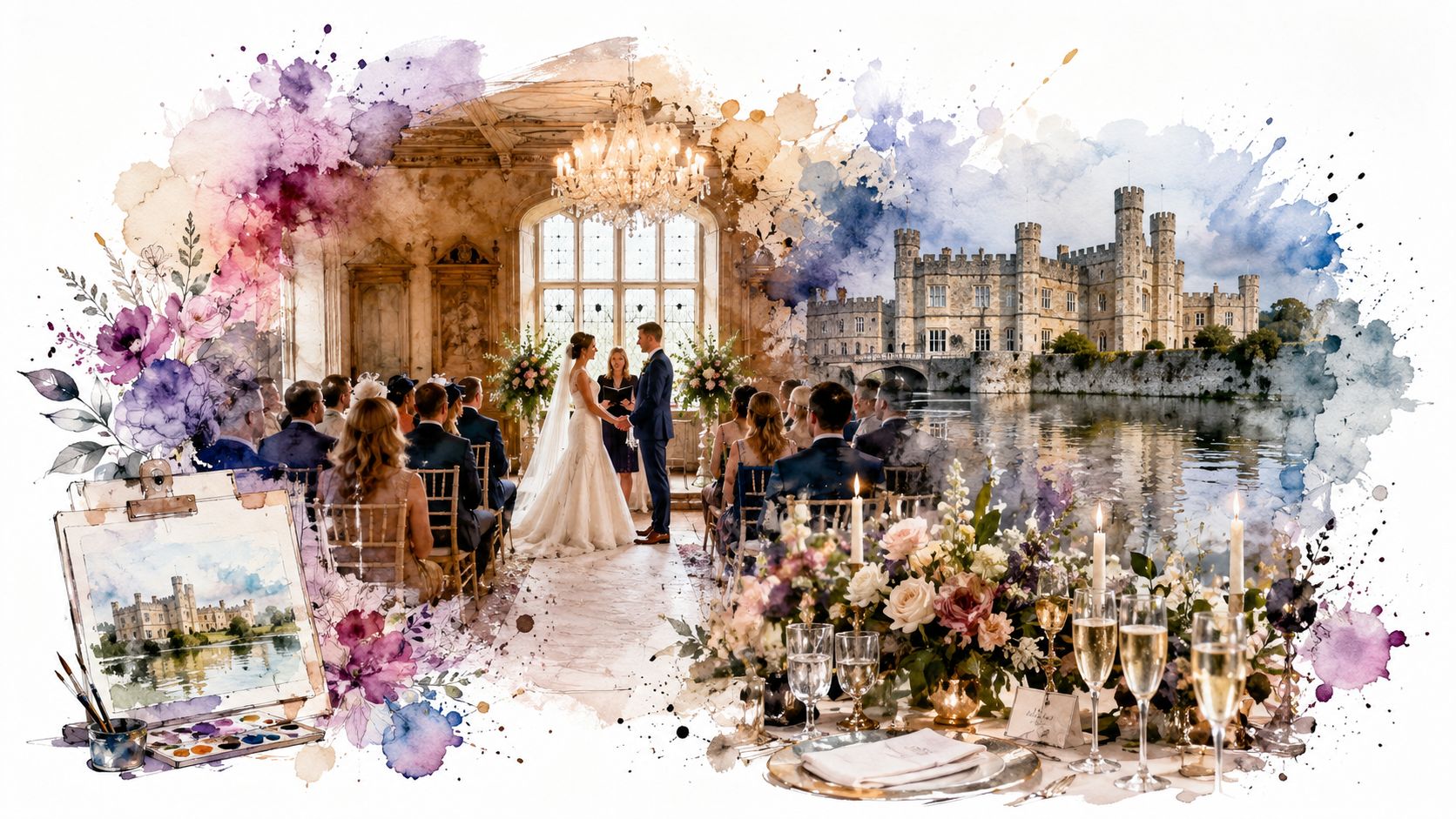
A day that flows properly
A classic format starts with guests arriving and orientating themselves before the ceremony. At a venue with this much visual impact, you don't need to rush them. Give people time to settle, take in the setting, and get to the right place without confusion.
If you're using one of the licensed ceremony areas, keep the guest experience front of mind:
- Indoor ceremony: Better for certainty, easier sound control, and a more formal atmosphere.
- Outdoor ceremony: Better for openness and scenery, but only if your wet-weather backup feels equally intentional.
- Post-ceremony drinks: This transition needs enough time for congratulations, photographs, and a calm move into the next stage.
One detail couples often overlook is guest positioning at dinner. Large historic rooms can feel polished or awkward depending on how tables are arranged. If you want help mapping that properly, this guide to wedding seating plans is a sensible resource for balancing family politics, sightlines, and room flow.
Dinner and the shift into evening
The wedding breakfast should feel like the visual high point inside the venue, not just the meal. In a castle setting, that usually means letting the room breathe. Tall florals can work, but only if they don't compete with the architecture. Low candles and considered linen often suit the setting better than trying to create something ultra-modern in a room that already has strong character.
For the evening, the question isn't just what entertainment you want. It's how the energy changes after dinner. Some couples want a formal progression with speeches, cake, and first dance. Others want to release the structure earlier and let the party start sooner. Both can work.
What doesn't work is a dead patch between courses and dancing. Historic venues are especially exposed to this because guests are looking around, drifting, and noticing downtime.
A good visual reference helps couples picture that rhythm in real terms:
What guests actually remember
Guests remember three things more than couples expect:
- How easy the day felt to follow
- Whether they could hear and see key moments
- Whether the atmosphere built steadily rather than dropping off
A castle wedding doesn't need constant entertainment. It needs well-timed movement, comfortable pacing, and no confusion about where people should be next.
That's where the craft lies. Not filling every minute, but shaping the day so the setting, service, and celebration support each other.
Navigating the Legal and Planning Timeline
Rain had just cleared before a site visit, and the castle facade looked exactly like the ceremony backdrop couples pin for months. The practical question came seconds later. Can you legally marry there, or is it only available for photographs? At historic venues, that gap between what looks possible and what is licensed causes more stress than flowers, stationery, or table plans.
Leeds Castle is a good example. Couples regularly assume that the grand exterior view shown in marketing can double as the legal ceremony setting. A discussion in a Kent weddings group shows how uncertain that can feel in real planning, with one user questioning whether the main castle facade is licensed and whether heritage restrictions affect what is allowed in that area, as discussed in this Kent weddings discussion.
The ceremony legality question couples should ask early
Get the answer in writing before you build the whole day around one view: Which exact spaces are licensed for a legal civil ceremony, and which spaces are available only for portraits, a blessing, or a symbolic exchange of vows?
That wording matters. A castle venue can have a licensed interior room, an approved outdoor ceremony area, a famous facade used constantly in wedding photography, and no legal permission to conduct the civil ceremony at that facade itself. I see couples trip over this most often when they book emotionally first and ask legal questions later.
If the formal requirements still feel murky, this guide on how to get married in the UK covers the legal basics that sit alongside a venue's own licensing rules.
Reception timing, sound limits, and what “late finish” really means
The second question couples often leave too late is evening timing. Leeds Castle's wedding information doesn't fully clarify a key nuance for couples, especially those with larger events. It is not clear how recent rule changes affect outdoor reception timing, how noise controls apply to different parts of the estate, or whether a quoted finish time feels the same in practice for 60 guests as it does for 160, as reflected on the Leeds Castle wedding page.
The point is not that there is a hidden problem. The point is that “music until midnight” can mean very different things depending on where guests are standing, whether sound is amplified, and when everyone needs to be moved indoors.
Ask direct operational questions:
- Outdoor amplified music: What is allowed outside, in which location, and up to what time?
- Guest numbers: Does a larger party change where the drinks reception or evening entertainment can be held?
- Indoor continuation: If outdoor sound must stop earlier, which indoor room takes over and how long does that room change take?
- Supplier finish times: When must the band, DJ, production team, and bar stop service?
- Departure logistics: What time do coaches, taxis, and non-resident guests need to leave the site?
A couple hosting 80 guests may experience those limits differently from a couple hosting a much larger wedding with a live band, additional production, and more complex transport. That is the trade-off. The more ambitious the evening setup, the more carefully the timings need to be pinned down in advance.
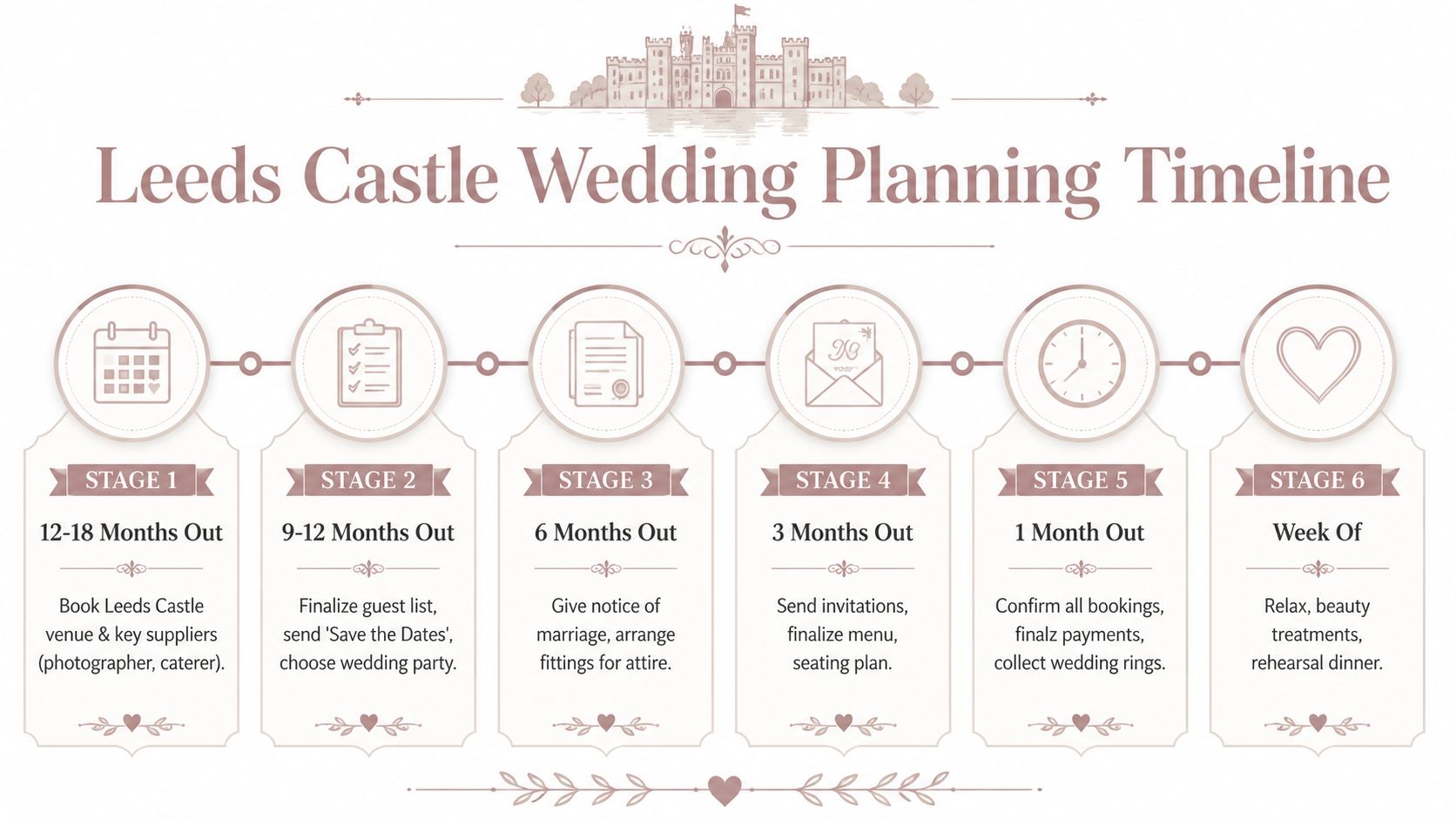
A planning order that saves trouble later
Historic venues reward early decisions. They also punish vague ones.
The smoothest planning sequence is usually this:
- Book the venue and agree the broad shape of the day
- Confirm the legal ceremony location in writing
- Check cut-off times for outdoor use, music, and guest movement
- Build the schedule around those restrictions, not around assumptions
- Lock transport, accommodation, and late-night exit plans
- Send guests clear information well before the wedding
That last step matters more than couples expect. Castles often involve multiple buildings, longer walking routes, and a mix of resident and non-resident guests. For parties with lots of guests travelling together, this group travel planning guide is helpful because accommodation and transport confusion can spill straight into your wedding timeline.
The brochure question is whether Leeds Castle looks magical. It does. The planning question is whether your ceremony is legally valid in the exact spot you want, and whether your evening still feels generous once the venue's sound rules, movement restrictions, and finish times are applied.
Capturing the Magic Iconic Photo Spots and Top Suppliers
The best Leeds Castle photographs are usually made in the twenty minutes couples are tempted to give away.
I have seen it happen often at historic venues. Hair and makeup run late, congratulations overrun, guests drift, and the portrait window gets cut down to a rushed lap of the obvious backdrop. At Leeds Castle, that matters because the setting gives you several very different looks in one venue. Water, stone, gardens, panelled interiors, long approaches. If you want images that feel varied rather than repetitive, the photography plan needs proper time and a sensible route.
As noted earlier, the castle's social media presence makes clear why couples are drawn here in every season. Leeds Castle suits romance on camera, but it is especially strong for couples who want contrast in their gallery rather than one type of shot repeated all day.
The photo spots that earn their place in the timeline
The castle exterior across the water is the signature image. It deserves time. It should not take all of it.
The strongest galleries usually combine a few key settings, each doing a different job:
- The bridge approach: Gives scale, arrival, and that unmistakable castle context.
- Moat-facing viewpoints: Best for classic portraits and wider editorial frames.
- Formal interiors: Useful for weather cover, darker romantic portraits, and detail shots with depth.
- Garden paths and softer edges of the grounds: Good for movement, quiet moments, and images that feel less staged.
The trade-off is simple. The wider and more ambitious the shot list, the longer you spend walking, repositioning, and managing dresses, veils, family members, and changing light. Leeds Castle is not a venue where you can cover every photogenic corner without cost. A tighter plan usually produces better work.
One practical note that couples rarely ask early enough: ask your photographer which of these locations can be covered without moving guests or interrupting service. That answer affects whether portraits happen smoothly or start to eat into drinks, dinner, or evening momentum.
How to choose suppliers who are actually right for a castle
A strong supplier at a modern hotel is not automatically a strong supplier at a heritage venue. Leeds Castle asks more of people behind the scenes.
Photographers need to handle bright exteriors and darker rooms without slowing the day down. Florists need to know how large a design has to be to read well in a grand room, and when to stop before the flowers fight the architecture. Hair and makeup teams need schedules built around distance between rooms, not just treatment times. Entertainment suppliers need to understand acoustics, access restrictions, and finish times because a castle can sound full very quickly.
Ask direct questions before booking:
- How do you handle mixed lighting between interiors and outdoor portraits?
- How much setup time do you need, and what access do you require?
- Have you worked in listed or historic buildings with protection rules?
- What is your backup plan if weather removes an outdoor photo location?
- How do you keep portrait time efficient without making it feel rushed?
Those answers tell you more than an Instagram grid.
What tends to look best here
Leeds Castle already has a strong visual identity. The most convincing weddings here work with that identity and give it a clear frame. Black tie, soft seasonal colour, garden romance, or candlelit formality can all work well. Trying to force too many ideas into one day usually shows in the photographs.
Suppliers should improve what is already there, not cover it up. Stonework, historic texture, long sightlines, and the setting over water do a lot of the visual work for you. Use that. Spend on the pieces guests will notice in person and the camera will record well.
For couples building extra time around the wedding weekend, it also makes sense to explore South England and Wales if you have guests travelling in from overseas and want the celebration to feel like part of a wider trip.
The result should feel timeless, but the planning behind it needs to be exact. At a venue like Leeds Castle, beautiful images come from good decisions made early, realistic timing, and a supplier team that understands how historic spaces function.
Insider Tips for a Flawless Castle Wedding Day
A flawless castle wedding isn't about controlling every variable. It's about controlling the important ones and leaving space for the venue to do what you chose it for.
The first priority is clarity. Guests need to know where to go, when to move, and what to expect. A beautiful site becomes stressful very quickly if older relatives, children, or less confident travellers feel lost. Good signage, a concise order of day, and one clear contact person solve more problems than extra decor ever will.
What helps on the day
- Build in transition time: Historic estates are larger than they look on paper. Moving guests always takes longer than couples expect.
- Tell guests about footwear: Lawns, paths, bridges, and old surfaces can catch people out. A small note in advance is useful.
- Protect the drinks reception: This part of the day often gets squeezed by overrunning hair, makeup, or ceremony delays. It shouldn't. It's when guests relax.
- Keep portrait time efficient: You don't need to disappear for ages to get strong images if your photographer has a proper plan.
- Use a weather backup you actually like: If the backup feels like a compromise, you'll spend the week watching forecasts instead of enjoying the lead-up.
What couples regret least
They rarely regret simplifying. They rarely regret a tighter supplier list. They rarely regret choosing comfort for guests over one more decorative flourish.
They do regret vague assumptions. Vague assumptions about licensed ceremony locations. Vague assumptions about evening timing. Vague assumptions about whether everyone can move around the venue easily.
If your wedding weekend includes guests turning it into a longer trip, a broader travel resource like this guide to explore South England and Wales can help them make more of the journey without relying on you for every recommendation.
A great castle wedding feels relaxed because the planning was specific, not because the couple got lucky.
That's the balance to aim for. Keep the romance. Keep the grandeur. But pin down the practical details early enough that the day can unfold with confidence.
If you love the atmosphere of a historic English wedding but want a venue with clear planning support, licensed ceremony and reception spaces, and a setting built for both intimate and larger celebrations, take a look at Battle Abbey Weddings. It offers the same sense of heritage and drama couples are searching for, with a practical framework that makes the day easier to plan well.