You're probably staring at a handful of venue tabs, each promising an “all inclusive” wedding, and noticing that no two packages seem to mean quite the same thing. One includes catering but not drinks. Another includes styling but not coordination. A historic venue may look perfect in the photographs, then introduce practical questions about supplier access, set-up windows, sound limits, or where guests can move through the building.
That confusion is normal. It's also why the phrase all inclusive wedding venue needs a closer look before you compare prices.
From the planning side, the strongest packages don't just bundle services. They remove friction. They give you one team, one contract, and one operational plan for the day. In a heritage setting, that matters even more. Character buildings bring atmosphere you can't manufacture, but they also need experienced handling if you want the day to feel effortless rather than tightly managed.
What an All Inclusive Wedding Venue Really Means
Choosing an all inclusive wedding venue is a bit like choosing a curated tasting menu instead of ordering every course à la carte. You're still getting a celebration that reflects your taste, but the structure has already been designed by people who know what works in that setting, in that kitchen, and with that service team.
That's the main appeal. You're not piecing together a venue, caterer, bar team, furniture hire, linen company, and on-the-day coordinator from separate suppliers who may never have worked together before. You're buying an organised framework that's already been tested in practice.
According to this definition of an all-inclusive wedding venue, the UK model is a single-contract provider that combines venue space with core operational services such as on-site catering, bar staffing, décor rentals like tables, linens and lighting, plus day-of coordination. The same source notes that this can reduce logistical friction by 40–60% compared to non-bundled models.
What that means in practical terms
When couples ask what “all inclusive” really changes, the answer is usually this:
- You have fewer moving parts. One venue team controls the timetable, room turns, service pacing and supplier access.
- Communication is cleaner. You're less likely to spend weeks relaying messages between separate companies.
- Responsibility is clearer. If something needs adjusting on the day, there's no debate over whose job it is.
- The venue can plan around its own constraints. In historic spaces, that's often the difference between smooth and stressful.
Practical rule: If one team controls the room, the kitchen, the bar and the timeline, the day tends to run more calmly.
That doesn't mean every all inclusive package is automatically right for you. Some are generous and thoughtful. Others are only partially bundled and still leave couples arranging key elements themselves. That's why it helps to understand the difference between a full-service package and a venue that wraps a few basics into the hire fee.
If you're comparing this route with a more independent approach, it's also useful to understand what dry hire means. Dry hire can offer freedom, but it also shifts far more planning and responsibility onto you.
Why historic venues need a different lens
In a modern blank-canvas venue, outside suppliers often have broad freedom to load in, style, install, and reset. Heritage venues rarely work that way. Protected interiors, limited access points, restricted fixings, and preservation requirements can shape everything from floristry to entertainment.
In those settings, an all inclusive model isn't just convenient. Often, it's the most realistic way to protect the building while still giving couples a smooth celebration.
Decoding the Details Typical Inclusions and Exclusions
The headline phrase “all inclusive” often sounds more complete than the actual paperwork. Some venues include nearly everything needed for a polished wedding day. Others include the operational essentials but leave several visible, meaningful costs outside the package.
That's why I always advise couples to stop asking “Is it all inclusive?” and start asking “What exactly is included, and what will I still need to book myself?”
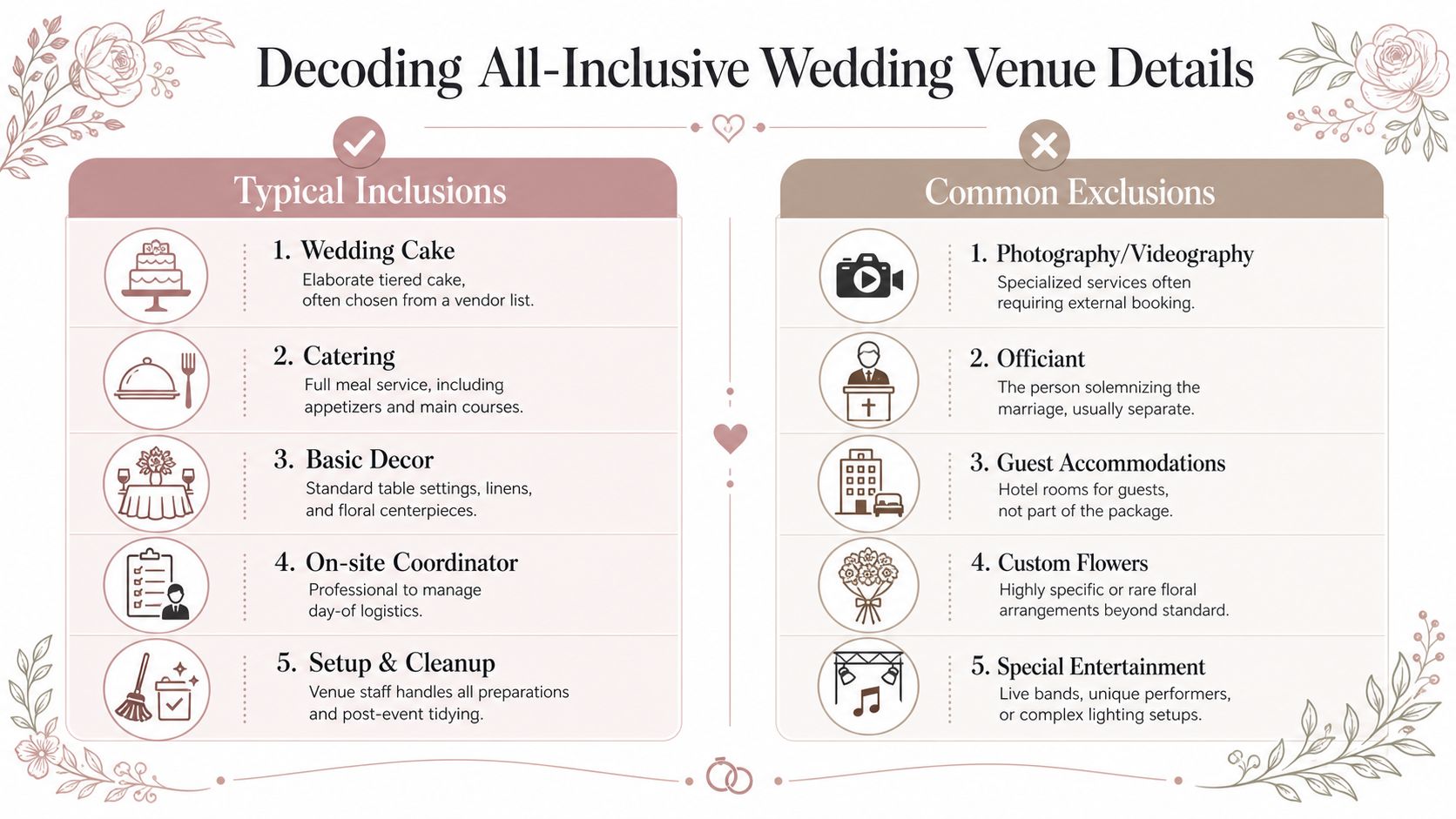
What's usually included
A strong all inclusive wedding venue package often covers the operational backbone of the day.
- Venue hire: Ceremony and reception spaces, furniture already suited to the building, and access for the agreed hire period.
- Catering: Usually a wedding breakfast, service staff, and some form of evening food.
- Bar service: This may include staffing, glassware, and selected drinks packages rather than unlimited alcohol.
- Core décor: Tables, chairs, linens, crockery, cutlery, candles, and lighting already approved for the space.
- Set-up and clear-down: The venue team prepares the rooms and resets the site after the event.
- On-the-day coordination: A coordinator or event manager keeps suppliers to time and oversees the flow of the day.
Some venues also include a honeymoon suite, standard styling items, or a shortlist of preferred suppliers for extras they don't directly provide.
What's often excluded
The missing pieces are where couples can get caught out.
- Registrar or celebrant fees: These are frequently separate, even when the rest of the day is bundled.
- Photography and videography: Many venues will recommend trusted professionals, but you'll usually book them independently.
- Entertainment: DJs, live bands, acoustic performers, and specialist lighting are often extra.
- Personal flowers: Bouquets, buttonholes, and highly bespoke floral installations may not sit inside the standard package.
- Cake: Some venues can arrange one, but many leave this to an external supplier.
- Guest accommodation: Overnight rooms for guests are commonly outside the venue package unless you're booking a venue with on-site lodging.
One area deserves special attention. According to Crown Hall Farm's discussion of all-inclusive package gaps, 3 of 10 sampled UK all-inclusive packages explicitly exclude registrar costs, with fees ranging from £200–£450 regionally in Southeast England. That's exactly the kind of line item couples assume has already been covered.
Don't rely on the brochure wording. Ask the venue to mark every included and excluded item against the contract itself.
A better way to review a package
When you compare venues, ask for a written breakdown under three headings:
| Category | Ask for | Why it matters |
|---|---|---|
| Core operations | Venue, catering, drinks, staffing, coordination | These determine whether the package is genuinely integrated |
| Styling | Linens, candles, furniture, ceremony décor, signage support | This is where “included” can mean either generous or very basic |
| Independent suppliers | Registrar, photographer, florist, entertainment, cake | These often sit outside the package and change the real total |
Photography is a good example. It's often excluded because it's so personal. If you're still narrowing down what style you want, this guide for professional wedding photographers is useful because it helps you evaluate coverage, communication, and what to ask before booking.
The more exact the package description, the easier it is to budget without unpleasant surprises.
The Real Pros and Cons of an All Inclusive Package
The right all inclusive wedding venue can make planning feel lighter from the start. The wrong one can feel restrictive, overpriced, or oddly impersonal. The difference usually comes down to how the package has been built and whether it suits your priorities.
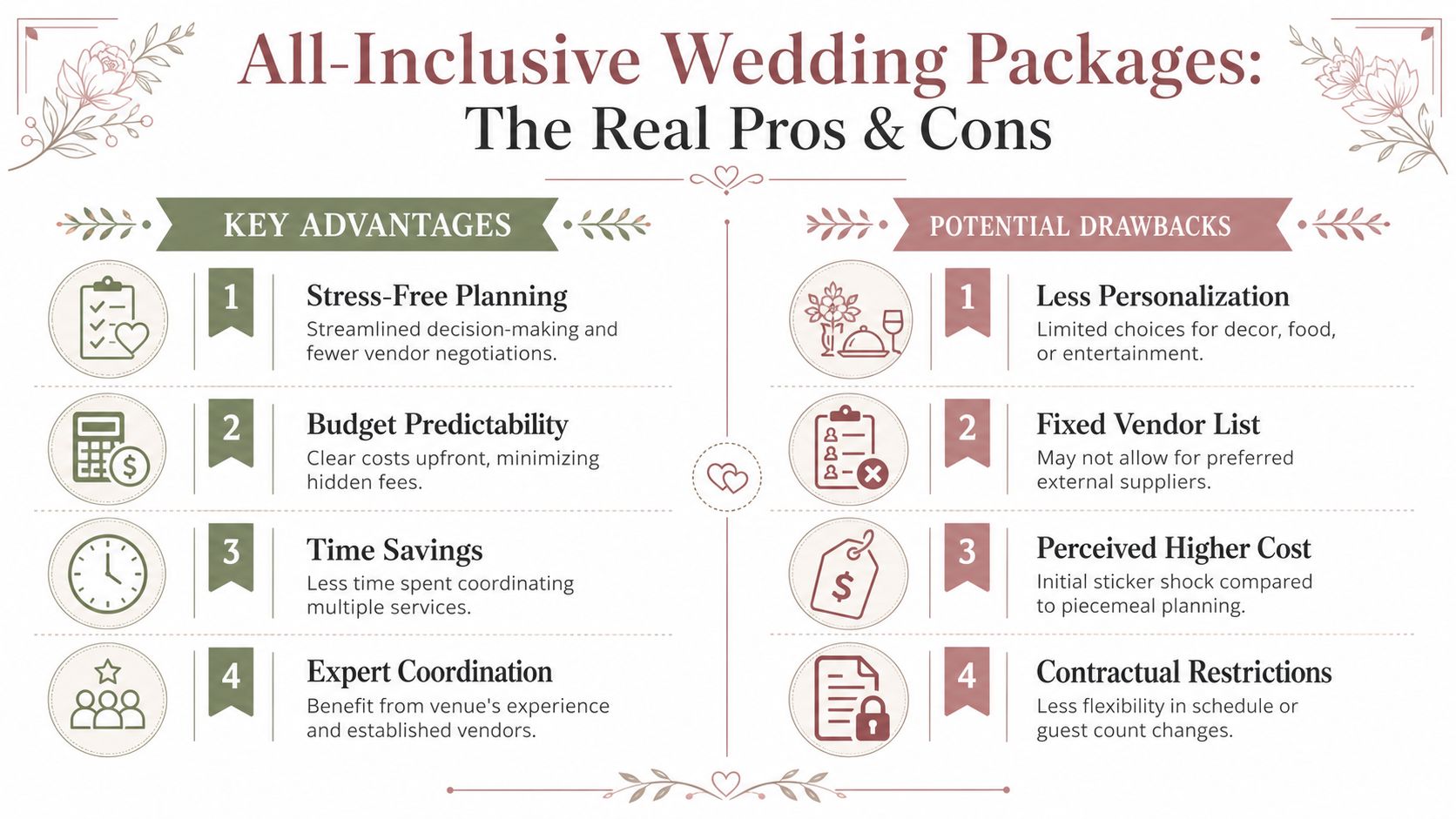
Where all inclusive works well
The strongest benefit is clarity. Venue hire is often the largest single wedding cost, typically taking 38% to 40% of the total budget, and in the South East of England the average wedding cost reaches £22,344, which is one reason bundled pricing appeals to many couples, as noted in these UK wedding industry figures.
When the venue, catering, bar and coordination sit together, couples usually find three things become easier:
- Budget planning becomes more realistic. Large costs are grouped together instead of scattered across several suppliers.
- Decision fatigue drops. You're choosing from a framework, not building every element from scratch.
- The day runs with fewer handovers. Staff who know the building and each other can solve problems quickly.
This is especially helpful in period venues where timings matter. Room turns may need to happen in a particular order. Service routes may be fixed. Some outdoor areas may only work for drinks at certain points in the day. A venue team that already understands those rhythms is a real advantage.
Where couples can feel constrained
The trade-off is flexibility. Bundled packages sometimes mean you're working from set menus, fixed bar structures, approved suppliers, and existing décor inventory. That's not always a problem. For many couples, it's a relief. But if you've spent months curating a very specific visual world, you may feel the edges of the package.
Potential drawbacks usually look like this:
- Limited supplier choice: You may not be able to bring in every preferred florist, caterer, or production team.
- Less room for dramatic customisation: Especially if the venue protects historic interiors.
- Contract boundaries: Guest count changes, timetable changes, and menu revisions may be more controlled.
A quick visual summary can help as you weigh those factors.
A package should simplify your wedding, not flatten it. If the venue can't explain where personalisation still fits, keep looking.
What works and what doesn't
What works is a venue that has a clear operating system but still leaves room for character. What doesn't work is a package built for efficiency alone, where every wedding starts to feel interchangeable.
A good all inclusive package should protect you from chaos, not from choice.
Understanding the Costs and What to Expect
Price is where many couples either feel reassured or immediately suspicious. Both reactions are understandable. A bundled figure can look high at first glance, but separate supplier quotes often add up faster than expected once catering, staffing, furniture, glassware, planning support and service charges are all in play.
Current benchmark figures help ground the conversation. According to Hitched's UK package overview, all-inclusive venues offer a 15–25% cost advantage over non-bundled options, with average package prices ranging from £6,118 for 60 day and 100 evening guests to £15,000 for 50 day and 70 evening guests with full coordination, décor, and bar hire in 2026.
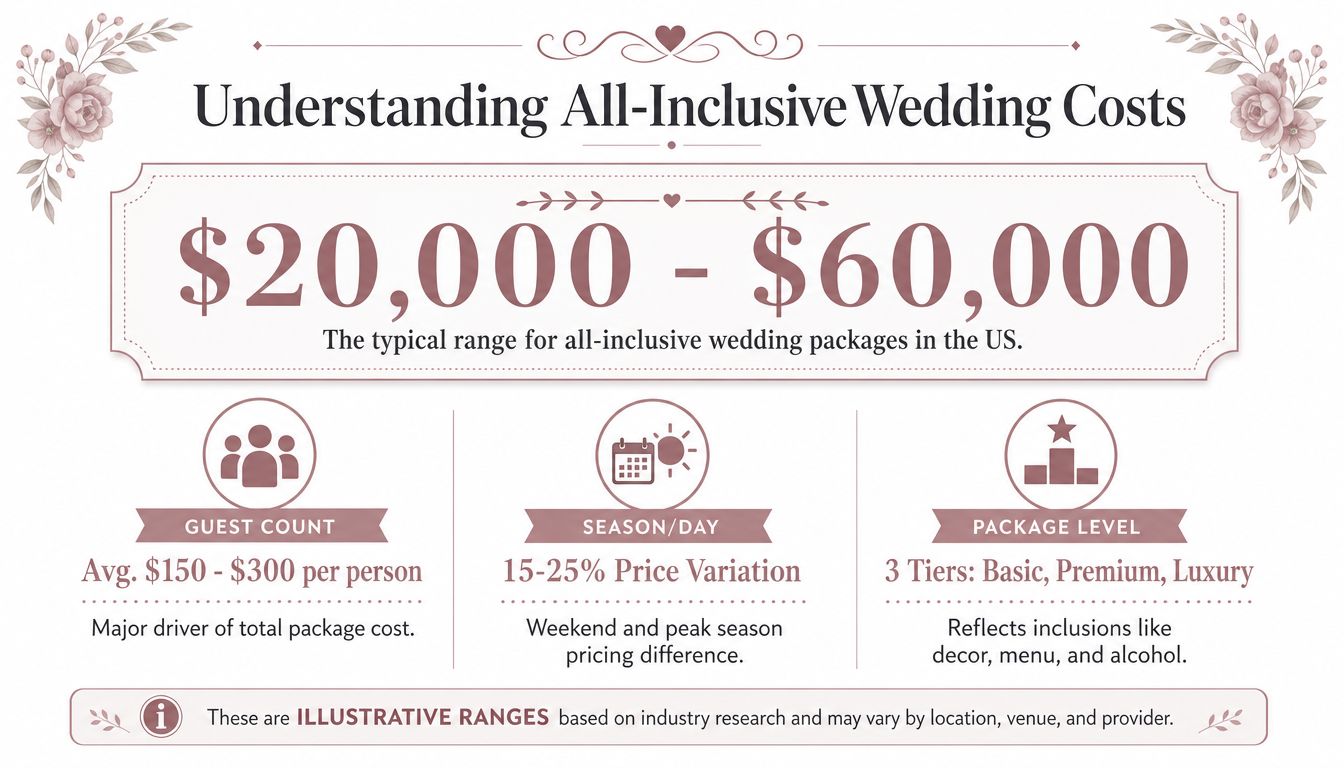
Why package pricing varies so much
Two venues can both call themselves all inclusive and be pricing entirely different things.
One may include only the essentials needed to stage the day. Another may fold in upgraded styling, broader drinks service, more planning time, and a stronger staffing ratio. Historic venues can also build pricing around specialist logistics, approved methods of set-up, and tighter operational control within protected spaces.
A useful benchmark is to compare any quote against detailed examples of wedding venues and prices so you can see how venue hire, catering and drinks are commonly separated or bundled in practice.
The hidden costs most venues don't advertise
This is the part couples need to examine carefully. The same Hitched benchmark notes that hidden costs such as service charges can inflate final bills by 15–25%.
Look for these items in writing:
- Service charges: Sometimes added as a percentage rather than shown in the headline figure.
- Set-up fees: Especially for external suppliers, late room turns, or ceremony layout changes.
- Administrative additions: Small planning or handling fees that only appear in the contract schedule.
- Bar upgrades: Premium wines, branded spirits, cocktail service, and additional staff can change the total quickly.
- Overtime or extension costs: Ask what happens if the day runs later than expected.
How to read a venue quote properly
Ask the venue for an itemised proposal with clear labels.
Included as standard
This should list everything already covered in the agreed price.Required but billed separately
These are the most important figures to spot early.Optional upgrades
These should be nice-to-haves, not essential items disguised as extras.
Budget check: If you can't tell from the quote what is fixed, what is estimated, and what is optional, the proposal isn't ready to sign.
The best venues don't mind this level of scrutiny. They expect it. Transparent pricing is one of the strongest signs that the package has been managed well behind the scenes.
Is an All Inclusive Venue Right for Your Wedding?
Not every couple needs the same kind of package. The question isn't whether an all inclusive wedding venue is “better” in the abstract. It's whether the structure suits your guest count, planning style, and the kind of atmosphere you want on the day.
Historic venues add another layer. They can be extraordinary places to marry, but they rarely function like blank-canvas event spaces. That difference affects what kind of package will serve you well.
Intimate weddings and larger celebrations
One of the most overlooked distinctions is full-site hire versus partial-site hire. Many guides blur the two, but for smaller weddings it can make a major difference.
According to The Wedding Secret's discussion of all-inclusive venue formats, only 12% of all-inclusive venues offer partial-site options, and couples can otherwise overpay by £3,000–£7,000 when a custom smaller-hire arrangement exists.
For practical planning, that usually means:
- For intimate weddings: A partial-site option can preserve atmosphere without asking you to fund spaces you won't use.
- For large weddings: Full-site exclusivity often makes sense because your guest flow, privacy, and staffing needs justify the scale.
- For in-between numbers: You need to ask exactly how the venue allocates rooms, terraces, bars, and service spaces.
If you're planning a celebration up to 60 guests, don't assume a full-estate package is the only route. Ask whether a contained part-site format exists and whether it still feels complete rather than reduced.
Why historic venues are different
Heritage settings often impose practical limits that generic guides ignore. Supplier vehicles may be restricted. Access windows can be narrow. Candles, floral mechanics, hanging installations, amplified music and furniture movement may all need approval.
That can sound daunting, but there's a positive side. In a historic venue, a well-run all inclusive package often protects you from exactly those friction points. The internal team already knows what can go where, how long room changes take, and which ideas are beautiful in theory but unworkable in that building.
In protected venues, planning freedom doesn't come from unlimited options. It comes from experienced options.
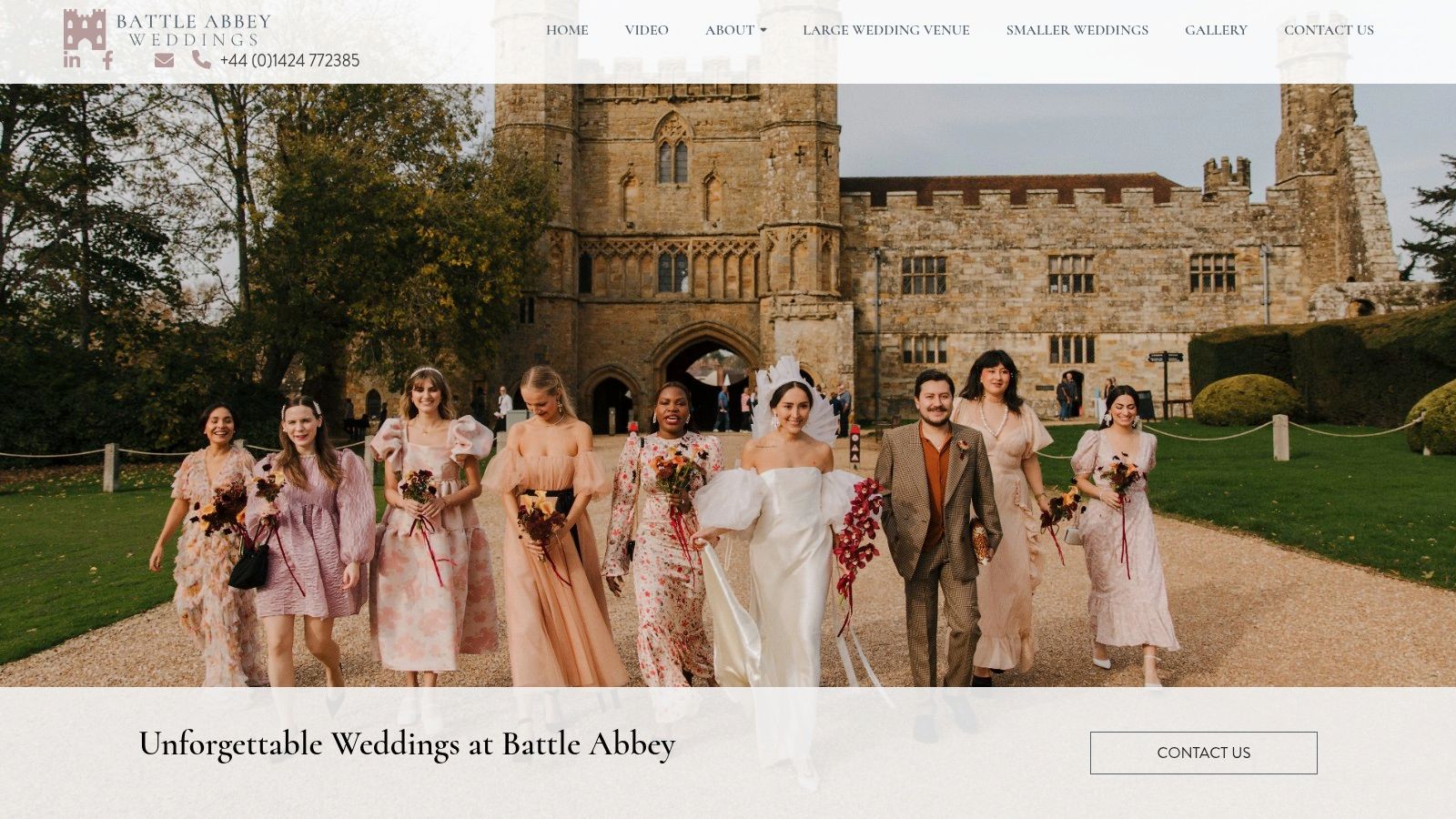
Battle Abbey is a good example of why this matters. A site with heritage significance and distinct ceremony, dining and outdoor spaces benefits from a planning model that understands the building first, then shapes the wedding around it. That approach usually produces a calmer, more coherent day than trying to force a free-for-all supplier structure into a sensitive setting.
Who usually benefits most
An all inclusive format tends to suit couples who recognise themselves in one of these groups:
- Busy professionals: Little time for chasing multiple suppliers.
- Destination couples: They need local expertise and tighter coordination.
- Families planning at scale: They want one lead team and fewer moving parts.
- Couples drawn to historic character: They'd rather work with a venue that already understands the site's rules and possibilities.
If what you want most is confidence, continuity and less logistical drag, this model often fits very well.
Essential Questions to Ask Before You Book
The best venue visits aren't the ones where you merely fall in love with the room. They're the ones where you leave with clear answers. A polished brochure can hide quite a lot, and a charming tour doesn't always reveal how the day is conducted.
Bring a checklist. Take notes. Ask for written confirmation afterwards.
Food and drink
Start with the experience your guests will notice most.
- What food service is included? Ask whether the package covers canapés, wedding breakfast, dessert, evening food, children's meals, and supplier meals.
- How flexible is the menu? Some venues can adapt easily for dietary needs and style preferences. Others work from fixed seasonal menus.
- What exactly is in the drinks package? Ask about arrival drinks, table wine, toast drinks, bar hours, and whether premium upgrades are available.
- Can we do a tasting, and when? A tasting tells you a great deal about the venue's standards and communication.
Staffing and coordination
Smooth weddings are brought to life.
- Who runs the day itself? Ask whether your coordinator is a dedicated person or the same manager overseeing several events.
- Who controls supplier arrivals and set-up? In heritage settings, that role matters.
- How is the room turn handled? If your ceremony and dining use different spaces, ask how the transition works and who manages it.
- How many service staff are included? You don't need exact staffing formulas. You do need confidence that service won't feel stretched.
Flexibility and customisation
This area tells you whether the package is supportive or rigid.
- Which suppliers must be in-house, and which can we choose ourselves?
- Can we upgrade décor without replacing everything?
- What happens if our guest count shifts?
- Do you offer full-site and part-site options, and how do they differ in atmosphere and use of space?
A venue that answers these clearly is usually easier to work with from the start.
Contingencies and contract detail
Ask the questions couples often leave too late.
- What is the wet-weather plan? Not just where you move, but whether there are extra costs attached.
- Are there overtime charges or end-time penalties?
- What isn't included that couples commonly assume is included?
- How are payments staged, and what happens if we need to postpone?
For a more detailed venue-visit checklist, these questions to ask a wedding venue are a useful companion to keep on your phone during tours.
The venue doesn't need to answer every question instantly. It does need to answer them clearly before you sign.
A good contract should make you feel calmer, not trapped.
Making Your Final Decision with Confidence
The right all inclusive wedding venue should make life easier in the ways that matter to you. If your priority is convenience, continuity, and a team that can take hold of the logistics, a strong package can be a very sensible choice. If your priority is full creative control over every supplier and every detail, you may need more flexibility than some bundled venues offer.
Three questions usually bring the answer into focus:
- Does the pricing feel transparent enough to trust?
- Does the package remove stress in the areas you care about most?
- Does the venue still leave room for your personality to show?
That balance matters even more in a historic setting. Characterful venues often deliver more atmosphere, more built-in romance, and more memorable photographs than modern blank spaces. But they also need an experienced team behind them. The package has to work with the building, not against it.
If you're close to making a decision, it can also help to think beyond the day itself. Couples often ask about thoughtful presents for parents, attendants, or each other, and this list of That Blanket Co wedding gift ideas is a lovely place to start if you want something personal without it feeling generic.
Choose the venue that feels organised, honest, and calm to deal with now. That feeling usually tells you a lot about how your wedding day will feel later. The building matters, of course. The team matters just as much.
If you're looking for a historic East Sussex setting that combines character, experienced planning, and flexible options for both intimate and larger celebrations, explore Battle Abbey Weddings. It's a rare opportunity to host your day within a landmark setting while working with a team that understands how to make a heritage venue feel warm, effortless, and unforgettable.