You're engaged, everyone's asking what the plan is, and the cruise ship idea keeps sounding better the more you look at it. That's usually the moment couples realise this isn't just a pretty venue choice, it's a legal decision, a guest-travel decision, and a budget decision rolled into one. Get those three things right, and cruise ship weddings can be brilliant. Get them wrong, and the whole trip turns into admin in a tux.
The Decision That Shapes Everything Else
A couple usually arrives at the cruise idea for one reason first, it feels like a wedding and honeymoon in one. The next step is deciding: Do you want a legally binding ceremony or a symbolic ceremony with the paperwork handled separately? For UK couples, that is the split that shapes everything else. Your itinerary, guest list, timing, and even the ship you pick all follow from it.
Take a real-world example. A couple looking at a Caribbean sailing may love the idea of an open-deck ceremony at sea, but the legal side rarely follows that fantasy neatly. Royal Caribbean explains that shipboard ceremonies generally need to take place in the region where the ship is docked, and many couples choose symbolic ceremonies because the legal paperwork has to be handled through the port authority or at home Royal Caribbean cruise wedding planning. The ceremony you want and the marriage that is legally recognised may end up in different places.
If you want the legal part handled properly, build the plan around that reality from the start. If you want the day to feel relaxed and focused on the celebration, symbolic is often the cleaner choice, then you complete the legal marriage elsewhere and keep the cruise for the event itself. Couples who leave the paperwork until the end usually create avoidable stress for themselves.
Practical rule: decide whether you are booking a marriage event or a celebration event before you fall in love with the deck photos.
That choice also affects the help you need. If you are comparing itineraries and working out whether a longer sailing or a destination call makes more sense, start by using compare cruise ships, then check whether the legal format fits the route. Do not do it the other way round. Pick the legal model first, then choose the ship and port that can support it.
Ceremony Formats and What Each One Actually Feels Like
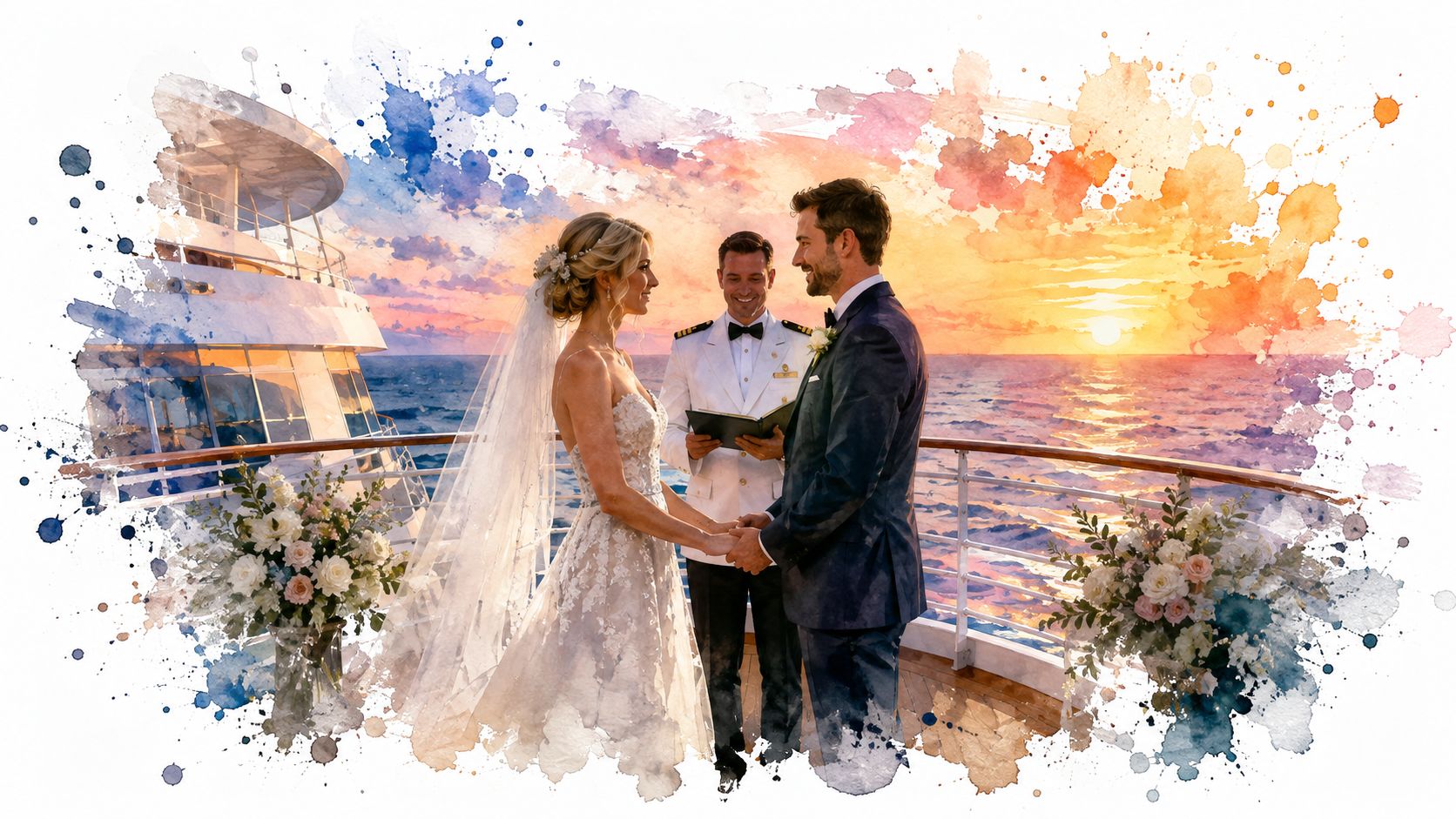
Symbolic at sea
This is the most flexible option, and for many UK couples it's the smartest one. You're not wrestling the legal system onboard, so the ceremony can be styled for atmosphere, not compliance. The mood is usually relaxed, private, and more about the views than the paperwork.
The trade-off is simple. You get the visual drama of the ship, but not the legal simplicity of a standard registrar-led wedding at home. If you choose symbolic, don't pretend it's a legal marriage until you've completed the proper paperwork elsewhere.
Legal in port
Legal ceremonies in port feel more structured. The ship is effectively working around the destination's rules, so timing is tighter and the event is more formal in feel. You're usually dealing with witnesses, port schedules, and a narrower window for getting everyone where they need to be.
This format suits couples who want the wedding to be legally anchored to the trip itself. It also suits guests who like a more traditional sense of occasion. The downside is that the ceremony can feel less spontaneous because the ship and the port are both setting boundaries.
Onboard chapel or private room
A chapel or enclosed venue onboard gives you the least weather anxiety and the most privacy. It feels more contained, less exposed to wind and noise, and better if you want a smaller guest list. This is the option I'd steer couples towards if they care more about intimacy than spectacle.
The atmosphere changes fast once you leave the open deck. Guests tend to feel they're in a real ceremony space rather than a staged photo moment. That said, you still need to watch the schedule, because cruise ships don't stop operating for your vows.
A strong cruise wedding package should tell you exactly who stands where, who officiates, and how much time you actually have in the room. If they stay vague, push for specifics.
The turnover window matters too. Carnival's planning material says ceremony blocks are about 15 to 20 minutes, with most port ceremonies starting around 12:30 p.m., which tells you how compressed the day can be Cruise Nation cruise wedding guide. That schedule favours couples who want efficiency. It doesn't favour anyone who needs a long, slow, highly choreographed service.
Legal Recognition and the Two-Stage Paperwork Workflow
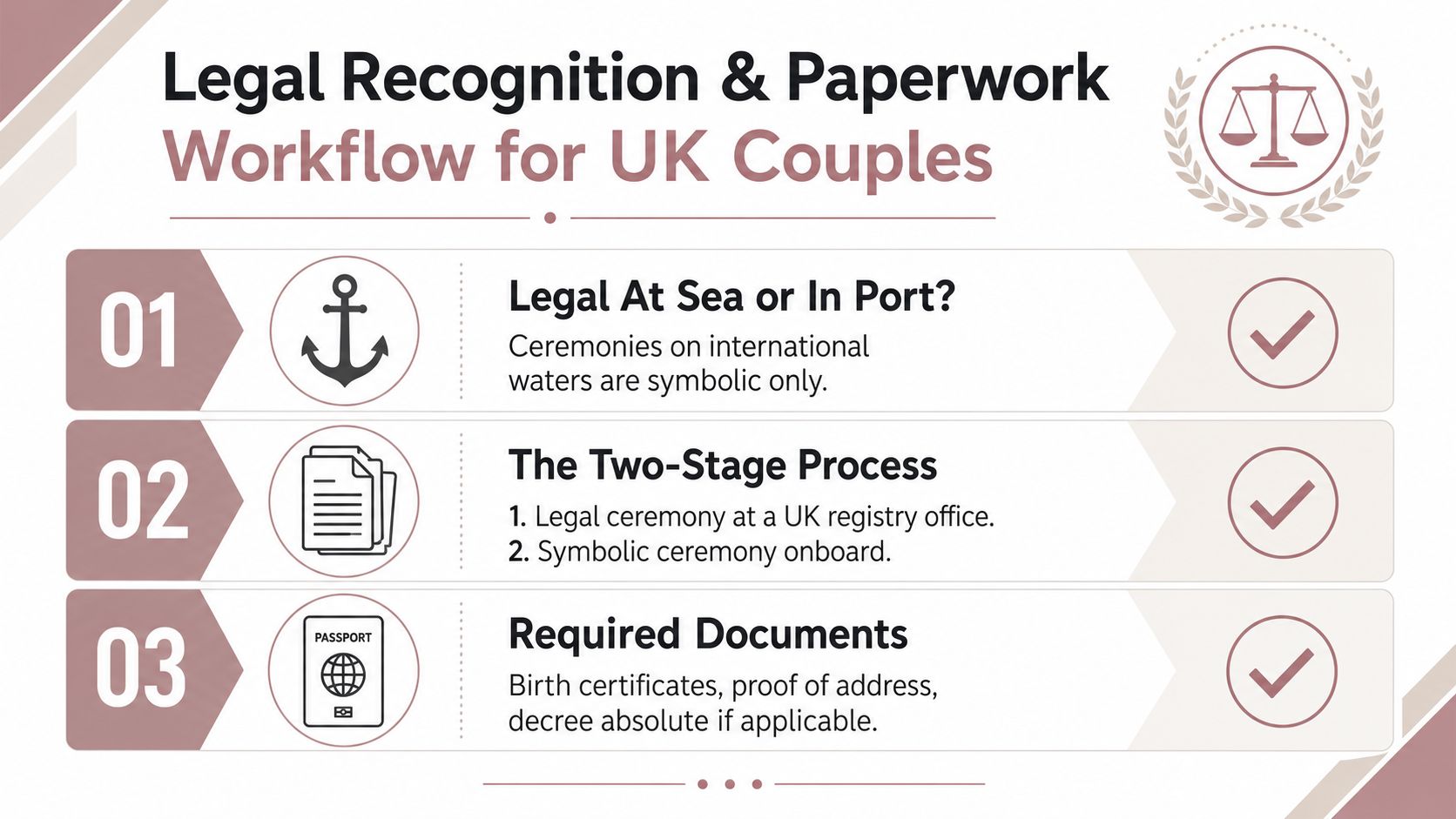
For UK couples, the legal question sits first. A cruise ceremony can be beautiful, but beauty does not make a marriage valid in the UK. If you book before you know where the legal part happens, you are buying confusion along with the venue.
The clean way to handle it is to separate the legal registration from the celebration. Many cruise weddings work as a symbolic ceremony at sea or in port, with the legal paperwork completed elsewhere. That split is often the smartest option for UK couples, because it keeps the ceremony simple and the paperwork clear.
The two-stage model
Treat the wedding as two jobs. First comes the legal marriage, then comes the celebration on the ship or at the port. That order keeps the admin under control and stops the day from depending on assumptions about what the captain or the cruise line can legally do.
Ask the right question from the start. Do not ask only whether you can get married on board. Ask where the marriage is legally registered, who issues the certificate, and which part of the event is ceremonial only. That is the question that matters for UK recognition, and it is the one couples should settle before they pay a deposit.
What to confirm with your registrar
The exact documents depend on your situation and where the legal ceremony happens, but the basic requirements are usually personal identification, notice requirements, and any forms the registrar asks for. If either of you has been married before, a decree absolute may come up. If you are changing names or travelling with different documents, check passports and supporting paperwork early, not days before departure.
Use this checklist before you pay anything:
- Legal venue: confirm whether the cruise ceremony is legally recognised or symbolic only.
- Issuing authority: confirm which office or registrar issues the marriage paperwork.
- Timeline: confirm when notice of marriage or equivalent paperwork must be completed.
- Identity documents: confirm which original documents are required, not just copies.
- Backup plan: confirm what happens if the legal process slips but the sailing still goes ahead.
If the cruise line gives you a glossy package description but cannot explain the paperwork chain clearly, assume you will need to do more chasing than you expected.
For UK couples who want a straightforward baseline on the home process, start with how to get married in the UK. Then compare that process with what the cruise line says it can arrange. That order keeps you grounded and stops you from mistaking a symbolic ceremony for a legally valid one.
Package Components and Realistic Cost Bands
Cruise wedding quotes look wide because the package structure is wide. You are not buying a ceremony alone, you are paying for a venue slot, shipboard staff, food, drinks, and often some level of guest coordination. Cruise Nation reports pricing starting around £500 for MSC Cruises and rising to more than £5,000 for Royal Caribbean destination weddings, which shows the spread comes from format and scale, not just decor Cruise Nation cruise wedding guide. That variation is normal.
Cruise lines build these packages to cover the event, then charge extra for anything that stretches time, space, or staffing. If you want to compare that structure with land-based options, wedding venues and prices gives a useful benchmark.
What's usually bundled
The basic package usually covers the ceremony lead or officiant, a private space, some floral or table styling, a cake or toast element, and photography options. Carnival's planning material also shows how tight the service window can be, so part of what you are paying for is speed and coordination, not just presentation Carnival cruise ship weddings.
What usually costs extra
The extras are where couples drift fast. Upgraded dining, additional guests, hair and make-up, premium photography, and any shore activity for the group all add pressure to the budget. That is not because cruise lines are being awkward, it is because the base package is built to cover the ceremony first, then the cost rises with people and time.
Budget by headcount, not by romance. The guest list changes more than the flowers do.
| Cost Driver | Why It Pushes the Price | Planning Lever |
|---|---|---|
| More guests | More seating, food, drinks, and staffing | Keep the guest list tight if you want control |
| Port or destination ceremony | More logistics, tighter slots, location-specific handling | Choose the least complicated legal route |
| Upgraded dining | Better venue, longer service, higher per-guest spend | Use the ship's included dining where possible |
| Photography add-ons | More coverage time and more deliverables | Confirm what the base package already includes |
| Hair and make-up | Onboard service time and specialist staffing | Book only if it reduces morning stress |
For a side-by-side sense of how cruise costs sit against land venue pricing, use wedding venues and prices as a comparison point. If the cruise quote starts creeping up because of guest numbers and add-ons, you need to know that early, not after the deposit.
Plan the booking around the paperwork as well as the party. If the legal route is still unclear, the package is not really priced yet. For couples who want a practical checklist before they commit, the PlanSeats wedding planning tips are a sensible starting point.
A 12-Month Planning Timeline That Actually Works
Cruise weddings run on a ship timetable, not a local venue timetable, so procrastination costs you more here than it does on land. Group cabins, ceremony slots, and paperwork windows all tighten faster than couples expect. If you're serious, start early and work backwards.
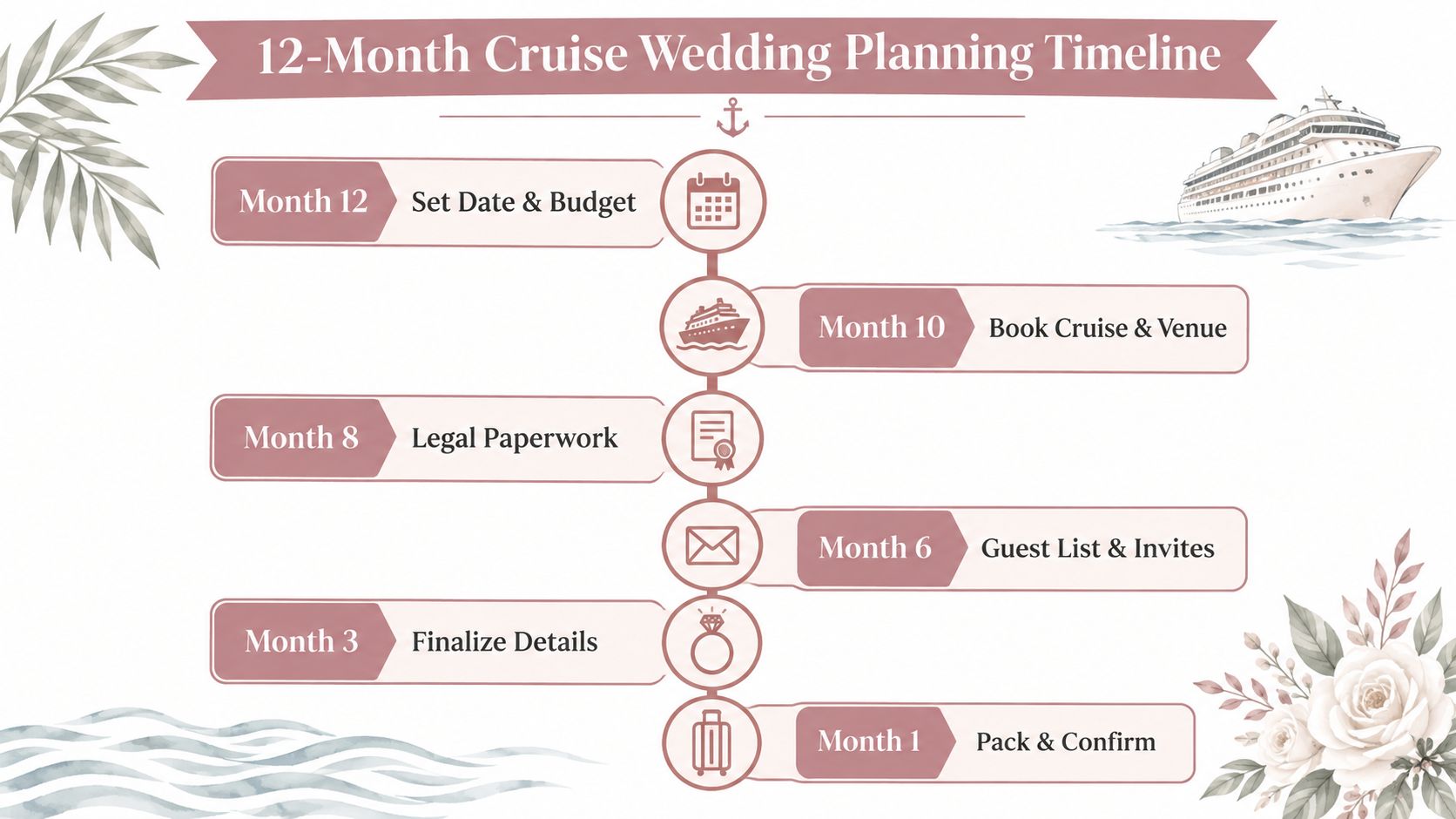
Month 12 to month 8
At month 12, choose the itinerary, budget, and whether you're doing legal or symbolic. At month 10, book the cruise and secure the ceremony venue if the line allows venue choice. That's also when I'd start using a planning framework like where to start when planning a wedding, because cruise weddings punish disorganisation quickly.
By month 8, lock the paperwork window with the relevant authority. Don't wait for a pretty invite design before you've confirmed what the legal process needs. If you're relying on passports, previous-marriage documents, or a notice-of-marriage process, that admin must be moving now.
Month 6 to month 1
At month 6, send save-the-dates with clear boarding and cabin-booking instructions. Guests can't act on vague enthusiasm. At month 3, finalise dietary needs, photography windows, and reception flow.
By month 1, your job is simple, pack, confirm, and stop changing details. That's also the point to chase passports, travel documents, and any guest who's still “thinking about it”.
The biggest traps are predictable. Late passport renewals, missed notice deadlines, and group cabin availability all create unnecessary pain. If you want a practical planning template for a wedding trip with moving parts, the structure in wedding planning timeline is a smart benchmark to adapt.
Guest Logistics and Travel Risk You Should Plan For
Cruise weddings look easy on paper. The couple gets a moving venue, guests get a shared trip, and the whole thing sounds simpler than booking a land venue. In practice, the guest side is where problems start. For UK couples, the main question is whether people can get to the port, board on time, manage their luggage, and afford the cabin or fare without resentment creeping in.
Attendance is a travel problem, not an invitation problem
A guest list is not an attendance list. People need time off work, transport to the port, passports in date, and money for travel and accommodation, and those are the points that cut turnout. If you are planning a cruise wedding, judge the guest list by the travel burden first, not by who sounds enthusiastic in the WhatsApp group.
That matters even more for guests coming from different parts of the UK. An older relative, a family with children, or anyone who dislikes early departures will feel every extra step. Group cabin blocks help, but they do not remove the stress of coordinating arrivals, luggage, and embarkation. If you need practical help coordinating the wider party, arrange group bookings early and make the port instructions unmissable.
Disruption needs a backup plan
Cruise weddings run on the ship's schedule, so weather, port changes, and embarkation timing can affect the ceremony. If a port is skipped or the itinerary shifts, the ship may need to move the event. That is manageable if you have asked the right questions before you pay a deposit. It turns into a headache if you assumed the brochure version was fixed.
Practical rule: never build the wedding day around the weakest part of the itinerary.
Ask the line how it handles accessibility, dietary needs, and ceremony timing around embarkation. Ask whether your group can board together and whether a ceremony slot is protected if the itinerary changes. Ask what happens if a guest misses embarkation or travels on a different schedule. If the answers stay vague, treat that as a warning.
I would also keep the trip from becoming a forced social marathon. Guests need downtime, especially on a sailing that already asks them to travel, board, unpack, and adjust to ship life. The best cruise weddings keep the schedule light and the instructions clear, because people remember ease far more than a packed programme.
Cruise Weddings Versus Land Venues
Cruise weddings win on one thing immediately, they bundle the celebration and the honeymoon into the same trip. Land venues win on everything that needs control. That's the trade.
If you want atmosphere, a cruise gives you movement, sea views, and a built-in shared experience for guests. If you want to control the ceremony time, the music, the decor, and the legal process without arguing with a ship schedule, a country-house or historic venue is cleaner. A land venue also makes paperwork feel normal instead of like a logistics project.
The other difference is guest behaviour. On a cruise, people are together for days, which is brilliant if you want a multi-day party and dangerous if you want a sharp, short celebration. On land, guests arrive, celebrate, and go home. Less friction, less shared memory, more control.
If you're coordinating a larger guest group, a service like arrange group bookings is the kind of practical support that matters more than another wedding mood board. Cruise weddings live or die on how easy you make travel, not on how pretty the invitation looks.
My view is simple. Choose a cruise wedding if you want an adventure-first event, a strong group experience, and you're happy to keep decor and timing within the ship's limits. Choose a land venue if you care more about ceremony precision, legal simplicity, and full creative control. Neither is wrong. They just solve different problems.
Questions to Settle Before You Pay a Deposit
Before you hand over money, ask three questions and insist on clear answers. First, is the ceremony legally recognised for a UK couple, or is it symbolic only? Second, what exactly is included in the package, and what gets charged separately? Third, what's the policy if weather, itinerary changes, or a missed port disrupt the ceremony?
If the answers are fuzzy, walk away or keep digging. A polished brochure can hide narrow guest limits, tight photography windows, and very little menu flexibility. Those are the details that cause resentment later.
Ask for the paperwork flow in writing. Ask for the guest-count rules in writing. Ask what happens if the ship changes course.
Battle Abbey Weddings understands exactly why couples compare a cruise with a historic venue, they want romance, clarity, and a day that runs properly. If you're still weighing whether a ship or a heritage setting fits your plans better, visit Battle Abbey Weddings and see how a licensed East Sussex venue can give you the atmosphere without the paperwork knot.