You may be at the stage where the venue feels right, the guest list is taking shape, and one question keeps coming back: how do we have a ceremony that feels like us?
For many couples, that question leads straight to a humanist wedding ceremony. It offers warmth, story, personality, and room for the people, promises, music, and words that matter most. Then comes the confusing bit in England and Wales. The ceremony you want and the legal marriage aren't currently the same thing.
That doesn't mean you need to give up on the wedding you've imagined. It means you need a plan that handles both the emotional experience and the legal paperwork with care. If you're dreaming of a meaningful celebration in a historic setting, this is where good planning makes all the difference.
What Is a Humanist Wedding Ceremony
A humanist wedding ceremony is a non-religious wedding ceremony built around the couple. Instead of following a religious liturgy or a standard registrar script, it focuses on your relationship, your values, and the promises you want to make in front of the people you love.
For couples who want a ceremony to feel personal without being religious, this often feels like the missing piece. You can include the story of how you met, the turning points in your relationship, readings that reflect your outlook on life, and vows written in your own voice. The tone can be elegant, funny, reflective, relaxed, or a blend of all four.
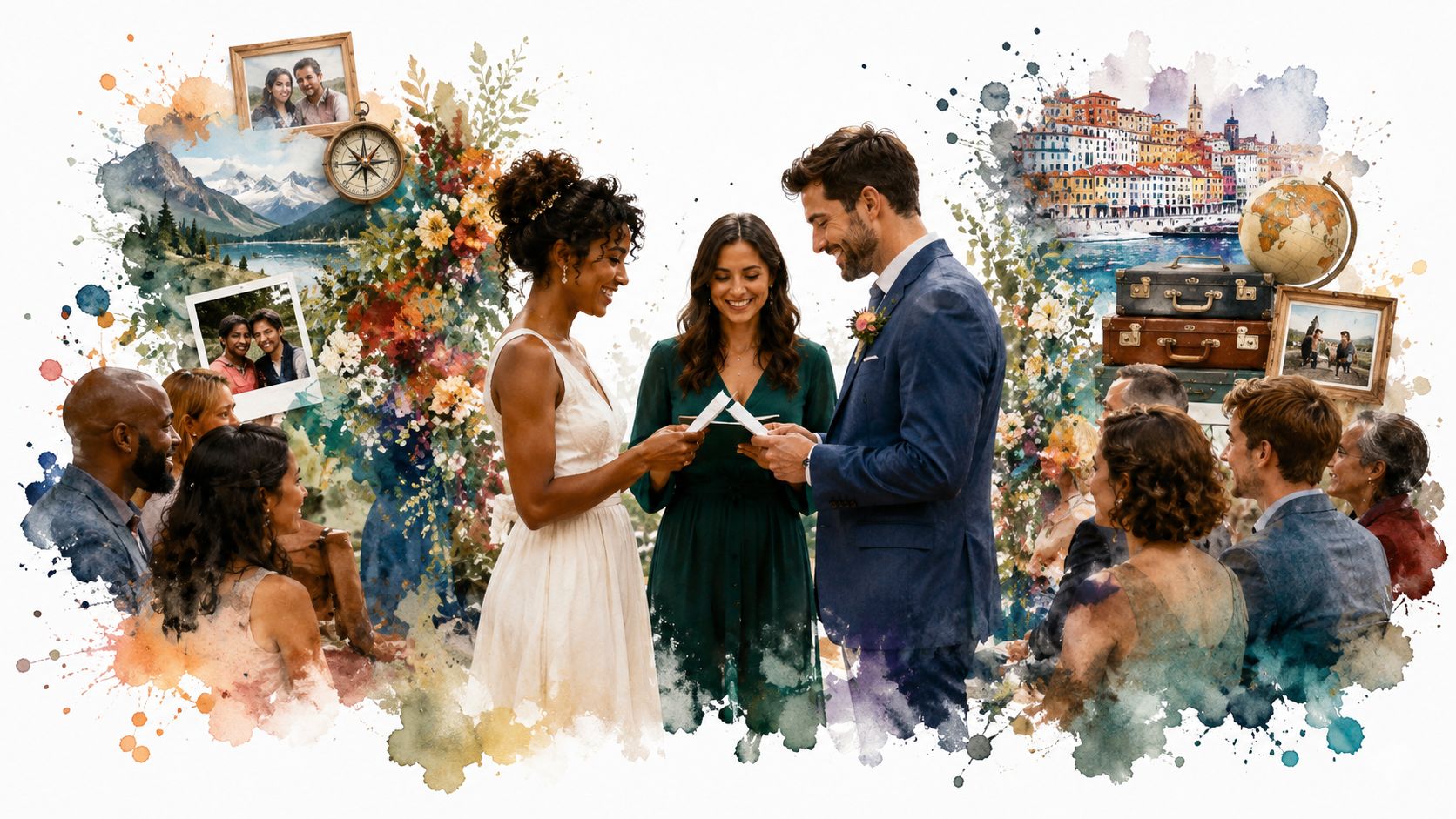
A lot of couples worry that “humanist” sounds political or anti-religious. In practice, it usually means something much simpler. The ceremony centres on human connection, shared ethics, mutual respect, and the life you're choosing to build together.
Why couples are drawn to it
Some couples want freedom. Others want depth. Many want both.
A humanist celebrant can shape a ceremony that feels recognisable as a wedding, while still sounding like you. That might mean including a favourite poem, a handfasting, ring warming, a moment of remembrance, or a welcome that acknowledges guests travelling from different parts of your lives.
A good humanist ceremony doesn't feel copied from a template. It feels like your relationship has been spoken aloud.
This style of ceremony has grown significantly. Humanist weddings in England and Wales saw a 266% surge over 15 years, rising from 287 ceremonies in 2004 to 1,051 in 2016, according to reporting on Humanists UK statistics in The Guardian.
What it feels like on the day
The emotional tone is often what wins couples over.
Rather than moving quickly through set wording, a humanist wedding ceremony usually gives space for story. Guests hear who you are, not just what you're doing. That creates a different atmosphere. People laugh more. They listen more closely. They often feel more involved because the ceremony reflects real lives, not generic lines.
Humanist Civil and Religious Ceremonies Compared
Choosing between ceremony types gets easier when you stop thinking in labels and start looking at what each one allows.
The main differences at a glance
| Feature | Humanist Ceremony | Civil Ceremony | Religious Ceremony |
|---|---|---|---|
| Core focus | Your story, values, and personal promises | Legal marriage with a formal structure | Marriage within a faith tradition |
| Content | Fully tailored and non-religious | Usually more fixed in wording and format | Guided by religious doctrine and tradition |
| Personalisation | High. Readings, rituals, tone, and structure can be shaped around you | Some personalisation, but within legal and venue rules | Varies by faith and officiant |
| Officiant role | Celebrant as writer, guide, and storyteller | Registrar conducts the legal ceremony | Religious leader leads the ceremony |
| Music and readings | Wide flexibility if they suit the tone you want | Subject to civil ceremony rules | Usually needs to fit religious setting and tradition |
| Venue flexibility in England and Wales | Emotional ceremony can happen in beautiful settings, but it isn't the legal marriage | Legal marriage must follow civil rules | Legal if conducted within recognised religious framework |
| Overall feel | Bespoke and intimate | Efficient and formal | Sacred and tradition-led |
What couples usually notice first
A civil ceremony often suits couples who want the legal part handled directly and without complications. It can still be lovely, but it tends to feel more procedural.
A religious ceremony can be meaningful for couples with a living connection to a faith community. The structure, language, and symbols come with a clear spiritual framework.
A humanist wedding ceremony usually appeals to couples who want something more authored. You're not fitting yourselves into a pre-existing script. The script is created around you.
A practical way to choose
If you're unsure which route fits, ask yourselves these questions:
- Do you want the ceremony to tell your story? If yes, a humanist format usually gives you the most room.
- Do you want one event to handle the legal marriage in England? If yes, a civil or recognised religious route may be simpler.
- Do you want non-religious language with emotional depth? That's where humanist ceremonies often stand out.
- Do family expectations matter? They often do. It helps to separate what matters to others from what will feel honest to you.
Practical rule: Choose the format that matches the feeling you want guests to remember, then build the logistics around it.
For many couples in England, the answer is a blend. They complete the legal marriage through a civil process, then hold a humanist ceremony as the wedding that carries the emotional weight of the day.
Navigating the Legalities in England and Wales
This is the part that catches couples out.
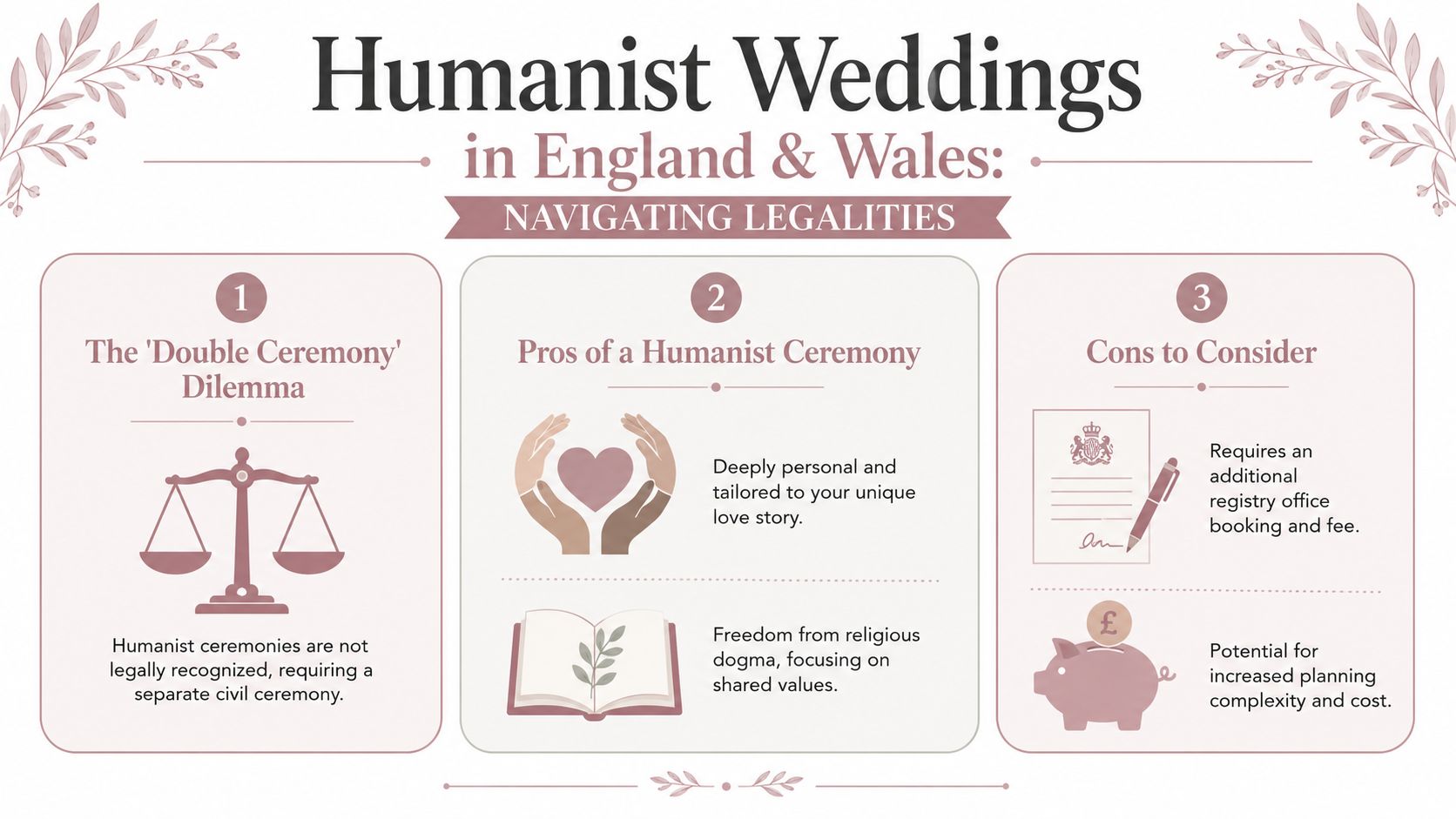
In England and Wales, a humanist wedding ceremony is not currently recognised as the legal act of marriage. That means you can absolutely have the ceremony, but you'll also need a separate civil marriage process for the legal paperwork. According to the Religion Media Centre factsheet on humanist weddings, this affects approximately 1,000 couples annually, and the civil component alone adds an estimated £390–£450.
What the law means in real life
The easiest way to understand it is this:
- a humanist ceremony can be your meaningful wedding ceremony
- a civil ceremony handles the legal marriage
- in England and Wales, those are usually two separate events
That's why couples often talk about the “double ceremony”. It isn't about having two full weddings. It's about dealing with two different functions. One is legal. One is personal.
For some couples, this feels frustrating at first. They assumed the ceremony at their venue would do both jobs. In England and Wales, that's the point where planning needs to become more intentional.
Three ways couples handle the double ceremony
There isn't one perfect method. The best option depends on your budget, your guest experience, and how much emotional energy you want to give the legal part.
Do the legal ceremony in advance
This is the calmest option for many couples. You complete the legal marriage at a register office on a different day, then treat the humanist ceremony as your full wedding day in every emotional sense.
Keep the legal ceremony very small
Some couples invite only the required witnesses and maybe immediate family. That keeps the administrative part simple and protects the atmosphere of the main celebration.
Separate the tone very clearly
If the legal signing happens close to the wedding day, decide together what it is and what it isn't. If it's just paperwork, let it be paperwork. Save your vows, music, entrance, and ring exchange for the humanist ceremony.
Couples are often happiest when they stop trying to make both parts equal. One handles legality. The other holds the meaning.
Why Scotland gets mentioned so often
Scotland is often part of this conversation because the system is different there. Humanist weddings gained legal recognition in 2005, and by 2019 they accounted for 23% of all marriages, according to Cosmopolitan's reporting on the Scottish position. In practice, that means couples there can have one ceremony that is both personal and legally binding.
That contrast is exactly why couples in England and Wales need a more deliberate plan.
How to make it feel smooth instead of fragmented
A few practical choices make a big difference:
- Book the civil ceremony early. Registry availability can shape your timeline.
- Tell key suppliers which moment is the emotional ceremony. Your photographer, planner, and celebrant need to know where the emphasis sits.
- Decide when rings and vows happen. Most couples save them for the humanist ceremony.
- Explain it clearly to guests. You don't need a long legal briefing. A short note on your website is enough.
If you want a clear overview of the formal marriage process, this guide on how to get married in the UK is a helpful starting point.
Finding Your Perfect Humanist Celebrant
The celebrant shapes the ceremony more than any other supplier apart from the two of you. Flowers create atmosphere. Music shifts emotion. The celebrant gives the ceremony its voice.
That matters because a humanist wedding ceremony is not a recitation from a fixed script. It's written, refined, and delivered around your relationship. The right celebrant can make the ceremony feel natural and grounded. The wrong one can make even lovely content feel flat.
What a celebrant actually does
A strong celebrant usually works as part interviewer, part writer, part speaker.
They'll spend time getting to know you, ask questions about your relationship, help you decide what to include, draft the ceremony script, guide you through edits, and deliver the ceremony on the day with warmth and confidence. Many couples are surprised by how collaborative the process feels.
Across the UK, the profession has grown substantially. The number of humanist celebrants now exceeds 500, and they collectively conduct around 10,000 ceremonies per year, a 240% increase over the previous decade, as referenced in this discussion of UK humanist ceremony growth.
What to look for in a celebrant
Don't choose on qualifications alone. Voice, manner, and chemistry matter just as much.
A few things to pay attention to:
- Writing style: Ask to hear a sample passage or ceremony extract. You're listening for warmth, rhythm, and personality.
- Delivery style: Some celebrants are calm and lyrical. Others are upbeat and witty. Neither is better. It just needs to fit you.
- Listening skills: A good celebrant won't impose a stock version of romance onto your story.
- Comfort with family dynamics: Blended families, remembrance moments, or sensitive relationships often need careful wording.
- Organisation: Deadlines, script drafts, meetings, and rehearsal notes should feel clear.
Questions worth asking on the first call
A first conversation tells you a lot. You might ask:
- How do you gather our story?
- How much can we personalise?
- How do you help with vow writing?
- Can we include symbolic rituals?
- What happens if we're nervous about public speaking?
- How do you handle a ceremony with guests of mixed beliefs?
If you're also thinking about who leads which part of the day, this page on who can officiate the wedding gives useful context.
The best celebrants don't try to sound impressive. They make you feel understood.
Crafting Your Ceremony Structure and Vows
Once you've chosen a celebrant, the blank-page feeling usually appears. Couples often ask, “What goes into a humanist ceremony?”
The good news is that there isn't a single correct order. The ceremony can be shaped around your personalities, your guests, and the mood you want to create. What helps is having a flexible blueprint.
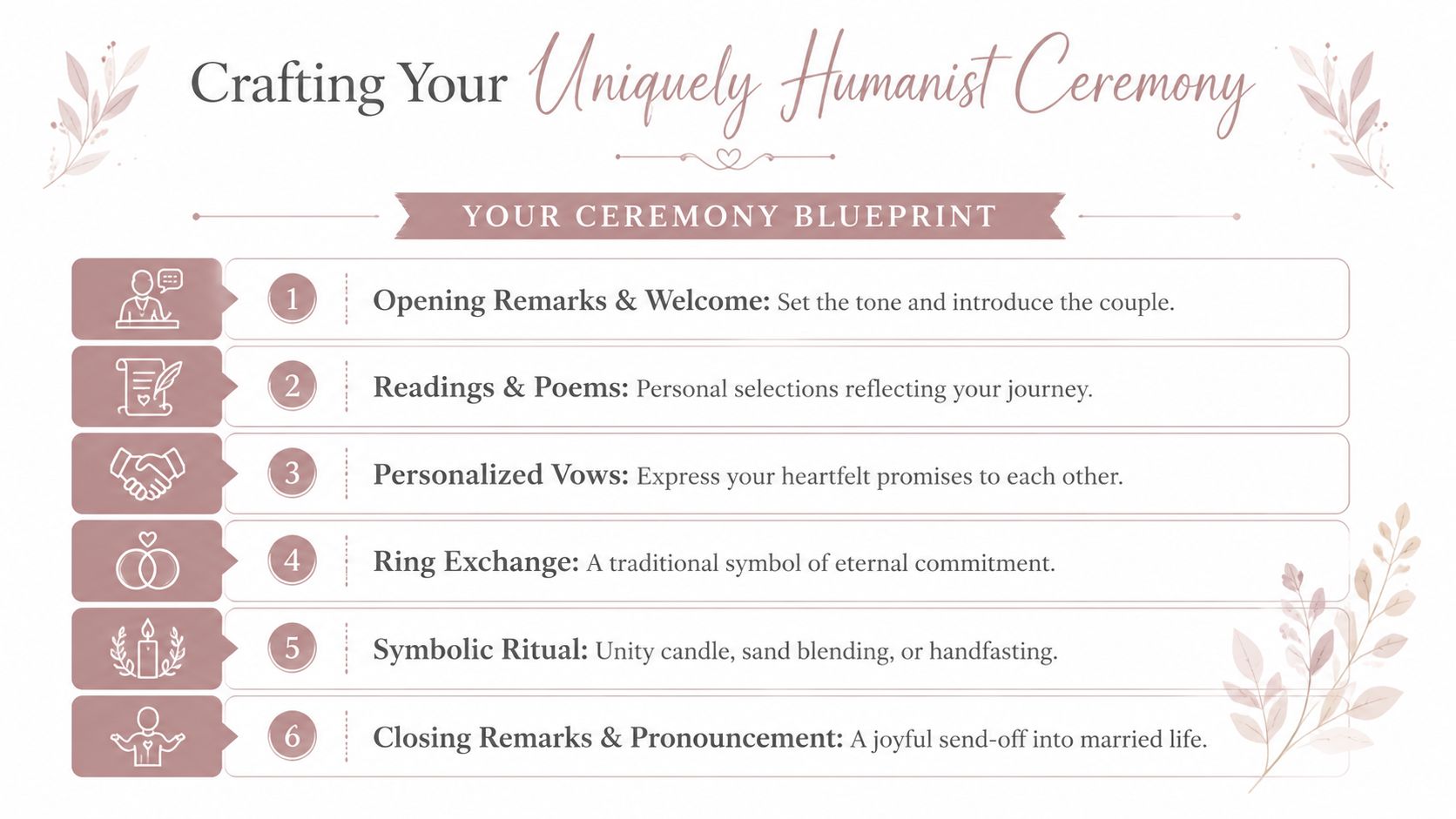
A simple ceremony flow that works well
Most couples build from these elements:
Opening welcome
Your celebrant welcomes guests, sets the tone, and marks the significance of the gathering.Your story
This is often the heart of the ceremony. It can include how you met, what changed as your relationship grew, and what others recognise in you as a couple.Readings or music
Friends or family can take part here. This is a lovely place for literature, philosophy, song lyrics, or something humorous that still feels thoughtful.Personal vows
These are your promises in your own words. They can be brief and sincere or more detailed and reflective.Ring exchange or another token
Rings are common, but not required. Some couples exchange another object or include a symbolic act.Closing words and celebration
Your celebrant closes with a final reflection and invites everyone into the joy of what comes next.
If you'd like ideas for how these pieces appear in a printed ceremony, this guide to a wedding order of service can help.
How to write vows that sound like you
The strongest vows usually aren't the most poetic. They're the most believable.
Try this approach:
- Start with what you value in your partner.
- Add what you promise in ordinary life, not just in grand moments.
- End with how you want to move through the future together.
For example, a vow might include tenderness, but also practical partnership. Promise to listen well, show up kindly, make space for ambition, laugh in the hard weeks, and protect the life you're building.
Good vow writing prompts
Use prompts rather than trying to write from nothing:
- When do I feel most supported by you?
- What ordinary thing do you do that makes me feel loved?
- What challenge have we already weathered together?
- What kind of home do I want us to create?
- What promise can I keep, even on difficult days?
Short vows delivered clearly are more moving than long vows written to impress.
Readings and rituals that fit a humanist tone
You can include ritual without becoming formal or religious. Many couples choose one symbolic act because it gives the ceremony shape and texture.
Common choices include:
- Handfasting: A visual act of binding your lives together.
- Unity candle: Quiet and elegant, especially in indoor spaces.
- Ring warming: Guests pass on good wishes before the rings are exchanged.
- Shared toast or quaich: A communal gesture of welcome and union.
For readings, look for language that speaks to commitment, companionship, and shared life. Poetry, novels, letters, or even a passage from a favourite film can work beautifully if it sounds like you.
A Humanist Ceremony at Battle Abbey
Historic venues suit humanist ceremonies especially well because the words themselves do so much of the work. You don't need a religious framework to create gravity. The setting, the gathering, and the ceremony script already carry it.
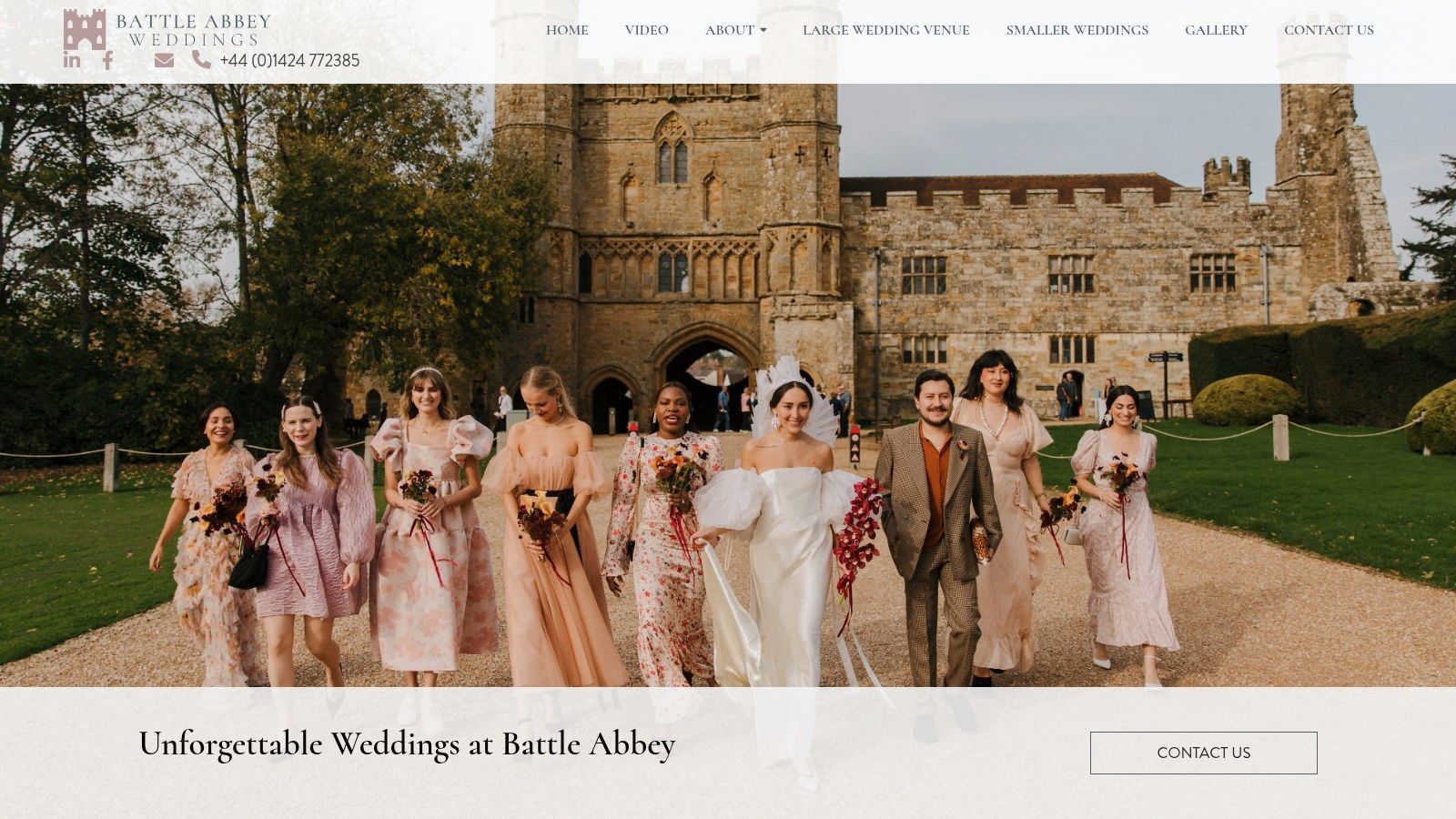
At Battle Abbey, that can translate into a ceremony that feels intimate and expansive at the same time. Historic stone, long views, and old architectural details give a humanist wedding ceremony a sense of occasion without dictating the content. That's a strong match for couples who want a day that feels rooted in place, but still personally written.
How the venue can shape the experience
A humanist ceremony works best when the setting supports the tone you want.
In a grand indoor space, the atmosphere often suits richer music, thoughtful readings, and a slower entrance. In an outdoor terrace or lawn setting, the ceremony can feel lighter and more open, with the natural surroundings becoming part of the experience. Couples often use that contrast well. Formality for the entrance. Warmth for the vows. Celebration as soon as the ceremony closes.
Guest flow matters too. If your legal signing happened earlier, the venue ceremony becomes the moment everyone has gathered for. That means the arrival, seating, music cue, and first words from the celebrant carry even more emotional weight.
Making the split ceremony feel seamless
The most successful approach is usually psychological as much as logistical. Treat the humanist ceremony as the wedding. Let everything else support that choice.
That means:
- Keep the legal signing simple
- Save your entrance for the main ceremony
- Exchange personal vows in front of guests
- Brief family members so nobody accidentally downplays the day
A venue film can help you picture how guests move through the space and how the atmosphere shifts across the day:
Lovely details that work well in a historic setting
A few ceremony choices often feel especially at home in heritage venues:
- Live strings or acoustic music for the entrance and signing moment
- A literary reading that suits the architecture and mood
- A handfasting in the open air if you want a visual ritual
- Private vow exchange before guests arrive, followed by public vows during the ceremony
The key is balance. Let the setting be dramatic, but keep the wording honest and human. That contrast is often what makes the ceremony memorable.
Your Humanist Wedding Planning Timeline
A humanist wedding ceremony rewards early planning because it has both legal and creative moving parts. Once you map those out, the whole process feels much lighter.
Early planning stage
When you first begin:
- Choose your venue and date so the rest of the logistics can lock into place.
- Research celebrants early and book the one whose voice feels right.
- Decide how you want to handle the legal marriage so there's no confusion later.
This is also a good point to think about practical comfort. If you're planning a spring wedding with outdoor elements or old stone interiors, Seattle studio's cruelty-free shawls can spark ideas for staying warm without compromising the look of your outfit.
Mid-planning stage
A little later, focus on the ceremony content:
- Meet with your celebrant and begin shaping your story.
- Choose readings, music, and any symbolic ritual you want included.
- Draft your vows earlier than you think you need to. They almost always improve with one calm edit.
Final weeks
Closer to the day:
- Confirm the civil ceremony details
- Share the running order with suppliers
- Brief readers, witnesses, and key family members
- Print or proof your order of service if you're having one
If a choice affects both the legal plan and the guest experience, decide it early. Last-minute changes tend to create stress in exactly the part of the day meant to feel most heartfelt.
A well-planned humanist wedding in England doesn't feel compromised. It feels intentional. That's the difference.
If you're looking for a historic setting that can hold both the grandeur and the intimacy of a personal ceremony, Battle Abbey Weddings is worth exploring. The team understands how much atmosphere, flow, and thoughtful planning matter when your ceremony is the emotional centre of the day.