You've got the mood board open, three venue tabs fighting for attention, and one very real question hanging over the whole plan, how do you choose a place that feels like history without turning your wedding day into a transport puzzle? In East Sussex, that tension is part of the charm. The county gives you sea air, old stone, quiet lanes, and the kind of settings that make guests pause before they even reach the drinks reception.
A lot of couples arrive thinking about the look first. That matters, of course, but in East Sussex the better question is what the place does to the day, how it shapes the arrival, the photographs, the meal, the pace, and even how people feel when they sit down for speeches. A wedding here can feel like it belongs to the setting instead of sitting on top of it.
Why East Sussex Captivates Wedding Couples
She stepped out of the car first, just to take it in. The venue sat above the lanes with old brick, weathered stone, and a view that made the whole morning feel quieter than it had a minute earlier. By the time the groom arrived, the light had shifted across the grounds, and everyone was speaking a little more softly because the place asked for it.
That response is exactly why East Sussex works so well for weddings. One part of the county gives you coastal drama, another gives you rolling countryside, and much of it is stitched together by venues that have stood through generations of use. The result is a day with depth, not just decoration. East Sussex also spans a large rural area with settled towns and villages alongside it, which helps explain why a wedding here can feel both secluded and well connected (East Sussex overview).
History that shapes the atmosphere
What couples often remember most is not a single room, it is the sense that the setting already has a story of its own. A ceremony inside a listed hall, a manor garden, or a heritage site can make the vows feel woven into something older and sturdier than the day itself. That is part of East Sussex's appeal, especially where English Heritage places and other historic sites give couples a setting that feels lived in rather than staged.
The county's public health briefing also reminds you that this is a real place with real communities, not just a romantic backdrop. Its focus on ischaemic heart disease as the leading cause of premature mortality in 2019 shows the contrast between the beauty guests see and the practical county behind it (East Sussex health inequalities briefing).
For couples, that contrast can be part of the appeal. A wedding held in a historic setting feels grounded because the building, the grounds, and the local setting all carry weight. The actual day still belongs to you, but it gains texture from everything around it.
A useful way to plan the wider picture is to compare venue choices with broader travel decisions, such as honeymoon destinations in USA, so you can decide whether you want your wedding story to stay rooted in heritage here and shift into something different afterwards.
The landscape becomes part of the guest experience
East Sussex does not just photograph well, it changes the rhythm of the day. Guests leave towns, follow rural lanes, pass fields and hedgerows, then step into grounds that feel separated from ordinary life. That journey matters because it builds anticipation before the ceremony even begins.
A good venue arrival often does half the emotional work. A stone drive, a tucked-away entrance, or a view that opens suddenly after a narrow approach can make guests slow down and notice where they are, which is exactly the kind of atmosphere historic estate weddings depend on.
The appeal lies in the county's earned romance. Nothing here needs to be forced. The setting does more than decorate the day, it shapes how people move, how they gather, and how they remember being there.
Navigating East Sussex Wedding Logistics
A wedding coach arrived late once at a countryside venue because the satnav tried to be clever on a narrow lane, and the florist had to unload under a drizzle that didn't look dramatic but soaked ribbon fast. The ceremony still happened on time, but only because the couple had built slack into the schedule and warned suppliers that the last mile mattered more than the postcode. In East Sussex, that kind of planning is the difference between a smooth day and one spent apologising.
Transport, access, and guest movement
The county's geography is part of the reason logistics matter so much. East Sussex has a large rural footprint as well as settled towns, so venue access can vary sharply from one location to another (East Sussex overview). Guests who are comfortable taking a train into a town centre may still need taxis or pre-booked transfers for the final stretch to a country estate, woodland venue, or coastal site.
For guests, the easiest plan is usually simple:
- Choose a central arrival point: Town stations make the handover to minibuses or taxis easier than asking everyone to find their way along rural roads themselves.
- Give suppliers route notes: Don't rely on a postcode alone if the access road is hidden or narrow.
- Build in arrival buffers: Rural journeys can take longer than people expect, especially when visitors are unfamiliar with local roads.
Practical rule: the prettiest venue can still become stressful if suppliers can't find the loading point.
Accommodation needs the same discipline. Larger guest lists usually need a mix of hotel rooms, nearby guesthouses, and private houses, while intimate weddings often work better when the couple books a single property for immediate family and core guests. The key is matching the scale of the stay to the scale of the celebration.
Civil ceremony planning and weather backup
Legal and registrar logistics need early attention too. If you're planning a civil ceremony, check notice requirements and registrar availability with the relevant local authority well before you lock in a date, because the booking rhythm can be tighter than couples expect. That's especially important in a county where demand clusters around the same attractive weekends.
Weather planning is just as practical as transport planning. East Sussex's beauty comes with British weather attached, which means outdoor terraces, lawns, and arrival drinks need a wet-weather version that feels intentional rather than improvised.
Before the day, I'd always ask couples to confirm:
- Where guests wait if rain moves in.
- Whether suppliers can access the venue the day before.
- How lighting changes if the ceremony starts later than planned.
The county council's own planning documents also show how local demand keeps evolving, with East Sussex looking to sectors like construction, engineering, health and social care, food and drink production, creative industries, and the visitor economy in future growth plans (East Sussex County Council plan). That matters for weddings because it shapes the local pool of caterers, makers, builders, stylists, and hospitality staff you'll be drawing on.
Choosing Your East Sussex Wedding Season
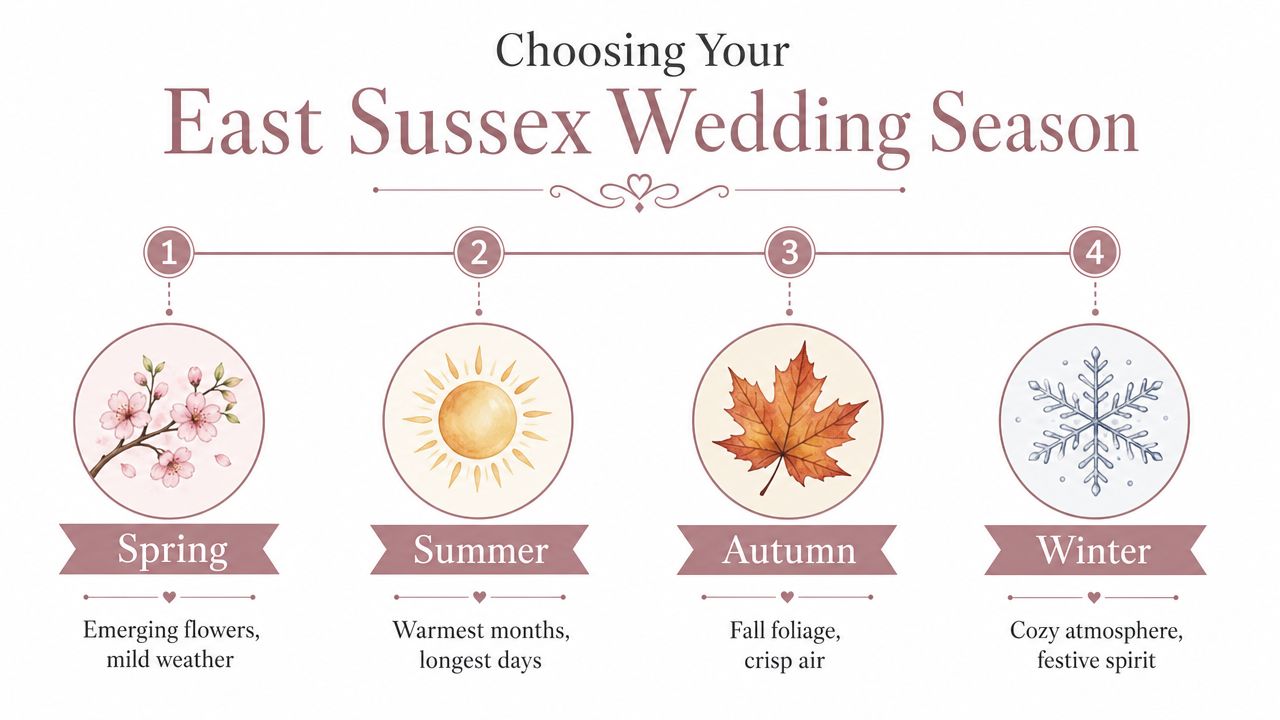
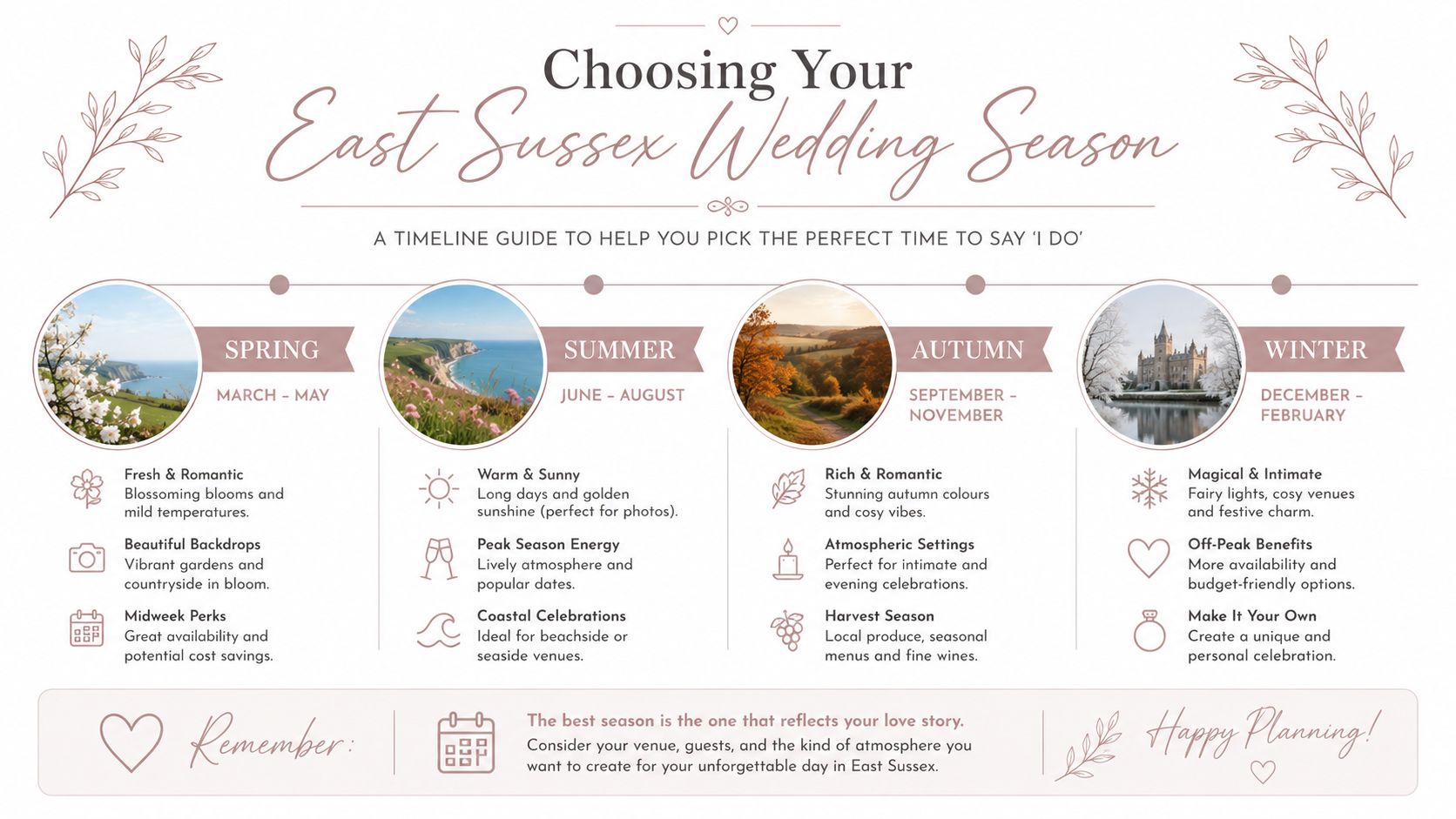
Spring in East Sussex feels like a promise being kept. The land turns softer, the gardens open, and historic venues start looking less severe and more alive, which is ideal if you want a romantic palette without overpowering the architecture. Summer gives you the longest, warmest stretch for outdoor drinks and late photographs, but it also asks you to book earlier and think harder about shade, transport, and guest comfort.
How each season changes the plan
Autumn is the season for texture. Trees and hedgerows deepen in colour, and the countryside gains that crisp, settled feeling that suits candlelight, dark green foliage, and richer tablescapes. Winter works best for couples who want intimacy, because indoor spaces, candles, and historic interiors can carry the atmosphere beautifully when the weather turns sharp.
The smartest way to choose is to decide what matters most:
- For photography: Spring and autumn usually give the most visually distinct scenes.
- For guest comfort: Summer is easiest for older relatives and children, provided the venue has shade and water.
- For atmosphere: Winter makes heritage interiors feel especially dramatic and contained.
If your venue has both outdoor and indoor options, pick the season that strengthens the room you'll use most, not just the one that looks best in a mood board.
Booking rhythm and practical value
Peak dates get claimed early because couples want the same golden weekends. That means your decision isn't just about colour or temperature, it's also about supplier availability and how much flexibility you want in styling. A May ceremony under fresh greenery needs different planning from a November reception with indoor candlelight and heavier florals.
The county's long-term demographic shape also helps explain why the wedding market feels varied. East Sussex has aged gradually over time, with the average age rising by 2 years since 2002, and its population has grown by 13.1% since 2002 (East Sussex overview). That mix of residents, second-home owners, visitors, and long-established communities contributes to a strong local events culture across the year.
Battle Abbey Weddings Where History Meets Romance
She walked into the Abbot's Hall with her bouquet still wrapped, and the room changed the tone of the morning immediately. Not because it was grand in a polished modern way, but because it felt lived-in by history, with the kind of presence that makes even a short ceremony feel ceremonial. A venue like that doesn't need to perform heritage, it already has it in the stone and the setting.
Battle Abbey sits on one of the most significant historic sites in England, and that matters to couples who want their wedding to feel rooted in place. The estate offers a blend of spaces that work differently depending on the size and style of the celebration, from the Abbot's Hall for ceremonies to the Duke's Library and Dining Room/Bar for dining, plus terraces and lawn space overlooking the battlefield. For couples who want to understand the venue's character in more detail, the internal guide on what makes Battle Abbey the perfect historic wedding venue gives a clear sense of how the setting shapes the day.
Why the setting feels so distinct
This is not just a beautiful building with a famous postcode. It is a place where English history is visible in every stone, and that gives the day emotional weight without needing extra decoration. Guests don't need a long explanation to feel the significance, because the venue does that work the moment they arrive.
The practical advantage is that this heritage does not come at the expense of usability. The estate is licensed for ceremonies and receptions until midnight, and couples can choose exclusive full-site hire for 75 to 250 guests or an exclusive part-site option for intimate celebrations up to 60. Those are very different party shapes, and it's useful to know the venue can serve both without losing its sense of identity.
Spaces that support the rhythm of the day
The flow works particularly well for weddings that want ceremony, drinks, dining, and dancing to feel connected rather than scattered. Ceremony in the hall, drinks on the terrace or lawn, dinner in one of the historic dining spaces, then a return to the evening atmosphere as the light fades over the ruins. That sequence gives the celebration a natural arc.
A venue like this also rewards simple styling. Historic architecture does much of the visual heavy lifting, which means florals, linen, and candlelight can stay elegant rather than oversized.
Practical rule: let the building lead, then choose details that respect its scale.
Battle Abbey Weddings also offers in-house catering with fresh, locally sourced East Sussex ingredients, flexible menus ranging from banquets to BBQs and hog roasts, and setup access the day before subject to availability. For couples, that combination means fewer moving parts and more control over how the day feels.
Historic Venues and Photographic Backdrops Across East Sussex
A Tudor manor gives one kind of photograph. A cliff-top view gives another. A medieval hall gives a third. East Sussex is strong precisely because it doesn't ask couples to choose one version of heritage and settle for it, it offers a whole range of it, from intimate spaces to grand settings and outdoor locations that change character with the weather.
Matching venue style to your wedding vision
If you want the day to feel close and editorial, smaller historic houses and gardens usually work best because they frame the couple rather than overwhelm them. If you want a ceremony with theatre, larger halls and estate settings give the photographer more architectural depth and the guests more room to move. For couples who love the outdoors, woodland edges, old garden walls, and dramatic sea-facing backdrops create a more relaxed visual rhythm.
That's where planning your architectural wedding shoot becomes useful, because the right lens on a historic building can make a venue feel intimate without flattening its scale.
Questions worth asking on venue visits
A venue visit is the right time to ask how the space behaves at different times of day, not just how it looks in brochure light. Ask where the natural photo spots are, where guests shelter if rain hits, and how close the ceremony location is to the reception flow. That saves time later, especially when you're moving between multiple locations on the same day.
A few useful comparisons help couples decide quickly:
- Grand halls: best if you want formal impact and indoor certainty.
- Gardens and terraces: strongest for drinks receptions and relaxed group photographs.
- Smaller heritage rooms: ideal for intimate guest numbers and layered styling.
The county also carries a long historical weight outside the wedding world. The 2021 Census put East Sussex at 545,800 residents, with 19,130 more people than in 2011, a rise of 3.6% (East Sussex census briefing). That doesn't tell you which venue to choose, but it does show the county is a living, changing place rather than a preserved set piece.
For couples comparing options, the internal page on local wedding venues is a sensible starting point, because it helps place one historic venue in the wider East Sussex area without losing sight of the individual mood you're trying to create.
Creating Your East Sussex Wedding Weekend Itinerary
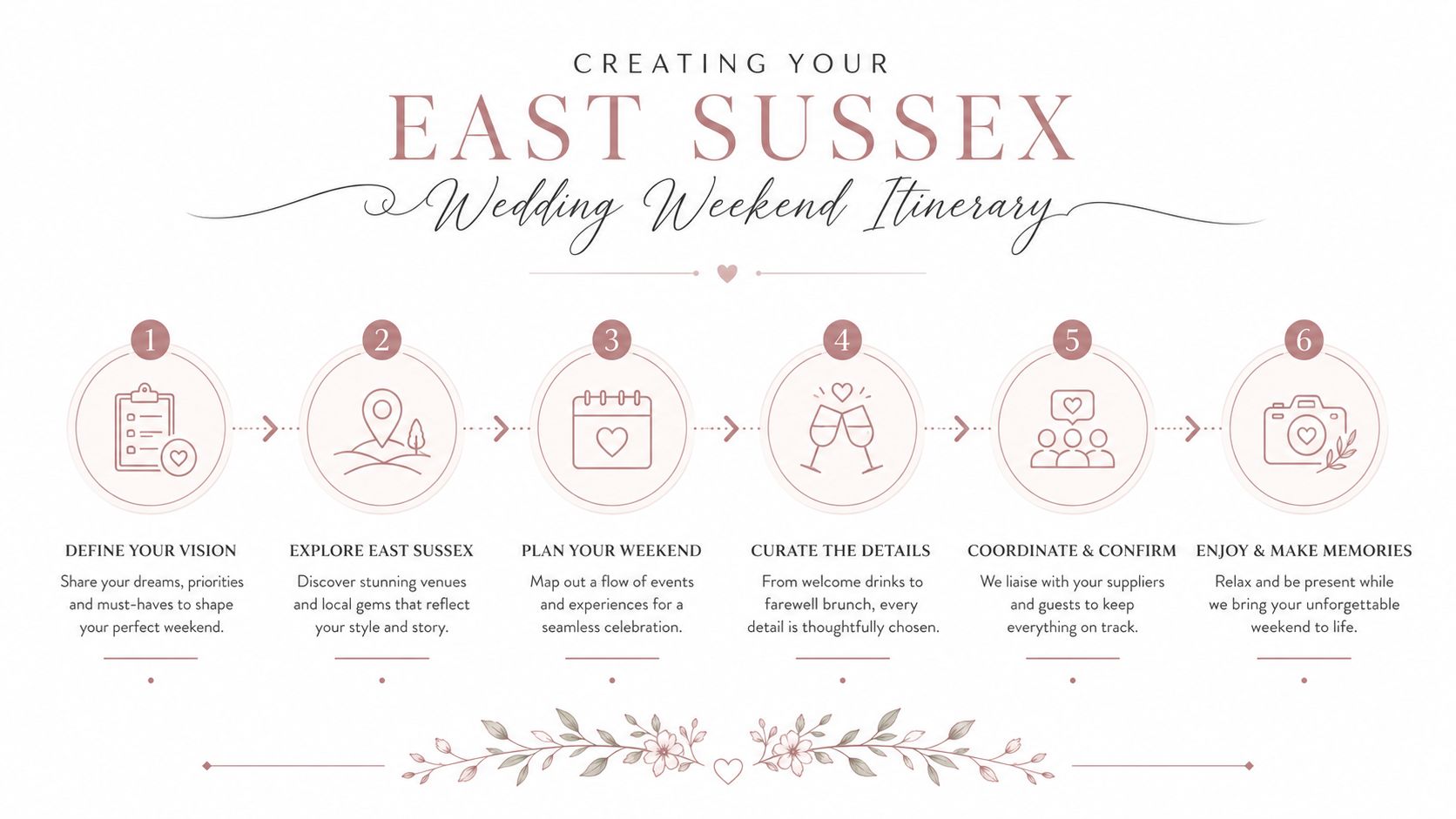
The best East Sussex weddings often feel like short, elegant escapes rather than single-day events. Guests arrive on Friday, settle into the county's pace, celebrate on Saturday, then linger over brunch on Sunday with slightly rumpled hair and very good stories. That extra day changes everything, because it gives people time to notice where they are instead of just clocking in and out of the schedule.
A simple weekend flow that works
Friday can stay light. A welcome drink in town, a private dinner for close family, or a relaxed gathering near the venue all help guests arrive without feeling over-programmed. For those who want a more place-specific start, the internal guide to things to do in Battle is a practical way to build local flavour into the weekend without making everyone travel far.
Saturday should stay focused on the wedding itself, with clear timing for arrival, ceremony, drinks, dinner, and the evening party. If you're using a venue with historic grounds, the surrounding streets and scenery can do plenty of the storytelling, so you don't need to overfill the day with extra activities.
What to include around the wedding
Sunday works best as a soft landing. A brunch, a walk, or a casual farewell coffee lets guests reconnect before they leave and gives the couple a proper end to the weekend. If your guest list includes older relatives or people with limited mobility, keep that final gathering simple and near accommodation.
The county's own future-facing plan is useful here too, because East Sussex is actively shaping growth around the visitor economy, creative industries, and food and drink production (East Sussex County Council plan). That gives couples a ready-made cue for local menus, makers, and experiences that feel rooted in the area rather than imported from elsewhere.
Bringing Your East Sussex Wedding Vision to Life
The strongest East Sussex weddings usually share one thing, they know what they're trying to protect. Sometimes that's a historic atmosphere. Sometimes it's guest comfort. Sometimes it's the feeling of being somewhere meaningful without losing modern ease. Once you know the priority, the rest of the planning gets much easier.
Balance the romance with the mechanics
Historic settings reward couples who respect the structure of the place. That means choosing décor that suits the room, timing that allows for access and setup, and a supplier team that understands older buildings and rural routes. It also means being honest about your guest list, because a venue that feels perfect for 60 people may not feel equally comfortable for 180.
The county's economy gives you useful clues about who to hire and what to prioritise. East Sussex is building around sectors such as creative industries, construction, engineering, health and social care, visitor economy, and food and drink production (East Sussex County Council plan), which suggests a local ecosystem that can support everything from floral design to catering to event build-outs. For a wedding, that means local knowledge is not a luxury, it's an operational advantage.
Make the day feel personal, not overdesigned
One of the easiest mistakes in a historic venue is to compete with the setting. A better approach is to choose one or two signature moments and let everything else support them. For some couples, that's the ceremony reveal. For others, it's a first dance that feels rehearsed enough to relax into rather than worry over.
If you want help shaping that moment with real intention, a guide to a memorable first dance can be a useful outside reference while you plan your own floor space, song choice, and timing.
Practical rule: a good East Sussex wedding feels designed, not crowded.
Battle Abbey Weddings fits that kind of planning because it gives you a historic setting, flexible guest capacities, in-house catering, and a team that works within the estate's rhythm rather than against it. If you're ready to turn the county's atmosphere into a real wedding plan, visit Battle Abbey Weddings and start shaping a day that feels as grounded as it is memorable.
Battle Abbey Weddings offers a historic East Sussex setting with ceremony and reception spaces, in-house catering, and options for both intimate gatherings and larger celebrations. If you're planning a wedding that needs heritage, practicality, and a clear sense of place, Battle Abbey Weddings is a strong starting point for turning that vision into a workable plan.