The last guests had just drifted from the terrace when the evening light turned the old stone honey-gold. A couple stood still for a moment, hearing only birdsong and the clink of glasses, and echoed a sentiment often heard at a great country estate wedding venue. It feels like stepping into a story.
The Dream of a Country Estate Wedding
A country estate wedding has a particular kind of romance. It isn't only about a handsome house, a long drive, or the promise of photographs under ancient trees. It's about atmosphere. Guests arrive and feel they've been invited somewhere private, meaningful, and slightly removed from ordinary life.
That sense of removal matters more than many couples realise. The strongest estate weddings feel self-contained. Ceremony, drinks, dinner, and dancing all unfold within one setting, so the day gathers momentum instead of losing it to transfers, waiting around, or shared public spaces.
The appeal isn't niche. The popularity of country estates is rising, with 62% of couples in 2024 choosing exclusive-use venues, and the UK wedding venue industry is projected to reach £3.9 billion in annual revenue in 2025, according to this overview of the UK wedding industry. Couples are moving towards places with character, privacy, and a stronger sense of occasion.
Why the dream feels so powerful
Country estate wedding venues let one place do several jobs at once:
- They create ceremony: A gravel approach, historic façade, or walled garden gives the day a natural beginning.
- They reduce visual clutter: Strong architecture means you don't need to decorate every surface.
- They give guests room to breathe: Older estates often include lawns, courtyards, terraces, and reception rooms with distinct moods.
- They feel personal: Exclusive hire changes the emotional tone. The venue becomes your home for the day.
If you're shaping the look of that day, it helps to study unforgettable wedding decoration trends for 2026, especially because estate settings reward design choices that work with the building rather than competing with it.
A country estate wedding works best when the setting carries half the beauty before the florist arrives.
The fantasy is real. So is the planning. The good news is that these two things don't oppose each other. They support each other. The more clearly you understand the moving parts, the easier it is to create a day that feels effortless.
Exploring Types of Country Estate Venues
Not all country estate wedding venues offer the same experience. Couples often use one phrase to describe several quite different settings, then wonder why venue visits feel confusing. The architecture, flow, and practical rules of each type shape the wedding day more than the photos first suggest.
The stately home or manor house
This is the classic English estate image. You might find formal gardens, panelled rooms, sweeping staircases, and reception spaces that already feel dressed for a celebration. These venues suit couples who want refinement, symmetry, and a sense of inherited grandeur.
A manor house often works beautifully for a wedding with a polished rhythm. Guests can move from a drawing room ceremony to drinks on a terrace, then into a library or dining room for the meal. The experience feels layered and ceremonial.
What to watch for is scale. Some manor houses look grand in photographs but have surprisingly intimate internal rooms. Others have generous lawns but fewer wet-weather options. Ask yourself whether the romance lies in the façade alone or in how the whole day flows.
The barn within an estate
Some of the most sought-after country estate wedding venues include a converted barn rather than a formal historic hall. This style tends to feel looser and more sociable. Timber beams, open floor plans, and less formal furnishing can suit couples who want elegance without stiffness.
Barn spaces also change how guests behave. People mingle more freely. The day can feel less segmented. That's helpful if you prefer long tables, relaxed speeches, sharing platters, or a late-night dance floor that starts naturally rather than ceremonially.
Typical strengths include:
- Flexible styling: Barns can lean rustic, modern, bohemian, or pared-back.
- Practical flow: Ceremony and reception can often happen in adjoining spaces.
- Supplier freedom: These venues sometimes allow more choice over catering and styling.
The trade-off is that you may need to bring in more personality through lighting, florals, draping, or furniture if the interior is plain.
The historic abbey, castle, or ruin-led estate
This is the dramatic end of the spectrum. Ruins, cloisters, battlements, and old ecclesiastical stonework give a wedding immediate atmosphere. For couples drawn to history, these venues offer something that newer builds can't imitate. They don't merely provide a backdrop. They provide narrative.
That narrative changes guest experience in a subtle way. People explore. They pause. They feel that the wedding belongs to a larger setting. It lends depth to even simple design choices such as candlelight, a string quartet, or a quiet dinner under old beams.
Historic venues reward restraint. Stone, age, and scale already do a great deal of visual work.
They also require more careful logistics. Heritage protections, access routes, sound behaviour, and outdoor-use rules often shape what is possible. If you love this type of venue, don't let that put you off. Just know that romance and regulation often arrive together.
How to choose your category
If you're unsure which style suits you, use this quick test:
- Think about the meal first. Formal banquet, long-table feast, or outdoor supper?
- Think about how guests should feel. Awestruck, relaxed, intimate, or celebratory?
- Think about decoration. Do you want a venue that needs very little added, or a blanker canvas?
- Think about weather. Which type gives you an indoor option you prefer, not merely tolerate?
Most couples don't need more inspiration. They need better vocabulary. Once you can name the type of estate you want, your search becomes far more efficient.
Essential Factors for Evaluating Your Venue
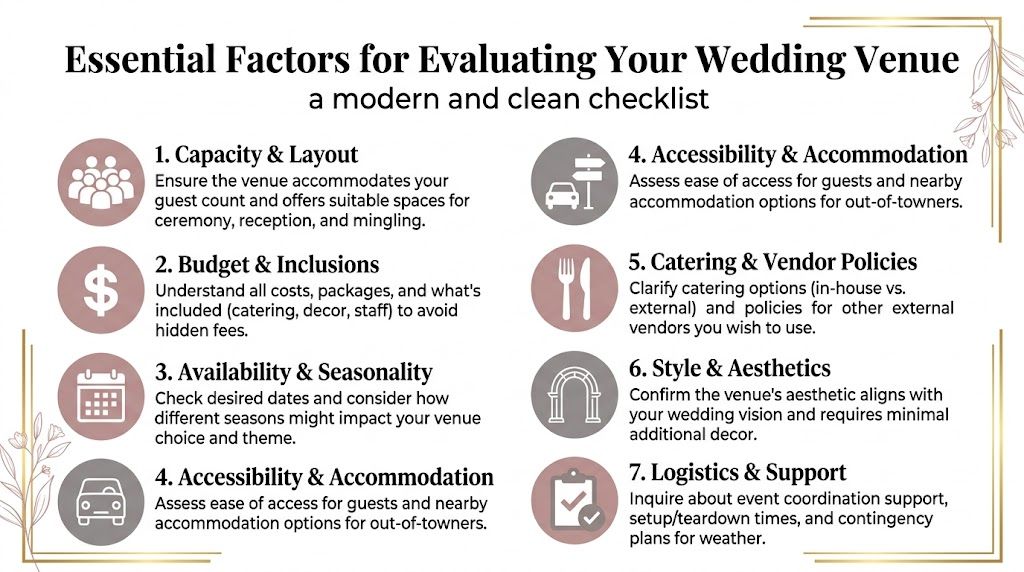
A beautiful venue can still be the wrong venue. The best decisions happen when couples assess a place as both a setting and an operating system. A country estate wedding venue has to perform under pressure. It must hold guests comfortably, support suppliers, adapt to weather, and make the day feel smooth rather than improvised.
Capacity and layout
Start with the floor plan, not the brochure headline. A venue may technically hold your guest count and still feel cramped at dinner, awkward during drinks, or thin on the dance floor. Ask where each part of the day would happen and how people move between spaces.
Look for a sequence that makes sense. Ceremony to drinks should feel natural. Drinks to dinner should not involve a bottleneck. If older relatives, small children, or guests in heels need to cross gravel, steps, lawns, and uneven stone, that becomes part of your planning.
A good layout gives you options without scattering everyone. Too many separated zones can fracture the atmosphere.
Licensing and ceremony rules
Historic venues often differ sharply from modern event spaces. In Grade I listed buildings such as Battle Abbey's Abbot's Hall, civil ceremony slots are often limited to a maximum of two hours because of heritage and acoustic regulations, which can reduce the number of possible weddings per day compared with modern venues, as noted in this overview of listed-building ceremony restrictions.
That sounds restrictive, but it can also clarify what matters. Historic spaces often work best when the venue team knows the building intimately and plans the day around those constraints instead of fighting them.
Practical rule: Ask not only "Are you licensed?" but "How long do we have in the ceremony space, and what happens immediately before and after?"
If the answer feels rushed, ask how the venue protects your privacy and pace.
Exclusivity and the feeling of ownership
Exclusive hire changes a wedding from an event booking into a hosted experience. It affects guest behaviour, photography, signage, sound, and peace of mind. No one wants to discover another party in the next room or hotel guests drifting through a drinks reception.
Ask whether exclusivity means full-site use, part-hire, or only a private room within a larger property. Those are very different propositions.
A quick comparison helps:
| Hire model | What it usually feels like | Best for |
|---|---|---|
| Full-site exclusive hire | Private, immersive, unhurried | Larger celebrations and destination-style weekends |
| Exclusive part-hire | Intimate but still self-contained | Smaller weddings with strong atmosphere |
| Shared venue booking | More economical, less private | Couples prioritising budget over privacy |
Catering and vendor policy
Food is one of the biggest practical and emotional parts of the day. Ask whether catering is in-house, preferred-list only, or open to outside suppliers. None is automatically better. The question is which model gives you the right balance of quality, flexibility, and control.
You also need to know what's included operationally. Does the venue provide staffing, crockery, glassware, cake service, late-night food, and bar management? A lower venue hire fee can be misleading if all the essentials sit elsewhere.
Accommodation and local staying options
Country estate wedding venues often sit in rural or semi-rural settings. That's part of the charm, but it changes guest planning. If there isn't ample accommodation on site, ask what exists nearby and how guests usually travel between venue and lodging.
This matters more than couples expect. If guests face a complicated late-night journey, the atmosphere can dip early. Strong shuttle or taxi planning protects the evening.
Photo opportunities and weather-proof beauty
A venue shouldn't have only one beautiful corner. Ask to see covered outdoor spots, indoor portrait areas, winter-friendly spaces, and places that work in flat light as well as sunshine. Historic staircases, cloisters, libraries, terraces, and window-lit rooms often save the photography on a wet day.
Accessibility and supplier logistics
A venue can be enchanting and still difficult to work in. Florists need load-in access. Bands need power and sensible setup routes. Elderly guests need manageable paths and toilets they can reach comfortably.
Check these points in person:
- Parking: Is it close enough and clearly signed?
- Access routes: Can suppliers unload near the working spaces?
- Mobility support: Are there steep stairs, loose gravel, or uneven thresholds?
- Power and sound: Is the infrastructure adequate for your entertainment plans?
The most successful weddings often look easy because the logistics were taken seriously long before the first invitation went out.
Decoding the Costs of an Estate Wedding
Country estate wedding venues often intimidate couples because the pricing can look elegant on the surface and murky underneath. That's rarely because anyone is being evasive. It's because estate weddings are built from several layers. Venue hire, catering, drinks, staffing, furniture, styling, and contingency costs may sit together or apart depending on the property.
The simplest way to budget is to separate fixed costs from guest-linked costs. Fixed costs stay broadly similar whether you're inviting a smaller group or a larger one. Guest-linked costs rise with every confirmed attendee.
What usually sits in the fixed-cost bucket
These are the items you should expect to examine first:
- Venue hire: Usually shaped by day of week, season, and level of exclusivity.
- Ceremony room or site use: Sometimes included, sometimes separate.
- Core staffing and coordination: Planners, front-of-house, bar staff, and setup support.
- Furniture and base tableware: Tables, chairs, linens, and standard place settings.
- Entertainment infrastructure: Dance floor, sound limitations, and power access.
- Weather backup arrangements: Indoor room reset, reserve furniture, or temporary cover.
A fixed cost is often where historic venues look pricier at first glance. Yet that fee may include atmosphere, architecture, and logistical support that would otherwise need to be hired in elsewhere.
What rises with your guest count
Per-head spending usually includes food and drink, but the format matters. A formal plated meal, barbecue, hog roast, canapés-only celebration, or extended evening feast all create different staffing and service needs.
The hidden pressure point isn't only the wedding breakfast. It is the accumulation of all guest-facing extras: reception drinks, wine for the table, toast drinks, evening food, additional furniture, and transport.
Budgeting gets easier when you stop asking "What does the venue cost?" and start asking "What does our guest experience cost per person?"
For a transparent example of how one historic venue lays this out, it's worth reviewing wedding venue hire and pricing information. The most useful venue pricing pages show hire, food, and drink separately so couples can build a realistic total.
The costs couples often miss
Some expenses stay invisible until contracts are under review. Ask direct questions about:
- Corkage or bar structure
- Supplier buyout fees
- Extra cleaning or waste charges
- Extended access for setup or breakdown
- Security requirements
- Generator or specialist lighting needs in outdoor spaces
- Furniture upgrades beyond the standard package
Even if a venue doesn't charge all of these, asking early helps you compare like with like.
Sample Country Estate Wedding Package Costs 2026 to 2027 Estimates
Because package structures vary widely between venues, the table below is best used as a planning framework rather than a universal tariff sheet.
| Item | Intimate Wedding (60 Guests) | Grand Wedding (150 Guests) |
|---|---|---|
| Venue hire | Ask for part-hire or smaller-room options | Ask for full-site exclusive hire options |
| Ceremony setup | Confirm whether room styling and chair layout are included | Confirm staffing for larger guest movement and reset timing |
| Catering | Consider a shorter menu or informal feast style | Consider a plated meal or larger-format banquet service |
| Drinks | Clarify drinks reception, table wine, and toast structure | Check whether volume changes package value |
| Evening food | Often worthwhile even for smaller weddings | Usually important to maintain late-night energy |
| Furniture and linens | Check what is standard and what is upgraded | Large guest counts can expose furniture shortfalls |
| Decor and florals | Historic interiors may need less added decor | Larger spaces may need statement pieces to feel full |
| Transport and accommodation support | Useful if guests are travelling from nearby towns | Often essential for larger groups in rural settings |
| Wet-weather backup | Verify indoor comfort, not just availability | Confirm how a larger indoor pivot would work |
A smaller wedding at a country estate can feel luxurious because you're concentrating the budget on privacy, food, and setting. A larger wedding can offer better value per guest if the venue is designed to absorb bigger numbers gracefully. Neither is automatically the smarter financial choice. The better choice is the one where the format, guest count, and venue model align.
Your Essential Venue Visit Checklist
A venue visit goes wrong when couples spend the hour reacting to beauty rather than interrogating function. Admire the stonework by all means, but leave with answers. Good country estate wedding venues welcome practical questions because they know clarity prevents disappointment later.
Questions about logistics
Save these to your phone before every visit:
- Wet weather: What is your exact backup plan if the outdoor ceremony can't go ahead?
- Flow: Where do guests go between ceremony, drinks, dinner, and dancing?
- Access: How do elderly guests, wheelchair users, and suppliers move through the site?
- Timing: How early can suppliers arrive, and when must everything be cleared?
- Noise and finish time: What are the music rules, and when does the celebration need to end?
Questions about cost and contracts
Bring a printed list if budgets make you nervous. It keeps the conversation grounded.
- What's excluded: Which fees aren't shown in the brochure or first quotation?
- Bar structure: Is there a minimum spend, drinks package, or cash-bar option?
- Staffing: Are service staff, setup staff, and coordination included?
- Damage and cleaning: Are there deposits, post-event cleaning fees, or security charges?
- Payment schedule: When are instalments due, and what triggers extra charges?
If a venue answers clearly and comfortably, that's a sign of organisational maturity, not sales polish.
Questions about catering and suppliers
Food affects the schedule, staffing, and mood of the whole day.
- Can we do a tasting?
- Do you offer in-house catering, preferred suppliers, or outside catering?
- Can menus be adapted for dietary needs and cultural traditions?
- What happens if guest numbers change close to the date?
- Are there restrictions on bands, DJs, florists, or marquee companies?
Questions about restrictions and styling
Historic estates are often more beautiful and more regulated. That's normal. Just ask early.
- Decor: Can you use candles, hanging installations, confetti, or open flames?
- Photography: Are there any no-access or no-drone areas?
- Outdoor use: Which lawns or terraces can be used for guests?
- Setup freedom: Can you decorate the day before, and can items stay overnight after the wedding?
The best visit ends with fewer assumptions. If you leave saying, "It's gorgeous," that's pleasant. If you leave saying, "We know how the day would run," that's useful.
Visualising Your Wedding Day Timeline
A country estate wedding feels calm when time has somewhere to go. The venue's variety of spaces should let the day unfold in chapters rather than one long blur in a single room. That is one of the great strengths of estate weddings. Preparation can feel private, the ceremony ceremonial, the drinks reception expansive, and the evening lively without guests feeling repeatedly uprooted.
The day before
One of the quiet luxuries of some estate weddings is day-before access. That changes everything. Florists can place arrangements without racing the clock. Hire companies can deliver safely. The couple can rehearse movement through the spaces and solve small problems while they are still small.
A typical day-before rhythm might look like this:
- Late morning: Supplier deliveries arrive and are checked against plan
- Early afternoon: Ceremony chairs, signage, and table layouts are set
- Mid afternoon: Florals, candles, and stationery are placed
- Late afternoon: Sound checks and final walk-through with the planner
- Early evening: Personal items are stored, emergency kit is handed over, and everyone leaves with the room already taking shape
That kind of setup creates a different wedding morning. You wake up to prepare, not to build.
The wedding day
A well-planned estate day uses the venue's geography intelligently. Indoor and outdoor spaces should complement each other, not compete.
Here is a sample flow:
| Time of day | What happens | Why it works at an estate |
|---|---|---|
| Morning | Hair, makeup, dressing, supplier arrivals | Separate rooms allow calm preparation |
| Guest arrival | Guests gather in a courtyard, garden, or hall | The setting creates occasion before the ceremony begins |
| Ceremony | Vows in a licensed room or outdoor setting | Architecture gives the moment weight |
| Drinks reception | Guests move to a terrace or lawn | The scene shifts without losing atmosphere |
| Wedding breakfast | Dinner in a library, dining room, or marquee space | Guests feel the day deepen rather than reset |
| Speeches and pause | Coffee, strolling, portraits, quiet conversation | Grounds give breathing room |
| Evening party | Dancing, cocktails, and late-night food | A new mood arrives without moving off site |
Leave more time for transitions than you think you need. Historic venues invite people to linger, and that isn't a flaw. It's part of the pleasure.
If you want help shaping the order of events, these wedding day timeline template resources are useful for pressure-testing the flow. It also helps to compare your draft against a venue-specific wedding day timeline template so your plan reflects real room changes, access times, and guest movement rather than generic assumptions.
Where couples usually underestimate time
Three moments regularly need more breathing space:
- Post-ceremony congratulations: Guests don't disperse quickly after an emotional ceremony.
- Room turns or dinner calls: A beautiful site encourages wandering and conversation.
- Golden-hour portraits: Historic grounds tempt couples to extend this part of the day.
A timeline isn't there to regiment joy. It's there to protect it.
Inside Battle Abbey A Historic Venue Profile
Some country estate wedding venues feel historic in a decorative way. Others feel historic because the place itself has influenced the terrain for centuries. Battle Abbey belongs in the second category. It offers the rare combination of monumental setting, practical hosting experience, and a layout that lends itself naturally to a wedding day with distinct emotional chapters.
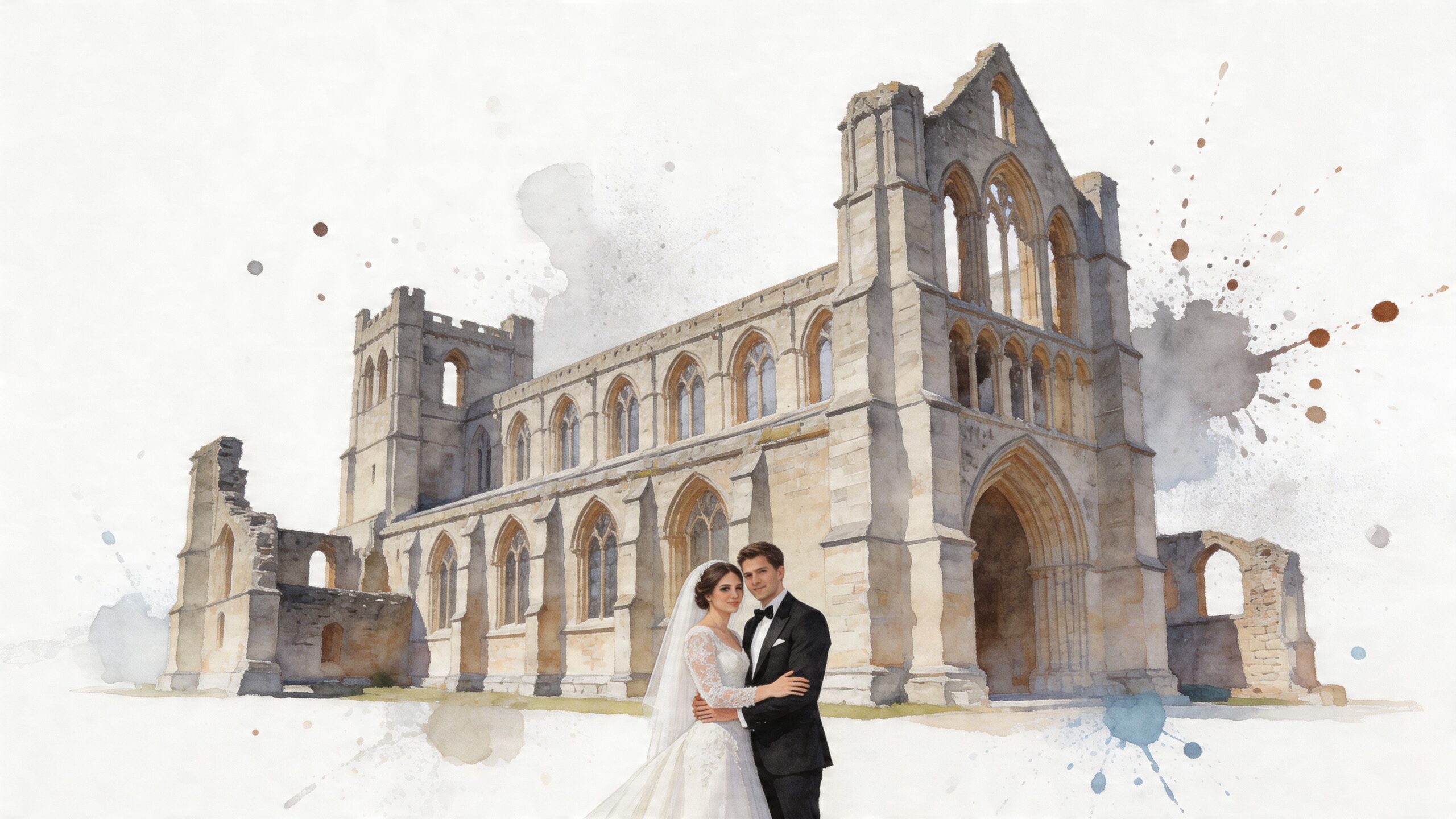
The atmosphere begins before a single chair is placed. Ruins, stonework, terraces, and long views over the battlefield create a setting that doesn't need much explanation. Couples who want a fairy-tale mood often discover that the strongest version of that mood isn't sweetness. It's depth. Places with genuine age carry emotional weight without becoming theatrical.
Why the location matters
Battle Abbey sits in East Sussex, within one of the country's most sought-after wedding regions. The Southeast dominates the premium venue market, and East Sussex ranks fifth nationally for its concentration of highly rated wedding vendors, according to this regional wedding market analysis. For couples, that means stronger access to planners, florists, photographers, musicians, and transport providers who already understand high-expectation weddings.
That regional depth matters at a historic venue. The best supplier teams know how to work with heritage spaces rather than treating them like blank canvases. They respect access windows, understand light patterns, and style rooms in ways that suit the building.
How the spaces support different celebrations
Battle Abbey is especially persuasive because it isn't only visually remarkable. It is usable. Couples can choose an intimate part-site format for smaller celebrations or a full-site approach for larger guest lists. That flexibility is hard to find in venues with this degree of architectural character.
The day can unfold across several distinct settings:
- Ceremony in the Abbot's Hall for a sacred, stone-framed sense of occasion
- Drinks on the Top Terrace or Six Penny Lawn with dramatic views and open air
- Wedding breakfast in the Duke's Library or Dining Room/Bar for warmth and structure
- Reception continuing until midnight without losing the historic atmosphere that made the venue attractive in the first place
This short film gives a clearer sense of scale and mood on site.
What makes it compelling in practice
There is also a practical intelligence in how the venue is run. In-house catering uses fresh, locally sourced East Sussex ingredients, and the menus can move from a formal banquet to a more relaxed barbecue or hog roast without feeling like a compromise. That matters because historic settings can sometimes feel rigid. Here, the atmosphere is grand, but the event design can still feel personal.
Couples also benefit from planning support and, subject to availability, access for setup the day before. That single detail can shift the emotional temperature of the whole wedding weekend. It allows décor to be placed thoughtfully, suppliers to work with less pressure, and the wedding morning to begin with anticipation rather than logistics.
For a fuller sense of how the venue balances grandeur with practicality, this guide to what makes Battle Abbey the perfect historic wedding venue is worth reading.
What stays with guests, though, is simpler. They remember having dinner in rooms with history in the walls. They remember stepping outside to ruins and open sky. They remember feeling that the wedding could only have happened there.
Answering Your Top Wedding Venue Questions
The final questions couples ask are usually the most useful ones. They aren't about mood boards. They're about what happens when the weather turns, the guest logistics get messy, or your values need to show up in the planning.
What is a realistic weather contingency plan for a UK country wedding
It starts with accepting that weather planning isn't pessimism. It's design. Sixty per cent of UK summer weddings experienced rain interruptions, and many guides overlook the fact that historic venues may restrict marquees, making flexible indoor space especially important, as noted in this rain-planning reference.
A good plan B should answer three questions:
- Where does the ceremony move if rain starts?
- Can that indoor option still feel beautiful in photographs and for guests?
- Who makes the weather call, and by what time?
If the indoor alternative feels like a leftover room, the plan isn't strong enough. The best historic venues treat the wet-weather option as a real version of the wedding, not an emergency downgrade.
How can we make an estate wedding more sustainable
Start with what the venue can control. Ask about local sourcing, waste handling, reusable tableware, seasonal menu planning, and whether the team can support lower-waste floral and stationery choices. In older estates, sustainability often comes down to many small operational decisions rather than one headline promise.
You should also ask practical heritage-specific questions. Some historic sites have rules about confetti, open flames, or ground protection. Those restrictions can be frustrating, but they often encourage better choices anyway.
How do we make guest logistics easier in a rural setting
Think like a host, not only a couple. Guests need clear travel instructions, taxi guidance, accommodation suggestions, and a sensible finish-plan for the evening. If many people are coming from London or further afield, give them one simple path from arrival to celebration.
Useful touches include:
- A transport note on the invitation or website
- Suggested nearby accommodation at several price levels
- A pre-booked taxi or shuttle plan
- Clear parking and accessibility information for older relatives
The countryside is part of the pleasure. Confusion shouldn't be.
If you're looking for a setting that combines historic grandeur with practical planning support, Battle Abbey Weddings offers a rare balance of both. You can explore ceremony spaces, guest options, and bespoke celebration formats in a venue shaped by English history and designed to host memorable weddings with clarity and care.