
You're in London, you've got a free day, and Stonehenge keeps nagging at you. It's close enough to feel doable, far enough to create friction, and the internet usually makes that friction worse by throwing too many options at you at once.
That's the challenge with going from London to Stonehenge. The trip isn't difficult, but it does reward a clear choice. Do you want the easiest route, the cheapest route, the most flexible route, or the one that leaves room for a wider Wiltshire day out? Pick the right trade-off early and the whole day feels smooth.
Planning Your Journey to a Prehistoric Wonder
Most travellers start in the same place. They know Stonehenge matters, they know it's one of the classic British day trips, and they're not yet sure whether they should book a coach, take the train, or rent a car.
That uncertainty is fair. Stonehenge sits about 90 miles (145 km) west of London, and the journey is practical enough for a single day if you plan properly. By road, it typically takes around 2 hours, while the standard public transport pattern is London Waterloo to Salisbury, then onward to the site by shuttle bus. Visit London's Stonehenge guide lays that out clearly, and it's why the trip stays so popular.

Why Stonehenge still feels different
Stonehenge isn't just another stop on a sightseeing list. It dates to roughly 2500 BCE, making it about 5,000 years old, and the average vertical pillar weighs about 25 tonnes. It also attracts over 1 million visitors per year, which says a lot about how strongly it still pulls people in from around the world, as noted in these quick Stonehenge facts.
You feel that weight before you even arrive. The planning becomes part of the experience because you're not travelling to a pretty village or a casual museum. You're heading out to a prehistoric site that still feels exposed, ceremonial, and slightly mysterious.
Stonehenge rewards travellers who treat it as a real outing, not a last-minute add-on.
Start with the kind of day you actually want
If you're the sort of traveller who likes simple logistics and no decision fatigue, a pre-arranged tour will suit you. If you want to move at your own pace, rail and shuttle usually give the cleanest balance. If your ideal day includes detours, countryside stops, or pairing Stonehenge with somewhere else, driving becomes far more attractive.
Before you book anything, it helps to think through timing, tickets, and whether you want to keep the trip low-impact. A solid sustainable travel planning guide is useful for that kind of decision making, especially if you're weighing public transport against car hire.
If you're building a bigger South England itinerary around the trip, this round-up of unmissable things to do in South England can help you decide whether Stonehenge should stand alone or sit inside a broader route.
Choosing Your Travel Method From London
You can leave London at 8am and stand in front of Stonehenge before lunch. The harder part is choosing the kind of day you want once you get there. Some travellers want the lowest-friction option. Others care more about budget, or about having enough freedom to add Salisbury, Bath, or a countryside pub without watching the clock all day.
That is why there is no single best route from London to Stonehenge. There is only the right trade-off for your day.
Quick comparison at a glance
| Travel Method | Avg. Round Trip Cost (per person) | Avg. Journey Time (one way) | Flexibility | Best For |
|---|---|---|---|---|
| Organised coach tour | Varies by operator | Around 2 hours by road | Low | First-time visitors who want simplicity |
| Independent train and bus | Train cost varies, Stonehenge Tour bus starts at £15 for an adult bus-only ticket | About 1 hour 30 minutes by train, then about 30 minutes by bus | Medium | Independent day trippers |
| Driving by car | Fuel and rental vary | About 2 hours by road | High | Couples, families, multi-stop itineraries |
| Private transfer | Higher-cost option | Around 2 hours by road | High | Travellers prioritising comfort and direct service |
Organised coach tour
Coach tours work well for travellers who want one booking, one meeting point, and very little decision-making on the day. For a first visit, that simplicity has real value. You can focus on the monument instead of train times, road signs, or parking.
The compromise is flexibility. You travel on the operator's schedule, not your own. If you like lingering at prehistoric sites, stopping for lunch where you choose, or adding Salisbury Cathedral on a whim, a coach can feel efficient but slightly constrained.
I usually suggest this option for short London stays, nervous solo travellers, and anyone who knows they will enjoy the day more if somebody else handles the logistics.
Independent train and bus
This is often the best balance between cost, control, and effort. You avoid driving out of London, keep your day largely independent, and still reach Stonehenge without too much complication.
The trade-off is that you do need to manage a connection in Salisbury. That is not difficult, but it does reward a bit of planning. Travellers who are comfortable reading train times and giving themselves a margin between legs usually find this method the most sensible. Travellers who hate transfers often do not.
It also suits people who want Stonehenge to feel like a real day trip rather than a packaged excursion. You can move at your own pace, spend time in Salisbury before or after, and keep costs more controlled than with a private car service.
Practical rule: If you want independence without the stress of London driving, train plus shuttle is usually the strongest compromise.
Driving by car
Driving gives you the most freedom, full stop. Leave early, stop for breakfast on the A303 side of the route, add Old Sarum or Bath, then head back to London when it suits you. That kind of flexibility is hard to beat.
But flexibility has a price. Traffic can reshape the whole day, especially on weekends, bank holidays, and summer afternoons. The driving itself is not difficult once you are out of London, but getting out of London is the part many visitors underestimate. Parking, fuel, and rental costs also make this a weaker value option for solo travellers.
For couples, families, or small groups, the maths improves quickly. If you are comparing self-drive costs, check car rental deals for travelers before you book. Driving makes the most sense when Stonehenge is only one part of a bigger day.
Private transfer
Private transfer is the comfort-first option. You get direct travel, no transport changes, and a calmer day than self-driving. It is particularly useful for travellers with mobility concerns, parents travelling with children, or anyone treating the visit as a special occasion rather than a budget outing.
The trade-off is straightforward. You are paying for time saved and friction removed. For some travellers that is money well spent. For others, it is hard to justify when train and bus can do the job for much less.
This option also works well if your plans sit around the airport side of London rather than central London. If that applies, this guide to things to do near Gatwick for wedding guests and romantic escapes can help you shape the rest of the trip.
Which option fits your day?
Choose a coach tour if ease matters most. Choose train and bus if you want the best middle ground. Drive if flexibility matters more than simplicity. Book a private transfer if comfort and direct service matter more than cost.
Stonehenge is ancient, remote-feeling, and surprisingly exposed once you arrive. Picking the right route changes more than the journey. It changes the pace and mood of the whole day.
Your Step-by-Step Travel Logistics
A Stonehenge day trip feels easy on paper. Leave London, change at Salisbury, reach the stones. In practice, the quality of the day depends on a few small decisions made in the right order.
For independent travellers, the train-and-bus route is usually the best balance of cost, travel time, and effort. Driving gives you more freedom, but it asks more of you on timing and energy. The key is choosing a plan that matches the kind of day you want.
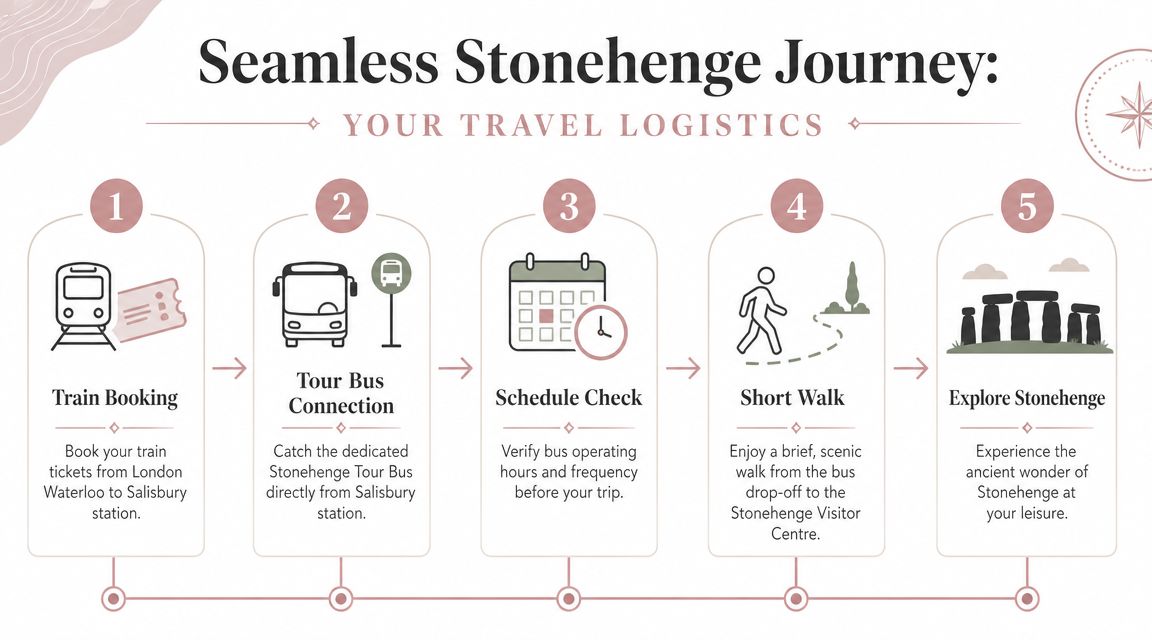
The public transport sequence that works
The cleanest independent route is London Waterloo to Salisbury by train, then the Stonehenge Tour bus from the station forecourt. Salisbury matters more than many first-time visitors realise. It is not just a stop on the way. It is the transfer point that holds the day together.
That route works well because each leg is built around the next. You are not piecing together local taxis or guessing which bus stop to use after arrival. If you want a day that feels organised without paying for a full coach tour, this is usually the strongest option.
How to do it in order
Book the train before you plan the rest of the day
Start with a departure from London Waterloo and work forward from there. This avoids building your plan around the wrong station or an awkward departure time.Leave enough space for the Salisbury connection
Tight connections look efficient, but they make the whole day brittle. A short buffer gives you time to get off the train, find the forecourt, and board without rushing.Go straight to the Stonehenge Tour bus stop outside Salisbury station
Keep this part simple. Do not assume there will be endless onward options if you arrive without a plan.Have your tickets ready on your phone before you leave London
Reception, battery life, and inbox searches all become annoying at the wrong moment. Open the confirmations in advance or save screenshots.Know the final on-site movement
Arrival at the visitor centre is not the same as standing beside the stones. There is still a short shuttle ride or a walk across the grounds, so keep that last stretch in mind when judging timings.
Here's a visual walkthrough if you prefer to see the flow before you travel:
Where time usually gets lost
The common mistakes are predictable. Travellers book the wrong London departure point, arrive in Salisbury without checking the onward bus, or treat tickets as something to sort out later.
Each one chips away at the day. Instead of arriving with that first clear view across the plain and feeling the place open up around you, you arrive flustered and already watching the clock.
Build your plan around buffers. Stonehenge is far better when the journey feels controlled before the site starts to feel ancient.
Driving without turning the day into work
Self-driving changes the trade-off. You gain freedom, especially if you want to add Salisbury, Bath, or smaller countryside stops. You also take on the full job of managing departure time, traffic, parking, and the tired drive back to London.
A few habits make a big difference:
- Use a straightforward route: Many drivers head out via the M3 and A303, which keeps the journey simple from London.
- Leave earlier than feels necessary: Road delays hurt more on a Stonehenge day because the site rewards unhurried time.
- Plan the return before you set off: The homeward leg is often the point where traffic and fatigue catch up with people.
- Allow time after parking: You still need to get your bearings and make your way through the visitor setup before the monument itself comes into view.
Driving suits travellers who value flexibility more than ease. Public transport suits travellers who want to spend the journey reading, looking out the window, and saving their energy for the site itself.
Maximising Your Visit With Smart Booking
A Stonehenge day usually goes one of two ways. You either step off the shuttle feeling ready to take it in, or you spend the first half hour sorting out tickets, timings, and where to go next. Smart booking is what separates those two experiences.
For most travellers, the key decision is not just whether to book ahead. It is how much certainty you want to buy into the day. Advance booking costs a little more in planning effort, but it gives you a fixed entry point and makes the rest of the schedule easier to control. Leaving it until the day gives you flexibility on paper, yet it often creates pressure at exactly the wrong moment.
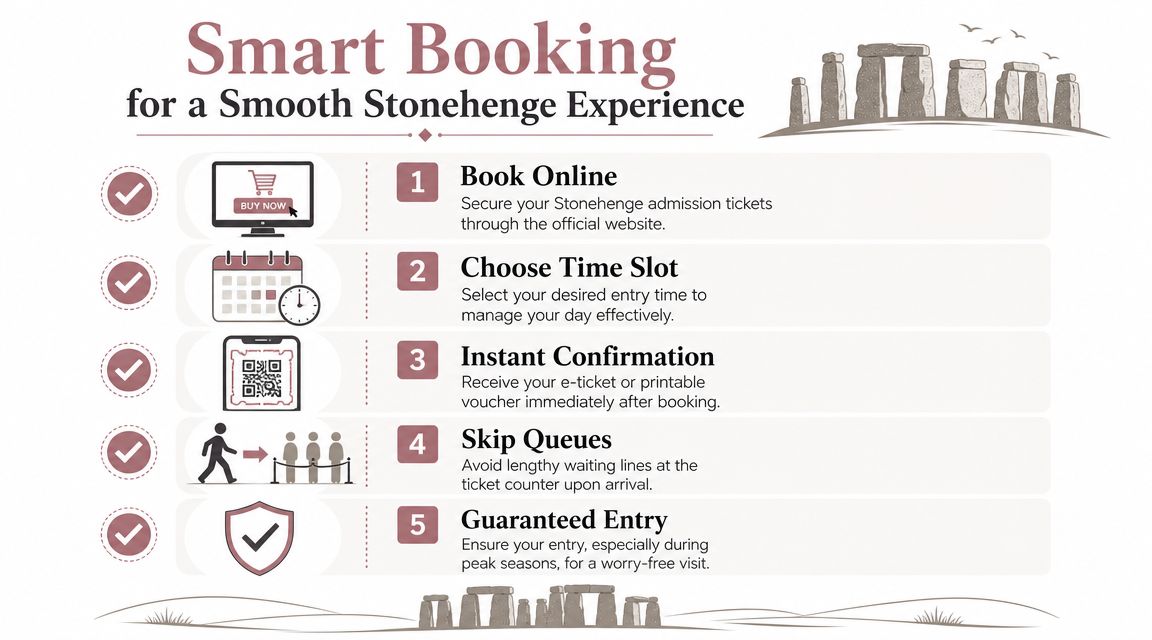
Why pre-booking matters
Stonehenge works best with a timed plan. The visitor setup adds a few stages after you arrive, especially if you are coming in from Salisbury and then continuing from the visitor centre toward the stones. That makes small delays more noticeable than they would be at a simpler attraction.
The official Stonehenge Tour bus from Salisbury station starts at £15 for an adult bus-only ticket, and from the visitor centre the monument itself is still a further short shuttle ride or a 40-minute walk away, as explained in this practical Stonehenge transport guide.
Book your entry before the day if you care more about calm timing than last-minute freedom.
That trade-off matters most for rail travellers and anyone adding Salisbury or Bath later. A missed slot can squeeze the rest of the day. Drivers have more room to recover, but even then, pre-booking protects the part of the trip you came for.
A better order for the visit
Once on site, pacing matters almost as much as transport. Visitors who rush straight through the visitor centre often end up treating Stonehenge as a photo stop. Visitors who give the site a proper sequence usually come away feeling they visited it.
A practical rhythm looks like this:
- Check in and get oriented first: Confirm your timing, toilets, café stop, and shuttle point before heading on.
- Choose the final approach deliberately: Take the shuttle if the weather is poor, your schedule is tight, or you are travelling with children or older relatives. Walk if you want the surroundings to unfold gradually.
- Give the stones proper time: The monument rewards twenty quiet minutes far more than five hurried ones.
- Leave room for the exhibition: If you are interested in prehistoric Britain, the visitor centre adds context that changes how the stones feel.
What a sensible booking strategy looks like
For a half-day visit, the best approach is simple. Fix your Stonehenge entry first, then build trains, buses, or driving times around it. That order works because Stonehenge has the least flexibility once you are committed to the day.
If you are trying to keep costs down, public transport plus pre-booked entry usually gives the clearest structure. If you value freedom more than price, driving plus timed admission gives you the widest margin for weather, traffic, and extra stops. Tours suit travellers who want the least planning, but the trade-off is less control over pace on site.
If Stonehenge is part of a wider heritage-focused trip, it pairs naturally with other historic places to visit in England. Battle Abbey Weddings is one example of a heritage property used for ceremonies and receptions in an English historical setting.
Expanding Your Day Trip to Salisbury or Bath
If Stonehenge feels too short as a standalone outing, add one place, not three. That's the practical rule. The strongest combinations are Stonehenge with Salisbury, or Stonehenge with Bath. They work for different reasons, and choosing the wrong one for your transport style is where people overcomplicate the day.
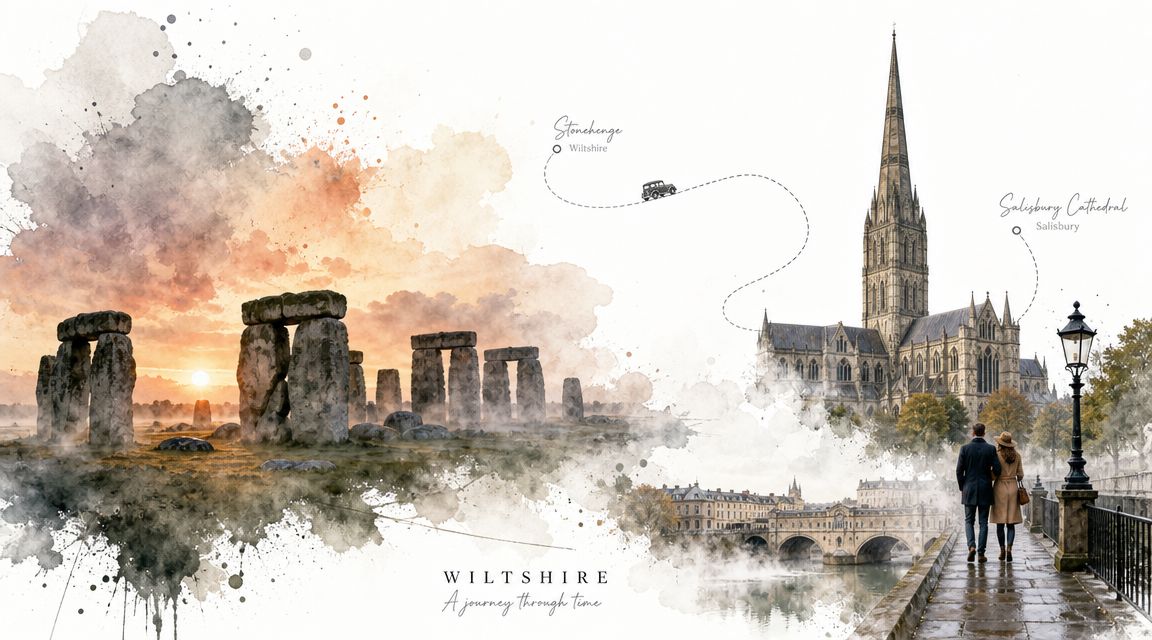
Stonehenge and Salisbury
This is the natural pairing if you're travelling by train. Salisbury is already built into the public transport route, so adding time there doesn't feel forced.
A sensible version of this day looks like this:
- Travel from London to Salisbury first: Keep your rail journey as the anchor of the day.
- Visit Stonehenge before or after town time: Either works, but decide in advance so you're not dithering at the station.
- Use Salisbury for a gentler second half: The cathedral and historic centre give the day contrast after the open surroundings around Stonehenge.
This combination suits travellers who want depth without haste. You get prehistoric Britain and a historic cathedral city in the same outing, without constantly changing mode or direction.
Stonehenge and Bath
Bath is the more ambitious add-on. It can be excellent, but only if you accept that the day becomes more structured.
This pairing works best if you're driving or taking a tour designed around both places. Trying to improvise it too tightly on public transport can turn what should be an inspiring day into a timetable chase. Bath rewards time in the streets as much as time at specific sights, so don't bolt it on casually.
If you want atmosphere and ease, choose Salisbury. If you want range and don't mind a fuller day, choose Bath.
How to choose between them
Pick Salisbury if you want the cleaner logistics, a calmer pace, and a trip that feels coherent from start to finish.
Pick Bath if you're comfortable with a busier schedule and want the satisfaction of seeing two major headline destinations in one day.
If English history is the wider theme of your trip, this guide to historical places in England is a useful next step when you're deciding what other heritage stops belong around a Stonehenge visit.
Essential FAQs for Your Stonehenge Visit
Is Stonehenge manageable if I have mobility concerns?
Yes, but plan the site movement in advance. The practical point isn't just getting from London to Stonehenge. It's the final approach from the visitor facilities to the monument area. If walking longer distances is difficult, use the shuttle rather than assuming the final stretch will feel short on the day.
What should I wear?
Dress for exposure, not for London. Stonehenge sits in an exposed setting, and the weather can feel sharper there than it did when you left the city. Comfortable shoes matter more than stylish ones, and layers usually beat a single heavy item because conditions can shift.
What's the best time of day to visit?
The best time is the one that lets you avoid rushing. Earlier visits generally make the day easier because they leave room for delays, time on site, and an optional second stop. Late starts can still work, but they narrow your margin and make every missed connection more annoying.
If your trip through southern England has you thinking beyond day trips and into historic settings for a celebration, Battle Abbey Weddings offers ceremonies and receptions within the Battle Abbey estate in East Sussex. It's a useful option to consider if you're drawn to heritage venues and want that same sense of place for a wedding rather than a visit.