You're probably doing what most couples do after they fall for Morden Hall. You've saved the photographs, noticed the river, the white façade, the lawns, the light in the ceremony rooms, and now you're trying to work out the part nobody posts about. How many guests will feel comfortable? What does “exclusive use” mean in practice? If you choose the North Lawn, what might that add to the budget?
That's where Morden Hall weddings become more interesting, and more manageable, once you stop looking at them as a single pretty backdrop and start seeing how the day moves through the house. I've watched couples arrive tense from London traffic and exhale the moment they cross into the grounds. The parkland softens everything. The house feels formal without being stiff. By the time the first guests step inside, Morden Hall has already done half the work a good venue should do. It changes the pace of the day.
Your Morden Hall Wedding Story Begins Here
A couple arrives just after midday. The city is still in their shoulders. Then the route opens into 125 acres of National Trust parkland, the River Wandle runs beside the estate, and the manor appears with that rare effect some London venues never quite manage. It feels removed from the capital without being remote. That contrast is one of the reasons Morden Hall weddings stay with people.
The house itself has presence, but not the intimidating kind. It welcomes rather than overwhelms. You notice the symmetry first, then the softer details: mature greenery, water, the hush that settles over guests as they realise the day won't be squeezed into a restaurant corner or shared with another event upstairs.
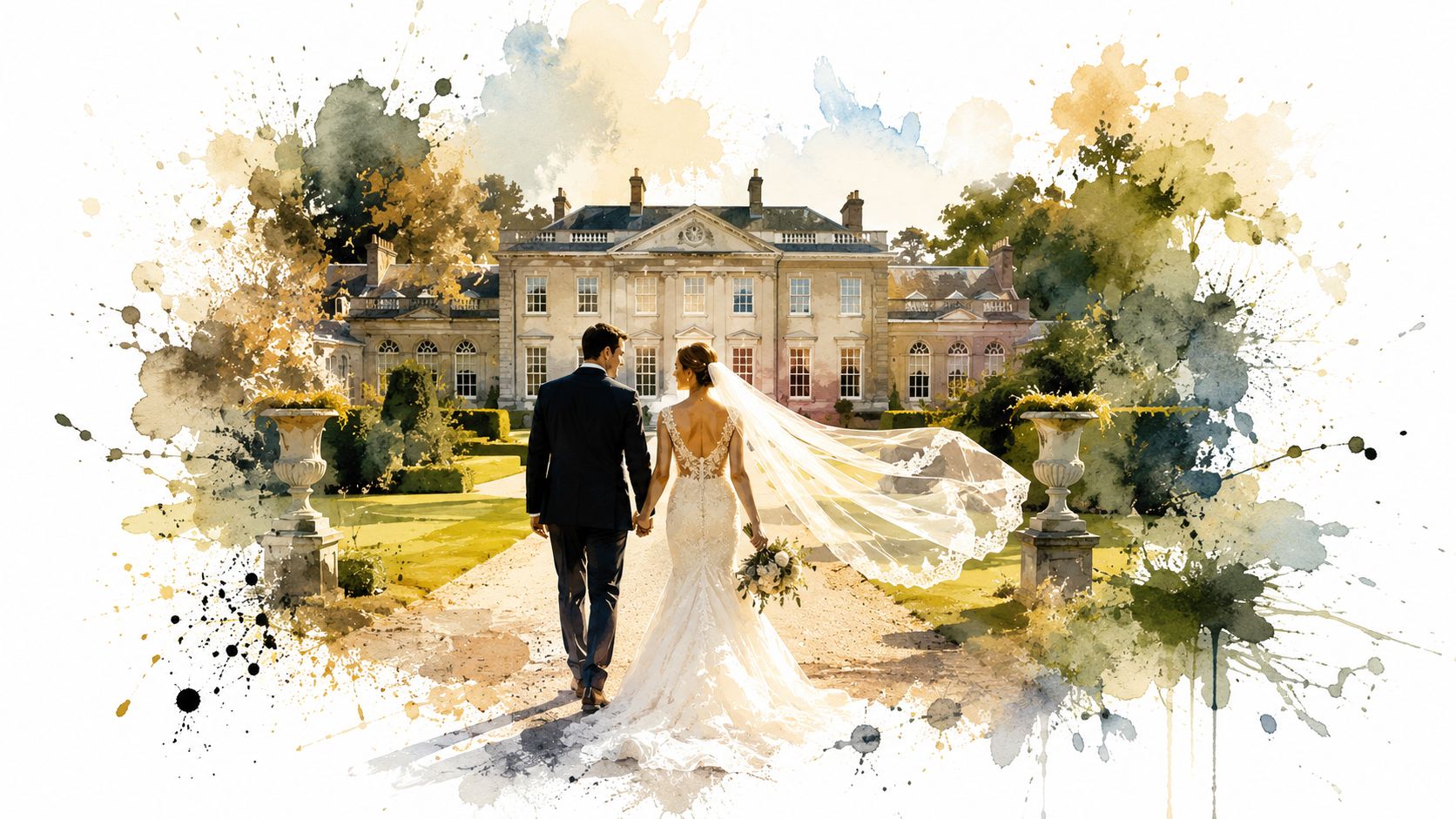
For many couples, that first impression matters almost as much as the ceremony room. Morden Hall is the sort of venue that lets guests feel they've arrived somewhere significant. Grandparents settle in. Friends start taking photographs before the official photographer has even unpacked. Someone always says they can't believe this is still London.
Why the setting works so well
Part of the magic is that the romance here isn't manufactured. The estate grew out of a real history, and the grounds do what purpose-built hotel spaces often can't. They give your day shape. There's a sense of progression from arrival to vows to drinks to dinner, and each part feels distinct.
Morden Hall suits couples who want a country house atmosphere without sending every guest far out of the city.
That balance, between softness and structure, is what makes the venue memorable. It's also what makes planning here easier than it first appears, once you understand how the rooms, capacities and timings work.
An Oasis of History and Exclusivity
Morden Hall isn't just styled to look historic. It was built in the 1770s, and the house still carries the character of that Georgian origin. According to the official Morden Hall brochure, it was restored in 2015, sits within 125 acres of National Trust parkland, and offers 12-hour exclusive use of the Hall and grounds from midday. Those details matter because they explain why the venue feels polished rather than fragile. The restoration preserved the atmosphere while making the building work for modern weddings.
What the history feels like on the day
Historic venues can sometimes feel as though you're borrowing them. Morden Hall doesn't. Its period details, including 18th-century plasterwork and carved fireplaces created for the Garth family, are part of the experience, but they don't compete with the wedding. They frame it.
You notice that most clearly during the quieter moments. A parent waiting near a fireplace before the ceremony. Guests pausing on the staircase. The room catching late afternoon light while florals soften the more formal lines of the architecture. The history here adds texture, not distance.
Why exclusive use changes everything
The practical value sits in one phrase: exclusive use. For couples comparing venues, that's often the line that separates a wedding that flows from one that feels interrupted. At Morden Hall, the house and grounds are yours for the day, which means your guests aren't crossing paths with another party, another bride, or a corporate event.
If you're weighing that against shared venues, it helps to understand what couples usually seek in exclusive-use wedding venues. Privacy is part of it, but the bigger advantage is control. Your drinks reception doesn't have to be squeezed because another booking needs the room. Your photographs aren't dodging strangers. Your atmosphere remains intact from arrival through the last dance.
Here's how that translates on a wedding day:
- Arrival feels calm: guests aren't asking which room is yours or waiting while another event clears.
- Transitions feel natural: the ceremony can lead into drinks, then dinner, then dancing without visible reset stress.
- The grounds feel personal: couples can step out for portraits without feeling they're competing for space.
Planning note: Exclusive use is most valuable when you're building a layered day, not just a short ceremony and meal.
That's why Morden Hall appeals to couples who want a wedding with movement and rhythm. It isn't only a pretty house. It's a venue designed to hold a full celebration privately, with enough distinction between spaces that the day unfolds in chapters rather than one long room hire.
Navigating Your Ceremony and Reception Spaces
A couple once arrived for their planning visit convinced the North Lawn was their ceremony spot. They had fallen for the photographs. Then we stood in the Willow Room, mapped where 110 guests would sit, talked through the British weather, and worked out what a wet-weather switch would mean for chairs, timings and staffing. By the end of the meeting, they still loved the lawn, but they loved having a realistic backup plan even more.
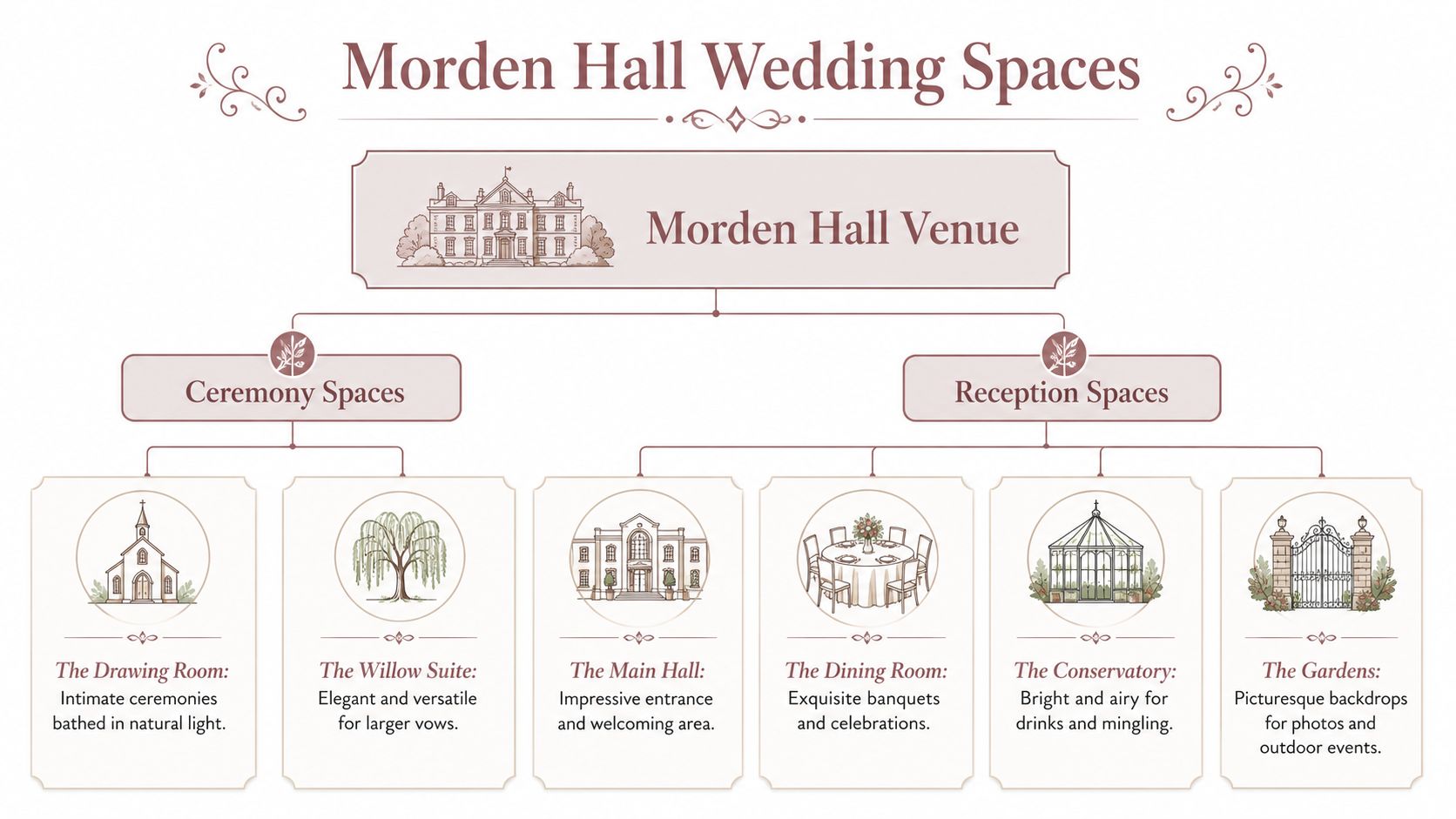
That is usually the turning point at Morden Hall. The spaces are beautiful, but they do not all solve the same problem. One room gives you atmosphere for vows. Another carries a seated dinner comfortably. The lawn gives you romance, but only if you budget for it realistically.
Ceremony rooms that set the tone
The Willow Room suits couples who want a ceremony that feels full, formal and centred in the house. The entrance has weight to it. Guests settle quickly, and the room photographs well because it already has presence without needing heavy styling.
The Hawthorn Suite creates a different mood. It feels closer and quieter, which often works better for smaller guest lists, emotional vows, or couples who want the ceremony to feel private even within a larger wedding day. A room that matches the size of the gathering nearly always feels better than one with empty rows and too much unused space.
For the meal, anchor your planning around the Mulberry Suite rather than your ceremony setup. This is one of the most common planning slips. Couples get attached to the ceremony room first, then realise later that dining, speeches and service need a different sort of space. If you are still comparing venues on pure hire cost, this breakdown of how wedding venue hire prices actually work helps put room use and capacity in context.
Outdoor ceremonies on the North Lawn
The North Lawn gives you the version of Morden Hall many couples first picture. Open sky, long views across the grounds, and that soft sense of space that makes an outdoor ceremony feel cinematic.
It also needs the most careful budgeting.
The extra spend usually comes from the parts couples do not see in the brochure. Weather cover. Chair moving plans. Protection for musicians or registrars if conditions turn. Extra labour if the team needs to reset quickly. I have seen couples cost the lawn as though it were "the same ceremony, but outside", and that is where budgets start to slip.
Budget reality: Price the North Lawn as an outdoor setup with contingency built in from the start.
That does not mean avoiding it. It means asking better questions early. What is the wet-weather plan? At what point is the call made to move inside? What hired items are lost if the forecast changes? Who is responsible for moving guests and resetting the ceremony space? Those answers matter just as much as the view.
A practical comparison usually makes the choice clearer:
| Option | Best for | Main advantage | Main caution |
|---|---|---|---|
| Willow Room | Larger indoor ceremonies | Strong sense of occasion inside the house | Less of the open-air feel some couples want |
| Hawthorn Suite | Smaller gatherings | Warm, intimate atmosphere | Can feel tight if your guest list rises |
| North Lawn | Outdoor vows | Memorable setting in the grounds | Budget and logistics need weather contingency |
After you've seen the spaces in stills, this kind of venue film can help you understand movement and scale in a more realistic way.
The evening capacity question couples often misunderstand
Evening numbers and daytime numbers should be planned as two different events using the same venue.
A seated wedding breakfast needs comfortable table spacing, service routes, and clear sightlines for speeches. An evening party runs on movement. Guests are at the bar, on the dance floor, crossing between groups, and using the room in a looser way. That is why a venue can feel generous at night and much tighter at dinner.
I often advise couples to stop asking, "How many people can we fit?" and start asking, "How do we want this part of the day to feel?" If you want a relaxed dinner with no cramped tables, use your dining layout as the guide. If you want to invite extra evening guests, that can work beautifully at Morden Hall, but only if you plan for a shift in format rather than expecting the daytime setup to stretch indefinitely.
Keep these distinctions clear from the start:
- Ceremony planning is about atmosphere, guest sightlines and the entrance.
- Dining planning is about table layout, service space and speech visibility.
- Evening planning is about circulation, dancing and where guests gather naturally.
Handled that way, the house works beautifully. Each space gets to do the job it does best, and the day feels composed rather than crowded.
Understanding Morden Hall Booking and Pricing
A couple once came to me convinced they had found the answer in one tidy figure. They had a summer Saturday in mind, wanted drinks on the lawn, and assumed the venue quote covered the shape of the whole day. By the time we worked through guest minimums, catering, drinks, and the backup plan for an outdoor ceremony, the budget looked very different. Not worse. Just honest.
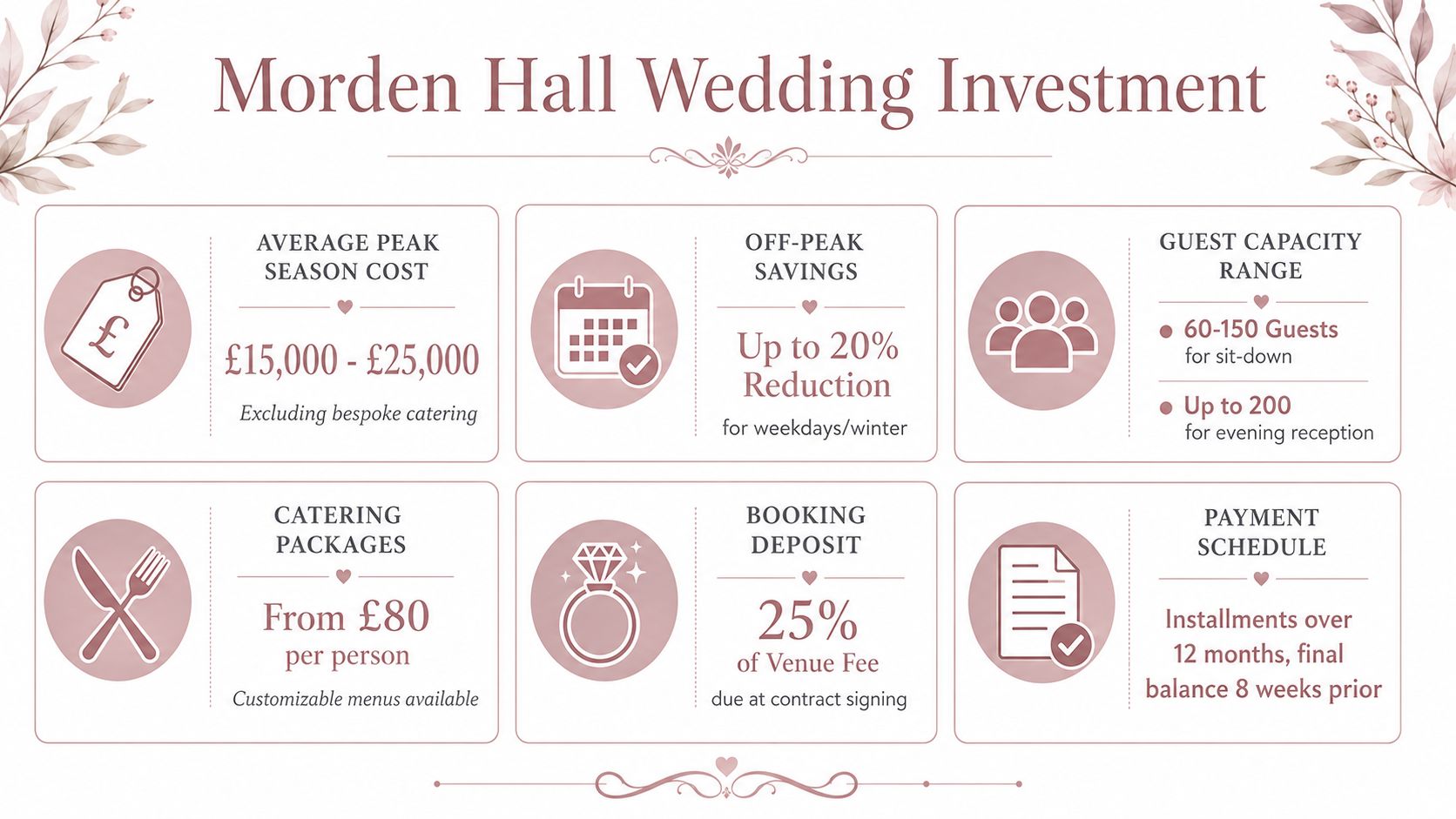
That is the essential starting point with Morden Hall. You are not budgeting for one line item. You are building a day in layers, and the choices that change the total fastest are usually the ones couples leave until too late.
Start with the date, then cost out the vision
The smartest Morden Hall budgets are built from the calendar outward. Season and day of the week affect the hire fee. Guest minimums affect whether your preferred date fits the wedding you want to host. Then the styling, food and drinks decisions sit on top of that foundation.
I always ask couples three questions first.
- Which dates feel emotionally right, and which dates make financial sense? Those are not always the same thing.
- How many people are you expecting, not just hoping for? A realistic RSVP pattern matters more than an ambitious guest list on paper.
- Do you want the ceremony outside badly enough to budget for weather planning properly? Outdoor weddings are beautiful here, but they are rarely the cheaper route once contingency planning is included.
That last point catches people out. A lawn ceremony can look simple in photographs, yet it often brings extra setup decisions, timing pressure, and the need for a clear wet-weather alternative that still feels intentional rather than second best.
The booking details that shape the spend
Morden Hall works best for couples who match their date to their numbers early. If your guest count is naturally generous, a peak weekend date may fit comfortably. If you are planning a smaller celebration, a weekday can give you more breathing room and save you from paying for a scale of event you never wanted in the first place.
This is why I rarely advise choosing the date first and asking budget questions later. The better order is simpler.
- Shortlist dates by season and weekday.
- Check that your likely guest count suits those dates.
- Ask exactly what the hire fee includes.
- Price the ceremony plan you want, including an outdoor backup if needed.
- Leave décor until the bones of the day are financially sound.
It is a calmer way to plan. It also prevents one of the most common Morden Hall mistakes, falling in love with a Saturday vision that only really works with a much larger guest count than the couple wanted.
If you are comparing venues and trying to work out what usually sits inside a hire fee versus what remains separate, this guide to wedding venue hire prices across different venue styles gives useful context.
Where couples overspend without meaning to
At Morden Hall, overspending usually comes from mismatch, not extravagance. A couple plans an intimate wedding, then books a date better suited to a fuller house. Or they picture a garden ceremony, then cost it as if sunshine is guaranteed and no second setup is needed. Or they treat the venue fee as the whole story, rather than the first chapter.
The couples who feel happiest with their budget tend to be the ones who make a few grounded decisions early. They choose a date that fits their likely numbers. They ask direct questions about inclusions. They put money behind the parts guests will feel, good food, enough drink, a comfortable flow to the day, and a weather plan that does not unravel by lunchtime.
Romance survives that kind of planning beautifully. In my experience, it looks even better for it.
A Sample Wedding Day Timeline at Morden Hall
The beauty of Morden Hall is how naturally a wedding day can travel through it. A good timeline here doesn't feel rushed. It feels staged in the theatrical sense, with each part of the celebration revealing itself at the right moment.
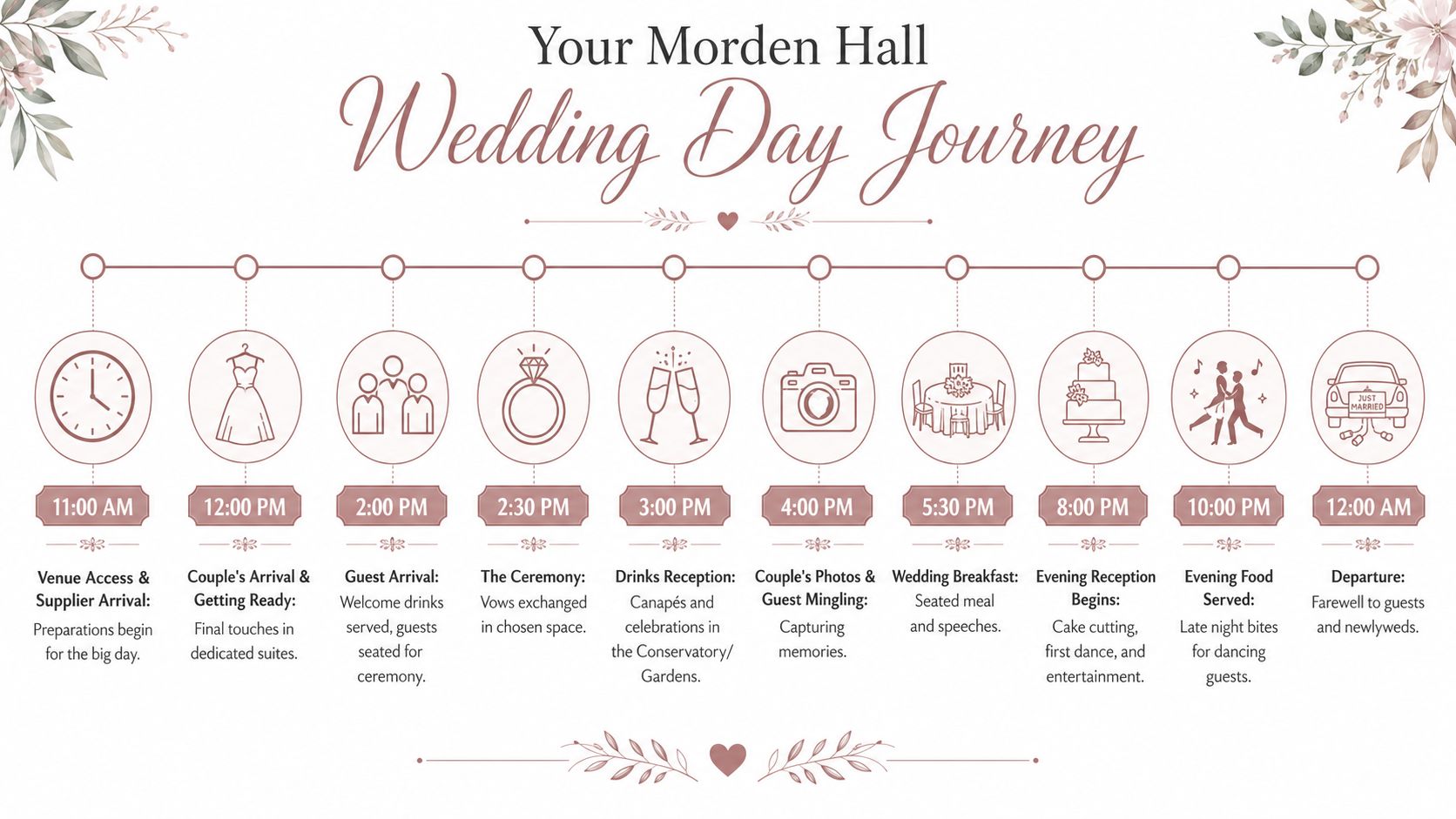
This sample journey shows the rhythm many couples aim for.
How the day often flows
Late morning begins calmly. Suppliers arrive first, florals are placed, tables are checked, and the house is still calm enough for the couple to hear themselves think. By midday, the venue's exclusive-use period begins, and that changes the feel immediately. The day is no longer theoretical. It's happening in your rooms, on your lawns, with your people coming in.
By early afternoon, guests start filtering through the entrance, coats are set down, hugs begin, and there's that low wedding hum every planner recognises. The ceremony follows in the chosen space, often with just enough pause beforehand for nerves to build in the best way.
The middle of the day
After the vows, Morden Hall comes into its own. Guests move out for drinks and conversation while the couple steps away for portraits. The venue proves its value during these moments. Nobody feels stranded between phases. There's room for movement, room for a breather, and room for older relatives to sit comfortably while friends start the celebration.
A typical shape looks like this:
- Midday arrival: access begins and preparations settle in.
- Afternoon ceremony: guests gather, the ceremony starts, and the house feels full without being chaotic.
- Drinks reception: the lawns or indoor spaces carry the social energy while photographs happen.
- Wedding breakfast: dinner and speeches anchor the day.
- Evening reception: the atmosphere loosens, extra guests arrive, and the celebration shifts into a different gear.
The smoothest Morden Hall weddings don't try to cram everything in. They leave enough breathing room for conversations, photographs and a change of pace between formal and relaxed moments.
Evening without losing momentum
By the time the evening reception starts, the day should feel like it has opened up rather than run out of steam. That usually means cake, dancing, greetings to evening guests and one last round of photographs if the light allows.
Then comes the final stretch. Shoes come off. The dance floor grows. Someone's aunt becomes unexpectedly brilliant at leading the party. Midnight departures always feel slightly cinematic at country house venues, and Morden Hall does that particularly well. Guests leave with the sense they've attended a complete day, not just a sequence of bookings.
Planning Your Photography and Guest Logistics
The most successful Morden Hall weddings usually get two things right behind the scenes. They protect time for photographs, and they make guest movement feel easy. If either part is overlooked, the day can still be lovely, but it won't feel as effortless.
Where the best photographs usually happen
The estate gives photographers variety without forcing long walks or awkward relocations. The house façade is ideal for the classic formal set. The river edges soften portraits that might otherwise feel too structured. Bridges, pathways and garden areas give enough contrast that a full gallery can feel rich without looking repetitive.
That matters if you want the album to tell a story rather than documenting poses alone. Many couples are now drawn to a more narrative style, and resources on authentic wedding day storytelling can be useful when you're deciding how much of your photography should feel editorial versus documentary.
A practical approach works best:
- Group photographs first: capture key family combinations while everyone's fresh.
- Couple portraits during drinks: guests are occupied, and you won't feel you're missing the meal.
- A short evening set if possible: the shift in atmosphere often creates some of the most memorable images.
If you're budgeting the visual side of the day, it also helps to understand typical wedding photographer cost factors before you start comparing portfolios.
Helping guests arrive and stay comfortably
Morden Hall has a real advantage here. It's about a 15-minute walk from Morden South tube station, which makes it more manageable for London guests than many country-house venues feel at first glance, according to Guides for Brides on Morden Hall.
For overnight stays, the venue also offers a 9-bedroom accommodation block sleeping up to 18 guests. That changes planning in a helpful way. You can reserve on-site rooms for the couple, immediate family or guests who'd benefit most from staying close.
A simple guest logistics plan
The easiest guest experience usually comes from separating people into groups early:
| Guest group | Best planning approach |
|---|---|
| Close family | Prioritise the on-site accommodation block |
| Friends from London | Share walking directions from Morden South tube station |
| Older relatives | Arrange the most direct drop-off option and avoid assumptions about walking distance |
| Out-of-town guests | Send accommodation suggestions as soon as save-the-dates go out |
This isn't glamorous planning, but it has a huge effect on the mood of the day. Guests who know how they're getting there, where they're staying, and when they need to move are much easier to host. That frees the couple to enjoy the venue rather than manage transport questions in formalwear.
Your Morden Hall Wedding Questions Answered
Couples usually arrive at this stage with practical questions they didn't think to ask at the start. That's normal. A venue can feel emotionally obvious and logistically hazy at the same time.
Can you bring in your own suppliers
Ask this directly at viewing stage, especially for photography, floristry, styling and entertainment. Venues often have recommended suppliers because those teams already know the building and service flow. That can be a genuine advantage. It can also affect how quickly the day runs once guests arrive.
The best way to approach it is simple:
- Ask which categories have flexibility.
- Find out whether external suppliers need approval in advance.
- Check timing rules for set-up and collection.
Is Morden Hall suitable for an outdoor ceremony if that's your priority
Yes, the North Lawn is a recognised option, but couples should plan it with clear eyes. Outdoor ceremonies are rarely just an aesthetic choice. They're an operational one too. Ask exactly what happens in poor weather, what infrastructure may be required, and what that means for the final bill.
The right question isn't “Can we marry outside?” It's “What does marrying outside require here?”
That one shift in wording usually gets you better answers.
How should you think about guest numbers
Use your seated daytime number as your anchor, not your evening invitation count. If your priority is a comfortable meal, speeches with good sightlines and room for service, plan from the dining capacity upward only if the evening format significantly changes.
A few guest-list rules help:
- Count your ceremony and meal guests carefully first.
- Treat evening guests as a separate hosting phase.
- Don't assume everyone experiences space in the same way. Older guests, parents with children and guests with mobility needs will use rooms differently.
What should guests wear
Morden Hall has that polished country house look that encourages guests to dress up, but comfort still matters, especially if people will be moving between indoor rooms and lawns. If members of your party are asking for guidance beyond a dress code line on the invitation, this guide on what to wear to a wedding is a useful reference for elegant, understated guest style.
Is it accessible for guests who need a gentler day
This should always be discussed in practical terms rather than assumptions. Ask about routes between the ceremony, drinks and dining spaces. Ask where guests can sit comfortably during transitions. Ask what the wet-weather plan means for anyone who can't move quickly between areas.
What's the smartest next step before booking
Book a viewing with a notebook and a real draft guest list. Don't visit as though you're browsing. Visit as though you're already planning. Walk each stage of the day in order. Where would guests arrive? Where would older relatives sit? Where would evening guests enter? Where would you go if the weather changed?
That's when Morden Hall usually becomes either a clear yes or a graceful no. For the right couple, it's often a very easy yes.
If you're still comparing historic venues and want another beautifully characterful option in the South East, Battle Abbey Weddings is worth a look. It offers a very different backdrop, but the same kind of thoughtful, heritage-rich celebration many couples are searching for when they begin exploring country house weddings.