Choosing your wedding venue is arguably the most significant decision you'll make in your planning journey. It sets the scene for your entire celebration, dictates a huge portion of your budget, and fundamentally shapes the experience for you and your guests. But with so much to consider, from historic manors in East Sussex to majestic English Heritage ruins, it's easy to feel overwhelmed during a viewing. How do you move past the beautiful facade and uncover the practical details that will make or break your day?
This comprehensive guide provides the crucial questions to ask wedding venue managers, ensuring you get complete transparency and find a perfect fit for your vision. We'll delve into everything from availability and guest capacity (whether for an intimate gathering of 60 or a grand affair for 250) to the finer points of catering, contracts, and those easily overlooked hidden costs. To effectively navigate the planning process, it's beneficial to consult an essential wedding preparation timeline that can guide you through each critical step, including when to start asking these crucial venue questions.
Using prompts tailored for unique settings like Battle Abbey Weddings, this checklist is designed to empower you with the knowledge to select a venue that not only looks the part but flawlessly delivers. Our organised categories cover everything from ceremony licensing until midnight to supplier policies and weather contingency plans, giving you the confidence to secure a space where your dream wedding can become a reality. Let’s get started.
1. What are your availability and booking windows for my desired wedding date?
This is the first and most critical question to ask a wedding venue, as it immediately determines if your vision is feasible. Before you fall in love with a location, you need to know if it's available for your ideal wedding date or season. Historic venues, particularly those linked with organisations like English Heritage, often have unique booking constraints, making this question even more vital.
Why This Question is Crucial
Securing your date is the cornerstone of your entire wedding plan. For a sought-after venue like Battle Abbey, popular dates, especially summer Saturdays, can be booked 18-24 months in advance. Understanding their booking window (for example, whether they are accepting bookings for 2026 or 2027) allows you to align your engagement timeline and secure your spot before it’s gone. You also need to uncover any potential blackout dates due to scheduled maintenance, private estate events, or specific English Heritage requirements that might not be publicly advertised.
Actionable Tips for Securing Your Date
When discussing availability, go beyond a simple "yes" or "no". Use these targeted follow-up questions to get a clear picture:
- Be Flexible: Arrive with 3-4 preferred dates. This increases your chances of finding an available slot and shows the venue you're serious. Ask, "If our first choice is taken, what are the closest available Saturdays in that month?"
- Ask About a Hold: Enquire if the venue can provisionally hold your preferred date. Most venues offer a courtesy hold for 7-14 days, giving you time to review contracts and make a final decision without pressure.
- Explore Off-Peak Perks: If your dates are flexible, ask about potential benefits for booking an off-peak date (e.g., a Friday, Sunday, or a winter month). You might find better availability and even preferential pricing.
- Confirm Setup Access: Clarify if your booking includes access the day before for setup. At Battle Abbey, this is often possible subject to availability and can significantly reduce wedding day stress.
2. What is your maximum and minimum guest capacity, and how does pricing scale?
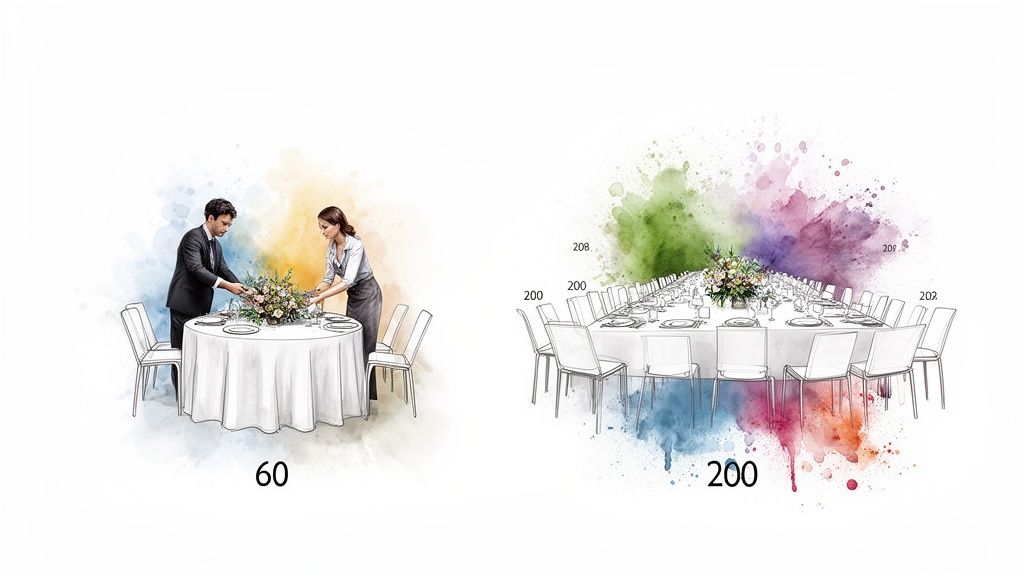
Understanding a venue's guest capacity is fundamental to your wedding logistics, influencing everything from the overall atmosphere to your budget. This question determines if the venue can comfortably host your planned guest list and, crucially, how the costs will adjust with your headcount. Knowing these figures upfront prevents the disappointment of falling for a space that is either too small for your party or too large for an intimate gathering.
Why This Question is Crucial
The capacity dictates the flow and feel of your day. A venue like Battle Abbey offers versatile options, from intimate celebrations for 40-60 guests on its stunning terraces to grand receptions for up to 250 people across multiple rooms. It’s vital to clarify if the quoted numbers are for seated dining or standing receptions, as this affects your layout choices. Furthermore, many historic venues have a minimum guest requirement, particularly for exclusive full-site hire on peak dates, which directly impacts your base cost. Understanding how pricing scales per guest for catering and hire fees allows for precise, transparent budgeting.
Actionable Tips for Clarifying Capacity and Costs
Move beyond the headline numbers to fully grasp the venue's flexibility. Use these follow-up questions to get a detailed understanding:
- Request a Room-by-Room Breakdown: Ask for the specific capacities of each space you plan to use, such as the ceremony room, dining hall, and evening reception area. This helps you visualise the guest experience throughout the day.
- Clarify Minimum Spend vs. Minimum Guests: Enquire if there is a minimum guest count for your chosen package or a minimum spend requirement. This distinction is key for budgeting, especially if your guest list is on the smaller side.
- Ask About Tiered Pricing: See if the per-head cost changes at certain thresholds. For example, "Does the price per guest decrease if our numbers exceed 150?" Historic estates often see a 15-20% variation in overall cost between a 75-guest and a 250-guest event.
- Confirm Inclusions: Ask if the quoted capacity includes suppliers like your band or photographers. Also, clarify if children and babies count towards the final headcount, as policies can vary.
3. What does the venue hire fee include, and what are additional/optional costs?
The venue hire fee is the foundation of your wedding budget, but a lack of transparency can lead to unexpected expenses. This question is designed to dissect the headline price and reveal the true, total cost. Understanding what is covered in the standard fee versus what incurs additional charges is essential for accurate budgeting and preventing financial surprises down the line.
Why This Question is Crucial
A seemingly all-inclusive price can hide a multitude of extra fees for everything from table linen to late-night extensions. At a venue like Battle Abbey, the venue hire is separate from the in-house catering, which provides a clear and transparent cost breakdown from the start. This prevents the common issue of external caterers adding a 15-25% markup, which inflates your overall spend. Clarifying these details upfront allows you to compare venues accurately and allocate your budget with confidence, ensuring no essential element is overlooked.
Actionable Tips for Uncovering Total Costs
To get a comprehensive understanding of the investment, move beyond the initial quote with these specific follow-up questions:
- Request an Itemised Quote: Ask for a detailed breakdown that separates the venue hire, per-head catering costs, beverage packages, and staffing. This is a standard practice and a red flag if a venue is hesitant to provide it.
- Clarify Core Inclusions: Confirm if basics like tables, chairs, standard linens, cutlery, glassware, and place settings are included in the hire fee or the catering price. Don't assume anything is standard.
- Probe for Hidden Service Fees: Ask if VAT, gratuity, and service charges are included in the quoted prices or if they will be added to the final bill. These can often add a significant percentage to your total.
- Define Timings and Access: Enquire about the specific time windows for setup and breakdown and confirm they are included. Venues like Battle Abbey may offer day-before access subject to availability, which can eliminate costly early-morning vendor fees.
- Discuss Premium Options: If you’re considering different spaces, like the Duke's Library versus the Dining Room, ask for a clear price difference. You can explore our wedding venue and price options for more details on how packages can be tailored.
- Understand Deposits: Ask about the damage deposit amount, what it covers, and the exact policy and timeline for its return after the wedding.
4. What catering options and menu flexibility do you offer?
Food and drink often account for a significant portion of a wedding budget, so understanding a venue's catering approach is vital. This question uncovers everything from cuisine styles and menu customisation to how dietary needs are handled. Historic venues may have exclusive in-house caterers or a curated list of approved partners, making it essential to clarify their philosophy and flexibility to ensure the dining experience perfectly matches the tone of your celebration.

Why This Question is Crucial
The meal is a central part of your guests' experience, and your choices should reflect your personal style and the atmosphere you want to create. For a venue like Battle Abbey, the options can be tailored to the setting: a formal three-course banquet feels right at home in the Duke’s Library, while a relaxed hog roast or BBQ is a perfect fit for a summer reception on the Top Terrace. Exploring their use of locally sourced East Sussex ingredients can also add a layer of regional authenticity to your day. This question helps you confirm that the venue can deliver a memorable culinary experience for all your guests.
Actionable Tips for Clarifying Catering
Use these targeted follow-up questions to understand the full scope of their catering services:
- Request Sample Menus: Ask to see sample menus for different service styles, such as plated dinners, buffets, and more casual options. This gives you a tangible sense of their culinary range and quality.
- Enquire About Tastings: Clarify if a menu tasting is included with your booking. Ask, "When can we schedule a tasting, and is there an additional cost for us or our parents to attend?"
- Discuss Dietary Accommodations: Confirm their process for handling dietary requirements. Ask specifically how they manage allergies, vegetarian, vegan, and gluten-free meals to ensure all guests are catered for safely and thoughtfully.
- Understand Menu Choices: Ask how many choices your guests will have per course. A common format is offering two or three options for starters, mains, and desserts, which you pre-select.
- Clarify Pricing Details: Enquire about per-head pricing for children versus adults and ask if there are different price points for different meal options. Also, ask about late-night snack options and if they are an additional cost.
5. What is your alcoholic and non-alcoholic beverage policy and pricing?
Beverage service is a substantial part of your wedding budget and significantly shapes the guest experience. This question is designed to uncover everything about a venue's bar operations, from package types and pricing structures to their policies on corkage and responsible service. For a venue with late licensing like Battle Abbey, understanding these details is key to planning a sophisticated and seamless evening reception that lasts until midnight.
Why This Question is Crucial
Unclear beverage policies can lead to unexpected costs and logistical headaches. You need to know if the venue offers set packages (e.g., house, premium, unlimited), charges per drink, or allows you to bring your own alcohol (corkage). This choice affects your budget, the variety of drinks available, and the flow of your event. It also addresses inclusivity by clarifying the quality and range of non-alcoholic options, ensuring every guest feels catered for. Probing into this early prevents last-minute budget shocks and ensures the bar service aligns with your wedding's style and your guests' needs.
Actionable Tips for Clarifying Beverage Options
Use these targeted follow-up questions to gain a comprehensive understanding of the venue’s beverage services:
- Request Detailed Menus: Ask for a full breakdown of all beverage packages. For example, "Could you detail what is included in your ‘house’ selection versus the ‘premium’ package, including specific brands of wine, beer, and spirits?"
- Clarify Pricing Models: Understand exactly how you will be charged. Ask, "Is the price per person for unlimited consumption, or do we pay per bottle opened? What is the cost for a separate Champagne or Prosecco toast?"
- Discuss Corkage Options: If you wish to supply your own special wine or Champagne, ask directly about their policy. "Do you offer a corkage option? If so, what is the fee per bottle, and what services does that include (e.g., chilling, glassware, service)?"
- Explore Non-Alcoholic Choices: Ensure all guests are well looked after. Enquire, "What non-alcoholic options do you provide beyond standard soft drinks? Do you offer mocktails or premium non-alcoholic beers and wines, and are these included in the packages?"
- Confirm Staffing and Service: Good service is essential. Ask, "What is your recommended bar staff-to-guest ratio for our headcount?" and "Is late-night tea and coffee service included or available as an add-on?"
6. What are your policies on external vendors (catering, florals, photography, DJ/entertainment)?
This is a pivotal question to ask your wedding venue as it directly impacts your creative freedom and budget. A venue’s vendor policy dictates whether you can hire your dream team of suppliers or if you must select from a pre-approved or in-house list. Understanding these rules early on prevents disappointment and ensures every professional you hire can work seamlessly within the venue's guidelines, especially at historic sites with specific preservation needs.
Why This Question is Crucial
Vendor flexibility is a major factor in personalising your wedding. For venues like Battle Abbey, the in-house catering team is an integral part of the exclusive experience, meaning external caterers are not permitted. This ensures a consistently high standard of food and service aligned with the venue's reputation. However, for other suppliers like photographers, florists, and entertainers, policies can vary. Historic estates often require external vendors to provide proof of liability insurance to protect the property, and there may be restrictions on where equipment, such as a DJ’s sound system or a florist’s installation, can be placed to avoid damaging ancient structures or delicate gardens.
Actionable Tips for Vendor Coordination
Navigating vendor policies requires clear communication and planning. Use these targeted follow-up questions to understand the specifics:
- Clarify Exclusivity: Ask for a clear breakdown: "Which vendor categories are exclusively in-house, which have a required or preferred list, and which are completely open for us to choose?"
- Request the Preferred List: Even if you can hire externally, ask for their list of recommended suppliers. These vendors are already familiar with the venue's layout, rules, and staff, which can make your day run much more smoothly.
- Confirm Insurance & Logistics: Enquire about the specific insurance requirements for external suppliers, such as the necessary public liability coverage amount. Also ask, "What are the access times for vendor setup and breakdown, and is there a designated loading area?"
- Understand Restrictions: Be specific about your plans. Ask, "Are there any restricted areas for photography?" or "Are there sound level limits or placement rules for our DJ and their equipment to protect the historic fabric of the building?"
7. What are your policies regarding guest conduct, noise restrictions, and midnight licensing restrictions?
Understanding a venue's house rules is essential for ensuring your celebration runs smoothly and without any unwelcome surprises. This question goes beyond the basics to uncover specific policies on guest behaviour, noise levels, and critical time restrictions that will directly impact the atmosphere and duration of your reception. For historic venues, particularly those situated on large private estates, these policies are in place to protect the property and ensure compliance with local regulations.
Why This Question is Crucial
Every venue operates under a specific licence that dictates when music must end and when guests must depart. At Battle Abbey, our midnight licence is a firm cutoff point, a standard you'll find at many professional venues across the UK. Clarifying these details prevents last-minute disappointment when the music stops. Moreover, noise restrictions are a key factor; while our exclusive hire of the 75-acre estate eliminates neighbour complaints, internal policies may still apply to protect the historic fabric of the building, especially concerning amplified music in certain areas after a specific time, often around 11 PM.
Actionable Tips for a Smooth Celebration
Use these follow-up questions to gain a complete understanding of the venue's operational policies:
- Confirm Timings: Ask for the exact cut-off times. "Does the midnight licence mean music off and bar closed at 12 AM, or is that when guests must have departed the property?"
- Clarify Noise Limits: Discuss any specific sound level restrictions for your DJ or live band. Enquire if these policies differ between indoor and outdoor spaces.
- Ask About Outdoor Activities: If you're planning lawn games, a fire pit, or fireworks, confirm if these are permitted and if any time-based restrictions apply.
- Review Guest Policies: Request their written policies on guest conduct. This should cover designated smoking/vaping areas, age verification for alcohol service, and how they manage guest safety and intoxication.
- Understand Access Restrictions: Confirm if any areas of the estate, such as the English Heritage ruins or private gardens, are off-limits to guests, especially after dark. This is a common and important rule at heritage sites.
8. What are your cancellation, postponement, and refund policies?
Life is unpredictable, and understanding a venue's policies on cancellation, postponement, and refunds is a non-negotiable step in safeguarding your investment. This question clarifies the financial implications should your plans change, ensuring you are protected from unforeseen circumstances. For historic venues that require significant upkeep, these policies are often strict to protect their operations, making clarity essential before you sign any contract.
Why This Question is Crucial
A clear policy provides financial peace of mind and prevents potential disputes down the line. You need to know exactly what happens to your deposit (typically 25-50% of the total cost) and subsequent payments if you need to cancel or move your date. For example, a common policy might state that cancelling within six months of the date means forfeiting 50-75% of your total payment, while cancelling within two months results in a 100% loss. Understanding these terms is a critical part of your wedding financial planning.
Actionable Tips for Securing Your Date
Don’t just accept a verbal summary; dig into the details with these targeted follow-up questions to ensure you are fully protected:
- Request the Policy in Writing: Ask for a separate, detailed document outlining their cancellation, postponement, and refund terms before signing the main contract.
- Clarify Deposit Terms: Ask specifically, "Under what circumstances is our initial deposit refundable, and when does it become non-refundable?"
- Explore Postponement Options: Enquire if you can move your date rather than cancel outright. Ask, "If we need to postpone, can our payments be transferred to a new date, and will the original pricing be honoured?"
- Understand 'Force Majeure': Check if the contract includes a 'force majeure' clause covering events beyond anyone's control, such as a pandemic or natural disaster, and what that means for your payments.
- Enquire About Wedding Insurance: Ask if the venue requires you to take out wedding insurance. This can often cover non-refundable costs for valid cancellation reasons, providing an essential safety net.
9. What are your setup and breakdown timelines, and how do you support bespoke celebrations?
The logistics of setting up and breaking down your wedding can dramatically affect your stress levels and the final look of your day. This question addresses the practicalities of timing and access while also exploring the venue's flexibility in helping you create a truly personalised celebration. It’s about understanding the venue’s role not just as a backdrop, but as a creative partner.
Why This Question is Crucial
A smooth wedding day relies on a well-organised timeline for everyone involved, from your florist to your DJ. Knowing when you and your suppliers can access the venue is fundamental to your planning. For a historic venue like Battle Abbey, which balances private events with its public heritage status, these timelines are meticulously managed. You need to know if you can get in the day before, who is responsible for the breakdown, and what restrictions might apply to protect the historic setting. Equally important is understanding how the venue’s team, with over 30 years of experience, can help bring your unique vision to life, whether it's a formal banquet in the Abbot's Hall or a casual BBQ on the upper terrace.
Actionable Tips for a Flawless and Personalised Day
Use these targeted follow-up questions to understand the full scope of logistical and creative support:
- Clarify Day-Before Access: Ask, "Is access available the day before for setup, and is this guaranteed or subject to availability?" This is a significant advantage offered at Battle Abbey and can hugely reduce wedding-day pressure.
- Request a Supplier Timeline: Enquire about the specific arrival and setup windows for your suppliers. "What time can our florist, band, and cake maker arrive on the day?"
- Confirm Breakdown Responsibilities: Understand who is responsible for what after the party ends. Ask, "What are our responsibilities for breakdown, and when does everything need to be cleared from the premises?"
- Discuss Your Vision: Be open about your ideas. Say, "We're dreaming of a non-traditional ceremony on the lawn. How have you helped other couples achieve something similar?"
- Probe Decoration Guidelines: Historic venues have rules to protect their integrity. Ask, "Are there any restrictions on decorations, such as candles or attaching items to walls, within the Duke's Library or other historic rooms?" Creating a solid plan is key, and you can see how this fits into a larger schedule by reviewing a wedding day timeline template.
10. What are the logistics for destination wedding guests, including parking, accommodations, and accessibility?
When your wedding venue is a destination like East Sussex, the comfort and convenience of your travelling guests become a top priority. Understanding the logistical support a venue offers is essential for ensuring everyone arrives relaxed and ready to celebrate. This question addresses the practicalities that significantly impact the guest experience, from on-site parking and local stays to overall accessibility.

Why This Question is Crucial
A stunning location like Battle Abbey often attracts guests from across England and beyond, making seamless logistics a key part of your hospitality. You need to know if the venue’s 75+ acre estate has ample parking for all guests, preventing any arrival-day stress. Furthermore, clarifying accommodation options and accessibility in advance demonstrates thoughtfulness and ensures all your loved ones, including those with mobility challenges, can fully participate. Historic estates may have unique access points, and confirming these details early is a crucial step when you choose a wedding venue.
Actionable Tips for Guest Logistics
Dig deeper than a simple query about parking. Use these targeted follow-ups to cover all your bases for a smooth guest experience:
- Request an Accommodation List: Ask for a curated list of 3-5 recommended hotels, B&Bs, and self-catering options within a 5-10 mile radius. Enquire if the venue has pre-negotiated group discounts or block-booking arrangements with any of them.
- Clarify Accessibility: Be specific about your needs. Ask, "What are the wheelchair-accessible routes from the car park to the ceremony and reception spaces?" and "Are there accessible toilet facilities and designated disabled parking bays?"
- Discuss Transport Options: Beyond just parking availability and local accommodations, it's vital to consider the overall logistics for how guests will travel to and from your celebration; this comprehensive guide offers practical advice on planning transportation to and from wedding venues. Ask about local taxi firm recommendations and space for a coach or shuttle bus to drop off and pick up guests.
- Ask for a Guest Guide: See if the venue can provide a "Destination Guest Guide" document. This is often a PDF that you can share, detailing travel directions, accommodation suggestions, local attractions, and emergency contact numbers, saving you significant planning time.
10 Essential Questions to Compare Wedding Venues
| Topic | Implementation complexity 🔄 | Resource requirements ⚡ | Expected outcomes 📊⭐ | Ideal use cases 💡 | Key advantages ⭐ |
|---|---|---|---|---|---|
| What are your availability and booking windows for my desired wedding date? | Moderate — coordination with venue calendar & English Heritage | Low–Medium — time to research, deposits | Secures preferred date and planning timeline; avoids conflicts | Couples targeting specific dates/seasons or destination guests | Early booking secures exclusive hire and date certainty |
| What is your maximum and minimum guest capacity, and how does pricing scale? | Low — select configuration and confirm tiers | Medium — layout planning and per-head budgeting | Accurate guest accommodation and scalable cost estimates | Large (75–250) or intimate (≤60) weddings; multi-room events | Flexible capacity options, transparent tiered pricing |
| What does the venue hire fee include, and what are additional/optional costs? | Moderate — requires contract review for inclusions/exclusions | Medium–High — budgeting for venue, catering, extras | Predictable baseline costs and fewer hidden fees | Couples wanting consolidated billing and in-house services | In-house catering, experienced planner, clear itemized quotes |
| What catering options and menu flexibility do you offer? | Low–Moderate — menu selection and tasting coordination | Medium — tastings, per-guest food costs | Tailored dining, dietary coverage, regional menu identity | Food-focused celebrations; seasonal/local ingredient emphasis | In-house culinary team, local sourcing, varied service styles |
| What is your alcoholic and non-alcoholic beverage policy and pricing? | Low — choose package and understand licensing | Medium — per-guest drink costs and staffing needs | Controlled beverage spend and compliant service to midnight | Evening receptions needing licensed service and package options | Midnight licensing, professional bar management, package variety |
| What are your policies on external vendors (catering, florals, photography, DJ/entertainment)? | Moderate — vendor approvals, insurance and heritage limits | Medium — vendor coordination and liability requirements | Creative flexibility with required protections and consistent food quality | Couples who want external creatives but venue-managed catering | Planner coordination, permitted external vendors with safeguards |
| What are your policies regarding guest conduct, noise restrictions, and midnight licensing restrictions? | Low — enforce rules and curfew coordination | Low–Medium — staff enforcement and guest logistics | Orderly, compliant events with set end time and guest safety | Heritage-site evening celebrations needing clear curfews | Midnight licensing, exclusive hire reduces neighbor issues |
| What are your cancellation, postponement, and refund policies? | Low–Moderate — review contract terms and timelines | Low — deposits, insurance premiums as needed | Financial clarity and risk mitigation when insured | Couples seeking transparent payment/refund terms | Clear deposit/payment schedules; postponement options with policy |
| Setup, breakdown timelines and bespoke celebration support | High — complex vendor sequencing and heritage constraints | High — setup day access, planner hours, additional staffing | Smooth day‑of execution and bespoke personalization | Highly personalized weddings or multi-space ceremonies/receptions | Experienced planner, bespoke support, multiple room flexibility |
| Logistics for destination wedding guests, including parking, accommodations, and accessibility | Moderate — coordinate transport, hotels and accessibility | Medium — shuttles, accommodation blocks, accessible routes | Improved guest attendance and ease of travel | Destination weddings or distant guest lists | Ample on-site parking, planner-led local accommodation guidance |
Your Final Step: Securing a Venue That Exceeds Expectations
You've navigated the comprehensive checklist, delving into everything from capacities and contracts to catering and curfews. Armed with this extensive list of questions to ask your wedding venue, you are no longer just a couple looking for a pretty space. You are a savvy client, prepared to find a partner who will help you execute your vision flawlessly. The journey to finding the perfect venue is about more than aesthetics; it’s about discovering a place where your plans are understood, your budget is respected, and your peace of mind is prioritised.
Remember, the answers you receive are as important as the questions you ask. A truly exceptional venue team won’t just provide rote responses. They will offer creative solutions, demonstrate flexibility, and volunteer information you hadn't even thought to request. Their enthusiasm and transparency are often the clearest indicators of the service you can expect on your wedding day.
From Questions to Confidence: The Key Takeaways
The goal of this exhaustive list is to empower you to move beyond the surface level. Instead of simply asking "What's included?", you now know to follow up with "What are the common 'hidden' costs?" and "Can you provide a sample invoice from a recent wedding of a similar size?". This strategic approach ensures total clarity and prevents unwelcome surprises down the line.
Let’s distil the core principles from our deep dive:
- Transparency is Non-Negotiable: The most crucial element is a clear, itemised breakdown of all costs. Vague packages or verbal-only agreements are red flags. A professional venue will provide everything in writing, ensuring you understand exactly where every pound is going.
- Flexibility is the Foundation of a Bespoke Wedding: Your wedding should be a reflection of you. A venue that offers flexibility with suppliers, menu customisation, and décor timelines allows you to create a truly personal experience, whether it's an intimate gathering for 60 or a grand celebration for 250.
- Logistics are the Unsung Heroes: Practicalities like guest parking, accessibility, accommodation options, and a solid weather contingency plan are the bedrock of a smooth, stress-free event. Overlooking these details can lead to significant headaches for you and your guests.
- The 'Team' is as Important as the 'Place': You are not just hiring a building; you are hiring the people who run it. The responsiveness, experience, and attitude of the venue coordinator and their team will have a direct impact on your planning process and the day itself.
Your Actionable Next Steps
With your newfound knowledge, it's time to put it into practice. As you embark on your venue tours, especially at historic properties or unique English Heritage sites, keep this checklist handy. Don't be afraid to take your time, make notes, and ask for clarification on any point that feels unclear.
Pro Tip: After each tour, take a few minutes with your partner to debrief. Discuss not only the physical space but also your gut feeling about the venue and its team. Did you feel welcomed? Did they listen to your ideas? This emotional connection is a vital part of the decision-making process.
By diligently asking these detailed questions to ask your wedding venue, you are not just gathering information; you are building the foundation for a seamless and memorable celebration. You are ensuring that the venue you choose is not merely a backdrop but an active, supportive partner in bringing your dream wedding to life. This preparation is your greatest asset, guaranteeing you can sign that contract with absolute confidence, knowing every detail has been considered and every contingency planned for.
Ready to ask your questions to a venue that has all the right answers? The experienced team at Battle Abbey Weddings prides themselves on a transparent, bespoke approach, set against one of Southeast England's most breathtaking historic backdrops. Discover how their in-house expertise can bring your vision to life by exploring their offerings at Battle Abbey Weddings.