Choosing your wedding venue is arguably the most significant decision you’ll make in the entire planning process. It’s the backdrop to your cherished memories, the framework for your budget, and the very first detail your guests will experience. The pressure to find the perfect location, whether it’s an intimate gathering in East Sussex or a grand celebration in a historic English Heritage property, can feel immense. How do you move beyond the beautiful photos and glossy brochures to understand the practical realities of a space? The answer lies in asking the right questions.
This guide is designed to be your indispensable checklist, equipping you with a comprehensive list of questions to ask wedding venues before you sign any contracts. We’ve organised everything you need to know, from the critical details about capacity, costs, and catering to the often-overlooked logistics of supplier restrictions, contingency plans, and accessibility.
Think of this not as an interrogation, but as a structured conversation to ensure a venue truly aligns with your vision, budget, and non-negotiables. By using this list during your tours, you’ll be able to compare potential locations with confidence and clarity. You will gain a complete picture of what each venue offers, uncovering any hidden costs or potential restrictions early on. This preparation empowers you to select a partner that will not just host your wedding day, but will actively help bring your unique celebration to life, flawlessly and without stress.
1. What is your venue capacity and layout flexibility?
This is arguably the first and most important of all the questions to ask wedding venues. The answer determines whether the venue is a viable option for your guest list and vision. It’s not just about a single number; it’s about understanding how the space can be configured to accommodate your guests comfortably throughout the ceremony, drinks reception, and wedding breakfast.
Why This Question is Crucial
A venue’s stated capacity can be misleading. A room that holds 150 guests for a standing reception feels very different when it needs to accommodate 150 seated guests with a dance floor and a band. You need to understand the functional capacity for each part of your day to ensure a smooth, enjoyable experience for everyone, avoiding cramped dining or an empty-feeling reception.
Flexibility is equally important. A venue that offers multiple rooms or the ability to transition seamlessly between indoor and outdoor spaces provides a more dynamic experience and a built-in contingency for unpredictable British weather.
Practical Examples of Venue Flexibility
Historic venues often provide a brilliant example of layout versatility. For instance, a place like Battle Abbey demonstrates this perfectly. Couples can choose between exclusive full-site hire for larger celebrations or intimate part-site options. This allows the venue to cater to a 200-person marquee wedding as effectively as a 40-person ceremony.
They utilise distinct spaces to create a natural flow:
- The Abbot’s Hall: A dedicated, atmospheric space for the ceremony.
- The Duke’s Library & Terraces: Perfect for a post-ceremony drinks reception.
- The Dining Room: An elegant setting for the wedding breakfast.
This multi-space approach prevents the logistical headache of “turning over” a single room while guests wait.
Actionable Tips for Your Venue Tour
When you discuss capacity, dig deeper with these specific queries:
- Request Detailed Floor Plans: Ask for layouts showing different table configurations (round vs. long) and where a dance floor, DJ booth, or band would be situated.
- Clarify Room-Specific Numbers: What is the maximum seated capacity for the ceremony room versus the dining room?
- Understand ‘Exclusive Hire’: Does this include all buildings, grounds, and terraces? Or are some areas off-limits? This impacts your photography options and where guests can mingle.
- Visualise the Flow: Walk the path your guests would take from arrival to ceremony, to drinks, to dinner. Does it feel logical and spacious?
2. What is included in the venue hire fee and what are additional costs?
After confirming a venue can accommodate your guest list, understanding the full financial picture is the next critical step. The initial hire fee is often just the starting point, so a clear breakdown of what’s included versus what costs extra is essential for accurate budgeting and avoiding unwelcome surprises. This is one of the most vital questions to ask wedding venues to ensure your dream day doesn’t exceed your budget.
Why This Question is Crucial
Transparent pricing is the cornerstone of a stress-free wedding planning process. Many couples are caught out by hidden costs for essentials like table linen, staffing, or even using the venue’s cake stand. A comprehensive understanding of the total investment from the outset allows for better financial planning and helps you compare different venues on a like-for-like basis, ensuring you get the best value for your celebration.
You need to know if the venue offers all-inclusive packages or an à la carte model where everything is priced separately. This distinction will significantly impact your final bill and the amount of coordination required with external suppliers.
Practical Examples of Pricing Transparency
A quality venue will be upfront about their pricing structure. For example, some historic venues provide clear, tiered options that simplify budgeting. They might offer a base exclusive hire fee and then present distinct, itemised packages for catering and drinks.
This approach gives couples flexibility and control:
- Catering: Options can range from elegant three-course banquets to more relaxed BBQs or hog roasts, each with a clear per-head price. Knowing the menu is created using fresh, locally sourced East Sussex ingredients adds value to the cost.
- Drinks Packages: Venues may offer various packages, from a simple toast to a full open bar, allowing you to choose what best suits your guests and budget.
This level of detail makes it easier to understand the total cost. For a deeper look at how costs can be broken down, you can explore wedding venues and prices to see how different elements contribute to the final figure.
Actionable Tips for Your Venue Tour
When discussing costs, use these specific queries to get a complete picture:
- Request an Itemised Quote: Ask for a detailed proposal for your specific guest count and desired wedding date, breaking down every single cost.
- Clarify ‘Inclusive’ Items: Does the hire fee cover staff, setup, cleanup, tables, chairs, linen, and cutlery? Are there separate service charges?
- Ask About Price Increases: If you are booking for 2025-2027, will the prices be subject to an annual increase? If so, by how much?
- Understand the Payment Schedule: Clarify the deposit amount, when interim payments are due, and when the final balance must be paid.
3. What catering options and dietary accommodations are available?
Beyond the setting itself, the food and drink are central to your guests’ experience and often represent a significant portion of your budget. This is a vital question to ask wedding venues because it reveals their culinary philosophy, flexibility, and whether they can cater to diverse tastes and needs. Understanding your options early prevents surprises and ensures the wedding breakfast is a highlight, not an afterthought.

Why This Question is Crucial
Some venues mandate the use of their in-house catering team, while others allow external suppliers. This is a critical distinction that impacts cost, choice, and quality. An in-house team familiar with the venue’s logistics can be a huge advantage, particularly in historic buildings with unique kitchen setups. Their expertise ensures a seamless service.
You also need absolute confidence in their ability to handle dietary requirements. From allergies to lifestyle choices like veganism, a venue’s process for managing special requests reflects its overall standard of care and attention to detail.
Practical Examples of Catering Flexibility
Venues with dedicated, experienced culinary teams can offer a brilliant range of styles. For instance, Battle Abbey showcases this versatility by providing everything from elegant three-course banquets to more relaxed BBQs and hog roasts on the terrace. This flexibility allows couples to tailor the dining experience precisely to the tone of their celebration.
They also emphasise their commitment to quality by:
- Sourcing Locally: Menus are built around seasonal ingredients from trusted East Sussex producers.
- Bespoke Menus: Their award-winning chefs work with couples to create a menu that reflects their personal tastes.
- Integrated Service: The catering team is an integral part of the venue staff, ensuring flawless coordination on the day.
This approach guarantees a high-quality culinary experience that is perfectly suited to the historic and grand setting.
Actionable Tips for Your Venue Tour
When discussing catering, get into the specifics to understand the full picture:
- Request Full Menus and Pricing: Ask for detailed menu packages with clear per-person costs. Inquire about children’s meals and supplier meal options too.
- Clarify Dietary Procedures: How do they manage allergy information? How much notice is required for special dietary requests?
- Enquire About a Tasting: Ask if you can schedule a menu tasting before making final selections and if there is a cost associated with it.
- Understand Beverage Packages: Clarify what is included in drinks packages, the cost of a corkage fee if you bring your own wine, and bar service hours.
- Confirm Staffing Ratios: Ask about the guest-to-staff ratio for table service to ensure your guests are well looked after.
4. What is the venue’s licensing and permitted hours of operation?
This is one of the most practical questions to ask wedding venues, as the answer dictates the legal framework and timeline for your entire day. A venue’s licence governs everything from whether you can legally marry on-site to the exact time the music must stop and your guests must depart. Overlooking these details can lead to significant logistical problems and disappointments.
Why This Question is Crucial
Understanding the venue’s licensing is fundamental to planning a seamless celebration. You need to know if they hold a civil ceremony licence, which allows for legal marriages to take place. Equally important are the licences for serving alcohol and playing music, which often come with strict time constraints. The “end time” isn’t just about when the last song plays; it affects your entire schedule, from the start of the reception to the booking of late-night transport for your guests.
These rules are not flexible; they are legal requirements the venue must adhere to, often determined by local council regulations or, in the case of historic properties, heritage conservation rules.
Practical Examples of Licensing and Hours
Historic venues, while beautiful, often have specific licensing tied to their unique status. A venue like Battle Abbey, for example, is fully licensed for civil ceremonies in multiple stunning locations, including the Abbot’s Hall and the Duke’s Library.
Their licensing structure also provides clarity on timings, typically allowing for celebrations to continue until midnight. This defined end time is crucial for planning:
- The Bar: Service hours for the bar will be aligned with the midnight closure.
- The Music: The DJ or band will know they must finish their set at a specific time.
- Guest Departure: You can confidently arrange for taxis and coaches, ensuring everyone has a smooth journey home.
This clarity prevents the awkwardness of an abrupt end to the party or unexpected additional charges.
Actionable Tips for Your Venue Tour
When discussing licensing, get precise details to avoid any ambiguity:
- Confirm Ceremony Licensing: Is the venue licensed for civil ceremonies, civil partnerships, or only vow renewals? Which specific rooms are licensed?
- Verify Alcohol and Music Hours: What time must the bar close and amplified music stop? Are there different rules for indoor versus outdoor music?
- Understand ‘Closing Time’: Does “midnight” mean guests must be off the premises, or is that when the music stops? Clarify the final departure time for everyone.
- Ask About Extensions: Is it ever possible to apply for a late licence (Temporary Event Notice), and what are the associated costs and probabilities of success?
- Clarify Vendor Access: Confirm that your suppliers’ setup and breakdown times can extend beyond the main licensed hours for guests.
5. What photography and videography permissions and restrictions exist?
Your wedding photos and video are the lasting memories of your day, so ensuring your creative team has the freedom they need is a non-negotiable part of venue selection. This question goes beyond simply asking if photographers are allowed; it’s about understanding the specific rules, restricted zones, and potential logistical hurdles that could impact your final gallery.

Why This Question is Crucial
A venue’s policy can directly influence your photographer’s ability to capture key moments. Some historic sites, especially those managed by organisations like English Heritage, have strict rules to protect the property. This might include prohibitions on flash photography in certain rooms, restricted access to fragile areas, or specific rules around drone usage for aerial shots. Clarifying these details upfront prevents disappointment on the day and ensures your chosen photographer can work effectively.
Photography Opportunities at Historic Venues
The appeal of a historic venue is often its unique and dramatic backdrop. For example, a location like Battle Abbey provides an extraordinary canvas for photographers. The key is understanding the scope of access.
Couples marrying at Battle Abbey can utilise:
- The Abbot’s Hall: For majestic ceremony and indoor group shots.
- The Terrace: Offering panoramic views perfect for drinks reception candids and golden-hour portraits.
- The English Heritage Ruins: Providing a truly iconic and atmospheric backdrop for couple’s portraits.
Knowing you have exclusive access to these diverse settings allows your photographer to plan a varied and stunning shot list.
Actionable Tips for Your Venue Tour
When discussing photography, use these specific queries to get a clear picture:
- Request a Site Map: Ask for a map that clearly marks approved and restricted photography locations, both indoors and on the grounds.
- Clarify Drone Policies: Are drones permitted? Is a specific permit, insurance level, or CAA licence required from the operator?
- Discuss ‘Golden Hour’ Access: If you want photos during the beautiful light just before sunset, will you have access to the best locations on the grounds, even if it’s outside standard reception hours?
- Confirm Supplier Access: Does your photographer need to provide public liability insurance documents beforehand? Are there any restrictions on their equipment, like large lighting stands?
- Check ‘Getting Ready’ Locations: Confirm that your photography and videography team will have access to the bridal suite or preparation rooms to capture those important pre-ceremony moments.
6. What weather contingency plans and indoor backup spaces are available?
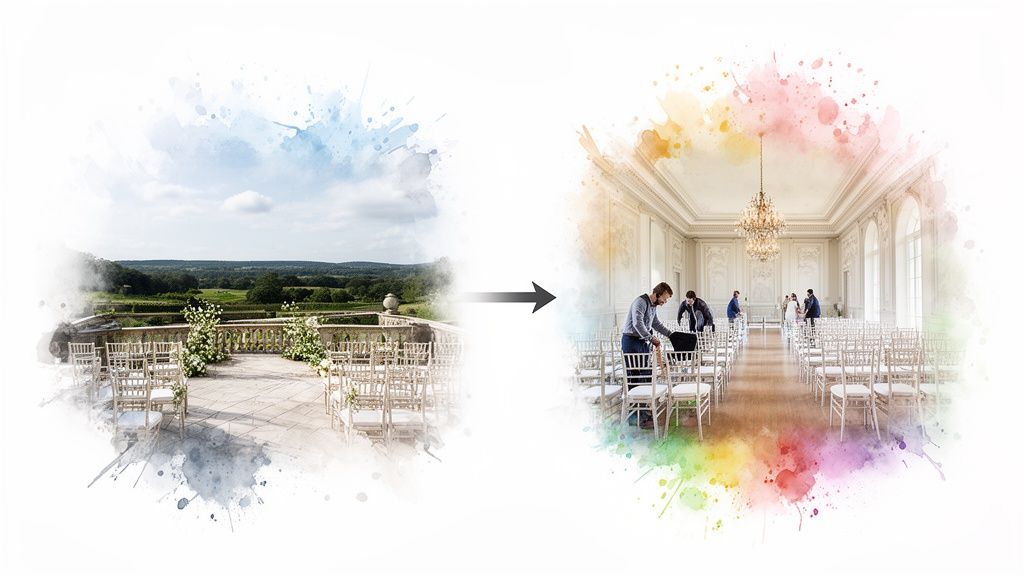
A beautiful outdoor ceremony or garden drinks reception is a dream for many, but the unpredictable nature of British weather makes a solid backup plan non-negotiable. This is one of the most critical questions to ask wedding venues, as the answer determines your peace of mind and the comfort of your guests should the forecast turn against you. It’s about ensuring your day is flawless, rain or shine.
Why This Question is Crucial
The quality of a venue’s contingency plan separates the good from the great. A vague “we can move it inside” is not enough. You need to know that the indoor alternative is just as beautiful and suitable for your guest numbers as your primary choice. A last-minute move to a cramped, uninspiring conference room can deflate the atmosphere of your entire wedding day. A seamless, well-rehearsed plan B ensures the day’s magic isn’t lost.
Practical Examples of Weather-Proofing
Historic venues excel at providing robust contingency plans, blending stunning grounds with equally impressive interiors. At Battle Abbey, couples can plan for an outdoor ceremony on the Top Terrace or Six Penny Lawn, knowing that the magnificent Abbot’s Hall or the elegant Duke’s Library are available as spectacular indoor alternatives.
This built-in flexibility means you don’t compromise on the backdrop:
- Outdoor Plan A: Ceremony on the manicured lawns with historic architecture in the background.
- Indoor Plan B: Ceremony in a grand, historic hall with vaulted ceilings and period features.
This approach guarantees a stunning setting regardless of the weather, removing stress and uncertainty from your planning process.
Actionable Tips for Your Venue Tour
Get specific about the venue’s weather preparedness with these questions:
- View the Backup Space: Don’t just talk about it; ask to see the indoor ceremony and reception options set up for a wedding.
- Understand the ‘Decision Time’: When does the final call have to be made to move indoors? Is it the morning of, or the day before?
- Clarify Transition Logistics: How does the venue team manage the move? Is there a dedicated team to redirect guests and ensure a smooth transition?
- Ask About Comfort Provisions: Does the venue provide items like large umbrellas for guests moving between buildings, or blankets and heaters for covered outdoor areas?
7. What is the venue’s experience with your specific celebration style (size, theme, formality)?
Not all venues are created equal when it comes to executing a specific vision. This question helps you determine if a venue’s team has the practical experience to bring your unique wedding to life, whether it’s an intimate formal dinner, a large-scale festival-themed party, or a classic fairy-tale celebration. A venue’s expertise directly impacts the smoothness and success of your day.
Why This Question is Crucial
A venue might have a beautiful gallery, but if all the photos show 200-guest formal banquets and you’re planning a relaxed, 60-guest celebration with a hog roast, there could be a mismatch. You need a team that understands the specific logistics, timings, and atmospheric nuances of your chosen style. An experienced venue won’t just accommodate your vision; they will proactively enhance it with suggestions born from years of successfully hosting similar events.
This is a key part of the process when you are deciding how to choose a wedding venue, as it ensures the team’s skills align perfectly with your expectations for the day.
Practical Examples of Venue Experience
A venue with deep-rooted experience can adapt its spaces and services seamlessly. For example, a historic setting like Battle Abbey has over 30 years of experience delivering bespoke weddings of all kinds. This expertise allows them to cater flawlessly to different formalities and scales.
Their team can execute:
- Formal Banquets: Utilising the grand Dining Room for multi-course seated meals for up to 120 guests.
- Casual Celebrations: Transforming the outdoor terraces for elegant BBQs, hog roasts, or relaxed evening receptions.
- Large and Intimate Events: Coordinating the flow for a 200-guest marquee wedding as effectively as a 40-person ceremony in the Abbot’s Hall.
This proven track record means they have already navigated the challenges your specific style might present, ensuring a stress-free experience for you.
Actionable Tips for Your Venue Tour
When you discuss their experience, ask for tangible proof and specific details:
- Request a Relevant Portfolio: Ask to see photo galleries or videos of weddings that are similar in guest count, theme, or formality to your own.
- Enquire About Recent Examples: Ask the coordinator to walk you through a recent wedding that mirrors your vision. How did they structure the day? What challenges did they overcome?
- Discuss Planner Experience: Ask about the lead planner’s direct experience with your style of celebration and how they approach bespoke consultations.
- Ask for References: Request contact details for couples who held a similar-sized or themed wedding at the venue.
- Confirm Space Adaptability: How do they transform a space from a formal dining room to a lively dance floor for a more casual party?
8. What vendor policies and restrictions apply to external services (florists, musicians, DJs, rentals)?
Your wedding is a personal expression, and the suppliers you choose play a huge role in bringing your vision to life. This question clarifies how much freedom you have to assemble your dream team. While some venues offer fantastic in-house services, others may have strict rules about who can work on their property, impacting everything from your floral arrangements to your evening entertainment.
Why This Question is Crucial
Understanding a venue’s vendor policy is essential for both creative control and budget management. A venue might have an exclusive list of suppliers they trust, which can streamline planning but limit your choices and pricing options. Conversely, a venue that allows any external vendor gives you ultimate flexibility but may require more coordination and due diligence from your side to ensure they meet the venue’s standards, such as having public liability insurance.
Clarifying these rules early prevents disappointment later. You don’t want to book your perfect venue only to discover your favourite photographer or the band you’ve set your heart on isn’t allowed to work there.
Practical Examples of Vendor Flexibility
Historic properties, in particular, need to protect their unique fabric and atmosphere, which is why they often have a curated list of trusted partners. For example, a venue like Battle Abbey works closely with experienced wedding planners who understand the logistics of such a special location. This collaborative approach indicates flexibility for external vendor integration, managed by a professional who knows the venue’s requirements.
This ensures a seamless experience where:
- Florists: Are familiar with the historic stone interiors and know what arrangements are permissible.
- Musicians & DJs: Understand the acoustics and any sound limitations of the period spaces.
- Rental Companies: Can provide heritage-appropriate linens, furniture, or marquees that complement the setting.
This system protects the venue while ensuring your suppliers are well-equipped to work effectively within it.
Actionable Tips for Your Venue Tour
When discussing suppliers, use these specific questions to get a clear picture:
- Request the Supplier List: Ask for their directory of recommended or required vendors for all categories, including florists, musicians, and photographers.
- Clarify ‘External Vendor’ Fees: Are there any surcharges or corkage-style fees for bringing in suppliers not on their list?
- Understand Insurance Requirements: What level of public liability insurance must your external suppliers have? Ask for this in writing.
- Confirm Logistical Access: What are the rules for vendor setup and breakdown? Clarify timings, parking, and access points for delivery vehicles.
- Coordinator’s Role: Will the venue coordinator liaise with your chosen suppliers, or is that entirely your responsibility?
9. What event day coordination and timeline support does the venue provide?
The most beautiful venue can fall short without seamless execution on the day. This question helps you understand who is responsible for ensuring your meticulously planned schedule comes to life. It’s about more than just a contact person; it’s about having a dedicated professional to manage suppliers, guide guests, and troubleshoot issues behind the scenes, allowing you to remain fully present.
Why This Question is Crucial
A venue-provided coordinator is invaluable. They know the property’s intricacies, from the best spot for confetti to the quirks of the sound system. Their role is to be the central point of contact, directing suppliers as they arrive, ensuring the ceremony starts on time, and cueing the kitchen for dinner service. Without this support, the responsibility often falls to the couple or a family member, adding significant stress to what should be a joyful occasion.
Clarifying the level of support is key. Are they a hands-on event manager who will run the entire day, or simply a point of contact to unlock doors?
Practical Examples of Venue Coordination
Historic venues with multiple distinct spaces rely heavily on expert coordination to manage the flow of the day. At a venue like Battle Abbey, the experienced event team acts as the operational backbone for your wedding. They don’t just hand you the keys; they provide proactive, day-of management tailored to the unique layout.
Their support includes:
- Supplier Coordination: Liaising with your chosen florists, photographers, and musicians to manage arrival, setup, and breakdown times.
- Timeline Management: Ensuring the transition from the ceremony in the Abbot’s Hall to the drinks reception on the terraces happens flawlessly.
- Guest Experience: Discreetly guiding guests between different areas and ensuring everyone is comfortable and catered for.
This integrated approach means the venue’s team works in harmony with your plans, not just adjacent to them.
Actionable Tips for Your Venue Tour
When discussing coordination, get specific about their role and responsibilities:
- Define Their Role: Ask for a clear job description. Are they a ‘Wedding Coordinator’ or a ‘Venue Manager’? The titles imply different levels of involvement.
- Request a Sample Timeline: Ask to see a sample wedding day timeline they have used for a similar wedding. How do they customise it?
- Meet the Coordinator: If possible, ask to meet the person who would be managing your wedding day. Do you feel a good rapport with them?
- Clarify Pre-Wedding Involvement: How much contact will you have with the coordinator in the weeks leading up to the wedding? Do they run a final details meeting?
- Understand Contingency Plans: Ask how they have handled past challenges, such as a supplier running late or unexpected bad weather. This reveals their problem-solving skills and experience.
10. What accessibility, parking, and guest amenity accommodations exist?
Ensuring every guest feels welcome and comfortable is the hallmark of a truly successful wedding. This question addresses the practicalities of guest experience, from arrival to departure, and is essential for creating an inclusive celebration. It covers everything from parking availability and wheelchair access to restroom facilities and quiet areas for elderly guests or those with young children.
Why This Question is Crucial
You want your loved ones to remember your wedding for the joy and celebration, not for the stress of navigating a difficult venue. A venue that prioritises accessibility demonstrates a high level of care and professionalism. For historic properties in particular, understanding the modern accommodations within a protected setting is vital. It’s not just about compliance; it’s about genuine hospitality for guests of all ages and abilities.
A lack of clear information on parking can cause late arrivals and frustration, while poor accessibility can sadly mean some guests are unable to participate in key moments of your day.
Practical Examples of Guest Accommodations
Historic venues must balance preservation with modern needs, and many do this exceptionally well. For example, a property like Battle Abbey often has designated accessible routes and facilities. While the ancient architecture is preserved, they can offer level pathways between key celebration areas.
The flow is carefully considered:
- Parking & Drop-Off: An estate will typically have designated guest parking with clear signage and a convenient drop-off point near the entrance for elderly guests or those with mobility challenges.
- Accessible Routes: The journey from a ceremony in the Abbot’s Hall to a drinks reception in the Duke’s Library and onto the terraces would have a planned accessible route, avoiding stairs where possible.
- Modern Facilities: English Heritage sites often feature modern, fully accessible restrooms discreetly located within the venue, ensuring comfort without compromising the historic atmosphere.
Actionable Tips for Your Venue Tour
When discussing guest facilities, use this checklist to cover all bases:
- Request an Accessibility Map: Ask the coordinator to walk you through the accessible routes between all key spaces you plan to use.
- Confirm Parking Logistics: How many spaces are available? Is it complimentary? Are there designated accessible parking bays close to the entrance?
- Inspect the Facilities: Physically check the accessible restrooms to ensure they meet your guests’ needs. Confirm their location in relation to your main reception area.
- Enquire About Comfort Amenities: Is there a cloakroom for coats and bags? Is there a quiet, comfortable seating area away from the music where older guests can relax?
- Discuss Staff Support: Ask what assistance staff can provide for guests with mobility challenges, such as offering an escort between rooms.
10 Key Questions to Compare Wedding Venues
| Topic | Implementation Complexity 🔄 | Resource Requirements ⚡ | Expected Outcomes 📊 | Ideal Use Cases 💡 | Key Advantages ⭐ |
|---|---|---|---|---|---|
| What is your venue capacity and layout flexibility? | 🔄 Moderate — site visits & floor plans | ⚡ Floor plans, measurements, staff walkthroughs | 📊 Confirm guest fit & circulation | 💡 Large or multi-space weddings | ⭐ Ensures comfort & adaptable layouts |
| What is included in the venue hire fee and what are additional costs? | 🔄 Low — request itemized quotes | ⚡ Detailed quotes, contract review | 📊 Clear budgeting; fewer surprises | 💡 Cost planning & vendor comparison | ⭐ Transparency; easier cost control |
| What catering options and dietary accommodations are available? | 🔄 Moderate — tastings & menu customisation | ⚡ Menu samples, tastings, service staff | 📊 Meet dietary needs; consistent quality | 💡 Food-focused receptions; diverse diets | ⭐ Professional service; local sourcing |
| What is the venue’s licensing and permitted hours of operation? | 🔄 Low — verify licences & curfews | ⚡ Licence documents, timeline alignment | 📊 Legal compliance; defined end times | 💡 Late-night receptions; licensed bars | ⭐ Prevents legal issues; clear expectations |
| What photography and videography permissions and restrictions exist? | 🔄 Low–Moderate — location maps & permits | ⚡ Site maps, vendor coordination, permits | 📊 Maximise coverage; avoid restricted areas | 💡 Heritage/backdrop-driven weddings | ⭐ Iconic imagery; fewer surprises for vendors |
| What weather contingency plans and indoor backup spaces are available? | 🔄 Moderate — logistics for backups & transitions | ⚡ Marquee hire, indoor alternatives, HVAC | 📊 Reduced weather risk; smooth transitions | 💡 Outdoor ceremonies; seasonal dates | ⭐ Reliable backups; guest comfort maintained |
| What is the venue’s experience with your specific celebration style (size, theme, formality)? | 🔄 Low — review portfolio & references | ⚡ Portfolios, references, planner consultations | 📊 Better execution; tailored solutions | 💡 Themed, bespoke, or large events | ⭐ Proven delivery; vendor networks |
| What vendor policies and restrictions apply to external services (florists, musicians, DJs, rentals)? | 🔄 Low — check approved lists & fees | ⚡ Vendor contracts, insurance, access rules | 📊 Clear coordination; fewer conflicts | 💡 Multiple external vendors; bespoke suppliers | ⭐ Vetted vendors; streamlined logistics |
| What event day coordination and timeline support does the venue provide? | 🔄 Moderate — timeline creation & oversight | ⚡ Dedicated coordinator, vendor liaisons | 📊 Smooth execution; on-time schedule | 💡 Full-day, multi-space celebrations | ⭐ Reduces couple stress; professional management |
| What accessibility, parking, and guest amenity accommodations exist? | 🔄 Low–Moderate — accessibility audit & mapping | ⚡ Accessibility maps, ramps, parking plans | 📊 Inclusive guest experience; easier arrivals | 💡 Elderly/disabled guests; rural estates | ⭐ Ensures access & comfort for all guests |
Your Journey Starts Here: Securing Your Dream Wedding Venue
You have now navigated the comprehensive checklist of questions to ask wedding venues, transforming what can often feel like an overwhelming task into a clear, manageable process. This journey is about more than just finding a beautiful space; it is about finding a partner for one of the most significant days of your life. The right venue team will not just answer these questions, but will welcome them, demonstrating their experience, transparency, and commitment to making your vision a reality.
Think of this list not as an interrogation script, but as a framework for a conversation. Each question is a key that unlocks a deeper understanding of how a venue operates, what its values are, and how it will support you from the initial tour to the final farewell. By delving into the specifics of capacity, costs, catering, and contingency plans, you move beyond the surface-level aesthetics and into the logistical heart of your wedding day. This diligence is what separates a good wedding from a truly exceptional one.
The Most Important Takeaways
As you move forward with your venue tours and consultations, keep these core principles at the forefront of your mind:
- Clarity is Non-Negotiable: Vague answers are a red flag. A professional venue will have clear, detailed responses regarding costs, inclusions, restrictions, and timelines. Ensure everything is documented in writing.
- The Contract is Your Guidebook: Every verbal promise and agreed-upon detail should be reflected in the final contract. This document is your ultimate protection and point of reference, so review it meticulously before signing.
- Your Vision is Paramount: The venue should feel like a collaborative partner, not a restrictive landlord. Do they seem genuinely excited about your ideas? Are they flexible and willing to work with you to personalise your day? Trust your intuition and the rapport you build with the venue coordinator.
Key Insight: The best venue for you isn’t just the one that looks perfect in photos; it’s the one that feels right. It’s the place where the team’s confidence and competence put you completely at ease, allowing you to be fully present on your wedding day.
Your Actionable Next Steps
With this powerful list of questions in hand, your path forward is clear. First, shortlist your top three to five venues based on your initial research and aesthetic preferences. Next, schedule in-person tours and dedicate ample time for each visit. Print this list or have it ready on a tablet, and don’t be afraid to take notes and ask follow-up questions.
After each tour, take a moment with your partner to debrief while the details are still fresh. Compare the answers you received, evaluate the ‘feel’ of each space, and weigh the pros and cons. This structured approach ensures you make a decision based on both emotion and logic, securing a venue that aligns perfectly with your budget, style, and practical needs. Asking the right questions to ask wedding venues is your first and most crucial step towards a seamless and unforgettable celebration.
Ready to ask these questions at a venue that blends historic grandeur with bespoke, personal service? Discover how Battle Abbey Weddings provides the answers you’re looking for. Explore our unique spaces and see how our dedicated team can bring your fairy-tale wedding to life at Battle Abbey Weddings.