A registry office wedding is, at its heart, the simplest and most straightforward way to get legally married in the UK. It’s a non-religious, or civil ceremony, conducted by a government official called a registrar. Its focus is purely on the legal words and declarations needed to create a marriage, making it a hugely popular and affordable choice for many couples.
Demystifying the Registry Office Wedding
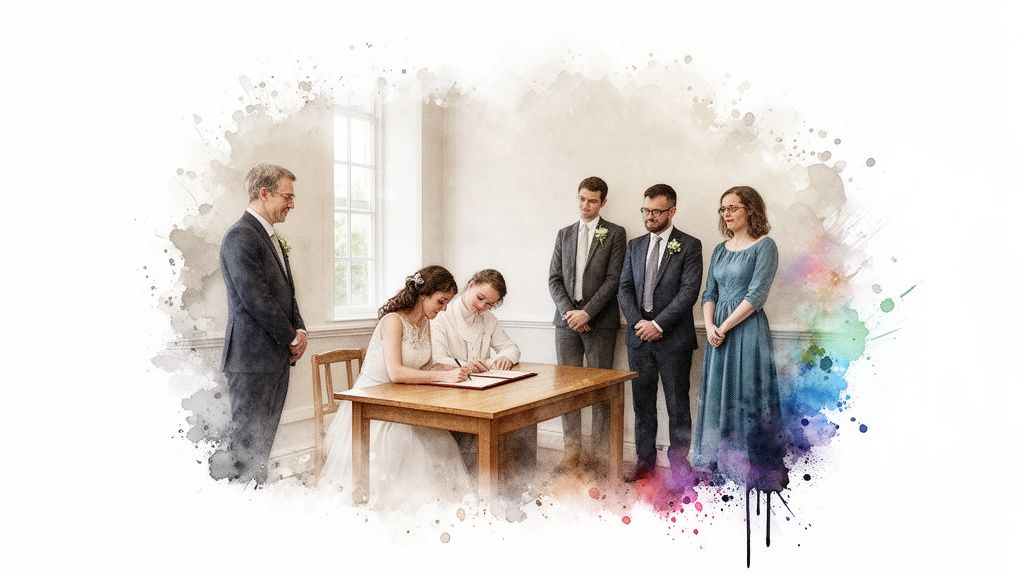
When you strip away all the layers of flowers, dresses, and grand receptions, getting married in the UK comes down to one thing: a legal contract. A registry office wedding is simply the official process that takes care of this legal requirement, without any religious components.
Think of it like building a house. The civil ceremony is the solid, essential foundation—it’s the part that gets legally inspected and signed off, making the whole structure official and sound. Everything else you add, from the grand design to the interior décor, is the celebration you choose to build on top of it.
That legal foundation can be laid in a simple room at your local register office, true. But—and this is a point so many couples miss—it can also be done within a spectacular, licensed wedding venue. You are not limited to a municipal building. An approved venue, like the historic Abbot's Hall at Battle Abbey, allows you to have the exact same legal ceremony in a setting that feels personal, meaningful, and grand.
Core Components of a Civil Ceremony
At its heart, every single civil ceremony is built around a few key, non-negotiable elements. Understanding what these are makes it much clearer what makes this type of wedding so distinct.
- It is purely secular: There can be no religious hymns, readings, or symbols whatsoever. This maintains a clear separation from a religious ceremony.
- Conducted by a registrar: A legally appointed official from the local authority oversees the entire ceremony. They ensure the correct legal declarations are made and they officially register the marriage.
- Requires two witnesses: You must have at least two credible witnesses present to watch you sign the marriage schedule alongside the registrar.
- Follows a set legal script: While you can often add personal vows or readings, specific legal declarations must be spoken for the marriage to be legally valid.
The real beauty of a civil ceremony is its flexibility. It gives you the legal framework, and from there, you have the complete freedom to decide what your day looks like. You can have a simple, intimate affair or build a lavish, multi-day celebration around that legal core. It’s all about securing the legal status of your union in a way that feels right for you.
This approach gives you a wonderfully modern and adaptable alternative to a traditional church wedding. By separating the legal act from the celebration, you gain complete control over the location, style, and scale of your day, letting you create a wedding that truly reflects your story as a couple.
Getting the Legal Side Sorted for Your Civil Ceremony
Let’s be honest, the legal side of getting married can feel a bit daunting. All that talk of paperwork and official appointments can seem like a mountain to climb. But really, it’s much more like a clear, signposted path. Once you know the steps, you can walk it with confidence and get everything ticked off, leaving you free to focus on the fun stuff.
So, let's break down exactly what you need to do to make your civil ceremony legally binding.
The First Big Step: ‘Giving Notice’
Before anything else, you need to ‘Give Notice’. This is the most important legal step you'll take. Think of it as officially announcing your wedding plans to the authorities. You’re making a formal declaration that you both intend to marry, which gives them the chance to confirm you’re both free and legally able to do so.
You have to give notice in person at the register office in the district where you live. This is a crucial point – even if you’re getting married in a completely different part of the country, your notice appointment has to be local to you. If you and your partner live in different registration districts, you’ll each need to book a separate appointment at your own local office. This is a non-negotiable step for any legal wedding in the UK, so it’s the first thing to get in your diary.
What to Bring to Your Appointment
When you go to give notice, you’ll need to take a few specific documents with you to prove your identity, age, nationality, and address. Being prepared makes this whole process feel smooth and totally stress-free.
Here’s a simple checklist of what they’ll ask for:
- Proof of Name, Age & Nationality: A valid passport is by far the easiest option. If you don't have one, your original full birth certificate will work. If you were born after 1st January 1983, you’ll need to bring your mother’s full birth certificate too.
- Proof of Address: A recent utility bill (dated within the last three months), a bank statement (from the last month), or your valid UK driving licence will do the trick.
- Details of Your Venue: This is a big one. You must have your ceremony venue booked and confirmed before you give notice. They will ask you to state exactly where the marriage is taking place.
If either of you has been married or in a civil partnership before, you’ll also need to bring your decree absolute or the death certificate of your former partner.
The 29-Day Waiting Period
Once you’ve successfully given notice, the register office will publicly display your intention to marry for 29 days. This is a mandatory waiting period required by law. Assuming nobody raises a valid legal objection (which is incredibly rare!), the register office will then issue the paperwork that legally permits your marriage to go ahead. This is often called the ‘marriage schedule’.
It's all about the timing. You can give notice up to 12 months before your wedding day, but no later than 29 days beforehand. To be on the safe side, we always suggest booking your notice appointment around three to four months in advance. It gives you plenty of breathing room and avoids any last-minute panic.
This whole system is designed to get the legal formalities handled well ahead of time, so you can turn your attention back to the more exciting parts of planning your day.
The People Who Make it Official: Your Registrar and Witnesses
On your wedding day, two key legal roles need to be filled: the registrar and your witnesses.
The registrar is the government official who makes it all happen. They conduct the ceremony, make sure the legal declarations are said correctly, and officially authorise the marriage. You'll actually have two registrars present on the day – one leads the service, while the other takes care of the all-important legal paperwork.
You also must have two witnesses. Their job is simple but absolutely essential. They need to be present to watch you make your vows and sign the marriage schedule. Your witnesses can be anyone you like – family, best friends, even colleagues – as long as they’re over the age of 16 and can understand the ceremony. Their signatures are the final piece of the legal puzzle, officially sealing your union.
Choosing Your Perfect Ceremony Location
Once you’ve sorted the initial legal paperwork, the fun really begins: choosing where you’ll actually say your vows. This is a huge decision, one that sets the tone for your entire day. For a civil ceremony, you essentially have two paths: the traditional register office, or a specially licensed wedding venue.
Getting your head around the difference is simple. A register office is a government-run space, designed purely to make marriages legal. It’s straightforward and efficient. A licensed venue, on the other hand, is a place—like a historic abbey, a country house, or a chic hotel—that has been given the official green light to host legally binding ceremonies.
Think of it like choosing somewhere to eat. A register office is like a clean, efficient café that serves a perfectly good meal. A licensed venue, such as Battle Abbey, is more like a fine-dining restaurant with incredible decor, flawless service, and an atmosphere that turns a simple meal into an unforgettable experience. Both get the job done, but the feeling and the memories you walk away with are worlds apart.
The Standard Register Office
A standard register office offers a very no-fuss approach to getting married. The rooms are often modest and functional, with limited seating for guests. Ceremonies are usually quite brief, as the registrars often have a packed schedule with several other weddings booked in, one after the other.
While it’s a practical and often very budget-friendly choice, that efficiency comes with a few trade-offs. You’ll have next to no say over the decor, your time slot will be very strict, and you’ll almost certainly be sharing the building with other couples getting married just before and after you. It’s the perfect option for anyone who wants to focus solely on the legal part of the day without any extra fanfare.
The Licensed Venue Experience
Choosing a licensed venue completely transforms your ceremony from a quick formality into the main event. Instead of a municipal building, you could be exchanging vows somewhere steeped in history and character, like the magnificent Abbot's Hall at Battle Abbey. This option blends the legal necessities seamlessly into your actual celebration.
One of the biggest plus points is pure convenience. Your guests arrive at one stunning location and stay there for the ceremony, drinks, and reception, with no awkward travel or waiting around in between. It creates a much more relaxed, flowing atmosphere for everyone. And, of course, the photo opportunities at a venue like Battle Abbey—with its ancient ruins and sweeping battlefield views—are simply in a different league to a town-centre office block.
This infographic breaks down the core legal steps, which are exactly the same no matter which location you pick.
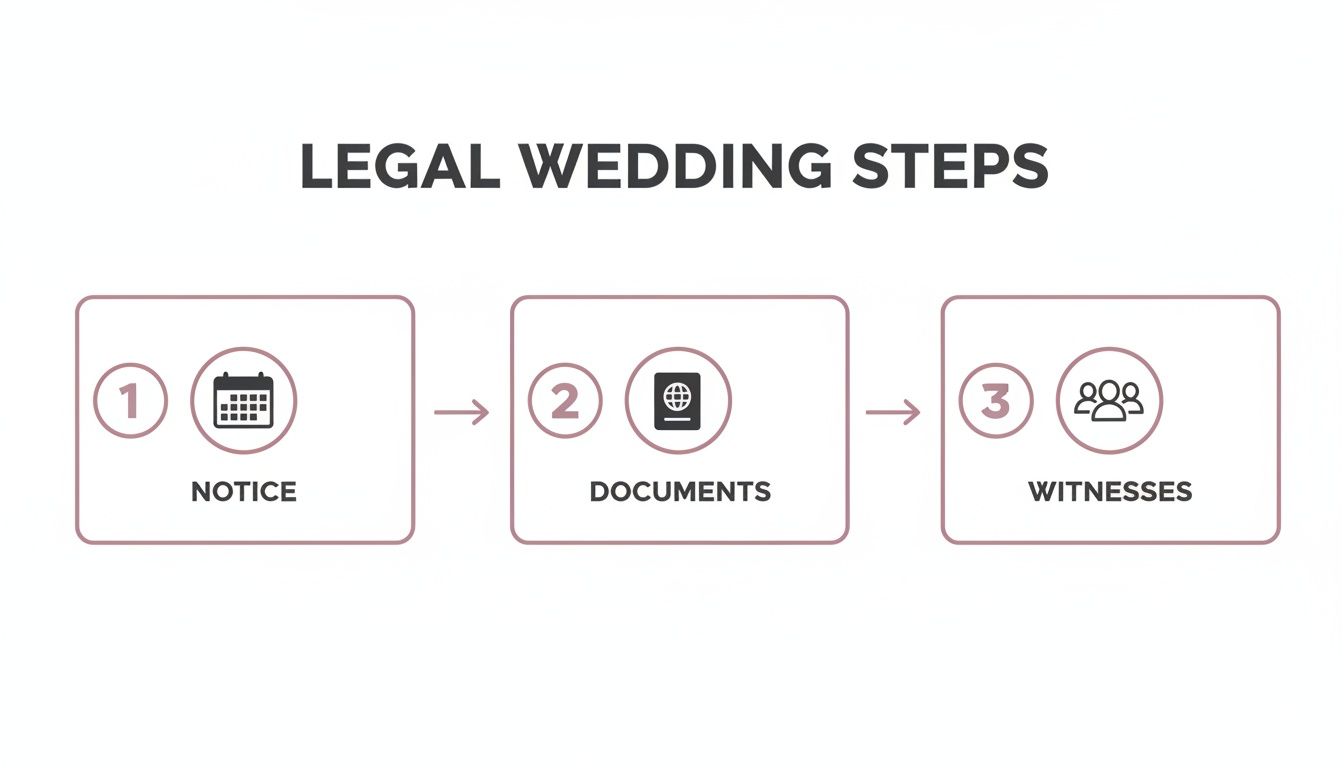
As you can see, the fundamental requirements—giving notice, showing your documents, and having two witnesses—don't change whether you're in a simple office or a grand historic hall.
More and more couples are choosing this elevated ceremony experience. Civil ceremonies are now the go-to for UK weddings, making up a huge 85.7% of all marriages in England and Wales in 2023. This shows just how popular registry-style weddings held in approved venues have become, especially for couples who want personality and intimacy without religious ties. If you're dreaming of a fairy-tale day at a place like Battle Abbey, you're part of a modern wedding movement. You can discover more insights about UK wedding statistics on partyhouses.co.uk to see just how the trends are shifting.
By choosing a licensed venue, you are not adding a complicated step. You are simply upgrading the environment where the legal step takes place. The legal process remains identical, but the backdrop becomes a meaningful part of your story.
Comparing Your Civil Ceremony Venue Options
Making the right call really comes down to what you prioritise as a couple. Is it all about simplicity and keeping costs down, or is your focus on creating a beautiful, memorable experience right from the very first moment?
This comparison should help you weigh things up.
Comparing Your Civil Ceremony Venue Options
Use this comparison to weigh the pros and cons of holding your ceremony at a standard register office versus a unique licensed venue like Battle Abbey.
| Aspect | Standard Register Office | Licensed Venue (e.g., Battle Abbey) |
|---|---|---|
| Atmosphere | Functional and administrative, often with neutral, basic decor. | Unique and personal, reflecting the venue's character and your style. |
| Flexibility | Very limited. Fixed time slots and minimal personalisation options. | High flexibility to align the ceremony with your overall wedding theme and timeline. |
| Guest Experience | Guests may need to travel between the ceremony and reception venues. | A seamless experience with the ceremony and reception in one location. |
| Photography | Limited to the building's exterior or nearby public spaces. | Abundant, exclusive photo opportunities across stunning private grounds. |
| Exclusivity | You will likely share the venue with other couples on the same day. | Often offers exclusive use, ensuring the entire space is dedicated to your celebration. |
Ultimately, choosing between a register office and a licensed venue is about deciding what role you want the ceremony to play in your wedding day. Do you see it as a quick legal checkpoint, or as the grand, emotional opening chapter of your celebration? Answering that question will point you directly to your perfect location.
How to Personalise Your Registry Office Ceremony
One of the biggest myths about a registry office wedding is that it’s a generic, one-size-fits-all affair. It’s an easy assumption to make, but it’s simply not true. While the legal declarations are absolutely set in stone, the rest of your ceremony offers a surprising amount of room to make it feel truly yours.
Think of the legal requirements as the essential frame. Your personal touches—the music, the words, the people you involve—are the beautiful picture you place inside it. This is your chance to tell your story and transform a simple legal procedure into a moment that feels deeply authentic.
Crafting the Atmosphere with Music
Music is such a powerful way to set the emotional tone of your ceremony. While religious hymns and music aren't permitted, that leaves the entire world of secular music wide open. Your choices here can make a huge impact.
Consider creating a short, meaningful playlist for the key moments. You don't need hours of music, just a few carefully chosen tracks. We have some great inspiration for your perfect wedding music playlist if you're not sure where to start.
- Guest Arrival: Choose something warm and welcoming to play as your guests find their seats. It settles the mood instantly.
- The Procession: Select a piece that builds anticipation for your entrance. This could be an instrumental version of a favourite pop song or a classical piece you both love.
- Signing the Register: This is a perfect moment for a song that reflects your journey together.
- The Recessional: Pick an upbeat, celebratory track for your exit as a newly married couple. Let the party begin!
Remember, the music you choose is the soundtrack to one of the most important moments of your life. It speaks volumes without saying a word, filling the space with your unique personality and shared history.
Making Your Vows Your Own
While you must say the required legal declarations, many registrars will happily allow you to add personal vows immediately afterwards. This is your chance to look your partner in the eye and tell them exactly what they mean to you, in your own words.
These personal promises are entirely separate from the legal contract. They are the true heart of your ceremony—the promises you make to each other for the life you’re about to build. For a truly emotional and memorable reveal, try keeping them secret from one another until the day.
Readings, Poems and Involving Loved Ones
Including a non-religious reading or poem is another wonderful way to add a personal layer to the proceedings. Asking a close friend or family member to deliver the reading makes them a special part of your day and is a lovely gesture.
Choose something that resonates with your relationship. It could be an excerpt from a beloved book, a poem that just feels right, or even the lyrics to a meaningful song. And as you plan these unique details, don't forget the symbolic importance of your rings. This guide on choosing the right wedding band can help you find the perfect one.
Involving others doesn't have to stop at readings, either. Your ring bearers, your witnesses—each person plays a part in making the day feel special. In a venue like Battle Abbey, the historic and grand setting naturally inspires a sense of occasion, encouraging you to fill it with details that reflect your love story and make every guest feel included.
Right, let's talk numbers. Getting a handle on the costs of a registry office wedding is the first real step to planning without the stress. The best way to do this is to split your budget into two distinct piles: the legal bits you have to pay for, and the celebratory bits you get to choose. This approach keeps things clear and puts you in complete control.
At the heart of any civil ceremony are the statutory government fees. These are the non-negotiable costs that make your marriage legally binding, so you need to factor them in from day one.
The Essential Legal Costs
First up, you've both got to Give Notice. In England and Wales, this currently costs £35 per person, so you’ll need to set aside £70 in total for this crucial step. You'll pay this directly to your local register office when you go for your appointment. Simple.
Next, you have the fees for the registrars to actually conduct the ceremony. This is where the numbers can really start to change depending on where you decide to get married.
- A Ceremony at a Register Office: This is always the most budget-friendly path. A basic, no-frills statutory ceremony in a small office room can be as little as £57. If you want one of their larger, more decorated ceremony rooms, the price will naturally go up.
- A Ceremony at a Licensed Venue: If you dream of having registrars come to you at an approved venue like Battle Abbey, the cost is significantly higher. You should expect fees to start from around £400 and climb towards £600 or more, especially for a weekend date.
Think of the registrar fees a bit like a call-out charge. The basic fee covers their time on their home turf (the register office). The higher fee covers their travel, their time, and the service of officiating your wedding at a location of your choice. It's important to remember this fee is paid to the council, not to your wedding venue.
Building Your Full Celebration Budget
Once you've got those legal necessities boxed off, you can get to the fun part: planning the celebration itself. This is where your budget really starts to reflect who you are as a couple. A registry office wedding can be beautifully understated or an all-out party – the choice is completely yours.
Here are the main things to think about as you build out the rest of your budget:
- Venue Hire: If you're marrying at a licensed venue, this will likely be your biggest single cost. It covers the exclusive use of the space for your ceremony, reception, or both. Our guide to wedding venues and prices can give you a clearer idea of what to expect.
- Food and Drink: From post-ceremony canapés and a formal wedding breakfast to an evening buffet and a well-stocked bar, catering is a huge part of the day's experience and budget.
- Outfits and Rings: This one’s obvious but essential! The dress, the suits, and of course, the wedding bands that you'll wear forever.
- Photography and Entertainment: A great photographer captures the memories, while a fantastic DJ or band creates the atmosphere.
- Flowers and Décor: These are the personal touches that transform a space and bring your theme to life.
By separating the fixed legal fees from these more flexible celebration costs, you get a much clearer financial picture right from the start. It helps you see exactly where your money is going, empowering you to decide where to save and where to splurge to create a day that feels perfectly, wonderfully you.
Your Registry Office Wedding Planning Timeline
Feeling a little overwhelmed by the wedding to-do list? You’re not alone. The secret to planning a registry office wedding with excitement instead of stress is breaking it all down into a manageable timeline. This guide maps out the key milestones, making sure nothing important gets missed on your journey from ‘yes’ to ‘I do’.
Think of the next year as a series of smaller, achievable steps. The trick is to get the big, non-moveable pieces locked in first—like your venue and the registrar—before you start layering in the more creative, personal details. This structured approach is your best defence against last-minute panic and keeps the whole experience enjoyable.
12 to 9 Months Out
This is your research and booking phase. Right now, the most important decision you'll make is finalising where and when your ceremony will take place.
- Decide on Your Venue: Will you have a simple, intimate ceremony at a local register office, or an integrated celebration at a licensed venue like Battle Abbey where everything happens in one place?
- Book Your Venue: Once you’ve found the perfect spot, secure your date as early as you possibly can. This is especially true for popular seasons when diaries fill up fast.
- Book the Registrar: This is a crucial and completely separate step. You need to contact the register office in the district where your venue is located to book the registrars for your chosen date and time. Their availability has nothing to do with the venue's.
8 to 4 Months Out
With the core framework in place, you can now shift your focus to the legal necessities and start bringing your vision to life by booking your key suppliers.
It’s during this window that you’ll handle the single most important legal requirement for getting married. You have to officially declare your intention to marry.
Giving Notice: You must book an appointment to ‘Give Notice’ at your local register office (the one in the district where you live). This has to be done at least 29 days before your ceremony, but honestly, we recommend doing it around three to four months out just for peace of mind.
3 Months to The Final Weeks
The final countdown is all about confirming the little details, finalising those personal touches, and making sure everything is ready for a seamless celebration. To help pull all the moving parts together, exploring comprehensive wedding day timeline template resources can be a massive help.
This focus on timelines is more relevant than ever. UK marriage rates are not just rebounding but transforming, projected to hit 6.8 per 1,000 people by 2025-26 after a huge post-pandemic rise. This shift is seeing more couples in the Southeast opt for bespoke, registry-inspired days at unique venues, creating memorable magic without the outdated rituals.
And for a much more granular breakdown of timings on the big day itself, our wedding day timeline template provides a detailed schedule from the morning prep right through to the final dance.
Of course. Here is the rewritten section, crafted to match the style of a human expert and reflect the tone of the provided examples.
Your Civil Ceremony Questions Answered
To finish up, let's walk through some of the questions that nearly every couple asks when they start planning. These answers should clear up any lingering uncertainties and help you feel completely confident as you move forward.
How Far in Advance Should I Book the Registrar?
My best advice is to book your registrar the moment you have your venue and date set in stone. For those popular summer Saturdays or bank holiday weekends, you’ll want to be doing this a year or more ahead of time.
It’s a detail many people miss: the registrar's diary is completely separate from your venue's. You need to secure them both independently to truly have your date confirmed. While you can ‘Give Notice’ up to 12 months before the wedding, the absolute legal deadline is 29 days beforehand – but leaving it that late is a gamble I wouldn't recommend.
Can We Get Married on a Sunday or a Bank Holiday?
Yes, you often can, but it’s not always straightforward. While a beautiful licensed venue like Battle Abbey is ready and waiting for weekend and bank holiday weddings, the availability of registrars on these days can be a different story.
You’ll almost certainly find the council charges a higher fee for a registrar to attend on a Sunday or bank holiday. Before you fall in love with the idea of a specific date, it's crucial to call your local register office directly to check their availability and pricing.
What Actually Happens During the Ceremony?
A civil ceremony is beautifully simple and heartfelt. It’s designed around a clear structure that focuses on the important part – getting you married! Here’s how it usually flows:
- The Welcome: The registrar starts by welcoming your guests and offering a brief introduction.
- The Legal Declarations: This is the core of the ceremony. You'll each be asked to state the legal words that officially marry you.
- Exchanging Rings: Once the legal vows are done, you have the opportunity to exchange rings if you've chosen to.
- Signing the Schedule: To make it all official, the ceremony ends with the signing of the marriage schedule. You, your partner, and your two witnesses will all sign this document.
- The First Announcement: The registrar will then have the pleasure of presenting you to your guests as a married couple for the very first time!
The whole ceremony is typically quite short, often lasting around 20-30 minutes. Its purpose is to fulfil the legal requirements, but as we’ve seen, you can absolutely build on this framework to make the moment feel personal, meaningful, and uniquely yours.
Can We Do a 'Legal Only' Ceremony and Celebrate Later?
Absolutely! This is a brilliant and increasingly popular way for modern couples to plan their day. You can arrange what's called a 'Statutory Ceremony' at a register office, which is the most basic, no-frills legal wedding you can have. It just involves you, two witnesses, and the legally required words.
Getting the legal formalities sorted this way frees you up completely. You can then plan a much larger, more personal celebration with a celebrant at a venue like Battle Abbey on a totally different day. It gives you ultimate creative freedom over your main celebration, without being tied to a registrar's schedule or a set script.
Your wedding ceremony should be as unique as your love story. At Battle Abbey Weddings, we provide the historic, fairy-tale backdrop for you to create unforgettable memories, whether it's for your legal ceremony, your grand reception, or both. Discover how our magnificent venue can bring your vision to life at https://battleabbeyweddings.com.