The morning after a wedding at Battle Abbey can begin in a surprisingly Roman way. Someone lingers over coffee, someone else proposes a drive, and within an hour you could be standing beside the mosaics at Fishbourne, tracing old walls at Richborough, or planning a longer escape to Bath where steam still rises in a city built on ancient ritual.
That is part of the pleasure of staying here. A celebration rooted in one historic setting can open into a series of excursions through Roman Britain, each with its own mood. Some suit couples who want a quiet half day together before dinner. Others work for wedding guests with a free afternoon, a hire car, and a taste for old stones, sea air, and places that still hold the shape of empire.
Roman towns in Britain were never all alike. Some were planned civic centres with straight streets and public buildings. Others grew beside forts, river crossings, and roads, taking on a more practical character over time, as outlined by Roman Britain's overview of Romano-British settlements. That difference still matters when you visit. One site offers the grandeur of baths and forums. Another gives you earthworks, quiet fields, and the unnerving sense that an important road once ran exactly where you are standing.
Roman rule lasted for centuries, long enough to leave marks that are still easy to follow across Britain's terrain. In some places, Roman streets lie under busy modern cities. In others, walls, gates, amphitheatres, and villa floors remain visible enough to turn an ordinary outing into something more intimate. For guests at Battle Abbey, that is the primary appeal. You raise a glass in one age, then spend the next day walking into another.
1. Richborough Roman Fort (Rutupiae)
Richborough has the kind of setting that sharpens the imagination. Reeds move in the marsh, sea air drifts in from the Kent coast, and the surviving walls rise from the ground with the severity of a place that once mattered immensely.
For guests based near Battle Abbey, Richborough makes sense as a day trip when you want Roman history without the density of a major city. It's dramatic, open, and easy to experience at your own pace, which suits couples who want a half-day of exploration followed by a long lunch in Sandwich or along the coast.
Why Richborough still feels like a threshold
Richborough is often remembered as an entry point into Roman Britain, and the site still carries that feeling of arrival. You don't need a complete streetscape to understand its importance. The surviving masonry, defensive lines, and monumental remnants create a strong sense that people once passed through here with military urgency, administrative purpose, and no doubt a certain awe.
That atmosphere works particularly well for wedding guests because the visit feels cinematic without being overwhelming. You can stand together on the site, read the outlines of power and movement, and still have room for conversation, photographs, and a leisurely return through Kent's villages.
Practical rule: Give Richborough a relaxed half day. It's better as an unhurried excursion than a rushed box-ticking stop.
A good visit here often includes:
- Early or late light: Stonework and open skies photograph best when the sun is lower.
- Comfortable footwear: The pleasure of Richborough lies in walking the perimeter and pausing often.
- A paired coastal stop: Sandwich or the nearby shore turns the outing into something more romantic than purely archaeological.
For couples, Richborough suits those who like historical places with wind, space, and mood. It doesn't dazzle with urban spectacle. It lingers instead.
2. Chichester Roman Palace (Fishbourne)
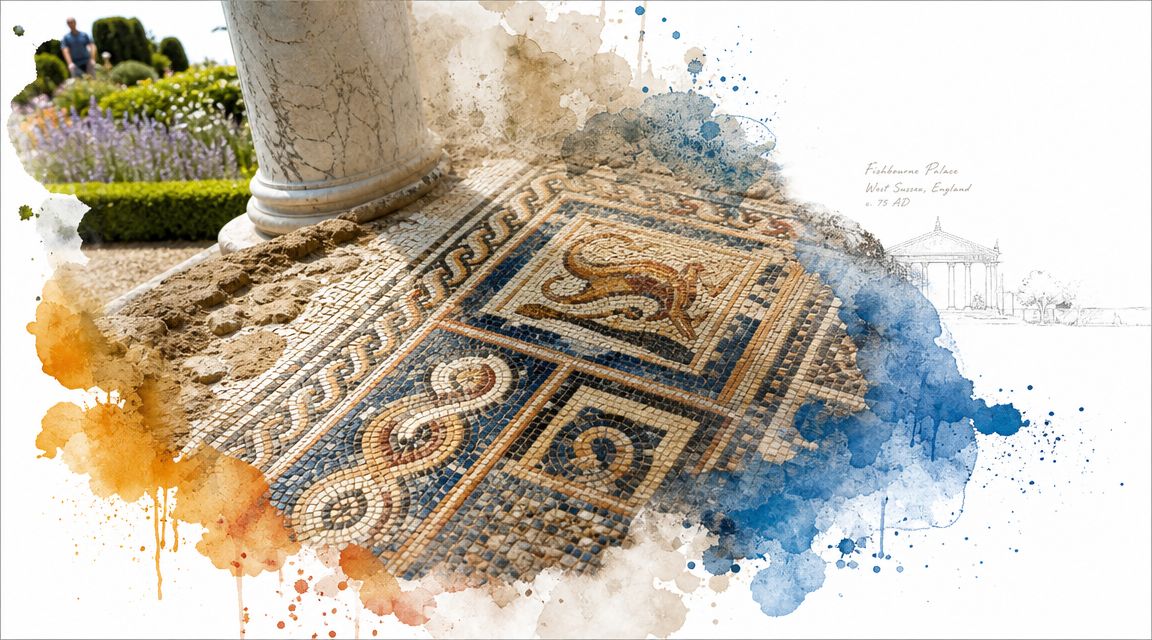
Fishbourne is one of the easiest recommendations for anyone attending a wedding at Battle Abbey. It's close enough to feel practical, distinctive enough to feel special, and elegant enough to appeal even to guests who don't normally plan their holidays around archaeology.
The site's greatest charm lies in contrast. Outside, West Sussex feels green and calm. Inside, you meet the remains of a place designed for status, display, comfort, and cultivated taste.
A Roman day out with real grace
Fishbourne's mosaics do more than impress. They make Roman Britain feel domestic and lived in. Instead of picturing only soldiers and governors, you begin to imagine footsteps across patterned floors, warmth rising through heated rooms, and formal gardens arranged to frame a life of cultivated luxury.
That makes Fishbourne especially good for couples. It's one of the Roman towns in Britain, or rather Roman sites tied to urban life and elite culture, where history feels sensual rather than abstract. Stone, geometry, order, decoration. It's easy to see why guests in wedding attire or just-post-wedding mood are drawn to it.
A lovely way to shape the visit is to keep the day gentle:
- Start with the museum: The objects give emotional scale to the architecture.
- Spend time with the mosaics: Don't rush from panel to panel. Let the workmanship register.
- Walk the gardens afterwards: They soften the archaeological experience and make it feel restorative.
Fishbourne also works brilliantly for mixed groups. Parents who love history, friends who want good photos, and couples after a quiet excursion can all enjoy it without compromise. If your wedding weekend includes guests from abroad, this is one of the most polished introductions to Roman Britain you can offer.
3. Silchester Roman Town (Calleva Atrebatum)
Silchester feels different from almost every other Roman destination in Britain because it hasn't been swallowed by a later city. You arrive not to a dense urban centre but to a place where the old town plan still has room to breathe.
That separation from later development gives Silchester unusual clarity. The walls, the lines of the streets, and the broad sense of enclosure allow you to grasp the shape of a Roman town in a direct, physical way.
The romance of an unfinished silence
Some Roman sites feel theatrical. Silchester feels contemplative. It's the kind of place where couples walk a little slower, partly because the setting encourages it and partly because the surviving structure of the town invites reflection on what's gone and what can still be read in the ground.
Recent reassessment has suggested a peak population for Silchester of about 5,500, rather than older assumptions of around 6,800, according to the University of Colorado article on new perspectives on Roman-period Britain. That's more than a technical correction. It reminds visitors that not all Roman towns in Britain were equally large, dense, or urban in the modern sense.
Silchester rewards people who like evidence as much as atmosphere. The pleasure comes from reading the place, not just looking at it.
For wedding guests, Silchester suits a quieter itinerary:
- Bring a site map: The visit is richer when you can orient yourself within the old street plan.
- Pair it with a country pub lunch: The rural setting encourages a slower day.
- Choose mild weather: Dry ground and soft light make the walls and earthworks easier to appreciate.
If Fishbourne evokes Roman refinement, Silchester evokes Roman structure. You leave with a stronger sense of how towns worked, and with the peculiar pleasure of having walked through a place that history never fully covered over.
4. Bath Roman Baths and City (Aquae Sulis)
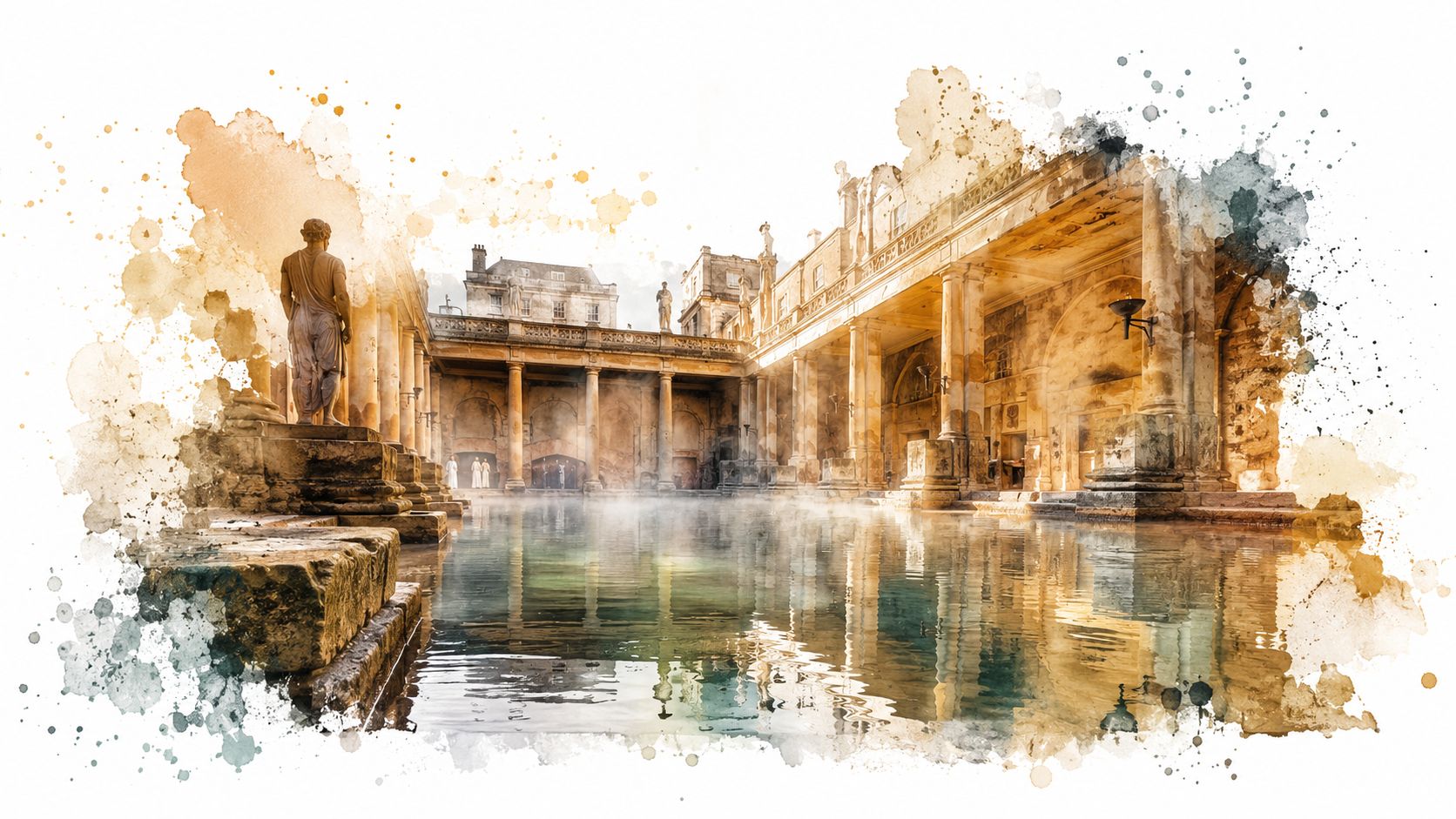
A wedding party leaves Battle in the morning, half expecting a history stop and finding something far more atmospheric by lunch. Steam rises from the Great Bath. Stone glows honey-coloured in the changing light. A couple who came for a handsome day out end up lingering over carved heads, temple fragments, and the strange intimacy of standing beside water that drew pilgrims here nearly two thousand years ago.
Bath suits guests who want one outing that feels generous from start to finish. The Roman Baths give you ritual, engineering, and drama in one compact visit. Step outside, and the wider city carries the mood forward through terraces, crescents, shopfronts, and long, elegant streets.
Water, ritual and continuity
The power of Bath begins with the spring itself. Roman visitors did not only bathe here. They treated the waters as sacred, tied to Sulis Minerva, and built a place where healing, worship, and social life met. That makes the experience feel unusually human. You are not only looking at walls and foundations. You are standing in a place organised around hope, habit, and ceremony.
Bath also gives wedding guests a different kind of Roman excursion from the quieter sites on this list. It is easier to shape into a polished day out. Friends who care most about archaeology can spend serious time in the museum. Others can enjoy the city at street level, with bookshops, cafés, and beautiful architecture close at hand. For couples extending their stay, it also fits neatly into broader things to do in South England near Battle Abbey Weddings.
How to make Bath feel personal
Go early.
That small choice changes the day. The baths are easier to absorb before the city fills, and the reflective quality of the site comes through more strongly when you are not hurrying shoulder to shoulder with other visitors. After that, let Bath unfold at a more romantic pace.
A good plan looks like this:
- Start with the Roman Baths and museum: See the sacred spring, the bath complex, and the objects that give the site its emotional weight.
- Pause for lunch nearby: Choose somewhere with a little quiet rather than racing to fit in every landmark.
- Keep the afternoon for walking: Bath rewards wandering, especially for couples who want conversation, views, and a sense of occasion.
For a visual sense of the place before you go, this short film helps set the mood:
Bath is the Roman choice for guests who want history with polish. You get sacred water, imperial ambition, and a city still skilled at staging a memorable afternoon. For wedding guests, that combination is hard to beat.
5. Colchester Roman Colony (Camulodunum)
A couple leaves Battle Abbey the morning after the wedding breakfast, trades the drama of Hastings for Essex streets, and by lunch they are standing beneath Colchester's Roman wall, tracing stone that has outlasted empire, conquest, and fashion. Colchester suits that kind of excursion. It feels less like a detached archaeological stop and more like a town that never quite let go of its Roman beginning.
Camulodunum was one of Roman Britain's earliest colonial centres, and that history still hangs over the place in a tangible way. You meet it in fragments. A surviving wall line. Museum cases filled with objects once handled in ordinary Roman lives. Street scenes where the old settlement still shapes the newer one. The pleasure here comes from noticing how the Roman town remained part of the town's long life, rather than being sealed off from it.
For wedding guests building a day trip around Battle Abbey, Colchester has a particular appeal. The journey is manageable, the centre is easy to explore on foot, and the mood is right for couples who prefer atmosphere to spectacle. There is romance in its texture. Warm brick and stone, church towers rising above old streets, the quiet surprise of finding Roman masonry beside the routines of a modern English town.
A good day in Colchester usually unfolds well if you begin indoors and then head out:
- Start at the museum: Seeing the finds first gives shape to what you will notice later outside.
- Walk the Roman wall and castle grounds: The physical scale of the colony becomes clearer once you move through it.
- Keep time for the town itself: Colchester rewards an unhurried hour in its older streets, with coffee, conversation, and room to wander.
Colchester is the Roman choice for guests who want history with a lived-in feel. After the ceremony, the speeches, and the music, it offers something quieter and more lasting. A town where Roman Britain still breathes through the stone.
6. Verulamium Roman City (St Albans)
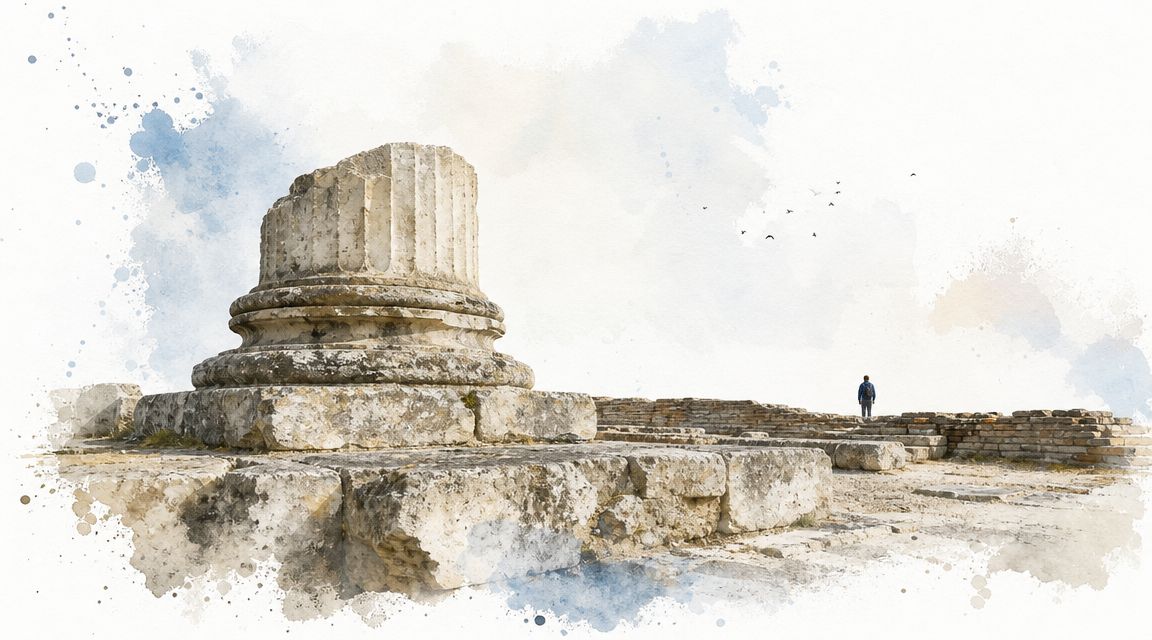
St Albans offers one of the most satisfying combinations in England. Roman city, medieval cathedral, later market town. You can move through many centuries in a single day without feeling that any one period overwhelms the others.
That balance makes Verulamium especially good for mixed wedding groups. Some guests want archaeology. Others want a picturesque town and an easy lunch. St Albans gives both.
A Roman city with a social life around it
Verulamium is one of those places where Roman urbanism becomes legible at a human scale. You're not only reading plaques or staring at fragments in cases. You're walking through an archaeological setting that still opens naturally into the life of the modern town.
Roman towns in Britain were not merely administrative labels. English Heritage describes the network of “small towns” as a distinctive Roman development, especially by the 3rd and 4th centuries, when such settlements often sat on road networks and commonly hosted industrial or commercial activity such as ironworking, pottery, and glass manufacture, acting as exchange hubs for agricultural goods and services, as explained in English Heritage's account of Roman commerce. Verulamium helps visitors understand that wider commercial world because it feels connected, not isolated.
A good Roman outing in St Albans doesn't end at the museum door. Let the town complete the story.
A gentle itinerary might look like this:
- Museum and park first: You'll understand the site better before wandering.
- Cathedral afterwards: The contrast in sacred and civic history is one of the day's pleasures.
- Late lunch in town: This keeps the outing sociable rather than academic.
For couples, Verulamium has a lovely conversational quality. It's not all spectacle. It's a place that invites shared noticing, which is often the best kind of travel.
7. Hadrian's Wall and Forts (Britannia Border)
A couple who has spent the weekend at Battle Abbey can stand here a few days later with the wind pulling at their coats, looking along a line of Roman stone that once marked the edge of empire. Housesteads clings to the heights. Chesters sits lower by the river. Vindolanda gives you letters, shoes, and the stubborn texture of ordinary lives. Hadrian's Wall turns Roman Britain from a chapter in a book into a journey with weather, distance, and silence.
It sits a little differently from the towns on this list, and that difference is the point. Along the Wall, forts and civilian settlements show Rome at full stretch, feeding soldiers, housing families, and holding a border through routine as much as force. You do not get the civic ease of Bath or the urban legibility of Verulamium. You get exposure, endurance, and a sharper sense of what it meant to live at the far edge of a province.
For wedding guests extending their stay into a longer northern tour, this is the memorable detour. It works especially well for couples who want their post-celebration travel to feel less polished and more stirring. If you are building a wider itinerary of historic places in England for wedding guests and couples, Hadrian's Wall is the boldest Roman outing in the set.
A good day here depends on restraint.
- Choose two or three sites with care: Housesteads, Chesters, Vindolanda, and Birdoswald each give a different mood.
- Allow time on foot: Walking between stretches of Wall helps the forts make sense.
- Consider an overnight stay nearby: The experience is better when it is not compressed into a rushed drive.
For romance, this is the rugged choice. The appeal lies in the big skies, the long ridgelines, and the feeling that history here was hard won. Couples who enjoy wild scenery often remember this section of Roman Britain more vividly than any mosaic floor or museum case.
If your route south or north later passes through the capital, the contrast with the local's guide to London 2025 can be surprisingly satisfying. One gives you frontier stone and open air. The other returns you to Roman survival under glass, streets, and towers.
8. London Roman City (Londinium)
London hides its Roman past in plain sight. That's part of the thrill. One minute you're among office towers and commuters, the next you're standing before wall fragments, an amphitheatre site, or the atmospheric remains of a temple buried beneath the modern city.
For wedding guests travelling through the capital before reaching East Sussex, Roman London is an easy and rewarding addition. It turns transfer time into discovery.
Roman layers beneath the modern capital
Londinium developed quickly after the Roman invasion, and its urban afterlife is still written into the City's layout. The experience of visiting isn't pastoral or ruin-filled in the way Silchester or Wroxeter can be. It's more charged than that. Roman history appears as interruption, survival, and buried order.
If your stay at Battle Abbey is part of a longer cultural itinerary, historical places in England near Battle Abbey Weddings sits naturally alongside a Roman London day. Guests who also want broader city inspiration can pair the archaeology with this local's guide to London 2025 for restaurants, neighbourhoods, and post-museum wandering.
A practical approach helps in London:
- Begin with a museum collection: It gives shape to what you'll encounter outdoors.
- Then walk the City: Roman remains make more sense when stitched together by foot.
- Keep expectations realistic: London's Roman story comes in fragments, but they're powerful fragments.
The city suits couples who enjoy contrast. Ancient masonry under glass, Roman routes beneath financial districts, sacred remains under polished stone. It's less dreamy than Bath, perhaps, but more surprising.
9. Wroxeter Roman City (Viroconium Cornoviorum)
Wroxeter has one of the most affecting settings of any Roman site in Britain. The remains rise from open Shropshire grassland, and the surroundings give the surviving civic architecture unusual presence. You see not only ruins but the scale of an organised urban place that once expected people to gather, trade, bathe, and move through formal public space.
The visual simplicity of the site is part of its strength. You don't fight traffic, modern density, or urban distraction. You stand and read.
A strong sense of Roman civic life
Wroxeter is ideal for visitors who want to understand what a Roman town felt like beyond military power or elite display. Bathhouses, street lines, public remains. The site gives a civic impression, and that makes it particularly valuable in a list of Roman towns in Britain.
A 2024 archaeological-economic study reported that per-capita productivity rose across Roman Britain over roughly 400 years, and that transport costs fell by about a factor of two, a change associated with the broader distribution of pottery from production locations during the transition from the Early to Late Roman period, as summarised in Popular Archaeology's report on intensive economic growth in Roman Britain. Wroxeter is one of the places where that broader commercial and logistical world becomes easier to imagine.
Wroxeter is best visited with patience. Stand back from the walls first, then move in close to the details.
For wedding guests on a longer route through western England, Wroxeter pairs beautifully with Shrewsbury. The contrast between Roman remains and later historic town life turns the day into a study in continuity and change. For couples, it's a thoughtful destination rather than a flashy one. That's exactly why many people remember it so fondly.
10. Chester Roman Fortress (Deva Victrix)
Arrive in Chester near dusk and the city reveals its Roman bones in stages. First the walls under your feet. Then the curve of the amphitheatre. Then the straight, disciplined lines of a fortress plan still directing an evening stroll, a dinner reservation, a walk down to the River Dee. Few Roman sites in Britain fold so naturally into a romantic city break.
That is Chester's particular gift. Deva Victrix was built for soldiers, but it now suits couples beautifully. You can spend the morning with carved stones and legionary history, drift into the afternoon along the river, and finish with the warm glow of the Rows and the city walls as the light softens.
A Roman fortress still shaping a living city
Chester stands apart because its military origin remains easy to read without feeling cut off from modern life. The old fortress footprint still governs movement through the city. Gates, streets, walls, and public spaces keep the Roman plan close to the surface, so the visit never depends on imagination alone.
For wedding guests extending a stay after celebrations at Battle Abbey, Chester works best as an overnight detour rather than a quick stop. It has the layered, fortified character that also draws people to historic castles and strongholds in Britain near Battle Abbey Weddings, yet the mood here is distinctly Roman. Older than the castle age, more urban than remote, and easy to enjoy at an unhurried pace.
A rewarding day in Chester often unfolds like this:
- Start at the museum: Legionary equipment, inscriptions, and everyday objects give the streets outside sharper meaning.
- Walk the walls next: The circuit shows the scale of the fortress and the shape of the later city that grew from it.
- Pause at the amphitheatre: It adds human drama to the military story and gives couples one of the city's most atmospheric historic settings.
- End by the River Dee: Water softens the sternness of the stone and turns the visit into something gentler and more memorable.
Chester is especially good for guests who want Roman history without sacrificing comfort, restaurants, or handsome places to wander after dark. Wroxeter asks for contemplation in open space. Chester offers enclosure, texture, and the pleasure of finding antiquity stitched into a still-lively city. For couples, that balance can be hard to beat.
10 Roman Towns in Britain: Comparative Overview
| Site | Planning Complexity (🔄) | Logistics & Cost (⚡) | Expected Experience (⭐ 📊) | Ideal Use Cases (💡) | Key Advantage (⭐) |
|---|---|---|---|---|---|
| Richborough Roman Fort (Rutupiae) | 🔄 Low–Moderate, simple visit but limited group facilities | ⚡ Moderate, coastal access, limited coach parking | ⭐⭐⭐, authentic military remains; strong visual arch 📊 | 💡 Short educational outings; dramatic photo stop for wedding parties | ⭐ Exceptional preserved defensive architecture and coastal backdrop |
| Chichester Roman Palace (Fishbourne) | 🔄 Low, well‑managed, timed entry recommended | ⚡ Low–Moderate, close to venues, good facilities | ⭐⭐⭐⭐, luxurious mosaic and garden experience 📊 | 💡 Premium day‑trip for guests interested in Roman luxury | ⭐ Most complete palace remains and internationally significant mosaics |
| Silchester Roman Town (Calleva Atrebatum) | 🔄 Moderate, benefits from guided interpretation | ⚡ Moderate, rural access, few on‑site amenities | ⭐⭐⭐, coherent town plan and readable urban fabric 📊 | 💡 Educational group visits; intellectually engaged guests | ⭐ Nearly complete Roman town plan with long roadway/wall survival |
| Bath Roman Baths and City (Aquae Sulis) | 🔄 Moderate, pre‑booking advised to manage crowds | ⚡ High, 100‑mile journey; entry fees and timed tickets | ⭐⭐⭐⭐, spectacular thermal complex and layered urban history 📊 | 💡 Premier cultural day or overnight excursion for wedding guests | ⭐ Iconic Great Bath, UNESCO status, outstanding museum collection |
| Colchester Roman Colony (Camulodunum) | 🔄 High, dispersed sites require itinerary planning | ⚡ High, long distance; may need overnight stay | ⭐⭐⭐, substantial archaeology and museum depth 📊 | 💡 Extended heritage itineraries for committed enthusiasts | ⭐ Temple of Claudius remains and very large artifact collection |
| Verulamium Roman City (St Albans) | 🔄 Low–Moderate, accessible, good visitor services | ⚡ Moderate, rail/coach friendly, short travel time | ⭐⭐⭐⭐, civic structures and reconstructed theater 📊 | 💡 Accessible day‑trip for mixed‑interest wedding groups | ⭐ Reconstructed theater and strong museum displays |
| Hadrian's Wall and Forts (Britannia Border) | 🔄 High, multi‑site planning and seasonal constraints | ⚡ Very High, remote; multi‑day travel and accommodation | ⭐⭐⭐⭐, monumental frontier with dramatic landscapes 📊 | 💡 Adventure/extended tours; romantic landscape photography | ⭐ Most extensive Roman military system with UNESCO recognition |
| London Roman City (Londinium) | 🔄 Moderate–High, fragmented sites need guided routing | ⚡ Moderate, rail access; museum entry costs add up | ⭐⭐⭐⭐, unrivaled artifact concentration and urban layering 📊 | 💡 London extensions and full‑day cultural itineraries | ⭐ World‑class museum collections and integrated urban remains |
| Wroxeter Roman City (Viroconium Cornoviorum) | 🔄 High, remote site, interpretive resources helpful | ⚡ High, long drive; limited nearby amenities | ⭐⭐⭐, impressive bath house and provincial urban remains 📊 | 💡 Specialist heritage visits for committed guests | ⭐ Monumental Bath House and clear forum/hypocaust evidence |
| Chester Roman Fortress (Deva Victrix) | 🔄 High, urban navigation and multi‑site visits | ⚡ High, distant; requires full‑day or overnight planning | ⭐⭐⭐⭐, exceptionally complete fortress fabric and amphitheatre 📊 | 💡 Military‑history focused excursions on extended tours | ⭐ Most complete Roman fortress remains with picturesque setting |
Planning Your Roman Itinerary
The best Roman itinerary depends less on ambition than on rhythm. A wedding stay at Battle Abbey already has its own shape: arrivals, reunions, dinners, the ceremony itself, the morning-after drift of coffee and stories. Roman excursions work best when they complement that atmosphere rather than compete with it.
If you've only got a little time, Fishbourne is the obvious first choice. It's close, elegant, and easy to enjoy without much logistical effort. Guests can leave after breakfast, spend a rewarding few hours among mosaics and reconstructed gardens, and still be back in time for evening celebrations. It's also one of the safest recommendations for mixed groups because it offers visual beauty, clear interpretation, and a manageable scale.
Bath is the stronger option for a full-day outing. It feels more expansive and more ceremonial, which suits wedding guests in a festive mood. There's Roman engineering, religious history, handsome streets, and plenty of room to turn the day into lunch, shopping, and photographs as well as archaeology. If you're organising something for family members or close friends, Bath has enough variety to keep everyone engaged.
Silchester and Richborough suit a different temperament. These are for guests who want the quieter side of Roman Britain. They're rich in atmosphere and especially good for couples who like walking, open spaces, and places that ask for a little more imagination. Fishbourne and Bath tend to impress immediately. Silchester and Richborough deepen gradually.
For guests extending their stay into London, St Albans, Colchester, or the capital itself can fit neatly into a broader route. These places show how Roman urbanism survived through later settlement rather than existing only as detached ruins. That's often the most moving part of travelling through the Roman towns in Britain. You realise that the Roman world didn't disappear entirely. In many places, it became the groundwork for what followed.
Then there's the northern journey. Hadrian's Wall, Wroxeter, and Chester make sense for couples turning the wedding into a longer heritage holiday. They require more travel, but they reward it with some of the most memorable Roman settings in the country. If you're planning that kind of route, it can also be fun to mix Roman sites with other prehistoric or medieval stops. For travellers building a classic southern excursion around ancient Britain, this EC Minibus guide to Stonehenge offers another useful point of inspiration.
A significant joy of these trips is how naturally they fit around celebration. A Roman bathhouse in the morning, a garden terrace at Battle Abbey by evening. Fortress walls one day, wedding vows the next. Britain's historic settings hold layers comfortably. Your visit becomes one more layer. Brief, personal, and memorable all the same.
If you're looking for a wedding venue that gives your guests this kind of unforgettable setting and these kinds of day-trip possibilities, Battle Abbey Weddings offers something rare: a celebration inside one of England's most storied settings, with the romance of historic architecture, sweeping grounds, and a location that opens onto some of the richest heritage excursions in the country.