A winter reception in a stone hall asks for food with presence. I once watched a couple choose between a glossy “Victorian banquet” of heavy sauces and sugarwork, then change course the moment they saw a table laid with seedcake, potted fish, baked roots and rosy slices of roast, because that second version felt lived-in, generous and real.
An Invitation to a Victorian Feast
By candlelight, Victorian era food has a way of turning dinner into theatre. Silver catches the glow. Glasses ring softly. Platters arrive with herbs tucked around them, pastry lids bronzed at the edges, steamed puddings waiting under linen, and fruit set out as though it has just come in from the garden wall.
For a wedding, that atmosphere matters as much as the dishes themselves. A Victorian-inspired menu doesn't need to feel like a museum display. It works best when it feels inhabited, as though guests have stepped into a household preparing for a grand occasion, with the polish of celebration and the warmth of hospitality held in balance.
What guests actually remember
Couples often begin with the wrong question. They ask whether a Victorian menu should be formal or rustic. The better question is what story the meal should tell.
A high ceremonial dinner suggests carved roasts, clear soups, moulded desserts and a wedding cake with old-fashioned character. A softer country-house version leans into orchard fruit, local greens, pies, puddings and elegant simplicity. A more grounded table, inspired by ordinary households rather than aristocratic fantasy, gives you vegetable-forward dishes, whole grains, fish, broths and practical comfort transformed by beautiful presentation.
Victorian food at a wedding is most convincing when it feels edible first and historical second.
That's the charm of the period. It contains splendour, yes, but also texture, seasonality and domestic detail. You can scent it in warm spice, see it in glazed china and folded napery, and hear it in the easy rhythm of shared courses.
Romance with substance
The most successful historic weddings don't only borrow the look of the past. They borrow its habits of gathering. Victorian dining was about display, but it was also about sequence, anticipation and ritual. Drinks on a terrace or lawn. A first course served with care. A main that invites conversation. Puddings that draw smiles from one end of the room to the other.
That rhythm suits a wedding beautifully. It gives shape to the celebration and allows every plate to contribute to the mood. Victorian era food, done well, isn't only decorative. It's narrative food. It turns a meal into a setting, and a setting into memory.
The Great Victorian Food Revolution
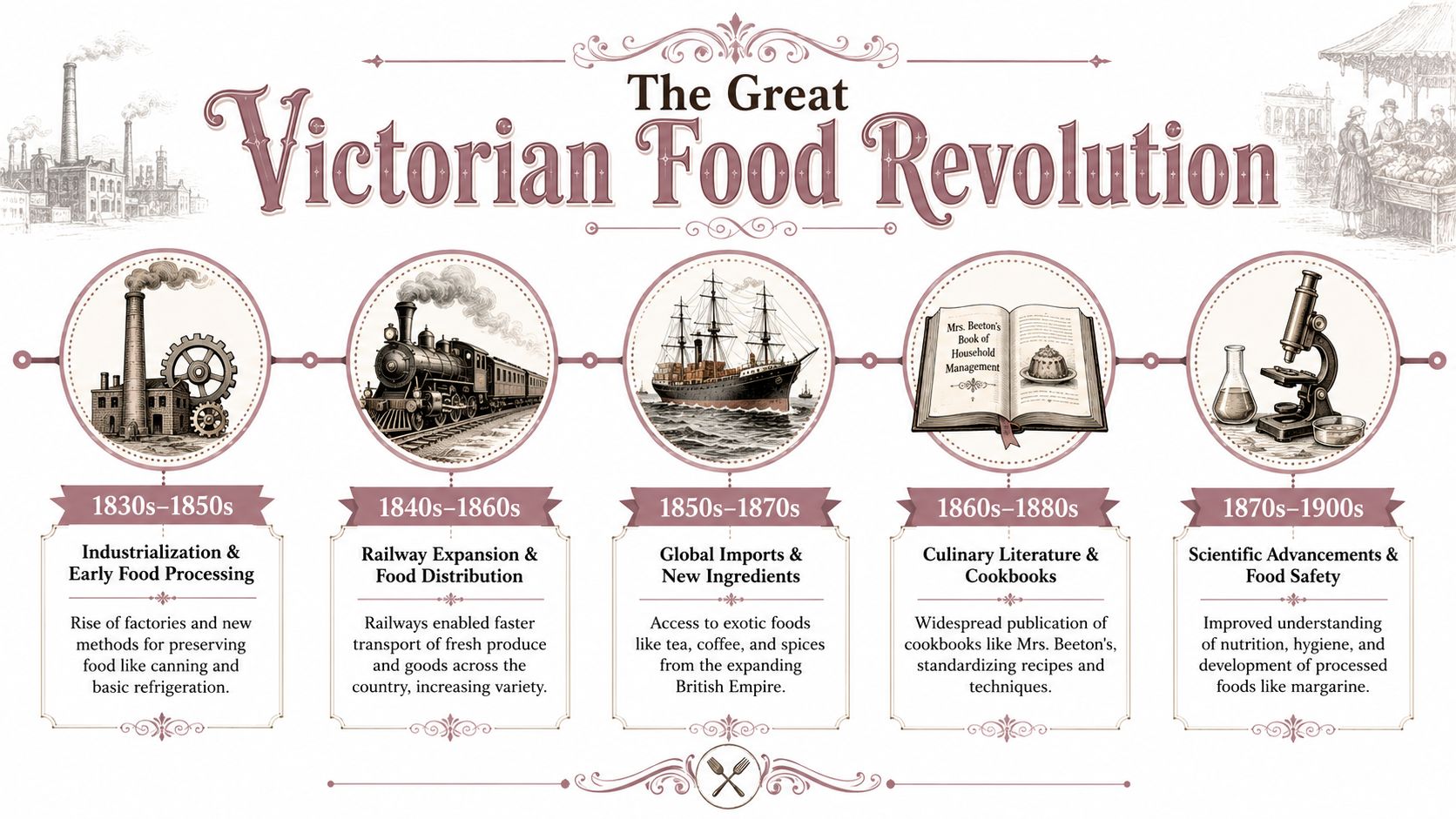
A bride planning a candlelit supper at Battle Abbey often arrives with the same fear: Victorian food will feel heavy before the first toast is made. Yet a menu built for an East Sussex autumn can tell a different story. Brown bread still warm from the oven, a clear soup with garden herbs, roast mutton with carrots and turnips, baked apples, poached pears, local greens. The century did not march to one fixed table. It changed course as transport, trade and preservation changed what people could buy and cook.
Railways changed the daily table
The railway mattered because it shortened the journey between field and plate. Flour, potatoes, root vegetables and beer could reach towns faster, and urban households gained better access to everyday staples. English Heritage's history of Victorian food and health also notes how canning, imported meat, and the era's weaker everyday beer reshaped Victorian diets over time.
That shift is useful for couples because it clears away one of the laziest myths about the period. Victorian era food was not only stodgy dining-room fare under silver covers. For many households, especially outside elite circles, it could be seasonal, practical, and surprisingly fresh. In East Sussex terms, that gives a venue room to serve dishes that feel both accurate and welcoming: watercress, cabbages, onions, carrots, barley, orchard fruit, fish, and plainly cooked meats with real character.
A wedding menu inspired by the 1840s should not look identical to one inspired by the 1890s.
Meat, preservation, and a broader menu
As the century advanced, cooks had more ways to store and transport food. Canned goods entered domestic kitchens. Refrigerated shipping increased the supply of imported meat. Middle-class tables, in particular, could offer a wider range of dishes with greater regularity, and even households of modest means felt the effects of a food system that was becoming larger and faster.
For wedding planning, that history opens several doors. An earlier Victorian supper suits local game, raised pies, broths, and roasts tied closely to season. A later-century menu can carry more abundance, with carved meats, bottled condiments, and a broader choice of ingredients that would have felt current rather than old-fashioned.
Both approaches can be truthful. The difference lies in the date, the social mood, and the kind of hospitality you want guests to feel.
Why this matters for a modern wedding
Historical accuracy helps with flavour as much as atmosphere. Couples do not need to choose between romance and food people enjoy eating. The Victorian period offers both, especially once you look beyond grand banquets and notice the produce that sustained ordinary households.
That is the most useful lesson of this food revolution. Better transport and better preservation expanded choice, but they did not erase seasonality. A strong modern Victorian menu at a historic venue can still begin with local soup or potted fish, follow with Sussex-reared meat or a vegetable pie, and end with fruit pudding or a baked custard. It feels rooted in the past because it respects the period's changing food culture, and it feels generous in the present because the ingredients are fresh, local, and beautifully served.
A Tale of Two Tables Victorian Food by Social Class
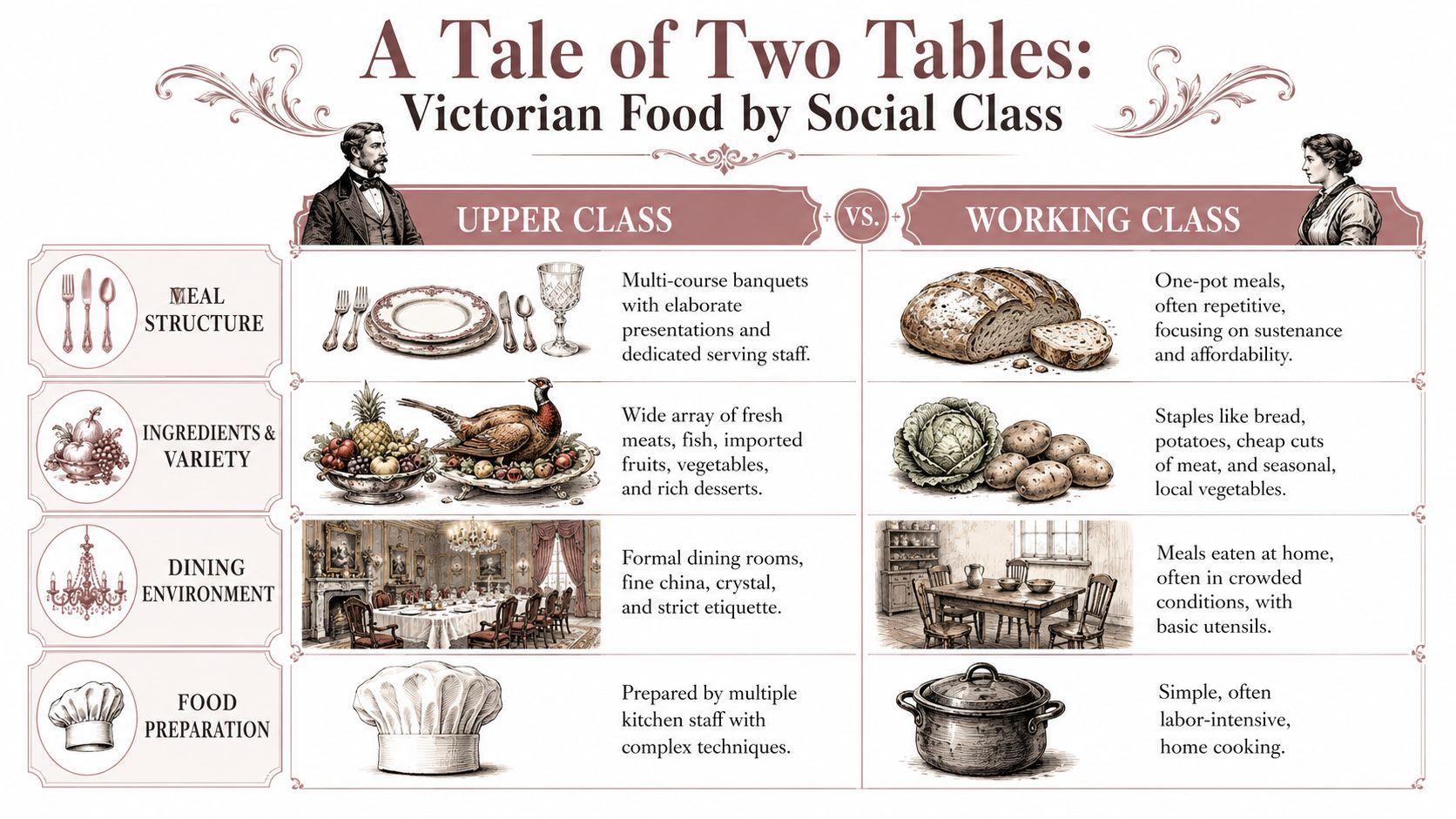
The Victorian dining room looked completely different depending on who sat down to eat. That contrast is where much of the era's fascination lies. One table glittered with courses, servants and display. The other relied on thrift, seasonality and repetition, yet could be far fresher and more nourishing than popular memory allows.
The grand table and the plain one
Upper- and middle-class dining often aimed to impress. That meant structured meals, richer sweets, imported ingredients where possible, and dishes that announced the household's means. Presentation mattered. Variety mattered. So did formality.
Working households approached food differently. Meals had to sustain labour, stretch ingredients and suit what could be bought locally and affordably. That usually meant bread, potatoes, seasonal vegetables, fish when available, porridges, soups and one-pot preparations. It's a humbler picture, but not a dreary one.
Here's a simple comparison couples can use when choosing their wedding style:
| Dining style | Wealthier households | Working households |
|---|---|---|
| Meal rhythm | Multiple courses and ceremony | Simple service and practical portions |
| Ingredients | Rich meats, sweets, imported extras | Whole grains, fish, roots, greens |
| Presentation | Formal and decorative | Plain but hearty |
| Wedding adaptation | Banquet, carved roasts, ornate desserts | Harvest supper, pies, broths, seasonal puddings |
The myth of universally unhealthy Victorian food
One of the most useful corrections for modern couples is this. The old assumption that all Victorian food was uniformly unhealthy doesn't hold up. The mid-Victorian working class had lower rates of chronic degenerative diseases than modern Britons, linked to high physical activity and diets rich in whole grains, oily fish and seasonal vegetables, according to the BBC's reporting on research discussed by the Royal Society of Medicine.
That nuance changes how a Victorian wedding menu can look. You don't have to choose between opulence and authenticity. A table inspired by ordinary households can be historically grounded and highly attractive to modern guests who want food that feels fresh rather than theatrical for its own sake.
Some of the most convincing Victorian wedding dishes are the least showy. Good bread. Smoked or potted fish. Cabbage and roots cooked properly. Fruit puddings. Seedcake with tea.
Which version suits a wedding best
That depends on the mood you want in the room.
- For black-tie elegance, draw from the ceremonial end of the spectrum. Choose served courses, polished silverware, clear distinctions between savoury and sweet, and a sense of procession.
- For a garden or country-house reception, borrow from the more domestic side. Build around produce, baked dishes, preserves, fruit and comfort.
- For couples who want guests to feel looked after rather than impressed, the working-table influence is often the secret. It gives you generosity without stiffness.
A historically aware menu doesn't flatten class differences into a single “Victorian” blur. It chooses its table. That decision affects everything from canapés to pudding forks, and it makes the whole event feel more intentional.
Signature Dishes and Forgotten Cooking Techniques
A winter wedding at a ruined abbey or a candlelit hall asks for food with presence. The sort that arrives under silver domes, releases a breath of herbs and wine into the room, and makes guests feel they have stepped into another century without sacrificing comfort. Victorian cooking did that beautifully. At its best, it was theatrical, seasonal, and far fresher than modern caricatures suggest.
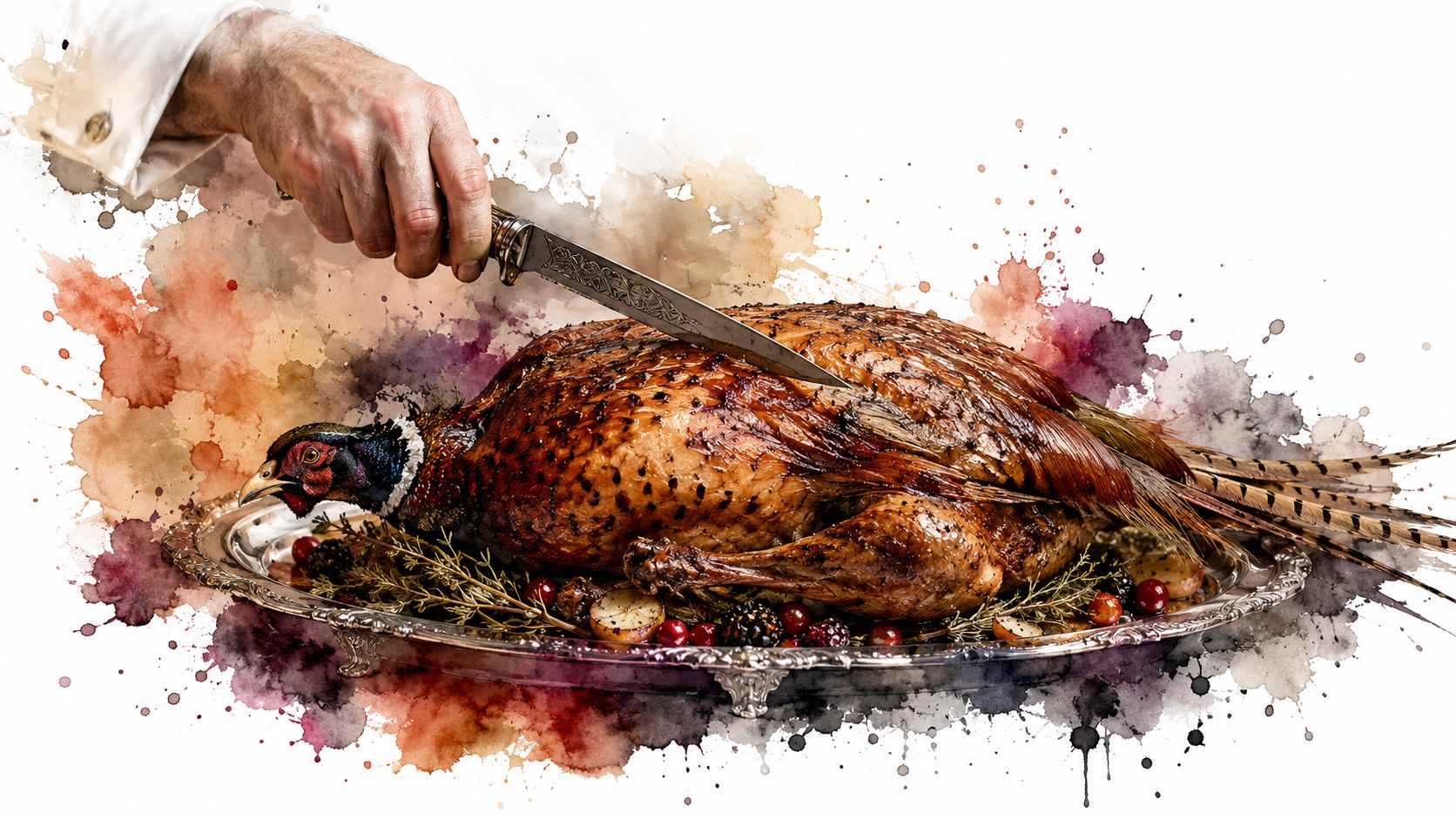
At a venue such as Battle Abbey, I would not begin with excess. I would begin with dishes that earned their place on the Victorian table because they suited the season and the service. A raised game pie made with local venison or rabbit. Potted mackerel or salmon on crisp toast, which feels entirely at home in East Sussex. A roast chicken, duck, or pheasant carried in whole, then carved with a little ceremony. A steamed fruit pudding that fills the room with spice when it is opened.
These dishes work because they are handsome and manageable. They give you historical character without forcing guests to decipher a museum piece.
Dishes worth reviving
The strongest Victorian-inspired menus usually build around a few recognisable centrepieces and a handful of quieter supporting dishes.
- Raised pies and savoury pastries suit drinks receptions, supper tables, and buffet displays. Their sculpted lids and rich fillings look period-correct at once.
- Roasted birds and joints bring ritual to the meal. A carving moment still has power, especially in a grand room with attentive service.
- Potted fish and meats are one of the era's smartest ideas for modern weddings. They are flavourful, practical, and surprisingly refined with pickles, brown bread, and herbs.
- Steamed puddings and fruit desserts give you warmth and tradition, especially for autumn and winter celebrations.
For couples testing recipes at home before the formal tasting, the old kitchen logic still applies. Heavy cookware gives braises, puddings, and pie fillings the steady heat they need. A practical reference such as this 2026 Dutch oven buying guide can help if you want to rehearse a few Victorian-style dishes in your own kitchen.
The methods behind the flavour
Victorian cooks built flavour patiently. The most useful methods for a wedding menu are not obscure tricks, but reliable habits.
- Roasting gave colour and drama to poultry, game, and larger joints.
- Potting preserved fish or meat under fat and created rich, spreadable starters for reception tables.
- Pickling cut through richness and made even simple plates feel lively.
- Steaming kept puddings and dense cakes moist, tender, and aromatic.
- Slow simmering produced broths, soups, and pie fillings with depth rather than heaviness.
A modern wedding chef can use those same methods with East Sussex produce and get a menu that feels rooted in the nineteenth century without becoming burdensome. Spring greens, beetroot, apples, onions, soft herbs, shoreline fish, orchard fruit. That is the side of Victorian food many people miss. Working and middling households relied far more on seasonality and thrift than on relentless richness, and that gives today's couples useful freedom.
A little visual inspiration can help when you're discussing service style with your caterer:
What not to recreate literally
Historical romance still needs clear judgment. Mid-Victorian Britain had serious problems with adulterated food and contaminated produce, and average life expectancy at birth was 40 for men in 1850, rising later in the century but still limited by disease and hidden toxins, as noted in this medical history overview of food, health and adulteration in Victorian Britain.
That means your goal is not strict replication. Your goal is accuracy in atmosphere, flavour, and rhythm, supported by modern sourcing and kitchen standards.
Modern rule: Recreate the look, the service, and the flavour profile. Keep current hygiene, refrigeration, and ingredient standards.
That matters most with preserved foods, raw dairy, decorative garnishes, and heavily handled display pieces. Let the history shape the menu's mood. Let your chef handle the safety.
The sweet course is a good example. Instead of relying on one towering cake, many couples get a richer Victorian effect from a spread of jellies, tartlets, seedcake, preserved fruits, and small iced fancies. For styling that kind of abundant finish, these dessert table ideas for weddings are a useful reference.
Crafting Your Victorian Wedding Menu From Canapés to Cake
The best Victorian wedding menus don't copy a cookbook page. They translate a historical mood into a serviceable, delicious sequence. Here are three approaches I'd happily take to a tasting, each rooted in a different side of the era.
High Society banquet
This version suits a candlelit hall, formal place settings and a slower, more ceremonial service.
Canapés
Small tartlets with mushroom duxelles, potted fish on crisp toasts, miniature savoury pastries
Starter
A velvety seasonal soup served with brown bread and cultured butter
Main
Carved roast beef or game bird with glazed roots, braised greens and a rich jus
Pudding
Steamed fruit pudding with a warm sauce, or a shaped jelly paired with poached fruit
Cake
A traditional-looking iced cake with restrained decoration rather than towering ornament
This menu works because it captures the grandeur people expect from Victorian era food while keeping the plate readable for modern guests. It's rich, but not exhausting.
Country estate luncheon
This one is softer and more garden-facing. It's ideal for spring and summer weddings, especially when drinks and canapés move outdoors before guests come in to dine.
A country estate menu might look like this:
- Reception bites such as asparagus tartlets, smoked fish pâté, herb biscuits and radish with butter
- First course of pressed ham or poached fish with leaves and sharp pickles
- Main dish built around roast chicken or a pie with seasonal vegetables
- Pudding course of berry tart, syllabub-inspired cream or baked custard with fruit
- Wedding cake flavoured with citrus or spice, displayed with smaller tea cakes
The mood here is elegant without stiffness. It feels domestic in the best sense. If couples want a service style that balances polish with comfort, this is often the strongest option.
Rustic harvest supper
The most overlooked Victorian wedding menu is often the most appealing. Working-table inspiration gives you food that feels generous, grounded and beautifully seasonal.
If your guests are the sort who praise the bread, ask for seconds of vegetables and actually finish their pudding, this is your menu.
A rustic harvest supper might include:
- A welcome table of farmhouse loaves, pickles, cheeses and potted fish.
- A starter of broth or vegetable soup.
- A main course of slow-cooked meat pie, baked onions, cabbage and roasted roots.
- A dessert of apple pudding, seedcake and preserve-filled tarts.
- Tea service with simple sweet bites.
This style debunks the notion that historical food must always lean aristocratic. It's also a lovely fit for venues that champion regional produce and menus designed for the season. If you're comparing formats for your own celebration, a look at this wedding breakfast menu example can help you think through how a period-inspired meal translates into a polished modern event.
How to choose between them
Rather than asking which menu is most “Victorian”, ask which one matches your day.
- Formal ceremony, black tie, evening reception usually favours the banquet.
- Garden drinks, daylight dining, spring flowers suit the country-house approach.
- Historic setting, autumn date, relaxed crowd often shines with the harvest supper.
The right answer is the one that lets history support the celebration rather than overpower it.
A Modern Victorian Feast at Your Historic Venue
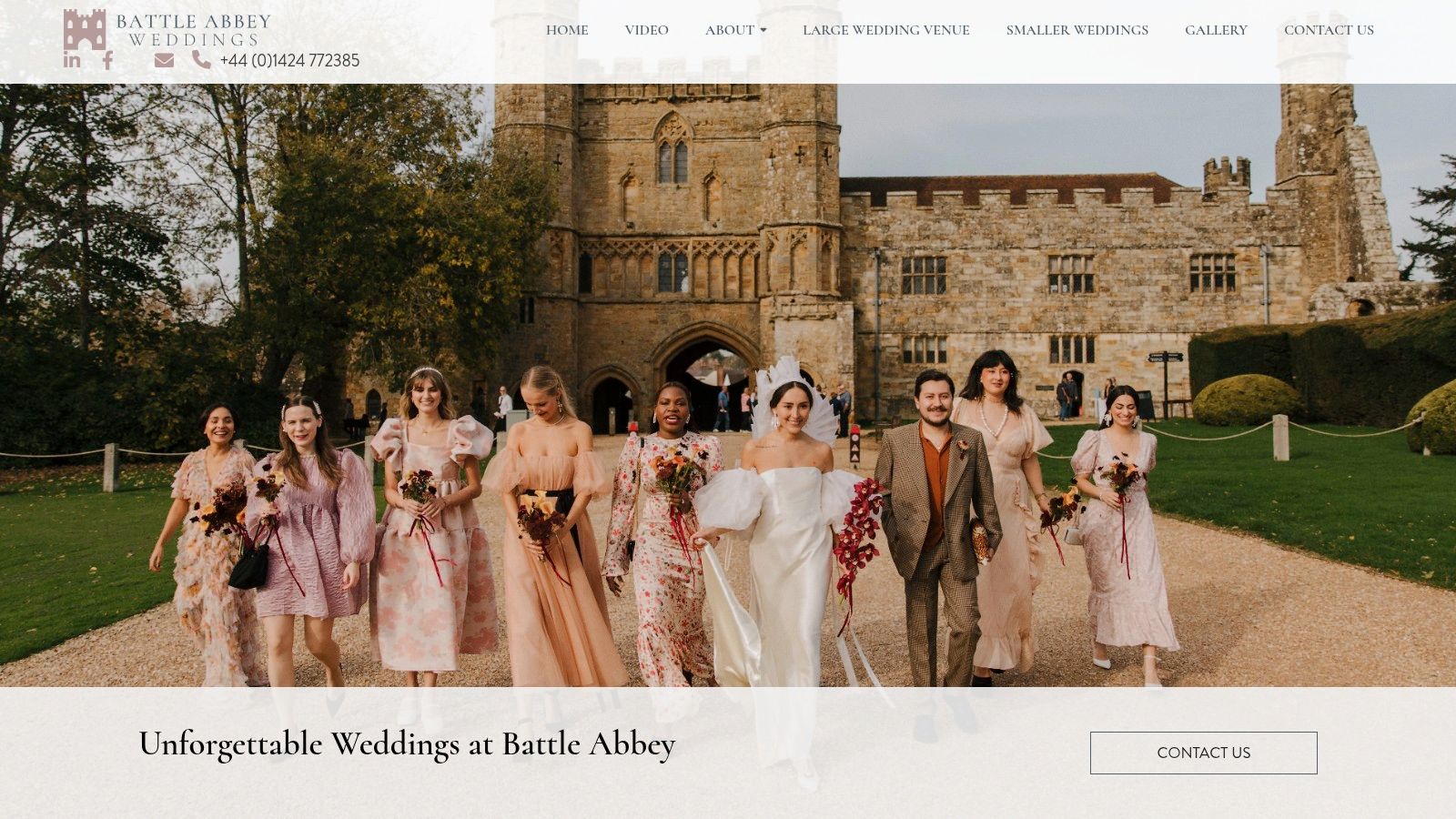
By the time guests step in from the East Sussex air, cheeks pink from the wind and hands warmed around a glass, the menu has already begun its work. A tray passes with potted trout on crisp toasts, a cook lifts the lid from a soup tureen fragrant with herbs, and later a pudding arrives with baked apples and cream. That is often the most convincing kind of Victorian feast. Rooted in the season, generous in spirit, and shaped for pleasure rather than display.
Historical menus succeed when a modern kitchen interprets them through local ingredients. In East Sussex, that means orchard fruit, brassicas, roots, soft herbs, well-reared meat, and fish that suits a simple hand. The result feels grounded in place, which matters far more than chasing museum-piece accuracy.
Start with ingredients, not gimmicks
One autumn couple might build their whole day around what the county is already offering. Savoury tartlets filled with onion and cheese for the reception. A first course of celeriac or parsnip soup. A main of carved beef or game pie with braised cabbage, roasted carrots and buttery potatoes. Then a pudding table with apple charlotte, steamed sponge and little seedcakes for those who never refuse one last bite.
That approach does something people often miss about Victorian food. It reveals how fresh and seasonal it could be, especially when you borrow from the better habits of everyday tables rather than the heaviest aristocratic excess. A good caterer can turn that history into a wedding meal that feels warm, polished and entirely alive.
Speak to your caterer in the right language
Couples usually get better results from specific prompts than from asking for "a Victorian menu" and hoping for the best.
| Effective prompts for your caterer | Vague requests to avoid |
|---|---|
| Seasonal Victorian-inspired dishes using East Sussex produce | A completely historically exact menu |
| Tableside carving, platters, or family-style service | Everything should feel old-fashioned |
| Fruit-led puddings and British classics with a period feel | Something Victorian for dessert |
| Textures, colours and courses that suit a historic house | We just want a theme |
A brief like that gives a chef room to cook well. It also keeps the food from slipping into parody.
Let the room shape the meal
Historic venues always influence appetite. Stone walls call for substance. Candlelight flatters silver, glass and a well-burnished pie crust. A long room can carry the theatre of carving, while a terrace or garden edge suits trays of savoury bites and chilled cups of syllabub before dinner.
Couples looking at Brodsworth Hall and Gardens wedding inspiration often notice the same lesson. Architecture gives you clues. Follow them, and the menu begins to feel as though it belongs to the house.
A convincing Victorian feast rests on proportion. One or two period touches in each part of the meal are usually enough. Perhaps a pickle or potted fish at the drinks reception, a carved joint or stately pie for the main course, then a proper pudding with fruit, cream and sponge. Guests remember that kind of dinner because it feels abundant without becoming fussy, historical without turning stiff.
The loveliest version of this style leaves the room glowing. Glasses catch the candlelight, the last slices of cake disappear, and the meal feels tied to the house, the season and the county outside the windows. That is what couples should ask for. Not a theatrical imitation of the past, but a dinner with memory in it.