You're probably at the stage where the beautiful parts of wedding planning are done, or nearly done. You've chosen the room, the flowers, the menu, the music for walking down the aisle. Then a different question lands with a thud. Who is going to make all of this happen on the day?
That question catches couples out because weddings don't run on good intentions. They run on timings, handovers, supplier arrivals, cue points, room resets, guest movement, and calm decisions made in the moment. The more personal the wedding feels, the more moving parts usually sit behind it.
At a historic venue, that becomes even more important. A ceremony in one space, drinks in another, dinner somewhere else, photos across the grounds, and guests flowing between old buildings and outdoor areas all need direction that feels invisible when it's done well. That's where wedding day coordination changes everything. It protects the atmosphere you've worked so hard to create.
Your Wedding Day Should Be About You Not a To-Do List
A common scene plays out in the final stretch before a wedding. One partner is answering a florist's message over breakfast. The other is checking whether the cake stand is arriving with the cake or with the stylist. A parent asks when they should leave for the venue. A bridesmaid wants to know who's pinning buttonholes. Nobody's done anything wrong. There are too many decisions still sitting with the couple.
That's the hidden pressure point. You can plan a lovely wedding and still find yourself managing it instead of living it.
In modern weddings, this isn't unusual. England and Wales recorded 246,897 marriages in 2021, after 194,124 in 2020, and the legal setting has become more flexible and more venue-based, which adds coordination demands for bespoke celebrations, especially in historic settings with multiple possible spaces for the day, as noted in this wedding coordinator complexity overview.
What stress looks like on the day
Stress rarely arrives as one dramatic crisis. It shows up as small interruptions.
- Before the ceremony: someone asks where the registrars should wait, who has the rings, and whether late guests can still be seated.
- During drinks: the photographer needs ten minutes with the couple, the caterer needs confirmation before dinner service, and an elderly relative needs help finding the loos.
- At the reception: speeches run long, the band needs access, and the cake knife has disappeared.
None of these jobs should belong to you. They also shouldn't automatically fall to your maid of honour, your mum, or the friend who is “good at organising things”.
Weddings feel effortless only when someone is working hard behind the scenes.
What couples usually want
Most couples don't want a bossy presence taking over their wedding. They want a calm professional who understands the plan, carries the responsibility, and solves problems in the background before they become part of the memory.
That's the promise of wedding day coordination. It gives you your wedding back. You stop being the project manager of your own celebration and return to the role you were meant to have. The couple at the centre of it.
What Wedding Day Coordination Truly Means
Wedding day coordination is often misunderstood as a bundle of errands. It's much more useful to think of it as a live operational role.
You create the vision. The coordinator protects the execution.
If your wedding were a film, you'd be the writers and lead cast. Your suppliers would be the crew. The coordinator would be the director calling cues, keeping everyone on the same page, and making sure the right thing happens at the right moment without dragging you out of the scene.
It's not “help on the day”
The phrase “day-of coordinator” sounds as though someone arrives with a clipboard that morning. In reality, proper coordination starts before the wedding itself because somebody has to absorb the full plan, understand every supplier's role, and turn separate bookings into one joined-up event.
A coordinator usually works as the person who can answer questions like these without asking you again:
- Who arrives first: florist, band, cake, or stylist?
- What happens if it rains: move chairs, change photo plan, adjust guest flow?
- Who cues the ceremony entrance: venue team, musician, celebrant, or coordinator?
- When does dinner start: after photos, after speeches, or after room turnover?
That's why the role matters. The wedding doesn't need more ideas by this point. It needs command, clarity, and timing.
The best coordination feels invisible
When coordination is strong, guests don't notice it as a separate service. They experience a wedding that feels smooth and unhurried.
A good coordinator is usually doing all of the following at once:
- watching the clock without making the day feel rushed
- fielding supplier questions before they reach the couple
- protecting photo opportunities and private moments
- spotting snags early, from missing place cards to delayed transport
- keeping everyone relaxed, because tone is contagious
Practical rule: if you are the person everyone expects to answer on the day, you don't yet have enough coordination in place.
The emotional value matters too
There's also a softer side to this role. Wedding day coordination creates space.
Space for a slow breath before the ceremony. Space for your parents to be present instead of troubleshooting. Space for your friends to toast you rather than move chairs or chase missing bouquets. Space for you to remember the day in full colour, not in fragments between logistics.
That's why I never treat coordination as an optional extra in principle. It's the structure that lets the romance breathe.
A Coordinator's Key Responsibilities Before and During the Day
The most important part of wedding day coordination often happens before the wedding morning. The risk point is the handover from planning to execution. If that handover is vague, the day feels vague too.
Professional guidance identifies the final 2 to 4 weeks as the highest-risk control point, when the coordinator should receive and distribute the final timeline, vendor contact sheet, final headcount, delivery windows, and rehearsal details. The same guidance also recommends a cue-driven run sheet with photographer pre-cues and pronunciation notes for the MC so the ceremony and reception flow cleanly. You can see that process described in this practical guide to final wedding coordination.
What happens before the wedding day
This stage is part detective work, part air-traffic control. The coordinator gathers the moving pieces and checks whether they fit together.
Typical pre-wedding responsibilities include:
- Reviewing your master plan: timings, floor plan, supplier list, transport, family details, and ceremony order.
- Taking over communication: suppliers stop coming to you with every small question and start using one central contact.
- Checking gaps: who places menus, who moves ceremony flowers, who collects gifts, who packs personal items at the end.
- Running the rehearsal: the entrance order, standing positions, exits, handoffs, and timing all become clear before the wedding day.
A strong rehearsal matters because ceremonies run on cues, not guesses.
What happens on the day itself
On the wedding day, the coordinator becomes the person who sees the whole board. Not just one supplier's task, but how each task affects the next one.
Here's what that often looks like in practice:
| Time of day | Coordinator focus |
|---|---|
| Morning | confirms arrivals, checks setup progress, handles early questions |
| Pre-ceremony | lines up processional, cues music, manages guest seating |
| Drinks reception | protects couple's photo time, tracks room reset, keeps service moving |
| Wedding breakfast | coordinates grand entrance, speeches, service timing |
| Evening | manages cake cutting, first dance, entertainment transitions, guest departures |
The details guests never see
Some of the most valuable work is almost invisible:
- Name checks: the MC knows how to pronounce names properly.
- Photo cues: the photographer gets warning before key entrances or reactions.
- Supplier pacing: catering, band, and venue operations aren't accidentally working against one another.
- Micro-emergencies: a stain, a missing buttonhole, a delayed taxi, a late place card amendment.
The smoother the wedding feels, the more likely it is that someone has quietly prevented ten small problems in a row.
That's why couples are often surprised by how much coordination includes. It isn't one heroic fix. It's a hundred small controls that keep the day elegant.
Day-Of Coordination vs Full Wedding Planning
Many couples know they need support, but they're not sure which kind. This is one of the biggest points of confusion in wedding planning.
The simplest distinction is this. Full wedding planning helps build the wedding from the beginning. Day-of coordination takes a wedding that has already been planned and makes sure it runs properly.
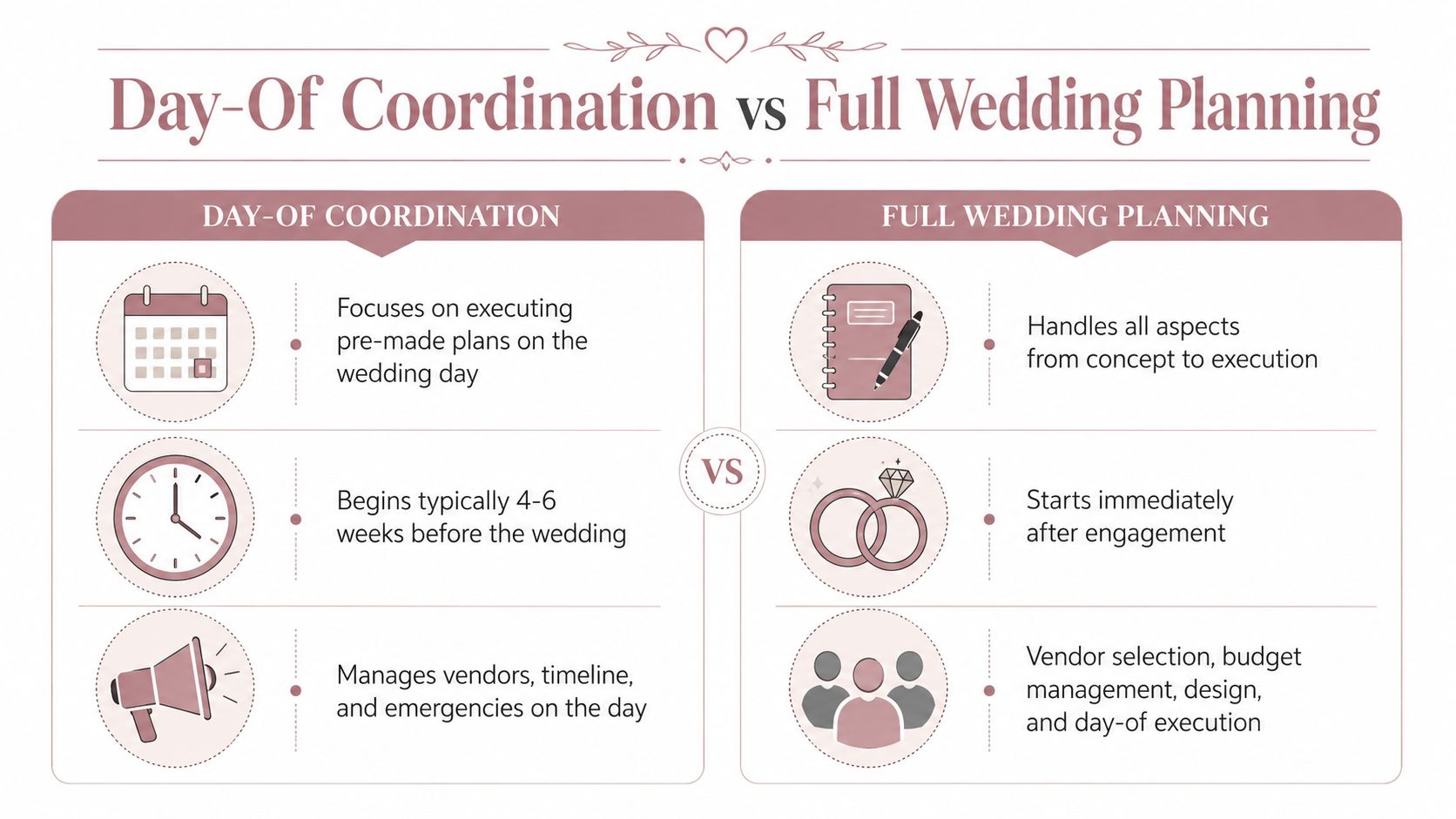
A useful way to think about it is architect versus site manager. One helps design and shape the whole project. The other ensures the finished plan is executed safely, accurately, and on time.
The clearest side-by-side view
| Service | Best for | Usually covers | Usually doesn't cover |
|---|---|---|---|
| Day-of coordination | Couples who've planned most things themselves | timeline management, supplier coordination, rehearsal support, setup oversight, problem-solving on the day | full budget building, long-term supplier sourcing, design development |
| Month-of support | Couples who want a stronger handover near the end | everything above plus final admin and supplier takeover in the last stretch | the full planning journey from engagement onward |
| Full wedding planning | Couples who want guidance from early stages | budget support, supplier recommendations, logistics, design direction, timeline creation, day-of management | depends on package, but generally it's the broadest service |
This distinction matters because service scope varies. Broad guidance for couples often highlights that coordinators handle timelines, supplier communication, rehearsal direction, floor-plan checks, gifts, and day-of emergencies, but that “day-of” can still mean different things from one provider to another. That's why the overview of what day-of coordination covers is so useful for setting expectations.
Where venue support fits in
Many generic articles fall short by treating “the coordinator” as though there is only one possible person in the role. At a venue-led wedding, there may be both an in-house planner or venue coordinator and an independent coordinator. They are not always interchangeable.
An in-house planner usually focuses on venue operations:
- room access
- tables and venue setup rules
- catering flow
- bar timing
- staff coordination
- venue-specific logistics
An independent coordinator often focuses on the wedding as a whole:
- personal décor details
- family movement
- outside suppliers
- rehearsal leadership
- couple-facing decisions
- collecting and protecting personal items
Those roles can overlap, but they are not identical. If you're comparing options, it helps to see how planning tools organise these workflows. If you're managing parts of the process yourself, this guide to choosing event planning software can help you think through timelines, contacts, and handover documents before you hire support.
For couples weighing budgets, this look at wedding planner costs can also help frame what level of service makes sense for your plans.
A short explainer can help if you prefer to see the distinction visually:
How to decide which one you need
Ask yourself these questions:
- Have you already booked most of your suppliers and built the day yourself?
- Do you want someone primarily for execution rather than design and planning?
- Is your venue already providing strong in-house operational support?
- Would you feel calmer if one person, other than you, became the main contact near the end?
If the answer is mostly yes, day-of or month-of coordination is often the right fit. If the whole process still feels unformed, full planning may be a better match.
Sample Wedding Timelines and Checklists
A wedding timeline shouldn't read like a military operation. It should feel natural. But underneath that gentle flow, someone still needs a plan detailed enough to support the ceremony, the meal, the photos, the music, and the handovers between each.
Scale matters. An intimate wedding and a larger celebration can both feel effortless, but they require different kinds of control.
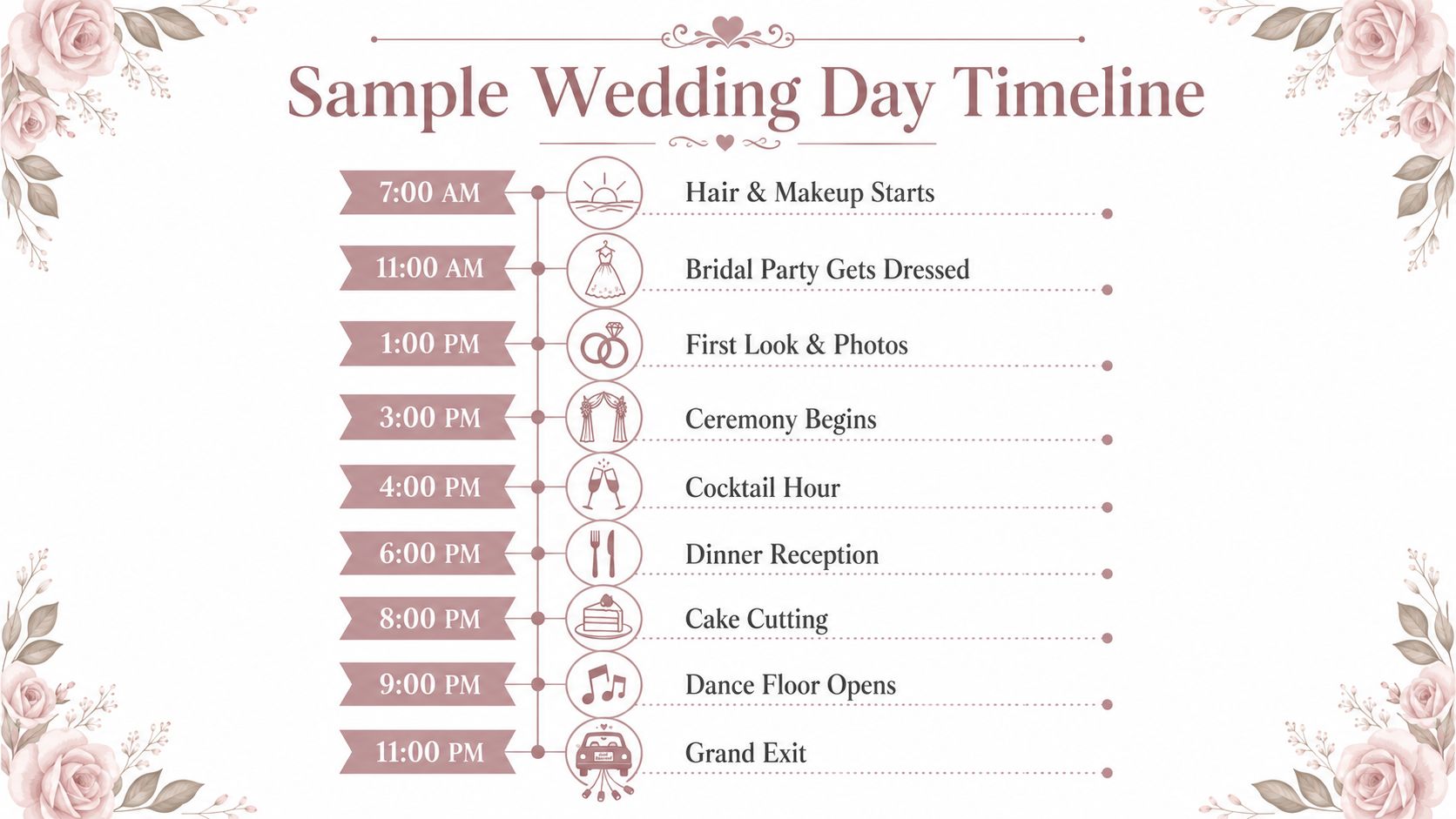
If you want a venue-specific planning starting point, this wedding day timeline template is a helpful reference for shaping the day.
Sample timeline for an intimate wedding
For a smaller celebration, the goal is usually ease. Fewer guests can mean more breathing room, but only if the day has structure.
A simple intimate timeline might look like this:
- Morning preparations: hair, makeup, getting dressed, detail photography
- Guest arrival window: gentle welcome, background music, ushers in place
- Ceremony: short, warm, and well-cued
- Drinks and canapés: couple slips away briefly for portraits
- Wedding breakfast: one room, one relaxed service flow
- Speeches and cake: tucked naturally into the meal
- Evening celebration: music, dancing, late bites, farewell
The checklist for a coordinator is often less about crowd control and more about atmosphere.
- Protect quiet moments: build in a short pause for the couple after the ceremony.
- Manage décor transitions: ensure cards, gifts, florals, and signage move where needed.
- Keep family informed: smaller weddings often mean closer involvement from relatives, which can create extra questions on the day.
- Avoid drift: intimate doesn't mean loose. Meals still need pacing and suppliers still need cues.
A smaller guest list doesn't remove logistics. It simply changes where the pressure sits.
Sample timeline for a larger wedding
A larger celebration needs stronger traffic management. More guests means more arrival complexity, more waiting risk, and more potential for one delay to ripple into the next stage.
A larger wedding timeline often includes:
| Phase | Coordination priority |
|---|---|
| Guest arrivals | signage, welcome points, seating support |
| Ceremony | processional timing, late guest handling, audio readiness |
| Drinks reception | guest distribution across spaces, photo management |
| Dinner transition | room turn or movement, table guidance, service readiness |
| Speeches and evening | keeping momentum while suppliers reset for dancing |
For larger weddings, the checklist becomes more operational:
- Multiple spaces: confirm who opens each space and when guests are invited to move.
- Bigger supplier team: caterer, bar, entertainment, florist, photographer, transport, and venue staff all need one clear sequence.
- Guest flow: avoid bottlenecks after the ceremony and before dinner.
- Clear authority: somebody must be able to say, kindly and confidently, “not yet”, “this way”, or “give us five minutes”.
A note on historic venues
At a historic venue, timelines also need to respect the setting. Old buildings have character, but they can involve stairs, separate entrances, outdoor walking routes, and different spaces serving different purposes across the day.
That's why a run sheet at this type of venue should be more than a list of times. It should show movement, responsibility, and cues. Who is where, when, and what they need in that moment. That level of planning is what turns a beautiful setting into a smooth guest experience.
Pricing Brackets and Questions to Ask a Coordinator
Couples often ask about coordination costs as though they're trying to price a single item. In practice, you're paying for oversight, timing control, communication, and problem prevention. That's why the fee can feel abstract until you understand what it protects.
A useful benchmark is this. Industry data suggests couples often reserve 10% to 15% of the total wedding budget for planning and event management, and the 2023 average UK wedding spending figure of £19,184 per wedding offers a clear frame for where coordination sits within the wider investment, as outlined in this wedding coordination cost guide.
How coordinators usually charge
You'll generally come across a few pricing approaches:
- Flat fee: common for day-of or month-of coordination. This is often the easiest to understand.
- Package structure: different levels of support, such as day-only, month-of, or fuller planning involvement.
- Overtime terms: worth checking carefully if your wedding may run later than planned.
The important thing isn't only the fee. It's what the service includes.
Questions worth asking before you book
A strong conversation with a coordinator should leave you clearer, not foggier. Ask questions that reveal how they work under pressure and how they define their scope.
- When do you step in? Ask whether they start close to the wedding or provide support earlier.
- Do you attend the rehearsal? This can make a major difference to ceremony confidence.
- Who handles supplier communication in the final stretch? You want one obvious point of contact.
- What happens if timings slip? Their answer will tell you a lot about their judgement.
- What do you need from us before the day? Good coordinators have a clear handover process.
- What isn't included? This is one of the most important questions of all.
- How do you work with venue staff? Especially relevant at venues with their own planner or operations team.
Price tells you what you'll spend. Scope tells you what you'll receive.
Looking beyond your local area for planning styles
Even if you're marrying in the UK, it can help to review how planners in other wedding destinations present their services, because it sharpens your eye for differences in style and scope. This round-up of top wedding planners in Cape Town is useful for seeing how clearly some professionals define planning support, design, and execution.
The right coordinator doesn't just fit your budget. They fit your wedding's shape, your venue, and the amount of responsibility you want to carry yourself.
How Battle Abbey Weddings Supports Your Day
Historic venues need coordination that respects both beauty and practicality. A setting with ceremony space, reception rooms, outdoor terraces, catering operations, guest movement, and photo locations works best when venue knowledge and wedding-wide oversight support each other rather than compete.
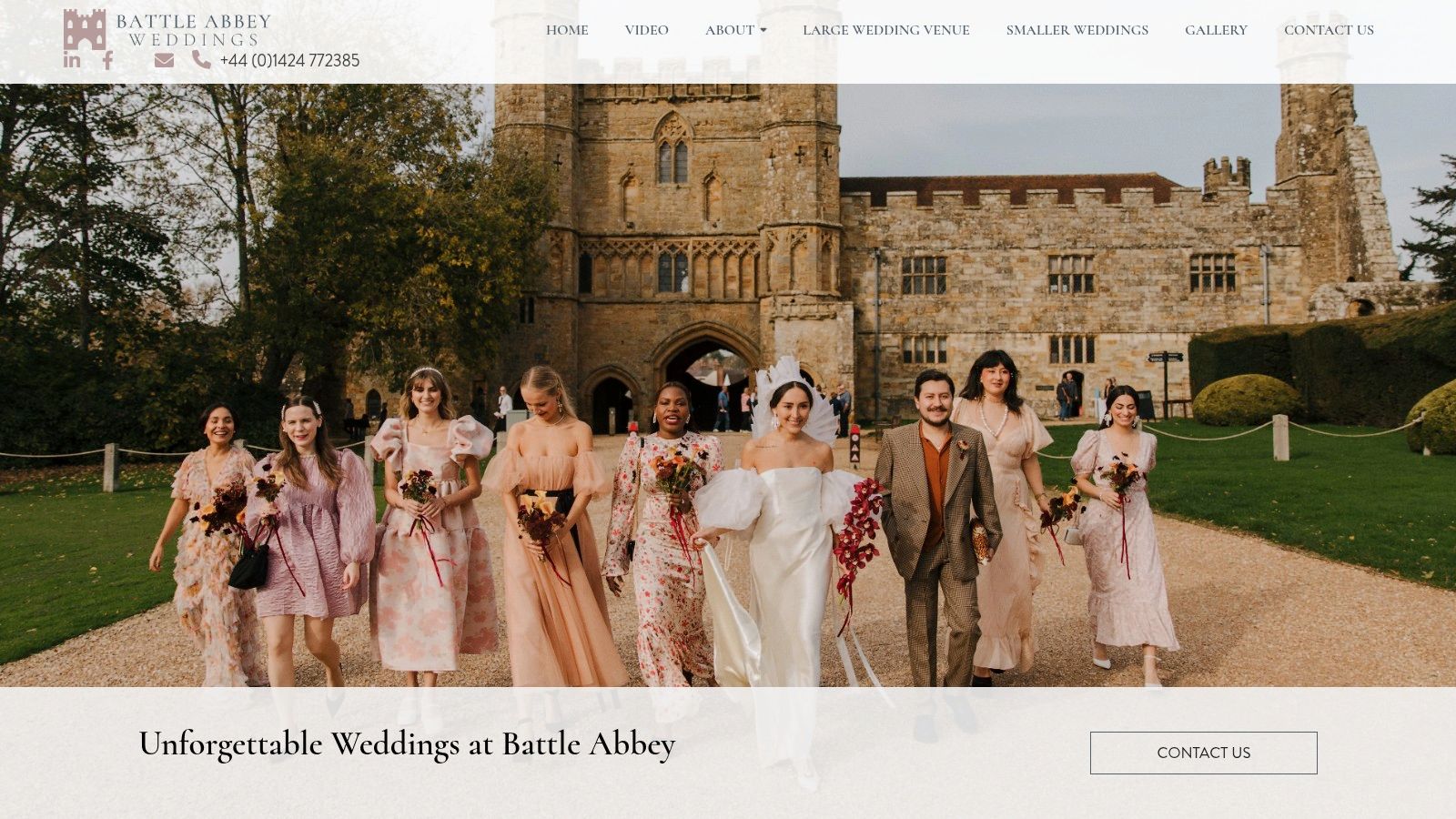
At Battle Abbey Weddings, that support starts with an experienced on-site planning presence that understands the venue's spaces, timings, catering flow, and setup realities. For some couples, that in-house support covers the practical reassurance they need. For others, especially those bringing many external suppliers or highly personalised details, an independent coordinator can complement the venue team by managing the wider wedding brief.
How the partnership works best
The strongest arrangement is usually very clear:
- Venue team: manages venue operations and site-specific logistics.
- Independent coordinator: manages the couple-facing plan across all suppliers and personal details.
- Shared timeline: one agreed running order, one contact structure, no crossed wires.
That balance is especially valuable at a historic venue, where access, setup timing, guest flow, and room changes benefit from people who already know the site well. It means your wedding can feel romantic and relaxed without becoming loose behind the scenes.
If you're planning a historic celebration and want a venue team that understands both atmosphere and logistics, explore Battle Abbey Weddings. It's a helpful place to start if you want a clearer picture of how your wedding day coordination, venue support, and overall flow can work together.