You may be staring at saved screenshots from bridal boutiques, one tab open to your venue, another open to gowns, and feeling an awkward gap between the two. You know the setting. Ancient stone. Grand halls. Soft lawn underfoot. A terrace with far-reaching views. What's harder is working out which dress will belong in that setting, and still feel good from the first step of the ceremony to the last dance.
That's where wedding dress shapes matter more than most brides first realise. Shape isn't just about whether a gown looks romantic on a hanger. It affects how you move through a historic venue, how your skirt behaves on old steps, how your train sits on uneven ground, and whether you still feel comfortable hours later when speeches begin and the evening relaxes.
For a place like Battle Abbey, that choice becomes especially meaningful. You're not dressing for a blank white room. You're dressing for a day that moves through spaces with character, scale, and texture. The right silhouette won't compete with that atmosphere. It will complete it.
Finding Your Gown for a Historic Wedding
A bride stands on the terrace and sees two versions of her day at once. There is the grand one, with the architecture, the history, the photographs against weathered stone. Then there is the private one, where she has to walk, turn, sit, hug people, laugh, and feel like herself. The best gown shape holds both.
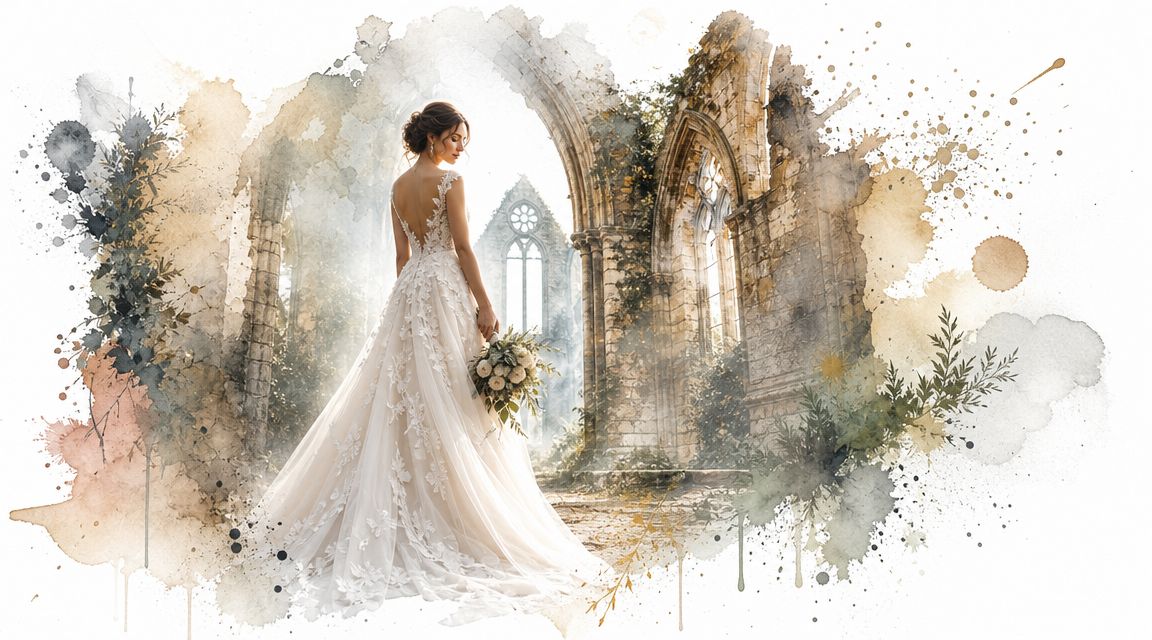
Historic venues ask something slightly different of a dress. A modern hotel ballroom can carry almost any silhouette without much resistance. A venue with ruins, terraces, lawns, older doorways, and a sequence of rooms asks for more thought. A dramatic gown may look exquisite in formal portraits, but if you're moving between spaces throughout the day, shape starts to matter in a practical way.
Why place changes the dress decision
When brides first shop, many focus on the front view in the mirror. That makes sense. But in a historic setting, you'll be seen in motion as much as at rest. Your dress will be photographed from the side as you walk across a terrace, from behind as you enter a hall, and from a distance against the scale of old stone walls.
That's why silhouette often matters before embellishment. The line of the gown sets the mood.
- A soft line gives an effortless, graceful feeling and often suits outdoor movement.
- A dramatic line creates presence in grand interiors and formal ceremony moments.
- A narrow line can feel modern and refined, especially against old architectural texture.
- A sculpted line makes a strong statement, but needs careful thought for comfort and stride.
Historic spaces reward dresses with character, but they also expose every practical weakness. If a gown is awkward to walk in, you'll feel it quickly.
Start with shape, not surface detail
Lace, sleeves, sparkle, buttons, and veils all matter. But they come later. If the shape is wrong for your comfort, proportions, or venue journey, no amount of beautiful detail will fix that.
The most useful first step is learning the language boutiques use. Once you understand the key wedding dress shapes, shopping becomes calmer. You stop saying, “I want something elegant but not too much,” and start saying, “I'd like to try an A-line and a sheath, then compare movement and waist placement.” That's when appointments become far more productive.
Understanding the Classic Wedding Dress Shapes
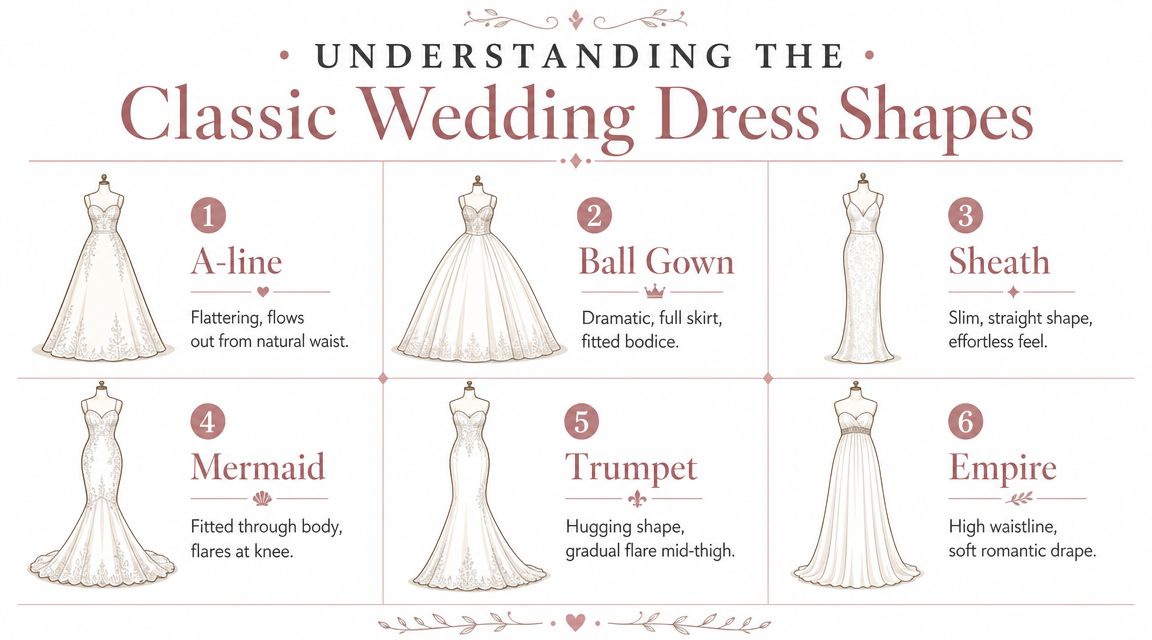
In the UK, bridal guidance is still anchored in classic silhouettes rather than trends alone. A leading bridal guide identifies A-line, ball gown, fit-and-flare, mermaid, and sheath as the main wedding dress shapes, and explains that the A-line is named for the letter A because it's fitted through the bodice and waist, then gradually widens to the hem. The same guide notes that a sheath falls straight from neck to hem, while mermaid or fishtail gowns are fitted through the body and flare at or below the knee. These aren't just style labels. They're the standard terms UK boutiques use when discussing fit, balance, and movement in appointments with brides (Hitched guide to wedding dress styles).
A-line and ball gown
A-line is often the easiest shape to picture once you know the name. It's neat through the bodice, defined at the waist, then gently opens out. It doesn't cling, and it doesn't overwhelm. On the body, it tends to feel balanced and forgiving.
Ball gown starts with a fitted bodice too, but the skirt becomes much fuller. This is the classic storybook silhouette. It brings drama, presence, and a formal sense of occasion. In a grand room, it can feel magnificent. In tighter transitional spaces, it asks a bit more of you.
A quick distinction helps:
| Shape | Visual effect | General feel |
|---|---|---|
| A-line | Soft widening from the waist | Romantic, easy to wear |
| Ball gown | Strong contrast between fitted bodice and full skirt | Regal, theatrical |
Sheath, fit-and-flare, and mermaid
Sheath follows a straighter line. It doesn't push volume outward in the same way, so it often feels clean, modern, and understated. Brides who love simplicity often gravitate here.
Fit-and-flare sits between ease and definition. It follows the body more closely than an A-line, then opens out lower down. It gives shape without the stronger drama of a mermaid.
Mermaid or fishtail is the most sculpted of these classic forms. It's fitted through the torso and hips, then flares at or below the knee. This gives a striking outline, but also changes how the gown moves. Walking stride, sitting, and turning all feel different in this shape.
Practical rule: If two dresses share the same fabric and neckline, the silhouette will still change the whole mood of the gown.
Trumpet, empire, and tea-length
Some shapes appear less often in core silhouette lists, but brides hear these terms all the time.
- Trumpet looks similar to mermaid at first glance, but the flare begins a little higher and usually feels less restrictive.
- Empire places the waistline higher, under the bust, then lets the skirt fall away. The result is softness and length rather than waist emphasis.
- Tea-length finishes above the ankle or around mid-calf. It feels playful, elegant, and particularly suited to relaxed or fashion-led celebrations.
If you're unsure where to begin, try on one gown from each of these broad families: softly structured, fully dramatic, straight and minimal, and body-skimming. Brides often discover that the shape they love in photos is not the one they love wearing.
Choosing a Silhouette to Flatter Your Figure
Most brides arrive at this question with a little anxiety. They want to know what “works” for their body, but they're worried about being boxed into rules. A better way to think about it is this: silhouette is a tool. It helps shift visual balance, draw attention to features you love, and support the way fabric falls on your frame.
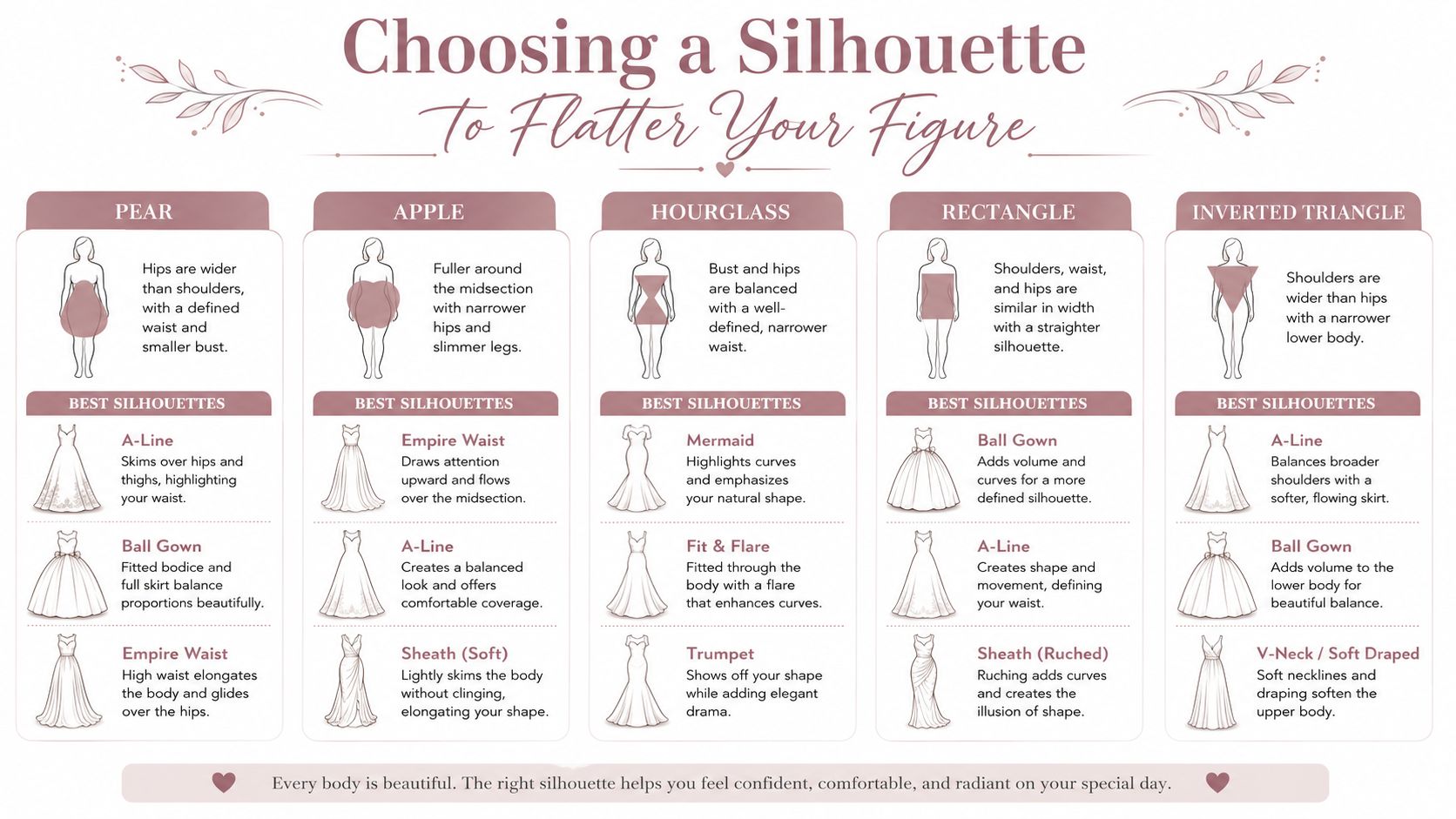
UK bridal guidance treats this as partly an engineering question. It notes that A-line gowns are widely recommended because the fitted bodice anchors at the waist while the skirt widens, redistributing visual volume away from the hips. The same guidance says A-line, ball gown, and empire-waist structures can help balance wider shoulders or hips, while sheath or column styles are better when the goal is to elongate the body and reduce perceived width. It also points out that seam placement, flare, and waist seam height all affect whether a gown skims, balances, or exaggerates natural proportions (Evelie guide to wedding dress styles by body shape).
What often suits different body balances
No body type chart can replace trying dresses on, but these principles help.
Pear-shaped balance
A-line often works beautifully because it defines the waist and lets the skirt fall away from the hips. Ball gowns can do something similar if you want more drama.Inverted triangle balance
If your shoulders are your broadest point, a skirt with some volume can create visual harmony. A-line and ball gown shapes often help by adding softness below the waist.Rectangle balance
Many brides with straighter proportions love dresses that create waist definition. A-line and fit-and-flare can help introduce curve visually.Hourglass balance
If you enjoy your natural curves, fit-and-flare and mermaid styles often echo them. If you want less cling and more softness, A-line still works well.Apple or fuller midsection balance
Empire waist and softer A-line styles can create length and flow without gripping the middle too tightly.
For more visual guidance before a boutique visit, tools that sort dresses for your unique shape can help you identify silhouettes you may want on your shortlist.
A short visual explanation can also make this easier to grasp:
Ask yourself better fitting questions
Instead of asking, “What dress shape should I wear?”, ask:
Where do I want definition
Waist, bust, shoulders, or hips?Where do I want softness
Through the skirt, over the tummy, around the thighs?How much structure feels good on my body
Firm corsetry, gentle support, or almost none?
The most flattering gown isn't the one that follows a rule. It's the one that gives you balance without making you feel edited out of yourself.
A good stylist will never use body-shape advice to narrow your choices too early. They'll use it to create better starting points, then let your comfort, personality, and venue do the rest.
Styling Your Gown for a Timeless Battle Abbey Wedding
Some venues call for sparkle. Some call for sleek modernism. A historic abbey setting calls for restraint in the right places and romance in the right places. That doesn't mean your gown has to be plain. It means every element should look intentional against old stone, long views, and rooms with their own atmosphere.
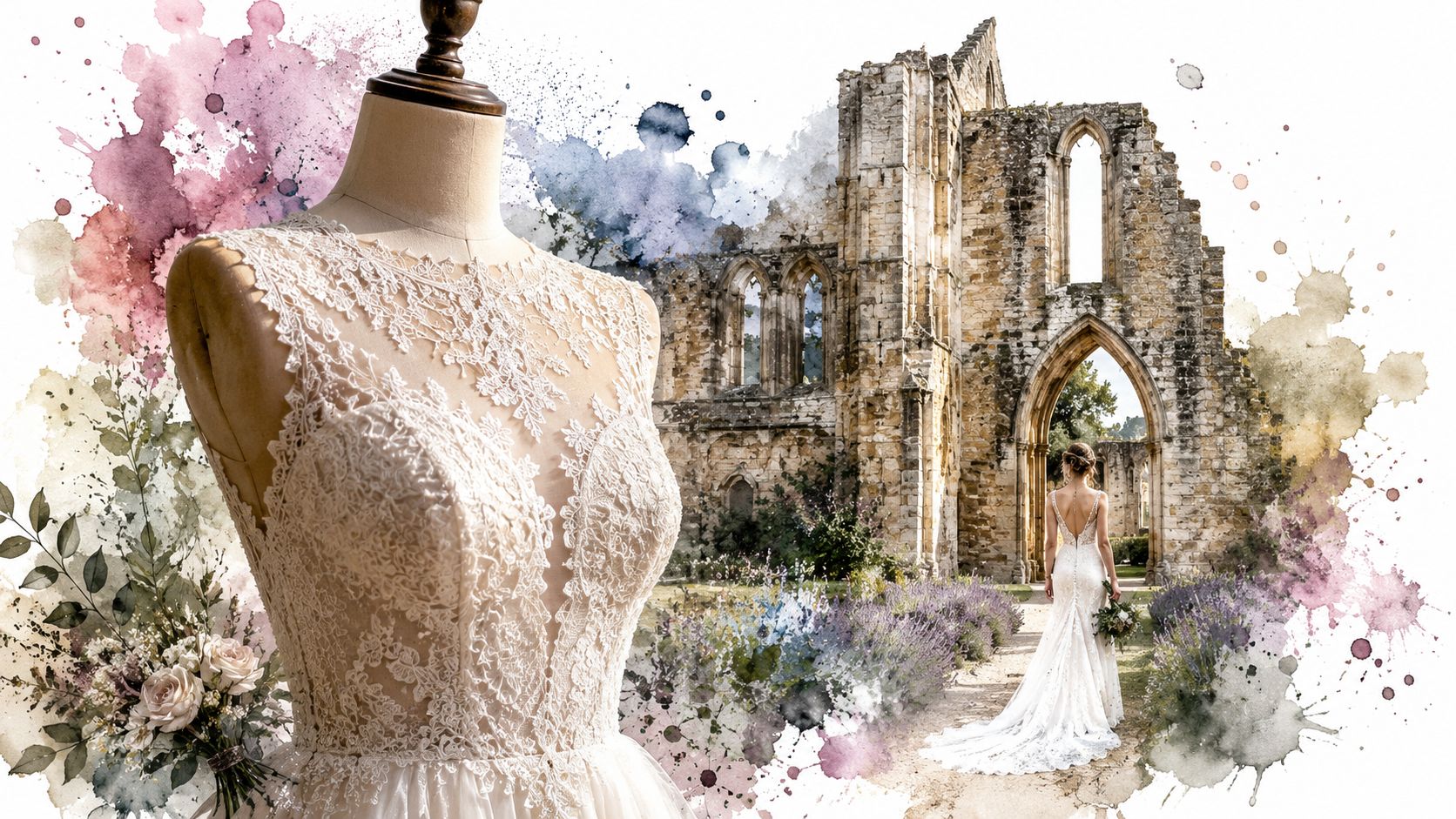
Match the silhouette to the spaces you'll use
A multi-space day asks more of a gown than a single-room celebration.
In a grand ceremony room, a ball gown can feel perfectly right. The architecture holds its volume, and formal entrances look wonderful. But if your day includes outdoor drinks, stairs, and movement between spaces, that same fullness may become tiring. In that case, a softer A-line often gives the same romance with fewer logistical demands.
A sheath can be especially striking in a historic setting because the simplicity lets the venue texture speak. Ancient stone, old wood, and soft natural light make minimal silhouettes feel expensive and deliberate. A fit-and-flare sits in the middle, offering shape for the ceremony and enough fluidity for later transitions.
Fabric and weather matter more than many brides expect
UK wedding advice consistently connects dress decisions to venue and season, and that matters even more for a venue with indoor and outdoor moments. Guidance also notes that warmer-than-average spring and summer periods, along with heat episodes reported by the Met Office, can make heavy ball gowns, thick linings, long sleeves, and high necklines uncomfortable. That's why breathable A-lines, lighter sheath or column shapes, detachable overskirts, and supportive but less restrictive bodices are such practical choices for English weddings in changeable conditions (K and B Bridals advice on choosing the right wedding dress).
For a historic venue, I'd think in pairings:
| Setting detail | Dress response that often works |
|---|---|
| Stone ruins and terraces | Lace with movement, or clean crepe for contrast |
| Formal hall interiors | Structured bodices, fuller skirts, richer satin or mikado |
| Mixed weather | Lighter lining, detachable layer, easier neckline |
| Day-to-evening shift | Bustle, overskirt, or less restrictive skirt shape |
Choose the dress for the whole day, not only for the first photograph.
Keep the styling in harmony
Once the silhouette is right, let the rest support it. If your gown is detailed, keep accessories focused. If your dress is clean and architectural, softer hair can stop the overall look feeling severe. Brides considering up styling with a romantic finish may enjoy these ideas for bridal hair updos for the perfect day.
The most timeless abbey bridal looks usually share one quality. They don't fight the setting. They seem to belong there.
From Ceremony to Celebration Practical Dress Considerations
A gown can look superb in the fitting room and still be the wrong choice for a long wedding day. That's not because the dress is badly designed. It's because wearing a dress for hours is different from admiring one for minutes.
A useful shift in thinking is to ask how the dress performs. Guidance on wedding dress shapes increasingly points out that the best silhouette is often a comfort and mobility decision as much as a body-shape decision. It also notes a growing preference for more relaxed, personalised wedding formats, which means brides often want dresses that work for outdoor photos, dancing, stairs, and a full ceremony-to-reception journey. That's especially relevant in historic UK venues, where uneven floors, long walks, and indoor-to-outdoor transitions can make a technically flattering gown feel impractical (Darianna Bridal on wedding dress shapes).
How different silhouettes behave through the day
A simple comparison helps more than vague advice.
- A-line usually gives the best balance of beauty and freedom. It tends to sit well for meals, moves comfortably, and doesn't demand a tiny walking stride.
- Sheath is easy to move through narrower spaces and often feels cool and light, but fabric choice matters because some versions show creasing more quickly.
- Fit-and-flare gives shape without as much restriction as a mermaid, though you'll still want to test stairs and sitting.
- Full skirts and ball gowns create impact, but they need more management. You may need help arranging the skirt, lifting layers, and bustling the train later.
- Mermaid can be stunning for the ceremony, but it's the shape most brides should test rigorously for sitting, dancing, and quick movement.
Questions to ask in the fitting room
Don't just stand still in front of the mirror. Try this:
- Sit fully down and stay there for a minute.
- Take a larger stride than you think you'll need.
- Turn quickly as if greeting guests behind you.
- Lift the skirt slightly and see how much fabric you're managing.
- Practise the bustle if there's a train.
If you have to keep adjusting the gown in the fitting room, you'll almost certainly keep adjusting it on the day.
Practical planning extends beyond the dress itself. Flowers, bouquet size, and tablescapes all affect how you move and use space throughout the celebration, so broader budget planning can help you make more confident styling choices. If you're weighing the whole day together, this guide on how much wedding flowers cost is useful context.
A romantic gown should support the day, not interrupt it.
Your Guide to Wedding Dress Shopping and Fittings
Once you know the shapes that interest you, shopping gets simpler. You don't need to walk into a boutique with a perfect answer. You just need enough language to compare options well.
Go in with a shortlist and an open mind
Start with two or three silhouettes, not ten. If you think you want an A-line, also try one fitted style and one clean, straighter style. Brides are often surprised by what changes once the dress is on their own body.
Bring a small, trusted group if you can. Too many opinions blur your instincts. The most helpful guests are the ones who understand your style and won't turn the appointment into a performance.
Prepare for fittings properly
Your fitting room choices affect what you see.
- Wear suitable underwear so bodices and waistlines sit closer to how they will on the day.
- Bring your shoes or shoe height once you have it, because hem length changes the feel of every silhouette.
- Move in each dress rather than standing still.
- Photograph the dress from several angles if the boutique allows it.
If you like understanding how structure changes fit, resources on dress forms can be surprisingly helpful. Brides who sew, alter family garments, or want to understand shaping often find this guide on how to improve sewing with adjustable forms useful background.
Use clear language with your stylist
The more specific you are, the better your appointment becomes. Try phrases like:
| Instead of saying | Try saying |
|---|---|
| “I want something flattering” | “I'd like more waist definition and softer volume over the hips” |
| “I don't want anything too much” | “I want clean lines with some movement, but not a very full skirt” |
| “I want to feel comfortable” | “I need to sit, walk outside, and dance without feeling restricted” |
A good stylist can work with that immediately.
Leave room for alterations
Very few bridal gowns feel perfect straight from the rail. That's normal. Alterations refine strap length, bust support, hem, bustle, and where the waist visually sits. Sometimes a dress you almost dismiss becomes your best option once those details are adjusted.
Don't panic if your favourite gown needs changes. Focus first on silhouette, fabric, and feeling. Those are harder to fake later than a hem or strap adjustment.
Creating Your Unforgettable Bridal Vision
The right wedding dress shape does more than flatter. It tells the truth about how you want to feel. Some brides want that sweeping, ceremonial entrance. Some want ease, lightness, and movement. Some want both, which is why details like detachable layers, bustles, and thoughtful tailoring can be so powerful.
At a historic venue, that decision becomes even more personal. You're stepping into rooms and grounds that already carry atmosphere. Your gown doesn't need to outshine that history. It needs to let you move through it beautifully, comfortably, and with confidence.
So trust what happens when you try a dress on and your shoulders drop. Trust the silhouette that makes you stand taller without making you feel stiff. Trust the gown that still feels right when you imagine the whole day, not just the aisle.
If you're adding soft, romantic finishing touches to suit an outdoor or heritage setting, floral accessories can bring the look together beautifully. This guide on how to make a flower crown for your wedding is a lovely place to gather ideas.
The best bridal style advice gives you knowledge, then hands the decision back to you. Once you understand wedding dress shapes, you're free to choose with clarity. Not by rule. By feeling, function, and the story you want your day to tell.
If you're dreaming of a wedding that feels storied, romantic, and unmistakably English, Battle Abbey Weddings offers a remarkable setting to bring that vision to life. Explore the venue, picture how your gown will move through its historic spaces, and start shaping a day that feels every bit as unforgettable as the setting itself.