Planning a wedding in a venue as steeped in history as a historic country estate demands a table plan that honours its grandeur while reflecting your personal love story. The arrangement of your tables is more than just logistics; it is the architecture of your celebration, shaping the flow of conversation, the atmosphere of the room, and the memories your guests will cherish. A well-considered layout ensures every guest feels included and every detail contributes to the overall narrative of your day.
This guide explores 10 distinctive wedding table planner ideas, each tailored to complement the characterful interiors and sweeping landscapes of a historic setting. We will move beyond generic advice to offer actionable strategies for everything from formal banquets under ancient arches to romantic, candlelit gatherings overlooking dramatic English Heritage backdrops. As you plan every detail to craft your fairytale wedding, consider how thoughtful personalized wedding gifts for memorable moments can further enhance the celebration.
Whether you’re hosting an intimate party of 60 or a grand affair for 250, these concepts will help you design a reception that feels both timeless and uniquely yours. Inside, you will discover practical tips for diverse guest counts, themed tabletop styling, and logistical considerations to bring your vision to life. From parliamentary-style long tables to eclectic mixed layouts and garden-inspired progressions, we will provide the inspiration you need to orchestrate a truly unforgettable dining experience.
1. Formal Banquet & Parliamentary Arrangements – Refectory Long Tables and Hollow Square
For a truly regal and dramatic statement in a historic venue, traditional banquet-style seating is unparalleled. This approach utilises two classic formations: long refectory tables and the hollow square. Refectory tables, running in parallel lines down the length of a grand hall, create a powerful sense of unity and visual grandeur, reminiscent of historic state dinners and medieval feasts. The hollow square, where tables are arranged to form an open rectangle with guests facing inwards, fosters an intimate yet formal atmosphere, perfect for speeches and entertainment.
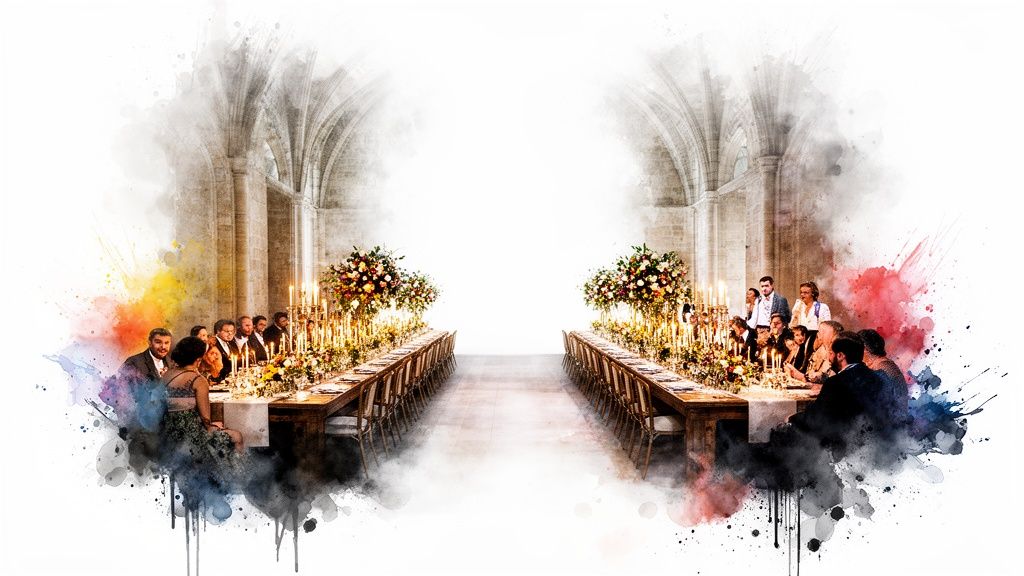
These layouts are ideal for venues with long, impressive spaces, such as the Abbot’s Hall at Battle Abbey. They honour the architectural integrity of period interiors and are exceptionally effective for guest counts of 75 or more, where managing logistics and creating a cohesive feel is paramount. Combining these layouts within your wedding table planner ideas can transform a large celebration into an organised, impactful, and unforgettable dining experience.
How to Implement This Layout
Successfully executing these arrangements requires careful planning and attention to detail. The goal is to enhance the room’s natural drama while ensuring guest comfort and seamless service.
- Refectory Tables: For a striking visual, run dramatic 18-inch floral runners down the entire length of the tables. Alternate high and low candle arrangements to add depth and a warm, flickering glow. The top table can be positioned at the head of the room, overlooking the parallel rows.
- Hollow Square: Use this formation to create a focal point. Position the open centre towards a key architectural feature, like a grand fireplace or historic windows with views of ruins. Define the corners of the square with tall, statement candelabras or floral installations to frame the space.
- Seating Logistics: For larger parties, clear and elegant seat numbering is essential. Place the wedding couple and key speakers along one of the longer sides to ensure they are visible to all guests, promoting an inclusive feel during toasts and speeches.
Key Insight: Ensure your catering team has a clear service plan. The linear nature of these layouts requires coordinated paths for staff to deliver courses efficiently without disrupting the guest experience. Ample lighting over the central void of a hollow square is also crucial for performances or a dance floor.
2. Circular Table Clusters – Intimate Roundtable Arrangement
For a more social and flexible atmosphere, circular table clusters provide an elegant solution that encourages conversation and intimacy. This classic layout uses multiple round tables, typically seating 8-10 guests each, arranged throughout the reception space to create distinct social hubs. It strikes a beautiful balance between intimacy and inclusivity, fostering smaller conversation circles while allowing guests to see and interact with others across the room, which is a key element of effective wedding table planner ideas.
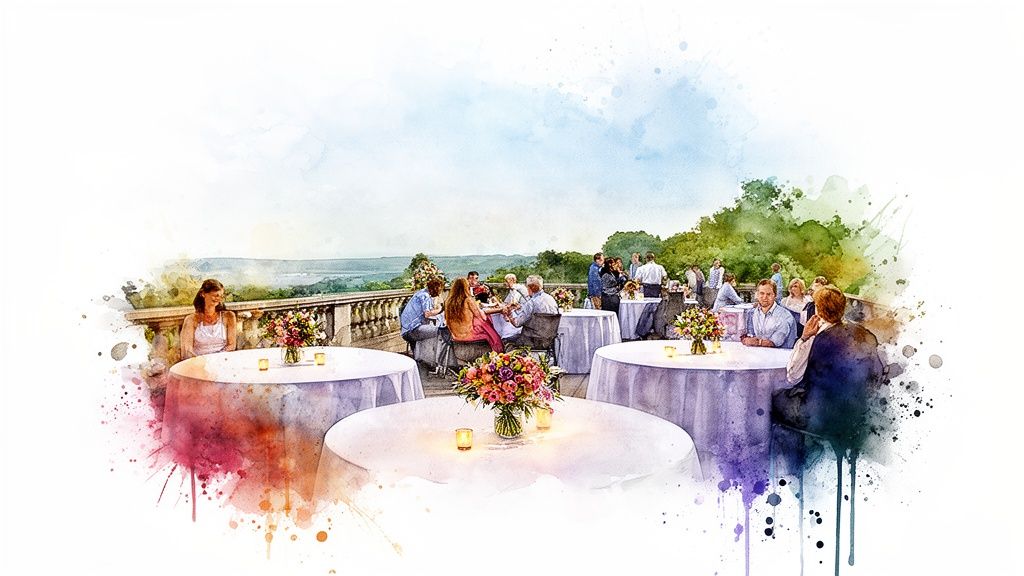
This arrangement is exceptionally versatile, making it perfect for both grand indoor spaces and scenic outdoor settings, like the terraces overlooking the historic battlegrounds at Battle Abbey. It allows for creative use of the venue’s footprint, easily accommodating guest counts from intimate gatherings to larger celebrations of 150 or more. The soft, organic flow created by round tables can soften the formality of a historic venue, making it feel warm and welcoming.
How to Implement This Layout
Successfully executing a circular cluster arrangement is about creating visual harmony and optimising the guest experience. The layout should feel intentional, not random, guiding the eye and facilitating easy movement.
- Create Visual Interest: Avoid a rigid grid. Instead, stagger the table positions to create a more dynamic and organic flow. Consider alternating the height or style of your centrepieces on every other table to add depth and prevent visual monotony.
- Maximise Venue Views: Position the most important tables, such as those for close family, to take advantage of the best views, whether it’s the historic ruins or the Sussex landscape. This thoughtful placement shows consideration and enhances the overall experience.
- Themed Table Naming: Instead of simple numbers, infuse your theme into the tables. For a venue like Battle Abbey, name each table after a significant date, a historic room within the Abbey, or notable figures from local history for a personal and memorable touch.
- Centrepiece Strategy: Use the circular shape to your advantage with a stunning central floral arrangement. Incorporate locally foraged East Sussex florals combined with abundant candlelight to create a romantic, inviting focal point at each table.
Key Insight: This layout is ideal for facilitating social interaction. Group guests with shared interests or connections at the same table to spark natural conversation. Ensure there are clear, wide pathways between tables for guests and catering staff to move around freely, especially if a dance floor is centrally located.
3. The Sweetheart Table – Elevated Couple’s Table
For a modern, intimate, and photographically stunning focal point, the Sweetheart Table is an increasingly popular choice. This arrangement features a small, exquisitely styled table set exclusively for the newly-married couple. Positioned prominently, often on a slight elevation, it places the couple at the heart of the celebration, ensuring they have moments of quiet connection amidst the festivities while remaining the visual centrepiece of the room. All guests have a clear, unobstructed view for speeches and toasts, creating a beautifully inclusive atmosphere.
This layout is particularly effective in venues with a distinct architectural feature, like the grand fireplace or historic archways at Battle Abbey. It transforms the couple’s seating into a deliberate design statement, perfect for high-fashion or editorial-style weddings where every detail is curated. This is one of the most romantic and visually impactful wedding table planner ideas for couples who want to feel both connected to their guests and celebrated in their own space.
How to Implement This Layout
Executing a Sweetheart Table successfully is about creating a captivating vignette that complements the grandeur of the venue while feeling personal and romantic.
- Strategic Positioning: Place the table in front of a dramatic backdrop, such as Battle Abbey’s historic ruins viewed through a large window, or a magnificent stone fireplace. This frames the couple and creates an instant photo opportunity.
- Framing and Florals: Use a statement floral installation, like a deconstructed arch or a cascading garland, to frame the table. Sourcing seasonal flowers from local East Sussex suppliers adds a touch of regional charm and sustainability.
- Subtle Elevation & Lighting: A slight platform of 8-12 inches is often more elegant than a full stage. Enhance this elevation with carefully placed uplighting to create a warm, romantic glow as dusk falls, drawing all eyes to the couple.
- Guest Interaction: While the table provides intimacy, ensure there is a clear passage for guests to approach the couple for congratulations and photos. This maintains a connection and prevents the couple from feeling isolated.
Key Insight: The Sweetheart Table is not just seating; it’s a styled centrepiece. Coordinate your tabletop decor, including linens, charger plates, and glassware, with your overall theme to make it a true showstopper. Ensure the chairs are as beautiful as the table itself, perhaps using unique “Mr & Mrs” designs or thrones.
4. The Outdoor Picnic-Style Gathering – Casual Lawn Tables
For a daytime celebration or a relaxed summer evening reception, an outdoor picnic-style gathering offers a charming and sophisticated alternative to formal dining. This approach embraces the natural beauty of the venue’s heritage landscape, using lawns or terraces for informal table arrangements that evoke an elegant garden party. Featuring mix-and-match seating, from rustic wooden benches to scattered chairs, this layout encourages guests to mingle freely in a relaxed, celebratory atmosphere.
This style is perfectly suited for venues with stunning outdoor spaces, like the manicured lawns overlooking the historic ruins at Battle Abbey. It creates a wonderfully sociable and less structured event, ideal for farm-to-table menus or gourmet picnic baskets. By incorporating this layout into your wedding table planner ideas, you can craft an effortlessly stylish and memorable experience that feels both personal and deeply connected to the scenic surroundings.
How to Implement This Layout
Successfully executing a casual outdoor setup combines thoughtful logistics with whimsical, nature-inspired décor. The aim is to create a comfortable and visually captivating environment that feels both organised and spontaneous.
- Table and Seating: Use a combination of long, rustic-style tables and smaller, separate vignettes to encourage guest flow. Position key tables to frame the best views of the landscape. Anchor any lightweight tables and décor securely in case of wind.
- Décor and Styling: Run long, flowing runners of seasonal garden flowers down the centre of communal tables. For evening celebrations, install overhead string or market lights to create a magical, warm glow (venue permits until midnight). Provide stylish shade solutions like large parasols or a small marquee for guest comfort during the day.
- Logistics and Service: Position food and beverage stations at the perimeter of the seating area to minimise disruption and prevent queues from forming in the main space. Use sturdy outdoor-appropriate linens and tableware that can withstand a gentle breeze.
Key Insight: Guest comfort is paramount for outdoor events. Ensure clear, safe pathways to and from the indoor facilities. Consider offering baskets with blankets or pashminas for guests as the evening cools, adding a thoughtful and practical touch to the celebration.
5. Family-Style Communal Dining – Shared Service Tables
For couples wanting to cultivate a warm, convivial, and interactive atmosphere, family-style communal dining is a superb choice. This layout moves away from individual plated meals, instead featuring long tables where guests share generous platters of food, much like a traditional Mediterranean or Italian family feast. This approach naturally encourages conversation and connection as guests pass dishes, creating a vibrant and generous celebratory feel that is both rustic and sophisticated.
This style is perfectly suited to venues that champion a farm-to-table ethos, such as a country house wedding at Battle Abbey where locally sourced produce can be the star. It breaks down the formality of traditional seating, making it an excellent component of your wedding table planner ideas for creating a relaxed yet memorable dining experience. It works beautifully for guest counts of all sizes, fostering intimacy in smaller gatherings and a sense of shared community in larger ones.
How to Implement This Layout
Executing a seamless family-style service requires a balance between a relaxed feel and precise logistical planning. The focus is on abundance, flow, and guest interaction without sacrificing elegance or creating clutter.
- Table Scape & Centrepieces: Keep floral arrangements and decor low and linear. Slender runners or clusters of bud vases leave ample room for serving platters. Use rustic wooden boards, slate platters, and simple ceramic bowls to complement the farm-to-table aesthetic.
- Seating Logistics: Intentionally mix friendship groups and families at each table. This encourages new acquaintances to bond over the shared experience of passing a bread basket or carving a main dish. Use clear, simple place cards to guide guests to their seats.
- Menu & Service Flow: Design a menu with dishes that are easy to share. Consider a signature centrepiece dish, like a whole-roasted local lamb or a stunning seafood paella, to create a ‘wow’ moment. Stagger the delivery of platters to the table so it never feels overwhelmed with food. Ensure servers are trained to proactively replenish dishes and clear empty ones.
Key Insight: Brief your catering team to place one of each platter at both ends of the table and in the middle for larger tables. This ensures all guests have easy access without having to pass dishes down a long line, keeping the experience smooth and enjoyable for everyone.
6. Asymmetrical Mixed Layout – Eclectic Seating Zones
For the modern couple looking to break from tradition and create a dynamic, fluid reception experience, an asymmetrical mixed layout is the perfect solution. This contemporary approach involves combining different table shapes and sizes, such as round dining tables, long communal trestles, and high-top cocktail tables, arranged asymmetrically to form distinct ‘zones’. This encourages guests to move, mingle, and experience the celebration in varied ways, from a formal seated dinner to a relaxed lounge conversation.
This style is exceptionally well-suited to venues with multiple interconnected spaces or large, open-plan areas that can be architecturally divided. By creating different environments within one event, you cater to diverse guest personalities and energy levels, offering both vibrant social hubs and quieter, more intimate nooks. Incorporating this into your wedding table planner ideas allows you to craft a bespoke journey for your guests, making the reception feel less like a static dinner and more like an exclusive, multi-faceted party.
How to Implement This Layout
Successfully executing a mixed layout is all about strategic zoning and cohesive design. The goal is to create a seamless flow between different areas while giving each zone a unique purpose and atmosphere.
- Define Your Zones: Map your venue’s layout to assign functions to specific areas. Place formal dining tables (rounds or squares) in the main hall, position high-top cocktail tables near the bar or on a terrace for socialising, and create a soft-seating lounge area away from the music for quiet conversation.
- Create Cohesion: Unify the eclectic setup with a consistent colour palette, recurring floral elements, or uniform stationery across all zones. For example, use the same style of place cards and menus on every table, regardless of its shape or size, to tie the look together.
- Guide Your Guests: Use clear signage and thoughtful lighting to guide guests between zones. Lower, warmer lighting can define a relaxed lounge, while brighter, more focused light can highlight the main dining area. Ensure pathways are wide and unobstructed to prevent bottlenecks.
Key Insight: A mixed layout requires a flexible catering plan. Consider different service styles for each zone, such as formal plated service in the dining area, canapés circulated in the lounge, and a dedicated cocktail station near the high-tops to enhance the guest experience in each distinct space.
7. The Heritage-Inspired Tiered Reception – Multi-Level Seating
For venues blessed with natural elevation changes or unique architectural features like terraces and mezzanines, a multi-level seating arrangement offers a breathtakingly dynamic and sophisticated experience. This approach stages different guest groups at varying heights, creating visual depth and distinct zones within a single space. It leverages the venue’s inherent character, such as stepped terraces overlooking historic ruins or raised platforms in a grand hall, to craft an unforgettable dining landscape.
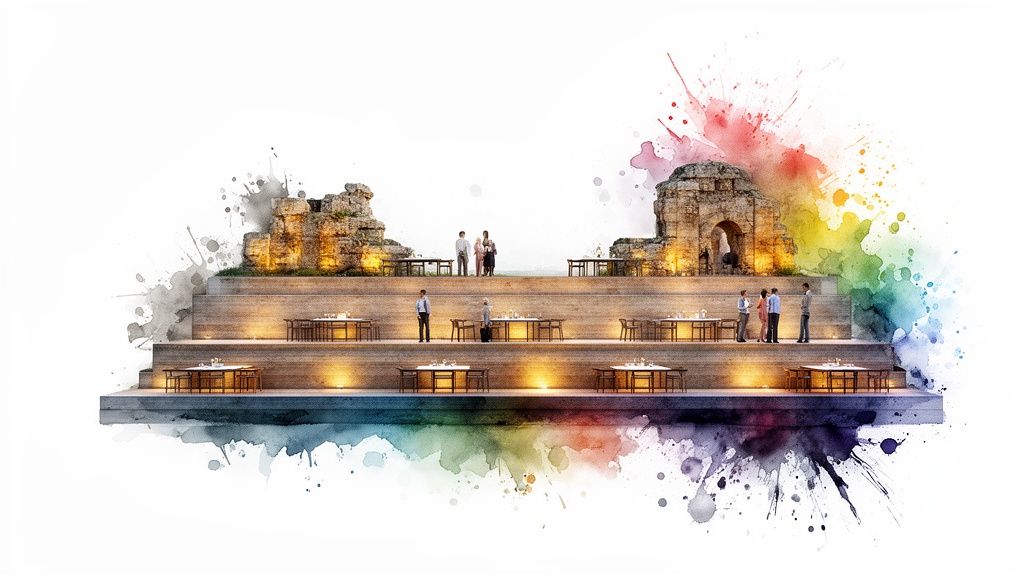
This layout is particularly effective in historic stately homes or hillside Tuscan estates where the architecture itself is a centrepiece. By embracing the venue’s verticality, these wedding table planner ideas transform the reception into a living tableau, ensuring every guest feels part of a grand, unfolding celebration. This tiered setup naturally breaks up a larger guest count, fostering intimate pockets of conversation while maintaining a cohesive and visually spectacular atmosphere.
How to Implement This Layout
Successfully executing a tiered reception is about maximising views and ensuring seamless flow between levels. The goal is to make the layout feel intentional and luxurious, not disjointed.
- Create Intentional Tiers: Reserve the most prominent or highest tier for the wedding couple and immediate family. This ensures they have the best sightlines and become a natural focal point for speeches and toasts. Place other guest groups on lower levels, organising tables to ensure everyone has an interesting view.
- Embrace the Architecture: Use the venue’s existing features as your guide. Natural stone walls, ancient archways, or wrought-iron balustrades can serve as built-in décor, reducing the need for extensive floral arrangements and allowing the heritage of the location to shine.
- Logistical Planning: Clear, elegant signage or ushers are essential to guide guests between levels. Work closely with your caterer to plan efficient service routes to each tier, ensuring all guests receive their meals promptly. On windy terraces, use weights to secure linens and low, stable centrepieces.
Key Insight: Lighting is paramount for a multi-level layout. Install discrete uplighting on each terrace or level to define the spaces and create a warm, inviting ambience after sunset. Ensure pathways, steps, and railings are well-lit to guarantee guest safety and comfort throughout the evening.
8. The Cabaret-Style Setup – Theater Seating with Central Focus
For weddings where entertainment, speeches, and performances are the star attraction, the cabaret-style setup offers an unparalleled guest experience. This layout arranges tables, often round or small squares, in a semi-circle or staggered formation facing a central stage or dance floor. It transforms a traditional reception into a captivating theatre-style event, ensuring every guest has an excellent view of the main proceedings.
While often associated with corporate galas or awards ceremonies, this setup can be beautifully adapted for a historic venue like Battle Abbey. The key is to blend the functional, performance-focused layout with romantic, period-appropriate decor. This approach is ideal for couples who have planned significant entertainment, from a live band to a magician or choreographed first dance, making it a cornerstone of their wedding table planner ideas for an engaging and dynamic celebration.
How to Implement This Layout
Successfully transforming a corporate-style layout into an elegant wedding reception requires a focus on decor, lighting, and integrating the venue’s historic features.
- Soften the Atmosphere: Counteract the formal, institutional feel of cabaret seating with luxurious, floor-length linens, soft-hued floral centrepieces, and an abundance of candlelight. This creates warmth and romance.
- Utilise Natural Features: Instead of a generic stage, use the venue’s inherent architecture as a backdrop. Position the performance area in front of a grand fireplace, a dramatic stone archway, or historic stained-glass windows to ground the event in its unique setting.
- Elevate the Speakers: For maximum visibility, place the wedding couple and key speakers on a subtle, raised platform, approximately 12 to 18 inches high. Professional uplighting and a soft spotlight will ensure they are the clear focal point during toasts and speeches.
- Maintain Engagement: Keep the energy high by interspersing speeches (ideally 5-7 minutes each) with live entertainment throughout the dinner service. This prevents lulls and keeps guests fully immersed in the experience.
Key Insight: The success of a cabaret layout hinges on professional-grade audio and lighting. Ensure your suppliers conduct a site visit to plan speaker placement and lighting rigs that enhance the performances without detracting from the historic ambience of the venue. Clear pathways for service staff are also essential to avoid disrupting sightlines.
9. The Floating Island Tables – Intimate Cluster Arrangement
For couples prioritising deep connection and intimate conversation, the floating island arrangement offers a sophisticated alternative to traditional layouts. This style uses small, separate clusters of round or square tables, each seating just 4-6 guests. Positioned with generous spacing, these tables act as independent ‘islands’, fostering semi-private, meaningful dialogue within a larger, cohesive reception space. This is a perfect choice for boutique celebrations where the quality of guest interaction is paramount.
This layout excels in venues that have distinct architectural features or smaller, character-filled rooms, like the charming Library at Battle Abbey. It allows you to frame key elements such as a grand fireplace or historic bay windows, turning them into natural backdrops for each cluster. Ideal for guest counts of 20-60, this approach to your wedding table planner ideas transforms the reception into a series of warm, personal gatherings, reflecting the high-touch service of a fine dining experience.
How to Implement This Layout
Executing this arrangement successfully centres on creating an atmosphere of curated intimacy while maintaining a sense of occasion. The key is to make each table feel like its own special world.
- Strategic Placement: Position tables to offer unique perspectives of the venue. No two tables should have the exact same view, encouraging guests to appreciate the historic surroundings from different angles. Use the space between tables to create clear, elegant pathways for service and guest movement.
- Personalised Tablescapes: Design distinct yet harmonious centrepieces for each table. You could name each table after a meaningful date or place in your relationship, incorporating this into the design. Coordinate linens in complementary, not identical, colours to add visual texture and variety.
- Atmospheric Lighting: Create pockets of warm, inviting light. Implement tiered lighting with small, individual light sources like elegant table lamps or focused overhead spotlights for each cluster. This enhances the feeling of privacy and draws guests into their own conversations.
- Curated Seating: Mix friend and family groups intentionally at each table. This layout is perfect for encouraging new connections, as the smaller group size makes it easier for guests who don’t know each other to bond.
Key Insight: Clear communication with your catering and service team is vital. With tables scattered throughout the space, staff will need a meticulously planned route to serve each ‘island’ efficiently and discreetly, ensuring a seamless and high-end dining experience for everyone.
10. The Garden Progression – Multi-Space Dining Journey
For a truly dynamic and immersive experience, transform your wedding reception into a progressive journey that unfolds across multiple spaces. This concept moves guests through different areas of the venue for each stage of the celebration: aperitifs on a scenic terrace, canapés on a manicured lawn, the main course in a formal dining room, and finally, dessert and dancing under the stars. This multi-space approach creates a narrative for the evening, revealing the beauty of the estate piece by piece.
This layout is perfect for historic venues with diverse settings, such as Battle Abbey, where guests can transition from the Top Terrace with its magnificent views to the intimate grandeur of the Abbot’s Hall. By creating distinct “chapters” for the celebration, you keep the energy high and provide guests with a memorable, evolving experience. This is one of the most sophisticated wedding table planner ideas for those wanting to maximise a venue’s potential and create a high-end, experiential event.
How to Implement This Layout
Executing a multi-space progression requires meticulous coordination and clear communication to ensure a seamless flow for your guests. The goal is to make each transition feel natural and exciting.
- Create a Clear Timeline: Start with aperitifs on the Top Terrace as guests arrive to take advantage of the best light for photographs. Move indoors to the Abbot’s Hall or Dining Room for the main dinner as evening falls, creating a cosier atmosphere. Return guests outdoors to a lit terrace for dancing and dessert.
- Guide the Journey: Use elegant signage, details on programme cards, or coordinated announcements from your master of ceremonies to guide guests between locations. Position staff strategically at transition points to direct the flow and perhaps share a brief story about the next space.
- Maintain Visual Cohesion: Ensure a consistent theme, colour palette, or floral style across all locations. This visual thread ties the different stages of the event together, making the journey feel like a cohesive, well-designed experience rather than a series of separate events.
Key Insight: Coordinate closely with your venue planner and caterers on the complex logistics. Day-before access is invaluable for setting up multiple areas. Ensure the catering team has a plan for efficiently moving food, drinks, and equipment between zones without disrupting the guest experience.
10 Wedding Table Layouts Comparison
| Layout | Complexity 🔄 | Resources ⚡ | Expected Outcomes ⭐ | Ideal Use Cases 💡 | Key Advantages 📊 |
|---|---|---|---|---|---|
| Formal Banquet & Parliamentary Arrangements – Refectory Long Tables and Hollow Square | High 🔄 — intricate layout & synchronized service | High ⚡ — long tables, large floral runners, elevated staffing | Dramatic, formal atmosphere; strong ceremonial sightlines ⭐⭐⭐⭐ | Large formal banquets, state‑style weddings (100–200) | Maximizes capacity; period‑appropriate visuals; central performance space 📊 |
| Circular Table Clusters – Intimate Roundtable Arrangement | Medium 🔄 — many tables but simple placement | Medium ⚡ — multiple centerpieces, linens | Warm, intimate conversation zones; flexible flow ⭐⭐⭐ | Intimate to mid‑size events; terraces and lawns (up to 150) | Encourages small‑group interaction; adaptable indoors/outdoors 📊 |
| The Sweetheart Table – Elevated Couple’s Table | Low–Medium 🔄 — single focal staging | Medium ⚡ — backdrop, lighting, platform | Romantic focal point; photo‑forward moments ⭐⭐⭐ | Modern weddings emphasizing couple visibility (100–150) | Maximizes couple visibility for toasts/photos; dramatic décor impact 📊 |
| The Outdoor Picnic‑Style Gathering – Casual Lawn Tables | Low 🔄 — informal placement; weather contingency required | Low–Medium ⚡ — mixed furniture, outdoor fittings | Relaxed, convivial atmosphere; landscape‑led visuals ⭐⭐⭐ | Daytime/summer outdoor celebrations (125–175) | Casual, cost‑effective; leverages outdoor views 📊 |
| Family‑Style Communal Dining – Shared Service Tables | Medium 🔄 — service timing & dietary coordination | Medium ⚡ — long tables, communal service ware, staff | Festive, communal dining; abundant farm‑to‑table feel ⭐⭐⭐⭐ | Farm‑to‑table or communal‑focused events (100–150) | Encourages mixing; cost‑efficient service; sustainable messaging 📊 |
| Asymmetrical Mixed Layout – Eclectic Seating Zones | High 🔄 — complex zoning, cohesive design needed | High ⚡ — varied rentals, lighting, designer | Dynamic, contemporary guest experience; strong visual interest ⭐⭐⭐⭐ | Multi‑space venues and large designer weddings (150–200+) | Multiple experiences; movement‑focused and Instagram‑worthy 📊 |
| Heritage‑Inspired Tiered Reception – Multi‑Level Seating | High 🔄 — multi‑level logistics & accessibility planning | High ⚡ — platforms, lighting, additional staff | Layered, photogenic compositions; leverages architecture ⭐⭐⭐⭐ | Venues with terraces/levels (100–175) | Maximizes terraces; dramatic depth and sightlines 📊 |
| Cabaret‑Style Setup – Theater Seating with Central Focus | Medium–High 🔄 — AV and sightline coordination | High ⚡ — professional AV, stage, focused lighting | High engagement with performances; stage‑focused experience ⭐⭐⭐⭐ | Speech/entertainment‑heavy events (175–250+) | Clear performance sightlines; convertible central floor for dancing 📊 |
| Floating Island Tables – Intimate Cluster Arrangement | Medium 🔄 — spacing and service routing | High ⚡ — extensive floor space, per‑table décor | Very intimate, semi‑private conversations; personalized décor ⭐⭐⭐ | Small VIP/intimate celebrations (30–60) | Ultra‑personalized guest experience; quiet conversation zones 📊 |
| Garden Progression – Multi‑Space Dining Journey | Very High 🔄 — staged transitions across locations | Very High ⚡ — moving décor, extra staff, complex logistics | Memorable, varied experience; estate showcase and narrative flow ⭐⭐⭐⭐ | Full‑site celebrations and experiential weddings (100–175) | Narrative journey through venue; multiple backdrops and phased moments 📊 |
Your Historic Wedding, Perfectly Planned
Your journey through these diverse wedding table planner ideas has likely sparked a vision for how your celebration will unfold. From the regal formality of Refectory Long Tables to the whimsical charm of a Garden Progression, the way you arrange your tables is far more than a logistical exercise; it is the very blueprint for your reception’s atmosphere, energy, and flow. Each layout offers a unique narrative, transforming a historic space into a deeply personal backdrop for your vows and festivities.
The key to success lies not in choosing the most popular or elaborate option, but in selecting the arrangement that authentically reflects you as a couple and enhances the guest experience. A well-planned layout can foster intimacy, encourage conversation, create stunning photographic moments, and ensure every guest feels included and valued. Mastering this element of your wedding planning is crucial because it directly influences how your loved ones interact, celebrate, and remember your special day.
Synthesising Your Vision: Key Takeaways
As you move from inspiration to implementation, remember the foundational principles we’ve explored. The most successful table plans are born from a thoughtful blend of aesthetics, practicality, and personal storytelling.
- Balance Ambiance and Practicality: Your dream of cascading floral runners on long banquet tables must coexist with the need for clear pathways for serving staff and guests. Similarly, an intimate, candlelit cluster of round tables needs to account for accessibility and ensure no one feels isolated from the main event.
- Let the Venue Guide You: A historic venue like Battle Abbey offers a magnificent canvas. Allow its unique architectural features, from vaulted ceilings to grand archways, to inform your choices. A Parliamentary Arrangement can command a long, dramatic hall, while a Mixed Layout can artfully segment a multi-room space, creating distinct zones for dining, dancing, and quiet conversation.
- Prioritise the Guest Experience: Think beyond the visual. How will your seating plan affect conversations? Will older relatives be comfortable? Is there a clear view of the top table and dance floor? The best wedding table planner ideas are those that place guest comfort and enjoyment at their very core.
Your Actionable Next Steps
With these concepts fresh in your mind, it’s time to take concrete action. Begin by finalising your guest list, as your numbers will be the single biggest factor in determining which layouts are feasible. Next, revisit your venue, but this time with a floor plan in hand and a critical eye for space, flow, and potential.
- Sketch it Out: Don’t be afraid to get creative. Use online planning tools or simple pen and paper to sketch out two or three of your favourite layouts within your venue’s dimensions. This process often reveals practical challenges and opportunities you hadn’t considered.
- Consult the Experts: Share your initial sketches and ideas with your wedding planner and venue coordinator. Their logistical expertise is invaluable. They can advise on everything from table dimensions and linen hire to power source locations for lighting and entertainment.
- Visualise the Details: Once you have a layout in mind, start layering in the stylistic elements. Consider how your centrepieces, place settings, and lighting will work with a long communal table versus a cluster of small round ones. This helps bring the entire vision to life and ensures a cohesive aesthetic.
Ultimately, your table plan is the silent host of your wedding reception. It guides your guests, shapes the mood, and sets the stage for an evening of unforgettable memories. By thoughtfully applying these wedding table planner ideas, you are not just organising chairs and tables; you are orchestrating a beautiful, immersive experience that honours your love story and the grandeur of your chosen setting.
Ready to bring your vision to life in a venue that embodies history and romance? The experienced team at Battle Abbey Weddings specialises in transforming these concepts into breathtaking realities, ensuring your day is as seamless as it is magical. Explore the possibilities and book a consultation at Battle Abbey Weddings.