You're probably here because you love the idea of a wedding meal that feels warm, generous, and less rigid than a formal plated dinner, but you're worried that “BBQ” might look too casual for a grand historic venue. That concern is sensible. At a place with ancient stone, formal rooms, and significant outdoor spaces, the line between relaxed and underdone is very thin.
Done properly, BBQ wedding catering can feel polished, abundant, and entirely at home in an English heritage setting. Done badly, it can create queues, smoke in the wrong place, confused dietary provision, and a menu that feels like an afterthought beside the architecture. The difference is never the word “BBQ”. It's the planning behind it.
Envisioning Your Elegant BBQ Menu and Service
The first decision is not what sauce to serve or whether to offer brisket. It's how the meal will be presented. Service style shapes the entire mood of the wedding breakfast, especially at a venue with both formal interiors and open-air reception spaces.
Choosing the right service style
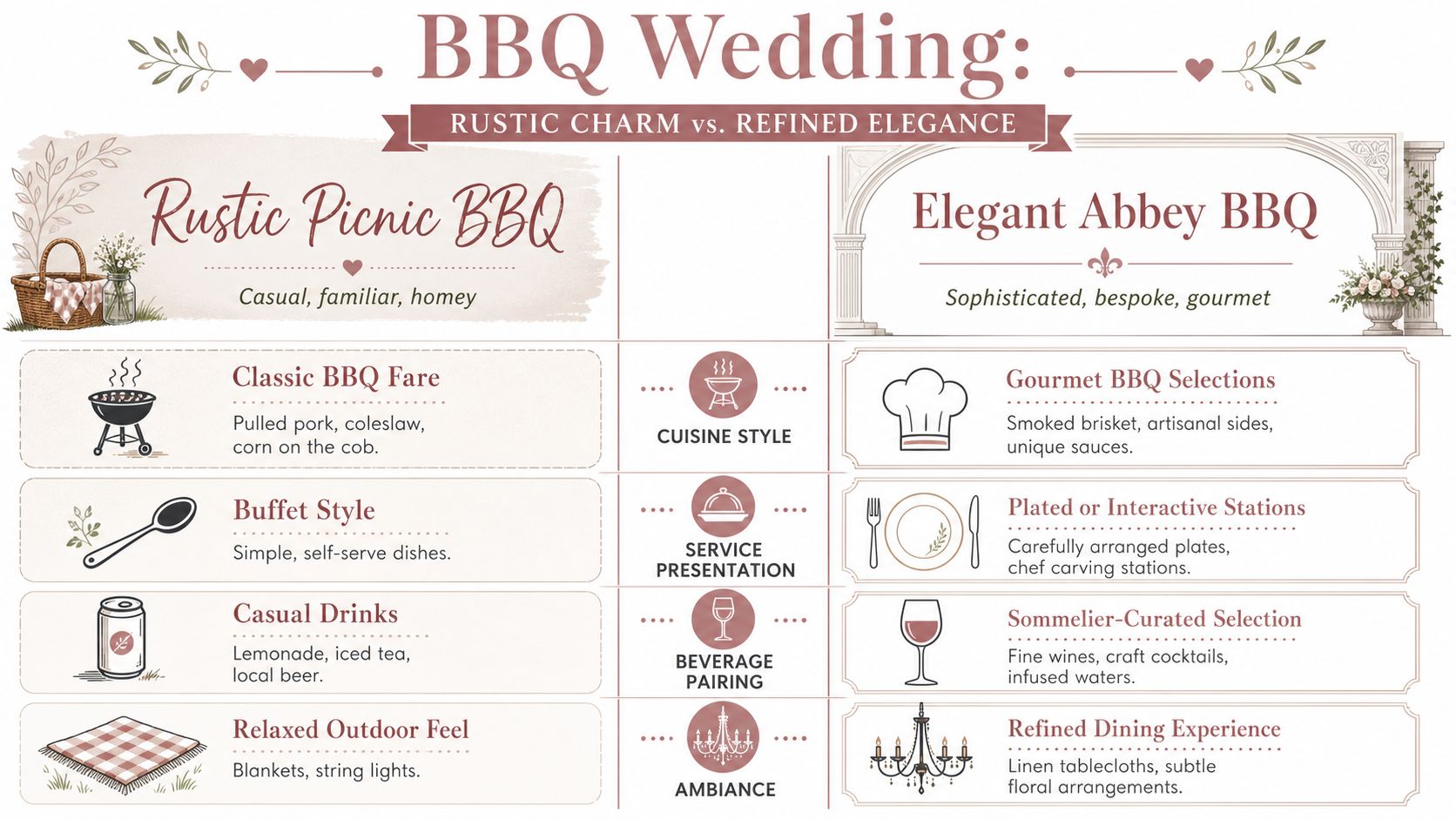
A sumptuous buffet suits couples who want generosity and movement. Guests enjoy choice, the food looks plentiful, and the atmosphere feels sociable rather than stiff. In a historic setting, the buffet must be dressed properly. Linen, refined serving ware, coordinated signage, and attentive staff make the difference between country fête and elegant reception.
Interactive stations create theatre. A carving point, a chef-finished side dish, or a sauce station can work beautifully on a terrace or lawn because they turn the food into part of the guest experience. This style works best when guest flow is carefully designed, so people don't bunch in one corner while another station stands quiet.
A plated BBQ meal surprises people, but it can be one of the strongest options for a more formal brief. Smoked or grilled elements can still appear on a composed plate with refined sides and thoughtful garnish. If you want the flavour profile of barbecue without the visual language of a buffet, this is often the clearest route.
Practical rule: Decide on service style before you finalise the menu. The same dishes read very differently on a buffet table, at a live station, or on a plated menu.
Designing a menu that feels premium
The phrase “BBQ wedding” often pushes couples towards familiar dishes. Familiar isn't the problem. Predictable is. A premium menu keeps the comfort of grilled food but sharpens the detail. That means house sauces instead of supermarket flavours, well-composed sides instead of filler salads, and a proper sequence between canapés, mains, and desserts.
For inspiration at the lighter end of the menu, especially for welcome bites before the main meal, Urban Man Caves' BBQ ideas are useful for thinking beyond standard nibbles and towards small-format grilled appetisers that still feel celebratory.
Menu planning should also reflect the venue itself. If you're reviewing a venue's existing approach to wedding dining, it helps to look at a real wedding food menu rather than trying to build everything from generic inspiration boards.
Making dietary requirements feel integral
Elegant BBQ wedding catering's success or failure hinges on dietary considerations. In the UK, around 2 million people live with a diagnosed food allergy, which makes dietary planning a central part of premium catering rather than a side issue, as noted in this discussion of wedding BBQ planning and dietary provision.
That has practical consequences.
- Vegetarian menus need equal status. A grilled vegetable stack, smoked cauliflower preparation, or composed plant-based main feels intentional. A lone veggie burger doesn't.
- Vegan dishes should be built, not substituted. The strongest vegan BBQ options are designed from the start, with texture, char, sauce, and substance considered together.
- Gluten-free and allergen-controlled service needs process. Separate utensils, clear labelling, and a service plan matter as much as the ingredients.
Guests notice when the dietary meal looks as though it came from the same wedding, not from a backup fridge in the kitchen.
Decoding the Real Cost of Your BBQ Wedding
Many couples start with the same assumption. BBQ must be cheaper. Sometimes it is. Often it isn't. The key question isn't whether the headline menu price looks lower. It's whether the all-in catering model delivers better value once staffing, equipment, service complexity, and waste are included.
A useful way to think about this comes from broader wedding catering commentary on value and sustainability. The final cost of BBQ depends heavily on staffing, equipment, and service style, and perceived savings can disappear when guest counts shift or waste increases, as discussed in this article on planning BBQ wedding catering with a value lens.
Where the budget actually goes
Food is only one line.
For historic venue BBQs, couples should ask about:
- Cooking equipment. On-site grills, hot holding equipment, prep tables, and protective flooring can all affect the quote.
- Service ware. Crockery, cutlery, buffet presentation pieces, station dressing, and linen all shape the finish.
- Labour. Chefs, servers, bar support, clearing staff, and a lead coordinator often matter more than couples expect.
- Transport and access time. Historic sites rarely allow the quick unload-and-go rhythm of a standard function room.
- Waste and breakdown. End-of-night removal and discreet clean-up are part of the actual cost, not an optional add-on.
That's why a simple per-head number can be misleading. A low food quote paired with thin staffing and minimal setup can create a poor guest experience in an otherwise beautiful venue.
A sample way to structure the numbers
The table below is a planning tool, not a price list. It helps you pressure-test what's included when a caterer says a BBQ is “better value”.
| Item | Estimated Cost | Notes |
|---|---|---|
| Menu food | Varies by caterer and menu complexity | Premium cuts, sides, desserts, and dietary alternatives change this significantly |
| Chef team | Varies | Live-fire or on-site finishing usually requires a stronger kitchen presence |
| Front-of-house staff | Varies | Service style affects labour more than couples often expect |
| Equipment hire | Varies | Grills, holding equipment, serving tables, linen, crockery, and protective surfaces |
| Transport and access | Varies | Historic venues may require careful load-in planning and longer setup windows |
| Waste removal and cleanup | Varies | Essential for heritage-sensitive sites and late-evening breakdown |
| Contingency for guest-count changes | Varies | Important where RSVPs remain fluid close to the date |
A useful perspective comes from the operator side too. If you want to understand why catering quotes are built the way they are, Launching your UK catering venture gives helpful background on the moving parts behind event pricing.
When BBQ is strong value, and when it isn't
BBQ tends to offer strong value when you want abundance, flexible guest interaction, and a menu that can work across mixed indoor-outdoor spaces. It can also reduce the formality pressure that sometimes pushes couples into expensive plating choices they don't want.
It becomes a false economy when the brief is highly formal but the budget doesn't allow the staffing and presentation needed to do it justice. It also loses value quickly when the quote excludes basics that you'll have to source separately.
If you're comparing approaches, a transparent menus with prices page is more useful than a vague package summary. You want to compare like with like, not just “BBQ” against “traditional catering” as broad labels.
Mastering Your Wedding Day Timeline and Staffing
The most relaxed BBQ receptions are usually the most tightly organised behind the scenes. Guests should feel ease. The catering team should feel sequence. Those are not competing goals. In practice, they depend on each other.
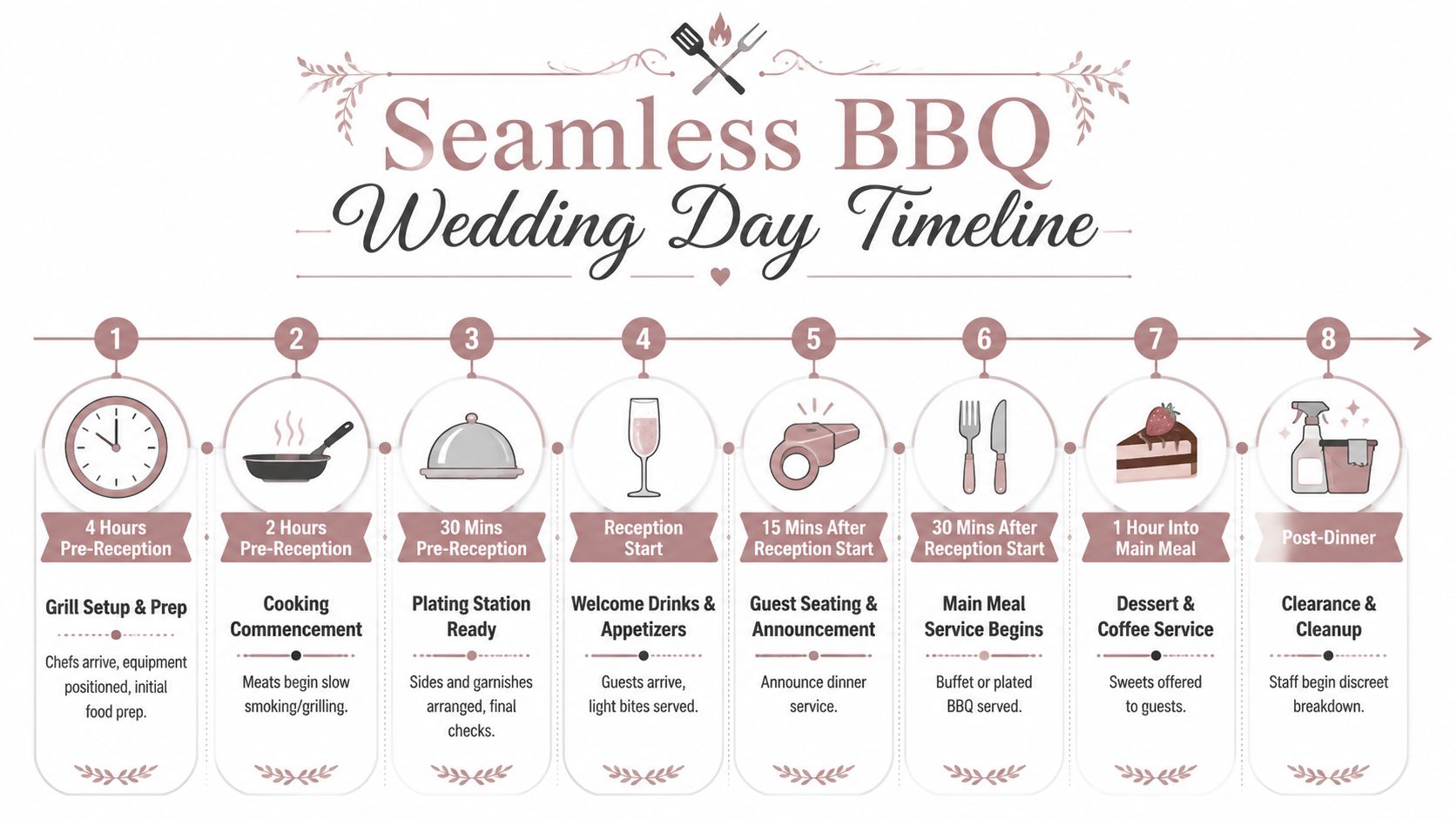
Plan backwards from the meal
Start with one fixed point. The moment guests are meant to eat. Then move backwards through setup, prep, cooking, station dressing, and guest call-up. Outdoor event operators repeatedly recommend this reverse planning method because it forces clarity around arrival, setup, buffet flow, and cleanup, all of which affect punctual service and safe food holding, as outlined in this BBQ catering checklist for event planning.
At a wedding, timing isn't only about food. It touches speeches, drinks reception length, the photographer's golden-hour window, and evening turnover. If dinner service slips, the whole emotional rhythm of the celebration can flatten.
Staffing and timing work as one system
A buffet for a large wedding doesn't run smoothly because the menu is good. It runs smoothly because enough people are there to guide, serve, replenish, clear, and solve problems before guests notice them.
Professional outdoor BBQ guidance recommends roughly 1 to 2 servers per 25 to 50 guests for buffet-style service, with the purpose of managing flow, clearing plates, and avoiding congestion, according to this staffing guidance for BBQ events.
That benchmark matters most when couples are tempted to trim staff to reduce cost. Understaffing doesn't just slow service. It creates visible friction.
- Queues lengthen when no one is directing guests or resetting buffet points.
- Tables clutter quickly if clearing is delayed.
- Dietary meals get mishandled when the same small team is trying to do everything at once.
- Late transitions happen because no one is free to begin the next task discreetly.
A beautiful buffet with too few staff never feels luxurious. It feels busy.
Build a timeline that protects the guest experience
For a polished wedding day, I'd treat the catering operation as a sequence of zones rather than one event. Cooking zone. Holding zone. Service zone. Dining zone. Clearance zone. If those zones overlap without a plan, the reception starts to look operational rather than celebratory.
A practical planning tool is a dedicated wedding day timeline template. Use it to lock in who arrives when, where guests will be during setup, and how service begins without awkward announcements or visible scrambling.
One more point often gets missed. RSVP discipline affects kitchen discipline. Caterers work far better when the final number is confirmed cleanly and in good time, because staffing, portions, and dietary prep all depend on it. Last-minute drift is one of the fastest ways to turn a smooth BBQ wedding catering plan into a stressful one.
Navigating the Logistics at a Historic Venue
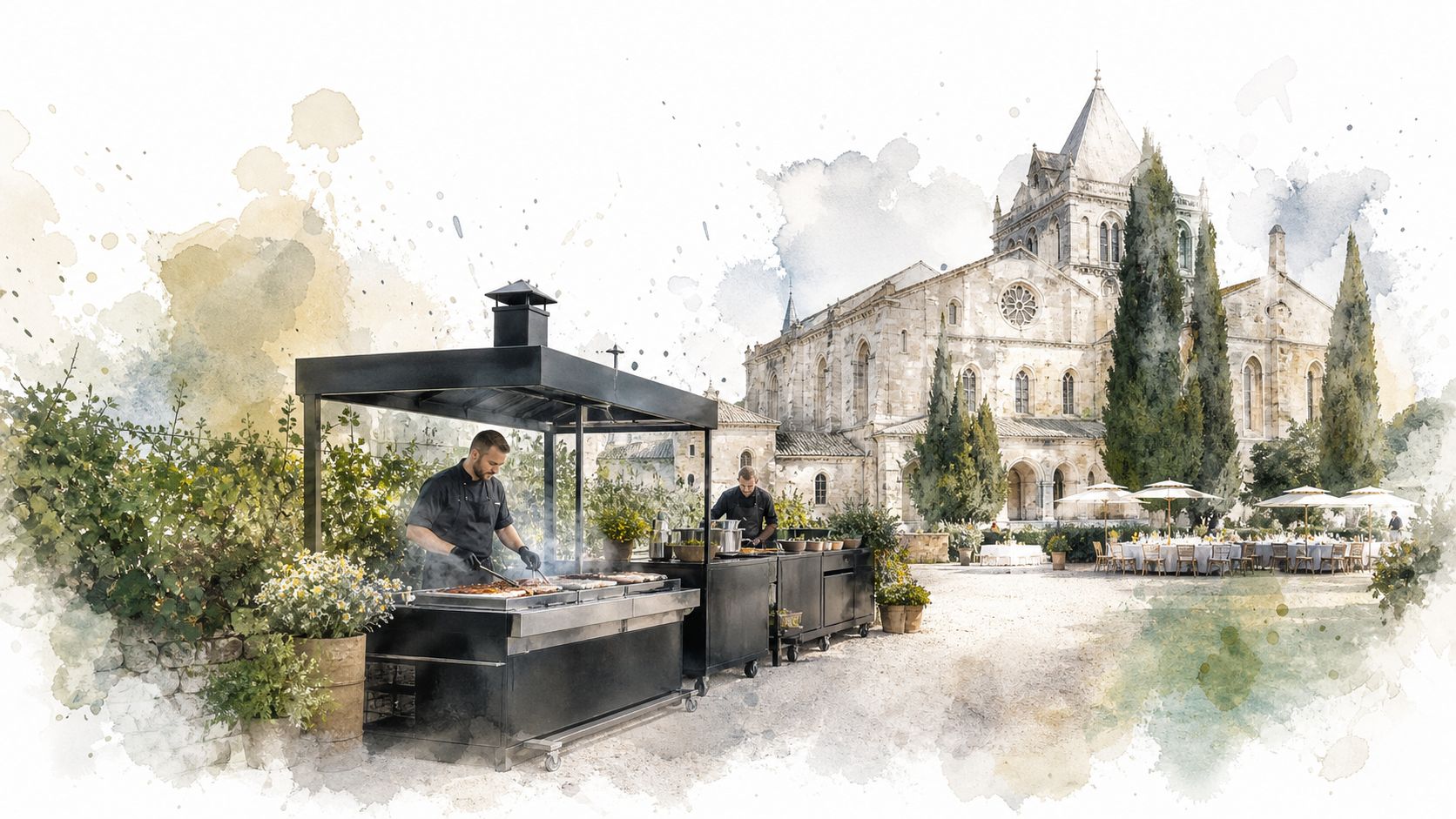
Historic venues ask more of a catering team than a modern blank-canvas barn or hotel function suite. The setting is beautiful, but it is not neutral. Lawns need protection. Stonework needs distance. Vehicle access may be controlled. Guest routes matter because one poor placement decision can interrupt both service and atmosphere.
Start with the site, not the menu
At a heritage property, grill position should never be decided purely on convenience. You need a safe working area, sensible distance from guests, a clean route for staff carrying hot food, and protection for the visual setting. That often means the best operational location is not the most obvious one.
Power is another hidden issue. Even when the cooking itself is live-fire based, the wider operation may still need lighting, hot holding support, refrigeration support, or sheltered prep space. Those practical requirements need to be tested against the site plan early, not the week before the wedding.
Protecting the setting while keeping service smooth
The strongest heritage-site setups usually include:
- Defined supplier access routes so delivery vehicles and staff movements don't interfere with guest arrival or photography.
- Protected working surfaces beneath cooking and prep areas where the venue requires them.
- A smoke-aware layout that keeps cooking theatre visible without directing fumes into drinks reception or dining spaces.
- A quiet breakdown plan so the end of dinner doesn't suddenly turn into a visible clear-up operation.
Timing and logistics are paramount. Confirming the caterer's arrival window, setup period, buffet flow, and cleanup procedure in advance is one of the simplest ways to prevent delay and keep food at safe serving temperatures throughout the event. That point is especially important outdoors, where distance and weather affect every stage of service.
Weather plans need equal dignity
The British weather question is not optional. A premium venue plan always has a wet-weather version that feels intentional, not apologetic. If the outdoor grilling element must shift, guests should still experience a coherent celebration rather than a diluted substitute.
At a venue with terraces, formal rooms, and mixed-use reception areas, the best fallback plans preserve three things. Shelter for the operation, a clear guest flow, and visual continuity with the original design. That may mean moving dining inside while keeping selected live elements outdoors, or repositioning service so the meal still feels abundant and calm.
The right Plan B shouldn't feel like second best. It should feel like the same wedding, adapted intelligently.
If you're evaluating a venue that offers both indoor ceremony spaces and outdoor entertaining areas, ask how catering transitions work across those spaces in real conditions, not just in brochure language.
Creating Atmosphere and Elevating the Guest Experience
A refined BBQ wedding doesn't rely on novelty. It relies on contrast handled well. Ancient architecture, soft florals, polished glassware, and the scent of live cooking can sit together beautifully when each element is given its proper place.
Within the UK catering market, the sector includes around 13,500 enterprises in 2025, and barbecue or grilled food was cited by 50% of catering business owners as the single most requested menu style, according to this UK catering statistics summary. That matters because it confirms what planners see on the ground. BBQ isn't a quirky side format anymore. Couples choose it because it creates warmth and social ease.
What elegant BBQ looks like in practice
The most successful version I see at historic venues usually begins with the drinks reception. Guests step onto a terrace or lawn, there's a sense of space, and the first impression isn't “buffet”. It's hospitality. Tray-served canapés arrive first. Glassware is right. Furniture is arranged in conversational clusters rather than scattered loosely.
Then the food itself enters the visual story. A station may be dressed with foliage and candlelight rather than gingham and chalkboards. Serving dishes are substantial and restrained. Staff guide guests with the confidence of restaurant service, not festival catering.
- Use materials that match the building. Stone, linen, muted metal finishes, and soft greenery usually sit more naturally in a heritage setting than overt rustic props.
- Treat signage as part of the design. Menus, dietary labels, and station names should look commissioned, not improvised.
- Create comfort near the action. Lounge seating placed at a thoughtful distance from the grill lets guests enjoy the atmosphere without standing in the working area.
Presentation carries the formality
A guest rarely says, “the meal lacked elegance because it was grilled.” They usually react to what they saw. Disposable-looking service pieces, weak lighting, cluttered buffet lines, or sauces in generic bottles quickly lower the tone.
The same smoked main can feel either casual or ceremonious depending on plate choice, service rhythm, and table styling.
There's also a social advantage to BBQ wedding catering that suits large celebrations well. It encourages conversation across tables, allows guests a little movement, and softens the stiffness that can settle over very formal dining rooms. In a grand setting, that touch of ease is often exactly what makes the whole celebration feel human rather than staged.
Your Historic Venue BBQ Checklist and Final Questions
Late in planning, this is usually the moment where a couple discovers whether their BBQ wedding will feel beautifully relaxed or unnecessarily difficult. The menu may be agreed and the setting may be spectacular, but a historic venue asks stricter questions than a modern marquee field. Where does live cooking sit without affecting guest comfort? How are dietary plates served without confusion? Who makes the call if rain changes the service plan an hour before dinner?
A clear, venue-specific checklist prevents expensive guesswork.
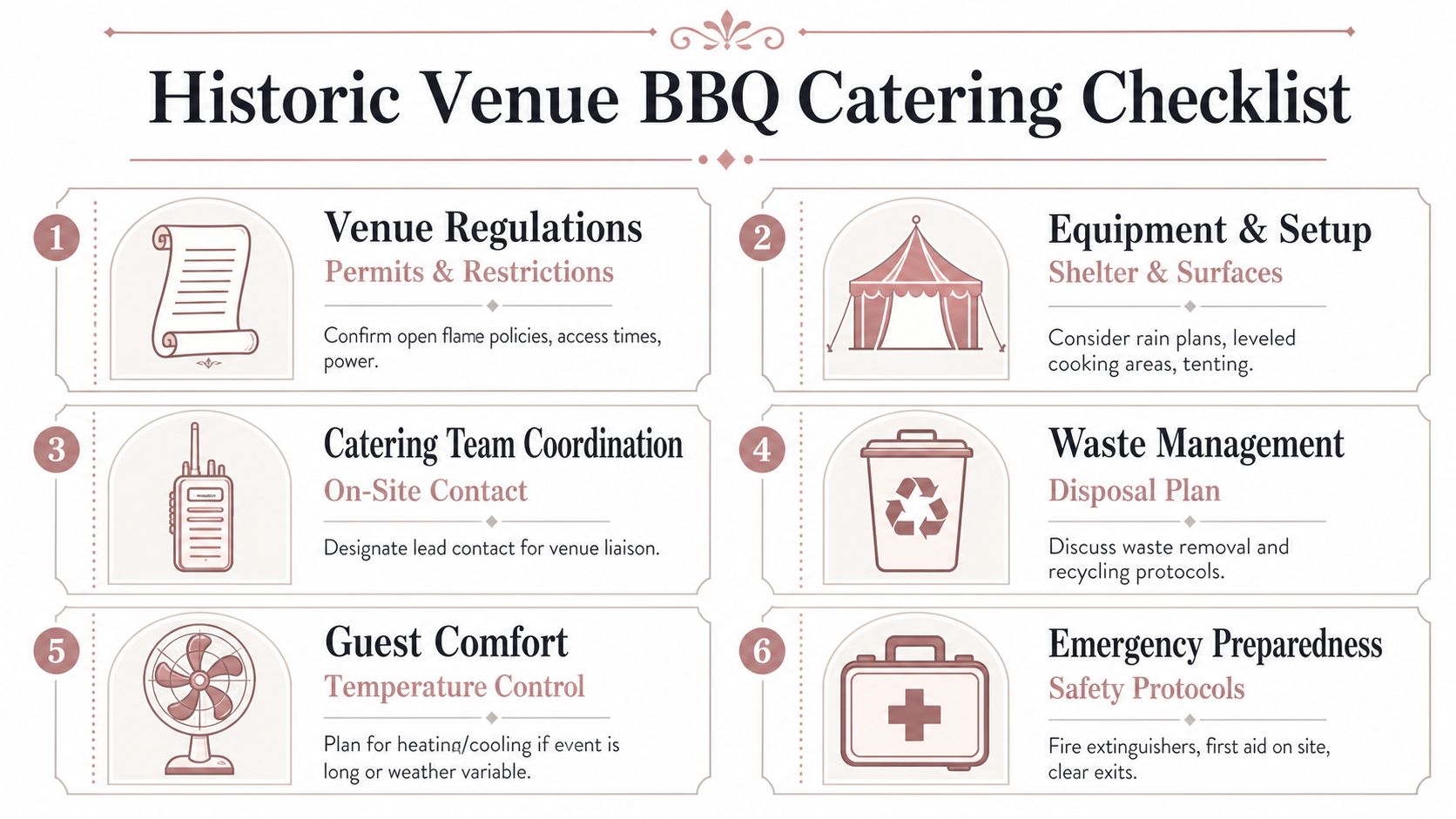
Your planning checklist
Confirm venue permissions early
Ask where live cooking is permitted, which surfaces need protection, what supplier access hours apply, and which heritage-sensitive areas are off limits.Fix the service style before finalising the menu
Buffet, chef stations, and plated service each change staffing levels, equipment needs, queue management, and the amount of space required. Late changes here usually affect much more than the food.Request a full inclusions sheet from the caterer
Ask exactly what the quote covers. Staffing, crockery, linen, setup time, hot holding, transport, clearing, and waste removal should all be listed plainly.Map guest movement properly
Decide where guests gather for drinks, how they are invited to dine, whether tables are called in turn, and how anyone with mobility concerns reaches the food without difficulty.Set a separate plan for dietary meals
Labels matter, but process matters more. Vegetarian, vegan, gluten-free, and allergen-sensitive dishes need their own preparation, handling, and service method if you want guests to feel looked after rather than accommodated as an afterthought.Approve a wet-weather version that still suits the setting
The fallback layout should protect comfort and keep the occasion feeling polished. Guests should not feel that the standard dropped because the forecast changed.Name one final decision-maker for the day
That may be the planner, venue coordinator, or catering lead. What matters is clarity when timing slips, weather shifts, or service needs adjusting.Review breakdown and waste before sign-off
Ask when clearing starts, how waste leaves the site, and what guests may still see near the end of the evening. Historic properties require a lighter operational touch than standard event venues.
Final questions couples often ask
Will smoke bother guests
It can if the grill is poorly sited. In a well-run plan, cooking remains part of the atmosphere without sitting in the middle of it. Positioning should account for wind, nearby seating, doorways, and the routes staff use throughout service.
Does an evening BBQ work as well as a daytime one
Yes, though it needs firmer structure. After dark, guests rely more on lighting, visible menu signage, and staff direction. Warm side dishes and clearly defined stations also help the meal feel intentional rather than loosely organised.
Is BBQ too informal for a historic wedding breakfast
A premium BBQ can work beautifully in a grand setting. The standard comes from the whole operation: tableware, staffing, pacing, furniture, menu design, and how confidently the food is served. Grilled cooking does not lower the tone. Casual presentation does.
How should we handle waste responsibly at a heritage venue
Start with two separate questions. Ask the caterer what leaves the site that night and what must be sorted during service. Then ask the venue what rules apply to disposal points, kitchen use, supplier exits, and protection of the grounds.
Can a BBQ menu still feel special for guests with dietary needs
Yes, if those dishes are planned as part of the menu from the beginning. The strongest BBQ wedding menus give vegetarian and allergen-aware guests something with the same care, visual appeal, and generosity as the main offering. A late substitute rarely feels celebratory.
What should we ask in our final catering meeting
Use this shortlist:
- Service timing. When does the team arrive, when does cooking begin, and how long is allowed for each stage of service?
- Operational layout. Where are the grills, prep tables, holding equipment, buffet or station lines, and clearing routes?
- Guest management. Who invites tables forward, answers dietary questions, and steps in if a queue forms?
- Venue protection. What is in place for smoke control, surface protection, waste handling, and discreet breakdown?
- Contingency planning. What changes if rain, wind, or delayed speeches affect the original timing?
One final point. If you are choosing between venue-led and external catering, ask who already understands the building in practice, not just on paper. Familiarity with access routes, power points, service doors, protected areas, and the pace of the venue usually makes the day calmer for everyone involved. Where that suits the brief, Battle Abbey Weddings offers in-house wedding catering options that include BBQ alongside other wedding breakfast styles, which helps couples compare formats within one venue framework.
If you're planning a relaxed but polished celebration in East Sussex, Battle Abbey Weddings is worth exploring for couples who want historic character, flexible reception spaces, and catering options that can accommodate a BBQ wedding without losing the sense of occasion.