You've chosen the venue. You may even have the date, the dress silhouette, and a clear sense of how you want the day to feel. Then the menu conversation starts, and suddenly a simple wish, serving food that feels generous, elegant, and true to you, turns into a knot of questions about guests, budgets, and whether a vegetarian meal will satisfy everyone at the table.
That worry is understandable. Couples often want a vegetarian wedding menu because it reflects their values, suits their tastes, or feels fresher and more modern than a traditional meat-led banquet. But they also want the room to feel abundant, not restricted. They want the meal to feel celebratory, not like a side option that somehow became the main event.
Beyond the Afterthought An Introduction
The old model of wedding catering treated vegetarian dishes as a footnote. One alternative plate, usually decided late, usually less exciting, and often clearly separate from the “real” menu. That approach no longer fits how people eat, host, or celebrate.
For UK weddings, dietary planning now sits at the centre of good hospitality. For a standard 100-guest wedding in the UK, an average of 26 guests have specific dietary needs, including about 8 vegetarians, 4 vegans, and 5 guests who are gluten-free, according to Wedding Hub's UK wedding dietary requirements analysis. That changes the conversation completely. A vegetarian wedding menu isn't a niche gesture. It's a practical, polished response to the way modern guest lists really look.
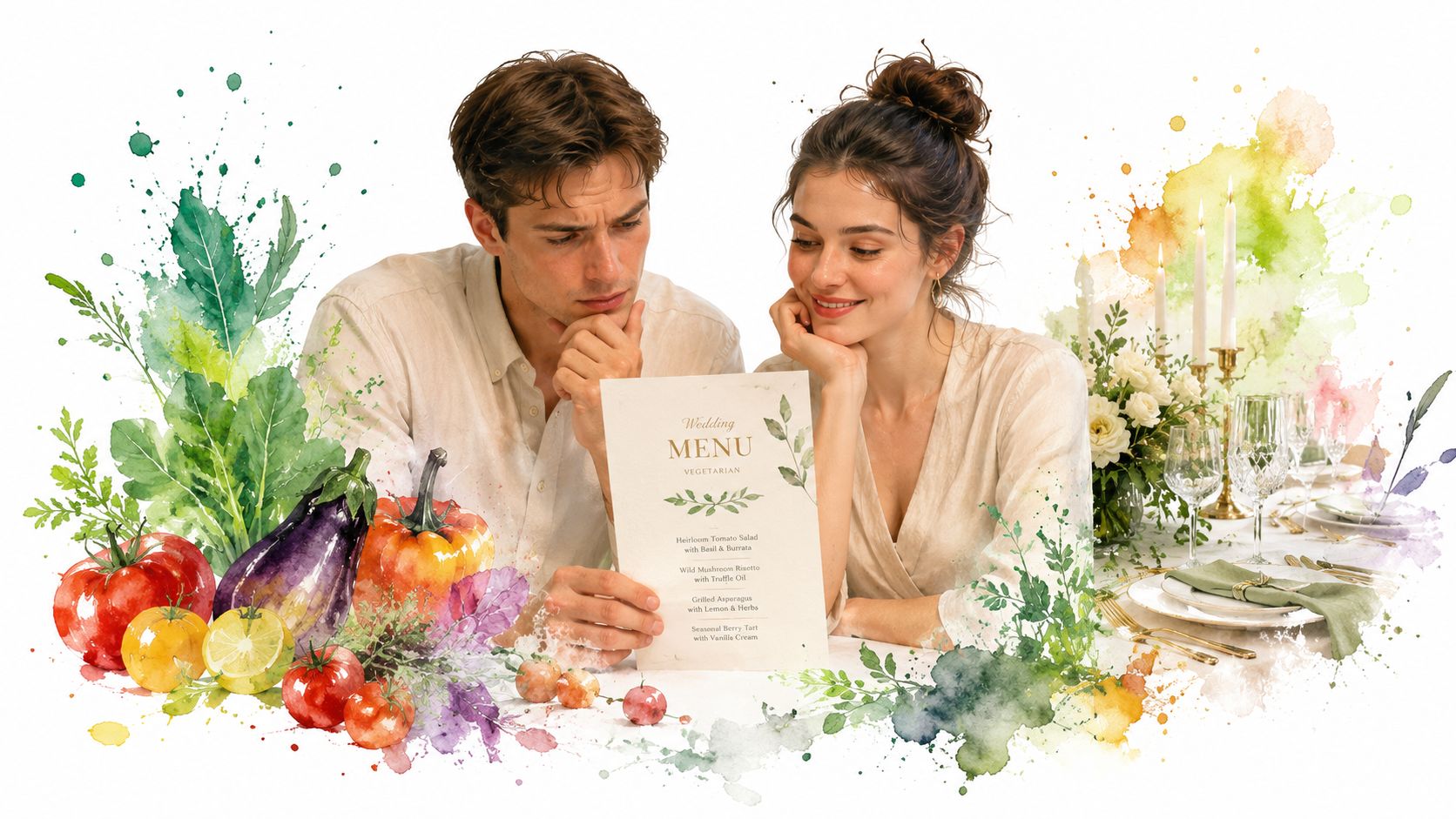
A well-planned vegetarian menu also suits a historic venue particularly well. Grand rooms, candlelight, stone walls, long tables, and a seasonal feast belong together. Rich tarts, elegant risottos, golden pastries, earthy roots, orchard fruit, and beautiful local cheeses can feel every bit as ceremonial as any classic roast.
What works in practice
The strongest menus don't begin with the question, “What can vegetarians eat?” They begin with, “What would feel generous, seasonal, and worthy of the occasion for everyone?”
That shift matters because guests notice confidence. If the menu reads as complete and intentional, they relax into it. If it reads as apologetic, they sense compromise before the first course arrives.
Practical rule: Build a vegetarian wedding menu as the main event, not as an accommodation.
Three principles tend to make the biggest difference:
- Lead with flavour: Guests remember crisp pastry, savoury depth, bright herbs, and proper seasoning. They don't remember whether a dish was meant to “replace” meat.
- Think in textures: The best vegetarian mains combine softness, crunch, richness, and freshness in the same plate.
- Keep the menu coherent: A wedding breakfast should feel like one story from canapé to dessert, not a patchwork of unrelated fallback dishes.
There's also a romantic advantage. Vegetarian menus often lend themselves beautifully to the mood couples want in a heritage setting. They photograph well, they can feel lighter through a long celebration, and they offer enormous scope for colour and seasonality.
A memorable wedding meal doesn't need to prove anything. It needs to feel thoughtful, generous, and beautifully handled. That's where a vegetarian wedding menu can shine.
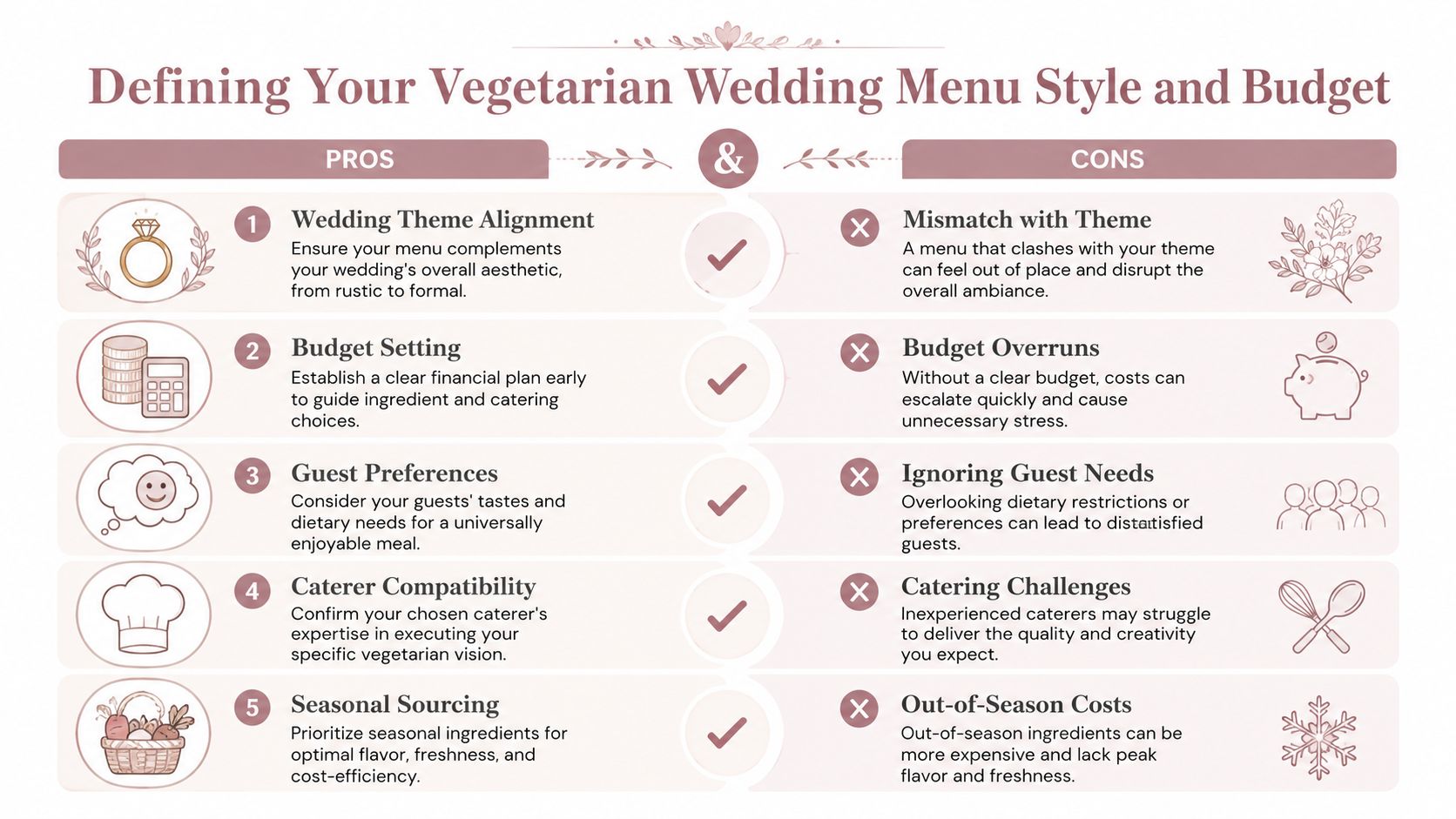
Defining Your Culinary Style and Budget
Before anyone debates halloumi versus mushroom Wellington, the sharper question is simpler. What kind of meal belongs at your wedding?
A menu should match the atmosphere of the day. If the setting is formal and candlelit, guests expect plates with structure and polish. If drinks are on the lawn and the tone is more relaxed, sharing platters, grazing tables, or a refined buffet may feel more natural. Style comes first. Dishes follow.
Match the meal to the setting
Historic venues tend to suit menus with a sense of occasion. That doesn't always mean the most formal option. It means the service style should feel in step with the rooms, the timing, and the movement of the day.
A few formats usually work best:
- Three-course seated meal: Best for couples who want structure, speeches between courses, and a classic wedding breakfast feel.
- Elegant buffet: Good for a sociable atmosphere, especially when guests enjoy choosing between composed salads, hot mains, and seasonal sides.
- Food stations: Useful when you want energy and movement. These need careful planning so they feel refined rather than like event catering at a conference.
- Outdoor barbecue or terrace service: Lovely in warm weather if the venue has lawns or terraces and the food still feels curated.
If you're weighing formats, it helps to look at real venue menu layouts rather than abstract ideas. A good starting point is browsing sample wedding food menu options to see how service style affects the shape of the day.
Don't assume vegetarian means cheaper
Many couples often stumble on this point. They expect meat-free catering to cut the budget automatically. Sometimes it does. Often, at wedding level, it doesn't.
As noted by Caiger & Co's guide to planning a vegetarian or vegan wedding menu, some ingredients may cost less, but high-end vegetarian dishes often require premium sourcing and intricate preparation. A carefully made mushroom Wellington, layered tart, or refined seasonal main can reach cost parity with meat dishes. Budget for quality and flavour, not for the assumption of savings.
A cheap vegetarian main feels disappointing faster than a well-made one feels expensive.
That's especially true in a formal setting. Guests forgive simplicity when it tastes excellent and looks deliberate. They don't forgive a plate that feels like filler.
Set a budget with the right priorities
Rather than asking whether vegetarian food is “better value”, ask where value is most visible to guests.
Consider prioritising:
- A standout main course that carries the room with confidence.
- Excellent seasonal produce so the food tastes alive rather than worthy.
- Strong canapé choices because first bites shape expectations.
- Service format efficiency so the kitchen can deliver every plate at its best.
Seasonality helps here. If you're trying to make sensible sourcing decisions, the Shopifarm local food resource is a useful reference for thinking about food miles and local produce choices in a more grounded way.
Where couples often overspend or underspend
A few trade-offs appear repeatedly:
| Decision area | What works | What often disappoints |
|---|---|---|
| Main course | One polished signature dish | Too many mediocre alternatives |
| Ingredients | Seasonal produce with clear flavour | Out-of-season ingredients chosen for novelty |
| Service style | Format matched to kitchen flow | Overcomplicated stations with queues |
| Budget focus | Spend where guests notice quality | Cutting the main and overspending on decoration-only details |
The best vegetarian wedding menu rarely comes from chasing trends. It comes from choosing a style that suits the venue, then spending with intention.
Crafting a Mouth-Watering Seasonal Menu
Seasonality solves several problems at once. It gives the menu a natural identity, helps the dishes feel rooted in place, and makes the food look as though it belongs to the setting rather than arriving from nowhere. In a historic venue, that matters. A spring lunch should feel bright and tender. A winter dinner should feel warming and candlelit.
The easiest way to shape a vegetarian wedding menu is to build it around the month, not around a list of fashionable dishes.
Spring menus that feel fresh but still substantial
Spring is often the prettiest season for vegetarian food because the ingredients do a lot of the work. You don't need to force richness onto the plate. You need freshness, colour, and enough structure to make the meal feel complete.
A spring celebration might begin with pea and mint arancini and asparagus tartlets at drinks reception. For the starter, a whipped goat's cheese plate with heritage beetroot, leaves, and toasted seeds feels elegant without becoming fussy. The main could be a wild garlic risotto finished with lemon and parmesan, or a layered vegetable galette with spring greens and buttery pastry. Dessert suits soft flavours, such as elderflower panna cotta with poached rhubarb.
These are the menus that pair naturally with terraces, blossom, and a lighter tone to the day.
Summer menus that thrive outdoors
Summer vegetarian food should feel generous and vibrant. Guests are often moving between indoor and outdoor spaces, and heavy plates can slow the mood too much.
A warm-weather menu works well when it leans into brightness:
- Canapés: Mini caprese skewers and courgette fritters
- Starter: Tomato salad with basil, burrata, and crisp sourdough shards
- Main: Charred aubergine with herbed grains, roasted peppers, and tahini dressing
- Dessert: Lemon tart with summer berries
Summer is also where buffet and sharing formats can shine if they're handled elegantly. Platters of grilled vegetables, courgette ribbons, salads with herbs and citrus, and a beautiful central tart can look abundant in a way that suits garden receptions.
Seasonal menus often feel more luxurious because they don't fight the calendar.
Autumn menus that win over sceptics
Autumn is the season that convinces doubtful guests. The produce is earthy, rich, and naturally suited to the kind of comforting depth people often associate with more traditional wedding food.
Think roasted squash canapés, mushroom crostini, or crisp sage polenta bites. A starter of celeriac soup with truffle oil and warm bread can set exactly the right tone. The main is where autumn really excels: pumpkin risotto, chestnut and mushroom Wellington, or lentil and root vegetable pie with glossy sauce and proper sides. Desserts can turn warmer too, with spiced apple crumble or poached pears.
This is the point in the year when a vegetarian wedding menu can feel especially grand rather than delicate.
Winter menus that feel ceremonial
Winter weddings need food with presence. Guests arrive from cold air into warm rooms, and the meal should meet that shift.
A winter sequence might include:
- Parmesan and rosemary shortbread with caramelised onion
- Mini leek and blue cheese tartlets
- Roast parsnip soup with hazelnut crumb
- Mushroom Wellington with dauphinoise-style potatoes and braised greens
- Dark chocolate torte with orange
The secret with winter vegetarian catering is contrast. Rich mains need sharp dressings, bitter leaves, pickled elements, or citrus somewhere in the menu to stop the meal feeling too dense.
Sample Seasonal Vegetarian Wedding Menus
| Season | Sample Starter | Sample Main Course | Sample Dessert |
|---|---|---|---|
| Spring | Whipped goat's cheese with beetroot and seeds | Wild garlic risotto with lemon and parmesan | Elderflower panna cotta with rhubarb |
| Summer | Tomato, basil and burrata salad | Charred aubergine with herbed grains and tahini | Lemon tart with berries |
| Autumn | Celeriac soup with truffle oil | Chestnut and mushroom Wellington | Spiced apple crumble |
| Winter | Roast parsnip soup with hazelnut crumb | Mushroom Wellington with greens and potatoes | Dark chocolate torte with orange |
A strong seasonal menu doesn't need to be complicated. It needs to feel deliberate. The flavours should build naturally, the ingredients should make sense together, and the meal should suit the weather, the room, and the pace of the celebration. That's what makes guests remember it fondly.
Accommodating All Guests Seamlessly
The hardest part of wedding menu planning usually isn't choosing the star dish. It's making sure every guest is looked after without turning dinner into a tangle of separate plates, last-minute substitutions, and stressed kitchen timings.
For larger celebrations, one of the smartest approaches is to anchor the menu around a vegetarian main that can be adapted where needed. That aligns with the guidance in Easy Weddings' advice on wedding guest menu planning, which notes that a spectacular vegetarian main that can flex for vegan or other needs usually creates a stronger dining experience than juggling several weaker alternatives.
Start with better RSVP wording
Many dietary problems begin long before the kitchen starts prep. They begin with vague guest replies.
“Any dietary requirements?” often produces incomplete information. Some guests write “vegetarian” but eat fish. Others mention “gluten-free” without clarifying whether it's a preference, intolerance, or coeliac requirement. Allergies get added informally later through family messages, which is exactly how details go missing.
Use wording that encourages specificity. Ask guests to list dietary requirements and allergens clearly, and if needed, follow up individually. For couples who want a clearer overview before speaking to caterers, this guide to understanding the 14 major allergens is a practical reference point.
Build one menu that flexes gracefully
The best inclusive menus don't feel fragmented. They feel shared.
That usually means choosing dishes with a naturally broad appeal. A carefully made tart, risotto, roasted vegetable dish, or Wellington-style main can often be adapted more smoothly than a highly dairy-heavy or breadcrumb-led option. If the kitchen can adjust garnish, sauce, or pastry elements without redesigning the whole plate, service stays calmer and guests receive something that still looks like part of the same celebration.
Here's where couples often make planning easier:
- Choose a core main first: Pick the dish that represents the wedding best.
- Check adaptation points: Ask which ingredients create the obstacles for vegan or gluten-free versions.
- Keep plating consistent: Different dietary plates should still look like they belong to the same meal.
- Limit unnecessary choice: Too many separate mains can weaken quality and slow service.
Guests feel cared for when their meal looks intentional, not isolated.
What works for mixed groups
A unified menu often handles complexity better than a highly customised one. For example, a roast vegetable and herb-led main may need only a sauce or pastry variation to cover vegan needs. A naturally gluten-free starter can reduce the number of separate plates from the outset. Desserts can also be chosen with flexibility in mind, especially fruit-based or chocolate-led options where alternative components are easier to prepare elegantly.
For couples considering alternative service styles, looking at wedding buffet menu ideas can help clarify whether a shared format or plated meal will handle your guest mix more comfortably.
A short visual guide can also help you think through service flow and guest experience before the final tasting.
Keep communication disciplined
The final guest list stage is where good plans can unravel. Avoid passing dietary updates across too many people. One document, one final version, and one agreed deadline keeps everyone aligned.
The most reliable handover includes:
- Guest name
- Table number
- Requirement type
- Severity where relevant
- Any agreed substitute or adaptation
This part of planning isn't glamorous, but it is what allows the meal to feel effortless on the day. When the menu is cohesive and the logistics are clean, guests never see the complexity behind it. They just feel welcomed.
Perfect Pairings and Supplier Coordination
A polished vegetarian wedding menu becomes even stronger when the drinks support it. Plant-led dishes often have more herbal, earthy, citrus, and creamy notes than a traditional roast-based menu, so pairings need a little thought. The good news is that they're usually very rewarding.
Pair drinks by flavour, not by rule
There's no need to make pairings feel academic. Keep the focus on weight, acidity, and texture.
Lighter spring and summer dishes usually suit crisp whites, sparkling wines, and fresh non-alcoholic serves with herbs or citrus. If you want ideas for bottles in that drier style, this overview of essential dry white wine brands can help you narrow the field before speaking to your drinks supplier. Richer autumn and winter mains tend to welcome fuller whites, light reds, or cocktails with bitter and spiced notes.
A few simple matches often work well:
- Goat's cheese, herbs, asparagus: crisp dry white wines
- Tomato, basil, burrata: sparkling wines or bright rosé
- Mushroom, chestnut, lentil dishes: light reds or fuller whites
- Apple, pear, spice desserts: dessert wines or elegant alcohol-free apple serves
- Dark chocolate desserts: richer reds or coffee-led after-dinner options
Use the tasting to solve practical issues
Menu tastings shouldn't only answer “Do we like this?” They should answer “Can this be served beautifully to our whole guest list?”
Ask direct questions. How stable is the dish between kitchen and table? Which elements are seasonal enough to change slightly? What will the vegan version look like? If weather affects outdoor drinks service, can canapés be moved smoothly indoors? If the celebration runs late, how does evening food fit around the last dances?
For couples comparing packages, looking through menus with prices can make it easier to spot where upgrades improve the guest experience and where they add complexity.
Bring your seating plan draft and your dietary notes to the tasting. The best menu decisions happen when flavour and logistics are discussed together.
Questions worth asking your caterer
Not every useful question is about ingredients. Some are about flow.
- Service timing: How long will each course take to serve across the full guest count?
- Adaptations: Which dish adapts best for vegan and gluten-free guests without changing the whole plate?
- Canapés: Which options hold well if drinks are served outdoors?
- Evening food: What feels satisfying later at night without repeating the wedding breakfast?
- Final numbers: When does the kitchen need the locked guest count and dietary list?
The most successful supplier relationships are calm and specific. If your menu is beautiful but the communication is vague, the day becomes harder than it needs to be. If both are strong, the meal will feel perfectly smooth.
Your Unforgettable Feast Awaits
A vegetarian wedding menu isn't a compromise dressed up as a trend. It's one of the clearest ways to host with intention. It can feel elegant, celebratory, generous, and completely at home in a historic setting when it's planned properly.
That confidence is also very much in step with where modern weddings are heading. In the UK, 90% of couples ask about vegan or vegetarian options during planning, and 80% actively choose to include plant-based dishes, according to Restaurant Associates' UK wedding catering trends report. That matters because it shows this style of menu isn't unusual. Couples are choosing it because it reflects contemporary hospitality.
Why this approach stays memorable
Guests remember whether dinner felt considered. They remember a main course that arrived looking generous, a dessert that suited the season, and the quiet relief of being catered for without needing to ask twice. They remember the ease of the meal as much as the taste of it.
A strong vegetarian wedding menu does something few parts of a wedding can do so completely. It combines aesthetics, logistics, values, and guest comfort in one experience. It can soften a formal room, animate a summer terrace, or bring warmth to a winter reception. A key aspect is its capacity to make everyone at the table feel included in the same feast.
Choose abundance over apology
That's the real shift. Don't approach the menu as a list of restrictions to solve. Approach it as a chance to create a meal with colour, depth, seasonality, and character.
If you choose one outstanding main, keep the guest communication organised, use the season to your advantage, and work closely with a capable catering team, the process becomes far more manageable than many couples expect. The result won't feel like the “vegetarian option”. It will feel like the wedding meal itself, exactly as it should.
In a setting of old stone, candlelight, lawns, terraces, and long conversation, that kind of menu feels particularly right. It invites guests to settle in, eat well, and remember the day as one where every detail felt cared for.
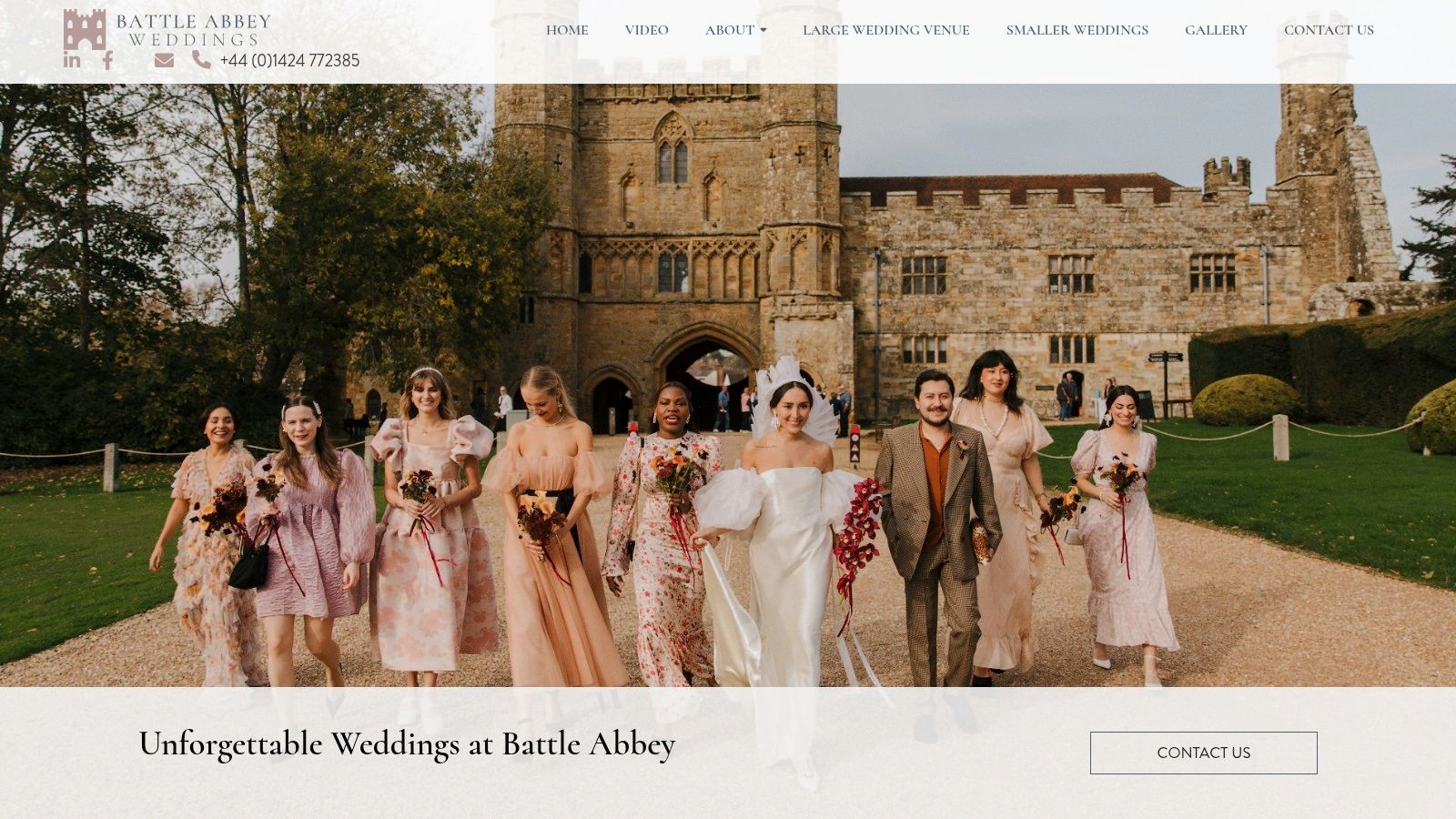
If you're planning a historic celebration in East Sussex and want a wedding menu that feels elegant, inclusive, and beautifully handled, Battle Abbey Weddings is well worth exploring. Their setting, flexible catering approach, and experience with bespoke celebrations make them a strong choice for couples who want the food to feel as memorable as the venue itself.