A lot of couples arrive at the same point in planning. They have a clear feeling for the wedding they want, but not yet a clear picture of what that feeling requires in real space, real staffing, and a real budget.
You may be imagining a room full of everyone who matters. Family from both sides. Old school friends. Work friends who became real friends. Children running across the lawn. A packed dance floor at the end of the night. That kind of wedding can be wonderful. It can also become confusing very quickly when venue listings make a large celebration sound simpler than it is.
Embracing the Grand Celebration
A wedding for 200 guests is not just a slightly bigger version of an average wedding. In the UK, the average wedding guest count is about 83 to 89, which means a 200-guest celebration sits in a very different planning category, with different space and operational needs, according to UK wedding guest statistics.
That's important to know, but it shouldn't discourage you.
A larger wedding often carries a different emotional weight. It can feel generous, inclusive, and rooted in family. It gives you room to celebrate with people you'd hate to leave out. It also changes the kind of venue you should be viewing. You're no longer looking for a place that is just beautiful. You're looking for one that can hold a full day comfortably, feed everyone well, move guests smoothly from one part of the celebration to the next, and still feel elegant rather than crowded.
A big wedding doesn't fail because there are too many guests. It fails when the venue and plan were designed for fewer people than the couple actually invited.
That's where many couples get stuck. A venue says it can host 200, so they assume that means 200 for the ceremony, 200 for the wedding breakfast, and 200 for dancing. Sometimes it does. Often it doesn't.
The good news is that once you understand the few areas that matter most, the search becomes much easier. You can assess venues with confidence, ask sharper questions, and tell the difference between a place that looks right in photos and a place that will work on the day.
Understanding True Venue Capacity and Layout
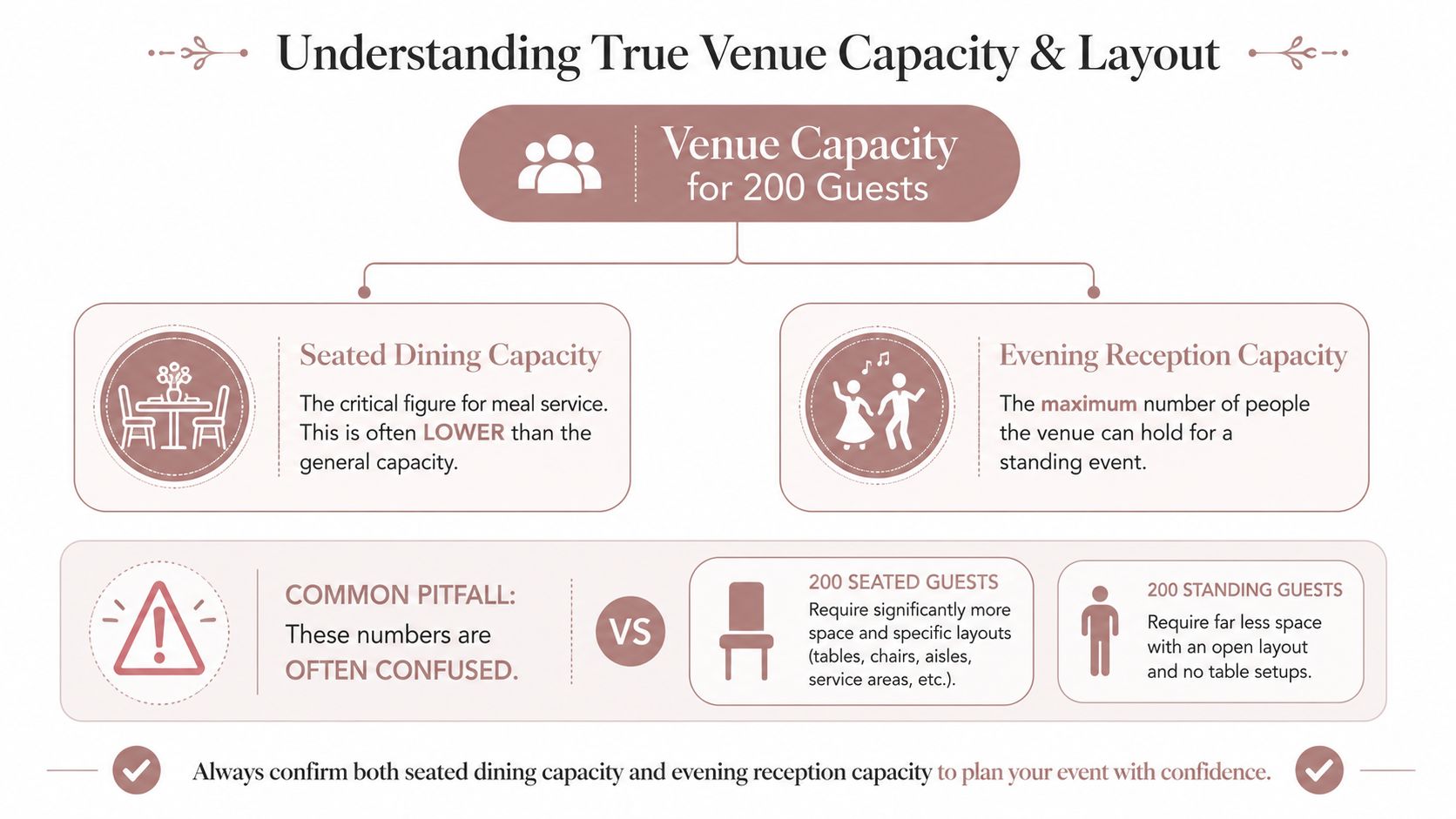
The first thing to check with any shortlist of wedding venues for 200 guests is this. Can the venue seat 200 guests for the day, not just hold 200 guests in the evening?
That distinction catches couples out all the time. Evening capacity usually refers to a more relaxed, standing-heavy reception. Day capacity is the tougher test because it has to support ceremony seating, dining tables, service routes, a dance floor, and the natural movement of a large group.
Why seated capacity matters more
For a seated dinner-and-dancing reception of 200 guests, you need a minimum of 3,500 to 5,000 square feet of usable space, based on wedding reception space planning guidance. That number includes much more than just chairs and tables.
You're making room for:
- Dining tables: Enough space for guests to sit, stand, and be served without bumping into neighbouring tables.
- Dance floor: A designated area that doesn't force caterers or guests into awkward detours.
- Bar area: A proper drinks point so queues don't spill into your dining layout.
- Circulation routes: Clear walking space for servers, photographers, older relatives, and guests moving between spaces.
If a venue only tells you its maximum capacity, ask to see a floor plan for your actual format. A room can feel generous at first glance and still be wrong for a formal wedding breakfast.
What to ask when viewing
A useful way to approach a viewing is to stop asking, “Can this venue host 200?” and start asking, “How would 200 guests move through this room?”
Use questions like these:
- How many guests can you seat for a wedding breakfast with a dance floor included?
- Can you show us a sample floor plan for 200 seated guests?
- Where do the bar, cake table, gift table, DJ, and catering service points go?
- Is that number comfortable, or is it your legal maximum?
That last question matters. A venue might technically fit your numbers, but still feel compressed once your suppliers are in place.
Practical rule: If a venue seems reluctant to discuss layout in detail, assume the headline capacity figure needs closer scrutiny.
Some couples find it helpful to review an expert guide on wedding venues before viewings so they know what operational questions to raise. It helps you arrive with the right mindset, especially if this is your first time comparing larger properties.
Reading the room properly
Historic venues can be especially deceptive in the loveliest possible way. High ceilings, long windows, and beautiful architecture make a room feel expansive. But fixed fireplaces, alcoves, columns, internal doors, and period furniture can reduce the practical layout area.
That's why theatre-style plans can be useful during the research stage. Seeing how chairs and aisles are arranged helps couples understand what “capacity” looks like in a real setup, not just on a brochure. A simple theatre-style seating layout guide can make those room diagrams much easier to interpret.
Here's a quick comparison that helps during venue visits:
| Setup type | What it usually means for space |
|---|---|
| Standing evening reception | Higher capacity, looser layout, less furniture |
| Seated wedding breakfast | Lower capacity, more floor area needed per guest |
| Dinner plus dancing in one room | Most demanding layout, needs careful zoning |
When couples get confused, it's usually because they're comparing unlike-for-like capacities. The venue isn't always being misleading. Sometimes the couple and venue are talking about different parts of the day.
Budgeting for Your 200-Guest Wedding
The budget for a large wedding tends to look manageable at first, then expand once the practical details start appearing. That's normal. A 200-guest wedding isn't only larger in guest count. It also increases staffing, timing pressure, catering logistics, and the number of moving parts.
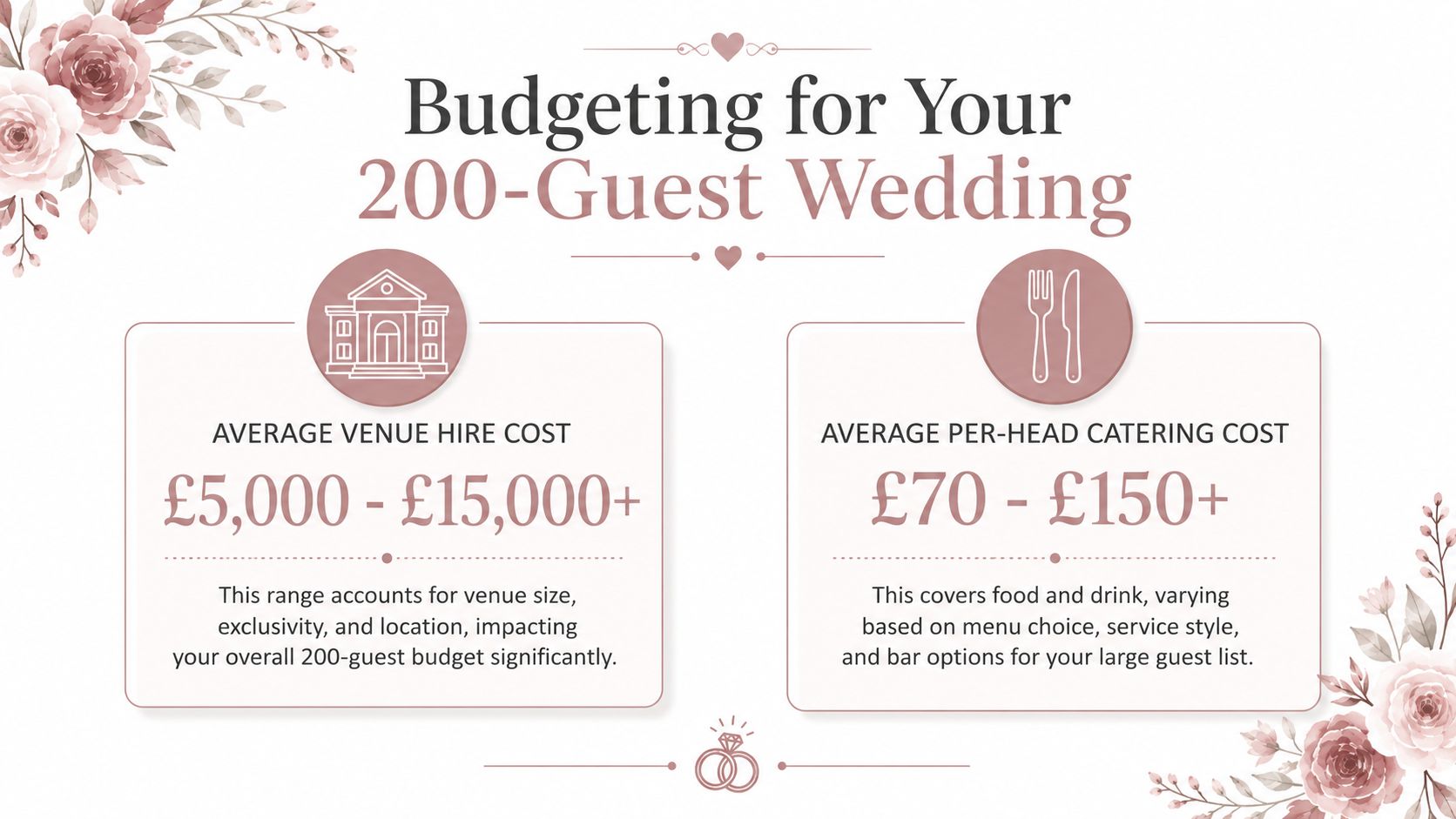
In the UK, the average all-in cost per head for wedding catering and venue is £117.10 as of 2026, which means around £23,420 for those core elements alone at 200 guests, based on UK venue and catering cost data. That figure is a useful benchmark because it grounds the conversation before extras enter the picture.
The first quote is rarely the full quote
For historic estates, hidden costs are often where couples feel most frustrated. Not because the charges are always unreasonable, but because they weren't obvious at the start.
The same cost source notes that overtime fees or corkage can add 15 to 25% at historic venues. On a large guest count, that can alter the whole feel of affordability.
Typical areas to examine closely include:
- Overtime staffing: If your celebration runs close to midnight, additional staff hours may apply.
- Corkage: Bringing your own wine can sound economical until corkage is added per bottle.
- Supplier restrictions: Some venues require in-house catering or approved suppliers, which changes how flexible your budget really is.
- Exclusive hire requirements: A large wedding often needs full-site use, which can affect minimum spend and access times.
- Setup access: If you need day-before access for styling, table plans, or large floral installations, ask whether it's included.
A helpful pricing conversation should end with a document that lists not just hire and food, but every likely extra your event format could trigger.
How to compare venue proposals fairly
When you're comparing wedding venues for 200 guests, look beyond the top-line hire fee. A lower venue fee can still lead to a higher final bill if many basics sit outside the package.
Use a simple comparison table like this in your notes:
| Cost area | What to check |
|---|---|
| Venue hire | Is it exclusive use, and for which spaces? |
| Catering | Is the per-head price for your guest count and menu style? |
| Drinks | What is included, and what sits under corkage? |
| Staffing | Are service staff, bar staff, and coordinators included? |
| Timing | What happens financially if the event runs later? |
Don't ask only, “What does it cost?” Ask, “What would make this quote increase?”
That single question often reveals more than the brochure.
For a visual sense of how couples think through these decisions, this planning video is a useful companion while building your numbers:
Historic venues can absolutely work for larger budgets and larger guest lists. You just need a quote that reflects the event you're planning, not an idealised version with half the practicalities removed. If you want to see how one venue presents its costs openly, a transparent venue hire pricing page is the sort of reference that helps couples understand what a fuller pricing structure looks like.
Planning the Logistics of a Large Celebration
A large wedding feels effortless when the day keeps moving. Guests rarely notice the machinery behind it. They notice whether they waited for drinks, whether the meal service dragged, and whether the room change felt smooth or awkward.
For 200 guests, logistics shape guest experience as much as flowers or music do.
How the day tends to flow
A well-run large wedding usually relies on separate phases that don't compete with each other. Guests gather for the ceremony. Then they move to drinks while the dining space is finalised or reset. After the wedding breakfast and speeches, the evening element opens up and the atmosphere shifts again.
That sequence matters because large groups need direction. If everyone is asked to do too much in one space at once, queues build quickly and the room loses its sense of occasion. Historic estates often help here because they naturally offer distinct rooms, terraces, lawns, and transition points.
Where large weddings often slow down
The most common pressure points are easy to overlook during a relaxed viewing:
- Arrival: Guests need clear parking, signage, and a sensible route into the venue.
- Bar service: If drinks service is under-resourced, the first queue forms fast.
- Meal service: Large tables are lovely, but the catering team needs proper access.
- Room turns: If your ceremony and dining happen in linked spaces, timing has to be realistic.
- Evening transition: Extra guests, entertainment setup, and lighting changes need planning rather than improvisation.
If you can picture where guests will stand when they are waiting, you're already planning like a professional.
Food choice also changes the operational rhythm. A formal three-course meal creates one kind of service pattern. A buffet, BBQ, or hog roast creates another. None is automatically better. It depends on the tone you want and the spaces available. For some couples, a dessert station or display table becomes part of the guest experience too. If you're adding sweet displays, practical styling details matter, and resources like this guide on how to select wedding cupcake stands can help you think through scale, presentation, and table footprint.
A planner's view of what guests remember
Guests don't leave saying, “The staffing model was excellent.” They say the day felt calm, generous, and well looked after.
That feeling usually comes from simple things done properly:
- Plates arrive hot
- Drinks appear without a long wait
- Toasts happen while people are still attentive
- Older guests know where to sit and rest
- The dance floor opens without confusion
A large wedding isn't hard because it has many people. It's hard because every small delay affects many people at once. That's why operational clarity matters so much more at 200 than it does at a smaller celebration.
How a Historic Estate Delivers the Dream
Historic estates solve a particular problem for larger weddings. They give the day shape.
Many venues advertise room for 200 guests, but that figure can apply mainly to the evening party rather than the seated daytime celebration. As noted in this UK venue round-up discussing day and evening capacity, couples planning a traditional wedding breakfast need to be especially careful about that difference. A venue with multiple substantial rooms is often far better suited to the full rhythm of the day.
Why separate spaces matter
A large guest count feels more comfortable when each part of the celebration has a natural home. Ceremony spaces need focus and sightlines. Drinks receptions need movement. Dining needs room to breathe. Evening celebrations need energy without forcing tables and dancing into conflict.
That's where a historic estate with distinct rooms and outdoor areas becomes practical, not just romantic. Rather than trying to make one room do everything, the venue can support a sequence.
A grounded example
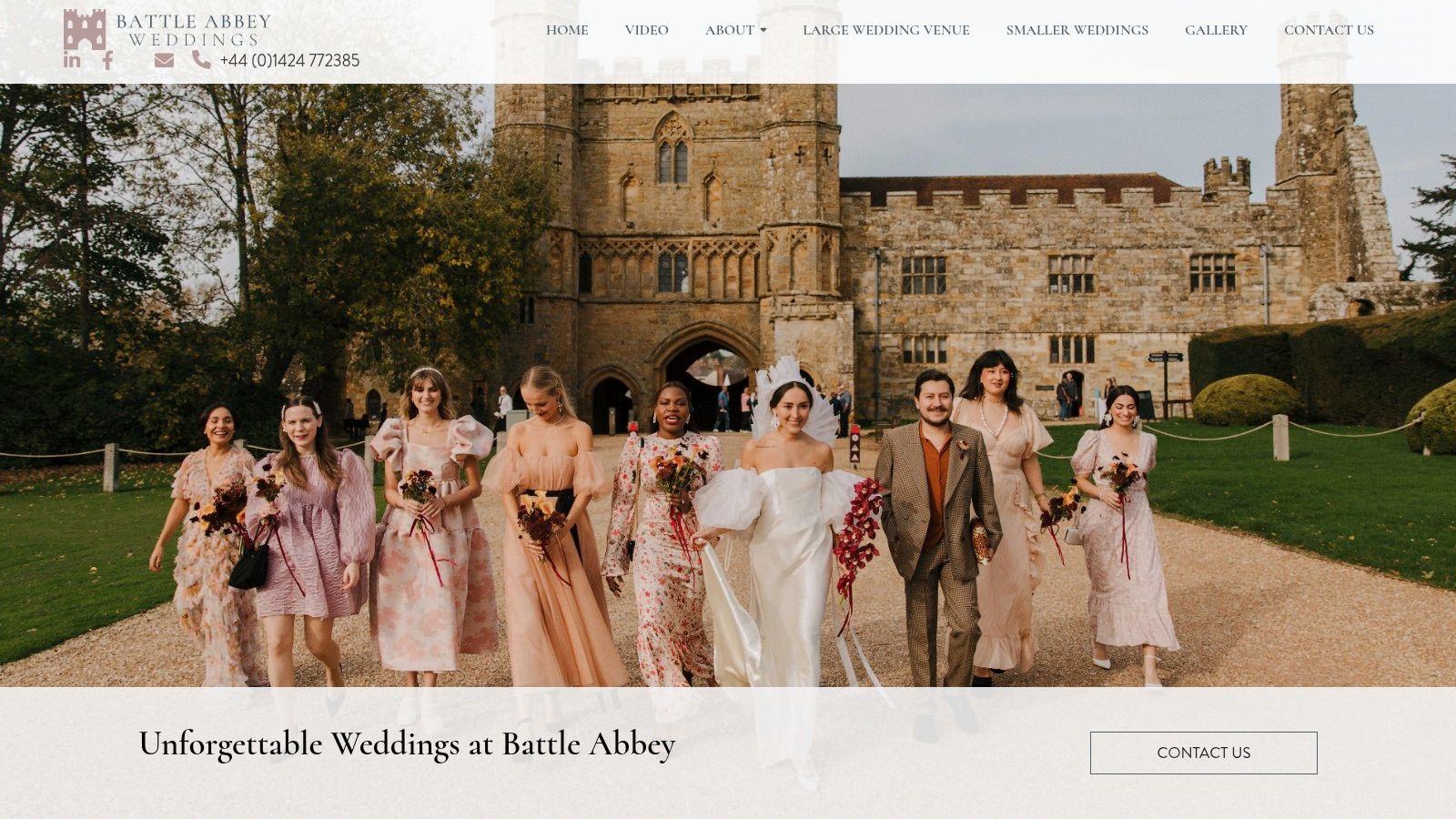
Battle Abbey Weddings is one example of how that model works in practice. The venue offers exclusive full-site hire for 75 to 250 guests, with ceremonies in the Abbot's Hall, wedding breakfasts in the Duke's Library or Dining Room/Bar, and drinks receptions on the terrace or lawn, according to the venue's published details on Battle Abbey Weddings. For a couple planning 200 guests, that kind of separation directly addresses the day-versus-evening capacity issue that causes trouble elsewhere.
The benefit isn't only capacity. It's flow.
Guests don't feel crammed into a single-purpose hall that has been pushed too far. The celebration can move from solemn to sociable to festive in a way that feels natural. That matters more in a large wedding because atmosphere changes are part of what keeps the day feeling fresh.
A historic venue earns its place when beauty and logistics support each other.
There's also a softer advantage that couples often notice only after visiting. Historic estates already carry visual depth. Stonework, panelled rooms, lawns, terraces, ruins, and long views do a lot of atmospheric work for you. That doesn't remove the need for planning, but it can reduce the pressure to transform a blank space from scratch.
Your Essential Questions for Venue Managers
When you meet a venue manager, don't try to sound polished. Try to be precise. Clear questions save money, prevent disappointment, and tell you very quickly whether a venue understands large weddings in a practical way.
Capacity and layout
Start with the point most couples miss.
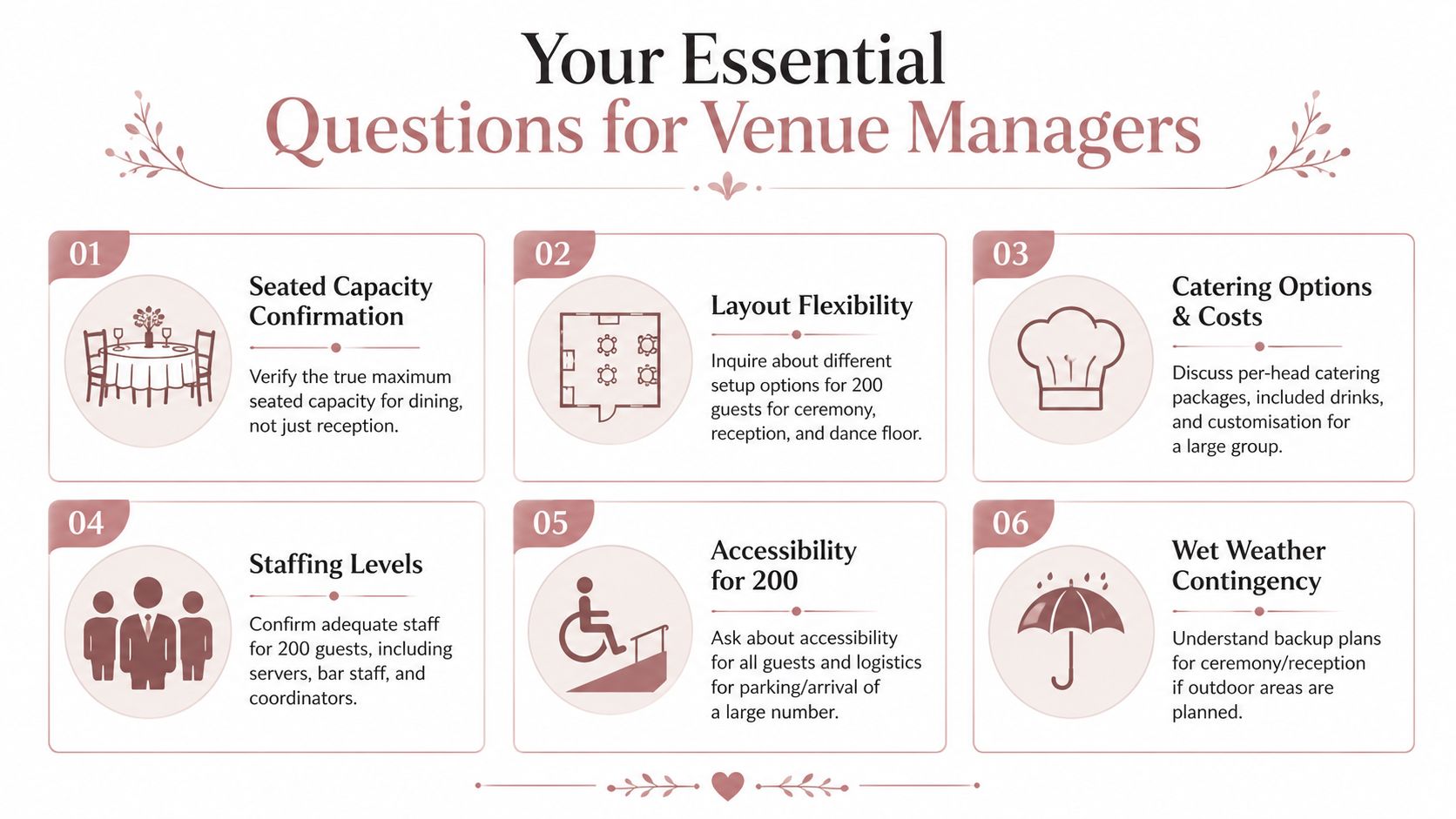
What is your maximum seated capacity for a wedding breakfast with a dance floor included?
This separates a true day capacity from a broad event capacity.Can we see a sample floor plan for our guest count?
A confident venue should be able to show how the room works, not just say it works.Which spaces would be used for ceremony, drinks, dining, and evening reception?
Good answers show that the team has thought about flow, not only headcount.
Pricing and contract detail
Here, you find the actual number, not the marketing number.
Can you itemise every likely extra charge beyond hire and per-head catering?
Listen for honest mention of overtime, corkage, setup access, and service-related add-ons.Are there required suppliers or in-house minimums?
Restrictions aren't always a problem, but they do affect flexibility.What happens if our timings overrun?
A clear answer helps you understand financial exposure if the day runs later than planned.
Ask for examples, not assurances. “No hidden costs” means very little unless the venue shows you what is and isn't included.
Logistics and guest experience
In such instances, experienced venue teams usually stand out.
| Question | What a useful answer sounds like |
|---|---|
| How will 200 guests be served efficiently? | Specific explanation of service style, timings, and room use |
| How are bars and drinks receptions handled? | Practical detail on where guests gather and how queues are avoided |
| What is your wet weather plan? | A defined backup option, not vague reassurance |
| How do you manage accessibility and arrival? | Clear routes, sensible parking guidance, and guest support |
If you'd like a ready-made prompt list before a viewing, this set of questions to ask a wedding venue is a useful planning companion.
A good venue manager won't be bothered by detailed questions. They'll answer them clearly, because they know that a successful 200-guest wedding depends on details being settled early.
Creating Your Unforgettable Large Wedding
A 200-guest wedding asks more of the planning process, but it also gives more back. The room feels fuller. The vows are witnessed by a wider circle. The party has a different kind of energy.
The strongest decisions usually come down to three things. First, confirming the venue's true seated capacity and layout. Second, building a budget around the full cost rather than the opening quote. Third, planning how guests will move through the day so the celebration feels calm rather than crowded.
That combination lets romance and realism work together.
As you shape the final details, don't forget the smaller human touches that make a large wedding feel personal. Thoughtful thank-you gifts for the people helping you through the day can go a long way, and collections of Revellia bridal party gift ideas can be useful when you're ready for that part of planning.
A big wedding doesn't need to feel overwhelming. It needs the right setting, the right questions, and a plan that respects the scale of what you're creating.
For a historic setting that can support the full flow of a large celebration, explore Battle Abbey Weddings to review its spaces, planning options, and venue details for weddings of different sizes.