Step Into a Medieval Fairytale. You're probably balancing two competing instincts right now. You want the romance of a storybook wedding, but you don't want it to tip into pantomime, over-decoration, or a day that looks lovely in saved inspiration images and falls apart in a real venue with real weather, real timings, and real guests.
Historic English venues solve part of that problem for you. Ancient stone, formal gardens, terraces, libraries, gatehouses, and ruins already carry atmosphere, so you don't need to manufacture magic from scratch. At places such as Battle Abbey, the setting does much of the visual work, which lets you focus your budget on the essential details guests perceive. Better food, better lighting, better flowers, and a cleaner flow from ceremony to drinks to dinner.
That matters because couples are spending more on weddings, not less. The average UK wedding reached £20,775 in 2024, rising by over £1,500 year on year, and venue costs reached an average of £8,800, with one in five couples spending between £10,000 and £15,000 on the venue alone, according to UK wedding spending data for 2024. If you're making that level of investment, the details need to feel coherent, not merely pretty.
The strongest fairytale wedding ideas at historic venues don't pile on props. They draw from the building, the natural surroundings, and the season. These ten ideas show how to do exactly that with Battle Abbey as the blueprint.
1. Historic Estate Venue with English Heritage Backdrop
The easiest way to make a wedding feel fairytale-like is to start with a venue that already looks as though it belongs in a storybook. Medieval stonework, formal lawns, old libraries, and dramatic ruins create atmosphere before a single candle or flower arrives. At a place like Battle Abbey, the architecture gives you scale, texture, and a sense of occasion that modern blank-canvas spaces often can't match.
A strong historic venue also gives you practical advantages. You can hold the ceremony in one characterful room, move guests onto a terrace for drinks, then bring everyone into a dining space that still feels connected to the same story.
Use the building, not just the postcode
If you're considering a heritage setting, look closely at how the spaces connect. Battle Abbey's own English Heritage wedding venue options show why layout matters. You want guests to move naturally from one moment to the next without long pauses, awkward bottlenecks, or a complete break in atmosphere.
What works well:
- Ceremony rooms with original features: Stone arches, timber ceilings, fireplaces, and leaded windows read beautifully in person and in photographs.
- Outdoor drinks spaces with a view: Terraces and lawns give guests breathing room and create a visual reset between ceremony and dinner.
- Reception rooms with character: Libraries and halls feel richer under candlelight than standard function suites.
What doesn't work as well is trying to “theme” a plain venue into feeling historic. Faux heraldry, plastic ivy, and rented props rarely look convincing against an otherwise ordinary backdrop.
Practical rule: Visit the venue in the same season as your wedding if you can. Historic buildings change dramatically with light, foliage, and sunset times.
Battle Abbey is especially useful as a blueprint because its setting is part of the experience. The backdrop isn't generic countryside. It's a significant historic setting, which gives your wedding a stronger sense of place.
2. Locally Sourced, Seasonal Menu with Regional Ingredients
Guests step out onto the terrace after the ceremony, glasses of Sussex sparkling in hand, and the menu already feels tied to the place. That is the advantage of serving food that belongs to the county and the season. At a heritage venue, dinner should feel as grounded as the stone walls and gardens around it.
Battle Abbey works well as a blueprint because the setting naturally pushes you toward an English-heritage menu rather than a standard hotel package. East Sussex gives couples plenty to work with. Local lamb, estate-reared beef, regional cheeses, orchard fruit, asparagus, berries, honey, and English wine all sit comfortably in a fairytale wedding that still feels believable and well judged.
The strongest menus are built around season first, then style of service. Spring suits pea risotto, soft herbs, early strawberries, and lighter puddings. Autumn allows for slow-cooked meats, root vegetables, apple-based desserts, and deeper, fuller sauces. Guests notice the difference. Seasonal produce usually tastes better, travels less, and needs less garnish to look generous on the plate.
Service style matters just as much as ingredients. A grand hall can carry a plated dinner with real formality. A lawn or terrace often works better with bowls, sharing platters, or a refined barbecue that keeps the atmosphere relaxed without losing quality. I usually advise couples to choose the format that fits the room, the timetable, and the guest mix, not the format that sounds most impressive on paper.
A simple planning framework helps:
- Reception drinks: English sparkling wine, elderflower cocktails, or local ale with canapés guests can eat in two bites.
- Wedding breakfast: Two or three courses that reflect the season and can be served well at scale.
- Dessert and cheese: A plated pudding, a regional cheese course, or both if dinner timing allows.
- Evening food: Something warm and familiar, such as bacon baps, mini pies, or Sussex rarebit-style bites.
There is a real trade-off here. Highly seasonal menus feel more personal and often photograph better on the table, but they require flexibility from the couple and the caterer. If you insist on a specific ingredient nine months in advance, you can end up paying more for produce that is out of season or not at its best.
Budget pressure often shows up fastest in catering. Hitched's recent National Wedding Survey notes continued pressure on overall wedding budgets in the UK, which is one reason menu choices need to be deliberate. A shorter, well-executed menu with excellent local sourcing usually gives better value than an overlong meal that tries to do too much.
Presentation should connect with the wider tablescape too. A menu built around orchard fruit, garden herbs, and English cheeses looks stronger when it is planned alongside the linens, florals, candles, and place settings. That is why I recommend reviewing table décor ideas for historic weddings at the same time as the catering brief, not after it. Food and styling should read as one story.
3. Candlelight and Vintage Lighting Design
Lighting is where many fairytale wedding ideas either become immersive or fall flat. Historic venues rarely need more décor. They need the right glow. Warm pools of light can soften stone, deepen colour, and make old rooms feel intimate rather than austere.
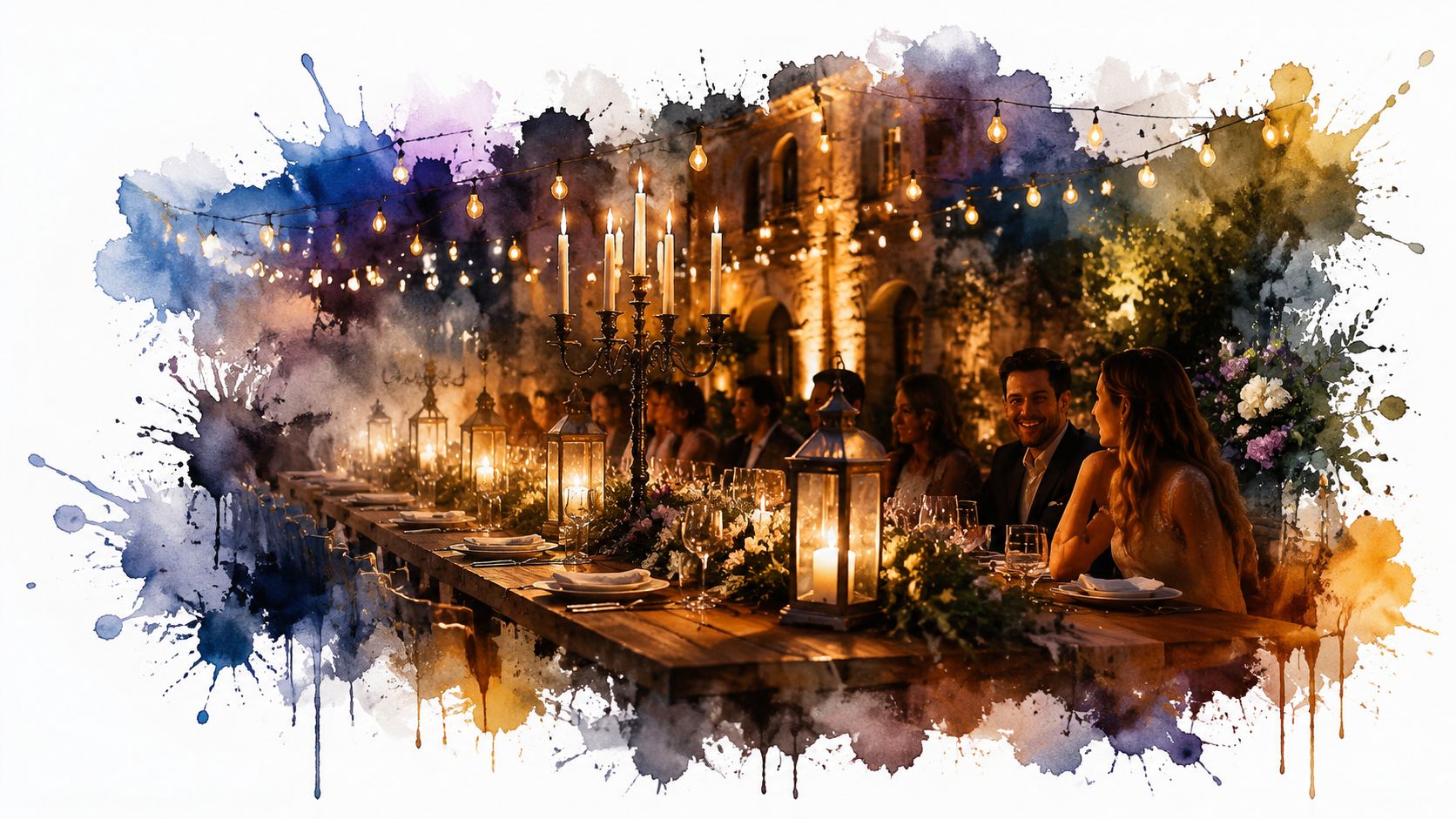
At Battle Abbey-style venues, candlelight, lanterns, discreet uplighting, and restrained festoon or string lighting usually work better than theatrical colour washes. Blue, magenta, and hard white lighting can clash with historic interiors and make a beautiful room feel like a corporate gala.
Keep it layered and warm
A good lighting plan uses several levels at once. Table candles handle intimacy. Lanterns and architectural uplighting define the room. Exterior lighting helps terraces, paths, and ruins remain usable and photogenic after dark.
The most useful starting point is to look at real table décor ideas for historic weddings, because lighting and tablescapes need to be planned together, not separately. Tall florals can block candlelight. Low centrepieces can make the room feel brighter and more connected.
A few rules save a lot of trouble:
- Use warm-white LEDs: They complement stone, wood, and candlelight.
- Ask about heritage restrictions early: Historic buildings often limit fixing points, open flames, and cable runs.
- Light pathways as well as focal points: Guests notice dark steps and uneven lawns immediately.
Soft lighting photographs well, but only if the photographer knows the plan. Share your lighting brief before the wedding, not on the night.
This gives a good sense of the mood you're aiming for:
One more practical point matters in the UK. Existing fairytale wedding content often ignores weather-proofing, even though guidance on fairytale weddings and UK weather volatility notes that 60% of UK weddings now face rain shifts. If your lighting plan includes terraces or gardens, make sure it still looks intentional under cover, not like a rushed backup.
4. Elegant Stationery with Historic and Botanical Design Elements
Stationery sets expectations before guests arrive. At a historic venue, it's one of the easiest places to create a fairytale mood without spending on things guests barely notice. Done well, it signals the tone of the day. Done badly, it introduces a completely different style from the venue itself.
For Battle Abbey-inspired weddings, I'd steer couples towards design details pulled from the building and grounds. Arched line drawings, medieval windows, botanical borders, heritage roses, wild meadow references, wax seals, deckled paper, and classic typography all fit naturally. The aim isn't to make your invitation look like a museum leaflet. It's to hint at history with a light touch.
Make the suite practical as well as beautiful
Historic venues often sit within wider estates or rural roads, so invitation design has to do real work. If parking, accommodation, entrance points, or timing are even slightly confusing, spell them out clearly on an enclosure card or wedding website.
The strongest suites usually include:
- An invitation that reflects the venue: A sketch of the hall, abbey ruins, or terrace immediately creates cohesion.
- Menu and place cards tied to the floral palette: This makes tables feel finished without needing excessive styling.
- Signage that suits the venue's materials: Painted boards, framed paper, and hand-calligraphed pieces tend to sit better in old buildings than acrylic.
Current wedding styling leans towards hyper-personalised details, and that fits historic venues especially well. The 2024 UK Wedding Report also highlights a 2025 trend toward digital tools such as virtual reality venue tours and AR photo booths, alongside demand for more personalised styling, in the UK Wedding Report 2024 PDF. That means your stationery can bridge both worlds. Traditional in look, clear and modern in function.
5. Romantic Bridal Attire with Classic and Vintage Influences
Historic venues favour clothes with presence. That doesn't mean everyone needs to dress like they're attending a costume drama. It means your outfit should hold its own against stone walls, long rooms, high ceilings, and formal backdrops.
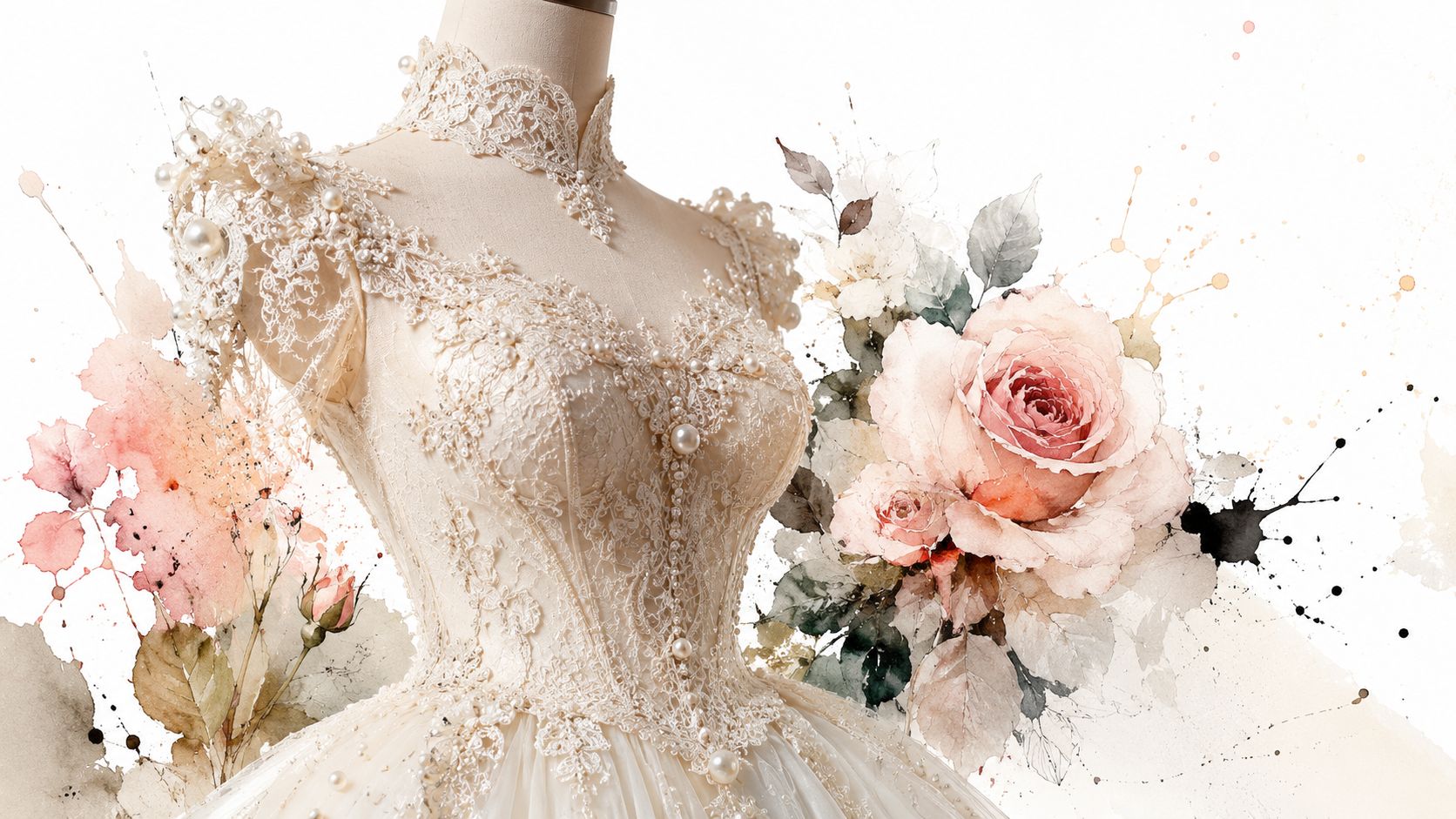
For brides, ballgowns, structured A-line silhouettes, silk mikado, lace sleeves, and longer veils tend to sit beautifully in abbey and estate settings. For grooms, morning dress, black tie, or well-cut tailoring with a classic waistcoat usually reads better than anything too trendy. The venue already brings drama. Clothing should look timeless beside it.
Dress for the site, not only the silhouette
Practical planning matters. Trains look wonderful on stone steps and in formal portraits, but they need managing on gravel, lawns, and terraces. Delicate hems can suffer quickly outdoors. Lightweight, slinky fabrics can also disappear visually in large historic interiors.
A sensible approach is to ask:
- Can you move comfortably between indoor and outdoor spaces?
- Will the hem survive the ground conditions?
- Does the look suit both daylight ceremony images and candlelit evening photographs?
Battle Abbey-style venues often host celebrations across several spaces. That means attire needs versatility. A cathedral veil may be perfect for the ceremony and portraits, while a bustle, cape removal, or evening hair change can make the reception easier.
Historic venues reward cleaner styling than people expect. One strong dress, one good veil, and thoughtful accessories usually beat layers of competing statement pieces.
Couples are also moving towards traditional and rustic hybrid styling rather than purely modern minimalism, which makes classic attire feel particularly at home in this setting.
6. Lush Floral Installations with Seasonal Garden Blooms
Guests step into a medieval hall or across abbey grounds and look to the same places every time: the ceremony backdrop, the entrance, the staircase, the tables. Floral design should meet the eye there first. At a historic English venue, that approach gives you atmosphere without fighting the architecture.
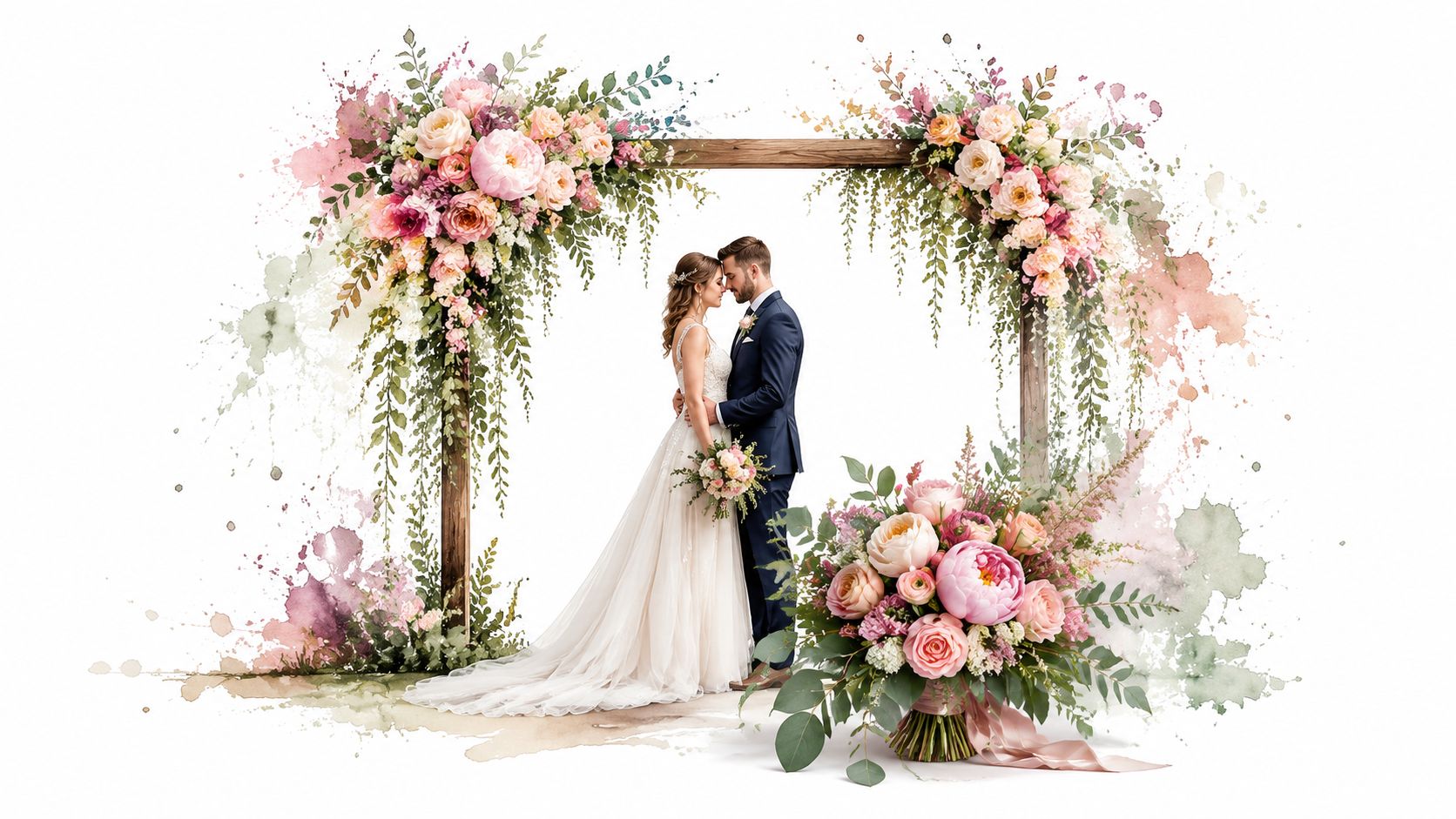
Seasonal flowers also read more convincingly in heritage spaces. Spring suits hellebores, blossom, narcissi, tulips, and early garden textures against weathered stone. Summer can carry roses, sweet peas, foxgloves, and rambling shapes on terraces and long tables. Autumn is often the strongest option of all in these venues, with dahlias, berries, seed heads, and foliage adding depth that suits oak, brick, and candlelight.
The main trade-off is scale versus placement. Couples often ask for flowers everywhere, then find the budget gets diluted into lots of small arrangements that barely register in photographs. I usually recommend concentrating spend in three areas and reusing key pieces later in the day.
If you're planning at Battle Abbey, their wedding floral package ideas show how installations can be shaped around existing terraces, stonework, and reception rooms rather than dropped in as generic décor.
What works particularly well in this setting:
- Ceremony meadows and grounded floral clusters: Softer beside historic architecture than a bulky full arch.
- Staircase or entrance arrangements: High visual return because every guest passes them.
- Low table arrangements mixed with candles: Better for conversation and more in keeping with old English dining rooms.
- Repurposed florals: Ceremony flowers moved to the top table, cake display, or bar keep the design coherent and cut waste.
Flowers also need to respect the site. Some listed venues restrict fixings, water use near fragile surfaces, or large suspended installs. Scent matters too. Strongly perfumed blooms can become oppressive in smaller panelled rooms, especially during dinner.
A fairytale look lands best when it feels rooted in the place. English garden flowers, gathered generously and edited carefully, usually do that better than exotic stems flown in for spectacle alone. If your cake designer is matching floral colours or hand-painted botanical details to the room styling, it can help to unlock expert cocoa butter methods before finalising the visual brief.
7. Bespoke Wedding Cake with Historic and Botanical Inspiration
A good wedding cake should look as though it belongs in the room where it's displayed. At a heritage venue, that usually means taking cues from architecture, gardens, manuscripts, plasterwork, or stone carving rather than choosing a design that could sit anywhere.
Ivory buttercream, delicate piping, pressed flowers, sugar roses, hand-painted botanical details, and restrained metallic accents all work well in old English interiors. A towering novelty cake often feels disconnected from the surroundings. A more refined tiered design usually lands better.
Let the display do some of the work
Cake styling is never just about the cake. Table choice, linen, candles, flowers, backdrop, and room position all affect how it reads. In a place like Battle Abbey, a cake can sit near a fireplace, within a library setting, or against a windowed wall and instantly feel more dramatic.
Flavour matters too. If the menu has been rooted in the season and region, the cake shouldn't feel like an unrelated afterthought. Fruit, spice, floral notes, citrus, and richer chocolate layers can all work, depending on the time of year.
If your baker is adding painted details or coloured finishes, it's worth understanding specialist decorative techniques such as expert cocoa butter methods. That's especially useful for couples who want a polished botanical or heritage-inspired finish without ending up with a cake that looks too modern or too sweetly rustic.
One practical note many couples miss is flower safety. If fresh flowers are going on the cake, the baker and florist need to confirm that every stem is prepared correctly and that any bloom used is safe for food-adjacent styling.
8. Personalized Wedding Favors with Local Artisanal Products
Guests leave a historic venue remembering the details that felt tied to the day and the place. Favours should do the same. At a setting such as Battle Abbey, the strongest choices usually come from nearby makers and reflect the county rather than a trend that could belong to any wedding.
Small jars of Sussex honey, handmade fudge, fruit preserves, shortbread, or miniature bottles from a local vineyard or distillery all work well, provided they suit your budget, guest list, and service style. The practical advantage is clear. These items are easy to personalise, simple for guests to carry home, and far less likely to be abandoned at the end of the night than decorative trinkets.
A good favour also needs to fit the room.
In heritage venues, packaging should feel considered but restrained. Linen tags, botanical labels, wax seals, and ribbons in soft neutrals tend to sit more naturally against old stone, dark wood, and formal tablescapes than bright novelty packaging. I usually advise couples to match favour design to their stationery suite so the whole scheme feels joined up rather than styled in separate pieces.
There are trade-offs to weigh. Edible favours are popular because they get used, but they do need sensible storage, especially in warm rooms or during summer weddings. Glass jars look beautiful, though they add weight and transport cost. Fresh local products can be a lovely nod to the region, but they need to be ordered close to the date and checked carefully for shelf life.
A simple framework helps:
- Choose something local: The favour should make sense for the venue and county.
- Check the logistics: Consider heat, breakage, transport, and setup time.
- Personalise the finish: Names, date tags, or a short note are usually enough.
- Place them clearly: At each setting, on a dedicated display, or handed out at departure.
Current UK wedding trend reporting points to continued demand for refined, heritage-inspired styling rather than overt novelty, which is one reason locally made favours suit this type of celebration so well. They feel collected, not mass ordered.
If you are also choosing attendant gifts, keep the same standard. Useful and personal usually ages better than flashy. A scent gift can work particularly well for the wedding party, and this guide to personalized fragrance for groomsmen is a solid starting point for couples who want something more considered than another monogrammed flask.
9. Professional Fairytale Wedding Photography with Historic Venue Expertise
A fairytale wedding at a heritage venue can photograph beautifully at 2 pm and become technically difficult by 4 pm. Abbey ruins throw hard shadows, medieval halls absorb light, and English weather can turn a bright terrace into a grey backdrop within minutes. Couples often assume any experienced wedding photographer can handle that shift. In practice, historic venues ask for a different skill set.
Photographers who regularly work in places like Battle Abbey understand how to use the building rather than fight it. They know which doorways frame a portrait properly, which stone interiors need careful exposure, and when a quick change of location will save time without losing the atmosphere. That matters because the strongest images at an English heritage wedding do two jobs at once. They document the people, and they record the setting that made the day feel distinctive.
Ask to see full galleries from historic venues, not only highlight reels. Ten strong images can hide a lot. A complete gallery shows whether the photographer can handle a dark ceremony room, a windy confetti exit, formal family groups on uneven ground, and candlelit speeches after sunset.
Your shot list should reflect the venue itself, especially if the architecture and grounds are part of the reason you booked it. I usually advise couples to cover four areas clearly:
- Architectural portraits: Use abbey arches, gatehouses, staircases, terraces, and long garden views as part of the composition.
- Timed couple sessions: Plan one short set in daylight and another near dusk if the schedule allows.
- Unoccupied detail coverage: Photograph flowers, tables, stationery, and cake before guests enter the room.
- Context shots of guests in the space: Drinks on the lawn, movement through cloisters, and candlelit dinner scenes often become the images that feel most like the day.
Booking early is sensible. Established photographers with strong venue-specific portfolios tend to fill prime dates well in advance, particularly for spring and summer weekends. Hitched's annual wedding survey also shows that photography remains one of the categories couples consistently prioritise in their budgets, which fits what planners and venues see in practice. You can review the latest findings in the Hitched National Wedding Survey.
One last practical point. Ask how the photographer works with coordinators and venue staff. At a historic property, access rules, restricted areas, and timing limits are common. A photographer who can work within those constraints calmly will protect the schedule and still get the images you want.
10. Bespoke Entertainment and Music for Intimate Fairytale Celebrations
Music carries more of the fairytale atmosphere than many couples expect. In a venue with ancient walls and formal rooms, the right sound fills the space elegantly. The wrong choice can feel harsh, too loud, or disconnected from the setting.
Ceremony music is where live performers usually make the strongest impact. A string quartet, harpist, pianist, or classical guitarist can suit an abbey hall beautifully. Drinks reception music can then shift into something lighter and more relaxed before the evening moves to a live band or DJ.
Match the entertainment to the acoustics
Historic rooms often have strong natural resonance. That's wonderful for certain instruments and much less forgiving for overpowered speakers or poorly balanced amplified sets. Ask performers whether they've worked in similar spaces before and whether they're comfortable adjusting for stone interiors, lower ceilings, or outdoor terraces.
A balanced entertainment plan often looks like this:
- Ceremony: Classical or acoustic live music.
- Reception drinks: A soloist or small ensemble that doesn't dominate conversation.
- Evening: A band or DJ who can build energy without overpowering the room.
This approach also suits how many weddings are structured. The average guest count remains around the mid-eighties according to market reporting, and historic venues often need entertainment that can scale elegantly for both intimate and larger groups. Battle Abbey's own venue format, with options for intimate celebrations and larger exclusive hire, is a good example of where flexible entertainment choices matter.
The best suppliers also understand timing. A beautiful set means very little if the musician is still setting up while guests are already moving into the room.
10-Point Fairytale Wedding Comparison
| Item | 🔄 Implementation complexity | ⚡ Resources & cost | ⭐ Expected outcomes / 📊 Impact | 💡 Ideal use cases | ⭐ Key advantages |
|---|---|---|---|---|---|
| Historic Estate Venue with English Heritage Backdrop | High, long lead time, heritage approvals, multi-space logistics (12–18+ months) | Venue hire £3,500–£8,000+; staff, insurance, venue fees | ⭐ Authentic, timeless atmosphere; 📊 accommodates 60–250 guests, exclusive photo locations | Large/full-day or destination weddings seeking historic authenticity | Authentic architectural backdrops; multi-space flow; built-in grandeur |
| Locally Sourced, Seasonal Menu with Regional Ingredients | Medium, menu planning, seasonal sourcing, coordination with suppliers | ⚡ £35–£75+ per guest; in‑house caterer, local suppliers, tastings | ⭐ Fresh, memorable dining; 📊 lower food miles, supports local economy | Food-forward weddings, farm‑to‑table themes, regional storytelling | Ingredient freshness; sustainability; regional authenticity |
| Candlelight and Vintage Lighting Design | Medium–High, electrical planning, safety, installation labor | ⚡ £800–£3,000; lighting equipment, electricians, design time | ⭐ Romantic evening ambiance; 📊 extends celebrations into night, strong photo impact | Evening receptions, intimate ceremonies, highlighting architecture | High visual impact for cost; complements historic features; photogenic |
| Elegant Stationery with Historic & Botanical Design | Low–Medium, design approvals, production lead times (8–12 weeks) | ⚡ £1.50–£5 per invite; full suite £2,000–£4,000; designer, printers | ⭐ Cohesive branding and clear guest information; 📊 tangible keepsakes | Destination weddings, formal events needing coordinated messaging | Sets tone pre-event; consistent aesthetic; collectible keepsakes |
| Romantic Bridal Attire with Classic & Vintage Influences | Medium, sourcing, fittings, alterations (9–12 months) | ⚡ Gown £2,000–£5,000+; fittings, preservation, accessory costs | ⭐ Timeless photographic results; 📊 enhances overall visual narrative | Formal ceremonies at heritage venues, editorial-style photoshoots | Timeless elegance; luxury fabrics; complements historic backdrop |
| Lush Floral Installations with Seasonal Garden Blooms | High, design, installation, seasonal coordination, weather contingency | ⚡ £1,500–£4,000; experienced florist, delivery/installation crew | ⭐ Romantic garden atmosphere; 📊 strong sensory and photo impact | Terrace/garden ceremonies, seasonally driven weddings | Fragrance and color harmony; locally sourced blooms; Instagram-ready |
| Bespoke Wedding Cake with Historic & Botanical Inspiration | Medium, design approvals, specialist baker, delivery logistics (6–9 months) | ⚡ £300–£800 for 3–5 tiers; £5–£8+ per slice; cake maker, staging | ⭐ Visual centerpiece and tasting highlight; 📊 ceremonial photo moment | Formal receptions, locally inspired menus, dessert focal points | Custom design that ties to venue; local ingredients; memorable centerpiece |
| Personalized Wedding Favors with Local Artisanal Products | Low–Medium, sourcing, personalization, packaging lead time (3–4 months) | ⚡ £2–£5 per favor; packaging, producer coordination | ⭐ Memorable guest keepsakes; 📊 supports local makers, aligns with theme | Destination guests, sustainability-minded celebrations, local-theme events | Local economic support; personalized mementos; cohesive presentation |
| Professional Fairytale Wedding Photography with Historic Venue Expertise | Medium, vendor selection, shot planning, timeline coordination | ⚡ £1,500–£4,000+; second shooter optional, editing time | ⭐ High-quality lasting images; 📊 comprehensive coverage (800–2,000 images) | Couples prioritizing legacy images, heritage venues, golden‑hour portraits | Expertise with ruins/low light; lasting documentation; promotional-quality images |
| Bespoke Entertainment and Music for Intimate Fairytale Celebrations | Medium, booking, acoustic planning, technical setup, soundchecks | ⚡ £300–£1,500+ per musician; £800–£2,000+ DJ; AV tech | ⭐ Emotional atmosphere and memorable moments; 📊 supports ceremony and reception flow | Ceremonies needing ceremony solemnity or evening receptions with live music | Live ambiance; adaptable formats (classical→band→DJ); enhances key moments |
Bring Your Historic Fairytale to Life
The most convincing fairytale wedding ideas don't rely on excess. They rely on fit. A historic venue gives you architecture, mood, and narrative from the start. Everything else should deepen that feeling rather than compete with it.
That's why the best celebrations at English heritage venues feel so coherent. The stationery hints at the building before guests arrive. The flowers echo the gardens and the season. The menu tastes of the region. Candlelight softens stone and timber at exactly the point day turns into evening. The music respects the room. Even the favours feel tied to the place rather than pulled from a generic wedding checklist.
There are practical realities behind all of this. Weather needs a backup plan, especially if you're using lawns, terraces, or ruins. Historic buildings often come with setup restrictions, power considerations, and tighter rules around open flame or installations. Outfit choices need to account for grass, gravel, and old staircases. And photography needs someone who can handle uneven light, large spaces, and fast transitions.
But those aren't reasons to simplify your vision into something bland. They're reasons to build it properly. A fairytale wedding at a historic venue works best when romance and logistics are planned together. That's the difference between a day that merely looks themed and one that feels immersive from start to finish.
Battle Abbey offers a useful model for this style of celebration because it combines sacred interiors, reception spaces with character, outdoor terraces, locally sourced catering, and the option of exclusive hire within a historic estate setting. If that combination is close to what you're looking for, a site visit is usually the point where ideas become much easier to shape. You can see how the light falls, where guests would gather, how ceremony and dining spaces connect, and which styling decisions will add value.
If you're in the middle of planning, keep coming back to one question. Does each decision make the wedding feel more connected to the venue, the season, and your own story? If it does, you're probably on the right path. If it doesn't, it may be decoration for decoration's sake.
The strongest fairytale weddings feel generous, grounded, and full of place. Historic English venues make that possible. Thoughtful planning is what brings it to life.
If you'd like to explore a historic East Sussex setting for your own celebration, Battle Abbey Weddings offers site visits, bespoke planning support, and ceremony and reception spaces within the Battle Abbey estate.