They had fallen for the lawn first. Then the registrar asked a simple question: “Is the ceremony space licensed?” That one detail changed the entire shortlist.
The Search for the Perfect Ceremony Setting
Most couples don't begin with a spreadsheet. They begin with a feeling.
It might be the hush just before the music starts. It might be the way late afternoon light settles across old stone, or the thought of stepping from vows straight into drinks on a terrace without shepherding guests into cars. The search for ceremony wedding venues is often a search for significance, not just availability.
I've seen couples tour places that were perfectly pleasant and entirely wrong. A polished hotel suite can feel efficient but anonymous. A pretty field can feel romantic until the practical questions arrive. Where do guests wait? Where does the signing happen? What happens if it rains? Can grandparents manage the walk? Is the setting legal for the type of ceremony you want?
Those questions are one reason so many couples now favour a venue that can do the whole day well. In the UK, approximately 62–77% of couples are choosing ‘one-stop shop' venues that host both the ceremony and reception, a shift tied to easier logistics and a smoother guest experience, according to UK wedding trend insights on all-in-one venues.
Practical rule: If a venue gives you butterflies but creates a transport plan, a weather plan, and a legal uncertainty, it isn't the easy choice it first appears to be.
That doesn't mean every all-in-one venue is automatically right. The right one feels coherent from the first arrival to the last dance. Guests know where to go. Suppliers know where to set up. You aren't losing an hour to movement between locations. Your photographs look connected because the day has a visual rhythm.
When couples ask me where to start, I tell them to think in scenes, not lists. Arrival. Ceremony. Confetti. Drinks. Dinner. Evening. If those scenes can unfold naturally in one place, the whole celebration tends to breathe more easily. A useful first step is this guide on how to choose a wedding venue, especially if you're still narrowing your style and priorities.
A ceremony setting should feel momentous. It should also make the day simpler, calmer, and kinder to everyone involved.
Exploring Different Types of Ceremony Venues
Venue style shapes the ceremony before a word is spoken. It affects how people enter, where they look, how they hear your vows, and how the day flows afterwards.
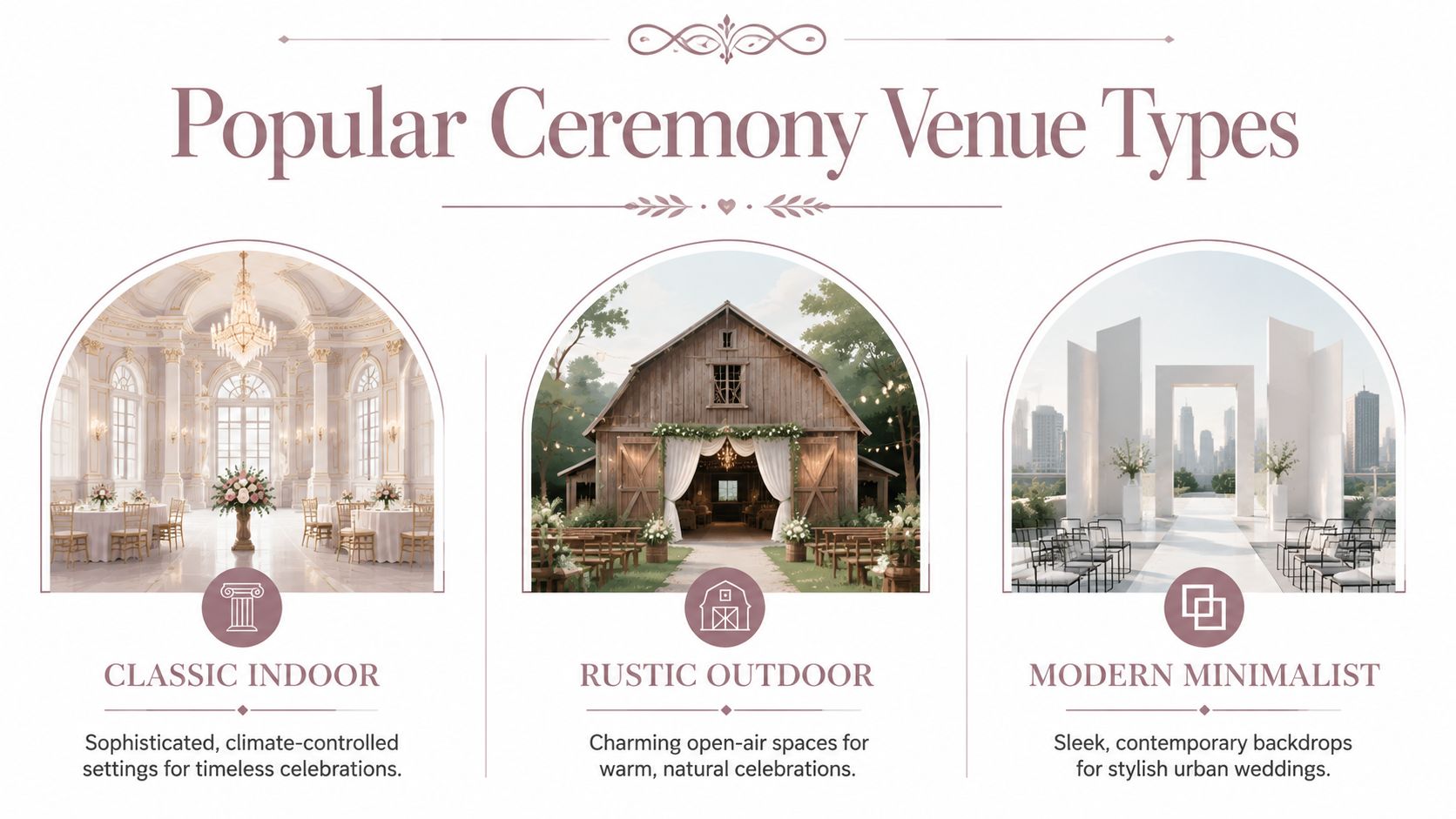
Classic indoor spaces
Hotels, manor houses, and purpose-built event spaces offer predictability. Floors are level, lighting is controllable, staff are usually used to tight timelines, and bad weather matters less. For couples planning in cooler months, this kind of venue often removes an entire layer of stress.
The trade-off is atmosphere. Some indoor spaces feel elegant and self-contained. Others need styling before they feel personal.
- Ballrooms and hotel suites work well for couples who want structure, onsite accommodation, and a straightforward supplier schedule.
- Country houses tend to feel softer and more domestic, especially for candlelit ceremonies and winter weddings.
- Modern urban venues suit couples who prefer clean lines, architectural backdrops, and a city-centre setting.
Outdoor settings
Gardens, terraces, courtyards, and lawns offer a kind of looseness that indoor rooms rarely can. Guests relax more quickly outside. Children often settle better. Photographs can feel less staged because the environment is already doing part of the work.
But outdoor ceremonies need a serious backup plan. Not an optimistic one. A serious one. The aisle needs to work in wind, the sound needs to carry, and heels need a stable surface. If an outdoor ceremony matters to you, shortlist venues that treat the weather plan as part of the design, not an afterthought. If you're drawn to lawns and terraces, these outdoor wedding venue ideas are a good reference point for what to look for.
Historic and religious venues
Historic spaces carry their own emotional weight. A ceremony in a church, abbey, or heritage hall often feels instantly ceremonial because the room already has history, scale, and visual character. In the UK, religious and historic venues account for approximately 30% of combined ceremony and reception locations, which speaks to their continued place in wedding planning, as noted in UK wedding industry insights on churches and abbeys.
That appeal isn't only about tradition. It's also about texture. Stone walls, timber ceilings, original windows, worn flagstones. These details create atmosphere before florals or candles ever arrive.
A good historic venue doesn't need to be over-dressed. It already knows how to hold a room.
For church ceremonies in particular, styling needs restraint. Too much décor can fight with the architecture. Couples planning a religious setting often find these budget-friendly church wedding decor tips useful because they focus on working with the building rather than covering it up.
A simple comparison helps:
| Venue type | Feels like | Strength | Watch for |
|---|---|---|---|
| Indoor classic | Formal, polished, controlled | Weather-proof and structured | Can feel generic without styling |
| Outdoor | Airy, relaxed, scenic | Natural beauty and open space | Backup plan is crucial |
| Historic or religious | Atmospheric, rooted, memorable | Built-in character and ceremony | Rules may be stricter |
The right category is the one that fits your ceremony, not just your Pinterest board.
Understanding Venue Licensing and Legal Essentials
A beautiful room isn't enough. For a civil ceremony, the space must be properly licensed.
That's where many couples get caught out. They assume that if a venue hosts weddings, every part of the property can legally hold the ceremony. Often, that isn't the case. The reception barn may be approved while the gardens aren't. The terrace may be available for drinks but not vows. The dramatic ruins might be wonderful for photographs and completely unsuitable for the legal part.
What licensed actually means
For a non-religious wedding, you need a venue that holds the relevant approval for civil ceremonies. Ask the venue to name the exact room or approved area where the legal ceremony can take place. Don't settle for “yes, we do weddings.” You need the specific licensed location.
28% of couples planning historic venue ceremonies faced delays due to licensing issues, according to reporting on the 2025 UK wedding findings about licensing delays. These figures highlight a common challenge, as historic properties are especially prone to confusion because some spaces are protected, some are ceremonial in feel but not approved, and some may be subject to access conditions.
Questions to ask before you pay a deposit
Use plain language. A venue team should be able to answer these quickly.
- Which room is licensed for the legal ceremony? Ask for the exact name.
- Does the licence cover our preferred ceremony style? Civil and religious arrangements aren't interchangeable.
- Who coordinates with the registrar? Some venues guide the process closely. Others leave couples to arrange everything themselves.
- Are there building restrictions? In listed or heritage properties, décor, candles, sound, and layout may be limited.
Non-negotiable: If the venue hesitates when you ask about licence details, pause the conversation until you have a clear answer.
Why listed buildings need extra care
Historic venues often work within conservation rules. That's part of their charm. The original stone, timber, and windows survive because the building can't be altered casually. It also means your plans have to respect the space.
You may not be able to pin drapery into walls, move certain furnishings, or introduce equipment that affects the fabric of the building. None of that is a problem if you know it early. It becomes a problem when couples assume they can treat a medieval hall like a blank canvas.
The safest route is simple: choose a venue that already knows how to host legal ceremonies in its approved spaces and can explain the boundaries clearly.
Matching Capacity and Layout to Your Vision
Capacity sounds like a number. In practice, it's a feeling.
A room for 60 can feel warm, connected, and filled with a subtle energy. The same room can feel overcrowded if the aisle is too narrow or chairs are packed too tightly. A grand hall can hold a large guest list beautifully, but if the seating plan spreads people too far from the ceremony point, the moment loses intimacy.
Start with flow, not headcount
I ask couples to think about what happens in the first fifteen minutes. Guests arrive, find seats, turn, stand, sit, and focus. If those movements are awkward, the ceremony feels unsettled before it starts.
Venues with onsite licensed ceremony spaces have a measurable advantage here. They reduce logistics failures by 40%, with a 92% on-time start rate compared with 67% for weddings that require travel between ceremony and reception, according to wedding venue timing data on onsite ceremony spaces. That difference isn't abstract. It's the late uncle who never had to find a taxi, the florist who didn't have to reset two sites, the photographer who kept the light rather than losing it in transit.
Layout choices change the mood
The same guest count can feel formal or relaxed depending on layout.
- Theatre style creates a clear focal point and suits traditional entrances.
- Semi-circle seating softens the room and brings guests closer emotionally.
- Broken rows with a central aisle help large halls feel less rigid.
- Long, shallow arrangements can work in historic spaces where architecture dictates the shape of the room.
If you're trying to picture how seating affects atmosphere and sightlines, this overview of theatre-style seating for weddings is worth saving before your visits.
Guests rarely describe a layout directly. They say things like, “It felt intimate,” or “We could actually see them.” Layout is why.
Match the room to the ceremony you want
A few practical tests help:
- Stand at the ceremony point and look to the back row. Can you still feel connected to the farthest seats?
- Walk the aisle route at normal pace. Does it feel graceful or cramped?
- Check transition space for confetti, drinks, and family photos straight after the vows.
A good layout supports the energy you want. It doesn't just fit the chairs in. When couples get this right, the venue feels as if it was made for their guest list, whether they're planning something compact and candlelit or much larger and more expansive.
Nailing the Logistics for a Flawless Day
A ceremony venue can look effortless and still require careful choreography. The calmest weddings usually come from couples who asked the boring questions early.
Build the day around movement
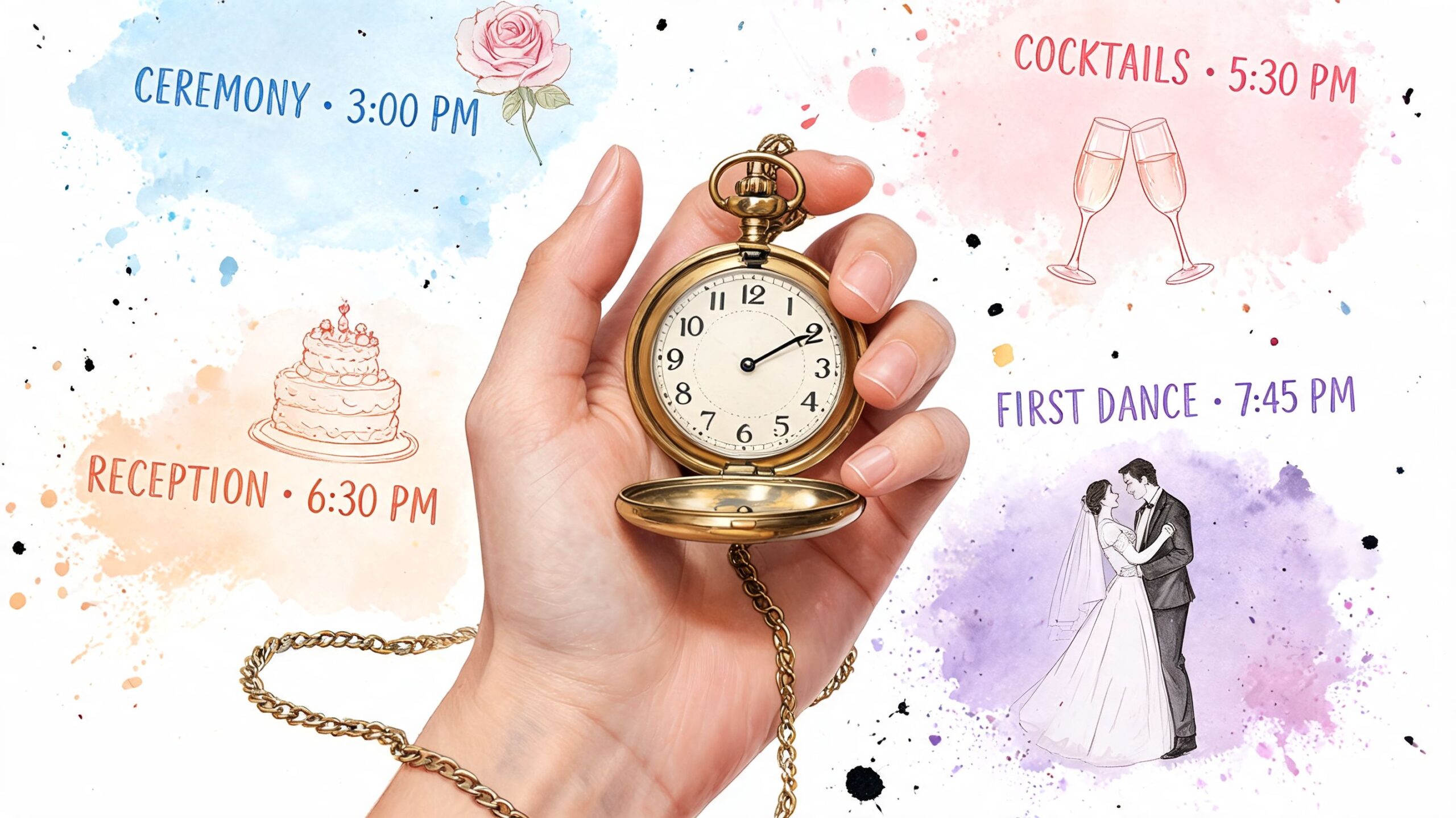
Start with arrival. Where do guests park? Is the entrance obvious? Is there shelter if people queue outside? If older relatives need a shorter walking route, can the venue provide one without fuss?
Then look at supplier movement. Florists, musicians, cake designers, and photographers all need access at different times. A venue that offers sensible setup windows and clear loading instructions is easier to work in, and that ease usually shows in the final result.
Some of the most useful venue logistics questions fit on a short list:
- Timing: When can suppliers arrive, and when must they leave?
- Accessibility: Are there step-free routes, nearby loos, and comfortable waiting areas?
- Weather plan: If the outdoor option changes on the day, who makes the call and by when?
- Sound and curfews: Are there restrictions on music, microphones, or finishing times?
- Photography access: Can your photographer use the grounds freely during drinks and sunset?
Plan for weather without losing the mood
Outdoor ceremony plans often fail because couples think only about rain. Wind is just as disruptive. It affects candles, music stands, hemlines, signs, and hearing. Ask the venue where the indoor alternative happens and whether it feels intentional, not improvised.
The backup space should be somewhere you'd happily choose on purpose.
A venue walkthrough can help you think through real timings and transitions. This short film is a useful prompt when you're imagining how the day unfolds in practice.
Keep the guest experience central
Logistics aren't only for suppliers. They shape how cared for guests feel.
If drinks are served far from the ceremony exit, people drift and the atmosphere thins. If there's nowhere comfortable to wait between moments, the day starts to feel disjointed. If signage is unclear, your family become unpaid coordinators. Good venue logistics protect the tone of the celebration. They keep the romance intact because no one is busy solving preventable problems.
When you visit, don't just ask what happens. Ask where it happens, who manages it, and how quickly the venue can adapt if the weather or timing shifts.
Critical Questions to Ask Before You Book
The smartest couples don't ask more questions. They ask better ones.
A venue brochure will tell you what's pretty. Your job is to uncover what's usable, what's included, and what could become awkward once contracts are signed. Take this opportunity to qualify a venue before you fall too hard for it.
Questions that reveal how the venue actually works
Some questions sound simple but open up the whole operational picture.
- Is the hire exclusive? If other events are onsite, ask exactly which spaces remain private to you.
- Which suppliers are required, and which are optional? Some venues insist on in-house catering or approved DJs. That isn't a problem if it suits you, but you need to know.
- Who resets the room after the ceremony? If the same space hosts dinner later, ask who moves chairs, where guests go meanwhile, and how long the turnaround takes.
- What does the quoted fee include? Staffing, furniture, glassware, setup time, and clearing at the end of the night can vary widely.
- What are the décor restrictions? Listed buildings and religious spaces often limit flames, fixings, confetti, or large installations.
For a broader prompt sheet before calls and tours, these essential wedding venue questions are useful because they cover practical contract details couples often miss on first contact.
Ask about sound, not just style
Couples rarely ask enough about acoustics. They should.
Historic venues often have natural reverberation that helps project vows without amplification, and couples can see 25–30% higher guest satisfaction scores because the ceremony feels clearer and more intimate, according to guidance on wedding venue acoustics and guest experience. That doesn't mean every stone hall automatically sounds perfect. It means you should test it.
Try these questions during a visit:
- Can we stand where the ceremony would happen and speak at normal volume?
- Does the venue usually recommend microphones for this room?
- Where do musicians or readers usually stand?
- Do soft furnishings, flowers, or guest placement change the sound noticeably?
If you have to shout to be heard during a quiet site visit, your guests may struggle during the real ceremony.
Look for clarity, not charm
A charming answer isn't the same as a clear one. If a coordinator says, “We're usually flexible,” ask what that means in writing. If they say, “It's never been an issue,” ask what happens if it becomes one on your day.
The best venue conversations leave you with specifics. Named rooms. Timed access. Written inclusions. Clear responsibilities. Romance matters, but clarity is what protects it.
Your Site Visit Checklist and A Venue in Focus
At one February site visit, a couple fell in love with a candlelit hall in the first five minutes. By minute fifteen, the bride's father had spotted the real question. Where would her grandmother wait if the registrar was running late, and how far would she need to walk to reach the ceremony room? That single question changed the tone of the visit. They stopped looking only at backdrops and started checking the parts of the day guests feel in their feet, their coats, and their confidence that the ceremony can begin on time and in the right place.
That is the purpose of a good visit. You are not only choosing a beautiful room. You are checking whether the venue can host your ceremony legally, comfortably, and without last-minute scrambling.
The Ceremony Venue Site Visit Checklist
| Area to Check | What to Look For | My Notes |
|---|---|---|
| Ceremony room | Licensed room name, sightlines, atmosphere, natural light | |
| Entrance and arrival | Clear signage, shelter, ease of access, parking flow | |
| Guest comfort | Seating quality, temperature, loos, waiting areas | |
| Accessibility | Step-free routes, distances between key spaces, support for less mobile guests | |
| Sound | Whether normal speech carries clearly across the room | |
| Weather backup | Indoor option that is also licensed, if needed, and still suits the tone of the ceremony | |
| Transition spaces | Route to drinks, confetti area, family photo spots | |
| Supplier access | Load-in route, setup time, storage, collection arrangements | |
| Décor rules | Candles, confetti, fixings, florals, furniture movement | |
| Day-of timing | Registrar arrival point, waiting area, room access times, reset needs between ceremony and reception |
One practical habit helps here. Ask the coordinator to walk the day in order, from guest arrival to the moment you leave the ceremony space. You will hear where timings are tight, where weather changes the plan, and whether the licensed room is the one you had in mind from the brochure.
A venue in focus. Battle Abbey Weddings
Battle Abbey Weddings is a useful case study because it shows how much pressure a well-configured venue can remove. The estate offers licensed ceremony space in the Abbot's Hall, along with reception areas across the site, and it can host both larger celebrations and smaller part-site events. For a couple, that often solves one of the quietest planning headaches. You do not need to split the legal ceremony from the rest of the day unless you want to.
That matters more than many couples expect.
In historic settings, the romantic question is often easy. Can we picture ourselves saying our vows here? The harder question is whether the venue's approved ceremony space, guest flow, access arrangements, and indoor backup all work together. Battle Abbey is a strong example of that balance. The architecture carries the sense of occasion, while the licensed rooms and established event structure help the day run in the order it needs to run.
During a visit, use that as your benchmark. Check that the room you love is the room in which you can legally marry. Check how guests move from arrival to seating, and from ceremony to drinks. Check whether older relatives can reach each space without stress. Check where the registrar meets you and where you wait before the processional begins.
Those details protect the romance. They are often the difference between a day that feels calm and one that feels improvised.