You're probably balancing two competing ideas right now. You want Battle Abbey to feel personal, soft and romantic, but you also don't want your decorations to fight the building itself or create a frantic setup on the morning of the wedding. That tension is where most DIY wedding decorations either shine or unravel.
Battle Abbey rewards restraint. Its stonework, historic rooms and terrace views already do a lot of visual work, so the best handmade details don't try to overpower them. They frame archways, soften tables, guide guests and add intimacy after dark. They also need to be practical. Historic venues often come with tighter setup conditions, less tolerance for messy adhesives, and less room for bulky installs than generic barn or marquee spaces. One Wild Wedding Company guide to DIY wedding decoration notes a rise in DIY stress complaints at heritage sites and highlights how venue access windows and historic-surface restrictions catch couples out.
That doesn't mean you should skip DIY. Far from it. More than nine in 10 UK couples take a DIY approach to at least one part of their wedding, according to Barclays' 2023 wedding spending research, so you're in good company if you want handmade details rather than an entirely outsourced look.
1. Floral Garland Installations for Historic Archways
A floral garland works at Battle Abbey because it adds softness without blocking the architecture. Drape it over an arch in the Abbot's Hall, frame an entrance, or use it to edge a focal point on the Top Terrace where the ruins stay visible behind it. The best versions look slightly loose and garden-inspired, not rigid and overbuilt.
What to use
Fresh foliage with a few hero flowers usually looks better than dense all-flower garlands in a medieval setting. Eucalyptus, ruscus, ivy and seasonal English blooms all sit comfortably against old stone. If you want a stronger colour story, use it sparingly and take inspiration from blue wedding flowers for historic venues, where cooler tones can feel elegant rather than overly sweet.
- Materials: Bind wire, floral tape, chicken wire or garland base, foliage, flowers, ribbon, cable ties approved by the venue
- Cost: Moderate to high, depending on fresh versus faux materials
- Time: Medium to high. Build the base well ahead, add fresh flowers close to the wedding
- Difficulty: Medium
What works at Battle Abbey
Keep the structure lighter than you think. Heavy garlands are harder to position quickly and more likely to sag when attached to temporary supports rather than permanent fixings.
Practical rule: Build garlands in sections. Two or three joined pieces are far easier to transport, repair and lift than one long length.
What doesn't work is forcing a stately-house flower style into a medieval venue. Huge foam-heavy swags can look too formal and can become awkward if your setup window is short. If you're using fresh flowers, source them as late as possible, store them cool, and have one backup section ready in case wind or transport damages an end piece.
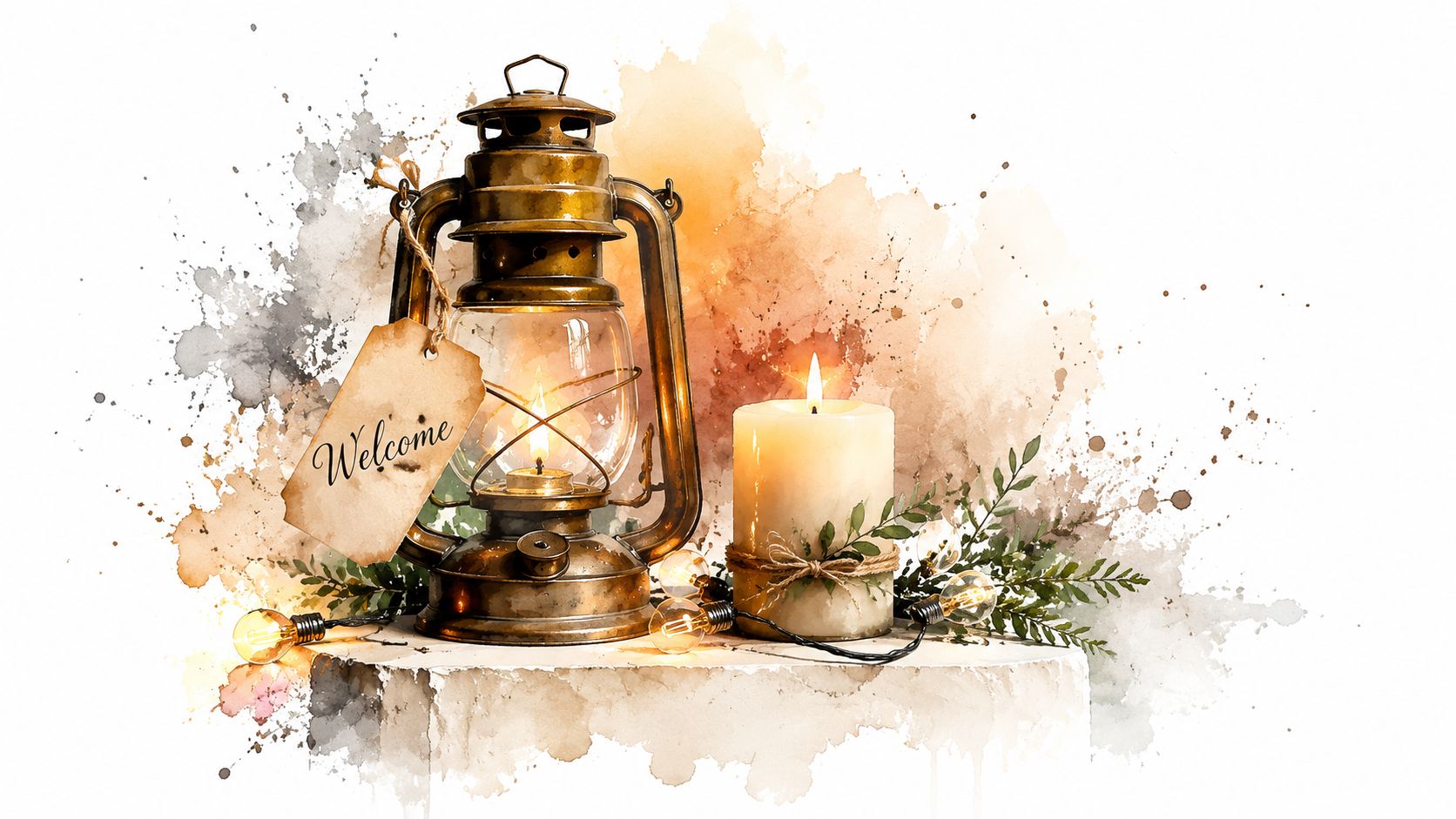
2. Ambient Lighting with Vintage Candles, Lanterns and String Lights
Lighting changes Battle Abbey more than almost any other decoration. In daylight, the venue feels grand and textural. After dusk, the same spaces can feel intimate, especially if you layer lanterns, taper candles and soft overhead lights rather than relying on one bright source.
Best combinations for this venue
On the Top Terrace and Six Penny Lawn, use weather-resistant festoon or string lights only where they can be rigged safely and neatly. On dining tables, cluster lanterns with LED candles if there's any risk of draughts. In internal rooms, warm white light suits the historic backdrop better than cool white, which can flatten everything.
A strong option for couples who want candle glow without wax mess is a layered mix of glass hurricanes and products like a vibrant sand candle collection, especially where you want a softer, refillable look on welcome tables or bar areas.
- Materials: Lanterns, LED candles, taper holders, extension leads, outdoor-safe string lights, cable covers
- Cost: Moderate
- Time: Medium. The planning takes longer than the placing
- Difficulty: Medium
Real trade-offs
The mistake I see most often is underestimating power planning. Couples buy beautiful lights, then realise too late they've not mapped sockets, cable runs or activation timing. A terrace install needs to look intentional in daylight too, because guests will see the wires before sunset.
If the cable route looks messy at 3 pm, the lighting plan isn't finished.
What doesn't work here is treating lighting as a last-minute extra. In a heritage setting, safe positioning matters as much as aesthetics, and flameless options are often the calmer choice outdoors.
3. Hand-Lettered Signage and Menu Cards
DIY signage earns its place when the venue has multiple spaces. Battle Abbey does. Guests may move from ceremony to drinks to dining and then outside again, so signs should guide people without looking like event clutter.
The style that suits historic rooms
Cream, stone, muted sage, dusty blue and soft metallic ink all work well. Try hand lettering on heavyweight cardstock, painted boards, or acrylic only if the finish is subtle. Medieval-inspired flourishes can be lovely, but keep them readable. Ornamental script is useless if guests can't work out where to go.
For menu cards, place the personality in the wording or border illustration rather than overcomplicating the letterforms. The Duke's Library and Dining Room already have presence, so a clean design often looks more expensive than an overloaded one.
- Materials: Cardstock, paint pens, calligraphy nibs, ink, easels, weather protection sleeves
- Cost: Low to moderate
- Time: Medium. Most of the work is practice and redos
- Difficulty: Easy to medium
Where DIY can backfire
Hand lettering always takes longer than expected, especially if you're making matching table names, place cards and menus. Wedissimo's guide on DIY wedding decoration ideas and hidden costs makes a useful point. Couples should cost up materials and tools and also account for their time, because DIY isn't automatically cheaper once extras and mistakes are included.
A smart compromise is to hand-letter one master design, then scan and print duplicates. You keep the handmade feel without spending the final week rewriting twenty menu cards because one ink stroke bled through.
4. Burlap and Lace Table Runner and Linen Layering
This one can look either beautifully textured or oddly themed. In a venue like Battle Abbey, the difference comes down to restraint and fabric quality. Use linen as the base, then layer in burlap or lace selectively rather than combining every rustic element at once.
How to make it feel elevated
Natural linen runners with a strip of antique-look lace usually sit better in the Duke's Library than full-width burlap. Burlap works best in smaller doses, such as a central band under low florals, because too much rough texture can feel heavy against polished table settings and historic interiors.
- Materials: Linen runners, lace trim, optional burlap sections, fabric weights or discreet pins, steam iron
- Cost: Low to moderate
- Time: Low to medium
- Difficulty: Easy
What works and what doesn't
Pre-wash and press every textile. That sounds obvious until you're unpacking creased runners on the morning and trying to flatten them with your hands. Soft drape matters more in old rooms because stiff fabric looks cheap next to old wood, stone and candlelight.
What doesn't work is using bright white synthetic lace with coarse orange-toned burlap. That combination belongs in a generic rustic package, not a historic fairytale venue. Choose one tactile statement and let the architecture carry the rest.
5. Mason Jar and Repurposed Bottle Floral Arrangements
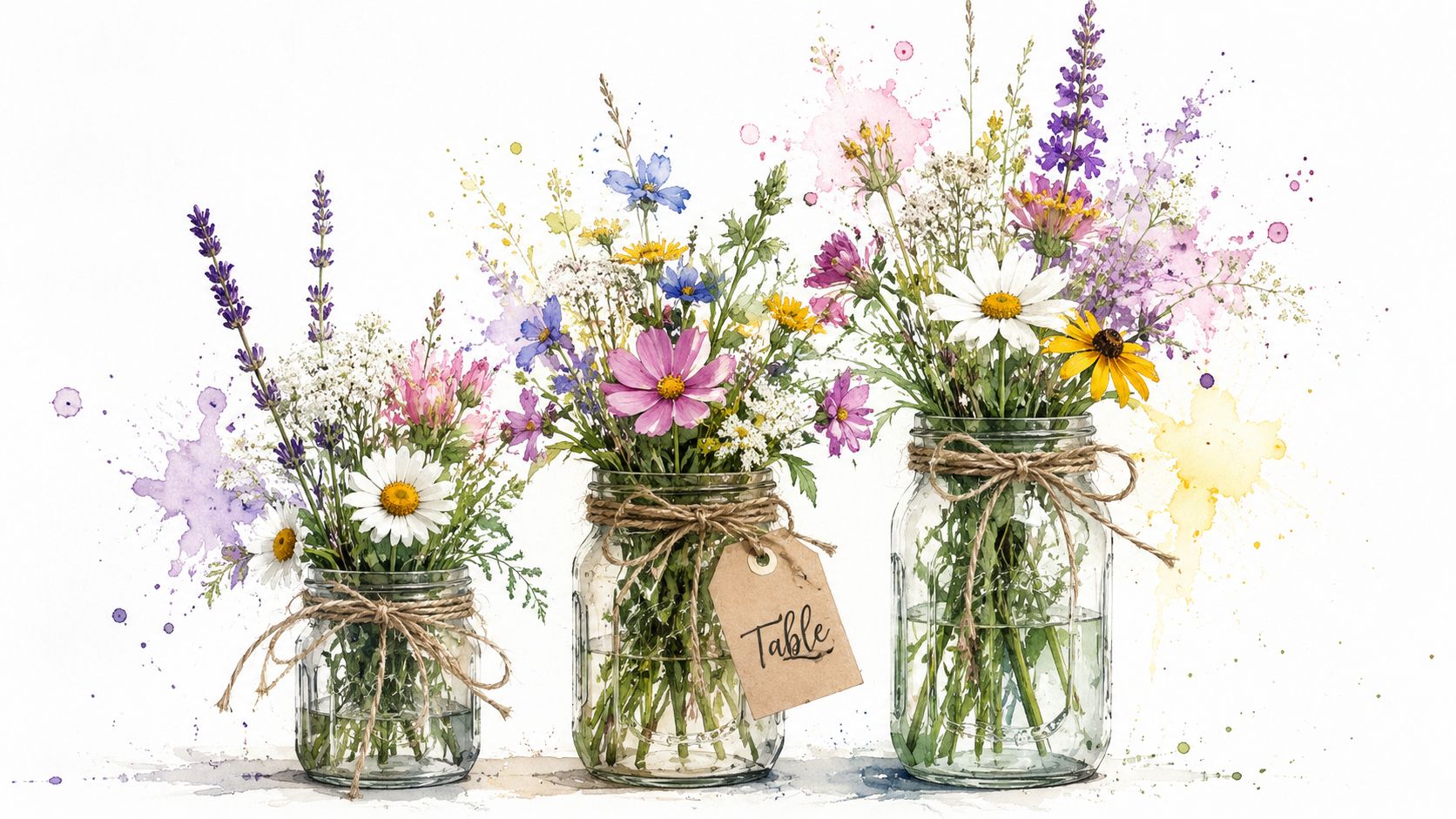
For a relaxed English-country look, this is one of the safest and most effective DIY wedding decorations. Small bottle and jar arrangements are forgiving, easy to spread across long tables, and they don't block conversation the way oversized centrepieces do.
Why they suit Battle Abbey
The venue already leans into local character, so cottage-garden flowers in mixed vessels feel natural rather than contrived. Amber bottles, clear jars and small bud vases all catch light beautifully in the Abbey's interiors and on terrace tables.
- Materials: Clean jars and bottles, twine or ribbon, flowers, snips, floral preservative, water tubs
- Cost: Low to moderate
- Time: Medium, especially if you're cleaning and removing labels yourself
- Difficulty: Easy to medium
Creating your own wedding decorations can reduce decoration costs substantially compared with hiring professionals, with one UK cost comparison from The Added Extra's guide to DIY wedding decorating costs stating savings can be significant if you keep the design manageable. Jar arrangements are one of the clearest examples because the materials can stay simple while still looking generous across multiple tables.
Where couples go wrong
They overfill the vessels. A few airy stems in each jar usually look fresher than a tight bunch shoved into a bottle neck. They also forget transport. Water-filled glass multiplies quickly, and moving dozens of finished pieces over uneven ground is harder than arranging them on a kitchen table.
Group bottles in crates by table, with labels already attached. It cuts setup confusion and reduces breakage.
6. Personalised Paper Decorations and Bunting Design
Paper decorations are often dismissed as either too crafty or too flimsy. In the right places, they're brilliant. They add movement, colour and personal detail without loading weight onto historic surfaces.
Where paper works best
Use paper bunting above cake tables, behind a guest book station, along a drinks area, or indoors where it won't fight weather. Printed names, meaningful phrases, monograms or a date can all work, but keep the palette tight. Aged ivory, faded blush, muted blue or sage sit comfortably with Battle Abbey's setting.
- Materials: Heavyweight cardstock, cutting machine or scissors, hole punch, ribbon or thread, laminating pouches for outdoor use
- Cost: Low
- Time: Medium to high, depending on how intricate the design is
- Difficulty: Easy
The hidden reality
Paper takes space and time. If you're making large quantities, you'll need somewhere dry to store everything flat and clearly labelled. It also needs a proper hanging test. Threads that look invisible at home can become visibly saggy once stretched across a larger room.
What doesn't work outdoors is delicate paper left unprotected. Even light moisture can curl edges and make your bunting look tired before guests arrive. If you love the look, install it indoors and use sturdier fabric or floral pieces outside.
7. Tiered Cake Stand and Dessert Table Styling
A dessert table should feel curated, not crowded. Battle Abbey has enough visual drama already, so your cake and sweet display doesn't need a carnival of props. It needs clear height variation, a focal centre and enough breathing room around the food.
Build the display in layers
Start with the main cake or central feature. Then place smaller tiers at staggered heights using cake stands, risers hidden under cloth, or stacked vintage books only if they're stable and safely covered. Keep florals low and selective. A few trailing stems or bud vases are usually enough.
For layout inspiration, it helps to look at dessert table ideas for weddings that balance focal styling with service practicality, especially if you're mixing homemade bakes with professionally made items.
- Materials: Cake stands, risers, linens, labels, serving tools, cake knife set, florals
- Cost: Moderate
- Time: Medium
- Difficulty: Medium
Don't sacrifice service for styling
The display has to survive real guests reaching across it. That means stable stands, clear spacing and temperature awareness. Buttercream near warm windows or direct sun can go downhill fast, and crumbly homemade bakes need labels or servers if you want the table to stay presentable.
What doesn't work is making every level the same height. Flat rows kill the drama. Give the eye somewhere to land first, then build out from there.
8. Wooden Pallet and Crate Feature Walls or Backdrops
This is the most high-risk item on the list. It can look brilliant in the right corner, especially if the ruins or terrace views sit behind it. It can also look bulky, unfinished and too rustic for the elegance of the Abbey if the build quality is poor.
Use reclaimed wood carefully
Crates often work better than full pallet walls because they're easier to transport, stack and restyle. You can fill some with candles, florals or books, and leave others empty so the whole structure doesn't feel too dense. Sand every surface thoroughly. Splinters and rough edges don't belong anywhere near formalwear.
- Materials: Pallets or wooden crates, sandpaper, paint or sealant if needed, cable ties or freestanding supports, florals, signage
- Cost: Low to moderate
- Time: High
- Difficulty: Medium to high
The venue-specific caution
Freestanding is better than fixed in a historic venue. Don't assume you'll be allowed to attach anything directly to walls, floors or railings without approval. Build a structure that can stand on its own and be dressed on site without tools everywhere.
Venue-first thinking: If a backdrop needs the building to hold it up, redesign the backdrop.
What doesn't work is treating a pallet wall as a universal rustic solution. At Battle Abbey, it needs to be cleaner, simpler and more refined than the versions you'd use in a barn.
9. DIY Photo Booth with Vintage Props and Backdrop
A photo booth gives guests something to do during the lull between formal moments, and it works especially well at larger weddings. In a venue with as much character as Battle Abbey, the trick is not to compete with the backdrop the venue already offers.
Make the booth feel part of the venue
Use vintage frames, old books, parasols, signage or period-inspired accessories rather than novelty props that pull the mood into hen-party territory. A simple draped backdrop in a side room or shaded terrace corner can work well, especially if you add one statement prop like a gilt frame or antique chair. If you're weighing whether a fully staffed setup is worth it, this guide on photo booth costs for weddings helps frame the trade-off between DIY and professional hire.
If you're displaying printed images afterwards or creating a memory station, details like selecting quality wall art frames can make the finished presentation feel less temporary.
- Materials: Backdrop fabric, stand, props, sign, camera or tablet setup, ring light or lamp
- Cost: Low to moderate
- Time: Medium
- Difficulty: Easy to medium
Keep it usable
The most photogenic booth in the world fails if guests don't know what to do. Put simple instructions nearby, check the lighting in advance, and assign someone to keep props tidy and upright.
What doesn't work is placing it in a circulation bottleneck. Give it space so people can queue, browse props and laugh without blocking service or access.
10. Ribbon and Tulle Aisle Decoration and Pew Markers
Ceremony décor at Battle Abbey should feel gentle. The Abbot's Hall already carries the emotional weight, so aisle decorations need to frame the moment rather than dominate it.
The right amount
Tie ribbon, chiffon or soft tulle in narrow lengths to pew ends or approved fixing points, then add a small flower cluster or foliage knot to every few rows rather than every single seat. Repetition matters more than abundance. A calm, consistent run down the aisle always looks better than alternating oversized bows and florals.
- Materials: Ribbon or tulle, floral wire, small posies or foliage bunches, scissors, transport box
- Cost: Low
- Time: Low to medium
- Difficulty: Easy
What to avoid in a historic ceremony space
Cheap tulle catches light badly and can read as shiny rather than soft. Overly bulky pew markers can also narrow the aisle visually or snag clothing as guests sit down. Before you make anything in volume, test one complete marker in the actual scale you want.
The practical challenge with ceremony décor isn't usually making it. It's installing it quickly and evenly when the room is being prepared around you. Keep attachment methods simple, keep pieces lightweight, and pre-pack them in order so helpers can work row by row without asking which one goes where.
DIY Wedding Decor: 10-Point Comparison
| Item | 🔄 Implementation Complexity | ⚡ Resource & Time | ⭐ Expected Outcomes | 📊 Ideal Use Cases | 💡 Key Advantages / Tips |
|---|---|---|---|---|---|
| Floral Garland Installations for Historic Archways | Medium, floral skill + delicate attachment (2–4 hr install) | Moderate, fresh/silk flowers, wire/rope; source 1–2 days prior | ⭐⭐⭐⭐, strong romantic focal points | Archways, Top Terrace, ceremony photo backdrops | 💡 Reversible attachments; test garland weight day-before; keep backup sections for weather |
| Ambient Lighting: Vintage Candles, Lanterns & String Lights | Medium–High, rigging, electrical planning, candle management | Moderate–High, lights, lanterns, electrician, weather-resistant strings; pre-sunset setup | ⭐⭐⭐⭐⭐, powerful evening atmosphere; extends celebrations to midnight | Evening receptions on Top Terrace, Six Penny Lawn, indoor-outdoor transitions | 💡 Use flameless LEDs for wind; create lighting map and hire electrician |
| Hand-Lettered Signage and Menu Cards | Low–Medium, skill and time for consistency | Low, cardstock, pens; practice 4–6 weeks, digitise for duplicates | ⭐⭐⭐, bespoke, personal touch (quality depends on skill) | Wayfinding across multi-room layouts, menus, keepsakes | 💡 Practice, use pencil guides, digitise to print duplicates; laminate outdoor signs |
| Burlap and Lace Table Runner and Linens Layering | Low, simple layering but needs prep (ironing, measuring) | Low–Moderate, fabrics, pre-wash/iron 1–2 weeks ahead | ⭐⭐⭐⭐, rustic-romantic tablescapes that suit historic interiors | Duke's Library, Dining Room banquets, textured tablescapes | 💡 Pre-wash linens, secure layers with decorative pins, source vintage lace locally |
| Mason Jar and Repurposed Bottle Floral Arrangements | Low, straightforward arranging, bloom timing critical | Low, jars/bottles, seasonal flowers; collect 2–3 months ahead, condition flowers 2 days prior | ⭐⭐⭐, charming cottage-garden centrepieces; less polished than pros | Centrepieces across terraces and halls; eco-friendly/local-themed events | 💡 Clean jars early, weigh outdoor vases with stones, use floral preservative |
| Personalized Paper Decoration and Bunting Design | Low, cutting/printing skills; careful outdoor installation | Very Low, cardstock, templates; make months ahead | ⭐⭐⭐, high-impact budget-friendly but weather-sensitive | Indoor/terrace bunting, playful motifs, non-invasive heritage-friendly decor | 💡 Use weather-resistant cardstock, laminate outdoor pieces, test hanging methods |
| Tiered Cake Stand and Dessert Table Styling | Medium, styling, stability testing, coordination with caterers | Moderate, stands, linens, refrigeration plan; can assemble day-before | ⭐⭐⭐⭐, eye-catching focal point and photo magnet | Reception dessert stations, selfie areas, showcasing local bakeries | 💡 Test stability under full weight, coordinate temperature control, sketch height zones |
| Wooden Pallet and Crate Feature Walls or Backdrops | High, carpentry, heavy assembly, secure engineering | Moderate–High, pallets, tools, skilled help; source 2–3 months ahead | ⭐⭐⭐⭐, strong rustic backdrop when well-built | Photo backdrops on terraces or dining halls, defined focal walls | 💡 Sand and treat wood, recruit skilled builders, use non-damaging attachments |
| DIY Photo Booth with Vintage Props and Backdrop | Low–Medium, backdrop design, prop sourcing, simple tech setup | Low–Moderate, props, camera/device, lighting; test beforehand | ⭐⭐⭐⭐, high guest engagement; photo quality varies by setup | Reception entertainment, guest engagement, social-media content | 💡 Assign an attendant, match backdrop to venue, provide clear hashtag/instructions |
| Ribbon and Tulle Aisle Decoration and Pew Markers | Low, straightforward but needs extra hands for install | Low, tulle/ribbon, floral accents; day-before install recommended | ⭐⭐⭐⭐, romantic, high visual impact for modest cost | Abbot's Hall ceremony aisles, pew markers, processional definition | 💡 Choose quality tulle, coordinate with registrar on aisle width, enlist helpers for install |
Make Your Battle Abbey Wedding Unforgettable
The strongest DIY wedding decorations at Battle Abbey have one thing in common. They respect the venue. They don't try to hide the stone, overfill the rooms or turn a heritage setting into a generic rustic reception. They add softness, warmth, guidance and personality exactly where the building benefits from it.
That's why the most successful projects on this list are the ones with a clear job. Floral garlands soften hard architectural lines. Lighting extends the atmosphere into the evening. Signage helps guests move confidently through the site. Bottle florals and layered linens make tables feel considered without swallowing the room. Aisle markers bring ceremony focus without distracting from the setting itself.
The trade-offs matter just as much as the ideas. DIY can save real money, but only when you choose projects that match your time, skill and access conditions. If a piece needs specialist rigging, very early setup, complex transport or major on-site assembly, it may stop being a good DIY candidate. Historic venues are less forgiving of improvisation. Surfaces may need extra protection, installation options may be limited, and the day can move quickly once suppliers and guests start arriving.
That doesn't mean you need to hand everything over to professionals. It means being selective. Choose two or three statement DIY elements you can execute well, then keep the rest simple. A beautifully made garland, thoughtful signage and well-prepared bud vases will usually have more impact than ten half-finished Pinterest ideas assembled under pressure.
It also helps to think in zones. Ceremony space, drinks space, dining tables, evening corners. When each area has one clear decorative idea, the whole wedding feels cohesive. When every surface gets a different treatment, the venue starts to feel busy rather than magical.
Start gathering materials early. Label boxes by location. Test attachment methods before the week of the wedding. If the venue offers setup access in advance, use that time for anything fiddly, scaled or weather-sensitive. And if one project keeps causing stress in the planning stage, that's often your cue to simplify it or outsource just that part.
Battle Abbey already gives you the fairytale setting. Your DIY job isn't to create the magic from scratch. It's to draw attention to what's already there and make it feel unmistakably yours.
If you want a venue that already delivers atmosphere, architecture and expert planning support, explore Battle Abbey Weddings. It's a setting where thoughtful DIY details can shine without having to do all the heavy lifting.