You’re probably here because the lovely version of the day is already clear in your mind. Your dog is part of the family, the lead-up to the ceremony feels incomplete without them, and the idea of leaving them at home while you say your vows just doesn’t sit right.
That instinct makes sense. At a historic venue, though, romance and logistics always travel together. Ancient stone, protected lawns, formal guest flow, catering movement, narrow thresholds, ruins, music, photographs, and a dog who may be delighted or overwhelmed all need to work in harmony. When couples get that balance right, the result feels effortless. When they don’t, the dog becomes the part of the day everyone is managing.
A good dog friendly wedding venue doesn’t just say yes to pets. It has to help you create a day that feels magical for you, safe for your dog, comfortable for your guests, and compliant with the realities of a heritage setting.
The Dream of a Dog Friendly Wedding Day
There’s a reason couples keep returning to the same image. A much-loved dog padding down the aisle. A velvet lead instead of a standard one. A quick nose boop during portraits. The soft laugh from guests when your dog settles at your feet as if they understand the importance of the moment.
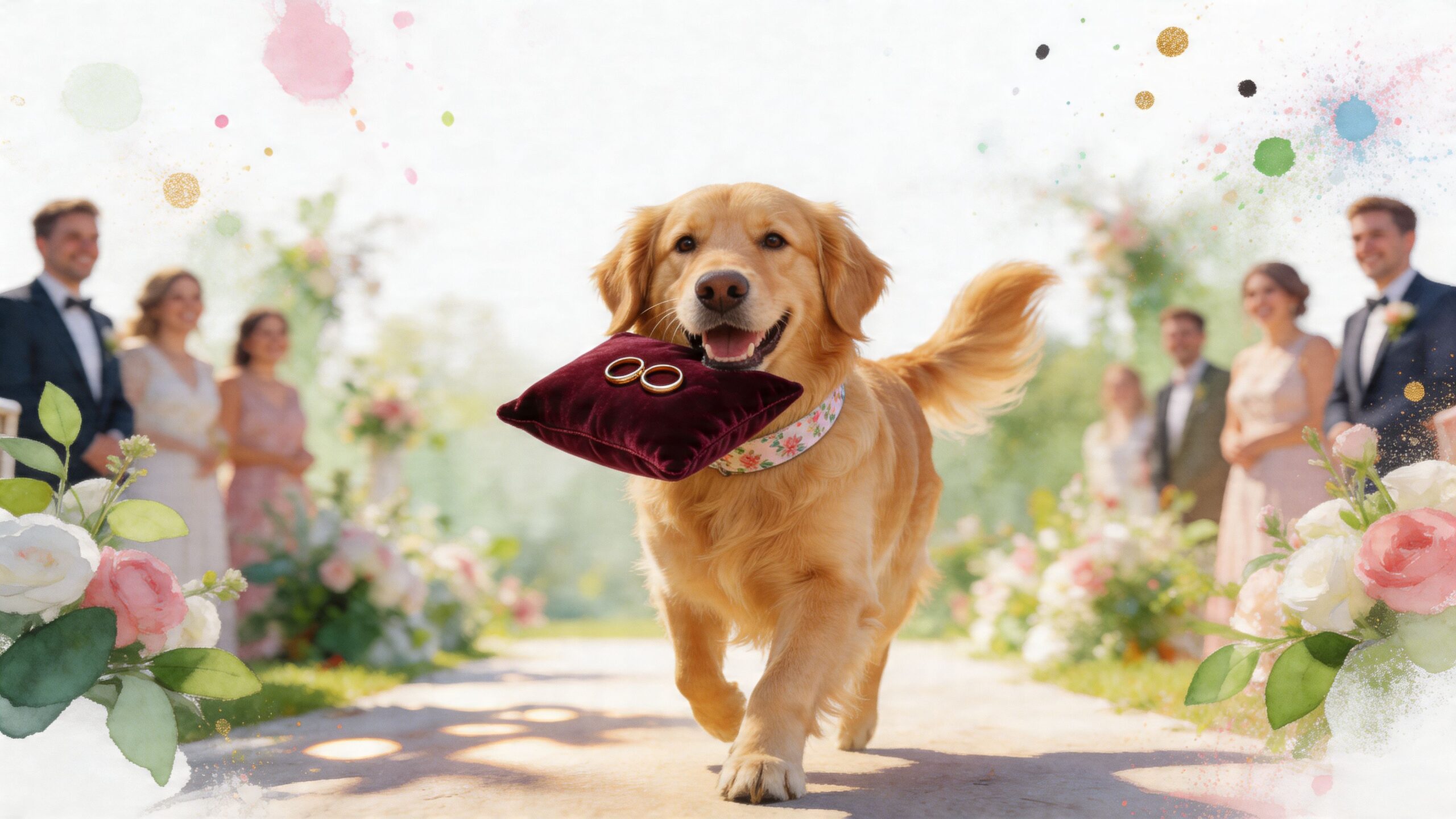
That emotional pull is strong for a reason. UK surveys report that 72% of couples would rather exclude human guests than their pets, which says a great deal about how central dogs have become to modern wedding planning in the UK. The figure appears in this pet-friendly wedding survey summary, and it tracks closely with what many planners see in practice. Couples aren’t looking for a novelty. They’re looking for a wedding day that includes their family properly.
Historic venues add another layer to that dream. The appeal is obvious. Dogs look wonderful against old stone, clipped lawns, terrace views, and candlelit interiors. A heritage setting gives those moments a storybook quality that newer venues often can’t replicate.
The challenge is that old places have rules for good reason. Floors may be slippery. Routes may narrow unexpectedly. Certain lawns may be suitable while others must stay protected. Dogs who cope beautifully in a park can react very differently in a crowded ceremony space full of music, perfume, long dresses, camera flashes, and people desperate to say hello.
A dog at a wedding should add warmth, not become a second event to coordinate under pressure.
That’s why the best approach is to hold onto the fairy-tale vision and build practical structure around it. The dog can absolutely be part of the day. The question isn’t whether it’s possible. It’s whether the venue and the plan are prepared for the reality of doing it well.
Finding Your Perfect Historic Dog Friendly Venue
The first question most couples ask is, “Are dogs allowed?” It’s an understandable starting point, but it’s far too broad. At a historic venue, the more useful question is, “How would our dog move through the day here, and what are the restrictions?”
A venue that’s merely dog-tolerant may allow your pet on site for photographs and little else. A dog friendly wedding venue will explain where dogs can be, who must supervise them, what backup plan applies if the weather turns, and how the site protects both animals and heritage features.
What to look for beyond a yes
Start with the grounds. You want practical green space, not just pretty green space. Ask where your dog can toilet, where they can decompress, and whether those areas are close enough to be useful during the natural flow of the day.
Then ask about interiors. Historic buildings often have limits around flooring, room access, open flames, antiques, narrow doorways, and guest traffic. A venue coordinator should be able to tell you plainly whether your dog can attend the ceremony, drinks reception, portraits, or only selected parts of the day.
Insurance matters just as much as aesthetics. Liability is a major concern, and 32% of couples face claims from incidents with unrestrained dogs. It’s important to confirm the venue has adequate insurance, such as a £5m insurance rider, which is standard for English Heritage sites. That guidance appears in the earlier-linked survey summary and should prompt a very direct conversation with any venue you’re considering.
Practical rule: If a venue gives vague answers about supervision, restricted areas, or liability, assume the pet policy hasn’t been thought through properly.
Essential questions for your shortlist
Use this table when you speak to coordinators.
| Category | Question to Ask |
|---|---|
| Ceremony access | Can our dog attend the ceremony, and under what conditions? |
| Grounds | Which outdoor areas are approved for dog access and comfort breaks? |
| Historic restrictions | Are there protected lawns, ruins, terraces, or interiors where dogs can’t go? |
| Supervision | Do you require a dedicated handler throughout the day? |
| Timing | Is dog attendance limited to certain parts of the wedding day? |
| Wet weather | What happens if rain forces everyone indoors? |
| Flooring and access | Are there slippery surfaces, steep steps, or narrow routes we need to plan around? |
| Guest comfort | How do you usually handle allergy concerns or guests who are nervous around dogs? |
| Catering safety | Where will food service happen, and how do you keep dogs away from service routes? |
| Insurance | What cover is required for a dog attending the event? |
| Deposits and cleaning | Is there a pet fee, damage deposit, or cleaning policy? |
| Emergency planning | What’s the protocol if our dog becomes distressed or needs to leave early? |
Look beyond the venue itself
Historic wedding planning rarely stops at the site boundary. If your dog is staying overnight, travelling with guests, or being collected after their ceremony appearance, your accommodation plan matters. It helps to review options for finding dog friendly lodging before you finalise transport and care arrangements, especially if friends or family are assuming the dog can stay wherever they are.
If you’re considering a heritage setting in East Sussex, it also helps to compare the character, capacity, and layout of venues before you enquire. A page on what makes a historic wedding venue work for different celebration styles can be useful for that early filtering stage, because layout often determines whether dog inclusion will feel easy or awkward.
The right venue won’t sound reluctant. It will sound organised.
Mapping Out Your Day Venue Logistics and Flow
Once the venue is booked, your dog needs their own route through the day. Not a vague idea. An actual movement plan.
Historic sites demand that level of thought because they contain natural pinch points. A broad lawn may open onto a narrow path. A ceremony room may empty onto steps. A photogenic terrace may sit close to a protected edge or area with heavy guest circulation. The dog’s experience depends on how those pieces connect.
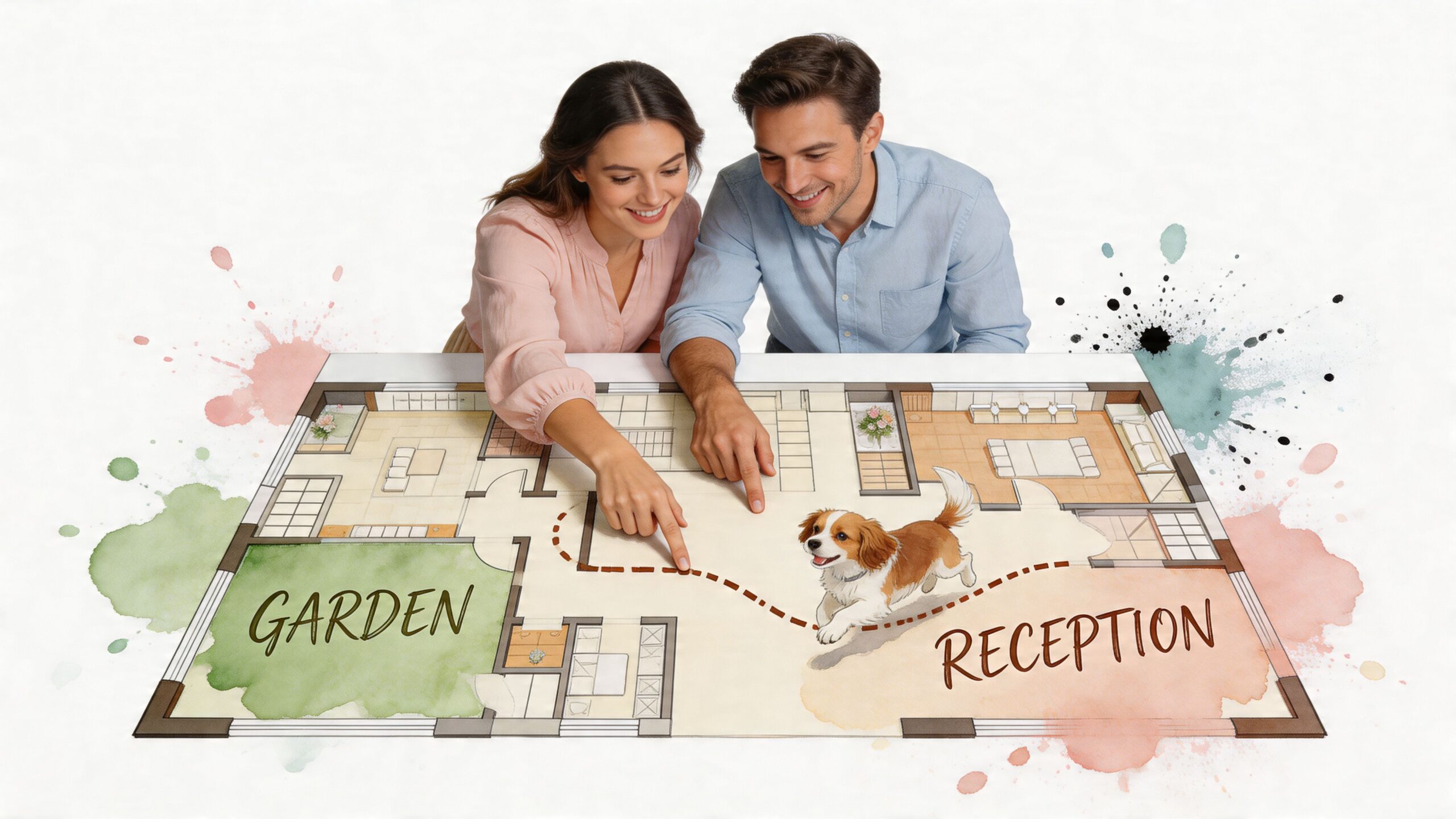
Venue risk assessment is critical. UK wedding planner data indicates that 28% of pet-inclusive events face containment issues. Outdoor areas should have secure boundaries, such as a 1.8m fence, to prevent escapes near historic ruins or busy roads, as noted by WedPro’s guidance on pets at weddings. That’s especially relevant at heritage venues where dramatic views and old masonry can create tempting but unsuitable roaming areas.
Build a simple pet-flow map
Think in zones rather than moments. Your dog doesn’t attend “the wedding”. They move through separate environments.
A practical map should cover:
- Arrival point: Where the dog gets out of the car without crossing guest arrivals.
- Holding area: A quiet place before the ceremony where the handler can settle them.
- Ceremony route: The exact path to the entrance, through the aisle space if applicable, and out again.
- Portrait location: One or two pre-approved backdrops only, rather than dragging the dog around the full grounds.
- Relief area: A discreet patch of lawn with shade, water, and waste supplies.
- Exit route: The shortest, calmest way off-site or back to accommodation.
At a venue with a sequence of formal indoor and outdoor spaces, that map matters more than couples expect. If you love sweeping outdoor wedding venue spaces with terrace and lawn options, decide in advance which one is for guest drinks, which one is for portraits, and which one is only for dog care. Blurring those uses usually creates stress.
Match the space to the dog’s role
Not every dog should do every part of the day. A calm, confident dog may join the ceremony entrance and stay for portraits. A dog who’s sociable but distractible may do better arriving for photographs only. A more sensitive dog may appear in one quiet pre-ceremony portrait session and leave before guests fully gather.
That selective approach often produces better results than insisting on full attendance.
Keep your most important dog moment early in the schedule. Energy, patience, coat condition, and focus are all better before the day becomes noisy.
A pre-wedding site visit matters here. Walk the exact routes at roughly the same time of day if you can. Let the dog experience the stone underfoot, open lawns, doors, echoes, and smells. You’re not trying to rehearse perfection. You’re checking for obvious discomfort before the wedding day forces decisions.
A short visual walk-through also helps couples think spatially rather than emotionally.
What works and what doesn’t
Some patterns are reliable.
What tends to work
- Ceremony and portraits only: Dogs stay fresh, guests get the moment, and the handler can leave before the reception becomes loud.
- One dedicated lawn for breaks: The dog learns where to go and the team knows where supplies are kept.
- Limited photo locations: Fewer transitions mean less waiting and less overstimulation.
What usually fails
- Free mingling during drinks: Guests crowd the dog, glasses lower to nose level, and nobody remains fully responsible.
- Last-minute route changes: Historic venues can’t always absorb spontaneous adjustments.
- Assuming the dog will “just settle”: New spaces rarely reward guesswork.
When the route is clear, the day feels softer. That’s the paradox of pet planning. The more structure you create, the more natural the dog’s involvement looks.
Your Canine-Inclusive Wedding Timeline
The easiest dog-friendly weddings are planned in layers. You don’t leave pet decisions until the final fortnight and hope for the best. You fold them into the same working timeline as your transport, florals, music, and seating plan.
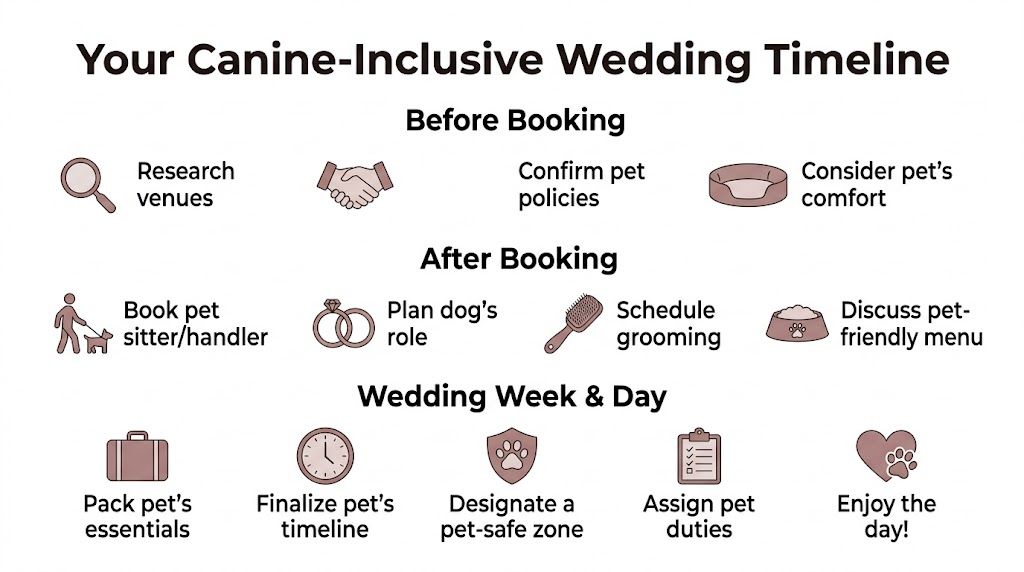
Before booking
Start with fit, not sentiment. If your dog is older, nervous, highly social, or prone to pulling when excited, that affects venue choice immediately. Ask whether the venue can support a short appearance rather than an all-day presence.
Confirm the practicalities in writing. Pet access, handler expectations, ceremony permissions, and restricted spaces should all be recorded before you pay a deposit.
After booking
This is the stage where plans often become real or unravel.
- Book a handler early: Choose someone who won’t be emotionally busy during the wedding.
- Decide the dog’s exact role: Ring bearer, aisle companion, portrait guest, or welcome appearance.
- Arrange trial visits: Let the dog see the venue before the wedding day.
- Coordinate vendors: Photographer, venue coordinator, and transport all need the same plan.
- Order practical kit: Lead, ID tag, towel, water bowl, bed, waste bags, treats, and a clean-up cloth.
Wedding week and day
The final week should feel calm, not improvised. Keep exercise normal, avoid dramatic diet changes, and make sure grooming is timed so the dog looks tidy but isn’t irritated by a same-day appointment.
A clean day-of sequence helps:
- Morning walk with enough time to settle afterwards.
- Light meal at the usual time.
- Travel with familiar items so the car journey doesn’t become the first stress point.
- Arrive before guests if possible.
- Keep the appearance window short and leave while the dog is still coping well.
Your timeline should end the dog’s part of the day before you think it needs to. That margin is what protects the atmosphere.
The couples who enjoy this most aren’t the ones trying to maximise dog time. They’re the ones who choose the right moments and let those moments shine.
A Happy Pet Makes a Happy Wedding Day Pet Care Plan
The most important decision you’ll make about your dog isn’t the flower collar or whether they walk the aisle. It’s who is responsible for them.
A wedding pulls every close friend and relative in several directions at once. If your chosen handler is also giving a reading, helping people find seats, appearing in family portraits, or trying to enjoy the drinks reception, the dog will drop down the priority list within minutes. That’s not unkind. It’s just what happens on busy days.
Start with welfare, not styling
A dog-friendly celebration only works if the dog is comfortable enough to cope with it. That means rest, water, shade, access to a quiet retreat, and freedom to leave before they become stressed.
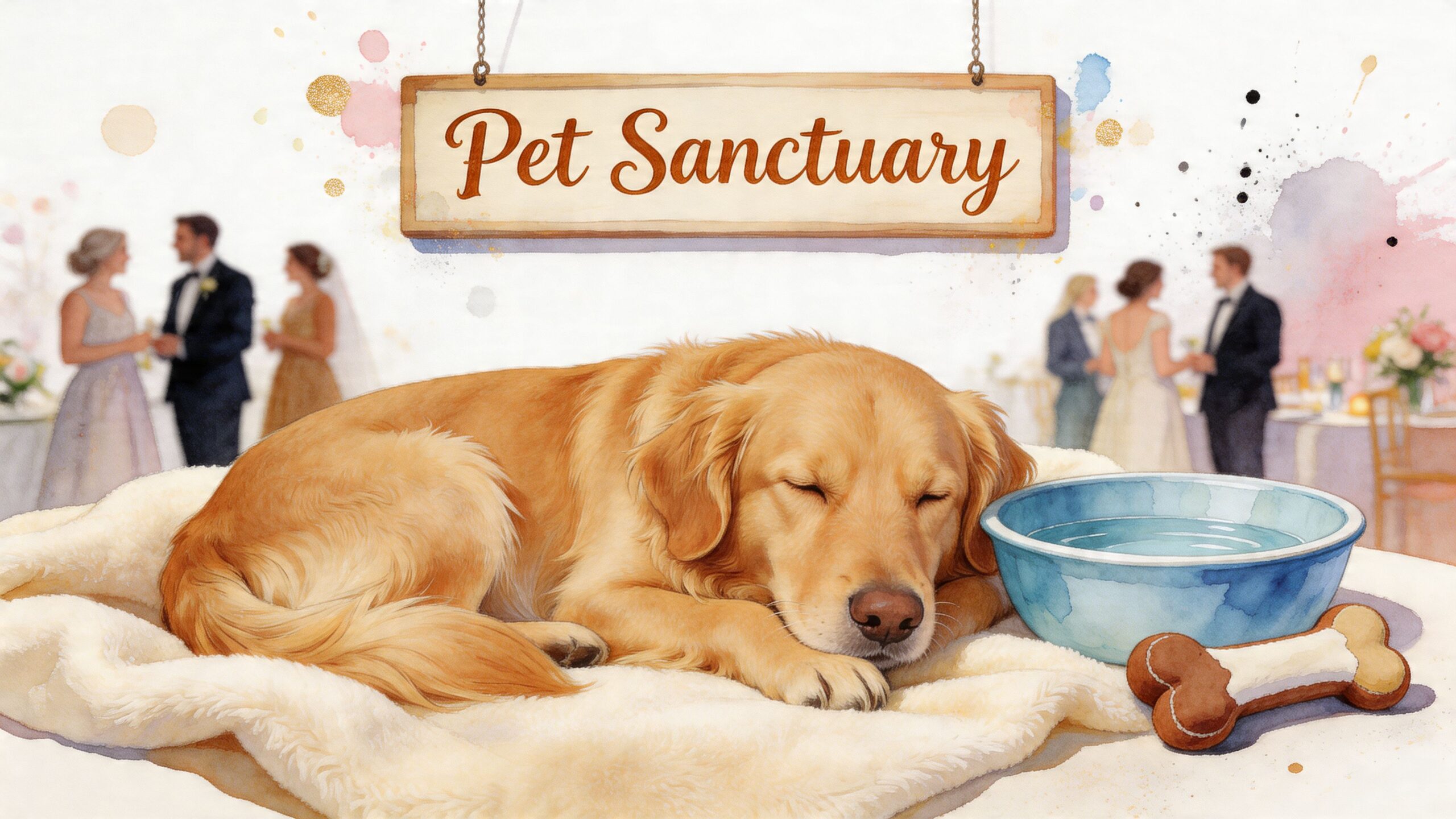
A major gap in generic wedding advice is that it often treats all dogs as interchangeable. Experts recommend pre-wedding venue visits to acclimate anxious dogs, and designated quiet zones are essential because stress-induced behaviours are common in the overwhelming environment of a 75 to 250 guest wedding, as outlined by Black Dog Weddings’ advice on dog-friendly venues.
That point matters even more at historic venues. Stone floors can feel slippery. Doors can echo. Crowds gather tightly in old rooms. Anxious dogs often tell you they’re struggling long before they bark or pull. Lip licking, pacing, panting, scanning, refusal to settle, and clinginess are all signs to shorten their involvement.
Build a comfort kit
A proper care kit prevents small issues from becoming disruptive.
Include:
- Water and bowl: The obvious one, but many couples still assume venue staff will produce it.
- Familiar bedding: A scent anchor helps dogs settle in strange spaces.
- High-value treats: Useful for quick redirection, not constant bribery.
- Spare lead and towel: Necessary if weather or grass conditions change.
- Favourite toy or chew: Helpful in a holding room or car.
- Any medication: Packed by the handler, not left in the bridal suite.
If your dog is prone to stress, it’s worth reading these science-backed ways to reduce dog stress and improve their health. The practical value isn’t wedding-specific. It’s that calmer baseline behaviour before the day usually leads to better behaviour on the day.
Different dogs need different plans
Not every dog should be managed the same way.
For elderly dogs
Prioritise shorter appearances, easy footing, and somewhere soft to lie down. Skip long photo tours. They may look content while growing physically tired.
For reactive dogs
Distance is your friend. Use side routes, off-peak arrival, and a separate waiting area. Don’t let guests “test” whether the dog is fine with strangers.
For high-energy dogs
Exercise before arrival helps, but don’t overdo it. Overtired dogs can become less settled, not more. Give them a job, then let them rest.
A quiet zone isn’t a luxury corner. It’s the place where your dog recovers their composure so the visible parts of the day remain joyful.
If you want examples of how venues and couples handle that balance in practice, pages focused on weddings with dogs in a historic setting can help clarify what level of participation is realistic.
The kindest plan is rarely the one with the most dog time. It’s the one your dog can manage happily.
Briefing Your Guests and Wedding Day Team
A smooth dog-friendly wedding depends on communication more than enthusiasm. Guests need the right expectations. Vendors need usable instructions. Your handler needs authority, not just a lead and good intentions.
Most problems don’t begin with the dog. They begin with people making assumptions. A guest assumes they can feed the dog from the canapé tray. A photographer assumes the dog will stay for golden hour. A family member assumes they can “watch him for a minute” while the handler disappears.
Tell guests early and politely
If your dog will attend any visible part of the day, mention it before the wedding. That gives guests with allergies, fears, or cultural concerns time to prepare discreetly.
You don’t need a dramatic announcement. A short line on your wedding website or details card is enough.
Try wording like this:
“Our dog will be joining us for part of the celebration. If you have allergies or concerns around dogs, please let us know in advance so we can help make you comfortable.”
That phrasing does two useful things. It signals welcome without sounding apologetic, and it makes it easier for guests to respond privately rather than awkwardly on the day.
You can also add a brief note if the dog will only appear for the ceremony or photographs. That often reassures guests who are worried the reception will involve a roaming pet near food and tables.
Brief vendors with the same plan
Every supplier who overlaps with the dog should get one concise version of the schedule.
Give your photographer:
- The dog’s appearance window
- Any no-go areas
- The handler’s mobile number
- A note on temperament and best cues
Give your caterer:
- Which spaces the dog may enter
- A request that no staff feed the dog
- A plan for keeping service routes clear
Give your venue coordinator:
- The final pet-flow map
- Arrival and departure timing
- The designated relief area
- The handler’s authority to remove the dog if needed
Give the DJ or band:
- Whether the dog will be on site during sound checks or key music moments
- Whether any announcements should avoid encouraging guests to crowd around
Give one person the final call
The handler must be able to say, “The dog is leaving now,” without asking permission from six people. That authority protects everyone.
A useful briefing for your inner circle might sound like this:
- To family: “Please enjoy him, but don’t take over handling unless asked.”
- To the wedding party: “Don’t offer food, and don’t call him over during formal moments.”
- To children’s parents: “Please help us keep greetings calm and supervised.”
- To the handler: “If he seems overwhelmed, take him out immediately. No need to check with us first.”
If your dog’s welfare depends on the couple making a live decision during portraits, speeches, or dinner, the chain of responsibility is already too weak.
Good communication also preserves the magic. When guests know the plan, they relax into it. They enjoy the aisle moment, smile at the portraits, and accept the dog’s quiet exit as part of a day that has been thoughtfully hosted.
The best dog-friendly weddings feel effortless because every person involved has been briefed just enough. Not with pages of rules, but with clear boundaries, kind wording, and one shared understanding. The dog is welcome, cared for, and never left to improvise the day on your behalf.
If you’re planning a historic celebration in East Sussex and want to understand what dog inclusion looks like in a protected heritage setting, Battle Abbey Weddings offers practical information on ceremony spaces, outdoor areas, guest capacities, and how weddings with dogs are managed alongside the realities of a historic site.