You're probably sitting with a saved folder full of venue screenshots, floral references, and dress ideas, trying to work out how to turn a romantic vision into a wedding day that runs well.
That's the central tension of an English countryside wedding. The appeal is obvious. Historic stone, long drives, ancient trees, lawns for drinks, candlelit interiors, and a sense that the setting already carries a story before your guests arrive. But the couples who enjoy these weddings most aren't the ones who chase atmosphere alone. They're the ones who pair beauty with strong decisions early.
That matters even more in the South East, where demand for heritage venues stays high and the average wedding cost sits at £22,344, above the national average of £21,990 according to UK wedding statistics for 2025. If you're investing at that level, every choice needs to pull its weight. The venue must do more than look lovely in photographs. It needs to support the flow of the entire day.
The most successful countryside weddings feel effortless because the planning behind them is disciplined. Guests know where to go. The ceremony setting has a weather-proof alternative. Food suits the space and the season. The timeline has breathing room. Nothing feels improvised, even when the mood is relaxed.
Envisioning Your Perfect Countryside Celebration
The dream usually starts with a feeling rather than a checklist. Couples mention a terrace at golden hour, guests spilling onto a lawn with champagne, or vows framed by old stone and mature gardens. They want softness, history, and that unmistakable English sense of place.
What they often mean is this. They don't want a blank-canvas wedding. They want a setting with character already built in.
Why this style still resonates
Country house weddings remain the strongest segment of the UK wedding venue market, and the sector is projected to reach £3.9 billion in annual revenue in 2025, up from £3.3 billion in 2024, according to wedding venue market statistics. That preference makes sense. Historic rural venues offer architecture, grounds, and atmosphere in one package, so couples don't have to manufacture grandeur with styling alone.
There's also a practical reason this format works so well. Couples increasingly want the ceremony and reception in one place. That same source notes that up to 77% of ceremonies in 2023 took place at the same venue as the reception. For guests, it's smoother. For couples, it removes handovers, transfers, and the energy dip that happens when everyone has to relocate.
A countryside wedding works best when the landscape, the building, and the running order all support the same mood.
Start with the experience, not the décor
Before choosing flowers, linen, or stationery, define the rhythm of the day. Ask yourselves a few simple questions:
- How formal should it feel: Are you picturing black tie in a panelled room, or a house-party atmosphere with open doors and garden drinks?
- Where do guests spend time: On a terrace, in a hall, across multiple rooms, or outside for most of the afternoon?
- What memory matters most: The ceremony backdrop, the dinner setting, the dance floor, or the weekend feel around the wedding itself?
These answers shape everything that follows.
A fairytale aesthetic doesn't come from adding more. It comes from choosing a venue and plan that already carry the right tone. If the building has ancient stone, historic interiors, and strong views, your styling can stay restrained. If the site lacks shelter, guest flow, or usable indoor rooms, no amount of floristry will solve the underlying problem.
The strongest brief is always balanced
A good brief for an English countryside wedding usually has two halves:
| Vision | Function |
|---|---|
| Historic setting | Licensed ceremony spaces |
| Beautiful grounds | Clear wet-weather plan |
| Romantic photography | Practical guest movement |
| Seasonal flowers | Catering that suits the space |
| Relaxed atmosphere | Tight timeline and staffing |
Keep both halves visible from the beginning. That's how a countryside wedding feels magical without becoming stressful.
Choosing Your Fairytale Venue and Ceremony
A strong venue does more than look romantic in photographs. It carries the ceremony, protects the guest experience if the weather turns, and gives the whole day a sense of ease that couples often mistake for "good luck". In practice, that ease is usually the result of choosing a property that already works hard behind the scenes.
For an English countryside wedding, I always assess two things at once. First, does the setting have genuine character: history, proportion, views, and ceremony spaces that feel special without heavy decoration? Second, can the day run cleanly from arrival to dancing without awkward gaps, room bottlenecks, or a frantic wet-weather reset? A historic estate that handles both is rare, which is why couples gravitate towards places such as country estate wedding venues in East Sussex, where the architecture and the logistics support each other.
What actually makes a venue feel exceptional
Historic atmosphere matters, but layout matters just as much.
A beautiful house with one impressive room and no useful overflow space can become hard work by mid-afternoon. Guests end up waiting while furniture is turned around, staff lose time covering distance, and the energy drops. By contrast, a venue with a proper ceremony room, a separate drinks area, a dining space with the right proportions, and grounds that are attractive rather than purely decorative gives you options without making the day feel fragmented.
That is why I advise couples to inspect movement, not just mood. Stand where guests will stand. Walk the route from the ceremony to drinks, then from drinks to dinner. Ask where older relatives can sit comfortably, where the wedding party can disappear for ten minutes without being hunted down, and how quickly staff can pivot if the forecast changes.
Four checks to make before you book
Ceremony flexibility
Confirm the legal ceremony options first. Then assess the emotional quality of each space. The indoor room should feel complete in its own right, not like a backup plan you tolerate if it rains.Guest flow
Good flow is quiet but noticeable. Guests should know where to go next without being herded, and each stage of the day should feel connected to the last.Capacity in real terms
Ignore the headline number for a moment. Ask how many guests the room holds comfortably for dinner, with proper tables, decent spacing for service, and enough room for people to move without scraping chairs every five minutes.Privacy and exclusivity
"Exclusive use" can mean very different things. Sometimes it covers the main house but not the grounds. Sometimes it starts at a certain hour. Get the detail in writing.
Questions that reveal whether the venue is well run
A polished viewing can hide weak planning. The right questions usually expose it quickly.
- If the ceremony moves indoors on the morning itself, what changes for the rest of the timeline?
- Where do guests go straight after the vows in both dry and wet weather?
- Is there enough covered space for drinks, canapés, and conversation if the ground is too wet for heels?
- Which spaces are used at the same time by caterers, musicians, and photographers?
- What does the room turnaround involve, and how long does it realistically take?
One answer tells you a lot. If the coordinator can explain the rainy version of the day with the same confidence as the sunny version, the venue is usually experienced enough to trust.
Ceremony spaces should feel romantic under pressure
The most successful ceremony settings combine beauty with composure. Historic indoor rooms often do this best. They hold sound well for vows and readings, they give photographs depth without needing much added décor, and they remove the low-level anxiety that can hover over an outdoor plan all morning.
Outdoor ceremonies still earn their place, but only if they are treated properly. A terrace or lawn works beautifully when there is a proper indoor alternative nearby and the team can switch the setup without drama. If the backup room feels like a compromise, couples spend the week watching weather apps instead of enjoying the run-up to the wedding.
That trade-off is worth facing early.
Match the ceremony to the tone of the day
A grand medieval hall creates a very different ceremony mood from a garden terrace. Neither is automatically better. The question is whether it suits the celebration you are building.
If the day is formal, with bespoke morningwear or black tie, historic interiors usually support that level of occasion beautifully. If you are weighing the dress code alongside the venue, this expert guide to wedding suits is a useful reference for judging what feels appropriate in a stately countryside setting. Ceremony style, clothing, architecture, and guest expectations should all belong to the same world.
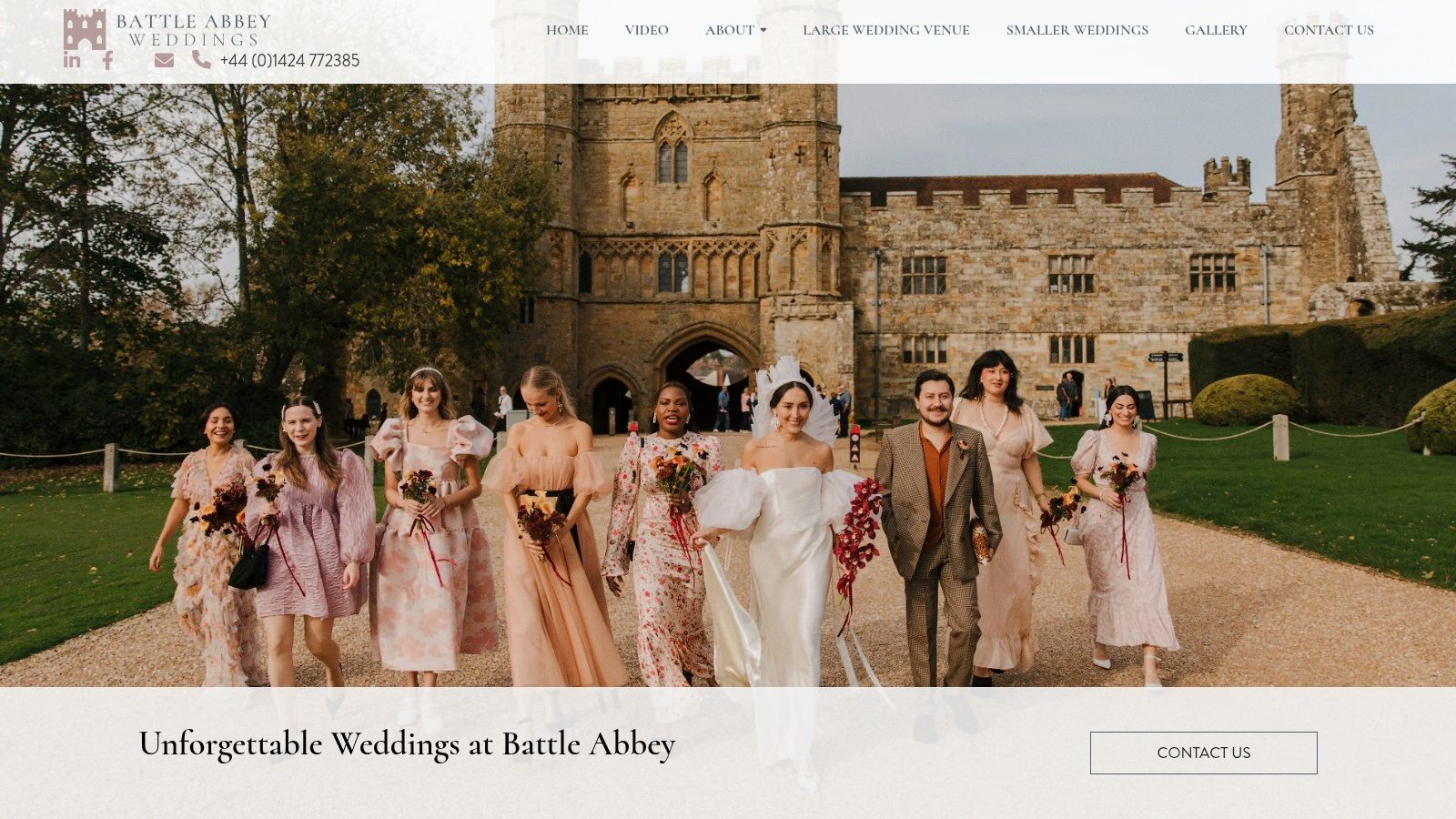
That is where a venue such as Battle Abbey tends to stand apart. The history is already present in the stone, the rooms, and the setting, so the ceremony feels meaningful before a single candle or flower is added. When the structure of the day is sound, the fairytale feeling follows naturally.
Styling Your Day with Seasonal English Charm
The quickest way to make a countryside wedding look forced is to style against the natural surroundings. Imported colour stories, out-of-season flowers, and décor that ignores the building usually feel disconnected from the setting.
Seasonal styling solves that. It makes the wedding feel rooted in place, and it often produces a more elegant result than trying to impose a generic “theme” on a historic venue.
Let the season do some of the design work
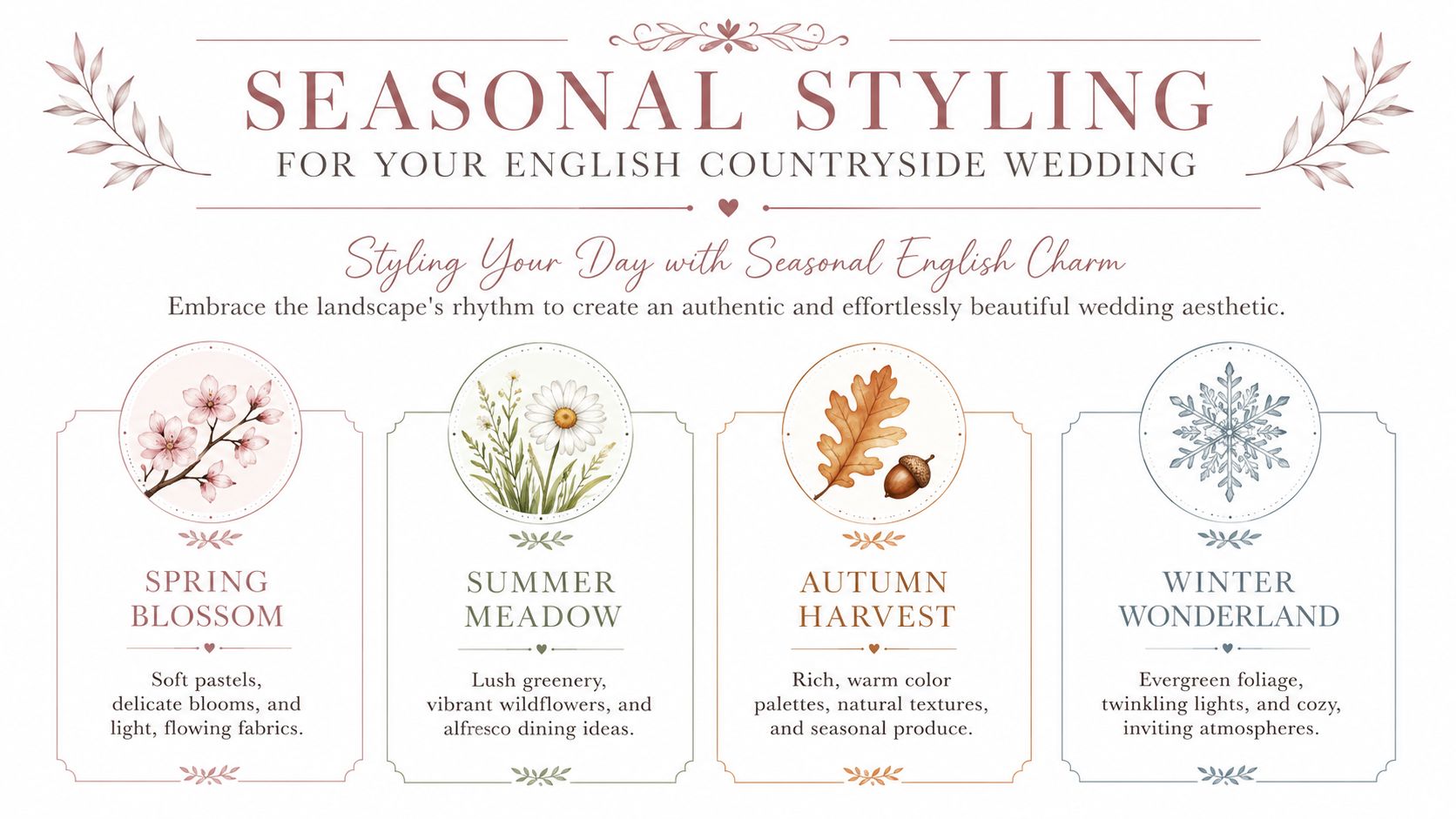
Spring asks for a lighter hand. Soft colour, blossom-led florals, and fabrics with movement suit old stone and fresh lawns beautifully. If you're planning around that mood, these springtime wedding colours are a useful starting point for building a palette that feels natural rather than overly styled.
Summer can carry more abundance. Garden roses, meadow textures, long drinks receptions, and dining that spills towards the terrace all make sense. Autumn suits depth. Think berries, foliage, polished wood, candlelight, and richer textiles. Winter needs warmth rather than excess. Evergreen details, layered lighting, and open fireplaces usually do more than elaborate installations.
A simple way to test your styling ideas is this. Remove the flowers in your mind. If the venue and your chosen palette still belong together, you're on the right track.
Sustainability should be aesthetic and practical
There's a clear appetite for greener weddings. 45% of UK couples now prioritise sustainable weddings, according to recent UK venue commentary on wedding trends. But sustainability in a countryside setting isn't always automatically cheaper or simpler. Local sourcing and waste reduction can add hidden costs, particularly around food and styling choices.
That doesn't mean you should avoid it. It means you should approach it with discipline.
Good sustainable styling choices often include:
- Season-led florals: Ask florists to work with the month rather than replicate a Pinterest board from another climate.
- Ceremony pieces reused elsewhere: Move meadow arrangements from the aisle to the dinner room, or repurpose mantel displays near the bar.
- Natural materials: Linen, paper, stone, brass, and glass age better visually than trend-led plastics or overly manufactured props.
- Edible décor with purpose: Fruit, herbs, and foliage can look generous without becoming wasteful.
An appropriate look matters elsewhere too. Formalwear should sit comfortably within the setting. For a polished country-house look that feels right in photographs and in person, an expert guide to wedding suits can help couples match cut, cloth, and formality to the venue.
A short film can also help you gauge how seasonal styling reads in motion, not just in still images.
What works and what usually doesn't
Here's the difference I see most often:
| Works well | Usually falls flat |
|---|---|
| Seasonal flowers | Demanding blooms that don't suit the month |
| Colour pulled from the landscape | Trend palettes that fight the building |
| Candlelight and texture | Excess props with no connection to the site |
| Reused ceremony arrangements | One-use installations with nowhere to go |
If the room already has history, your styling job is to frame it, not compete with it.
Crafting the Perfect Countryside Menu
Food shapes the tempo of a wedding as much as the look of it. In a countryside setting, the menu needs to match both the venue and the way guests will move through the day. A formal dining room invites one style of service. A terrace reception and relaxed afternoon suggest another.
The best starting point is always the setting itself. If your venue has an in-house team used to the building, use that knowledge. Historic properties often have service routes, room timings, and practical limitations that an outside caterer may only discover too late.
Choose a format that matches the space
A three-course wedding breakfast works beautifully in a grand room with a sense of occasion. It slows the day down in a good way and gives speeches a natural frame. It's often the right choice when the architecture already leans formal.
A gourmet BBQ or hog roast creates a different mood. It suits couples who want the day to feel more like an elegant country gathering than a stately dinner. This format can work especially well when guests have already spent time outdoors and the venue has a strong terrace or lawn for drinks.
If you're comparing options, these are the practical trade-offs:
- Formal plated meal: Better for structure, speeches, and black-tie energy.
- Relaxed sharing or outdoor-led service: Better for movement, informality, and a softer schedule.
- Hybrid approach: A polished starter and main indoors, then a more relaxed evening food offer, often gives the best of both.
For couples who want to see how a countryside venue approaches these choices, a sample wedding food menu is useful because it shows the difference between banquet-style dining and more informal options.
Build flexibility into the menu
Menus don't need to be complicated to feel thoughtful. They need range, good pacing, and enough flexibility for mixed dietary requirements.
Focus on these decisions early:
- Canapés with purpose: Choose options that can be eaten easily while standing outdoors.
- A main course that holds quality: Rural venues often involve service distances and room changes, so dishes should travel well and stay elegant.
- Dietary parity: Vegetarian, vegan, and allergen-friendly dishes should feel equally considered, not like afterthoughts.
- Evening food that revives the party: Late food should be satisfying and easy to eat, especially after dancing.
If you're planning pre-wedding hosting, recovery brunches, or a dressing-room spread with a softer feel, even something like a plant-based afternoon tea set can help shape a more relaxed countryside weekend around the main event.
Serve food that suits how guests are actually eating, not how you think a wedding menu is supposed to look on paper.
Keep the menu local, but stay honest about the trade-offs
Locally sourced produce suits the English countryside perfectly. It usually tastes better, feels more rooted in place, and gives the catering a sense of identity. But local sourcing isn't a guarantee of lower cost or simpler planning. Seasonal availability can narrow your choices, and highly specific requests may work against the idea of local procurement.
The strongest menus are usually the least performative. They use local ingredients where it makes sense, choose a service style that complements the venue, and keep enough flexibility for weather, timing, and guest comfort.
Mastering the Logistics of a Rural Wedding
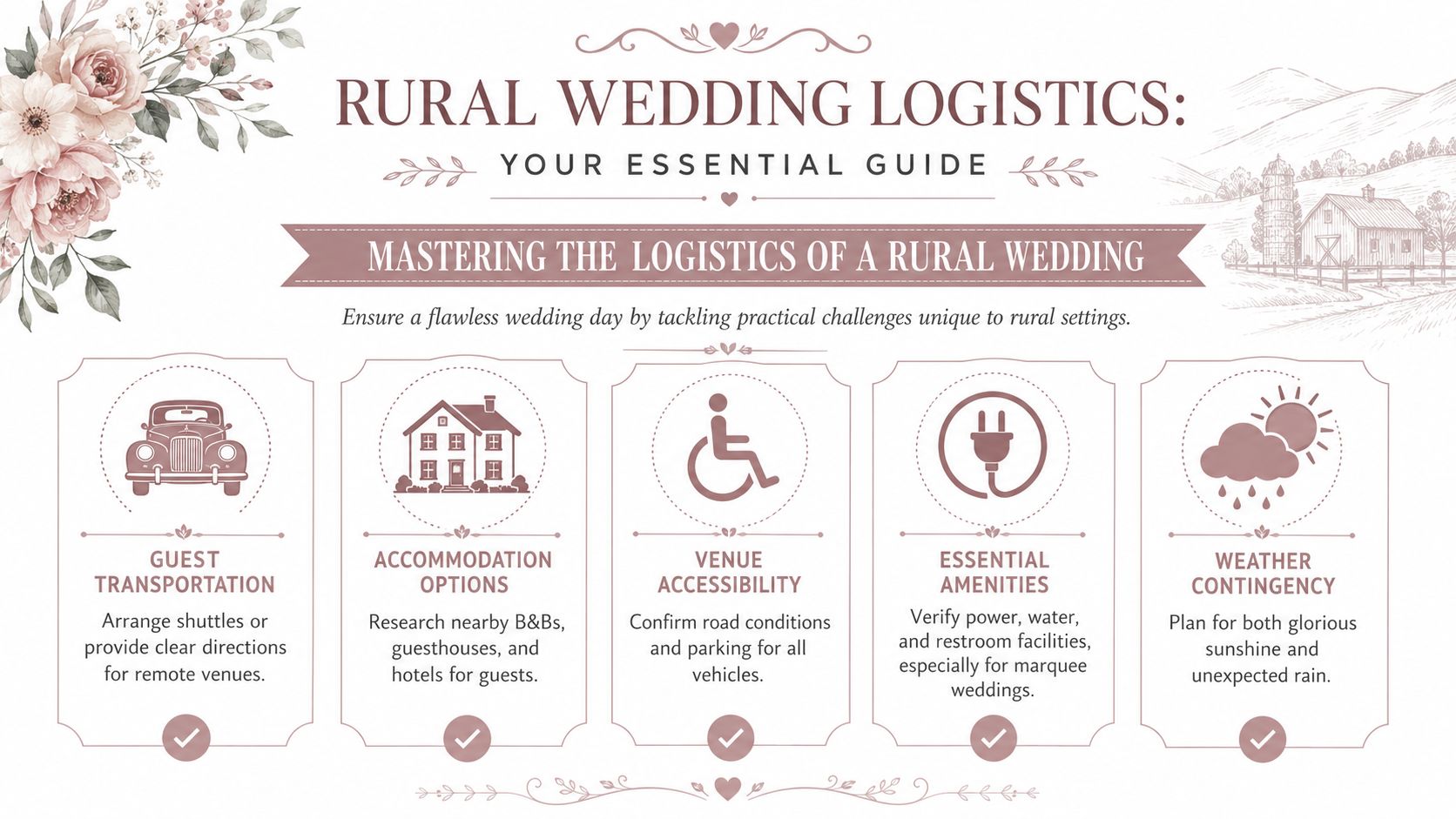
A countryside wedding feels effortless only when the operations are handled with real discipline. Guests should know where to go, where to stay, how to get home, and what happens if the weather turns at 1pm. At a historic venue, those decisions shape the atmosphere as much as the flowers or tablescape do. The magic depends on good planning.
Transport is part of the guest experience
Remote venues ask more of people. Country roads are dark, phone signal can drop, and taxi availability is often poor late at night. If guests are left to piece it together themselves, the day starts with stress and can end with people stranded.
The strongest approach is to build transport around actual guest behaviour, not optimistic assumptions. If a large share of guests are staying in one nearby town, book a coach. If several older relatives are driving, make parking straightforward and close to the action. If the evening finishes after local taxi firms stop operating, arrange the return journey before invitations are sent.
A clear travel plan should cover:
- Accurate directions: Postcodes are not always enough for rural estates and abbey grounds.
- Parking instructions: Include surface type, walking distance, and whether heels will be a problem.
- Arrival timing: Give a realistic window, not one that only works in perfect traffic.
- Departure logistics: Confirm the final coach run or pre-booked cars in writing.
Signage matters more than couples expect. At larger heritage properties, a missed turning or secondary gate can throw off the whole arrival flow. Venues with established event operations, including places such as Battle Abbey, usually know where temporary signs can go without compromising the setting. Ask early.
Accommodation needs to be mapped, not mentioned
Accommodation is one of the first pressure points in a rural wedding weekend. There may be beautiful rooms on site, but rarely enough for everyone who wants them. Once guests assume they will all stay nearby, expectations get ahead of reality.
Set the accommodation plan while the guest list is still taking shape. Start with anyone for whom proximity is essential. That usually means the couple, immediate family, the wedding party, older relatives, and guests with mobility concerns. After that, recommend clusters of hotels, inns, or rental houses that make transport easier rather than scattering people across the county.
| Guest group | Priority for closest accommodation |
|---|---|
| Couple and immediate family | Highest |
| Wedding party | High |
| Elderly relatives or guests with mobility needs | High |
| Friends travelling together | Flexible |
| Local guests | Usually none |
This is also where honesty helps. A romantic rural setting sometimes comes with limited room stock, uneven check-in times, or longer transfer distances than guests expect. Say that clearly and give people a workable plan. Good logistics feel generous.
Weather planning needs a full second version of the day
Outdoor ceremonies in the English countryside are beautiful because they are slightly unpredictable. The mistake is treating the wet-weather option as a lesser version of the wedding. That is how couples end up making rushed calls, moving furniture under pressure, and disappointing themselves before the ceremony has even started.
The indoor plan should be designed with the same care as the outdoor one. At a venue with history and architectural presence, that can work in your favour. A stone hall, panelled room, or atmospheric cloister often gives the day more depth, not less. The key is making the switch operationally easy.
Cover these points in advance:
- Use a licensed indoor ceremony space that is presentation-ready
- Keep the backup location close enough to reset quickly
- Decide who makes the weather call, and at what time
- Confirm how chairs, music, florals, and guests will be moved
- Check whether drinks service, confetti, and photography can adapt without delay
The rain plan should feel intentional, polished, and fully in keeping with the venue.
I advise couples to walk both versions of the day with the venue team. Stand where guests will arrive. Time the move from one space to the next. Check umbrella storage, cloakroom capacity, and whether elderly guests can manage the route comfortably. Those details matter more than a hopeful forecast.
Protect the budget lines that keep the day running properly
Rural weddings do not always cost more across the board, but they do shift spending into less glamorous categories. Couples often save on heavy decor because the setting already carries character. Then pressure appears elsewhere. Transport, staffing, power supply, heating, flooring, and contingency plans can have more impact on guest comfort than another layer of styling ever will.
The smartest budgets protect the parts guests feel:
- Venue usability: Strong indoor and outdoor options reduce last-minute spend.
- Transport and parking management: Especially if guests are spread across several hotels.
- Experienced coordination: Historic sites and multi-space weddings benefit from hands-on control.
- Infrastructure: Power, lighting, heating, toilets, and ground protection for outdoor elements.
One practical benchmark is timing. If your schedule only works when every supplier arrives exactly on cue, every guest finds the venue first time, and the weather stays dry, the plan is too tight. Build in breathing room. For couples shaping a realistic planning schedule, the Get Spliced wedding timeline is a useful reference point for sequencing decisions before they become expensive problems.
A fairytale setting still needs a working engine behind it. That is what lets the day feel calm, elegant, and unmistakably English rather than logistically fragile.
Building Your Dream Team and Timeline
Twelve months before the wedding, the mood is still all possibility. Six weeks before, the same day can start to feel crowded with decisions, supplier emails, delivery windows, and weather calls. The couples who enjoy a relaxed countryside wedding are usually the ones who built the right team early and gave that team a schedule with space in it.
Build a team that understands the setting
A beautiful portfolio is not enough. For an abbey, estate, or country house wedding, suppliers need to understand old walls, limited access points, uneven ground, shifting daylight, and the fact that guests may move through several spaces across the day.
Ask each supplier where they do their best work. The answer tells you a lot. A florist who is brilliant in clean, modern venues may over-style a historic room. A photographer who depends on bright interiors can struggle once the ceremony moves into candlelight or the drinks reception runs under grey skies. A band used to city hotels may underestimate sound restrictions, power setup, or the time it takes guests to move between lawn, cloister, and dining room.
Look for proof of four things:
- Historic venue experience: They know how to work within heritage rules and still produce something polished.
- Confidence in mixed weather: Their work still looks good in soft rain, overcast light, or a last-minute indoor switch.
- Calm communication: They answer clearly, flag issues early, and do not create drama in the final month.
- Restraint: They add to the setting instead of competing with it.
One useful reference point is the Get Spliced wedding timeline, which gives couples a clear sense of when decisions usually move from optional to urgent.
Set a planning rhythm that the venue can actually support
The strongest timelines are built around operational reality, not wishful thinking. If hair and makeup overruns by forty minutes, can the ceremony still start gracefully? If portraits take longer than expected, is there a sheltered drinks space that keeps guests comfortable? If the band load-in is delayed, does the catering schedule still hold?
Those are the questions.
A simple planning structure works well for most countryside weddings:
Early stage
Confirm the venue, then book the suppliers who are hardest to replace on your date. Usually that means planner or coordinator, photographer, caterer if not in-house, and entertainment.
Middle stage
Refine the design direction, confirm the ceremony format, choose florist and hire items, and make firm decisions on accommodation and guest transport. This is also the stage to check every timing assumption against the venue itself, not just against a spreadsheet.
Later stage
Finalise the running order, room plan, wet-weather version, supplier access schedule, and exact setup responsibilities. Everyone should know who is placing candles, who is moving signage, who is cueing the ceremony, and who has authority to make weather calls on the day.
A countdown that protects the atmosphere
The fairest test of a timeline is simple. Does it create calm, or does it ask too many people to improvise at once?
A practical countdown looks like this:
- A year or more out: Book venue and key suppliers, set budget, outline guest numbers
- Around six to nine months out: Fix the visual direction, choose florist and attire, confirm ceremony plans
- A few months out: Menu tasting, transport planning, stationery, accommodation details
- Final month: Guest count, seating plan, supplier schedules, weather contingency, room layouts
- Wedding week: Deliver final contacts, pack personal items, and stop making cosmetic changes that create extra work
Good planning is mostly about sequence. The right decision made early protects the feeling of the day later.
One concise example is Battle Abbey Weddings, where licensed historic spaces, catering, and planning support sit under one operational structure. For couples planning a countryside wedding with a fairytale brief, that joined-up setup reduces gaps between vision and delivery.
The most romantic English weddings still run on timing, delegation, and sound judgement. Get those three things right, and the day feels effortless to your guests, even though a great deal of care is holding it together subtly in the background.