The first days after an engagement are usually a blur of joy, screenshots, family messages, and a growing notes app full of ideas. Then the practical questions arrive. Can we marry at our chosen venue? How much notice do we need to give? What if one of us lives abroad? Which ceremony makes it legal?
At a historic venue, those questions often arrive earlier. Couples fall in love with the atmosphere first. They picture ancient stone, candlelight, a long table, the walk across a terrace, and the moment their guests turn to watch them enter. Then they realise the legal side has to line up perfectly with the romantic side, or the whole plan becomes more stressful than it needs to be.
That’s where clear guidance matters. The legal process for how to get married in uk terms isn’t impossible, but it is structured. The couples who find it easiest are usually the ones who deal with the paperwork early, understand the timetable, and then get on with the enjoyable decisions.
Small traditions often become part of that early planning too. Once rings are chosen, many couples start asking who wears which ring and on which hand, so a practical explainer like Wedding Ring Placement Traditions can be useful while you’re sorting both symbolism and ceremony details.
The other early decision is where the day will happen. Before you compare aesthetics, layouts, and ceremony options, it helps to think through the practical side of how to choose a wedding venue, because legal requirements and venue suitability need to support each other from the beginning.
Your Journey from 'Yes' to 'I Do'
A couple often starts with a date idea and a venue mood. They rarely start with the register office timetable. That’s completely normal.
What helps is treating the legal process as the framework that protects the celebration. Once that framework is in place, the creative decisions become far easier. You stop worrying whether your chosen date is viable and start focusing on your guests, your ceremony style, your meal, and the atmosphere you want people to remember.
Historic weddings add one more layer. Character venues aren’t blank boxes. They have licensed spaces, operational rhythms, registrar coordination points, guest flow considerations, and in some cases outdoor elements that need thoughtful planning. None of that should put you off. It means a wedding in a place with real history benefits from organised timing.
A wedding feels effortless on the day when the legal work was handled calmly months earlier.
If you’re feeling excited and slightly overwhelmed at the same time, you’re in good company. Most couples are. The process becomes manageable once you separate it into three things: whether you’re legally eligible to marry, which kind of ceremony you want, and when you must complete each formal step.
First Steps Your Legal Eligibility and Ceremony Choices
A couple can fall in love with a medieval hall, reserve guest rooms, and start discussing flowers before anyone asks the question that determines whether the day can happen as planned. Are you both legally free to marry, and can your chosen ceremony take place in the setting you have in mind?
That is the first checkpoint I ask couples to clear, especially when they are planning at a historic venue where not every beautiful space is licensed for the legal ceremony.
Start with age and legal capacity
In England and Wales, you must both be at least 18 to marry. The Marriages and Civil Partnership (Minimum Age) Act 2022 brought that change into force on 27 February 2023, ending marriage at 16 or 17 even with parental consent (marriage law and demographics in England and Wales).
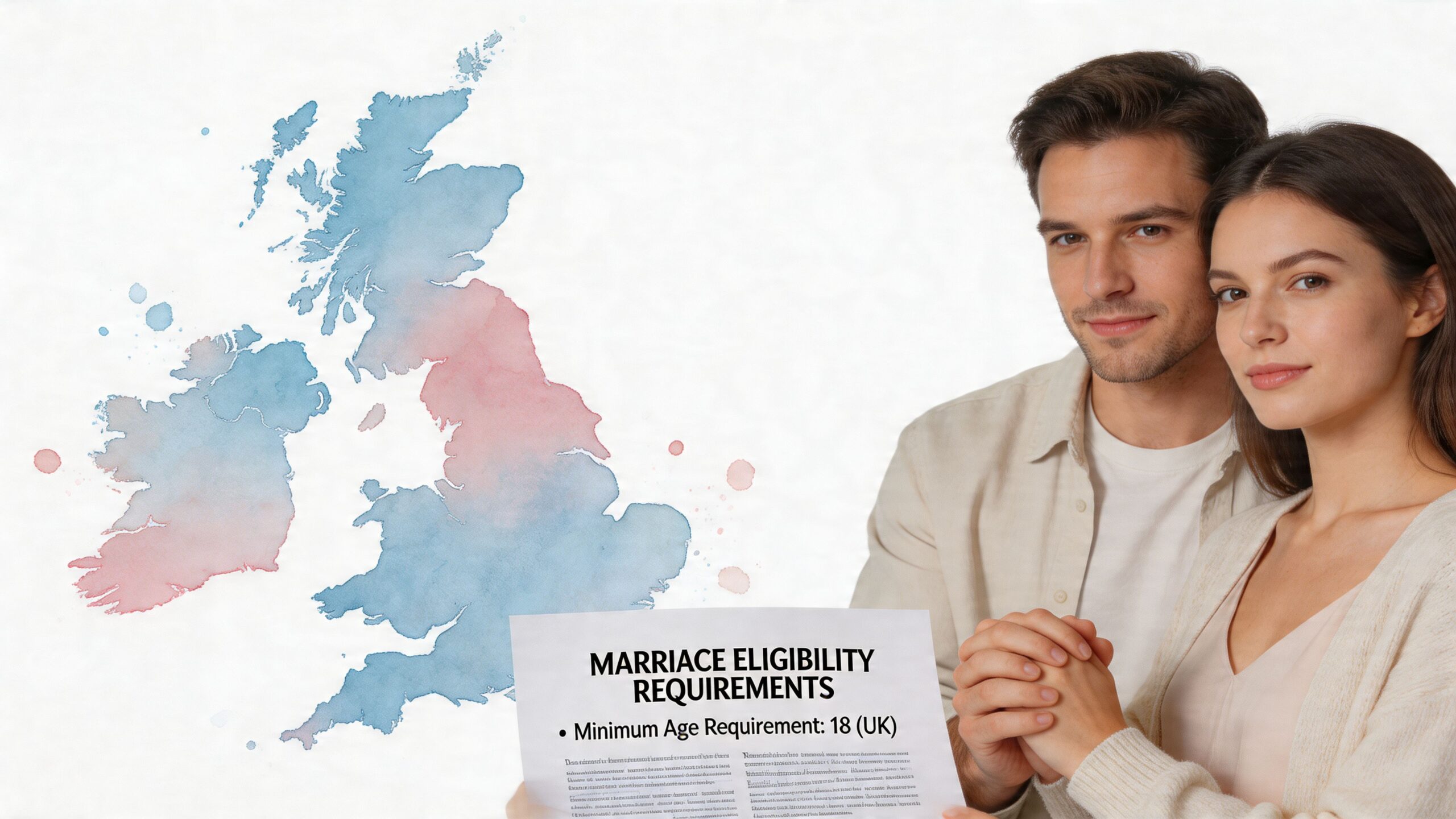
You must also have legal capacity to marry. In practice, that means both of you understand what marriage is, neither of you is already married or in a civil partnership unless that relationship has legally ended, and you are not within the prohibited degrees of relationship.
This is usually straightforward. It becomes more document-heavy if one of you is divorced, widowed, or has changed your name.
Know which UK legal system applies
Couples often say they are getting married "in the UK" as though there is one set of rules. There are separate legal systems for England and Wales, Scotland, and Northern Ireland.
Follow the law of the place where the ceremony will happen. If your wedding is in England, the English process applies even if you live abroad or your family is using guidance from Scotland. I see this catch out international couples in particular, because online advice often blends the three systems together.
For venue planning, that distinction matters early. The notice process, the authorised people involved, and the rules around ceremony format can differ, so date-holding and registrar coordination need to match the correct jurisdiction from the start.
Civil or religious ceremony
Your next decision is the legal form of the ceremony. This shapes the venue options, the wording, who conducts the service, and how much flexibility you have with the timetable.
A practical comparison looks like this:
| Ceremony type | What it means in practice | Common planning trade-off |
|---|---|---|
| Civil ceremony | A legally binding ceremony at a register office or approved premises, conducted by a registrar | Greater flexibility on venue style and guest flow, but you need a licensed room and registrar availability |
| Religious ceremony | A legally binding ceremony conducted under an authorised religious process | Strong faith setting and tradition, but less freedom over wording, format, and sometimes timing |
For many couples at heritage venues, a civil ceremony is the more workable option because it allows the legal ceremony and celebration to happen in one place. If you are considering a register office ceremony first and a reception later, this guide to a registry office wedding and venue celebration planning will help you weigh the logistics.
What “approved premises” means at a historic venue
This is the point where generic legal guidance often stops being helpful.
If you want a civil ceremony outside a register office, the venue must be licensed, and the ceremony must take place in the licensed part of that venue. At a historic property, that can mean one room is approved for the legal ceremony while the cloister, terrace, or dining hall is used for drinks and dinner only.
Couples are often surprised by this, but it is normal. It does not limit the atmosphere of the day. It means the legal plan and the event plan need to be aligned early, especially if you are booking exclusive use and shaping the guest journey around the building.
A good planning question isn't limited to, "Is the venue licensed?" Ask, "Which exact room is licensed, what is the capacity in that room, and how does that affect the rest of the day?"
What works well in practice
- Choose the legal ceremony type before confirming suppliers whose timings depend on it
- Confirm the exact licensed ceremony space, not just the venue as a whole
- Check whether your preferred wording and style are permitted within the ceremony type you have chosen
- If one or both of you live overseas, ask early what extra documents or lead time may be needed before you commit to a fixed date
Common mistakes I advise couples to avoid
- Assuming every attractive room in a heritage venue can host the legal ceremony
- Booking a celebrant-led or symbolic ceremony without understanding that it may not create a legal marriage
- Using guidance from Scotland or Northern Ireland for a wedding taking place in England
- Treating legal eligibility as a formality to sort out after the venue is booked
The couples who find this part least stressful are not the ones who know every legal term at the start. They are the ones who match legal choices to venue reality early, then build the celebration around a plan that will stand up on paper as well as on the day.
The Official Countdown Giving Notice and Required Documents
The most important administrative step is giving notice. If couples are unsure how to get married in uk legal terms, this is usually the part they need explained clearly.
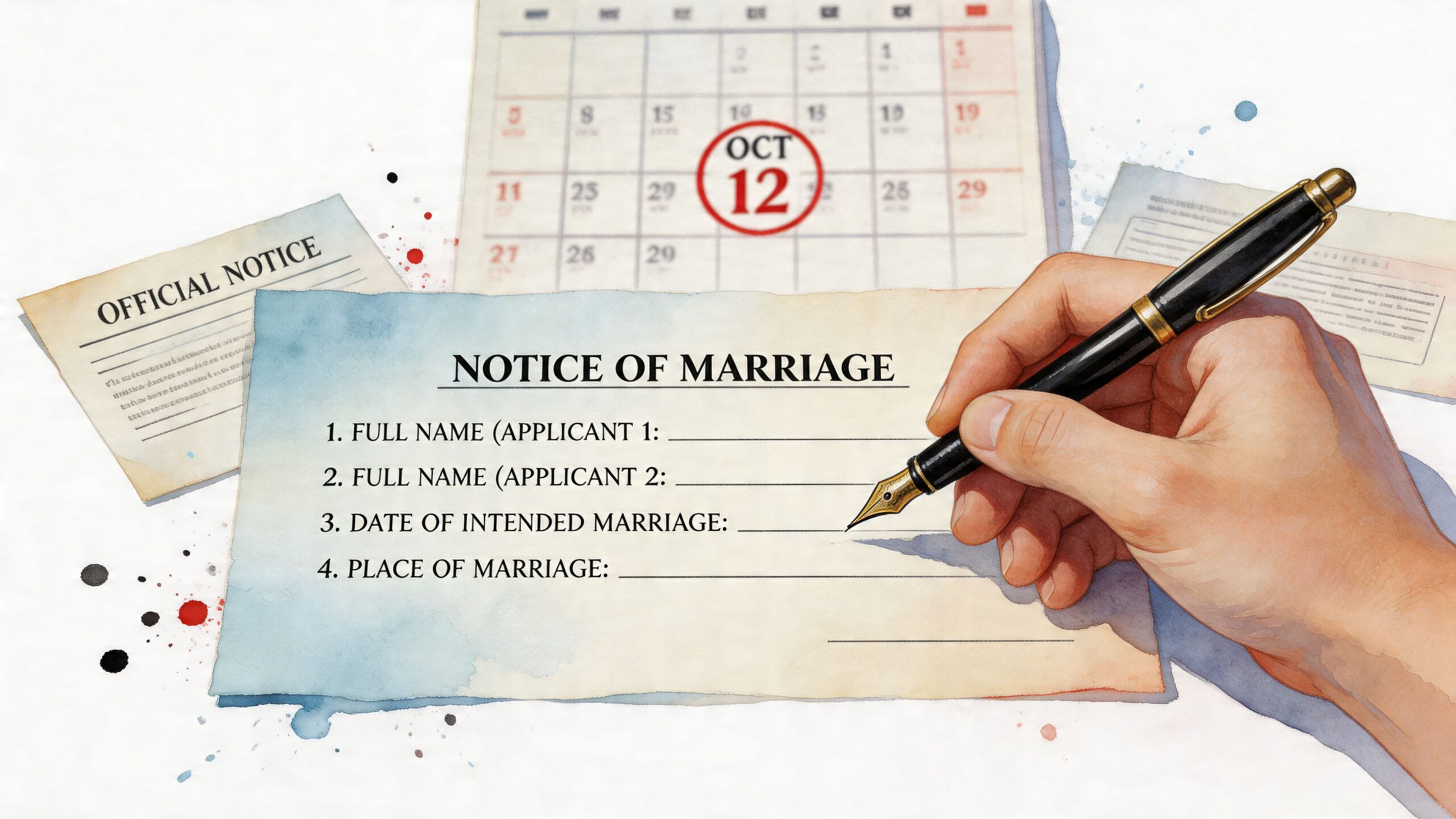
What giving notice actually is
Giving notice means formally declaring your intention to marry. You do this in person at the register office in your district. It isn’t a soft reservation or a general statement of intent. It is a legal prerequisite.
Under the UK marriage notice system, there is a minimum 29-day notice period, the notice is publicly displayed for 28 days, it is valid for exactly 12 months, and each person must have resided in the district for at least 7 days before giving notice in person (UK marriage notice requirements).
Those timings create the planning backbone. If you’re aiming for a specific wedding date, you need to count backwards from that date and fit the notice process into your wider planning calendar.
The timeline couples should follow
The easiest way to approach notice is sequentially.
Confirm where the ceremony will take place
You need the right venue or register office details before your notice appointment.Check where each of you must attend
The correct register office depends on your district. Don’t assume one convenient office can handle everything unless it is the correct one for your circumstances.Complete the residency period
If the rules require residence in district before notice, build that in. This point is especially important for international couples.Attend the appointment in person
Notice isn’t usually something to leave to email chains or assumptions.Wait out the legal display period
Your ceremony cannot legally take place until that minimum period has passed.Marry within the notice validity window
If the wedding date slips too far, the notice can expire and the process must begin again.
The couples who struggle most are rarely the least organised socially. They are the ones who book a date first and only later check whether the legal timetable can support it.
Documents to prepare properly
The exact document set can vary with personal circumstances, but the practical categories are consistent. Bring originals where required, and never assume a screenshot or partial scan will do.
Most couples should be ready to show:
- Proof of identity such as a current passport or other accepted identification
- Proof of address if required for your register office process
- Evidence of name changes if your current name differs from earlier legal documents
- Proof that a previous marriage or civil partnership ended if applicable
- Immigration or visa-related documents where relevant to your status
If one or both of you have been married before, this is the point to be meticulous. Missing paperwork in that category is one of the most common reasons appointments become stressful.
A practical document method
A tidy system saves a surprising amount of anxiety. I advise couples to prepare one shared folder and one digital checklist, then review them together before the notice appointment.
Use this simple structure:
- Section one for identity documents
- Section two for address evidence
- Section three for previous marriage or civil partnership paperwork
- Section four for venue and ceremony details
- Section five for any immigration-related evidence
If you’re planning a civil ceremony rather than a church wedding, it also helps to read a practical guide to a registry office wedding so you understand how the legal process and ceremony format fit together.
A short visual overview can also help if you’re discussing the process with family or planning from abroad:
What works and what goes wrong
A few habits consistently make this stage smoother.
| Works well | Usually creates problems |
|---|---|
| Booking the notice appointment as soon as your date and venue are stable | Waiting until the rest of the wedding feels “more organised” |
| Checking each document against current names and legal status | Bringing mismatched documents and hoping the office will overlook it |
| Planning backwards from the ceremony date | Planning forwards from engagement and assuming there’s plenty of time |
| Treating notice validity as a firm legal window | Assuming notice can simply be extended informally |
The legal side of a wedding doesn’t need to feel cold. It just rewards accuracy. Once your notice is accepted and your date sits safely within the permitted window, many of the background worries disappear.
Navigating Special Circumstances and International Weddings
Destination weddings in England often look straightforward from the outside. The venue is chosen, flights are discussed, guests are excited, and everyone assumes the paperwork is just a formality. In practice, international weddings need earlier coordination and fewer assumptions.
International couples and the residency trap
For international couples, planning needs to start with immigration status and local presence, not stationery design. According to guidance cited for getting married in the UK, British citizens need no visa, non-UK residents must reside in England or Wales for 7 days before giving notice, 15% of marriages in 2024 involved foreign-born partners, and registrar demand at historic venues has been high enough that booking registrars 6 to 9 months ahead is treated as critical.
That combination matters. Couples often think “we’ll fly in shortly before the wedding and do the legal bits then”. For many, that doesn’t work. If one or both partners live abroad, the residency and notice timetable may require a separate planning trip or a much longer arrival window than expected.
If you're travelling for your wedding, never assume your ceremony date is secure until the legal route and registrar availability are both confirmed.
Visa and status questions to sort early
Generic online advice often falls short. It may say who doesn’t need a visa, but not how that interacts with real planning.
The right questions are:
- What is each partner’s nationality and immigration status?
- Can both of you legally give notice in the district required?
- Will your intended arrival dates satisfy the residence rule before notice?
- Does your current visa status permit the marriage process you’re planning?
If there’s any uncertainty, check the legal route before paying non-refundable wedding costs. International couples lose the most time when they make venue and guest commitments first and immigration checks second.
Historic venues require registrar coordination
A heritage venue isn’t a register office with decorative stonework. It is a separate setting that usually requires active coordination between the couple, the venue team, and the registrar service responsible for attending the ceremony.
That means:
- the licensed ceremony space must be available
- the registrar must be available
- your legal notice must still be valid on the date
- your travel and residency plans must support the notice process
If even one of those pieces is off, the wedding day logistics become fragile.
Other circumstances that need extra care
International planning gets the most attention, but it isn’t the only situation that benefits from slower, more careful preparation.
If one or both of you were married before
Bring the formal proof that the previous marriage or civil partnership ended. Don’t leave interpretation to chance. If names differ across documents, make sure the paper trail is easy to follow.
Same-sex marriage
Same-sex marriage forms part of the modern legal framework in England and Wales. The practical lesson for couples is simple. Check the exact legal format and venue licensing requirements that apply to your ceremony choice, then align all supplier paperwork and day-of logistics with that legal structure.
Civil partnership conversion and ceremony expectations
Couples sometimes assume that because one legal status already exists, the administrative route to marriage will be informal. It may not be. If your circumstances are less standard, confirm each legal step directly before finalising the day’s format.
What works in real planning terms
The strongest international plans tend to share the same traits:
- travel dates are chosen around legal requirements, not the other way round
- registrar availability is checked early
- paperwork is assembled long before flights are booked
- everyone involved knows whether the ceremony is the legal wedding, a blessing, or a symbolic celebration
What tends not to work is trying to compress all legal tasks into the final weeks before guests arrive. Historic venues reward good timing, but they can’t override legal requirements.
From Legalities to Celebration Your Wedding Timeline and Costs
You have a date in mind, guests are asking about travel, and a historic venue has caught your eye. This is often the point where couples realise the legal process and the celebration cannot be planned on separate tracks. At a venue like Battle Abbey, timing matters twice. It matters for the law, and it matters for securing the spaces, suppliers, and guest experience you want.
Build the legal milestones into the wedding calendar
The strongest wedding plans start with the fixed points. Legal notice periods, registrar availability, and venue access shape the rest of the schedule.
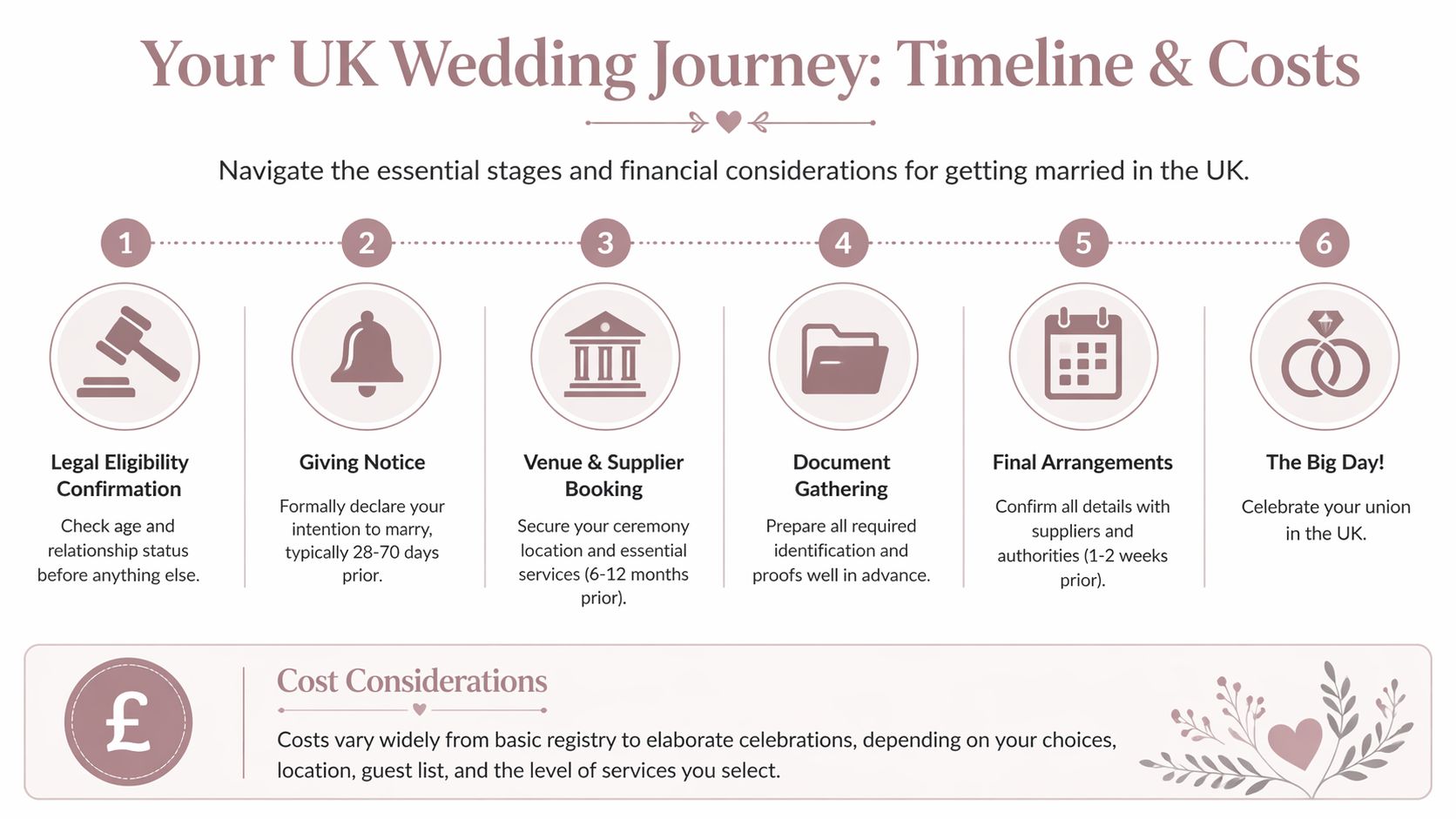
At a practical level, the timeline often works like this:
- Early planning
Confirm that you are legally free to marry, choose the type of ceremony, and check that your preferred venue can host that ceremony in the correct licensed space. - Venue and date booking
Place a hold or book the venue, then confirm how the legal ceremony will be delivered on site and begin gathering your documents. - Notice period
Book and attend your notice appointments in good time for the wedding date you want. - Final planning phase
Lock in suppliers, floorplans, guest logistics, and ceremony timings once the legal timetable is safely in place. - Wedding week
Paperwork should already be finished. The focus should be on hosting, not administration.
Couples who want help mapping the wider planning process around those legal dates may also find a general wedding preparation timeline useful.
Separate legal costs from celebration costs
This is one of the clearest ways to avoid budget drift.
Legal costs usually cover notice fees, registrar fees where applicable, certificates, and any document-related administration. Celebration costs cover the parts of the day that shape the experience for you and your guests, such as venue hire, catering, drinks, flowers, music, transport, photography, and accommodation.
Keeping those categories separate helps with decision-making. If a couple tells me their budget feels unclear, the cause is often simple. The compulsory costs and the design choices have been merged into one large number, so it becomes harder to see where flexibility exists.
Civil ceremonies remain a common choice because they give couples more control over venue style and flow, especially when the aim is to combine the legal ceremony and the celebration in one place. That can work very well at a historic venue, but only if the legal booking and the event booking are coordinated from the start.
Where couples overspend by mistake
Budget problems often come from timing rather than taste.
| Budget mistake | Better approach |
|---|---|
| Paying deposits before the legal date is workable | Check notice timing, registrar availability, and ceremony logistics before committing money |
| Forgetting to budget for the legal ceremony itself | Add notice fees, registrar costs, and certificates to the first version of the budget |
| Mixing required costs with styling choices | Track legal and hospitality spending in separate lines |
| Changing the ceremony format late | Decide early whether the day includes a legal ceremony, a religious service, or a symbolic celebration |
A steady budget comes from knowing which payments make the marriage legal and which payments shape the day around it.
What venue coordination looks like in real life
At a licensed historic venue, planning does not stop at booking a beautiful setting. Someone has to line up the legal ceremony space, guest arrival, supplier access, photography windows, room changes, and the registrar's schedule so the day runs calmly and makes sense on site.
That coordination becomes even more important for international couples or for anyone arranging exclusive use of a venue with limited availability. A date may look perfect on paper but still need checking against notice rules, travel plans, and local authority timings before it is safe to confirm.
For couples comparing budgets in more detail, Battle Abbey Weddings' guide to average wedding costs is a useful reference point for separating venue, catering, drinks, and planning choices from the legal side of getting married.
That separation gives couples more control. It also makes the planning process feel calmer, which is exactly what you want once the paperwork is underway and the celebration starts taking shape.
Your Essential UK Wedding Checklist and Final Tips
A good checklist should reduce stress, not create it. Keep this one practical and visible.
Your core checklist
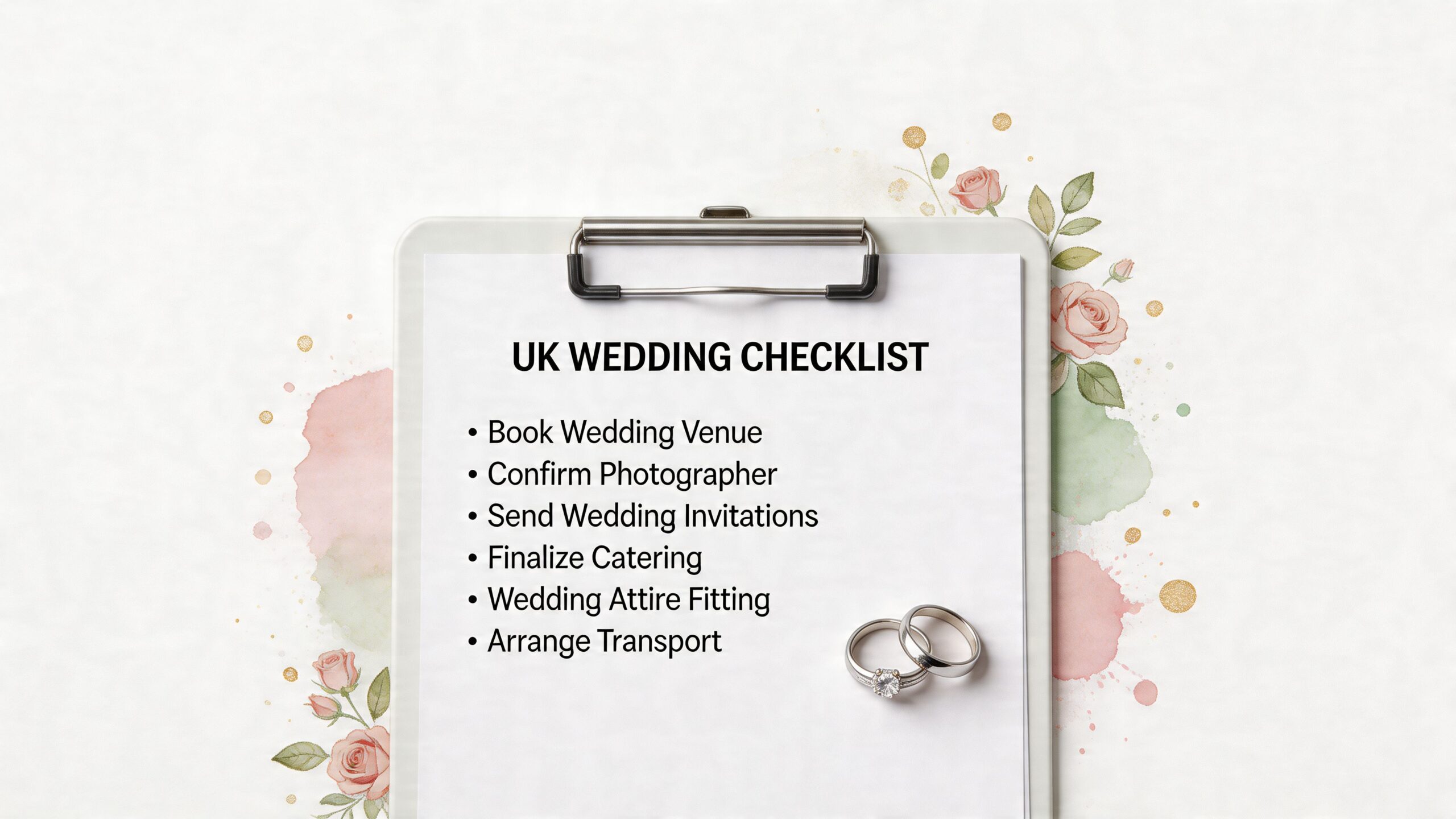
Checklist for getting married in the UK
- Confirm eligibility. Make sure both of you meet the legal age requirement and are free to marry.
- Choose your ceremony type. Decide whether you want a civil or religious ceremony before you finalise the venue.
- Verify the ceremony location. Check that the exact room or space for the legal ceremony is properly licensed if required.
- Gather documents early. Identity, address, previous marriage paperwork, and any immigration-related evidence should be collected well in advance.
- Book the notice appointment. Don’t leave this until the wedding feels close.
- Check registrar arrangements. For approved premises, confirm attendance and timing with the relevant authority.
- Track the legal validity window. Make sure the ceremony happens within the permitted period after notice.
- Reconfirm final details. Names, timings, witnesses, and ceremony format should all be checked again before the day.
Final practical tips
A few habits make a noticeable difference:
- Create one paperwork folder for both partners. Don’t split key legal documents across email inboxes.
- Use names consistently across bookings and legal records wherever possible.
- Ask questions early if one of your circumstances is less straightforward.
- Choose suppliers and a venue team that understand legal timing, not just aesthetics.
The legal side of your wedding should support the celebration, not overshadow it. When the administration is handled well, the day feels exactly as it should. Personal, joyful, and unhurried.
Frequently Asked Questions About UK Marriage Laws
What do we use to change a surname after the wedding
In practice, your marriage certificate is the key document people usually rely on when updating records after the wedding. The exact organisations you notify and the order you do it in will depend on your circumstances, but keep certified copies and move through each institution methodically.
What happens if our notice expires before the wedding
If the 12-month validity of the notice runs out before the ceremony takes place, you generally have to start the notice process again. Treat the validity window as fixed and plan carefully if your date changes.
Are humanist or celebrant-led ceremonies legally binding in England and Wales
Couples often assume a beautiful personalised ceremony is automatically the legal marriage. That isn’t always the case. In England and Wales, celebrant-led ceremonies may require a separate legal civil process for the marriage itself, so confirm the legal format before the day is designed around it.
If you're planning a wedding in East Sussex and want a venue team that understands how legal timing, registrar coordination, and historic venue logistics fit together, Battle Abbey Weddings is worth exploring. The setting offers licensed ceremony space, flexible celebration formats, and the kind of practical planning support that helps couples move from paperwork to celebration with confidence.