You're probably weighing two versions of the same wedding right now.
One ends neatly at midnight. The band finishes, the bar closes, guests drift off, and the day folds away in the usual order. The other keeps its pulse for a little longer. The formalities soften, the room relaxes, and the most memorable part of the celebration begins when the timetable of a standard reception would usually stop.
At a historic venue, that choice feels even sharper. Stone walls, candlelight, old staircases, terraces after dark, and the hush of a heritage setting can make a late night wedding reception feel cinematic. They also bring rules, timings, sound limits, staffing questions, and cost decisions that modern blank-canvas venues don't always force you to confront.
That contrast is exactly where good planning matters. Romance carries the atmosphere. Logistics protect it.
The Magic of a Late Night Historic Wedding
When a wedding runs late in a grand historic setting, the atmosphere changes completely. Dinner service and speeches belong to the public part of the day. The late hours feel more private, even with a full guest list. People loosen their shoulders, kick off formal shoes, gather in smaller circles, and settle into the sort of conversations and dancing they'd never fit into a tighter timetable.
At a venue with ancient stone, high ceilings, and terraces opening into the night, that final stretch often becomes the part couples remember most clearly. The room looks different after dark. Candles and architectural lighting pull attention to arches, beams, portraits, and worn stone details that can disappear in daylight. Guests feel that shift straight away.
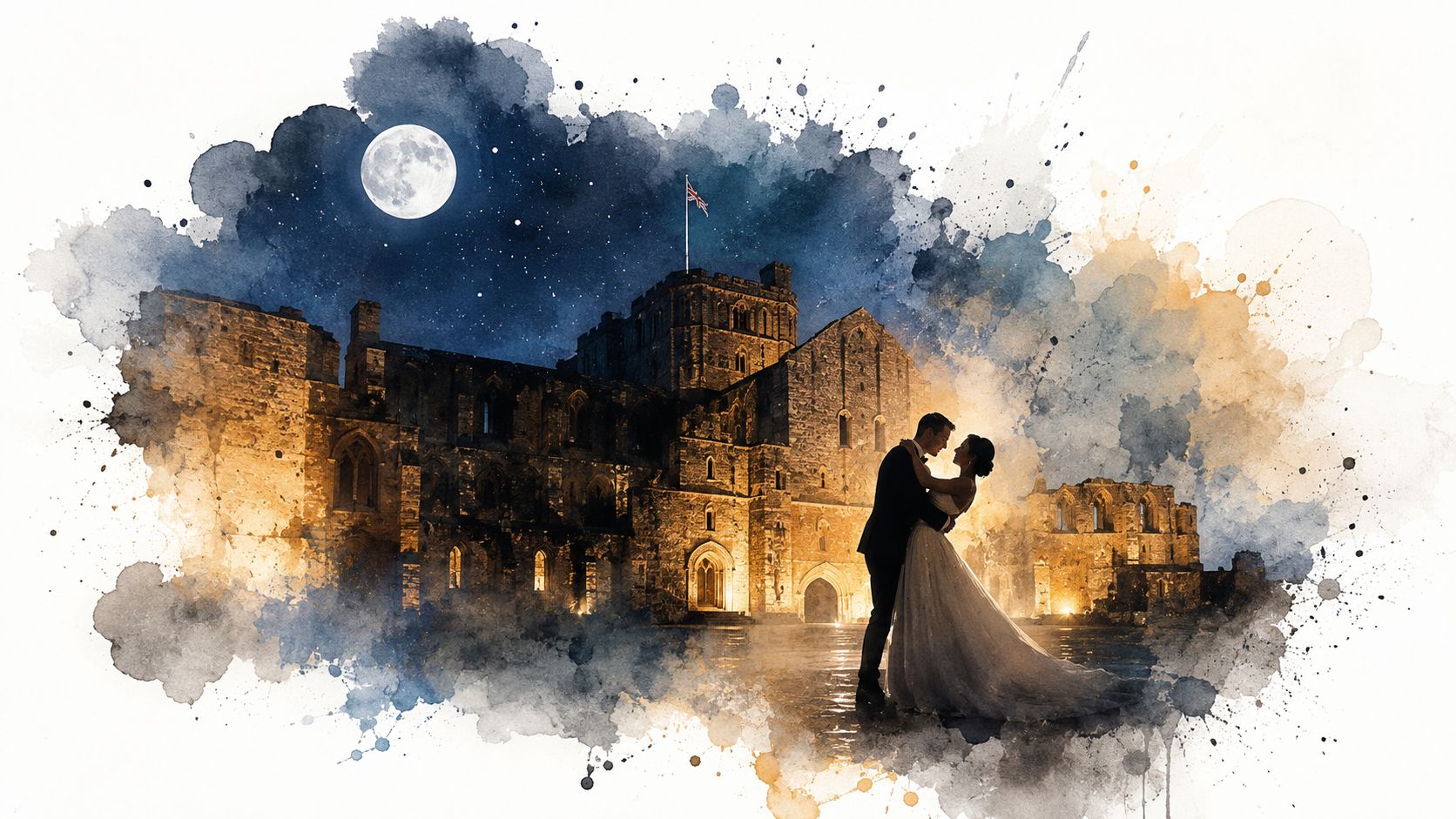
Why the last hours feel different
Historic venues reward couples who want contrast in their reception. You can move from a refined meal into something warmer and less formal without losing elegance. That's especially effective in spaces that already carry visual drama.
If your venue includes tall interiors, it's worth studying how statement fittings behave in larger rooms. A guide to Golden Lighting high ceiling solutions is useful for understanding scale, drop, and visual balance when you're planning evening ambience in lofty historic rooms.
Couples drawn to heritage settings usually aren't looking for a generic all-night party. They want the sweep of history and the energy of a modern celebration in the same evening. That combination works beautifully when the setting itself already has character, as you can see in this look at what makes Battle Abbey a historic wedding venue with such a distinctive atmosphere.
The dream still needs a budget
A late finish is emotional, but it's also a budget line. The average UK wedding reception costs around £12,000, and extending the party past midnight can add £500 to £2,500. The average total wedding cost was £20,604 in 2026 according to UK wedding cost data collected by WorldMetrics.
Those figures matter because they frame the extension properly. It isn't a small add-on, but it also isn't automatically out of reach. For many couples, it's the difference between a reception that ends on schedule and one that unfolds into a more relaxed, atmospheric final act.
Practical rule: If a late night wedding reception is high on your priority list, treat it as part of the original design of the day, not as something to “add if there's room” at the end.
Understanding the Midnight Curfew
At 11:40 pm, the room can still feel electric. Glasses are full, the dance floor has finally loosened up, and guests are ready for another hour. In a historic venue, that is often the exact point where the rules start to matter most.
A midnight finish shapes far more than the last song. It affects your entertainment contract, bar timings, staffing, guest transport, and how the venue protects the building and its neighbours. At a place like Battle Abbey, the romance of a late-night reception sits alongside real operating limits. The couples who get the atmosphere right are usually the ones who settle those limits early and build the party around them.
What the curfew really covers
“Midnight” rarely means one simple thing. It can mean amplified music must stop at 12:00 am, while the bar calls last orders earlier and guests are expected off site shortly after. Outdoor areas may close before the indoor rooms do. Historic venues often separate those timings because sound behaves differently across stone walls, courtyards, lawns, and nearby residential areas.
Licensing in the UK does allow for temporary extensions in some circumstances. During the 2017 Royal Wedding consultation, the government set out named dates when alcohol sales and regulated entertainment could continue until 1 am, as explained in the Royal Wedding licensing consultation document. The same report also noted that late applications for temporary extensions were more likely to fail, which is why venues prefer this conversation well before final planning meetings.
That point catches couples out. A late finish feels like a styling choice, but operationally it is a permissions question first.
The decisions to make before you book the evening plan
Sort out the curfew before you confirm a band, DJ, sax player, after-party food, or guest coaches. Ask for exact times, not broad wording.
- Amplified music cut-off: Confirm when live or recorded music must end.
- Bar timing: Ask when last orders are called and when service must stop.
- Outdoor access: Check whether terraces, lawns, and smoking areas close earlier than the reception room.
- Guest departure window: Clarify whether guests must be in taxis by midnight or if exiting the main space is sufficient.
- Temporary Events Notice responsibility: Confirm who applies, who pays, and what happens if approval does not come through.
A planning call goes much faster when these points are written down. This guide to questions to ask a wedding venue before you commit is useful for that conversation.
How to keep the energy high within the rules
The best late-night receptions at heritage venues do not rely on squeezing in extra time. They use the allowed time well.
That usually means tightening the format after 10 pm. A live band can finish on a high, then a DJ takes over with a more controlled sound setup. Guest numbers naturally condense, so it often makes sense to draw everyone into a smaller room or a more contained section of the space. That shift feels warmer, fuller, and more celebratory than trying to keep a large historic hall buzzing with a reduced crowd.
Sound control matters here. Stone surfaces throw music back into the room, and open courtyards can carry it much farther than couples expect. Lower speaker output, careful speaker placement, and closing external doors promptly can make the difference between a party that feels polished and one that starts creating problems for the venue team.
A curfew is not there to kill the mood. In a historic setting, it is part of the design brief. Treat it that way, and the ending can still feel dramatic, modern, and romantic.
Designing Your Reception Timeline from Sunset to Last Dance
A late night wedding reception only feels effortless when the timeline is doing quiet work in the background. The pacing matters more in a historic venue because guests often move between terraces, reception rooms, bars, and photo locations. If the evening loses shape, the energy drops fast and is hard to rebuild.
This visual is a good starting point for thinking about flow across the whole evening.
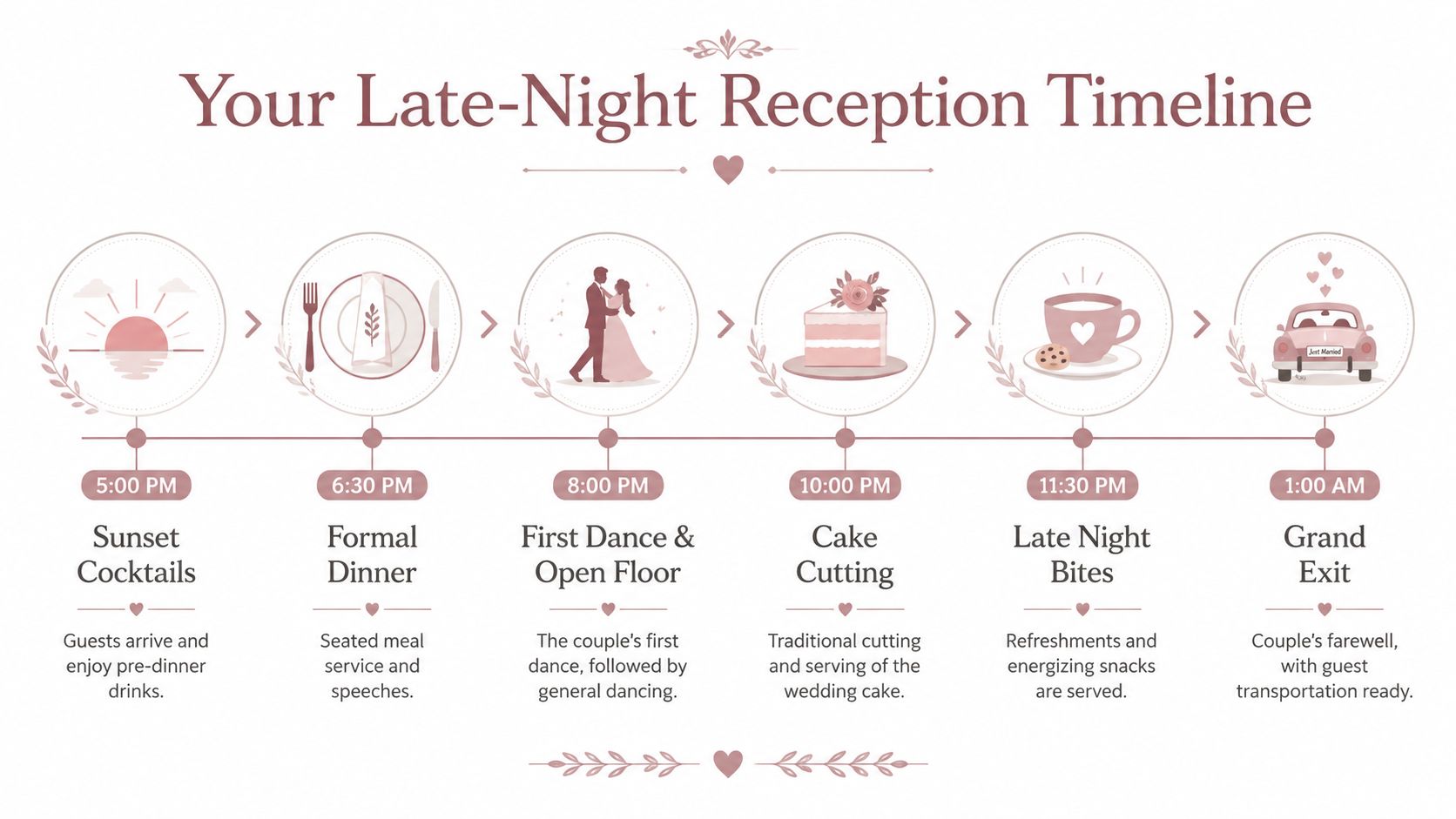
A strong timeline builds in transitions
The biggest mistake couples make isn't overpacking the schedule. It's leaving the transitions vague. Historic venues have atmosphere to spare, but guests still need cues. They need to know when drinks become dinner, when dinner turns to dancing, and when the late-night phase begins.
Use the formal structure early. Then loosen it steadily.
Here's a sample planning format you can adapt with your coordinator using a wedding day timeline template designed for venue planning.
| Time | Activity | Location/Notes |
|---|---|---|
| 5:00 PM | Sunset cocktails | Terrace or lawn, drinks and canapés after the ceremony |
| 6:30 PM | Guests move to dinner | Clear directional cue from coordinator or MC |
| 6:45 PM | Formal dinner begins | Seated meal in the main reception room |
| 8:15 PM | Speeches | Keep them close to dessert or coffee for flow |
| 8:45 PM | Short reset | Room refresh, bar reopens fully, evening guests settle in |
| 9:00 PM | First dance and open floor | Start while energy is still high |
| 10:00 PM | Cake cutting | Works well as a visual moment, then back to dancing |
| 10:30 PM | Late-night bites | Quick, easy-to-eat food near the dance floor or bar |
| 11:15 PM | Second wind set | DJ or band shifts tone, floor-filling favourites |
| 11:50 PM | Final gathering moment | Last dance or closing song sequence |
| 12:00 AM | Grand exit or close | Transport and staff positioned in advance |
Later in the evening, a short visual summary can help couples and suppliers stay aligned.
Two versions that work well
For a classic elegant reception
- Earlier first dance: Open the floor soon after speeches.
- One late-night food moment: Keep service simple and polished.
- Defined finale: Use a final song, sparkler exit if permitted, or a formal farewell line.
For a more party-led evening
- Longer dance block before cake: Let momentum build before interrupting it.
- A softer middle reset: Pull in coffee, cocktails, or a terrace breather rather than stopping the room.
- After-hours feel inside the venue: Shift lighting, tighten guest layout, and make the final hour feel more club-like.
The common thread is structure. If you leave the final hours unplanned because you want them to feel spontaneous, they often feel loose instead.
Creating Ambiance After Dark with Light and Sound
A historic venue doesn't need much decoration after sunset. It needs restraint and precision. The right light can turn old stone into a backdrop with depth and warmth. The wrong light can flatten everything into a function room.
Lighting the architecture, not just the dance floor
Start with the features that make the venue memorable. Arches, fireplaces, staircases, terraces, and exterior stonework should read clearly after dark. That doesn't require flooding the site with brightness. It requires layers.
Use warm uplighting to pick out texture in the stone. Keep dining tables softer than the bar and dance floor. If there's a terrace or lawn visible from inside, light its edges gently so guests can still sense the outdoor scenery beyond the windows.
A good late-night room usually has three moods at once:
- A lively centre: The dance floor, DJ booth, or band area.
- A low-lit social edge: Bar, poseur tables, and quick-chat corners.
- A quiet retreat: Somewhere guests can breathe without leaving the party entirely.
Solving the post-10 pm energy dip
Many planners avoid structured games after 10 pm because they can kill dance floor momentum. At the same time, the usual advice often ignores the lull that appears when some guests are tired of dancing but don't want to go home. The 2026 trend highlighted in this guide to evening wedding reception activities is a move toward activity-based late receptions such as mini-golf or bingo.
That trend matters because it gives couples permission to diversify the final hours without turning the evening into a children's party or corporate social.
After 10 pm, the job isn't to make every guest dance. It's to keep every guest engaged in the same atmosphere.
What works and what usually doesn't
Some late-night additions strengthen the room. Others split it.
Usually works well
- A silent disco option: Particularly useful where sound restrictions tighten late in the evening.
- A terrace whisky or signature cocktail corner: Strong for guests who want conversation without leaving the celebration.
- Low-pressure activity stations: Think a discreet games table, personalised quiz cards, or a refined lounge area.
Often works poorly
- Big organiser-led games late at night: They force attention away from the room's natural energy.
- Overly bright LED effects in heritage rooms: They can clash badly with old interiors.
- Entertainment that needs a full reset of furniture: If staff have to dismantle the entire room after dinner, the rhythm breaks.
The best late night wedding reception doesn't ask one entertainment format to do all the work. It combines music, lighting, and a few parallel experiences so the night feels full without becoming chaotic.
Late-Night Feasting and Refreshments
Late-night food has one job. It needs to revive people quickly without dragging the evening back into a formal service pattern.
That's why the best options after 10 pm are easy to carry, easy to recognise, and satisfying within a few bites. In a historic venue, the presentation should still feel considered, but the format needs to be relaxed.
What guests actually want late in the evening
After dancing and drinks, guests usually respond better to warm, savoury food than to anything too delicate. A late-evening spread works best when it feels generous rather than fussy.
Good options often include:
- Hog roast baps: Filling, fast to serve, and suited to an outdoor or rustic-luxury mood.
- Gourmet sliders or mini brioche rolls: Easy to eat while standing.
- Cheese boards and artisan platters: Better for a calmer, more elegant final phase.
- Loaded fries or upscale comfort food cups: Ideal near the bar or dance floor.
- Coffee and small sweet bites: Useful if you want the mood to soften toward the end.
Timing matters more than the menu
Late-night food often fails because it appears too late, not because guests didn't want it. If people have started leaving, or if the room is deep into the final dance set, service can feel irrelevant.
Serve it during the dip, not after the dip.
A reliable rhythm looks like this:
- Dinner closes cleanly: No long drag between dessert and dancing.
- Bar and dance floor carry the centre of the evening: Keep the room moving.
- Food arrives when guests need a second wind: Usually when dancing starts to fragment and people head for water, fresh air, or the bar.
Keep the bar strategy clear
Confusion at the bar can undo the smoothness of the whole final act. Decide in advance whether the late hours are covered by an open bar, limited drinks package, token system, or cash bar. Then communicate it discreetly through signage, your planner, or the toastmaster.
If you're shifting the tone from dinner to party, the drinks should shift too. Signature serves, espresso-based cocktails, non-alcoholic options, and water points all help. Guests don't need more complexity. They need quick service and obvious choices.
Ensuring a Flawless Finale for Guests and You
The end of the wedding is where hidden costs and hidden stress tend to appear. Not because anything has gone wrong, but because couples naturally spend more planning time on the ceremony, dinner, flowers, and music than on departures, staffing, and site close-down.
At a rural or heritage venue, those final logistics need real attention.
The hidden bill at the end of the night
Many venue round-ups mention late licences without spelling out the true extension cost. Extending a UK wedding past midnight can cost £700 per hour plus a £65 per hour security charge, which can push a 2 am finish to over £1,500 before musician fees, according to this breakdown of late-night extension costs at UK wedding venues.
That's the kind of figure couples need early, not after contracts are underway.
It also explains why a midnight finish with a strong final hour can be better value than a later finish with thin attendance and rising overtime charges. More time doesn't always create a better party. Sometimes it just creates a longer invoice.
Transport is part of the guest experience
Historic venues in countryside settings need an exit plan that's as deliberate as the arrival. Don't assume guests will “sort taxis later”. If everyone starts booking at the same time from a rural site, wait times stretch and the final mood turns ragged.
Use a transport plan with layers:
- Pre-booked taxis for key households: Older relatives, families with children, and VIP guests first.
- Clear collection point: Guests shouldn't be wandering the grounds looking for drivers.
- Visible final schedule: Put departure guidance in the guest information pack and on the day's signage.
- One person in charge: This can be your coordinator, venue contact, or transport lead.
The end of the wedding should feel guided, not abandoned. Guests remember the last 20 minutes with surprising clarity.
Staff, security, and a controlled close
A late finish needs a team that's still switched on. That includes bar staff, event staff, security, and whoever is managing the final room reset and supplier exits. If those roles aren't clearly assigned, the closing phase becomes messy fast.
For couples still deciding how to shape the evening entertainment itself, this guide to essential wedding entertainment planning is useful because it forces the right operational questions, not just the fun ones.
This is also the one point in the planning process where the venue's operational style matters as much as its beauty. Battle Abbey Weddings offers ceremonies and receptions until midnight within a heritage setting, so the practical conversation centres on making those licensed hours work fully rather than assuming indefinite extension.
For photography, save a few minutes for the dark. Candlelit portraits indoors, exterior shots against illuminated stone, and a final terrace image after most guests have gone can carry a completely different mood from the daytime gallery.
Your Battle Abbey Late Night Wedding Checklist
A late night wedding reception at a historic venue works when every supplier is planning the same ending. Not a similar ending. The same one.
Use this checklist in your final meetings and make sure each point has an owner.
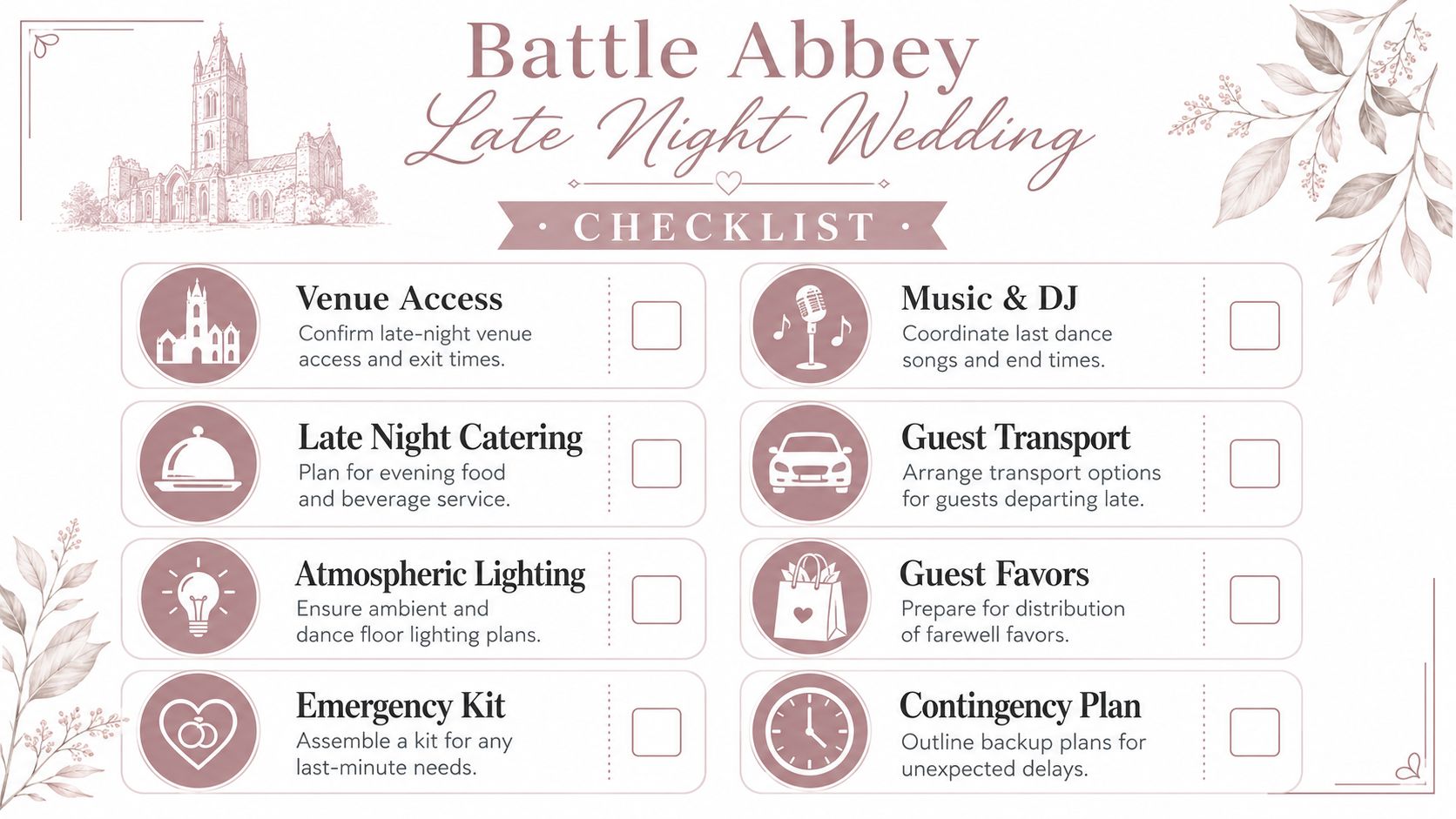
Final planning checks
- Confirm access and exit times: Make sure suppliers, musicians, and transport teams all have the same final schedule.
- Lock the music plan: Last dance, final set, volume limits, and pack-down timing should be fixed in writing.
- Approve late-night catering: Choose food that can be served quickly and eaten without interrupting the room.
- Arrange guest departures: Pre-book where needed and communicate the pick-up plan before the day.
- Review your lighting plot: Check what happens after dinner, not just during it.
- Prepare farewell items: Favours, overnight bags, and cards should be distributed without creating congestion at the end.
- Assemble an end-of-night kit: Flats, pain relief, water, phone charger, hair grips, and copies of the transport list.
- Create a contingency plan: Delayed dinner, weather shifts, or a slower room turn shouldn't derail the close of the evening.
One extra check couples often forget
If you're handling your own drinks decisions, a practical buying guide can save wasted spend and awkward shortages. This checklist with expert tips on buying wine for celebrations is worth reading before you finalise bar quantities and service style.
The final test is simple. If a guest asked three questions, could your team answer them instantly?
- What time does the party finish?
- Where do I go when I leave?
- Is there food or drink still available in the last hour?
If the answer is yes, the ending will feel calm, polished, and memorable.
If you're planning a historic celebration in East Sussex and want a reception that feels atmospheric, organised, and fully considered through to the final song, explore Battle Abbey Weddings and start the conversation early. A late-night plan works best when the venue, timeline, catering, sound, and guest logistics are designed together from the start.