You can spend weeks choosing flowers, linen, and table settings, then look at your wedding gallery and realise the light did half the storytelling. That's why natural light photography feels so memorable at a historic venue, it doesn't just show the day, it lets the day breathe. At somewhere like Battle Abbey, where ancient stone, terrace views, and changing British weather all shape the atmosphere, the right light turns a beautiful wedding into something that feels timeless.
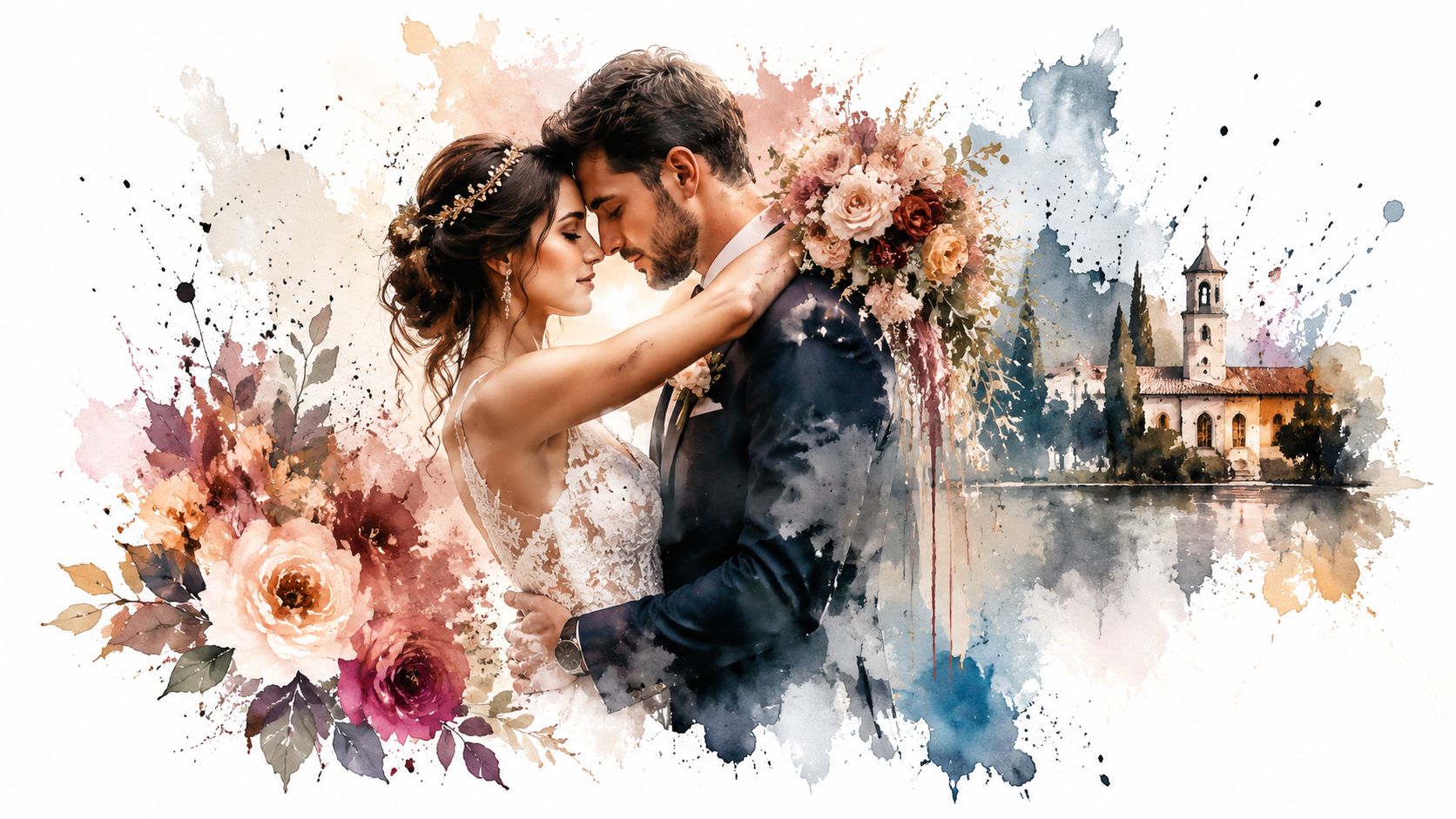
The roots of this style go back to 1826/1827, when Nicéphore Niépce produced what Britannica identifies as the first permanent photograph using a camera obscura and a light-sensitive plate. By 1841, William Henry Fox Talbot's calotype had reduced exposure times to a few minutes under the right conditions, which helped make outdoor, light-driven photography practical Britannica's history of photography. That legacy still matters. The most romantic wedding photographs often feel special because they're built from the same principle, reading the available light as it is and letting it shape the moment.
Embracing the Timeless Beauty of Natural Light
A couple arrives at their venue hoping for soft skies, flattering portraits, and that effortless, luminous look everyone saves to their mood board. Then the forecast changes, the clouds roll in, and the plan looks less like a fairy tale and more like a puzzle. That's normal in the UK, and it's exactly why natural light photography rewards photographers who can adapt without losing elegance.
At Battle Abbey, the setting already carries its own sense of history. The stone, the open terraces, and the old-world interiors naturally suit photographs that feel gentle rather than over-staged. That's part of the appeal of natural light, it doesn't compete with a venue's character, it reveals it.
Why light feels more truthful than flash
Natural light photographs tend to feel calmer because the illumination already belongs to the scene. Faces keep their texture, the background keeps its atmosphere, and the image doesn't fight the space. The Science and Media Museum notes that Anna Atkins created the first photographically illustrated book in Britain using direct light exposure, which is a beautiful reminder that natural light has always been both technical and artistic in British photography Science and Media Museum.
Practical rule: if the light looks good on the couple's faces before the shutter clicks, it'll usually look good in the finished photograph too.
That's why the best wedding images rarely come from forcing a venue into a single “perfect” light. They come from reading the available light, soft daylight in the morning, brighter courtyard contrast at lunch, and richer tones later in the day. The photographer's job is to make those shifts feel intentional, not accidental.
Planning Your Wedding Day Around the Sun
The most reliable wedding timeline is the one that respects light first. In the UK, that means planning around the reality of seasonal daylight, cloud cover, and the way historic surfaces bounce light around in unpredictable ways. A courtyard that looks dreamy at one hour can feel harsh an hour later, and a terrace that is ideal in the morning may become glare-heavy by late afternoon.
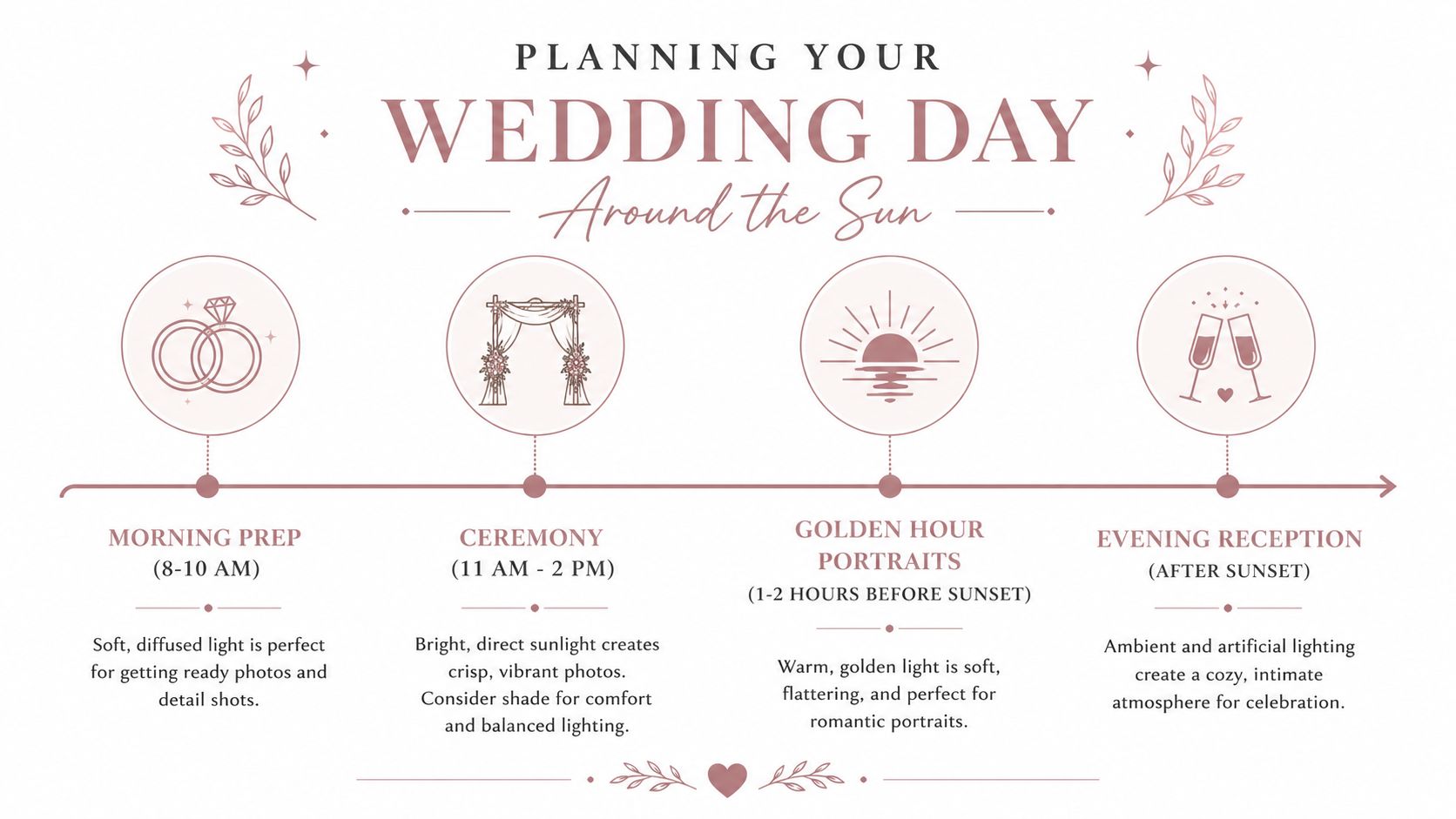
For practical planning, the key is to treat the day as a sequence of light conditions, not just a sequence of events. UK-facing guidance highlights how much daylight varies by season and latitude, with frequent cloud cover making generic “find soft light” advice too simplistic for real weddings The School of Photography. That matters at historic venues, because pale walls, stone courtyards, and wet surfaces can all throw light back onto faces in ways that change the look of a photograph from one minute to the next.
A venue-aware timeline that works
Start with morning prep in the brightest room with the cleanest window light. Details, dress shots, cufflinks, bouquets, and quiet moments usually benefit from that early softness, especially when shadows haven't turned hard yet. If the room at Battle Abbey has an elegant window, use it for portrait snippets before the pace of the day rises.
For the ceremony, think about where the couple will stand relative to the window or archway rather than where the room looks prettiest. In mixed indoor light, the most flattering result often comes from keeping the faces in balanced light and avoiding a background that's so bright it pulls attention away from the vows.
Later, save the terrace or lawn portraits for the light that gives the scene shape rather than flatness. If you're building your own planning notes, this wedding day timeline template is a useful way to organise key moments around the changing light.
If the day is cloudy, don't panic. Cloud cover often gives you a larger, softer source, which can be kinder than direct sun for portraits and speeches.
By the time evening arrives, the reception doesn't need perfect daylight to feel beautiful. It needs atmosphere, and that can come from windows, lamps, candles, and the last blue tone in the sky outside.
Essential Gear and Camera Settings for Luminous Photos
Good natural light work starts before the couple even steps into frame. The camera setup needs to support the mood, not fight it, and that usually means keeping the choices simple enough to react quickly. For natural-light portraits, a reliable starting point is to shoot in manual or aperture-priority mode, set ISO 100, and keep shutter speed around 1/160 s or faster to help prevent blur Digital Photography School.
That baseline matters because wedding days move fast. Hands touch, heads turn, laughter breaks out, and nobody stands still long enough for slow settings to save an awkward frame. A faster shutter gives you a better chance of keeping eyes sharp and expressions alive.
The settings that shape the look
A wide aperture is what gives portraits that soft background and a gentle sense of separation from the venue. A zoom lens can be useful for ceremony coverage when the photographer needs flexibility, while a prime lens often suits intimate portraits where the priority is a quieter, more sculpted look. The choice depends on the moment, not on a rule.
ISO is the piece that gets overused when the light drops, but the goal isn't always to crank it higher and hope for the best. It's usually better to position the couple closer to usable light, or move them into open shade, than to rescue a badly exposed image later. If shadows are already creeping into faces, a thoughtful shadow recovery workflow can also help, and MerchLoom's shadow removal strategies offer a useful reference for understanding how shadows are handled in post-production.
Practical rule: if the eyes don't have catchlights, the face may be technically exposed but still feel flat.
Catchlights are one of the simplest signs that the subject is really being lit well. They also tell you whether the photographer is placing the couple where the light works, not just where the background looks attractive.
If you're comparing photographers, these questions to ask wedding photographers will help you understand how they handle lens choice, exposure, and changing light on the day.
Posing and Directing Couples in Natural Light
The easiest mistake in wedding portraiture is to treat posing as a separate job from lighting. In practice, the two are inseparable. A couple standing in the right place with the wrong head angle still looks stiff, while a relaxed pose in flattering light can feel intimate and expensive without looking staged.
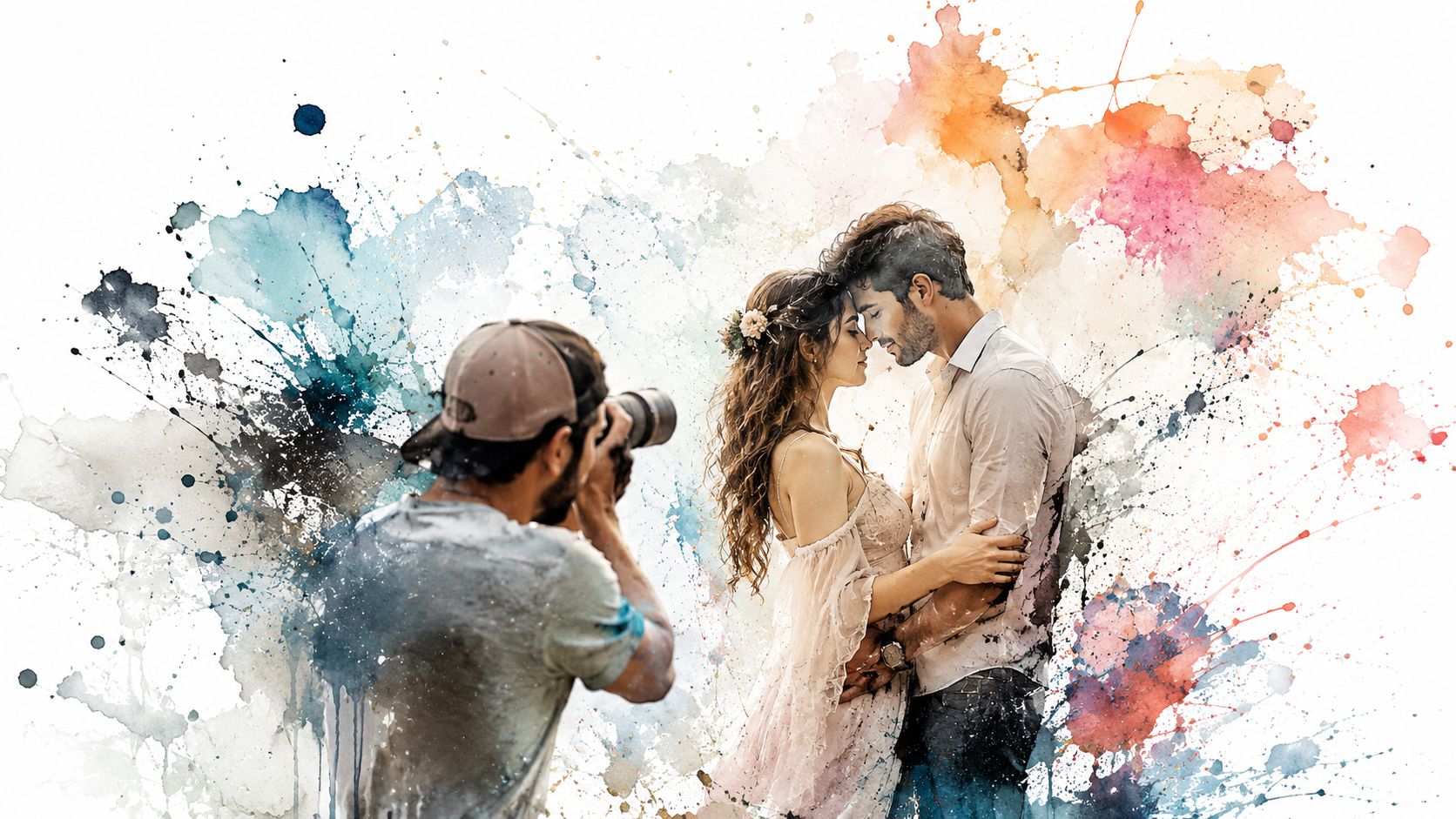
The best direction is often small and precise. Ask for a shoulder turn, a slower walk, a pause near a window, or a gentle lean into the person beside them. Those tiny changes are enough to move a face from harsh light into flattering light, or to help the camera pick up catchlights and texture instead of shadow.
Romance comes from movement, not stiffness
At a venue like Battle Abbey, a couple might pause in the Duke's Library for a quieter portrait, then step outside for a lighter, airier frame on the lawn. Indoors, a photographer can use the window as the primary source and “feather” the light by shifting the couple slightly away from its strongest point so the face stays soft. Outdoors, backlighting can turn the edge of the veil or hair into something luminous without making the couple feel over-directed.
For creators who think visually across formats, crafting magnetic video thumbnails is a surprisingly relevant mindset here, because the same instinct applies to wedding portraits, place the subject where the eye lands naturally, then let the frame do the rest.
The embedded video below is a useful reminder that movement and expression matter just as much as location.
A useful way to direct a couple is to give them an action, not a pose. “Walk slowly and talk to each other” produces better facial energy than “stand there and smile.” “Hold hands and pause by the arch” creates more natural posture than telling them to keep their shoulders still.
Best small adjustment: turn the face slightly toward the light source, then stop before the chin lifts too high. That's often enough to keep the features open and the expression relaxed.
The result should feel like a memory, not a set piece.
Mastering Tricky Lighting at a Historic Venue
Historic venues look magnificent because they're full of contrast, texture, and depth. Those same qualities can make exposure harder. Dark interiors, bright windows, irregular stone surfaces, and patterned shade all need different decisions, and the photographer who handles them well usually wins the gallery without making the images look forced.
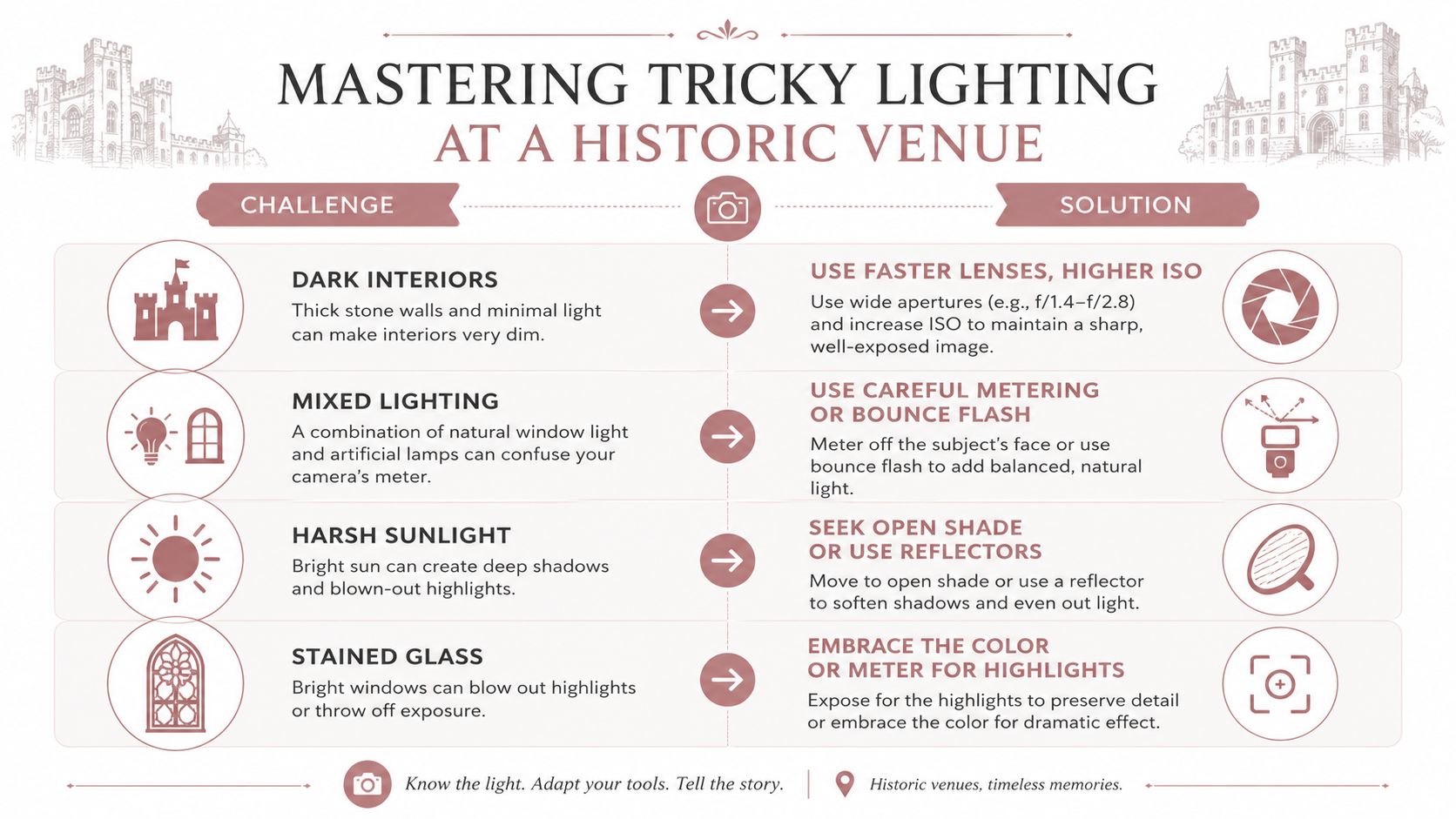
One of the most useful field techniques for awkward sun is to place the subject in open shade or right at its edge, then use a reflector to bounce light back into the face SLR Lounge. Another strong option is to put the sun behind the couple and expose for the brighter sky, while the photographer stands in the subject's shadow to reduce flare. That approach protects the scene from losing its depth, which matters when the background is as important as the people in front of the camera.
What to do when the venue itself creates the problem
Inside a historic building, bright window light and darker walls can fool the camera into overexposing the background or sinking the face into shadow. In those moments, it helps to think in terms of balance rather than perfection. A small reflector, careful metering, or moving the couple a step sideways can change the frame more than a major equipment change.
Dappled light from trees on a lawn can also be a trap. It looks pretty in person, but it can leave patchy highlights across a face or dress. The cleanest answer is usually to move the couple just outside the mottled area or to wait until the light shifts enough to become even.
Battle Abbey Weddings is one option couples consider when they want spaces that can support both indoor ceremony portraits and outdoor terrace moments, because the venue's rooms and grounds create different light conditions within the same day what makes Battle Abbey a historic wedding venue.
Practical rule: if the light is uneven on the face, change position before you change settings.
The hardest part isn't the lack of light, it's the mixture of light. Once that's understood, even a bright ruin wall, a shaded archway, or a glass-heavy interior becomes workable.
Your Story Told in Light
The strongest wedding photographs don't just flatter a couple, they keep the day legible. Faces should stay natural, stone should keep its tone, and the sky shouldn't blow out so badly that the venue loses its sense of place. That balance matters especially in backlit or high-contrast scenes, where preserving natural skin tones can be more important than chasing the softest possible look How to Shoot Photos.
That's the promise of natural light photography at a historic venue. When the photographer plans around the sun, reads the room, and keeps the couple comfortable, the images start to feel effortless because the decisions behind them were careful. The romance comes through not because everything was perfect, but because everything was handled with taste.
If you're choosing a venue or refining your timetable, talk early about where the light falls at each part of the day, where portraits will happen if the weather turns, and which spaces give you the best blend of atmosphere and clarity. That preparation is what makes the final gallery feel timeless instead of rushed.
For couples who also want to turn still moments into short-form storytelling, creating viral short-form videos with AI is worth exploring as a complementary creative approach, especially when you already have a strong visual narrative from the wedding day itself.
Your photographs should look like your own history, not someone else's trend. Plan for the light, trust the venue, and choose a photographer who knows how to work with weather, stone, and changing skies. For a wedding at Battle Abbey, that's how you end up with images that feel warm, truthful, and enduring.
A CTA for Battle Abbey Weddings.