Raising a glass is one of the few wedding moments every guest notices. The toast lands, crystal catches the light, and for a beat the whole room is sharing the same ritual. That's why non alcoholic wedding drinks deserve proper planning. They're not a side note for one table or a token option at the bar. They shape whether guests feel included in the celebration itself.
That matters even more at a venue with the character of Battle Abbey. A drinks menu for the Abbot's Hall or a terrace reception against English Heritage ruins needs to look polished, serve smoothly, and feel worthy of the setting. The old default of orange juice in a flute won't do the job. Couples now expect alcohol-free options that mirror the occasion in taste, presentation, and ceremony.
That expectation isn't niche. Nearly one-third of British adults aged 18 to 34 plan to celebrate their wedding with only soft drinks or non-alcoholic beverages, and the UK National Wedding Survey also found that 11% of newlywed couples explicitly chose dry weddings in the previous year, according to reporting on changing UK wedding drinking habits.
If you're building a drinks list now, think in terms of service moments. Welcome drink. Toast. Wedding breakfast pairing. Evening bar. For broader inspiration beyond weddings, this round-up of top Australian healthy non-alcoholic drinks is useful, but a historic venue needs choices that also carry visual weight.
1. Wild Idol
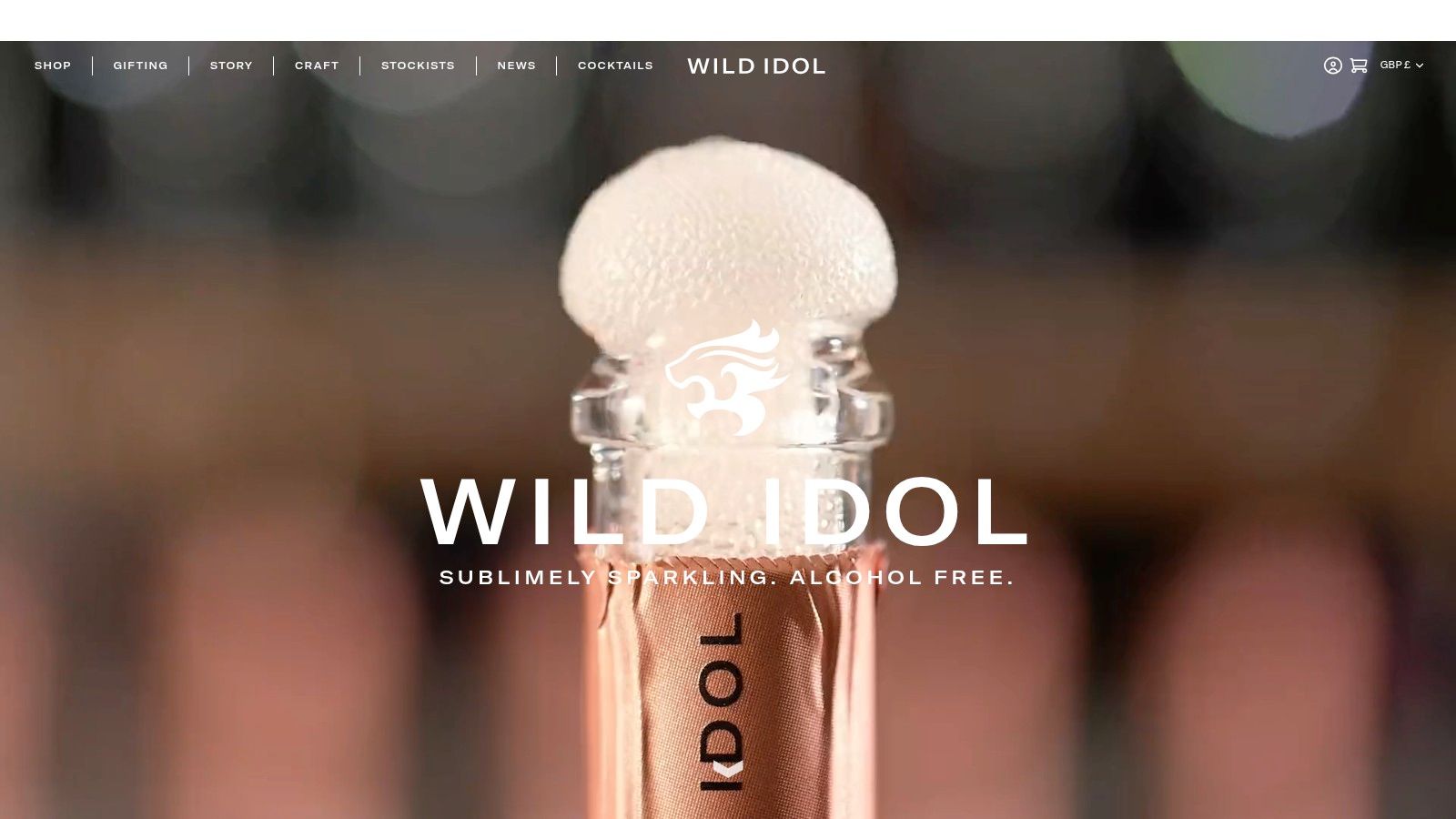
If your priority is a natural toast, Wild Idol is one of the strongest non alcoholic wedding drinks to start with. It looks right in the bottle, pours properly into flutes, and doesn't make abstaining guests feel as though they've been handed the “alternative” option.
Its advantage is straightforward. It's positioned as a premium sparkling wine-style pour, but it's naturally alcohol-free rather than dealcoholised. For couples who care about that distinction, especially those planning a formal toast in the Abbot's Hall or on the terrace, that's a meaningful detail.
Where it works best
Wild Idol is strongest in the ceremonial parts of the day. The White and Rosé styles suit reception drinks, speeches, and that first all-room toast where you want every glass to look equally celebratory.
In practice, it works best when you avoid overcomplicating the serve. Keep it cold, use clean flutes, and let the bottle do the visual work. At a heritage venue, simple service often looks more luxurious than a garnish-heavy presentation.
Practical rule: Use your smartest bottle for the toast, not necessarily for all-day pouring. Guests remember what was in their hand for the speeches more than what sat on the back bar.
There are clear trade-offs. Wild Idol is a premium buy, so it's rarely the most economical option for every non-alcoholic serve across an entire wedding. It also has a tighter flavour range than brands built around multiple wine styles or cocktail alternatives.
What couples usually like and what they don't
- Best for formal moments: It delivers a Champagne-adjacent feel without looking improvised.
- Best for mixed guest lists: Vegan and gluten-free credentials remove friction for planners.
- Less suited to casual bars: If you need a broad zero-proof menu late into the evening, this alone won't cover enough styles.
The service lesson is simple. Use Wild Idol where elegance matters most. Then build out the rest of your non alcoholic wedding drinks list with aperitifs, beer alternatives, or sparkling teas so the whole menu doesn't rely on one premium bottle.
2. Thomson & Scott Noughty
Thomson & Scott Noughty is the practical planner's sparkling bottle. It doesn't have quite the same “special occasion only” feel as some luxury alternatives, but it earns its place by being versatile. That matters when the same wedding needs a toast drink, a wedding breakfast pour, and something your caterer can source consistently.
Noughty's range covers dealcoholised sparkling Chardonnay and Rosé, plus still options. Certified organic, vegan and Halal status make it especially useful for inclusive menus, because you're solving several guest needs with one supplier rather than patching together multiple substitutes.
Best fit for flexible service
This is the bottle I'd choose when couples want cohesion rather than theatre. If your drinks service runs from post-ceremony reception into dinner, Noughty gives you enough range to avoid serving one sparkling style all day.
The mini 200ml bottles are particularly helpful. They're useful for individual toasts, room drops, or favours that can double as a practical drinks element. At a large venue, that can reduce last-minute tray logistics because not every toast has to be poured at once.
For couples comparing celebratory bottles against classic sparkling service, Battle Abbey's own guide to affordable sparkling wine is worth reading alongside your zero-proof options.
One of the most common planning mistakes is assuming every non-drinker wants a mocktail. Many would rather have a clean, wine-style pour that matches the room.
The trade-offs to know
- Stronger on practicality: Reliable supply and a recognisable style make it easy for venues and caterers to handle.
- Good value relative to luxury sparklings: It often makes more sense for broad service than ultra-premium toast bottles.
- Less distinctive in flavour identity: If you want guests talking about the drink itself, sparkling tea or botanical aperitifs can feel more original.
The main reservation some couples have is the production method. Because it's dealcoholised, it won't suit everyone who specifically wants naturally alcohol-free products from start to finish. For many weddings that won't matter. For some, it will be the deciding factor.
If your drinks brief is “elegant, inclusive, dependable”, Noughty is very hard to dismiss.
3. Saicho Sparkling Tea
A drinks reception at Battle Abbey asks for more than a worthy alcohol-free substitute. The room, the service style, and the food all put pressure on the choice. Saicho Sparkling Tea earns its place because it feels considered in its own right.
Saicho's single-origin sparkling teas are cold-brewed, gently carbonated, and built for pairing. That makes them especially effective during the wedding breakfast, where a zero-proof serve needs enough structure to sit beside a carefully planned menu rather than disappear into the background. If you are shaping courses and drinks together, Battle Abbey's guide to planning a wedding food menu is a useful reference point.
The smartest use at Battle Abbey
I would use Saicho where ceremony and flavour need to work together. Poured into flutes for canapés on the terrace, it looks polished. Served with the meal, it gives non-drinkers something with tannin, acidity, and length, which standard juices and sugary mocktails often lack.
That matters at a historic venue. Guests notice whether the alcohol-free option has been chosen with the same care as the wine.
Battle Abbey's own thoughts on glasses of Champagne are helpful here because the same service rules apply. Use proper glassware, brief staff on what they are pouring, and time the pour to the moment. A good bottle can lose impact if it arrives in the wrong glass or without any introduction.
Where it wins and where it can misfire
- Excellent with food: Few alcohol-free options handle a plated meal as well as sparkling tea.
- Strong visual fit: The bottle and flute service suit a formal, heritage setting.
- Harder to please every palate: Tea-led flavours are more refined than crowd-pleasing, so they work best when positioned as a pairing rather than a generic soft drink.
Saicho also offers wedding support, which helps once you move from inspiration to logistics. For larger celebrations, that can make case ordering, delivery timing, and menu wording much easier to manage. The budget trade-off is simple. This is rarely the cheapest zero-proof option on the list, so I would not usually make it the only alcohol-free drink at a big wedding. It works best as a featured serve for the toast, the canapé reception, or the meal, with simpler options covering the rest of the day.
Serve sparkling tea with the same confidence you'd give a premium wine pairing. If staff present it as a deliberate choice, guests respond to it as one.
This is a strong choice for couples who want sophistication without imitation.
4. Lyre's
Lyre's solves a different problem. It isn't the best answer for a single elegant toast. It's the best answer for couples who want a real zero-proof bar menu that lasts into the evening.
That distinction matters. A wedding can start with flutes and speeches, but by the time guests move to the bar they want choice. Some want something citrusy, some bitter, some long and refreshing, some dark and spirit-led. Lyre's covers enough ground to let your bar team recreate familiar cocktail structures without building a bespoke menu from scratch.
Best for the evening bar
In this context, breadth triumphs over romance. Lyre's offers spirit alternatives across gin, whiskey, rum, aperitifs and vermouth, plus ready-to-drink cans. For a reception bar, that means you can create a short, confident menu of alcohol-free serves that still feels recognisable.
A practical move is to keep the menu tight. Two spritzes, one sharper citrus serve, one darker stirred-style option, and one canned backup for quick service usually works better than trying to replicate every classic cocktail under the sun.
For pairing ideas, Battle Abbey's approach to wedding food menus is a useful reminder that drinks should support the meal and the flow of the event, not compete with them.
Where couples need to be careful
- Great range: It's one of the simplest ways to build a full alcohol-free cocktail list.
- Good brand recognition: Guests often already know the name, which reduces hesitation at the bar.
- Not all products are strict 0.0%: Many sit below 0.5% ABV, so check every bottle against your guest requirements.
That final point is a key trade-off. For many weddings, products in that category are perfectly acceptable. For Muslim guests, pregnancy-related preferences, or couples who want a strict 0.0% policy, you can't assume the whole range fits.
The other limitation is style. Lyre's is strongest in mixed drinks. If your non-drinkers prefer a direct wine or beer analogue, you'll still need another category on the menu.
5. Everleaf
For a welcome drink, Everleaf is one of the most useful products on the market. It gives you a grown-up bitter-sweet profile, but the serve is simple enough that catering staff can make it quickly during a busy arrival window.
That speed matters more than many couples realise. A drinks reception at a venue like Battle Abbey often involves movement between spaces, trays circulating outdoors, and a short service period before guests transition again. The best non alcoholic wedding drinks in that moment aren't always the most elaborate. They're the ones that look elegant and can be delivered consistently.
Why it suits terrace service
Everleaf's core flavours, Forest, Mountain and Marine, lend themselves to a spritz format. Served with light tonic over ice, they feel botanical and adult rather than sugary. That makes them especially good for canapé service on the Top Terrace or Six Penny Lawn.
There's also a staffing benefit. The standard serve is easy to train and repeat, which helps maintain quality across a high-volume reception. You don't need a specialist cocktail bartender to make it work well.
The broader category is clearly established. In Great Britain, the no and low drinks market reached £362 million in 2023, with total sales volume of 78.4 million litres, according to the SARG no/lo drinks monitoring report. Premium non-alcoholic serves are now entirely at home at weddings.
Best used selectively
- Excellent as a welcome drink: It sets an elegant tone from the first tray.
- Easy for caterers: The serve is quick and repeatable.
- Less suitable for everyone: Bitter aperitif flavours won't suit guests who want a sweeter, fruit-led drink.
If you choose Everleaf, balance it. Offer one brighter, softer option alongside it so guests aren't funnelled into one flavour profile. That's the difference between a stylish menu and a restrictive one.
6. Pentire
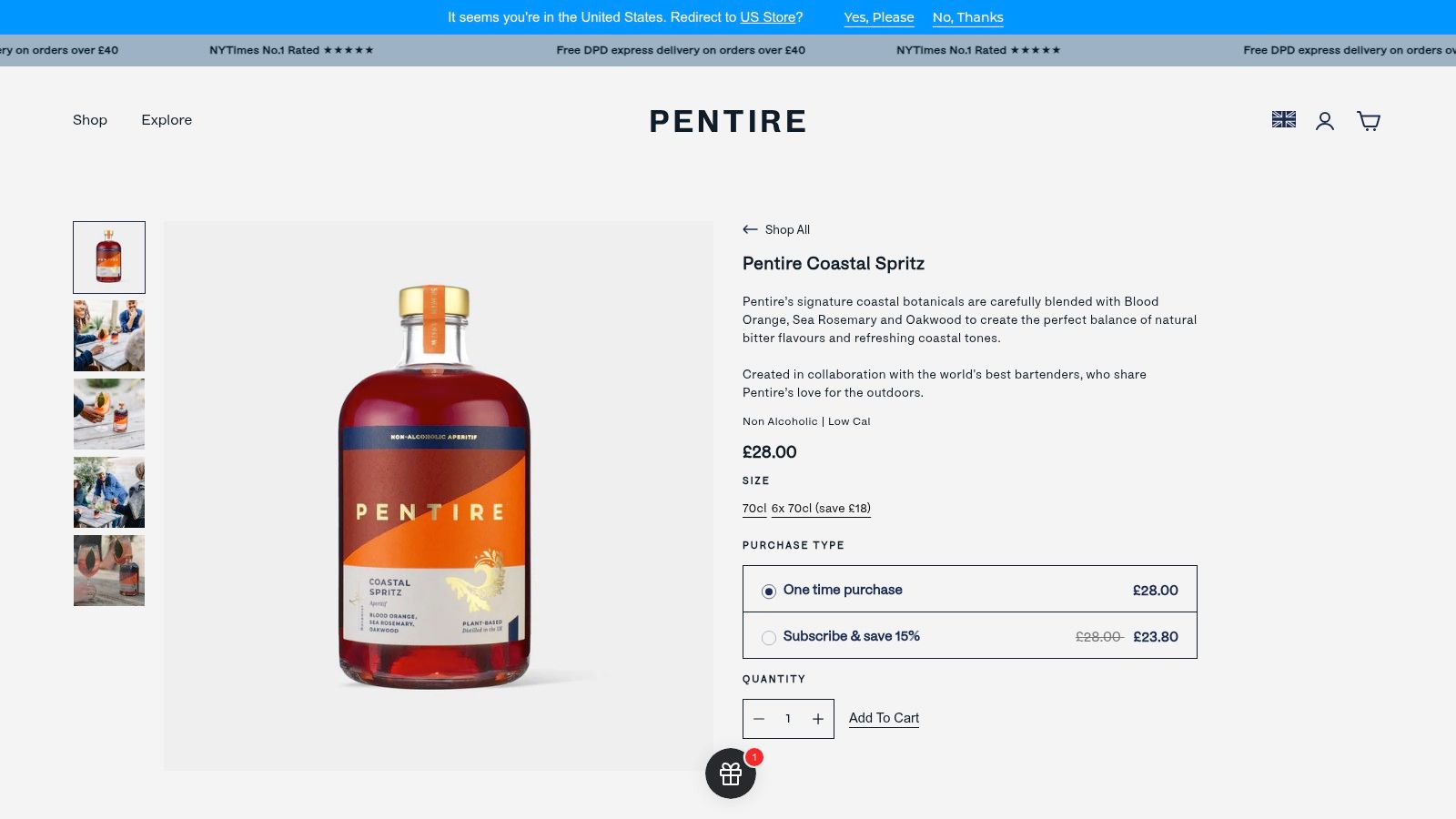
Pentire has a clear personality. It brings a British coastal, botanical profile that feels fresh, modern and slightly less formal than a sparkling bottle. That makes it useful for couples who want their non alcoholic wedding drinks to loosen the mood after the ceremony without dropping into generic soft drinks.
Its strongest feature is format flexibility. Bottles work well for a designed spritz serve, while ready-to-drink cans help if you need speed, consistency, or a lower-stress evening setup.
Strong for outdoor and transitional service
Pentire shines in the middle parts of the day. Think post-ceremony reception, summer lawn drinks, or a later evening bar where guests want something cold and refreshing without a long wait.
That flexibility also helps with staffing. A bartender can build a proper spritz from bottles for the main reception, while chilled cans can support faster service later without compromising the brand or flavour profile.
One practical gap in current wedding planning advice is cost clarity. There's still a lack of UK-specific guidance on per-guest savings when couples substitute alcohol with premium non-alcoholic alternatives, even as the category has grown and reached a substantial market value, as discussed in analysis of the rise of the low and non-alcoholic beverage sector. At venue level, that means couples should ask for line-by-line drinks pricing rather than assuming zero-proof automatically costs less.
Where Pentire is strongest
- Best in summer styling: It feels natural on terraces, lawns and canapé trays.
- Helpful service formats: Bottles and cans let you tailor the setup to staffing.
- Not universally crowd-pleasing: The aperitif bitterness can split opinion if guests expect something sweeter.
If you want a signature non-alcoholic serve, choose one bottle-led spritz and one direct-pour alternative. It keeps service moving and stops the bar from becoming a queue for customised mocktails.
Pentire is at its best when the event needs energy, not ceremony.
7. Lucky Saint
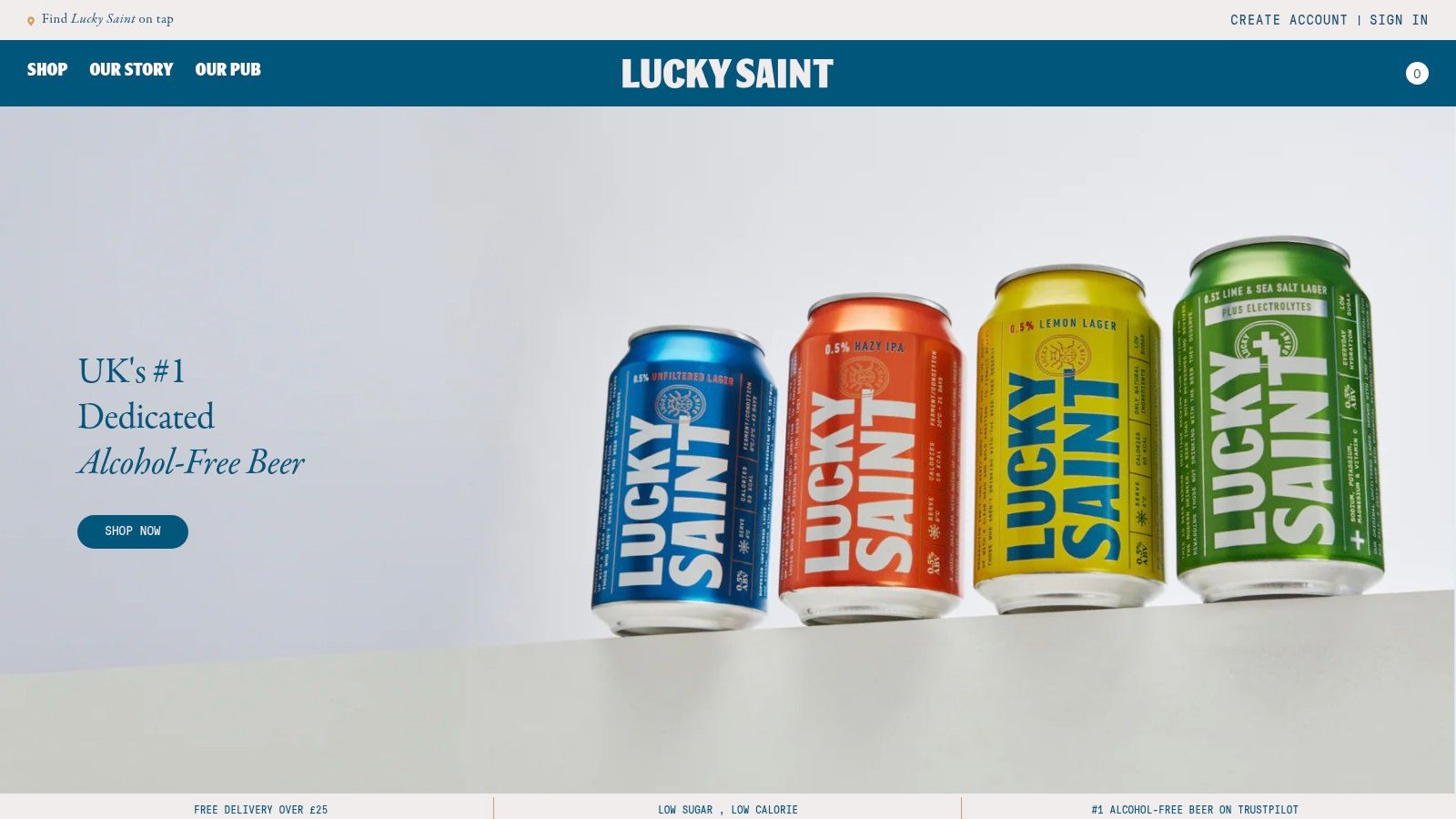
The evening bar at a wedding changes pace fast. After dinner and speeches, some guests stop wanting flutes, botanical serves or anything that reads as a special occasion drink. They want a cold beer in hand while they catch up with family, step out onto the terrace, or head for the dance floor. Lucky Saint earns its place at that point.
At a historic venue such as Battle Abbey, that matters more than couples sometimes expect. A drinks list can look polished on paper but still miss the habits of real guests. If part of your guest list would usually order lager or pale ale without hesitation, a strong alcohol-free beer option makes the bar feel properly considered rather than tokenistic.
Lucky Saint works well because it is familiar and easy to serve. Staff do not need cocktail prep, extra garnish stations or specialist glassware. Bottles and cans can be chilled in volume, restocked quickly, and served at the bar without slowing down the room. For larger evening receptions, that simplicity protects service standards and keeps queues shorter.
It also helps balance the style of the whole menu. Sparkling non-alcoholic wines and aperitif-style serves carry the ceremony beautifully. Beer covers the social part of the night.
As noted earlier in the article, low and no alcohol choices are now expected in hospitality settings, especially at the bar rather than only during the toast. Couples do not need a long zero-proof cocktail list to meet that expectation. One credible alcohol-free beer often does more practical work than three elaborate mocktails.
Where Lucky Saint is strongest
- Best for evening bar realism: It gives beer drinkers something they would choose willingly, not just accept as a substitute.
- Helpful for staffing and stock control: Cases are easy to chill, count and replenish, which makes budgeting and quantity planning simpler.
- Useful in mixed-service spaces: It suits bars, courtyard service and informal late-night moments without changing the tone of the wedding.
The key caveat
- Check the ABV and your guest requirements: Products in this category are commonly classed as alcohol-free at up to 0.5% ABV, which will not suit every couple, faith requirement or personal preference.
- Treat presentation properly: At a venue with as much character as Battle Abbey, serve it in clean branded or stemmed beer glassware, not straight from a warm box behind the bar.
- Pair it with the right food: It sits comfortably with evening bites such as sliders, flatbreads, croquettes and salty canapés, where sparkling alternatives can feel less natural.
For planning, I would usually position Lucky Saint as an evening bar line rather than a reception drink. Build your quantities around the later part of service, when guests want something familiar, quick and refreshing. That is how it improves both inclusivity and flow, without asking the bar team to do more than the moment requires.
Non-Alcoholic Wedding Drinks, 7-Brand Comparison
| Product | Implementation complexity 🔄 | Resource requirements ⚡ | Expected outcomes ⭐📊 | Ideal use cases 💡 | Key advantages |
|---|---|---|---|---|---|
| Wild Idol | Low 🔄, simple sparkling service | Moderate ⚡, chilled 750ml bottles, flute glassware, premium cost | ⭐⭐⭐⭐, strong Champagne‑style presence for toasts 📊 | Formal toasts, receptions, premium moments 💡 | Naturally 0.0% (not dealcoholised); polished Champagne alternative |
| Thomson & Scott Noughty | Low 🔄, standard sparkling wine service | Low‑Moderate ⚡, 750ml + 200ml minis, reliable trade supply | ⭐⭐⭐, consistent, value‑friendly wine service 📊 | Toasts + wine service throughout the wedding breakfast 💡 | Organic/vegan/Halal certified; good value and supply reliability |
| Saicho Sparkling Tea | Medium 🔄, specialised pours & pairing guidance | Moderate ⚡, 750ml & 200ml, signage/menus, planning support | ⭐⭐⭐⭐, distinctive, food‑friendly alternative that stands out 📊 | Couples seeking a sophisticated non‑wine toast; food pairing menus 💡 | Terroir‑driven cold‑brewed teas; weddings programme and volume support |
| Lyre's | High 🔄, cocktail menu/technique required | High ⚡, multiple SKUs, cocktail ingredients; RTDs reduce load | ⭐⭐⭐⭐, enables full zero‑proof cocktail bar; high inclusivity 📊 | Evening receptions, zero‑proof cocktail bars, bespoke drinks lists 💡 | Broad spirit alternatives; recipes and RTDs for menu versatility |
| Everleaf | Low 🔄, simple spritz serve (easy to train) | Low ⚡, 50cl bottles, tonic/ice; fast for catering teams | ⭐⭐⭐, elegant aperitif served quickly; efficient service 📊 | Welcome drinks, aperitif stations, fast‑serve events 💡 | Ready‑made aperitif profiles; easy low‑touch spritz serve |
| Pentire (Coastal Spritz & RTD) | Low‑Medium 🔄, bottles or RTD cans, clear serves | Moderate ⚡, 70cl bottles and RTD cans, storage/wholesale options | ⭐⭐⭐, coastal flavour identity with flexible formats 📊 | Seasonal/seafood menus; choose bottles or cans for service style 💡 | Distinct British coastal profile; bottle or RTD flexibility |
| Lucky Saint | Low 🔄, standard beer service | Low ⚡, cans/bottles, multi‑packs, chilled storage | ⭐⭐⭐, familiar beer experience; cost‑effective for bars 📊 | Evening bars, guests preferring beer alternatives 💡 | Credible AF beer styles; wide distribution and pack pricing |
Bringing Your Vision to Life. The Final Pour
The drinks service often feels easiest on paper and hardest on the day. A bottle that looks right for the toast may slow service on the terrace. A good dinner pairing may feel flat at the evening bar. The strongest non alcoholic wedding drinks menus solve those practical tensions early, with each serve chosen for a specific part of the celebration.
At Battle Abbey, that approach matters. The setting naturally divides the day into distinct moments, and each one asks something different of the bar team. A toast in the Abbot's Hall needs a bottle that pours cleanly into flutes and still feels right for a formal room. Reception drinks on the terrace need speed, cold storage, and a serve that still looks considered after the fiftieth tray leaves the bar. Dinner in the Duke's Library or Dining Room needs bottles that work with the menu rather than competing with it.
Quantities deserve the same care as styling. For most weddings, alcohol-free drinks are not a side note for a handful of guests. They need room in the buying list, the chill plan, the glassware count, and the staffing brief. I advise couples to map demand across the whole day. Include the guests who will stay alcohol-free throughout, those who alternate between alcoholic and alcohol-free drinks, and anyone joining the toast with a non alcoholic option. That is usually where budgets become clearer too. A premium sparkling bottle for the ceremony has a different job from a fast-pour spritz or a canned beer for the evening, so the pricing should reflect that.
Presentation is where good planning becomes good hospitality. Guests should never feel they have been handed the lesser option, especially Muslim guests, pregnant guests, designated drivers, or anyone choosing not to drink. Hitched's discussion of alcohol-free weddings and ceremony styling reflects that shift well. At a historic venue, the answer is usually simple. Use proper flutes and wine glasses. Serve with good ice. Keep garnishes restrained. Write the menu with confidence, so every drink sounds intentional and appropriate for the occasion.
The table matters as much as the tray.
Non alcoholic drinks sit beside linen, florals, candlelight, and polished glassware, so they should be treated as part of the design scheme rather than a late bar decision. Saicho can carry a pairing-led dinner service with real presence at the table. Everleaf and Pentire suit aperitif moments where clean glassware and a consistent garnish do most of the work. Wild Idol and Noughty belong in ceremonial moments where bottle shape, pour, and label all contribute to the atmosphere. If you're refining those finishing details, Afida's luxury napkin guide is a useful reference for how small table choices change the overall feel.
The most effective menus mix roles. Use a premium sparkling option for the toast. Follow with a botanical spritz or sparkling tea during the reception. Bring in a food-friendly bottle for dinner, then offer a credible beer or zero-proof cocktail at the evening bar. That structure gives guests choice without creating a cluttered bar list or unnecessary waste.
A well-planned alcohol-free menu improves the whole day. It supports the flow of service, respects the building, and gives every guest a drink that feels fully part of the celebration. If you're planning a celebration in East Sussex and want your drinks service to feel as polished as the setting, Battle Abbey Weddings can help you shape a bespoke menu that suits your ceremony, reception style, guest list, and venue spaces beautifully.