The registrar closes the vows, your hands are still warm from the rings, and the room settles into that rare hush before the applause properly begins. Signing the registry sits in that narrow but memorable stretch of the ceremony, while the couple, witnesses, and officiant complete the paperwork.
It can feel brief on the running order. In the room, it carries real weight.
The soundtrack requires tact during this stage. Guests are watching, photographers are working close, and the mood is shifting from formal promise to celebration. A song that is too grand can pull focus. One that is too slight can leave the moment feeling unfinished.
At Battle Abbey, the venue makes the decision more exacting. Ancient stone gives music a long tail, and Abbot's Hall is far less forgiving than a modern blank-canvas venue with soft furnishings and low ceilings. I usually advise couples to treat signing music as atmosphere first, statement second. The best choice warms the room, supports the images, and keeps the ceremony flowing naturally into the next part of the day.
That is also why the signing song should relate to the entrance music rather than sound as if it came from a different wedding altogether. If you are still shaping that wider musical thread, it helps to explore indie wedding processional music before you finalise this part of the ceremony.
The eight songs below work particularly well here because they can be arranged with restraint, which matters in a historic room where volume, tempo, and instrumentation change the atmosphere more than couples often expect.
1. All of Me by John Legend
The couple have reached the table, pens are uncapped, and the room has exhaled after the vows. That is exactly why All of Me works here. It carries feeling immediately, yet it does not demand the kind of attention that turns the signing into a separate performance.
For Battle Abbey, that balance matters. The song is romantic, familiar, and gentle enough to sit under the practical business of witnesses moving into place, pages turning, and photographers catching the close shots that often become favourites later.
In Abbot's Hall, I would usually avoid the full original track unless the ceremony is already styled in a contemporary direction. John Legend's vocal is intimate on headphones. In an ancient stone room, it can spread further than intended and pull focus toward the lyric. A piano-led version without vocals, or soft strings with plenty of space, keeps the emotion while letting the moment remain about the couple rather than the song.
Best way to use it at Battle Abbey
Ask your musician for restraint. A lighter left hand on the piano, a measured tempo, and an ending that tapers away rather than announcing itself all suit the room better than a big recital finish.
Recorded music can work beautifully too, but only if it is managed properly. At a heritage venue, I always want clean cueing, controlled volume, and a hardwired setup from a supplier who has worked in echoing ceremony spaces before. Technical fuss is far more noticeable during the signing than couples expect, because everyone is looking in one direction and there is nowhere for a bad start or abrupt fade to hide.
A simple rule helps here. If the song swells into a strong vocal climax, use a wordless arrangement for the registry and keep the sung version for the drinks reception or first dance playlist.
This song earns its place through warmth and poise. It loses some of its charm when it is dressed up with heavy percussion, over-sung by a soloist, or pushed too loud for the room. At Battle Abbey, All of Me is at its best when it feels close, polished, and gently affectionate.
2. Marry You by Bruno Mars
The register is signed, the room exhales, and the mood shifts. Marry You does that job well. It brings a burst of lightness after the legal formality, which is why I recommend it for couples who want Battle Abbey to feel celebratory rather than hushed from start to finish.
Used carelessly, though, it can tip into cheesiness. In a historic room such as Abbot's Hall, the original track is often too bright, too compressed, and too lyrically forward for the moment. The better route is a clean wordless edit, or a live arrangement for strings and piano that keeps the skip in the rhythm while softening the pop edges.
This song works best when it feels specifically suited to the building.
If your signing table is set in one of the Abbey's stone-lined spaces, ask for a slightly slower tempo and a gentler opening. Those first few bars can feel abrupt if the acoustics are lively. A quartet handles this beautifully, especially if the cello keeps the pulse neat and the upper strings stay crisp rather than sugary. For a pianist, I would want clean phrasing and very little pedal, otherwise the room can blur the bounce that makes the song charming in the first place.
It is also a smart choice for couples heading straight out to drinks on the Top Terrace. The mood change feels natural. Guests hear the first hint of celebration before anyone has left their seat, and the handover from ceremony to reception feels considered rather than accidental.
A few versions tend to work particularly well here:
- String quartet or trio: Keeps the wit of the song, but gives it enough polish for an ancient venue.
- Piano with light percussion: Best for a more contemporary ceremony, provided the rhythm stays discreet.
- A version without lyrics: Useful if you love the tune but do not want the words to dominate the signing.
The trade-off is simple. This is not the choice for a solemn, candlelit ceremony that has been styled with a formal, almost ecclesiastical tone. It suits relaxed elegance, modern florals, good timing, and a couple who do not mind a flash of personality in the middle of all that history.
Handled well, Marry You feels buoyant, stylish, and spirited. At Battle Abbey, that balance matters. The song should brighten the room, not bounce around it.
3. The Book of Love by Peter Gabriel or Ben Rector
This is the choice for couples who want signing the registry songs to feel thoughtful rather than merely pretty. The title alone gives it thematic weight, and in a venue layered with history, the literary quality of the song feels completely at home.
Peter Gabriel's version has a stately, almost chapel-like calm to it, while Ben Rector's feels warmer and more conversational. Neither is wrong. The decision depends on the room and the hour. In softer evening light, Gabriel can feel haunting in the best way. In a daytime ceremony with a more relaxed mood, Rector often sits more naturally.
Why it suits an old room
Historic venues reward songs with space in them. Fast phrasing and dense production can get lost or bounce back awkwardly. This song does the opposite. It leaves air between the notes, which gives old stone and timber room to respond.
That makes it particularly good if your signing table is styled with candles, antique brass details, or a more editorial floral design. It doesn't need to announce itself. It deepens the atmosphere.
In a historic ceremony room, the song doesn't need to fill every corner. It only needs to hold the moment together.
There is another practical benefit to this timing. Industry experts often view this part of the wedding as a short segment, which makes tracks that sound finished without requiring a long progression particularly helpful. If the registration takes more time than you planned, this choice flows smoothly into a second gentle wordless piece without sounding abruptly cut.
What works is subtle emotional intelligence. What doesn't is pairing it with an aggressively modern playback style or bright, club-like speaker voicing.
4. Perfect by Ed Sheeran
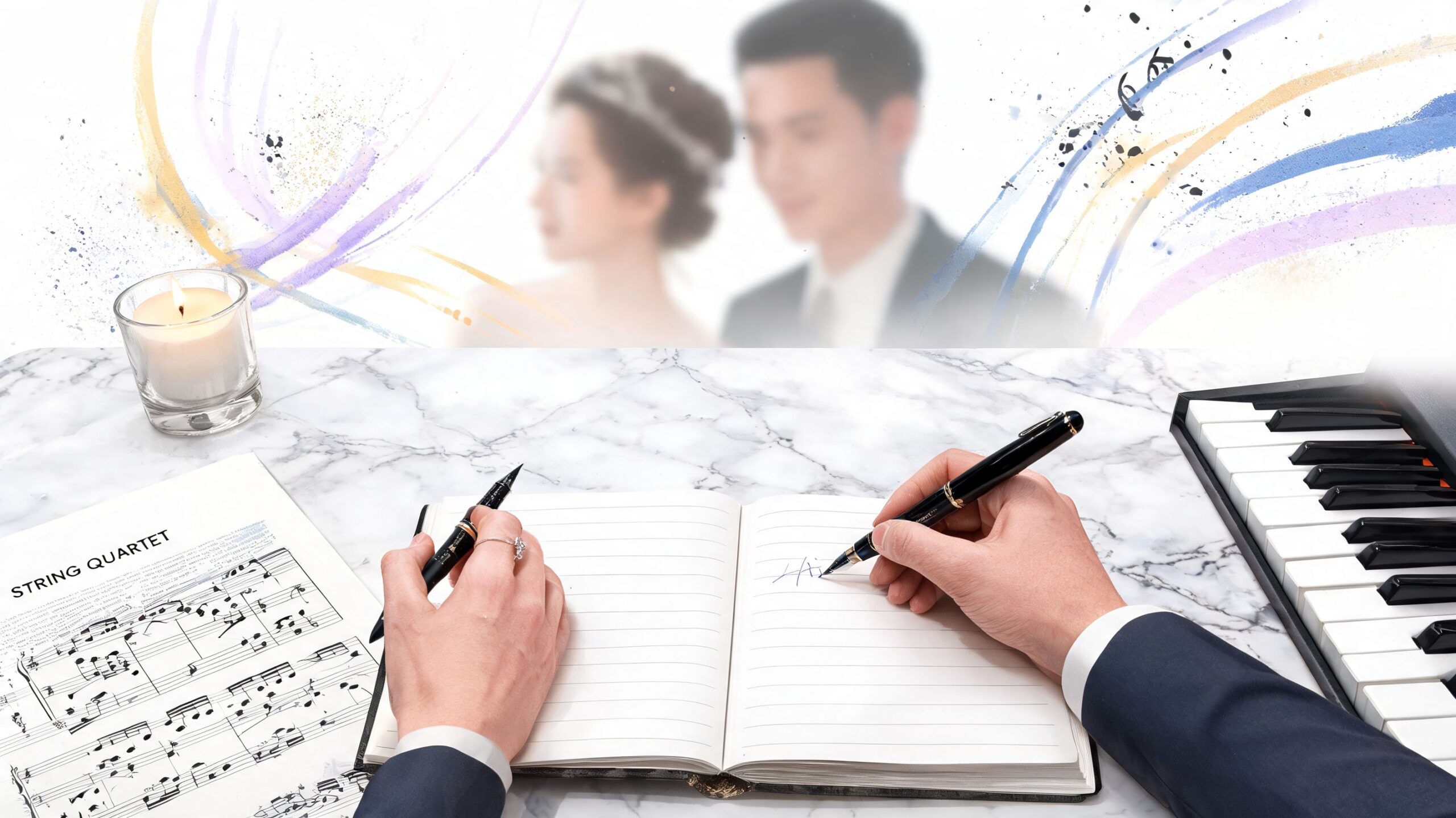
The registrar has stepped aside, pens are poised, and the room drops into that hushed pause that always feels larger inside an ancient venue. “Perfect” handles that moment well because guests know it within a bar or two, yet it still carries enough sweep to suit Battle Abbey's formality.
At Battle Abbey, the trade-off is simple. A song this recognisable can feel romantic, but it can also tip into mainstream if the arrangement is too close to the radio version. In Abbot's Hall, where stone and timber give music a long tail, I would avoid a full pop backing track and choose piano with strings instead. That keeps the emotion while letting the room do some of the work.
Best for a more polished, stately signing
This is a strong choice for ceremonies with classic styling. Candlelight, long stems, formal morning dress, a veil with structure, or a late afternoon winter ceremony all suit it beautifully. It is less convincing in a deliberately rustic or offbeat setting, where it can sound a little too polished for the atmosphere you have built.
The version matters more than couples expect. A string arrangement or a wordless orchestral recording usually sits more gracefully under the signing than a sung performance, especially in historic rooms where lyrics can bounce back and blur. If you are hiring live players, ask them to keep the phrasing clean and the dynamic controlled. The goal is presence, not performance.
A few practical notes make all the difference:
- Use the room, do not fight it: In Abbot's Hall, strings, piano, or a small quartet suit the acoustics far better than dense percussion or heavy bass.
- Keep the pace moving: Registry signing is short. The music should support the action, not stretch it into something self-conscious.
- Choose the emotional shade carefully: This song works best after heartfelt vows and a formal processional. If the ceremony has been light, playful, or modern in tone, another choice may feel more honest.
I recommend this song most often for couples who want romance with a little grandeur, but not the full weight of a classical piece. Handled well, it feels tender and cinematic. Handled badly, it can sound like wedding playlist filler in one of the most atmospheric rooms in Sussex.
What works is restraint, warmth, and a refined arrangement. What weakens it is a big vocal delivery that competes with the signing itself.
5. Thinking Out Loud by Ed Sheeran
The signing begins, the room settles, pens are uncapped, and for a minute the ceremony turns inward. “Thinking Out Loud” suits that shift beautifully at Battle Abbey because it carries warmth without asking for too much attention.
Its strength is ease. The rhythm has a soft sway, the melody is familiar, and the emotional tone feels settled rather than showy. In a historic venue, that matters. Ancient stone has a way of magnifying anything over-sung or over-produced, so this song usually works best when the arrangement is simple and the tempo is left alone.
Best for a warm, close-room feel
I recommend this most often for smaller ceremonies and for couples using one of the Abbey's more intimate spaces, where guests are near enough to catch every musical detail. In that setting, a solo guitarist or pianist can make the signing feel personal, almost conversational, rather than staged.
There is a trade-off, though. Because the song is so well known, the original version can pull focus fast. If you use it, use it with discipline.
A few versions tend to work especially well in rooms like Abbot's Hall:
- Solo acoustic guitar: Gentle, relaxed, and well suited to daytime ceremonies where you want softness without sentimentality.
- Piano solo: Cleaner in reverberant stone rooms, especially if speech has already been emotionally rich and you want the signing to breathe.
- Piano and cello or single violin: A stronger choice for winter light, candlelit styling, or a more formal ceremony design.
Keep the phrasing clean and the volume modest. Lyrics can blur in old walls, particularly once chairs shift and guests start to exhale after the vows. A non-vocal arrangement usually carries the feeling more gracefully than a full vocal track.
This song earns its place when the atmosphere is intimate, affectionate, and unforced. At Battle Abbey, it should feel as if it belongs to the room, not as if it has been dropped in from a playlist.
6. Turning Tables by Adele
The room has settled after the vows. Pens are being placed on the table, candlelight is catching the stone, and for a minute the ceremony can hold something with a little more tension in it. “Turning Tables” works in that exact pocket.
This is the choice for couples who want depth rather than sweetness. Adele wrote it with a bruised, defiant edge, so it will never behave like a light romantic standard. Used well, that edge becomes compelling. Used badly, it can feel far too heavy for the signing.
At Battle Abbey, arrangement matters more than title. In Abbot's Hall, the original recording usually carries too much vocal weight for ancient stone walls, particularly once the formal part of the ceremony has broken and the room starts to shift. A pianist with a cellist, or a small string-led version with plenty of space between phrases, gives you the emotional shape without crowding the moment.
Best for a candlelit, later-day ceremony
I suggest this most often for autumn and winter weddings, later afternoon ceremonies, or designs with a more dramatic visual language. Black tie, deep florals, tapered candles, darker velvet tones, all of that gives the song somewhere to belong. It also suits couples who prefer music with character and are happy to step away from the obvious wedding canon.
There is a clear trade-off. A song like this gives the signing real identity, but it asks for tighter control than a softer love song. Volume needs to stay measured. Tempo should remain steady. If a singer is involved, the delivery has to be restrained enough that guests feel the atmosphere rather than being pulled into the full heartbreak of the lyric.
My practical rule is simple. Keep the arrangement spare, let the piano lead, and avoid anything too produced or heavily amplified. In a historic room, that restraint reads as confidence.
Choose it if you want the signing to feel cinematic, grown-up, and slightly unexpected. At Battle Abbey, that can be striking. It can also be one of the most memorable choices of the day if it is shaped for the room rather than borrowed straight from the original track.
7. At Last by Etta James

The registrar has finished the legal words, pens are being passed across the table, and the room softens for a minute. “At Last” suits that exact change in atmosphere. It brings instant recognition, and it also gives the signing a sense of occasion that feels earned in a place like Battle Abbey.
At this venue, the song works best when it is treated with restraint. The lyric is famous, the melody is generous, and the stone rooms already add their own drama. In Abbot's Hall, I would keep the arrangement warm and measured so the music wraps around the moment rather than dominating it. Solo piano, piano with double bass, or a small jazz trio with very light percussion usually sits well. Full backing tracks and big vocal delivery can become too much once the sound starts travelling around ancient walls.
Best for timeless glamour
This is one of the strongest choices for couples whose styling has a classic backbone. Black tie, candlelight, polished tableware, ivory florals, champagne tones, and a reception that moves into one of the Abbey's more formal interiors all give “At Last” the right setting.
It also solves a practical problem many couples run into. They want the signing music to feel romantic, but not childish, trendy, or tied too tightly to one moment in pop culture. This song carries romance with maturity. Grandparents know it. Friends in their twenties know it. Very few tracks manage that without feeling bland.
The trade-off is clarity of style. “At Last” needs conviction. If the rest of the day is relaxed, rustic, or deliberately offbeat, it can feel too dressed for the occasion. If you choose it, commit to a polished arrangement and keep the tempo unhurried.
My usual advice is simple:
- Choose a version with space in it: The original has weight, but a clean live arrangement often works better for the signing itself.
- Keep the vocal controlled: In a historic room, less vibrato and less volume usually sound more expensive.
- Match it to the room: Abbot's Hall can carry a trio beautifully, while a smaller stone space often benefits from piano alone.
- Use it for sincerity: This song rewards couples who mean every word and avoids any hint of novelty.
Done well, “At Last” makes the signing feel stately, romantic, and unmistakably grown-up. At Battle Abbey, that combination is hard to beat.
8. Fly Me to the Moon by Frank Sinatra
The register is being signed, pens are moving, and the room needs a change in temperature. After a romantic ceremony, this song brings lift, wit, and a little glamour without breaking the spell. At Battle Abbey, that shift matters. Ancient stone can make slower songs feel heavier than they do on a playlist, while Sinatra's swing keeps the moment light on its feet.
I usually steer couples toward a non-vocal version here. A jazz piano arrangement works well if the signing is taking place in a smaller room where every lyric would sit too close to the paperwork. In Abbot's Hall, a swing-inspired quartet version has enough air and rhythm to travel through the space without turning the signing into a cabaret set.
Best for couples who want charm over intensity
This is a strong choice when the signing needs to bridge the ceremony and the first glass of champagne. It suits a wedding with black tie touches, polished service, and a reception that opens into drinks, conversation, and movement rather than a tearful pause. The song gives the day a sense of occasion, but it does so with ease.
It also gives musicians room to shape the atmosphere properly. Local players can soften the swing, slow the pulse slightly, or strip it back to piano and double bass so it sits comfortably inside the Abbey's acoustics. That flexibility is one reason standards continue to work so well, as noted in Hitched's wedding interlude music guide.
My practical advice is straightforward:
- Keep the arrangement light: piano, brushed drums, double bass, or a small jazz ensemble will usually carry better than a full, brass-led sound.
- Watch the tempo: too quick and the signing feels hurried. Too slow and the song loses its sparkle.
- Match it to the room: Abbot's Hall can take more rhythmic detail, while tighter stone spaces usually sound cleaner with fewer players.
- Use recorded music carefully: a flat speaker can make this feel tinny in a historic setting. If you are not hiring live musicians, choose a warm, well-balanced recording.
Some songs wrap the signing in sentiment. This one gives it poise, charm, and a touch of old-world confidence. In the right Battle Abbey setting, that can be exactly the right note.
Signing the Registry: 8-Song Comparison
The signing moment passes quickly, but it changes the room. One minute, everyone is holding the emotion of the vows. The next, guests are exhaling, turning to one another, and waiting for the first clear signal that the ceremony has softened into celebration. At Battle Abbey, that shift is sharper because the building has such presence. Stone and timber give music character, but they also expose poor choices.
A useful way to compare these eight songs is not just by taste, but by how they behave in a historic room, how easily they can be arranged for live players, and whether they support the signing without pulling focus.
| Song | Fit for the signing | Typical length | Best setup at Battle Abbey | Atmosphere in the room | Practical advice |
|---|---|---|---|---|---|
| "All of Me", John Legend | Easy to place and familiar to guests | Around 4 minutes | Solo piano, guitar, or a no-vocals recording | Tender, warm, quietly emotional | Works best kept simple. In Abbot's Hall, piano carries beautifully. In smaller stone rooms, avoid a heavy backing track. |
| "Marry You", Bruno Mars | Slightly trickier because the original wants to bounce | Around 3 and a half minutes | String trio, piano-led cover, or a well-produced recorded version | Bright, playful, celebratory | Best for couples who want the signing to feel upbeat rather than hushed. A gentler arrangement usually suits the Abbey better than the full pop production. |
| "The Book of Love", Peter Gabriel / Ben Rector | Strong thematic choice with two distinct moods available | Just under 4 minutes | Piano and voice, guitar, or a piano version | Intimate, thoughtful, affectionate | Peter Gabriel gives it gravity. Ben Rector feels lighter and more contemporary. This is particularly effective in rooms with candlelight and close seating. |
| "Perfect", Ed Sheeran | Reliable, romantic, and easy for musicians to adapt | Around 4 minutes | Strings, piano, or a polished wordless track | Sweeping, formal, heartfelt | This sits well in grander settings. If you use strings in Abbot's Hall, ask for restraint so the room does not become too lush or blurry. |
| "Thinking Out Loud", Ed Sheeran | Manageable, but length needs attention | Around 4 and a half minutes | Acoustic guitar, piano, or a trimmed recorded version | Relaxed, intimate, gently soulful | Lovely for a smaller ceremony. If your signing is brief, have musicians prepare a clean finish or choose an edited version. |
| "Turning Tables", Adele | More unusual, with a stronger emotional edge | Just under 4 minutes | Solo piano, strings, or a no-vocals arrangement | Dramatic, poised, reflective | Best for couples who want tension and release rather than pure softness. In older stone rooms, keep the arrangement spare so the melody stays clear. |
| "At Last", Etta James (covers) | One of the easiest classics to place | Around 3 minutes | Jazz trio, piano and double bass, strings, or a recorded cover | Timeless, gracious, warmly celebratory | Excellent if you want romance without sentimentality. This can sound glorious live, but a good recorded version also works if the speaker setup is warm and balanced. |
| "Fly Me to the Moon", Frank Sinatra | Compact and stylish, especially for a shorter signing | 2 and a half to 3 and a half minutes | Jazz trio, piano and bass, or a wordless swing arrangement | Charming, urbane, lightly festive | Better for couples who want wit and polish than overt emotion. Abbot's Hall can handle the rhythmic detail. Smaller rooms usually prefer a lighter touch. |
The primary trade-off is between atmosphere and control. Live musicians can shorten, extend, or soften a piece to fit the pace of the signing. Recorded tracks give certainty, which helps if timings are strict, but they need careful sound levels in an ancient venue. A song that feels rich through headphones can turn thin or muddy once it hits old stone.
If I were choosing purely for Battle Abbey, I would group these into three practical camps. "All of Me", "Perfect", and "The Book of Love" are safe romantic choices. "At Last" and "Fly Me to the Moon" bring character and social ease. "Marry You" and "Turning Tables" are more personal choices, which can be memorable when they truly reflect the couple rather than just filling a slot.
Making Your Musical Choice Part of Your Story
The best signing the registry songs do more than fill silence. They shape the emotional hinge of the ceremony. In a matter of minutes, they carry everyone from the solemnity of the vows into the warmth of congratulations, photographs, and the first ripple of celebration.
At Battle Abbey, that effect is heightened by the setting. Abbot's Hall has the kind of presence that rewards careful musical choices. The Duke's Library invites elegance. The Top Terrace asks for a graceful transition if drinks follow straight after. When couples listen to tracks only through headphones at home, they often choose one thing. When they imagine that same song against old stone, historic timber, and a room full of people holding their breath after the vows, the answer often changes.
That's why arrangement matters as much as title. Live musicians bring flexibility. They can extend an ending, soften a dynamic, or respond to a slightly slower signing. Recorded music gives consistency and, when managed properly, absolute control over cue points. Neither is better by nature. The right choice depends on your room, your budget, and whether you want the music to feel curated or naturally organic.
Practical trade-offs deserve careful consideration. Powerful vocals can overwhelm reverberant halls. Acoustic instruments often sound exquisite during intimate ceremonies but might require thoughtful reinforcement for larger guest counts. A well-made wordless track often solves problems before they arise. It also helps to ask your planner, musician, or DJ to consider the overall flow rather than isolated songs.
The emotional side matters too. Some couples want tenderness. Others want relief and joy. Some want old-school glamour. Others want modern lyrics in a historic frame. All of those instincts can work. The mistake is choosing a track because it's popular, then discovering it doesn't suit the moment between vows and celebration.
Listen to your options in sequence. Entrance, signing, exit. Notice whether they belong to the same story. If your ceremony is unfolding at Battle Abbey, let the building guide you a little. Its atmosphere can support romance, drama, intimacy, and grandeur, but it responds best when the music feels intentional.
Choose the song that sounds like the two of you in that exact pause. Pen in hand, guests smiling, history all around you. And if you're planning the wider day as carefully as the ceremony itself, it also helps to organize your Winelands wedding celebration with the same attention to flow, timing, and atmosphere.
If you're planning a wedding that deserves both atmosphere and impeccable coordination, Battle Abbey Weddings offers one of the most distinctive historic settings in East Sussex. From intimate ceremonies to full-site celebrations, the team can help you shape every detail, including how your music moves through Abbot's Hall, the terraces, and the reception spaces, so your signing moment feels every bit as memorable as the vows themselves.