You're probably staring at two competing ideas right now. You want the meal to feel romantic, considered, and a little cinematic, but you also don't want a valentines day menu that looks lovely on paper and falls apart in service. That tension shows up whether you're planning dinner for two, a proposal supper, a micro-wedding, or a full reception in a historic setting.
At Battle Abbey, food has to do more than taste good. It has to suit the room, the rhythm of the evening, and the way guests celebrate. A candlelit supper in the Duke's Library needs different pacing from a drinks-and-canapés reception on the terrace. A menu for twelve close family members should land differently from one designed for a larger wedding breakfast. The strongest menus don't just chase romance. They give guests clarity, comfort, and a sense of occasion.
That matters because Valentine's dining has become a packaged experience rather than a simple meal. A 2025 Drive Research summary notes that 49% of consumers say cost is a top consideration when buying Valentine's gifts, with average Valentine's dinner spending around $121 and roughly $33 of that on drinks, which helps explain why fixed-price menus and clear packages feel easier to commit to for occasion dining (Drive Research Valentine's Day statistics). In practice, that's why menu structure matters as much as flavour.
If you're also thinking about guest flow, package design, and hospitality menu optimization, these eight ideas give you different ways to build a celebration that feels romantic without becoming vague or overcomplicated.
1. Classic French Fine Dining Menu
A French menu still works because it understands ceremony. Guests expect a beginning, a build, and a finish. In a historic room such as the Duke's Library or Dining Room, that natural structure feels at home.
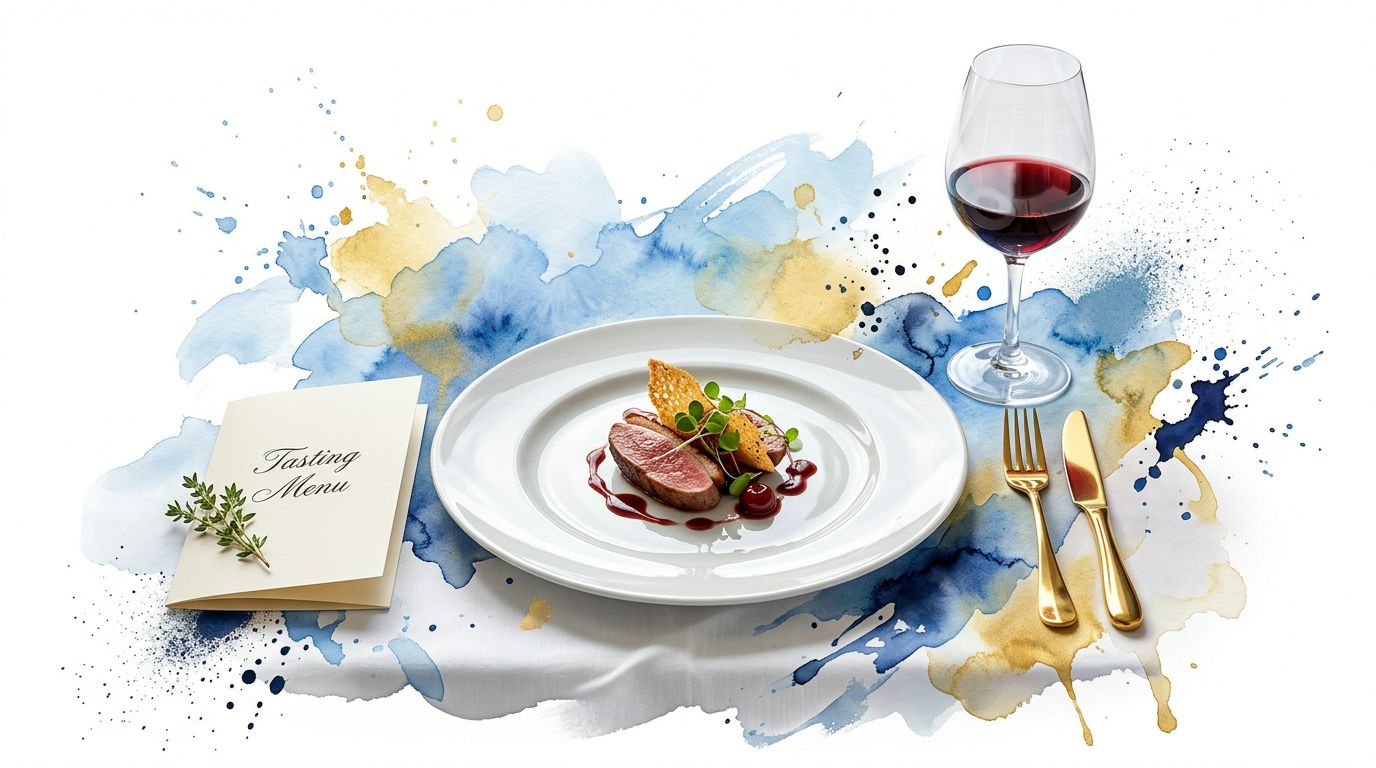
Start with something precise and elegant. A cheese gougère, dressed crab tartlet, or oyster with a sharp mignonette sets the tone well. Then move into a fish course, a refined main such as duck breast or fillet of beef, and a chocolate-led dessert with proper restaurant polish.
What works in a historic venue
French fine dining suits couples who want the room to feel quiet, composed, and dressed for the occasion. It's especially effective for an intimate wedding breakfast or a proposal dinner where every course arrives with a little pause and anticipation.
The mistake is making it too heavy. Rich starter, rich fish, rich meat, rich pudding sounds luxurious, but by the third course guests start slowing down. The better approach is contrast. Bright first course, buttery middle, deeper main, lighter pre-dessert if needed, then chocolate or fruit.
Practical rule: If every course is trying to be the grandest dish of the night, none of them stands out.
Best pairings and trade-offs
If you're leaning French, let drinks carry part of the romance. A pre-dinner reception with glasses of Champagne on the Top Terrace creates a clean transition into a seated meal and gives the kitchen breathing room before first course.
A few points make this format land better:
- Offer mirrored alternatives: Every meat or fish course should have a vegetarian equivalent with the same level of care in sauce, garnish, and plating.
- Keep the menu readable: Guests should understand the dish without needing translation notes under every line.
- Time speeches carefully: Fine dining loses momentum if hot courses wait through long toasts.
- Use premium ingredients sparingly: Truffle, caviar, or oysters work best as accents, not as a theme repeated on every plate.
Think Le Gavroche in spirit rather than parody. Technique matters, but restraint matters more.
2. Farm-to-Table Seasonal Menu
Some of the most romantic menus aren't ornate at all. They feel grounded, local, and honest. In East Sussex, that means building a valentines day menu around what nearby growers, farmers, cheesemakers, and vineyards do well, then letting the ingredient story carry the mood.
This style suits couples who want warmth rather than formality. It also works beautifully in a venue with history, because the food feels rooted in place rather than imported from another dining script.
Let the sourcing do part of the talking
A seasonal menu should sound specific. Heritage beetroot with whipped local curd. Roast squash with hazelnut and sage. Line-caught fish with brown shrimp butter. East Sussex cheese course with oat crackers and chutney. Apple tart with cultured cream.
That specificity gives the meal character. It also helps guests remember it later, because they can tie flavours to place.
The retail side of Valentine's in the UK also points in this direction. Grocery Insight's 2025 report notes that supermarkets leaned into “gifting and dine-in offers” with themed bays, signage, and curated bundles, which reinforces how well fixed, easy-to-compare occasion packages perform for this celebration (Grocery Insight Valentine's Day overview 2025).
How to stop it feeling rustic by accident
Farm-to-table can drift into “nice pub menu” if the finishing details aren't considered. The ingredients may be local, but the presentation still needs shape and occasion.
Use subtle details that enhance without stiffening the meal:
- Producer cards: Name the farm, dairy, vineyard, or bakery at each table or on the menu.
- Seasonal pacing: Keep winter menus comforting, but break up braised and roasted elements with pickled or raw components.
- Regional drinks: English sparkling wine, local rosé, or Sussex apple juice make the menu feel coherent.
- One signature course: A visually striking vegetable dish often gives this menu style its most memorable moment.
This format is particularly strong for smaller receptions and winter weddings. It feels generous, thoughtful, and easier for guests to connect with than an overworked “luxury” menu built from ingredients with no local relationship.
3. Interactive Experience Menu with Station Dining
Not every romantic meal needs everyone facing forward at a formally laid table. For some celebrations, especially larger receptions, station dining gives you energy, movement, and better conversation. It turns the meal into part of the event rather than a pause before dancing.
That matters for Valentine's-inspired occasions because guests increasingly treat the day as an experience. OpenTable's 2025 Valentine's Day research found that Galentine's Day dining increased 34% year over year in its data, which signals a wider appetite for broader, more social ways of celebrating love (OpenTable Valentine's Day research via PR Newswire).
Stations that feel polished, not chaotic
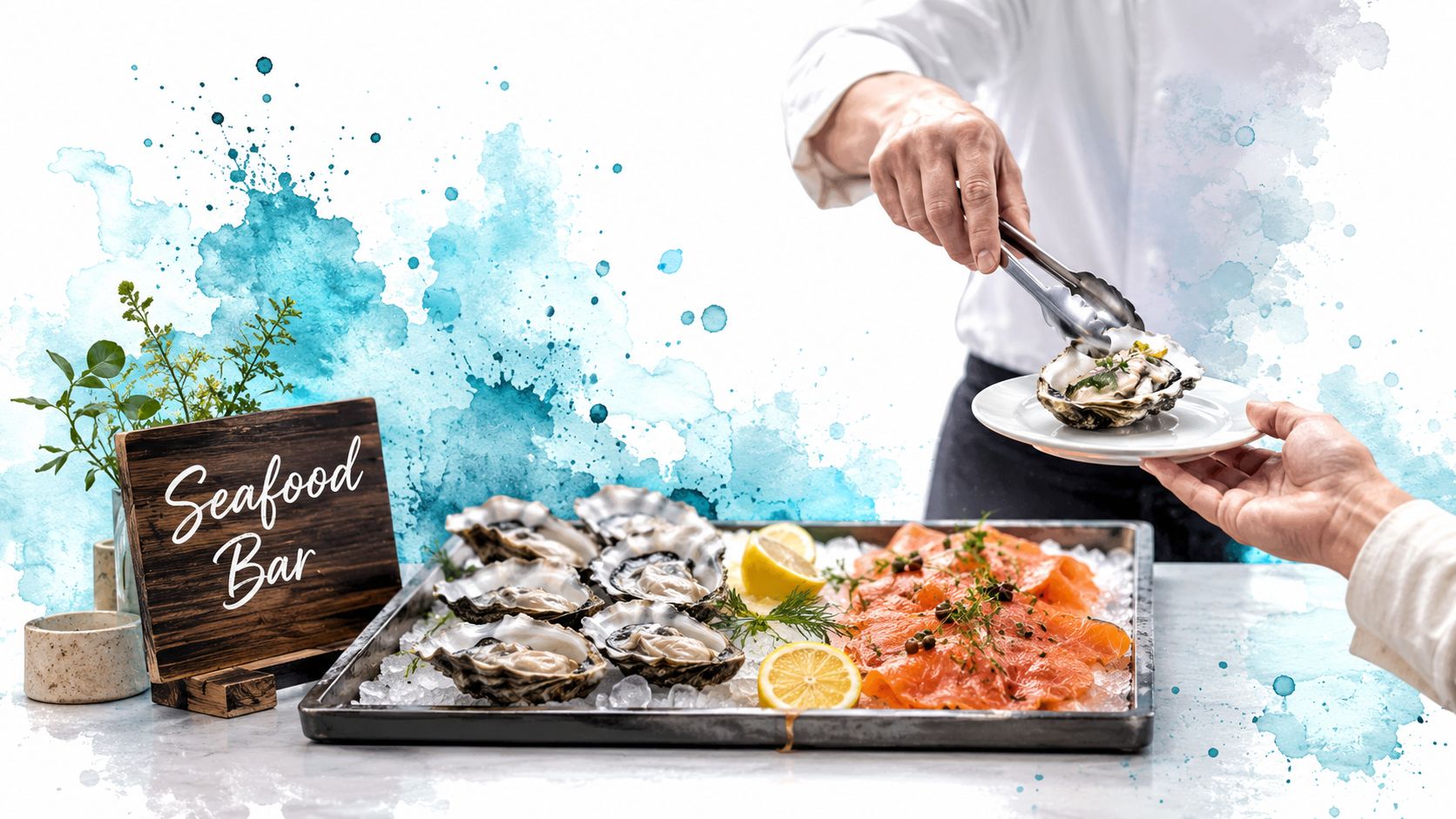
The best station menus have a clear spine. One raw bar or seafood station, one hot carving or main station, one pasta or risotto finish point, one dessert moment. Beyond that, choice becomes clutter.
For a venue like Battle Abbey, the appeal is spatial. Guests can move between indoor rooms and outdoor areas, gathering at different points rather than bottlenecking at one buffet line. This format often suits engagement parties, evening receptions, and mixed-age celebrations where some guests want to graze and talk while others want to keep moving.
A good starting point is to review broader wedding buffet menu ideas and then refine them upward for a Valentine's occasion with better styling, stronger signage, and more theatrical finishing.
The service details that make it work
Station dining only feels luxurious when service is disciplined. Guests need clear movement, replenished plates, and visible staff who can answer questions quickly.
Use these principles:
- Create a hero station: Oyster bar, carved beef, or handmade dessert finishing. Give guests one focal point.
- Open in phases: Don't release every station at once if the room is compact.
- Protect quieter guests: Add seated corners for older relatives and anyone who won't enjoy standing service.
- Write proper signs: Ingredient and allergy notes should be immediate and elegant.
A short visual example helps if you're picturing the flow:
This format is lively, flattering to group celebrations, and easier to scale than many couples expect. What doesn't work is calling a basic buffet “interactive” and hoping styling will rescue it.
4. Romantic Sweetheart Menu with Aphrodisiac Ingredients
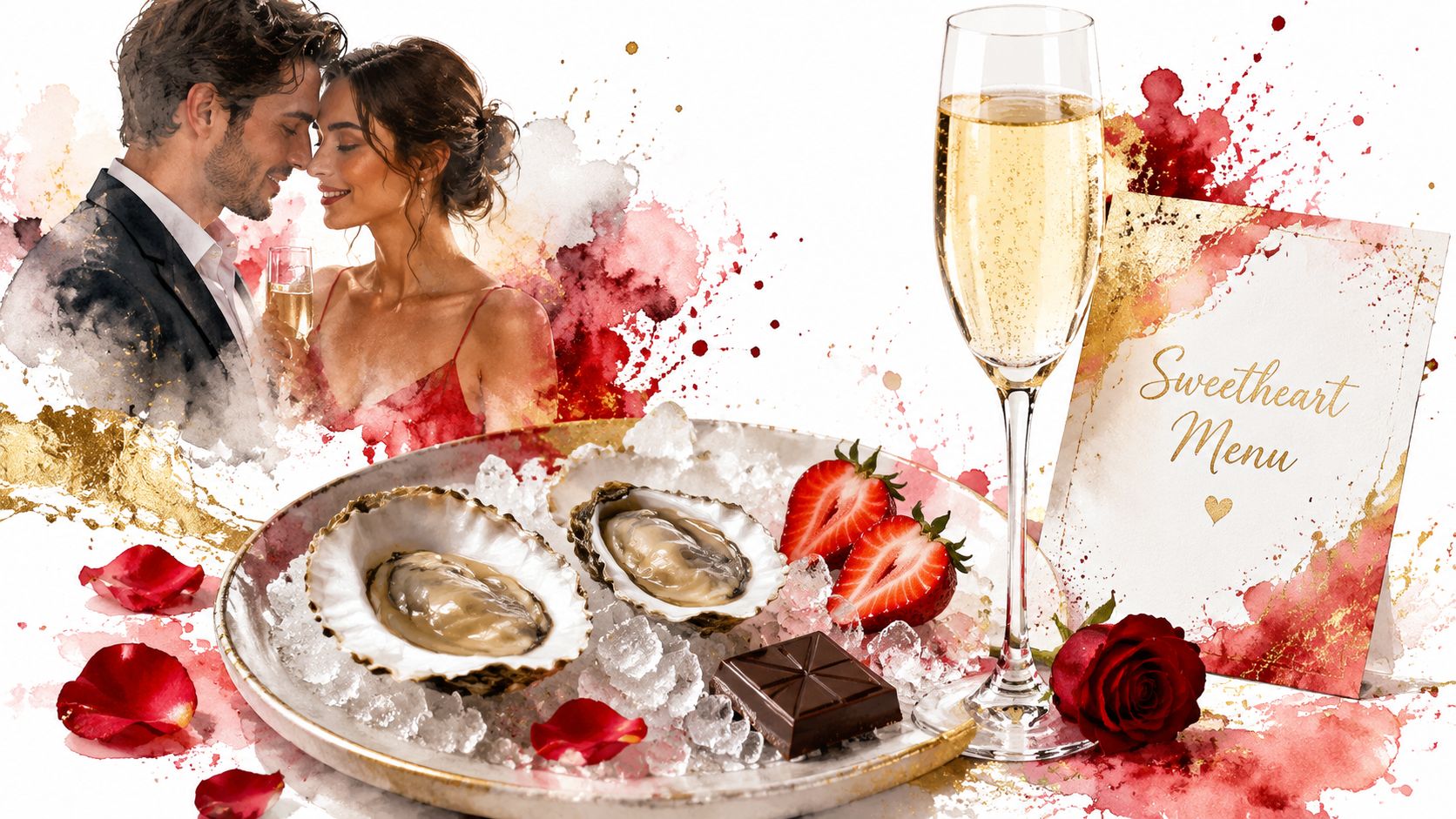
Some couples want the menu to lean openly into the symbolism of Valentine's Day. That's where a sweetheart menu earns its place. Oysters, dark chocolate, strawberries, honey, Champagne, and truffle all carry familiar romantic associations, and used carefully, they make the evening feel playful rather than clichéd.
There's historic logic behind this. Food Studies Institute notes that chocolate's close tie to Valentine's Day came through deliberate romantic marketing, and that Cadbury created its first heart-shaped boxes in 1870, helping turn the occasion into a curated food-and-gift ritual rather than a simple social feast (Food Studies Institute on Valentine's Day history).
Use the theme lightly
This menu works best when the references are elegant and controlled. One oyster course. One truffle note in a pasta or potato dish. Strawberries in dessert, not in cocktails, garnish, petits fours, and breakfast boxes as well.
Overdoing the theme makes the menu feel novelty-driven. Underplaying it slightly keeps it grown-up.
The most romantic themed menus hint rather than shout.
A strong sample progression
A balanced sweetheart menu might look like this:
- First course: Oysters or a vegetarian alternative with citrus and herbs.
- Middle course: Handmade pasta, Jerusalem artichoke, or a delicate fish course with a truffle accent.
- Main course: Beef, poussin, or a glazed celeriac dish with a polished sauce.
- Dessert: Dark chocolate, strawberry, rose, or honey in a restrained plated finish.
Offer half portions for adventurous ingredients. Oysters divide a room, and truffle fatigue is real. The better menus give guests the feeling of participation in the theme without forcing every diner into the same level of enthusiasm.
This style suits candlelit private dinners and small receptions particularly well. In larger rooms, the symbolism can get lost unless the service and styling are equally intentional.
5. Contemporary British Menu with Historic Elements
A historic venue doesn't need faux-medieval food to feel connected to its setting. In fact, that usually backfires. Guests want a menu that feels British and contemporary, with subtle nods to heritage rather than theatrical reenactment.
That's where this format shines. It takes familiar British ingredients and techniques, sharpens the presentation, and lets the venue's age do the rest.
Build around recognisable dishes, then refine
Think smoked trout with horseradish and pickled cucumber. Roast lamb with dauphinoise and winter greens. Suet crust pastry used carefully in a starter rather than as a dense main. Rhubarb, custard, and shortbread reworked into a plated dessert.
The menu reads clearly and feels appropriate to Battle Abbey's setting. It also gives couples a useful middle ground if they find French fine dining too formal and rustic seasonal dining too casual.
A heritage-led menu can also sit well alongside English wine. For couples considering rosé with a lighter British menu, these Cobham House Vineyard rosé insights are a sensible reference point when discussing style and food pairing.
What to borrow from history and what to leave behind
Borrow structure, ingredients, and a sense of place. Leave behind heaviness. Historic food can become starch on starch with a dark sauce poured over all of it. Modern guests don't want that, particularly at an evening celebration.
A practical way to shape this menu is to review a house style such as the White Swan menu and then adapt the tone upward for a more romantic service. The principle is simple. Keep the food legible, British, and elegant.
- Use heritage as texture: Mention the venue's story in the printed menu, not in overworked dish titles.
- Choose one traditional flourish: Game, smoked fish, or a classic pudding reference can be enough.
- Balance the plate: One rich course is plenty.
- Pour English sparkling confidently: It belongs here.
This menu often wins with families because it feels celebratory without alienating anyone.
6. Vegetarian and Vegan Garden of Eden Showcase Menu
Plant-based Valentine's menus are often treated as the compromise option. That's a mistake. If you build them properly, they become the most visually striking and memorable menus of the night.
The key is not to frame the whole meal around absence. Guests don't want “without meat”, “without dairy”, “without compromise” repeated across the page. They want abundance, texture, colour, and enough depth to feel hosted properly.
Design for drama, not apology
A strong plant-led menu might open with roasted chicory, blood orange, and toasted seeds. Then a hand-shaped agnolotti or pressed terrine of root vegetables. Main course could be charred cauliflower, mushroom pithivier, or a glazed celeriac dish with a glossy reduction. Dessert can go floral, citrus, chocolate, or poached fruit.
Luxury ingredients still belong here. Truffle, wild mushrooms, heritage carrots, bitter leaves, nuts, fermented elements, and carefully chosen oils all add the complexity that people usually associate with meat-based menus.
Guests remember a vegetarian menu when it has height, contrast, and proper savoury depth.
Where couples often go wrong
The common error is offering one pretty starter, one worthy main, and then expecting dessert to carry the whole emotional finish. A Garden of Eden menu needs substance all the way through.
Keep these standards in place:
- Make mains substantial: A vegan main should feel complete, not like side dishes assembled into a circle.
- Check the wines: Plant-based food loses credibility if the pairing list ignores vegan-friendly options.
- Use botanical detail well: Herbs, edible flowers, and leaves should add flavour, not just decoration.
- Allow mixed menus when needed: Some celebrations need plant-led choices alongside other dishes, especially for family groups.
This format is excellent for daytime receptions, modern couples, and any event where visual freshness matters as much as tradition.
7. Progressive Journey Through Europe Multi-Regional Menu
Some couples don't want one cuisine. They want a sense of travel, movement, and layered personality. A progressive European menu does that well, especially in a venue with Norman roots and a story already tied to the continent.
One course from France, one from northern Italy, one from Spain, one from Britain, one dessert drawn from central Europe. If you handle it with discipline, the menu feels cultured and expansive. If you don't, it becomes a tasting of unrelated holiday memories.
Keep one hand on the wheel
The trick is choosing a common thread. That could be winter produce, coastal ingredients, a wine journey, or a progression from light to rich. Without that thread, guests notice the jumps more than the pleasures.
This style works especially well for small to mid-sized receptions where the service team can explain each course briefly. Printed passport-style menus are charming here, but the food still needs cohesion on the plate.
A successful sequence might move from:
- France: Oyster, tartlet, or velouté
- Italy: Handmade pasta or risotto
- Spain: Seafood or saffron-led middle course
- Britain: Refined roast or game-inspired main
- Europe-wide dessert language: Chocolate, citrus, hazelnut, or preserved fruit
Why it suits modern celebrations
Many Valentine's occasions no longer follow the classic dinner-for-two script. Broader coverage of alternative Valentine's celebrations points to more varied formats such as daytime plans, shared activities, and group-friendly experiences, which makes a multi-regional menu a useful fit for mixed guest lists and wedding-adjacent events (alternative Valentine's dining ideas).
This format is good for cosmopolitan couples, destination guests, and receptions where conversation is part of the entertainment. It's less effective when the room wants a single strong culinary identity.
8. Intimate Tasting Menu Experience with Chef's Narration
For the smallest celebrations, nothing feels more personal than a narrated tasting menu. This is the closest you get to private theatre through food. Each course arrives with context, the pacing is deliberate, and the meal becomes part of the story of the day.
This works beautifully for an engagement dinner, a micro-wedding, or a private post-ceremony supper. It's not the right choice for every guest list, but for the right one, it's unforgettable.
Precision matters more than abundance
A tasting menu needs confidence in portioning and sequence. Too much food and guests feel trapped. Too little and the meal feels mannered. The sweet spot is a progression that changes pace, temperature, and texture often enough to keep attention alive.
A chef-led format also lets you personalise discreetly. A course can reference where the couple met, a favourite ingredient, or a shared travel memory without turning the whole menu into an inside joke.
The practical limits
This is one of the hardest menu styles to execute well. It asks more of the kitchen, more of service, and more of guests' attention. It also demands a room that supports quiet listening and close timing.
One reason it resonates is that many people are looking for options beyond the standard indulgent prix fixe. Commentary around Valentine's menu content has highlighted a gap between inspirational restaurant menus and the practical decision-making couples need, especially when choosing between dining out, hosting at home, or creating a smaller, more intentional occasion (What's Gaby Cooking Valentine's Day menu context).
For couples considering this format, keep these boundaries clear:
- Limit the audience: Small groups make chef narration feel intimate rather than forced.
- Pair drinks carefully: Premium wine works, but thoughtful alcohol-free pairings can be just as effective.
- Allow time: This menu can't be rushed between long speeches and a fast room turn.
- Capture the details: Tableside finishing and plated moments deserve photography.
A tasting menu isn't about volume. It's about attention.
Valentines Day: 8-Menu Comparison
| Menu Option | Complexity 🔄 | Resource Requirements ⚡ | Expected Outcomes 📊 | Ideal Use Cases 💡 | Key Advantages ⭐ |
|---|---|---|---|---|---|
| Classic French Fine Dining Menu | High, formal multi-course timing and precise service (2.5–3.5 h) | High, experienced chefs, sommelier, formal service staff, premium ingredients | Very high perceived quality and elegance; slow, ceremonious pacing | Luxury weddings, mature couples, intimate historic rooms | Timeless sophistication; showcases technique and pairings |
| Farm-to-Table Seasonal Menu | Moderate, seasonal planning and flexibility required | Moderate, strong supplier relationships, local sourcing logistics | Fresh, authentic flavors with strong provenance storytelling; price variability | Environmentally conscious couples, intimate meals (up to 60) | Highlights local producers; sustainable and authentic |
| Interactive "Experience" Menu with Station Dining | High, traffic flow, timing and food-safety coordination | High, multiple stations, more staff, varied equipment | Energetic, social and flexible experience; varied guest engagement | Younger couples, large celebrations (150–250), entertainment-focused events | Encourages mingling; adaptable to diets; visual/photogenic |
| Romantic "Sweetheart" Menu (Aphrodisiac Focus) | Moderate, themed ingredient sourcing and sensitive menu wording | Moderate, specialty ingredients (oysters, truffle, chocolate), careful plating | Highly romantic and memorable for many; may alienate some guests | Valentine's/anniversary dinners, intimate gatherings (up to 60) | Strong theme and storytelling; intimate sharing experiences |
| Contemporary British Menu with Historic Elements | Moderate, reinterpretation of classics with historical context | Moderate, skilled chefs, local game/produce sourcing | Creates sense of place and authenticity; broad guest appeal | Destination weddings valuing heritage, 75–250 guests | Venue-appropriate storytelling; elevates familiar flavors |
| Vegetarian/Vegan "Garden of Eden" Showcase Menu | Moderate–High, requires plant-based technique and creativity | Moderate, specialist ingredients, garden/producer partnerships | Inclusive and creative dining; may surprise non-vegans positively | Vegan/vegetarian couples or mixed-diet events of any size | Eliminates need for alternate menus; showcases gardens and innovation |
| Progressive "Journey Through Europe" Multi-Regional Menu | High, coordination across cuisines, longer service (3–4 h) | High, diverse ingredients, multi-cuisine expertise, sommelier support | Distinctive, educational experience; risk of disjointed execution | Well-traveled or international guests, larger celebrations (100–250) | Memorable narrative; celebrates continental diversity |
| Intimate "Tasting Menu" with Chef's Narration | Very High, theatrical service, personalization, lengthy timing (3–4 h) | Very High, top chefs, extensive prep, premium sourcing and staffing | Ultra-luxury, very memorable and personalized; premium pricing | Food-enthusiast couples, small groups (20–60), milestone events | Deep personalization; chef creativity and storytelling shine |
Your Culinary Story Starts at Battle Abbey
Choosing a valentines day menu is rarely just about choosing dishes. You're deciding how the whole celebration will feel once guests sit down, pick up a glass, and begin to settle into the room. The menu can make an evening feel stately, warm, playful, theatrical, or highly personal. That's why the strongest choice isn't always the most elaborate one. It's the one that fits your guest list, your space, and the pace you want for the day.
For an intimate dinner, a French menu or narrated tasting experience often gives you the most emotional detail. For a micro-wedding, a sweetheart menu or a contemporary British menu usually balances romance with broad guest appeal. For larger celebrations, station dining and seasonal farm-to-table formats often work harder because they keep the event moving and help guests interact naturally. Plant-led menus and European journeys add personality when you want the food to say something distinctive about you as a couple.
The practical side matters just as much as the romance. Guests appreciate clarity. Fixed menus, thoughtful beverage pairings, visible vegetarian options, and a well-paced service pattern nearly always outperform sprawling choice. Valentine's dining has become an occasion built around experience, ambience, and easy-to-understand packages, so there's real value in editing the offer until it feels coherent. When the structure is right, the romance comes through more clearly.
A historic setting sharpens every menu decision. Heavy dishes feel heavier in a formal room. Minimal food can feel underwhelming in a grand one. Outdoor drinks receptions need food that survives movement and weather. Candlelight flatters some plating styles and does nothing for others. At Battle Abbey, those details matter because the venue offers several distinct ways to celebrate, from intimate part-site gatherings to larger full-site receptions, with ceremonies in the Abbot's Hall and wedding breakfasts in the Duke's Library or Dining Room/Bar. A menu should respond to those spaces rather than ignore them.
That's where an experienced in-house catering team becomes especially useful. Battle Abbey Weddings offers bespoke menu planning built around locally sourced East Sussex ingredients, with formats ranging from three-course meals to more relaxed celebratory dining. Whether you want a classic plated supper, a botanical feast, or a Valentine's-inspired reception menu with drinks and canapés, the best result comes from shaping the food around the atmosphere you want guests to remember.
If you're planning a romantic celebration in East Sussex, Battle Abbey Weddings can help you turn a menu idea into a fully considered event, with historic rooms, outdoor reception spaces, and in-house catering customized for your guest list.