The spreadsheet is open. One tab holds family names from both sides, another lists hotels within driving distance, and a third is just questions. Can the venue seat everyone for dinner? Where do elderly relatives wait if the weather turns? Will the bar queue swallow the drinks reception? You're not looking for a pretty room. You're trying to host a major gathering without losing the warmth that made you want a big wedding in the first place.
That's the point where many couples realise that searching for wedding venues for 250 guests isn't really a venue search at all. It's an exercise in choreography. It asks whether a historic house, abbey, manor or estate can carry the weight of a large guest list while still feeling personal.
Envisioning Your Grand Celebration
A large wedding usually starts with a simple sentence: “We can't cut that many people.” Then the guest list grows in a very human way. Cousins you grew up with. University friends. Your parents' oldest friends. Colleagues who feel more like family. Before long, the celebration you pictured as lively has become expansive.
That scale changes the brief. According to The Knot's 2026 Real Weddings Study, the average wedding guest count is 117. A 250-guest wedding is therefore more than double that benchmark. It sits in a different category altogether, one where venue capability matters as much as setting.
A couple I once helped had impeccable taste and a wonderfully clear vision. She was particular about silhouette and detail, the sort of bride who'd happily spend an evening comparing heels, clasps and finishing touches before choosing the final look from a thoughtful luxury bridal edit. He wanted a drinks reception that didn't feel like a conference interval. What they needed wasn't just a beautiful building. They needed a building that could absorb a crowd and still give every moment shape.
Grandeur without distance
Historic venues can do this better than blank-canvas spaces, but only when they're chosen carefully. A long approach drive can create anticipation. A cloister, terrace or library can break the day into chapters. Stone walls, candlelight and portraits can help a room feel held together, even when the guest count is high.
A big wedding only feels impersonal when the venue treats all 250 guests as one mass instead of guiding them through distinct moments.
That's why the right venue for a wedding of this size should feel less like a hall for hire and more like a sequence of spaces with a purpose. Ceremony in one mood. Drinks in another. Dinner somewhere with structure and atmosphere. Dancing somewhere that can lift the energy without forcing everyone into a bottleneck.
What couples are really choosing
When you tour wedding venues for 250 guests, you're not only comparing architecture. You're deciding how your day will feel at full volume.
- Connection: Can guests still find you, hear speeches, and feel part of the day?
- Comfort: Does the venue support a large gathering without queues, crowding or confusion?
- Character: Will the setting hold onto romance once tables, bars and suppliers move in?
That's the standard worth using. Not whether a venue can technically take 250. Whether it can host them beautifully.
Mastering Capacity and Layout for 250 Guests
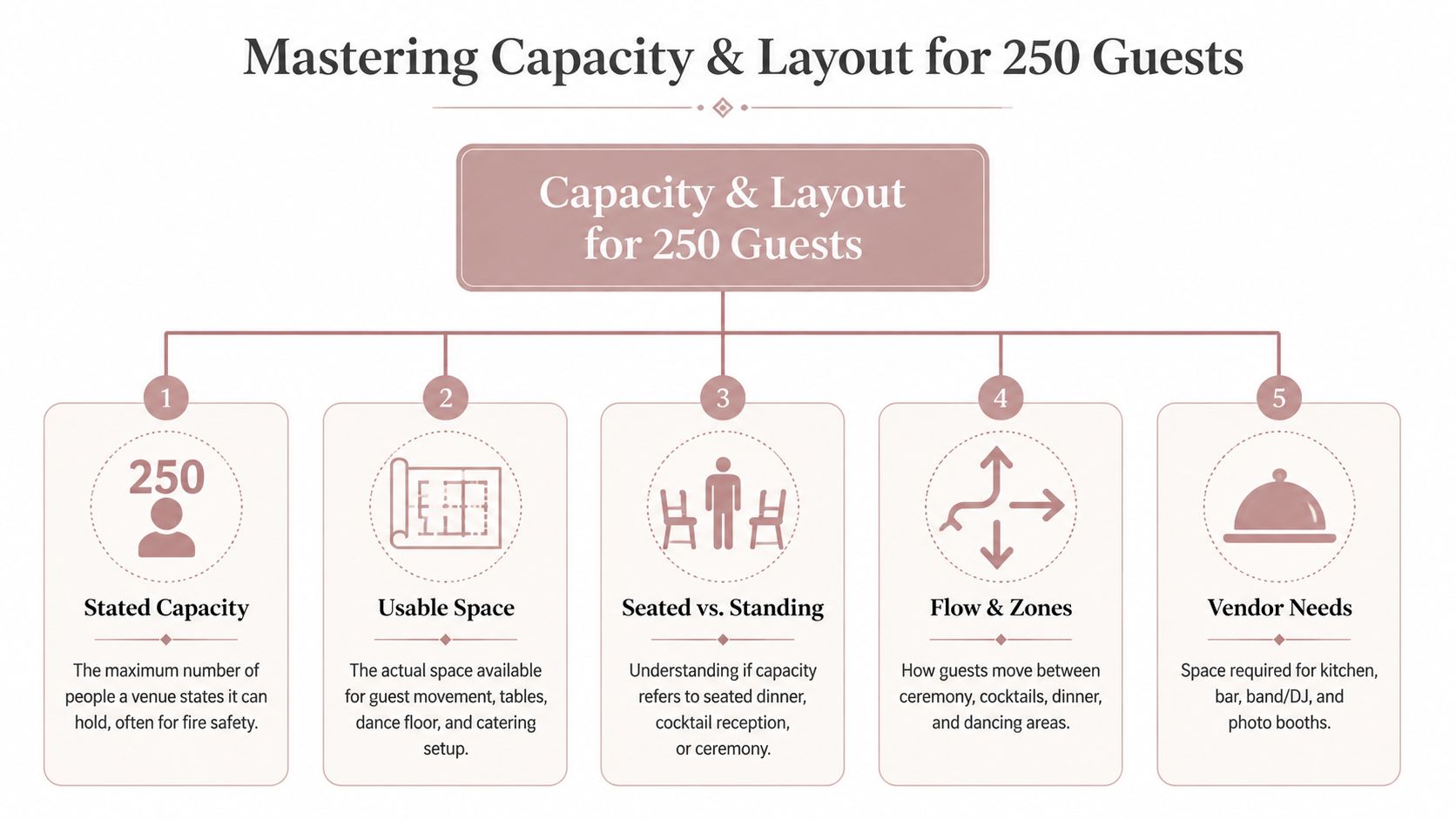
The first trap is the phrase “capacity 250”. On venue literature, that number can mean many things. It may refer to a standing reception, a ceremony with tight rows, or the legal maximum for a room. None of those automatically means a comfortable wedding breakfast and evening party.
For a 250-person guest list, it's practical to expect around 200 attendees, reflecting an estimated 20% decline rate, and a seated dinner at that realised size often needs roughly 2,000 to 3,000 sq ft of guest space before you add a bar, dance floor or service areas, according to this large guest count planning guide.
Read the floorplan, not the brochure
When I walk a venue with a couple, I ignore the headline first and ask for the plan. Where do the round tables sit? Where do staff enter with plated courses? Where will guests stand during the transition from speeches to dancing? Capacity lives in those answers.
A room can look enormous when empty and immediately shrink once furniture is placed. Industry guidance for large receptions also warns that a room rated for 250 people may only feel comfortable for around 180 once dining and movement space are included, and suggests allowing 4 to 5 feet between aisles and around 300 to 400 square feet for a lively dance floor at this scale, as outlined in this wedding reception size guide.
The minimum questions to ask on a viewing
Use a venue tour to test how the room works in real life.
- Dining layout: Ask the coordinator to show you a sample table plan, not just tell you that the room “fits”.
- Circulation: Stand where a server would stand. Then trace the route to the furthest table.
- Dance floor placement: Check whether dancing steals space from seated guests or sits naturally in its own zone.
- Service footprint: Bands, bars, buffets and cake tables all consume room that couples often forget to count.
For a 250-guest seated reception, a practical benchmark is about 3,000 square feet of usable dining space, or roughly 279 square metres, with layouts stretching towards 3,700 square feet for more generous circulation. Guidance on larger events also notes that buffet service needs extra room and often uses one buffet table per 75 guests, based on these basic venue size guidelines.
Practical rule: If the venue can't show you where people move, it probably hasn't thought hard enough about how they'll feel.
One grand room or several characterful spaces
Both models can work. A single hall creates impact and keeps everyone together. It's often easiest for speeches and gives the evening a strong focal point. The downside is that any weakness becomes obvious. If the bar sits in the wrong place or the dance floor cuts through the dining room, everyone feels it.
A venue with several spaces can be more forgiving. Ceremony in one room, drinks outside or in a terrace setting, dinner in another, dancing somewhere with a different mood. That progression helps a large day feel layered rather than relentless. It's one reason couples often look closely at large wedding venues that offer distinct rooms instead of a single oversized shell.
What to look for in historic settings
Older buildings reward scrutiny. They have charm, but they also have columns, thresholds, corners, staircases and service constraints. None of that is a problem if the layout respects the building.
I'd rather work with a historic venue that explains how 250 guests will be distributed than a larger blank room that gives no thought to atmosphere. Space is only useful when it's usable.
Solving the Guest Logistics Puzzle
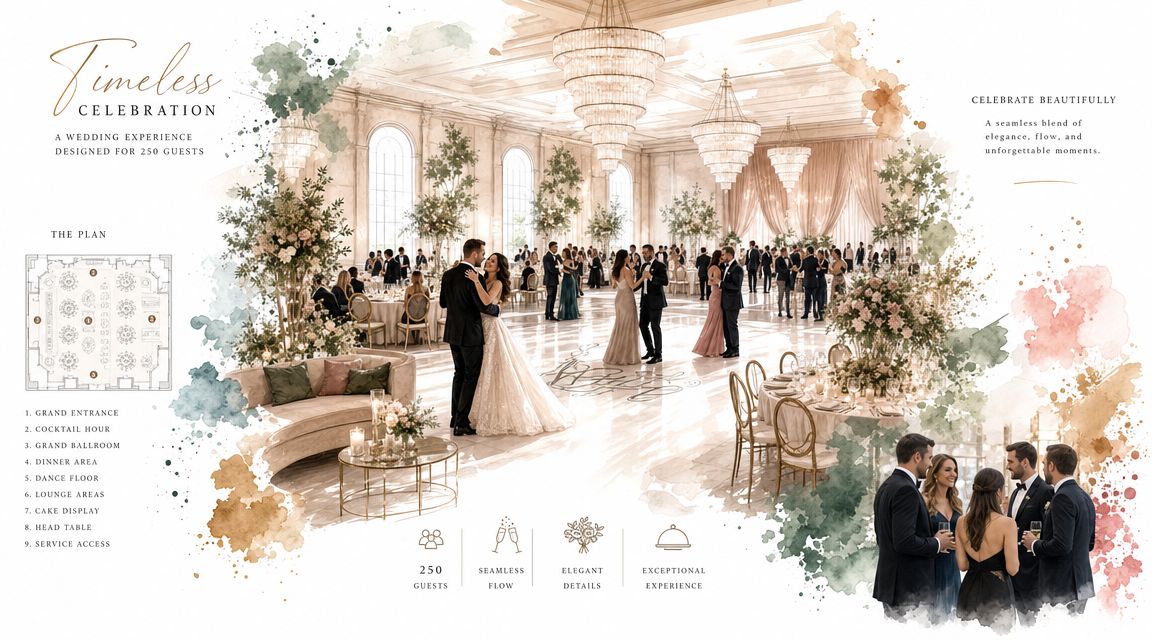
The most common mistake with large weddings is assuming that if 250 people can fit inside the venue, the logistics must be fine. They usually aren't. Large-guest weddings fail in motion before they fail on paper.
A venue may have a glorious hall and still struggle with arrivals, waiting times, wet-weather rerouting, or coaches trying to turn around on a narrow approach. That's why the operational side of wedding venues for 250 guests deserves as much attention as the architecture.
Arrival sets the tone
For large UK weddings, guest experience often depends less on raw capacity and more on practical matters such as coach access, weather contingency and ceremony-to-reception flow, as noted in this discussion of guest logistics and event flow.
I've seen this play out many times. Guests arrive in waves, not neatly spaced intervals. One cluster reaches early, another arrives after getting lost, and a coach may unload a whole side of the family at once. If there's no clear drop-off point, no sheltered waiting area and no signposted route, the mood shifts quickly from excited to flustered.
The questions venues should answer easily
Ask how the site behaves when everyone moves at once. A capable venue team should answer without hesitation.
- Transport planning: Is there coach access, sensible drop-off space, and a realistic plan for late-night departures?
- Accommodation guidance: Can the team help guests with nearby options and travel times?
- Wet-weather movement: If drinks move indoors, where do guests go and what gets displaced?
- Accessibility: How do wheelchair users, older guests and families with children move through the day?
A strong guest list also needs a strong planning tool. Couples often get clearer answers from venues when their numbers are organised, grouped by household and transport needs, which is why a structured wedding guest list template is useful long before RSVPs are final.
The hidden pinch points inside
Historic venues often feel magical because they reveal themselves gradually. That can be an advantage for atmosphere and a complication for flow. Cloakrooms, loos, bars and terraces may sit in characterful but awkward positions. If all roads lead through one doorway, you'll get queues.
If guests need to ask “Where do we go now?” more than once, the venue flow isn't finished.
One of the best large weddings I planned had no grand logistical trick. The venue thought carefully. Drinks were served where guests naturally gathered. Staff directed older relatives to seats before the main crowd moved. Suppliers had a separate access route. The couple barely noticed any of it, which is exactly how good logistics should feel.
Intimacy comes from movement
A big wedding doesn't need to feel sprawling. It needs rhythm. Bringing everyone together for the ceremony, letting them spread out for drinks, gathering them again for dinner, then releasing them into a more relaxed evening creates intimacy through pacing.
That's the main puzzle to solve. Not whether 250 people can stand in one place, but whether the venue can carry them smoothly from one chapter of the day to the next.
Navigating Costs and Contracts for a Large Wedding
Large weddings magnify every line item. A charge that feels manageable on a smaller event can become significant once you're planning for a broad guest list, more staffing, more furniture, more glassware, more setup time and more cleanup. That's why couples should read venue pricing in layers, not as a single headline figure.
With the average UK wedding costing around £20,700 in 2023 for a much smaller guest count, a 250-person celebration becomes a substantial investment where transparency and contractual clarity matter from the outset.
Package pricing versus dry hire
Neither model is automatically better. What matters is whether the pricing structure suits a large-format event.
With an all-inclusive or managed package, the venue often controls catering, staffing and drinks. That can reduce friction because one team coordinates the moving parts. It also makes it easier to compare what is and isn't included.
Dry hire offers freedom, but large weddings expose the complexity quickly. You may need to source everything separately, from caterers and bars to furniture, generators, glassware and waste removal, depending on the site. In historic properties, supplier access times and protection requirements can make that freedom more expensive than it first appears.
Charges that deserve close reading
The contract should tell you how the day works when plans meet reality. Read for operational detail, not just price.
- Staffing and service: Ask whether staffing is built into the catering cost or added later.
- Time limits: Clarify setup access, supplier load-out windows and overtime charges if the evening runs long.
- Restricted suppliers: Some venues require approved caterers, bar teams or production suppliers.
- Damage and cleaning clauses: Historic buildings often need stricter protection and restoration terms.
Ask the venue to walk you through a final invoice example from start to finish, using your likely format rather than an idealised package summary.
What “per head” doesn't always include
Catering usually anchors the budget discussion, but “per head” can hide a lot. It may cover the meal and still leave drinks service, canapés, evening food, crockery upgrades, staffing extensions or children's meals outside the quote. On a large wedding, those distinctions matter because even small omissions repeat across many guests.
This is also where sustainability and operations overlap with spending. Buffet service can require more room and more infrastructure than couples expect. Plated service can be smoother in some venues because it keeps queues down and can give the room a calmer rhythm. The right choice depends on the building, the kitchen support and the service team, not just personal preference.
A quick primer on contract terms can help before you sign anything:
A contract should answer these points plainly
I get wary when a venue is charming in person and vague in writing. At this scale, vague becomes expensive.
Look for clarity on the following:
| Contract area | What you need to know |
|---|---|
| Exclusive use | Which spaces are yours, and for how long |
| Payment schedule | Deposit terms, staged payments and final balance timing |
| Minimums | Whether food, drink or guest-count minimums apply |
| Change policy | What happens if numbers shift or layouts change |
| End-of-night terms | Music finish time, departure rules and supplier collection |
A well-run venue doesn't resist these questions. It answers them cleanly.
Case Study A Grand Wedding at Battle Abbey
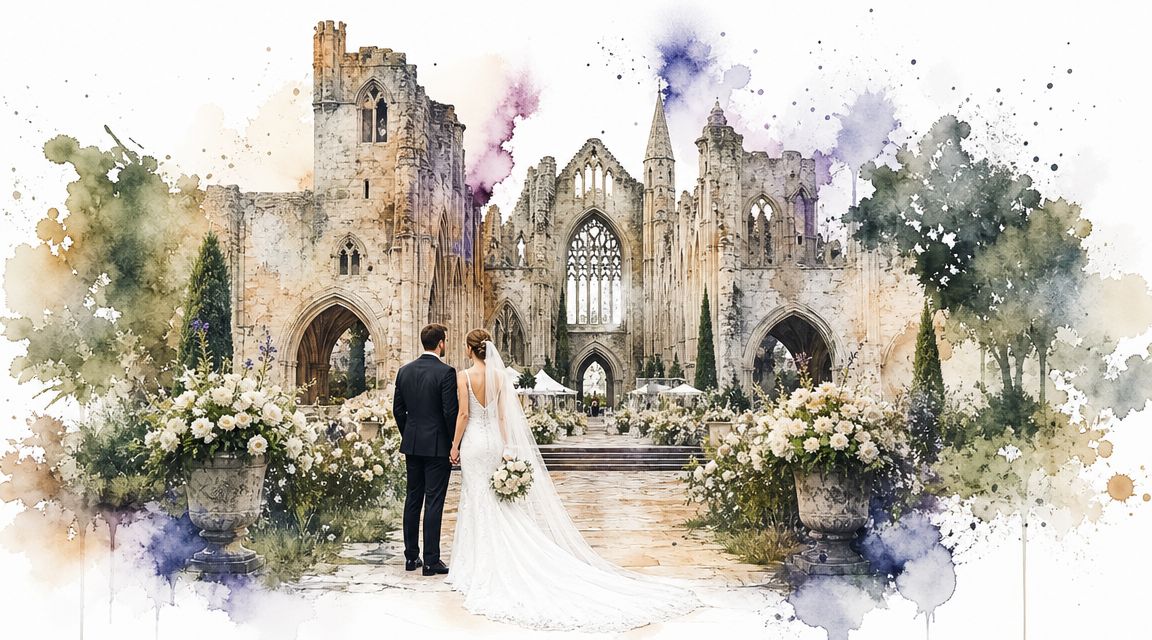
The wedding day began. Guests stepped through ancient stone surroundings and into the Abbot's Hall in that familiar pre-ceremony hush, all rustle and anticipation. What mattered was that the room didn't feel overwhelmed by the numbers. It felt framed by them.
A historic venue earns its keep. Architecture does some of the emotional work for you. Tall ceilings lift the moment, but the room's detail still pulls the eye inward to the couple, the vows and the people nearest them.
A day that moves in chapters
After the ceremony, guests spilled out rather than jammed up. Some headed for drinks, some paused for photographs, some took in the view and found relatives. That gradual release is one of the secrets to making a large wedding feel civilised. Nobody needs to do the same thing at the same second.
On the Top Terrace, the guest list felt expansive in the right way. People had room to circulate. Older guests could settle into conversation. Friends from different parts of the couple's lives began to overlap. That's the lovely social alchemy of a big wedding, but it only happens when the venue gives people enough breathing room and a clear next step.
Dinner with scale and atmosphere
The wedding breakfast took place in the Duke's Library, where the room's character prevented the dinner from feeling like a banquet hall. Large weddings can become visually flat if every table sits in an undifferentiated box. Here, the setting gave shape to the room before the flowers, candles and place settings even arrived.
Service timing mattered as much as décor. Guests were seated without that long drift that drains momentum. Speeches landed because the room held attention. Once dinner ended, there was no awkward pause while staff reset a crowded space under everyone's feet. The day could continue because it had been built to continue.
Historic venues handle large weddings best when each room has a job and each transition has a host, a route and enough time.
Why this kind of venue works
Some venues advertise large capacity but still require couples to compromise on flow or atmosphere. This format works because the site can split the day naturally across ceremony, drinks, dining and evening celebration. That allows different moods to emerge without making guests feel dispersed.
For couples comparing heritage settings, the practical details matter just as much as the romance. What makes Battle Abbey a historic wedding venue is the combination of licensed ceremony space, reception areas, outdoor terraces, bespoke catering and planning support within one estate setting.
What the guests actually remember
Guests rarely go home talking about the square footage. They remember how the day felt. They remember whether they could hear the vows, whether drinks appeared smoothly, whether dinner felt lively rather than cavernous, and whether the evening built naturally.
That's why a strong venue for 250 guests doesn't only solve logistics. It protects emotion. It makes a large wedding feel intentional, welcoming and full of texture from the first arrival to the last dance.
Your Venue Booking Timeline and Essential Questions
Large historic venues don't reward hesitation. If you're planning a big wedding, start early enough that you can compare properly rather than panic-book the only date left. The couples who choose well usually move in a steady sequence: shortlist, visit, question, review the contract, then book once the operational details line up with the atmosphere.
A practical way to think about timing is to begin venue research well in advance, especially if you need peak dates, heritage surroundings and enough flexibility for a high guest count. Once the venue is provisionally right, turn your attention to the details that shape the visual and practical side of the day. That often includes attire decisions too. If the groom or groomsmen are weighing seasonal tailoring and texture, this guide to wedding suit fabric options is a useful place to start.
A simple planning rhythm
Use your timeline to reduce guesswork.
- Early stage: Build the first guest list, identify your must-haves, and separate essential requirements from nice extras.
- Viewing stage: Ask to see real layouts, wet-weather plans and supplier access routes.
- Decision stage: Compare contracts side by side, not just brochures or photo galleries.
- Pre-booking stage: Confirm who handles catering, timings, setup access and evening transitions.
Essential questions for large wedding venues
Save this list to your phone and bring it to every viewing.
| Category | Question to Ask |
|---|---|
| Capacity and layout | What does your stated capacity actually refer to: ceremony, seated dinner, or standing reception? |
| Capacity and layout | Can you show us a sample floorplan for our likely guest count and table style? |
| Capacity and layout | Where do the dance floor, bar, cake table and band or DJ go? |
| Logistics and accessibility | How do guests arrive, and is there a clear plan for coaches, taxis and late departures? |
| Logistics and accessibility | What is your wet-weather plan for drinks and photographs? |
| Logistics and accessibility | How do older guests and wheelchair users move between spaces? |
| Costs and contracts | What is included in the venue hire fee, and what is charged separately? |
| Costs and contracts | Are there minimum spend requirements for food or drink? |
| Costs and contracts | What overtime, cleaning, staffing or supplier fees might appear later? |
| Service and restrictions | Which suppliers are mandatory, preferred or prohibited? |
| Service and restrictions | How much setup access do we get before the wedding day? |
| Service and restrictions | What are the rules on music finish time, candles, confetti and outdoor use? |
The right answer isn't always “yes”. Sometimes it's a clear, experienced explanation of how the venue handles a constraint.
That distinction matters. Large weddings in historic venues always involve some compromise. The question is whether the venue team understands those compromises well enough to protect the guest experience.
If you're looking for a historic setting in Southeast England that can host a large celebration with ceremony, reception, dining and outdoor flow in one place, Battle Abbey Weddings is worth considering. It offers exclusive wedding hire for larger guest counts within the Battle Abbey estate, with spaces including the Abbot's Hall, Duke's Library and outdoor terraces, plus bespoke catering and planning support.