You've probably got a venue shortlist open already, a planner on hold, and one open question that keeps coming back to the same line item, what sits behind a Seven Stars menu when the celebration has to work for real guests, real timing, and a real historic room. That's the useful question, because the right menu at a heritage site isn't just about dishes, it's about how smoothly people move from arrival to speeches to the last evening plate without the day feeling staged or overcomplicated.
For a wedding at a place with abbey ruins, a terrace, and formal interiors, the menu needs to behave like part of the event design. It has to feel rooted in British hospitality, but still be flexible enough for mixed dietary needs, older guests, and a room size that changes the service rhythm. A well-built Seven Stars-style menu does exactly that, by giving the day a clear culinary shape instead of a generic buffet or a list of disconnected favourites.
Imagining the First Course at Battle Abbey
The first thing guests notice on a historic estate is rarely the formal dining room. It's the walk in, the view, the pause on the terrace, and the sense that the food has started before the cutlery appears. That matters at a venue like Battle Abbey, because the menu has to support the atmosphere of arrival, not fight it.
A wedding breakfast in a heritage setting works best when the food feels like part of the building's rhythm. The route from reception drinks into the main meal should feel natural, with canapés that let people talk, stand, and settle before they sit down properly. That's why the internal logic of the day matters so much more than a simple list of courses, and why couples who think in terms of “starter, main, dessert” often miss the bigger picture.
The idea of a Seven Stars menu fits this kind of setting because it's structured, recognisable, and adaptable. It signals a menu with personality, but not a menu so fixed that it can't respond to the room, the season, or the guest list. If you're comparing what feels right for a historic venue, the question isn't just what people will eat, it's how the sequence of eating supports the ceremony space, the speeches, and the evening flow. For a useful historical context on how food traditions shape this kind of setting, see the venue's note on Victorian-era food at Battle Abbey Weddings.
Practical rule: if the first course doesn't help guests relax, the whole meal feels tighter than it should.
A strong plan starts with the narrative arc. Arrival food should feel lighter and more social, the main meal should read as intentional and celebratory, and the evening food should restore energy without resetting the mood. That's the difference between a menu that fills a table and one that carries a wedding day.
What a Seven Stars Menu Means for a Wedding
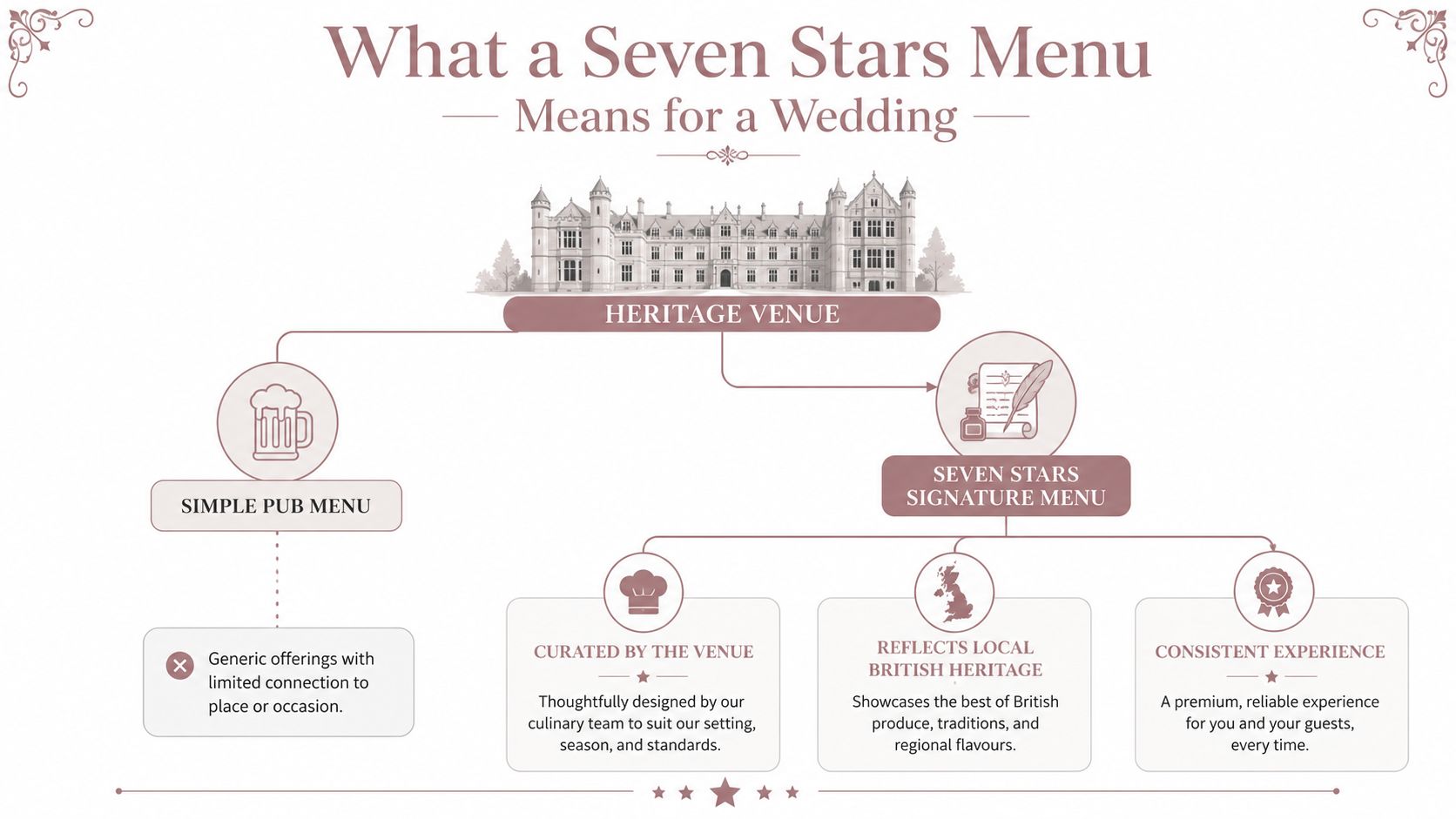
At its simplest, a Seven Stars menu is not just a pub menu with a nicer font. In the UK, the clearest examples of Seven Stars venues show how a traditional pub identity can sit alongside more curated dining, with hybrid menu thinking, fixed-price offers, and vegetarian choices all working together rather than competing. SquareMeal's listing for the Kingsbridge Seven Stars is a good reminder of that model, because it combines pub staples, globally influenced dishes, and value-led offers into one coherent offer, including lunch and supper club pricing that signals transparency rather than improvisation. The same listing also confirms vegetarian options on the main menu, which is now a basic expectation for mixed groups in regional hospitality. SquareMeal's Seven Stars listing shows how that kind of menu identity is built.
For a wedding, the translation is straightforward. The menu needs three things. First, structure, so guests know the day has been thought through. Second, signature dishes, so the meal feels tied to the venue rather than borrowed from anywhere. Third, transparency, so the couple can understand what's included, what can be adapted, and where costs change.
The phrase “Seven Stars menu” also matters because the search itself is messy. People often land on mixed results for different venues in different countries, and a lot of those pages are just basic PDFs or bare listings. That means the value of a named menu is clarity. It gives everyone, the couple, the planner, and the catering team, a shared way to describe a service style without having to rewrite the whole plan each time.
A wedding menu built on this model usually has three blocks.
- Canapés and drinks reception, which should be easy to serve and easy to eat standing up.
- The main meal, which carries the formal part of the day.
- Evening food, which should match the energy level of the room, not just add more volume.
A named menu works when the couple can repeat it back in one sentence and still know what will happen on the day.
That's the value here. A Seven Stars framework gives the wedding a culinary identity that feels consistent from first glass to final bite.
Sample Course by Course Seven Stars Menu
A workable heritage-venue menu should feel familiar enough for older relatives, but still polished enough for the setting. The sample below is built the way I'd brief a catering team for a historic room, with local flavour, manageable service, and plates that still look composed after the walk from kitchen to table. For a venue-led example of how a named menu is often presented, the White Swan menu tag is a useful reminder that couples usually want a menu family, not just a list of dishes.
Sample Seven Stars Wedding Menu at Battle Abbey
| Course | Sample Dish | Local Element |
|---|---|---|
| Arrival canapés | Mini fish tartlets, goat's cheese crostini, and seasonal vegetable bites | East Sussex dairy, local vegetable seasonality |
| Starter | Chalk-stream style smoked salmon with herb salad, or a woodland mushroom tart | Regional fish cues, market-fresh herbs |
| Main | Roast chicken with pan gravy, seasonal vegetables, and a vegetarian pie option | British roast tradition, estate-style seasonal produce |
| Dessert | Summer fruit tart or warm sponge with custard | Soft fruit and classic English pudding profile |
| Evening bite | Sausage rolls or a simple savoury traybake | Easy-to-serve British comfort food |
The reason this structure works is that it balances recognisable British cooking with enough room for polish. Fish, roast poultry, pies, and fruit desserts all read well in a country-house setting, and they don't force the kitchen into overly complicated holding or plating. The menu also avoids overdesigned food that looks better on paper than it does after service begins.
For East Sussex character, the important thing is ingredient logic rather than gimmick. Use produce that feels fresh and regional, then let the service style do the rest. A canape should be one bite, a starter should be neat enough for formal service, and the main should hold temperature well without losing shape. Desserts should be comforting, not fragile, because the room is usually at its busiest by then.
The kitchen logic matters too. Dishes with similar component structures are easier to scale, easier to brief, and easier for servers to identify at speed. That's why pie, roast, and tart formats show up again and again in good heritage menus, they're practical before they're fashionable.
Scaling the Menu from 30 to 250 Guests
The same menu can feel intimate at 30 and completely different at 200, even when the dish list barely changes. The service style does most of that work. At a smaller reception, the team can personalise plating, respond to individual preferences, and keep the pace relaxed. At a larger banquet, the priority shifts to timing, line discipline, and keeping every table aligned so speeches and courses don't drift.
For a part-site celebration, the Dining Room or Bar setting gives much more freedom. A plated meal can feel elegant, but so can a family-style arrangement if the room is being used for a close-knit gathering. That sort of format is useful when the guest list is compact and the couple wants people to talk across the table rather than wait for formal service.
At full-site scale, especially in a larger hall setting, consistency beats improvisation. A set menu is easier to control, and it keeps the guest experience coherent from the first table to the last. BBQ and hog roast formats can work too, but they change the tone fast. They're looser, faster, and often better suited to the evening or a more casual reception than the main seated meal.
If the meal has to support speeches, think about service speed first, not just menu style.
A practical way to choose is to match the service model to the guest count and the mood you want:
- Under 60 guests, use plated service or a refined family-style approach if the room supports it.
- Around 75 to 120 guests, a set plated menu is usually the safest route for pace and polish.
- Larger guest counts, use a tighter menu with fewer variables, because staff movement and timing become the main risk.
- Casual evening segments, consider BBQ, hog roast, or tray-served options once the formal meal is complete.
The kitchen's access and setup window also matter. If the venue allows the day before where availability permits, that extra time can be the difference between a calm service and a rushed one. It lets teams rehearse table flow, check equipment, and reduce avoidable friction on the day itself.
Adapting the Menu for Dietary and Seasonal Needs
On a wedding day, the dietary brief usually arrives in fragments, one guest is gluten-free, another avoids dairy, someone else is vegetarian, and a parent needs a plain plate that won't cause questions at the table. The menu only holds together if the kitchen and front-of-house team can read those needs before service starts and act on them without hesitation. In the UK, that means clear coding, clear handover, and no guesswork. The strongest Seven Stars-style menus use standard abbreviations such as V, VE, GF, and GFO, which help guests and staff understand the options before the plate is in front of them. That kind of menu structure matters most when the room is full and the meal has to keep moving. The venue's own Sunday menu sample shows how fixed side sets and coded items help front-of-house teams stay consistent during busy service.
Written confirmation matters just as much as the menu wording. Couples should ask how allergens are flagged, whether substitutions are agreed in advance or dealt with at the table, and how the kitchen handles separate plates for mixed dietary groups. For a practical overview of food-labelling expectations, Relief Chefs UK compliance tips are a useful reference point, especially if you're checking how clearly the venue communicates ingredients and adjustments.
Seasonal logic that works
Spring and summer weddings usually suit lighter proteins, soft herbs, salads, and fruit-led desserts. Autumn and winter menus usually sit better with root vegetables, richer sauces, game, and warmer puddings. That choice is not about style for its own sake. It is about serving food that still feels right after ceremony time, photographs, and speeches have all taken their share of attention.
The same menu can change cleanly if the kitchen keeps the course structure stable and swaps ingredients with the season. A mushroom tart can become a vegetable tart. A fruit dessert can shift from berries to poached fruit. A roast main can stay in place while the vegetable set changes with availability. That approach keeps the meal recognisably the same menu, which matters in a heritage venue where guests expect continuity from one course to the next.
Mixed dietary groups need more than a token vegetarian option. They need a dish that sits naturally beside the rest of the meal, not something that looks like a separate afterthought. The better kitchens solve that by designing plant-based plates with the same visual care as the main meat course, so nobody feels singled out at the table.
Older guests bring another trade-off into view. Clear labelling, plain presentation, and predictable service reduce the chance that someone hesitates, asks twice, or ends up with the wrong plate. That is the difference between a menu that claims flexibility and one that can actually deliver it.
Drink Pairings and Timing for the Day
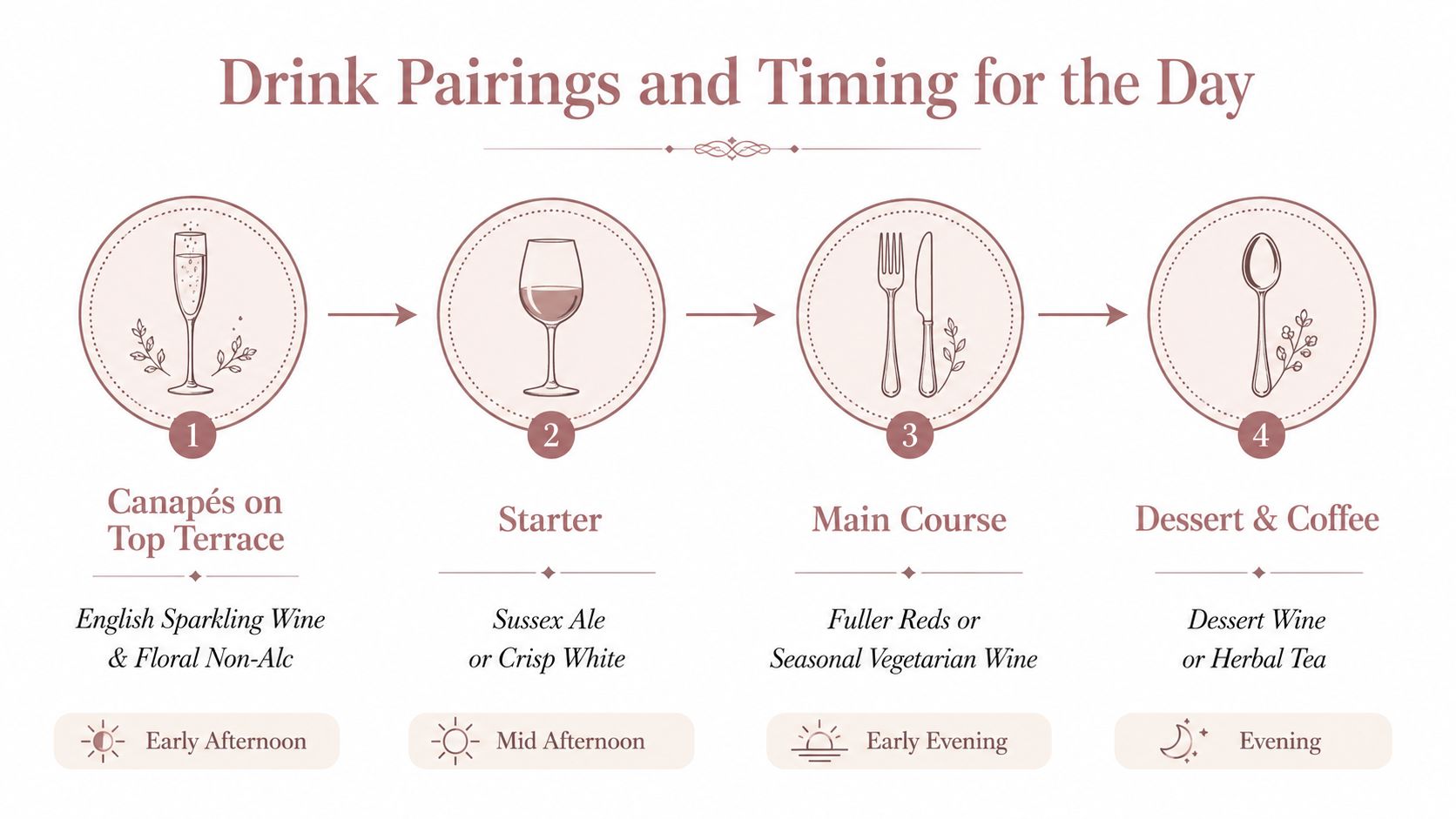
The cleanest drink pairing plan starts light and finishes with more weight, because the guests' attention shifts through the day. Reception drinks on a terrace call for something fresh and easy, while the main course usually needs a fuller glass that can stand up to roasted or savoury food. By dessert, the pairing should soften again, or step back and let coffee and conversation take over.
That's why English sparkling wine works so well at the start of the day. It feels celebratory without overwhelming the canapés, and it suits the open-air arrival moment better than a heavy pour. For a more relaxed cocktail idea that sits comfortably in this kind of reception window, San Diego gin cocktails are a useful style reference for couples who want something bright and modern without making the drinks list feel theme-led.
A practical wedding timeline usually runs in this order:
- Reception drinks and canapés, light sparkling wine, floral non-alcoholic options, or a simple gin serve.
- Starter service, a crisp white or a local ale if the starter is food-led rather than delicate.
- Main course, fuller reds or a structured seasonal drink that matches the richness of the plate.
- Dessert and coffee, something sweet, or a herbal tea for guests who don't want another alcoholic round.
The licensed window also shapes the end of the evening. Battle Abbey Weddings is licensed until midnight, which gives the drinks plan enough breathing room for speeches, cake cutting, and a late social stretch without forcing the final round too early. That kind of timing support is useful because the drinks list shouldn't feel like an afterthought, it should mirror the event's pace.
A good drinks package makes the room feel looked after, not over-served.
Tiered packages help with that. They let couples decide where to spend on celebration drinks, where to keep things simple, and where a non-alcoholic option deserves equal attention. That balance usually keeps the whole day calmer.
Pricing and Booking Considerations to Plan For
The clearest wedding budgets separate venue hire, catering, and drinks packages from the start. That matters because each one moves for a different reason. Guest count changes catering first, service style changes labour and timing, and drink choice changes the spend profile in a way couples often underestimate when they first tour a venue.
The useful thing about transparent pricing is that it forces the planning conversation to become specific. If you're comparing a plated meal with a more casual service, you're not just choosing food, you're choosing staffing rhythm, table reset time, and how long guests stay seated. That's why the same guest list can produce a very different overall figure depending on whether you want a formal breakfast or a looser dining format. For the clearest published entry point on how menus are presented with costs, see menus with prices at Battle Abbey Weddings.
A lot of couples over-budget on the dish list and under-budget on the structure around it. They focus on canapés and mains, then discover that drinks, staffing, and service style matter just as much to the final experience. The smarter approach is to ask what the quoted price includes, what changes if the guest count shifts, and whether the menu can be adapted without triggering a completely new service model.
The booking process also deserves attention. A deposit secures the date, but a good planner shortens the gap between the first viewing and the finished brief. That's particularly valuable at a historic venue, where room layout, access, and service flow can all influence the catering plan. Day-before setup access, where available, gives the team more certainty and usually reduces avoidable pressure on the wedding morning.
Ask these questions early
- What is included in the catering quote, and what is charged separately?
- How does the menu change for a larger or smaller guest count?
- Can the drinks package be tiered, or adjusted for non-drinkers?
- How much setup time is available before the event?
- Who coordinates the timing between kitchen, planner, and service staff?
Those answers tell you more than a glossy brochure ever will. They show whether the venue is selling dishes, or selling a managed experience.
Putting Your Seven Stars Menu Together
The best way to judge a Seven Stars menu is to reduce it to five decisions. What's the food sequence, what service style fits the guest count, how will dietary needs be labelled, what drinks support the timing, and how transparent is the pricing. If those five things feel clear, the menu is probably strong enough for the day.
For a historic venue, the smartest menus are the ones that look effortless because the planning was exact. They preserve character, but they don't rely on charm to cover weak logistics. That's the standard worth asking for at the first viewing.
Battle Abbey Weddings pairs historic surroundings with a catering approach that can be shaped around the way you want the day to run. If you're planning a reception that needs structure, flexibility, and a menu that feels right in East Sussex, visit Battle Abbey Weddings and see how the venue's setting, service, and planning support could fit your guest list.